
Free visual inspection and a written scope of work before any mitigation begins - photos, moisture readings, and drying logs go in your claim file
The scope we write is the scope we bill. Anything new gets shown to you, in writing, before we touch it.
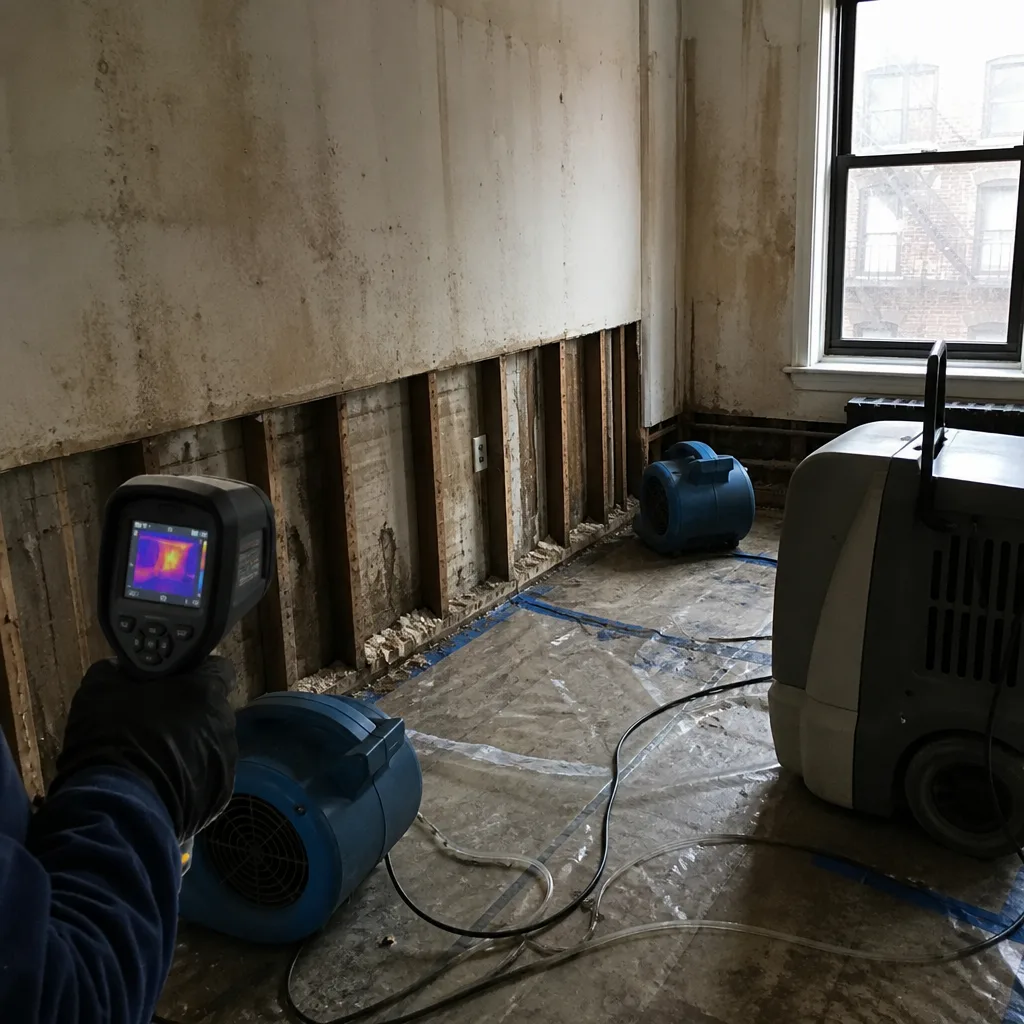 Before
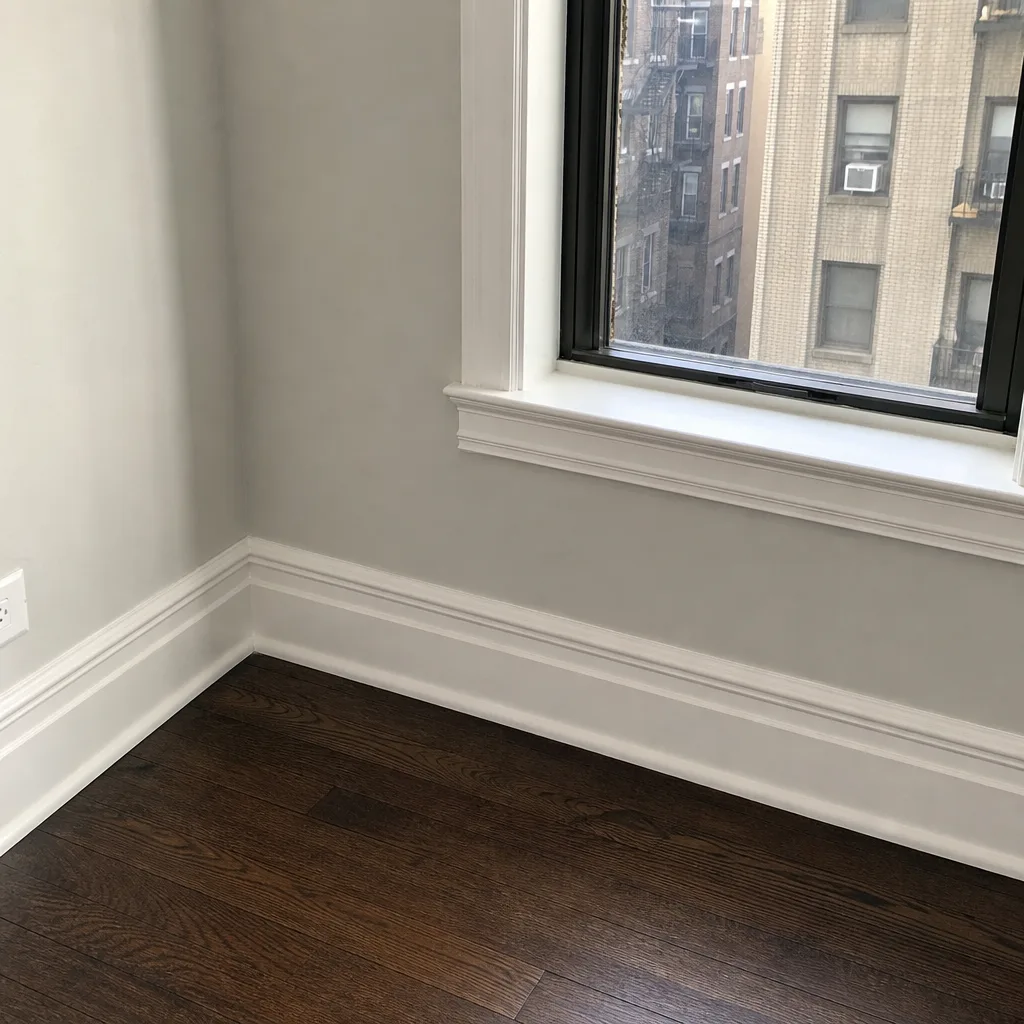 After
After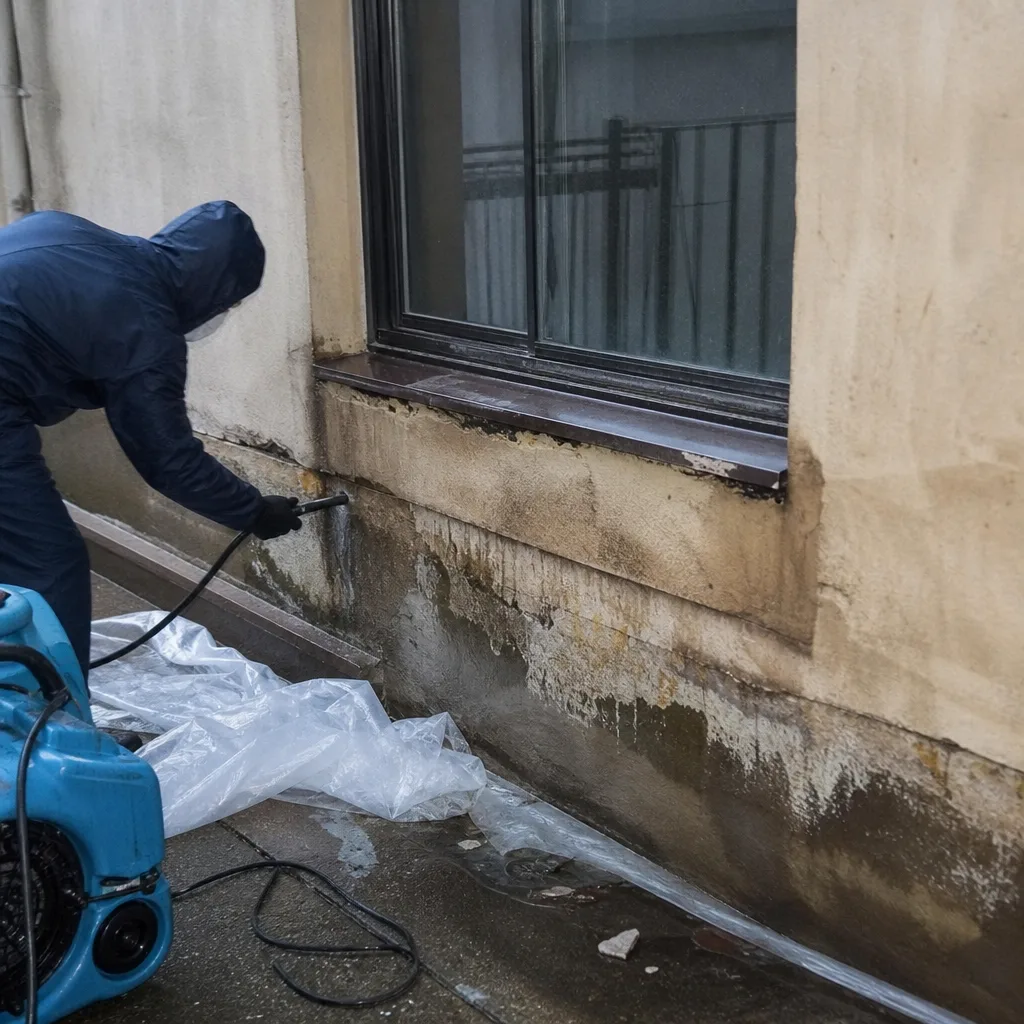 Before
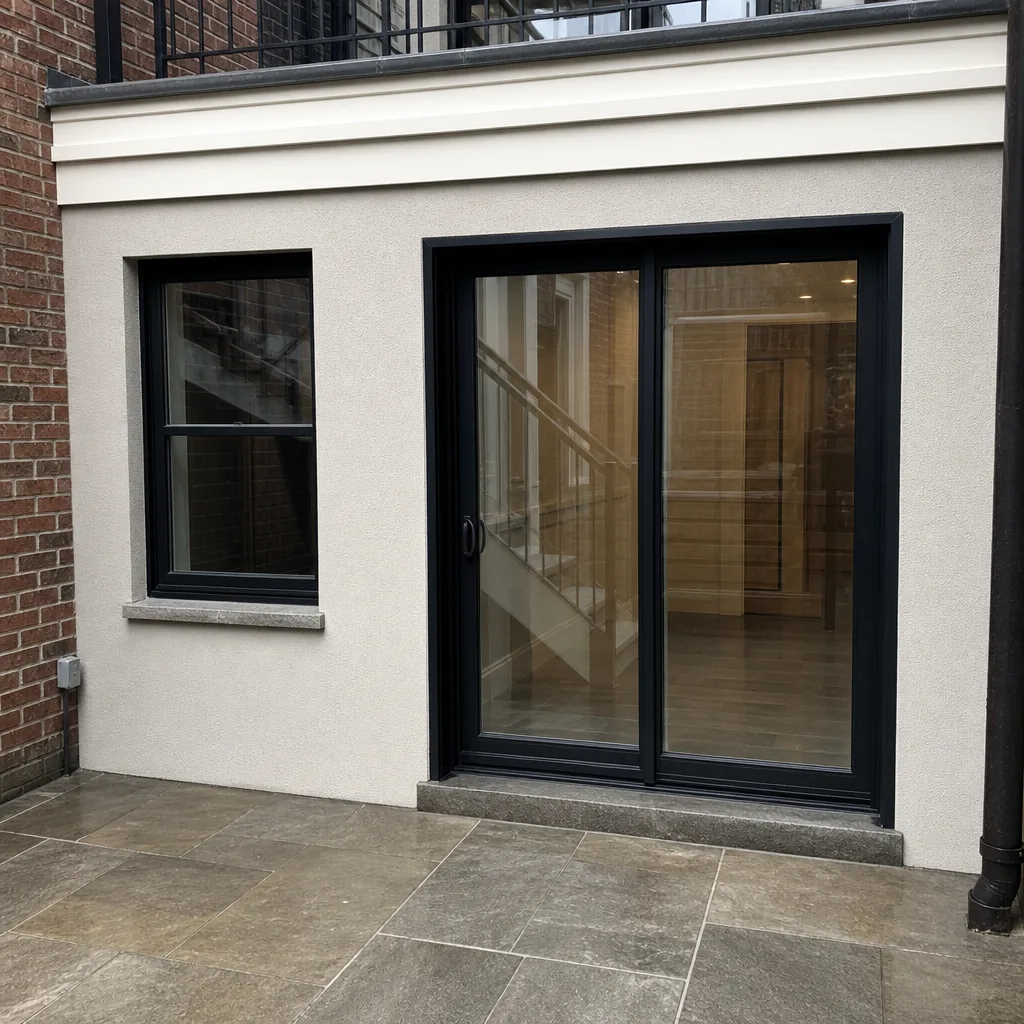 After
After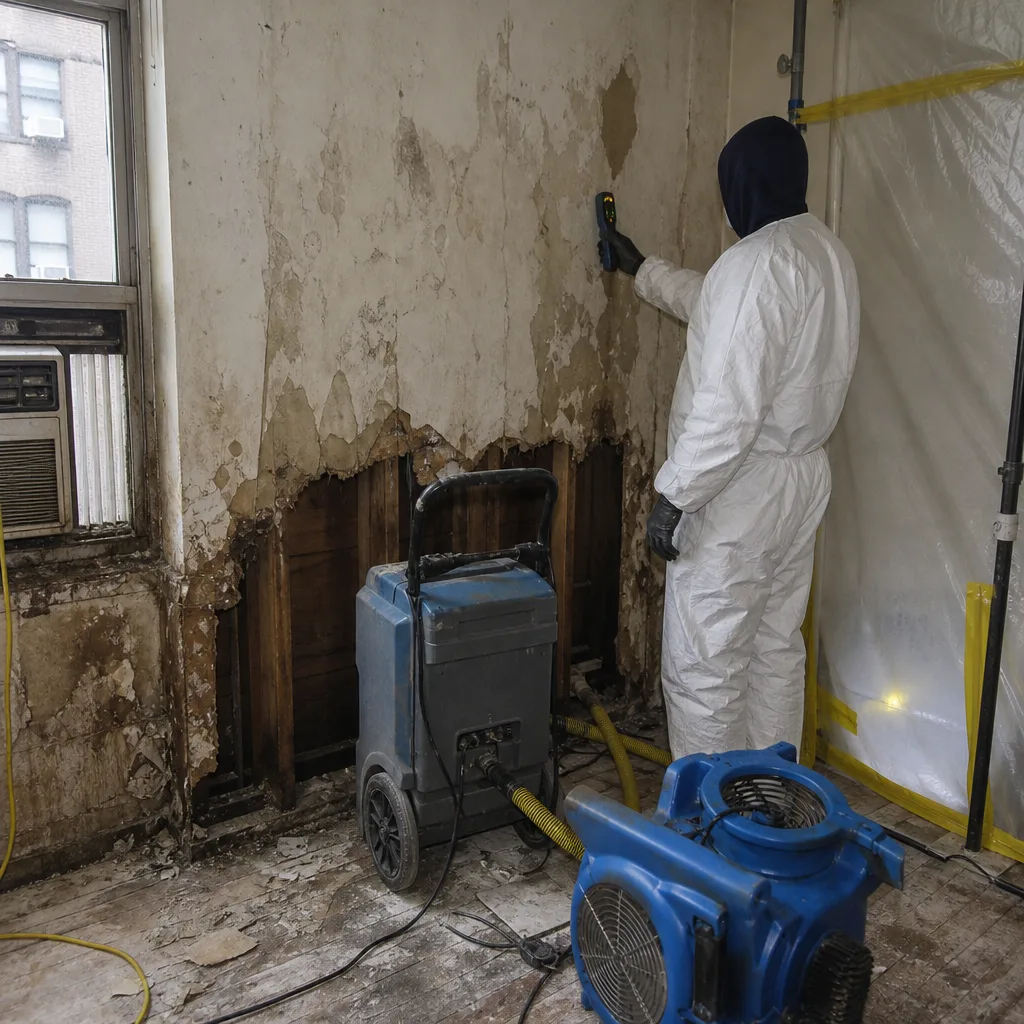 Before
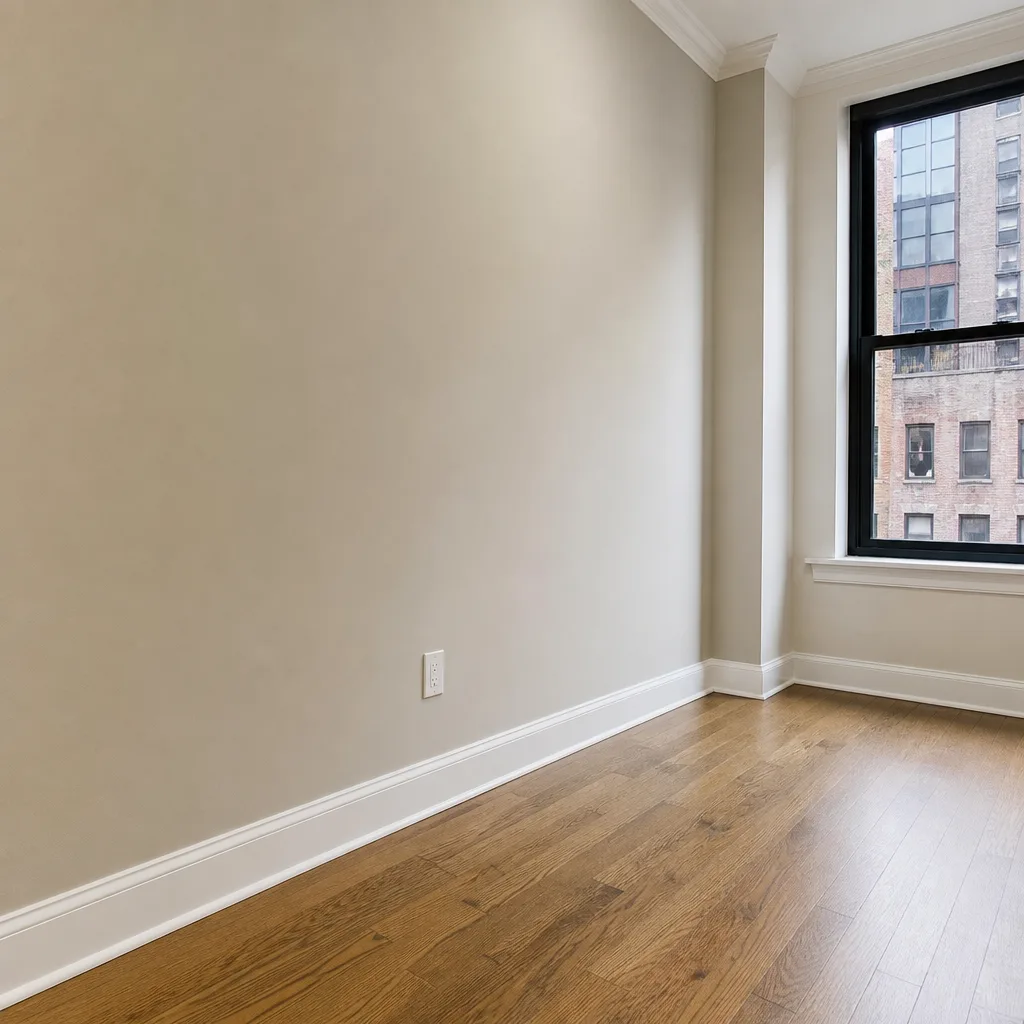 After
After24/7 Emergency Water Damage Restoration in Lower Manhattan
Water damage in Lower Manhattan moves fast, and so do we. A burst supply line in a Tribeca loft or saltwater in a Battery Park City mechanical room needs extraction running within the hour, not a callback sometime tomorrow. Call (518) 314-5660 and you’ll reach a live dispatcher who can have a certified crew on site in Lower Manhattan typically within 45 minutes, 24 hours a day, every day of the year. The first hour decides whether you’re drying drywall or replacing it, whether your elevator machinery gets neutralized or corroded, whether this is a cleanup or a rebuild. We do the full Water Damage Restoration job from first extraction to finished reconstruction, and we start with a free visual inspection so you know what you’re dealing with before any work begins.
Understanding Water Damage Restoration Severity in Lower Manhattan Properties
Not all water is the same, and Lower Manhattan sees more of the worst kind than nearly anywhere else in New York. The industry classifies water by contamination level. Category 1 is clean water from a burst supply line or failed water heater. Category 2 carries significant biological or chemical contaminants, common in washing machine overflows or sump failures. Category 3 is grossly unsanitary: sewage, harbor surge water, or anything that has sat long enough to grow bacteria. Lower Manhattan’s coastal exposure means we routinely handle Category 3 saltwater events that inland restoration companies almost never see. Saltwater changes the drying equation entirely. You cannot simply extract it and run air movers. Chloride ions left inside wall cavities, conduit, and electrical enclosures keep corroding metals for months after the moisture reading says dry. That’s why proper saltwater restoration includes chemical neutralization, a step most generic water damage protocols skip. In Lower Manhattan’s converted masonry buildings, the sub-basements housing boilers and elevator machinery sit at or below the water table, so even a moderate nor’easter can bring groundwater up through the slab. Moisture mapping matters more here than in any outer-borough frame house, because the water is often coming from below, not above, and it hides inside concrete and steel far longer than it hides in drywall.
Why Lower Manhattan Property Owners Choose Floodline Restoration Co.
- 45-minute response commitment: our crews stage in Lower Manhattan and know the access routes, the loading zones, and how to get equipment into a residential tower without waiting on a freight elevator booking.
- 24/7 live answer, never an automated system: a real dispatcher picks up at 2 a.m., asks the right questions, and gets a certified crew moving.
- IICRC-certified crews: our technicians carry WRT (Water Restoration Technician) and ASD (Applied Structural Drying) certifications and handle Category 3 losses with full containment and decontamination protocols.
- Free visual inspection: we assess the loss, locate the moisture boundaries with thermal imaging and hygrometers, and give you a written scope before any drying equipment goes in.
- Direct insurance billing: we bill your carrier, coordinate with your adjuster, and hand both of you the documentation that gets claims approved faster.
- One team from extraction to reconstruction: Curt Bowman built this company so the crew that reads the moisture map on day one is the same crew that rebuilds the wall on day thirty. No handoffs. No inherited crews. No playing messenger.
Our Water Damage Restoration Process
Inspection & Assessment
We start with thermal imaging and moisture mapping to find every wet surface, including the water you can’t see behind baseboards, under tile, and inside wall cavities. In Lower Manhattan’s sub-basements, we also check for salt residue and map the contamination boundary before any extraction begins.
Extraction / Stabilization
Truck-mounted and portable extraction units pull standing water out fast, including from elevator pits and sub-grade mechanical rooms. For Category 3 saltwater, we contain the area and begin chemical neutralization of surfaces before structural drying starts.
Drying & Dehumidification
Professional-grade Dri-Eaz dehumidifiers, XPOWER and B-Air air movers, and Injectidry systems for wall cavities are placed based on the moisture map, not guesswork. We take daily readings and log them until your structure hits the dry standard, then hand that log to you and your carrier.
Cleaning & Sanitization
Category 3 events get full antimicrobial treatment and HEPA air scrubbing. We disinfect all affected surfaces, and in saltwater losses we apply corrosion neutralizers to electrical enclosures, conduit, and metal framing before they’re sealed back up.
Specialty Treatment for Saltwater & Sub-Basement Losses
Lower Manhattan’s unique exposure demands a step most restoration companies don’t offer. We treat chloride contamination in pits, panels, and HVAC systems, and coordinate with elevator contractors before re-energizing hydraulic equipment.
Repairs & Restoration
Once dry and stable, we rebuild what needs rebuilding: drywall, flooring, trim, paint, and mechanical reconnections. The same crew that managed the drying handles the finish, so nobody has to relearn your building.
Need Emergency Water Damage Restoration in Lower Manhattan Now?
Crews minutes away, answering live 24 hours a day. The sooner we start, the less it costs.
Working With Your Insurance Company
Insurance is almost always in the room on a Lower Manhattan water loss, even when nobody’s said it yet. Floodline Restoration Co. handles the paperwork side so you don’t have to translate restoration jargon to an adjuster. From the first hour, we document everything: photos room by room, moisture readings at every stage, a line-item scope of work written in the format carriers recognize. We talk to your adjuster directly. We bill your insurer directly. And when the carrier asks why a sub-basement needed chemical neutralization instead of just fans, our logs and photos answer that question with evidence, not argument. That’s the difference between a claim that stalls and one that closes.
What We Provide Your Insurer
- Thorough documentation of the loss
- Photos of all damage, room by room
- Moisture readings and drying logs
- A detailed, line-item scope of work
- Direct coordination with your carrier
Built for Lower Manhattan’s Loss Calendar
Water damage in Lower Manhattan follows a rhythm, and knowing it means we show up before the damage spreads. January and February bring deep freezes that burst supply lines in older Financial District buildings where pipes run through uninsulated masonry chases. A single frozen riser can flood six floors before anyone notices. Spring brings thaw and heavy rain, and with it groundwater seepage into the sub-basements that sit below the water table in Battery Park City and along the East River waterfront. Summer thunderstorms dump inches in an hour, overwhelming roof drains and sending water down through converted loft buildings in Tribeca faster than building sump pumps can move it. Then there’s nor’easter season, from September through April, when a 4 or 5 foot surge at the Battery can push harbor water into elevator pits and mechanical rooms through drain backflow. We run crews in Lower Manhattan every month of the year, but we’re busiest right after the first hard freeze and during the first big coastal storm. That’s not a scheduling problem; it’s a readiness advantage. We know where the losses are going to be before the water moves.
Water Damage Restoration Across Lower Manhattan’s Neighborhoods
Lower Manhattan is small by acreage but enormous by building type, and each neighborhood loses water differently. In Battery Park City, the residential towers sit on compacted Hudson River landfill, and their sub-basement mechanical rooms take on brackish water even in a moderate surge. Tribeca’s cast-iron and converted masonry lofts have tight stairwells and narrow service entrances that defeat standard drying equipment; our crews run compact air movers and Injectidry wall-cavity systems that actually fit through the door. The Financial District’s pre-war towers have deep sub-cellars where boilers, switchgear, and elevator machinery sit below the water table, vulnerable to groundwater intrusion year-round, not just during storms. Along the South Street Seaport and East River corridor, older buildings carry decades of accumulated plumbing patches, and a failed joint on a high floor sends water down through the entire stack by morning. And around City Hall and the civic center, institutional buildings and converted offices often have suspended ceilings that hide slow leaks for weeks until the damage is extensive. Each of these areas needs a different access plan and a different drying strategy. We run them all from our New York City office, so a crew is never far from where the water actually is.
Specialized Water Damage Restoration Services We Offer in Lower Manhattan
Emergency Water Extraction
Standing water in a Lower Manhattan basement or loft is not a waiting situation. We arrive with truck-mounted and portable extraction equipment sized for the tightest sub-basement access. In a Battery Park City elevator pit or a Financial District mechanical room, we start pulling water before it migrates into conduit, switchgear, or elevator machinery. Every minute of standing Category 3 water increases the contamination load and the rebuild scope.
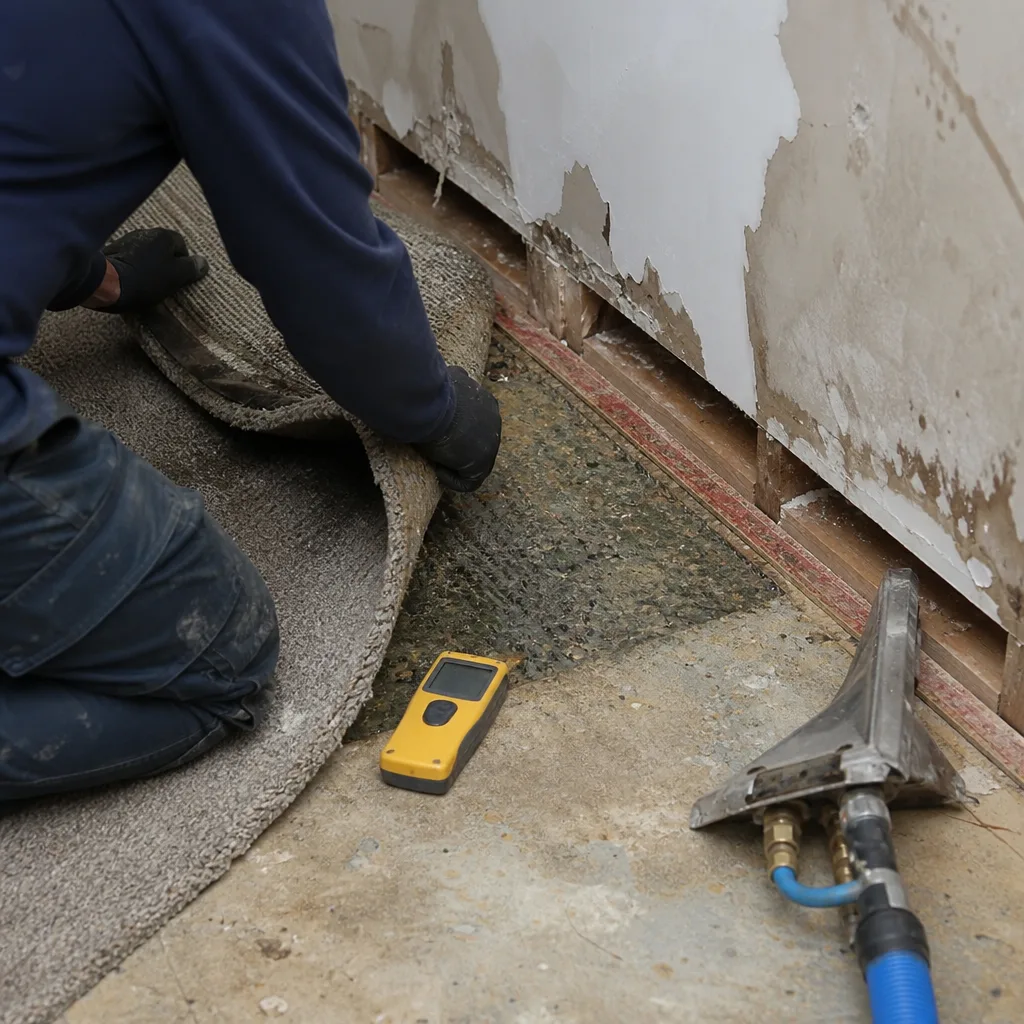
Structural Drying & Dehumidification
Drying a converted masonry loft or a sub-grade mechanical room is not the same as drying a wood-frame house. Concrete, brick, and steel hold water differently than timber and drywall, and they hide moisture longer. We place Dri-Eaz desiccant and refrigerant dehumidifiers and B-Air and XPOWER air movers based on the moisture map, then take daily readings with hygrometers until the structure hits the dry standard. In saltwater losses, we include chloride testing in the drying log, because “dry” and “safe from corrosion” are two different things here.
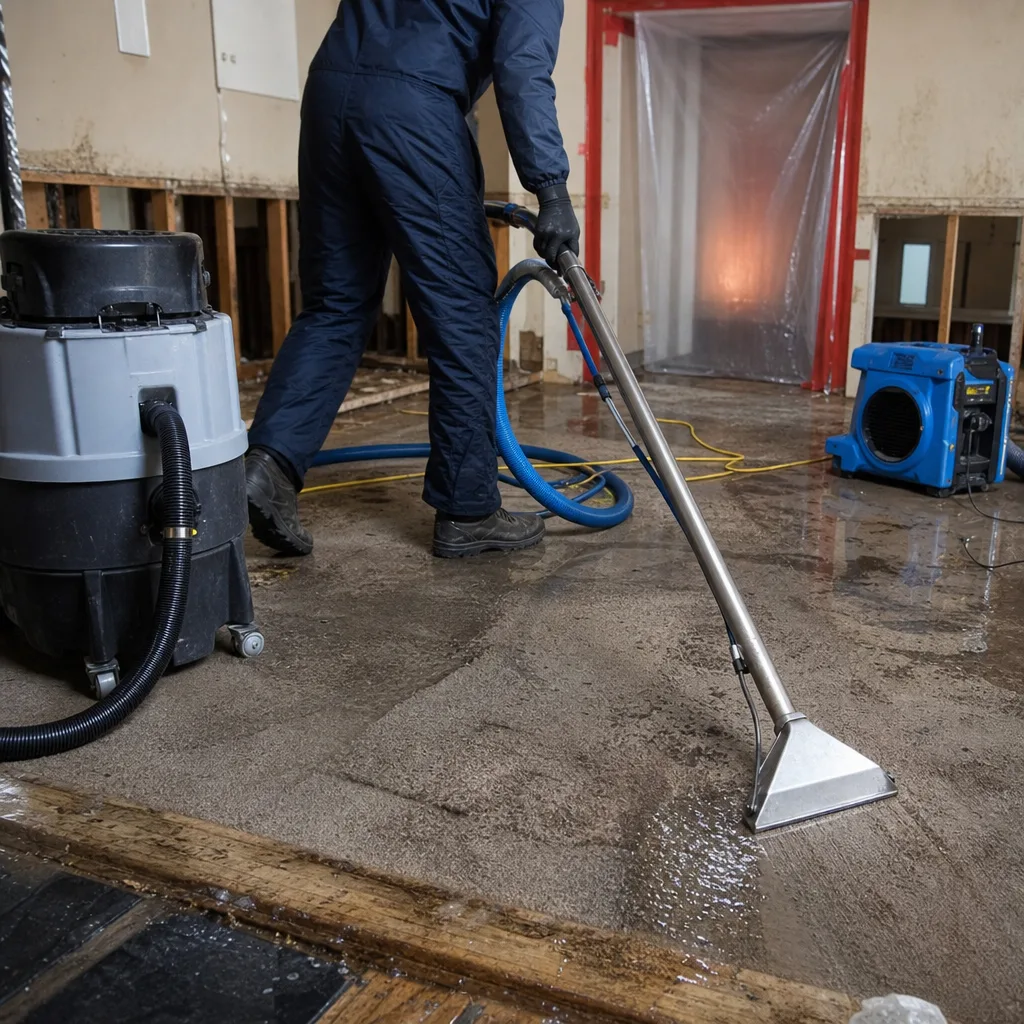
Flood Cleanup
Whether it’s a coastal surge that pushed harbor water into a Battery Park City basement or a nor’easter that overwhelmed a Financial District roof drain, the cleanup path starts with Category 3 containment and decontamination. We remove contaminated materials, disinfect surfaces, neutralize salt residue, and run HEPA air scrubbers until the air is clean enough to work in. Then we dry, log, and document for your carrier. Curt Bowman’s crews have handled enough Lower Manhattan surge events to know that the carrier will ask about salt contamination specifically, so we document it from the first hour.
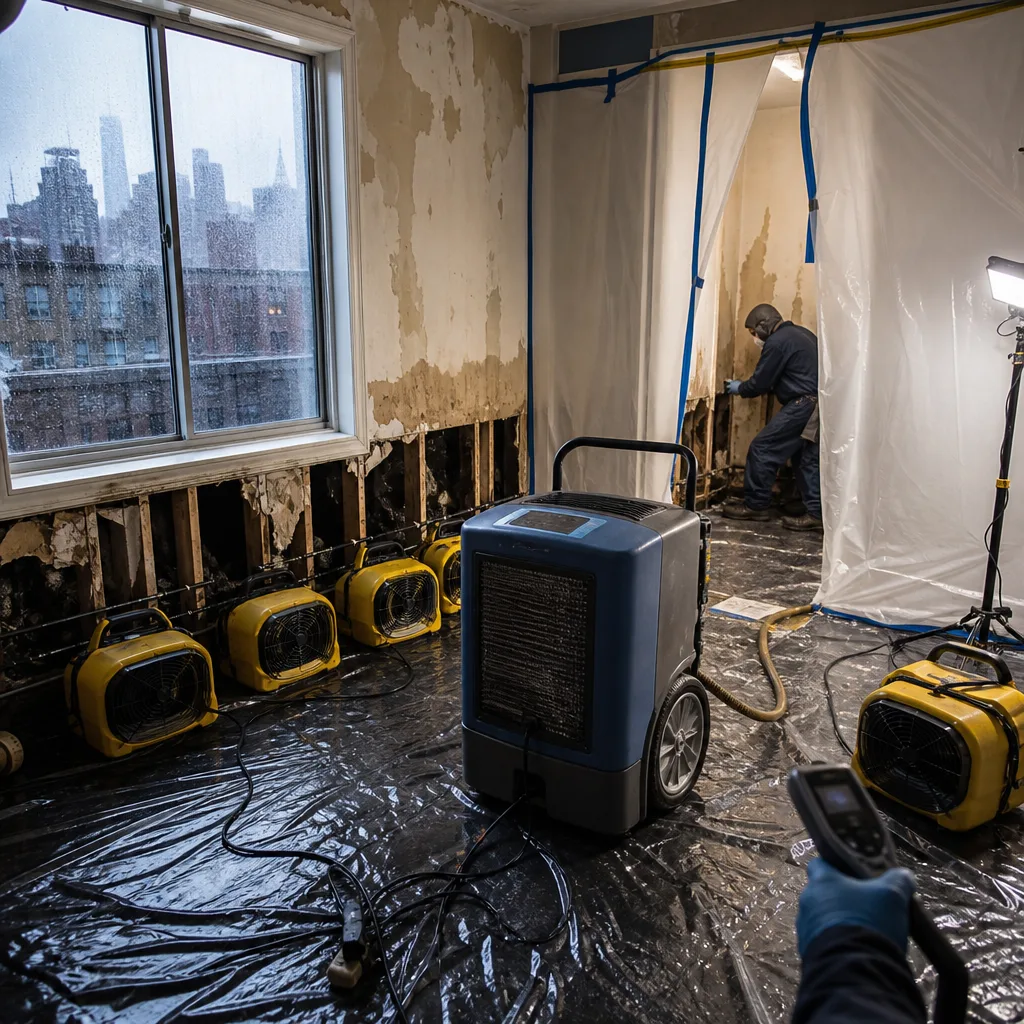
Burst Pipe Restoration
A frozen riser in a pre-war Financial District building or a failed supply line in a Tribeca loft spreads water through ceiling cavities, wall chases, and electrical boxes faster than most people imagine. We trace the water path with thermal imaging, extract what’s pooled, and dry the cavities with Injectidry systems that reach inside walls without tearing out every surface. That matters in Lower Manhattan, where rebuilding a lath-and-plaster wall in a landmark building is not a weekend project.
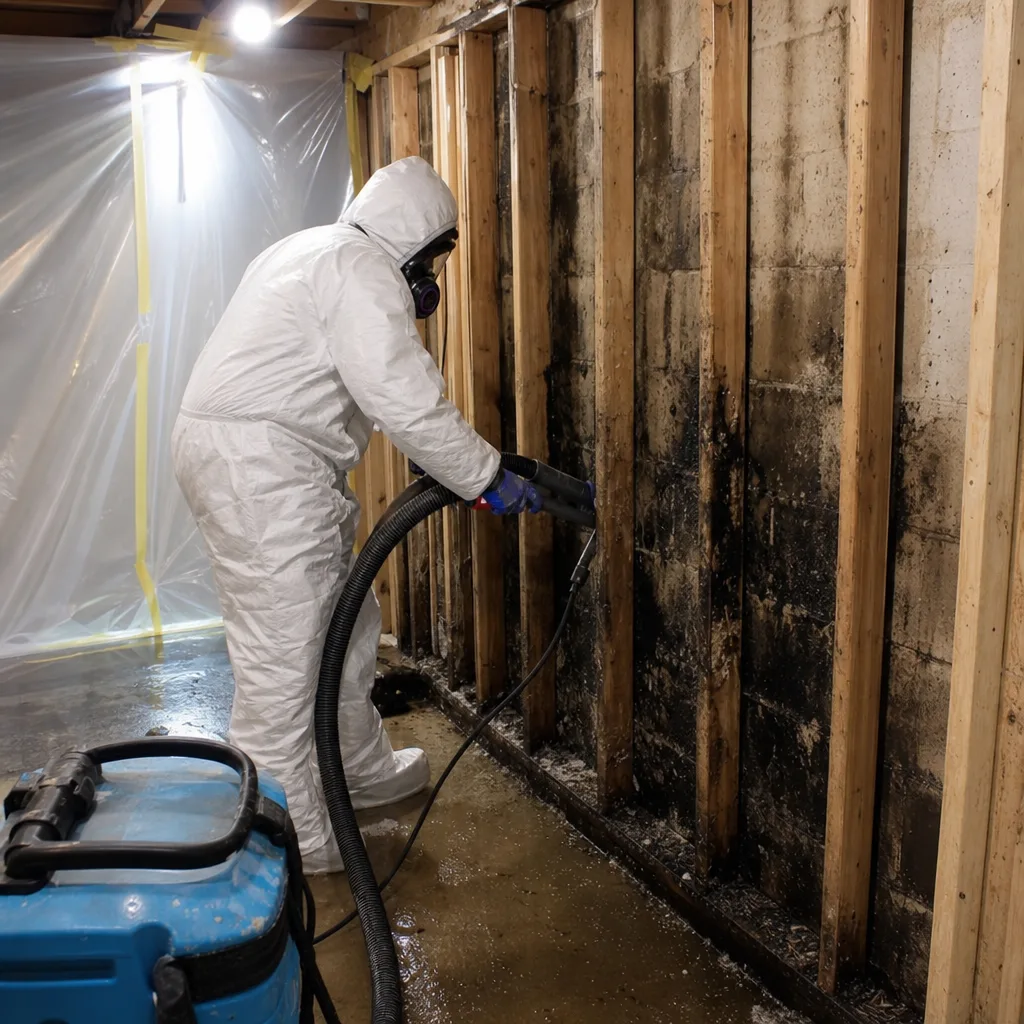
Basement Water Removal
In Lower Manhattan, “basement” often means a sub-basement below the water table, holding a building’s boilers, elevator machinery, and main electrical gear. Removing water from those spaces is only the first thirty minutes of the job. The real work is drying the concrete and steel, neutralizing any salt contamination, and documenting everything for the adjuster before corrosion or mold gets a foothold.
What happens when you call
- 1
A real person answersNo phone trees - you reach a local pro.
- 2
You get an upfront price rangeHonest numbers before anyone is dispatched.
- 3
A background-checked tech heads outLicensed & insured, dispatched right away.
- 4
You approve before work beginsNothing starts until you say go.
Water Damage Restoration Costs in Lower Manhattan, NY
Let’s talk numbers. In Lower Manhattan, a straightforward Category 1 water extraction from a loft or apartment typically runs $2,800 to $6,500, depending on square footage, access, and how far the water traveled. Structural drying with professional equipment and daily monitoring adds $1,200 to $4,000, with tight-access buildings on the higher end because setup takes longer and equipment runs longer. A Category 3 saltwater event in a sub-basement mechanical room is a different job entirely: containment, chemical neutralization, and coordination with elevator or electrical contractors push the range to $8,000 to $30,000 or more, and that’s before any rebuild. What moves the price? Access. A narrow Tribeca stairwell or a freight-elevator booking delay extends equipment setup time. Contamination level. Category 3 costs more because safety protocols and disposal costs are real. And salt. Chloride neutralization and corrosion treatment are line items that only exist in coastal surge losses. The free visual inspection gives you a firm written scope and a line-item quote before any work starts, so there are no surprises on the bill. Call (518) 314-5660 and we’ll walk you through it honestly.
We Also Serve Cities Near Lower Manhattan
Our crews run throughout the surrounding area daily, including Midtown Manhattan, Midtown West, Murray Hill, and Washington Square. If you’re a few blocks north of Canal, you’re still inside our response radius, and you’ll get the same live answer, the same 45-minute arrival commitment, and the same written scope before we start.
Serving Lower Manhattan, NY - Our Local Coverage Area
We’re based in the Lower Manhattan area and know this community well. Use the map below to see our service coverage - if you’re nearby, we can almost certainly help.
Lower Manhattan Water Damage Restoration Questions, Answered
How does saltwater from a Lower Manhattan storm surge affect drying and restoration differently than freshwater?
Saltwater leaves chloride residue in every material it touches, and that residue keeps corroding metal, concrete, and electrical components for months after the surface feels dry. Freshwater drying stops at the moisture reading; saltwater restoration requires chemical neutralization of wall cavities, conduit, panels, and metal framing before anyone closes the wall. Skip that step and the corrosion shows up weeks later as a breaker failure or a hydraulic elevator fault. Call (518) 314-5660 for a saltwater-specific assessment.
Do I need to worry about Category 3 water in a Battery Park City basement after a minor nor’easter?
Yes. Even a 4-foot surge at the Battery can push harbor water into sub-basement mechanical rooms through drain backflow or groundwater intrusion. That water is Category 3 by definition because it comes from the harbor and whatever the harbor carries. Treating it as clean water and running fans is a known failure mode in this neighborhood. It needs containment, decontamination, and salt neutralization. We’ll tell you honestly whether your loss requires that path.
What’s the biggest risk if elevator pits or electrical rooms in a Financial District high-rise flood with saltwater?
The biggest risk is re-energizing the systems too soon. Chloride contamination inside hydraulic components, conduit, and switchgear starts corrosion reactions that don’t show themselves for weeks. The equipment comes back on, runs fine for a month, then fails. Proper saltwater restoration means the restoration crew and the elevator or electrical contractor coordinate chemical neutralization before re-energizing. We’ve done this on Battery Park City tower losses, and the coordination is as important as the drying.
Can your drying equipment fit into a narrow Tribeca loft or cast-iron building basement?
Yes. We run compact B-Air and XPOWER air movers and Injectidry wall-cavity systems precisely because Lower Manhattan access is tight. Standard big-box drying equipment gets stuck in a Tribeca stairwell or won’t pass through an alley-load door. Our crews know which units fit through which openings, and we plan the equipment layout before we arrive.
How quickly can you respond to a burst pipe in a Lower Manhattan residential tower, given street parking and access constraints?
Our crews stage in Lower Manhattan and typically reach a residential tower within 45 minutes of your call, day or night. We know the freight elevator booking requirements for most buildings in Battery Park City, Tribeca, and the Financial District, and our techs carry the access documentation those buildings require. A burst pipe on the 20th floor is not a reason to wait; it’s a reason we plan the route before we leave.
Will insurance cover water damage restoration in Lower Manhattan?
Most standard policies cover sudden and accidental water damage, like a burst pipe or an appliance failure, and we bill your carrier directly. Flood damage from a storm surge is a separate conversation because it requires a flood policy, and Lower Manhattan’s FEMA Zone AE and VE designations mean most mortgage lenders require one. Our team documents the loss from the first hour and coordinates directly with your adjuster, whether it’s a plumbing loss or a surge claim. Call (518) 314-5660 and we’ll help you understand what your policy covers before any work begins.
How long does structural drying take in a Lower Manhattan sub-basement?
Most properly contained structural drying jobs complete in 3 to 5 days. A salty sub-basement with tight access may run longer, because the concrete and steel hold moisture longer than wood framing does, and we don’t call it dry until the readings say dry and the chloride tests come back clean. We log every reading daily and hand that log to you and your carrier.
What should I do in the first 30 minutes after discovering water damage in Lower Manhattan?
Shut off the water source if you can do so safely, kill power to the affected area at the breaker, and call (518) 314-5660. Don’t walk through standing water if it might be in contact with electrical systems or if it came from outside. Move what you can to dry ground. Every minute of standing Category 3 water expands the contamination footprint and the rebuild scope. A live dispatcher will talk you through the first steps and get a crew moving.
Done right, and backed in writing. In a Battery Park City residential tower basement, our crew found the elevator pit flooded with Category 3 saltwater after a 4-foot surge. We coordinated with the elevator contractor to neutralize salt residue before re-energizing hydraulic systems, then ran Dri-Eaz dehumidifiers and air movers with containment barriers to restore the mechanical room to pre-loss condition. That’s the Keystone Standard: the 90-Day Done Right Promise, given in writing, no arguing. If it’s not done right, we make it right. Serving Lower Manhattan and the surrounding neighborhoods with live dispatch, uniformed and background-checked technicians, and direct insurance billing, every hour of every day.
Written by Curt Bowman, Owner at Floodline Restoration Co., serving Lower Manhattan and the greater New York City area.