
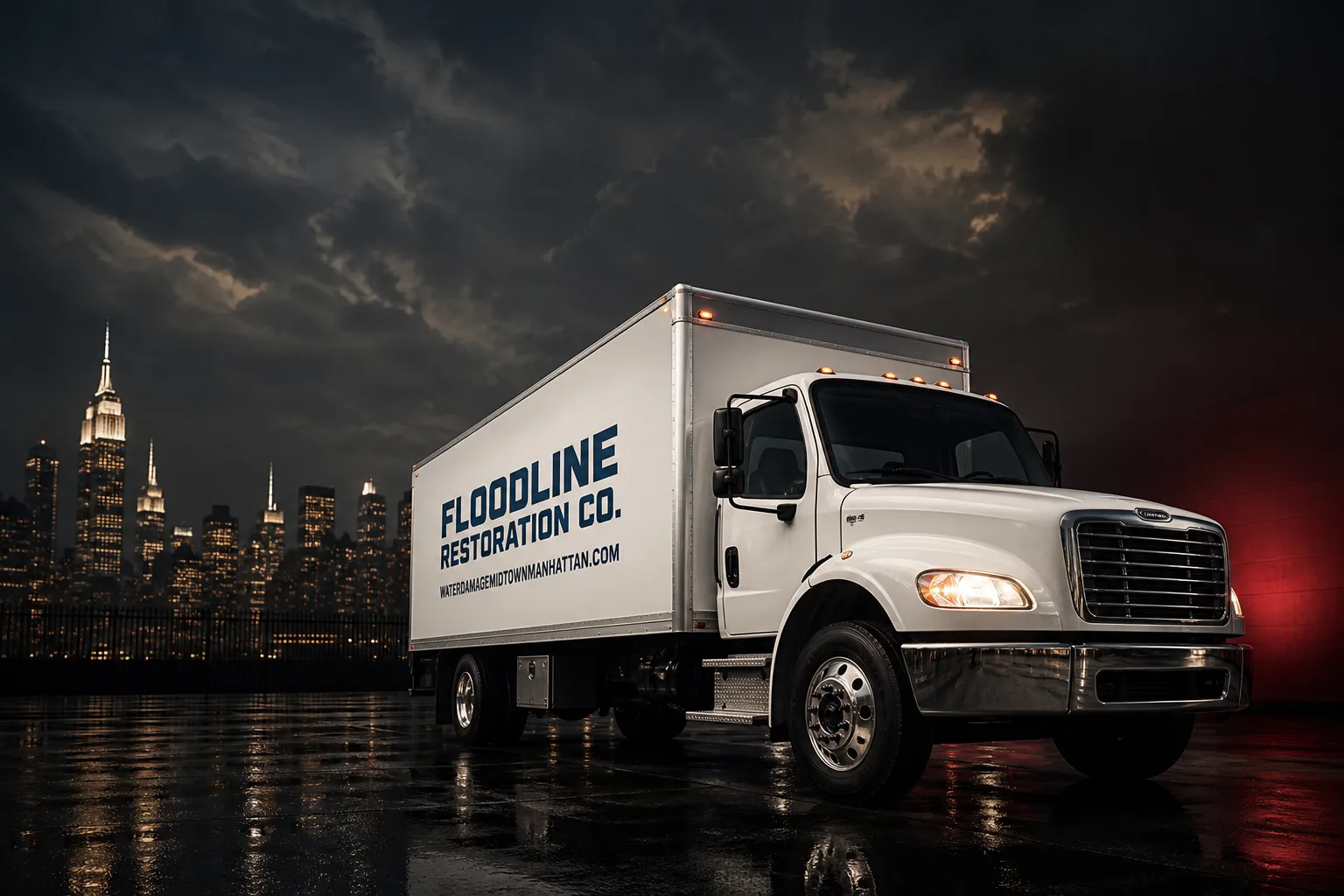
Free visual inspection and a written scope of work before any mitigation begins - photos, moisture readings, and drying logs go in your claim file
The scope we write is the scope we bill. Anything new gets shown to you, in writing, before we touch it.
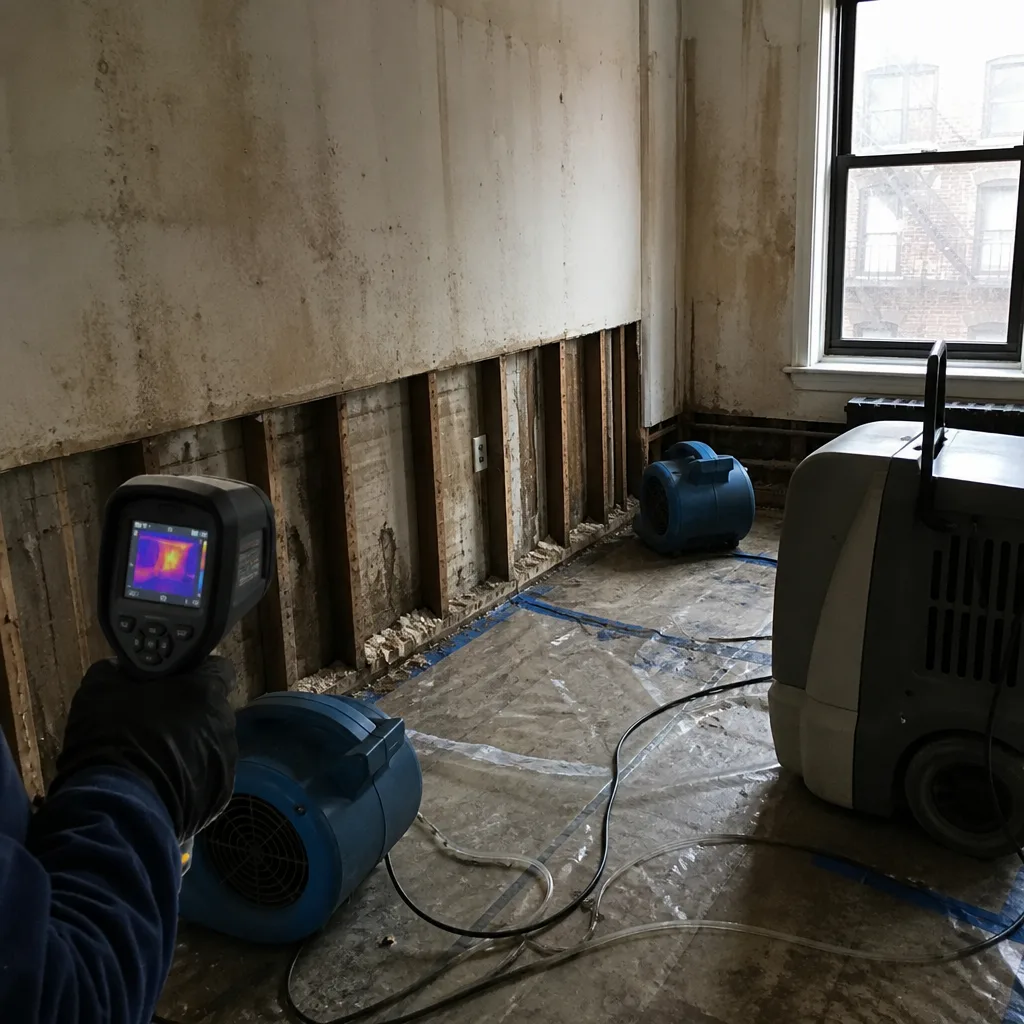 Before
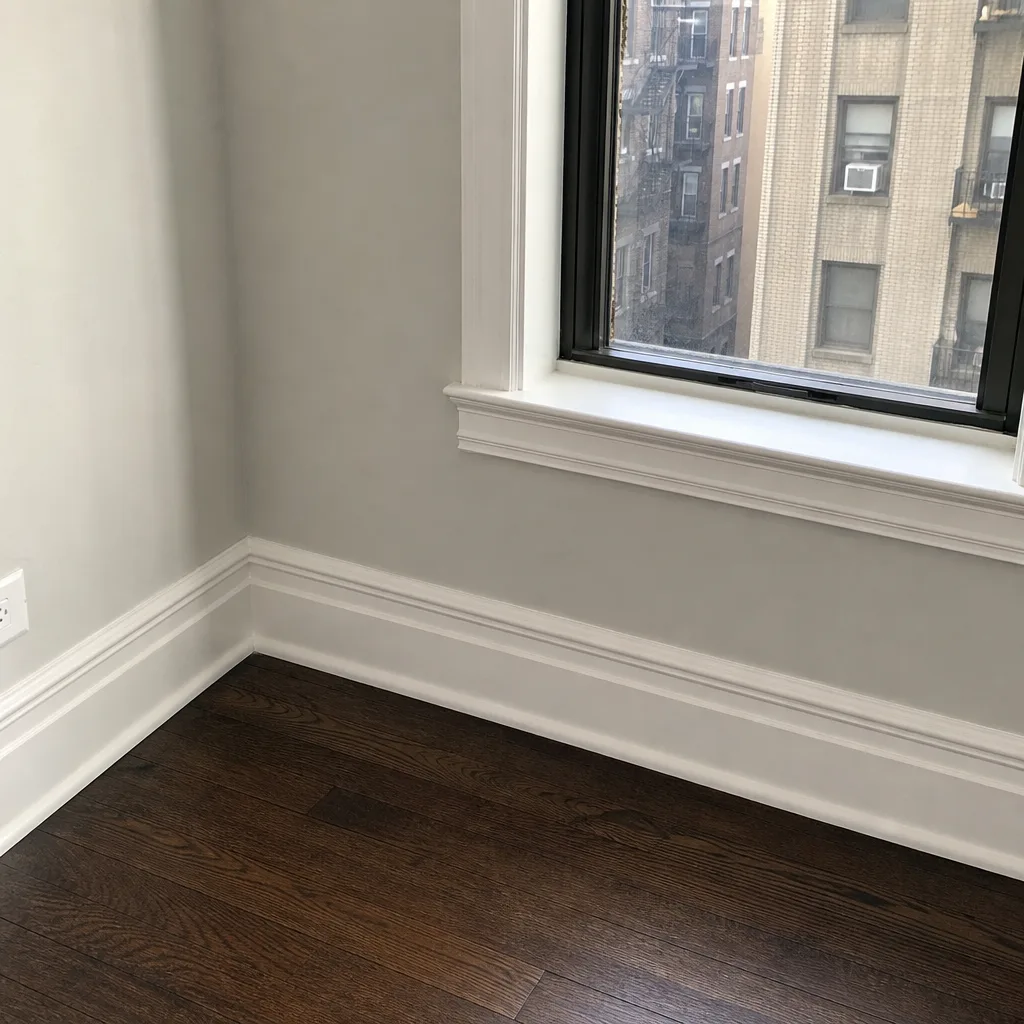 After
After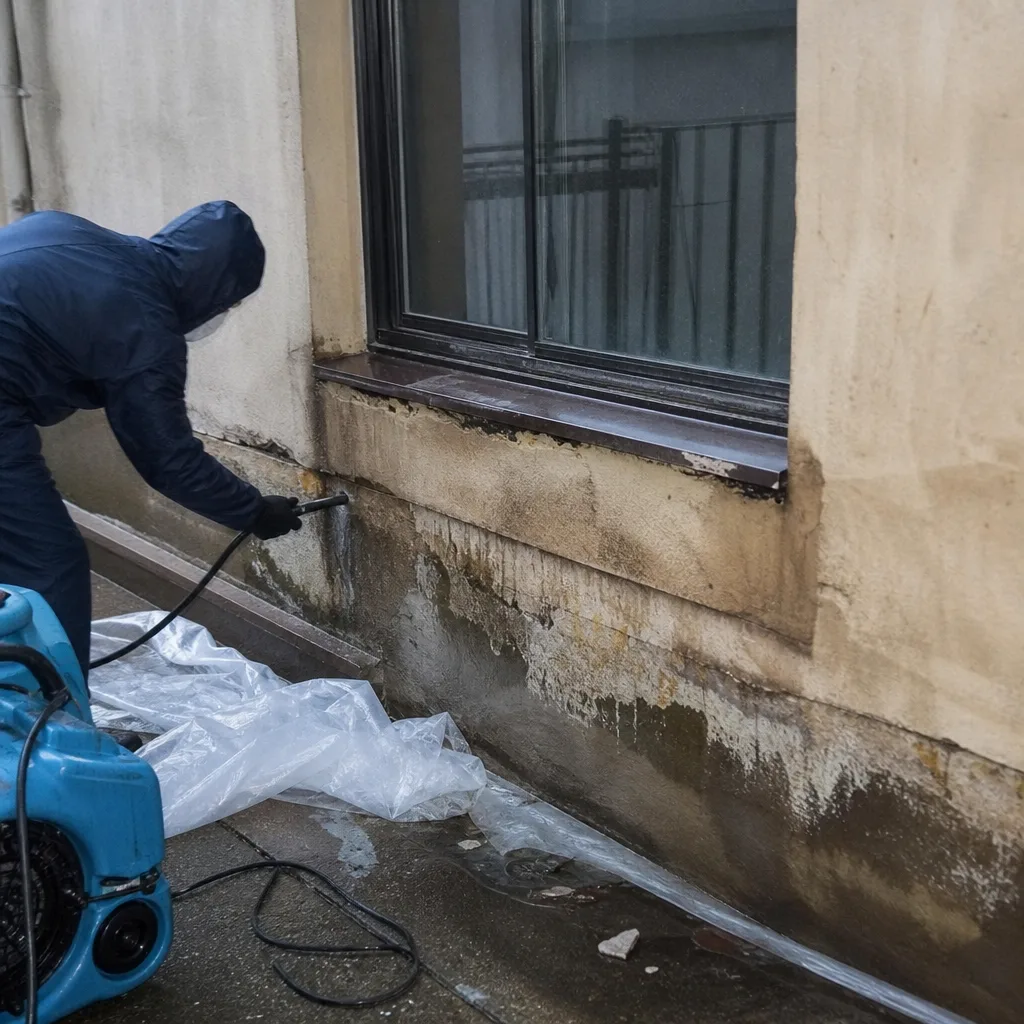 Before
 After
After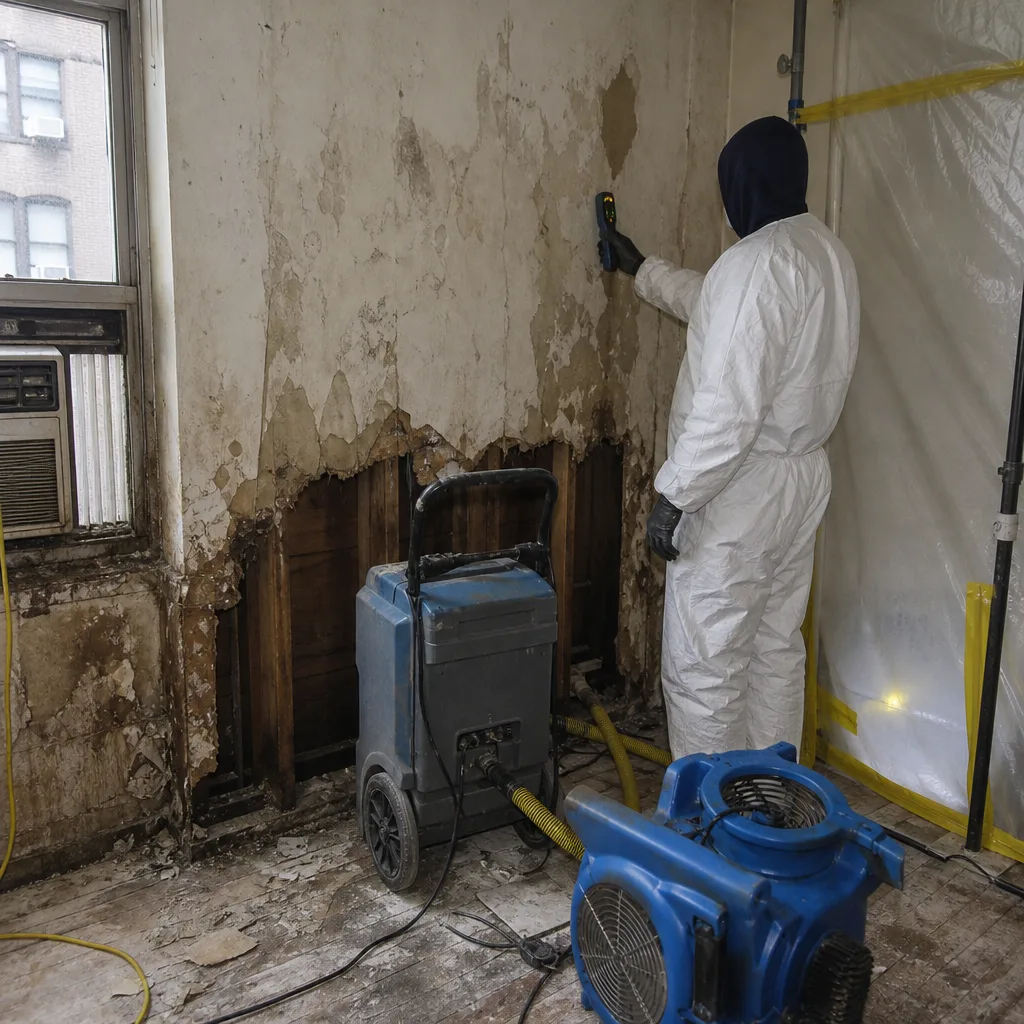 Before
 After
After24/7 Emergency Storm & Disaster Restoration in Lower Manhattan
Storm and disaster restoration in Lower Manhattan typically starts with one phone call, and the first decisions you make after a flood, nor’easter, or wind event decide whether you’re looking at days of cleanup or months of reconstruction. Saltwater intrusion, sub-basement flooding, and storm surge damage in Battery Park City and the Financial District need a crew that knows what salt does to elevator pits, switchgear, and cast-iron-era framing once the water recedes. We answer live at (518) 314-5660, 24 hours a day, every day. A Floodline Restoration Co. crew reaches Lower Manhattan properties quickly, begins emergency extraction and stabilization the same visit, and gives you a free visual inspection with a written scope before any work starts. The first hour after a surge or a windblown window matters because saltwater keeps corroding, moisture keeps wicking, and Category 3 water keeps breeding mold even after the floor looks dry.
Understanding Storm & Disaster Restoration Severity in Lower Manhattan Properties
Lower Manhattan’s building stock makes storm damage restoration a different animal than it is in the outer boroughs or inland New Jersey. The neighborhood’s converted cast-iron lofts in Tribeca, pre-war masonry towers in the Financial District, and Battery Park City’s landfill-based residential high-rises all share one vulnerability: deep sub-basements that sit at or below the local water table. When a nor’easter pushes a 4-to-5-foot surge into those sub-basements, the water that arrives is Category 3 - pathogen-laden saltwater mixed with harbor sediment, sewage, and fuel residue. That means drying alone won’t cut it. Contaminated drywall, insulation, and any porous material below the water line must be removed and replaced. Concrete and steel need chemical salt neutralization before moisture mapping can even be trusted, because salt reads differently on moisture meters and keeps absorbing humidity for months. We classify every affected area by water category, map the full moisture perimeter with hygrometers and thermal imaging, and document the salt contamination pathway from the floodline down through the fill. That’s the difference between a restoration that holds and one that fails in stages, weeks after the storm left town.
Why Lower Manhattan Property Owners Choose Floodline Restoration Co.
- 45-minute response commitment: When you call us from a Battery Park City lobby with water rising in the sub-basement, we commit to having a crew en route within 45 minutes, not a callback window. Live dispatch means a real person confirms the address and rings the nearest crew.
- Live answer, 24/7: You’ll never reach a recording at 2 a.m. A human dispatcher picks up, takes the address, and starts moving a crew toward Lower Manhattan immediately. No answering service, no voicemail queue.
- IICRC-certified crews: Our technicians carry IICRC WRT (Water Damage Restoration), FSRT (Fire and Smoke Restoration), and AMRT (Applied Microbial Remediation) certifications. They’re background-checked and uniformed, and they’re the same people who handle your moisture readings from day one through final clearance.
- Free visual inspection: Before any work is authorized, we walk the property with you, mark the waterline, check for hidden salt retention in wall cavities and mechanical spaces, and explain what we’re seeing in plain language.
- Direct insurance billing: We bill your carrier directly, provide photo documentation from the first hour, and coordinate with your adjuster so you’re not the one carrying paperwork between Floodline and the insurance company.
- One team, extraction to reconstruction: The same Floodline Restoration Co. crew that extracts, dries, and neutralizes is the crew that rebuilds. No mid-job handoff to a third-party contractor, no inherited crew you’ve never met.
Our Storm & Disaster Restoration Process
Inspection & Assessment
We start by tracing the water’s path: where it came in, where it traveled, what it wicked into. In Lower Manhattan sub-basements, that means checking the fill line on foundation walls, the salt crust on electrical conduit, and the mechanical rooms around elevator pits. Thermal imaging and penetrating moisture meters find water hiding inside concrete and behind cast-iron columns before we move a single wall panel.
Extraction & Stabilization
Category 3 saltwater comes out first, using truck-mounted and portable extraction units. We remove saturated drywall, insulation, carpet, and any porous material that absorbed harbor water. Simultaneously, we stabilize the building envelope: emergency board-up for broken windows, roof tarping for wind-damaged sections, and temporary power shutdowns if switchgear took on water.
Drying & Dehumidification
Professional-grade Dri-Eaz and Phoenix dehumidifiers and centrifugal air movers create a contained drying environment. In Lower Manhattan’s deep sub-basements, we pair mechanical dehumidification with in-place concrete drying systems to pull moisture out of the fill and slab. Daily moisture readings are logged until every area reaches the dry standard.
Cleaning & Sanitization
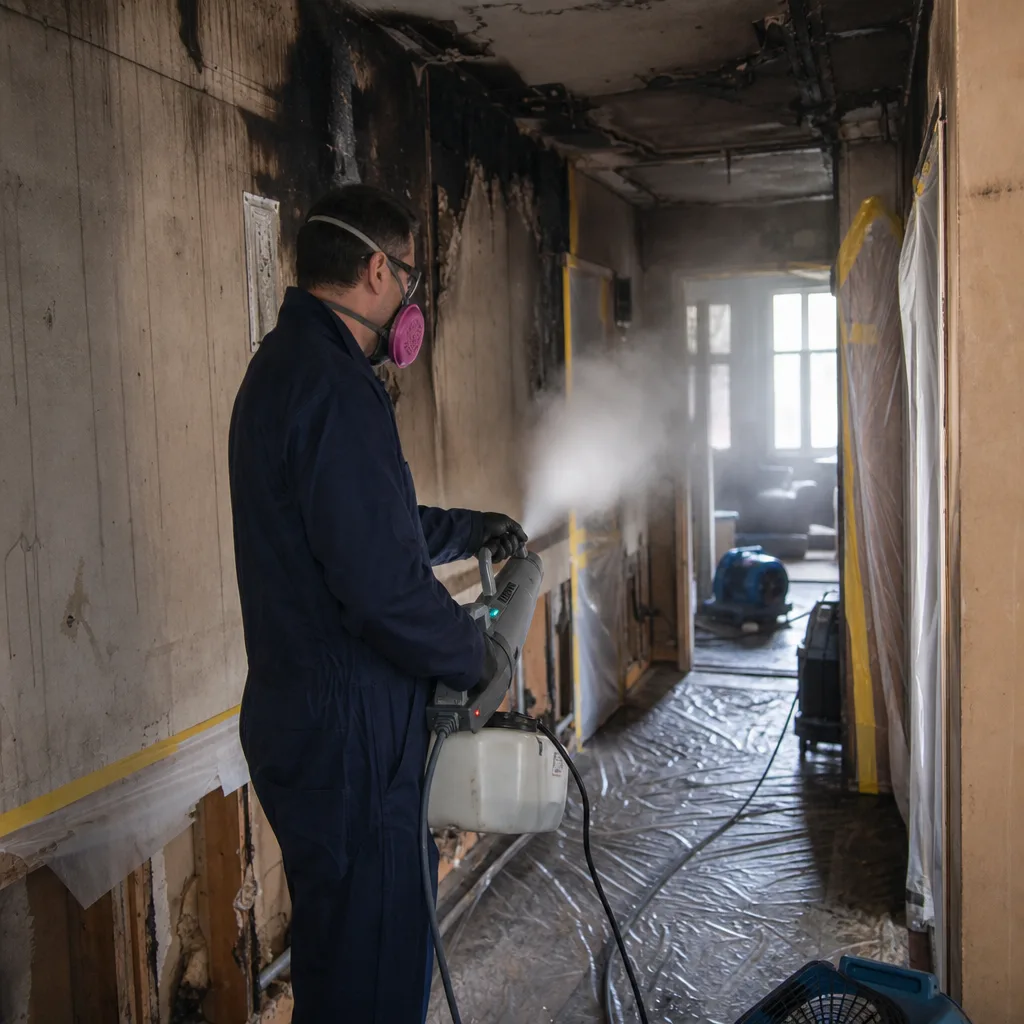
After drying comes chemical salt neutralization. Salt residue left in wall cavities, panel boxes, and HVAC ducting keeps corroding metal for months after the visible water is gone. We treat all salt-exposed surfaces with neutralizers designed for post-flood corrosion control, then apply antimicrobial agents across structural framing and mechanical spaces.
Specialty Treatment: Salt & Corrosion Control
This is the step that matters most in Lower Manhattan and nowhere else in the city. Elevator pits in Battery Park City and Financial District towers need salt neutralization coordinated with the elevator contractor before hydraulic or traction systems are re-energized. Switchgear contacts, bus bars, and conduit get inspected, cleaned, and corrosion-inhibited. If electrified equipment is re-energized with salt residue on the contacts, you’ll see arc faults and premature failures weeks later.
Repairs & Restoration
We rebuild what needed removing: drywall, flooring, trim, and occasionally entire mechanical rooms. Our reconstruction crews handle framing, insulation, finish carpentry, and electrical coordination. The final walkthrough includes a written moisture log and our 90-Day Done Right Promise, handed to you in writing.
Need Emergency Storm & Disaster Restoration in Lower Manhattan Now?
Crews minutes away, answering live 24 hours a day. The sooner we start, the less it costs.
Working With Your Insurance Company
Insurance claims after a Lower Manhattan storm event hinge on documentation from the first hour. We photograph everything, room by room, including the waterline on the wall and the salt residue in the mechanical spaces, before any equipment is moved or wall panels removed. We provide your carrier with a line-item scope of work, moisture readings, and drying logs that show exactly what was done and why. Our team coordinates directly with your adjuster, schedules reinspections, and handles the paperwork flow so you’re not running point between your condo board, your carrier, and a restoration contractor. In the Financial District and Battery Park City, where building damage often involves multiple units and the co-op or condo association’s master policy, we’re used to the layered-coverage conversation and can help clarify which scope falls under your unit owner’s policy versus the building’s policy.
What We Provide Your Insurer
- Thorough documentation of the loss
- Photos of all damage, room by room
- Moisture readings and drying logs
- A detailed, line-item scope of work
- Direct coordination with your carrier
Built for Lower Manhattan’s Loss Calendar
Lower Manhattan’s storm damage season doesn’t follow one clean pattern. Late-summer and early-fall hurricane remnants push storm surge up the Hudson and East River, and when a nor’easter hits in February or March, the coastal geometry funnels water into New York Harbor from multiple directions at once. Battery Park City and the Financial District waterfront take the brunt of those surges first. Winter storms bring northeast winds that tear roof membranes and blow out windows on pre-war towers, then the January deep freeze bursts supply lines in converted lofts where 100-year-old plumbing runs through uninsulated exterior walls. Spring thaw and heavy rain push groundwater into sub-basements that sit below the water table, even without a coastal flood event. Every one of these has a specific restoration playbook, and in Lower Manhattan, the playbook starts with salt. The line the water left is where we start.
Storm & Disaster Restoration Across Lower Manhattan’s Neighborhoods
Response routes matter in Lower Manhattan, and the building type shapes the restoration. In Battery Park City, the residential towers built on compacted Hudson River fill take on saltwater in their sub-basement mechanical rooms during moderate nor’easters with just 4-to-5-foot surges. Those jobs are elevator pit coordination, switchgear salt neutralization, and deep concrete drying. In the Financial District, the converted commercial buildings and pre-war masonry structures hide boilers and electrical gear in basements that flood from both storm surge and groundwater intrusion. In Tribeca, cast-iron-era loft buildings with original timber framing and brick party walls wick moisture upward from flooded basements into 100-year-old floor systems - a drying challenge that requires injection drying through the original subfloor rather than surface treatment alone. Along Water Street and South Street, low-lying thoroughfares near the FDR Drive and the East River esplanade see street-level flooding that pushes water into building lobbies and service entrances. Our crews know which routes stay passable during a coastal event, which buildings have freight elevators large enough for our drying equipment, and which co-op boards need documentation before we can start extraction. That local knowledge saves hours on a job where hours matter.
Specialized Storm & Disaster Restoration Services We Offer in Lower Manhattan
Flood Damage Restoration
Floodwater in Lower Manhattan is almost always saltwater and almost always Category 3. We extract, classify, and map the full moisture perimeter, then run chemical salt neutralization alongside structural drying. Dri-Eaz and Phoenix equipment runs until daily readings hit the dry standard, and we hand you the moisture log.
Emergency Board-Up
When a nor’easter blows out a Financial District tower window or a Tribeca storefront’s glass, the opening has to be secured before rain, debris, or people enter. We install marine-grade plywood and weather-rated fastening systems within hours, sized to protect the opening until permanent glazing arrives.
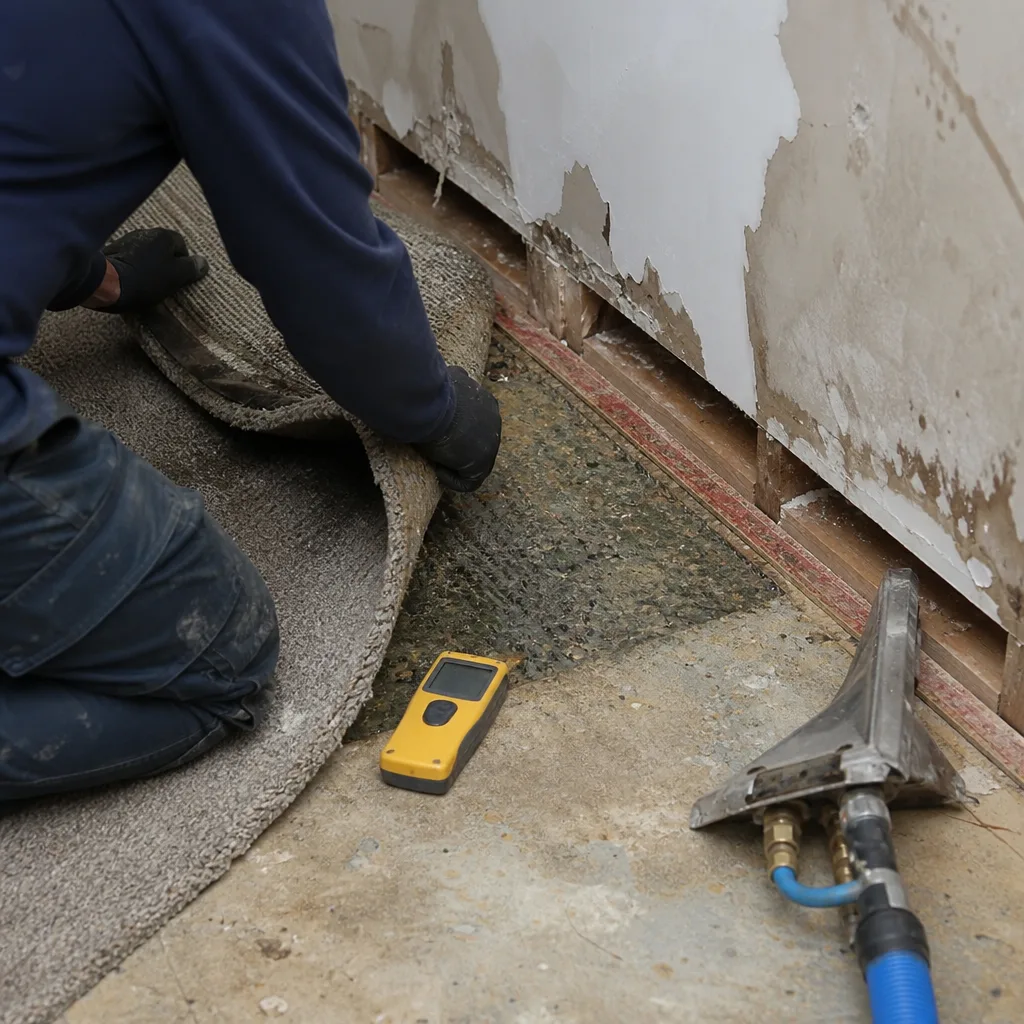
Debris Removal
Storm debris in Lower Manhattan means broken glass, torn roofing membrane, soaked wallboard from flooded basements, and - in coastal surge events - harbor sediment and driftwood pushed into building entries. We remove, bag, and dispose of all storm debris under proper waste protocols, and we document everything for the carrier.
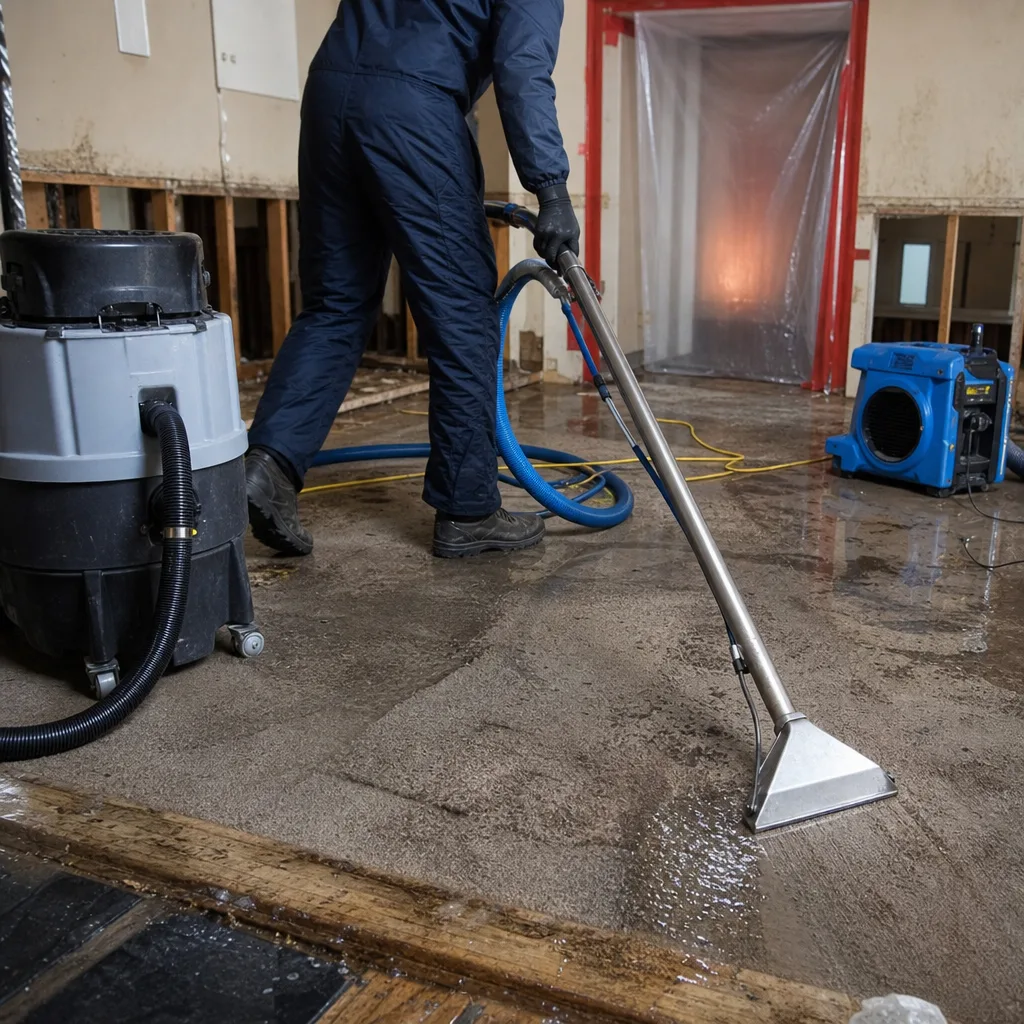
Roof Tarping
Wind-driven rain and lifted roof membranes are a year-round Lower Manhattan problem, especially on the older commercial-to-residential conversions. We install reinforced tarp systems anchored against Manhattan wind loads, not the lighter systems used inland. A properly tarped roof stops interior water migration while roofers are scheduled.
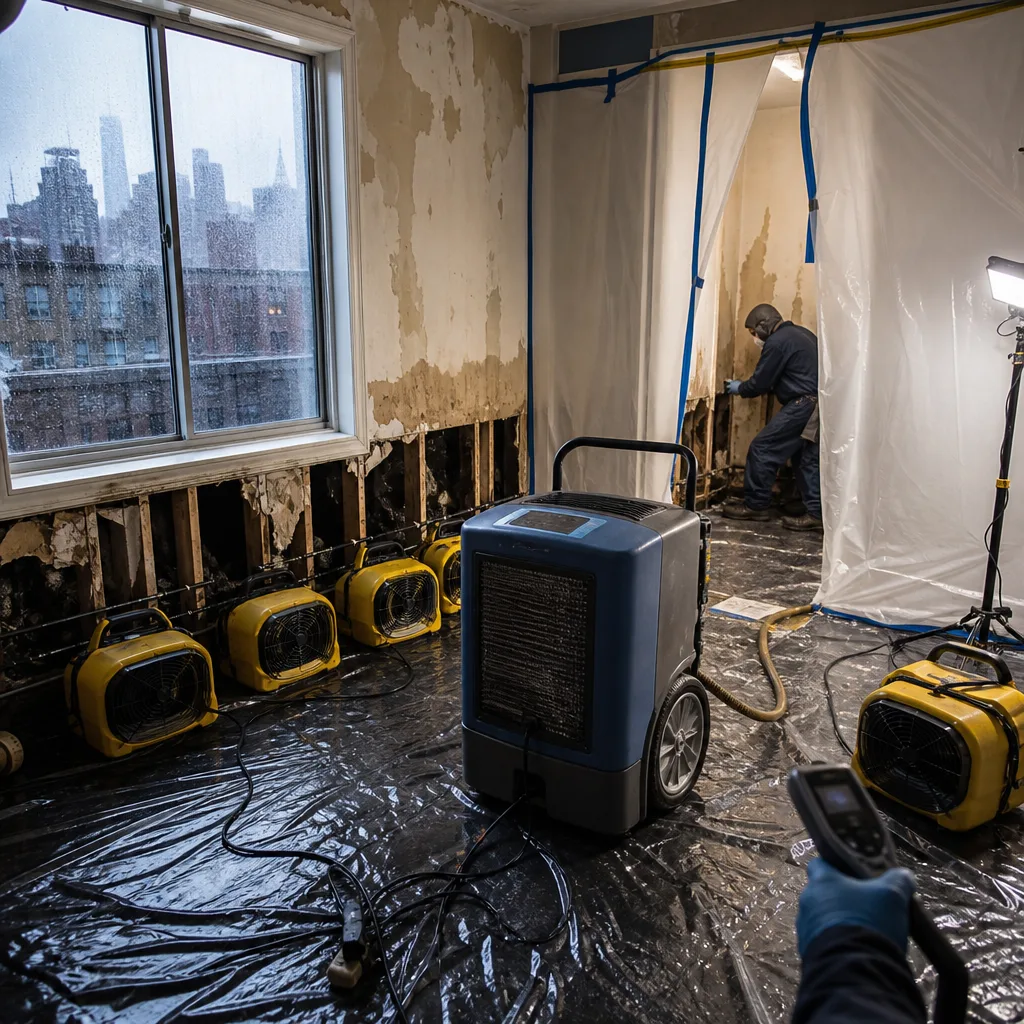
Wind Damage Repair
Wind damage in Lower Manhattan often shows up as cracked window seals, loosened masonry coping, and water driven through aging facade systems. We restore the interior damage that wind and driven rain create, then coordinate repairs with facade and window contractors so the building is sealed correctly from outside in.
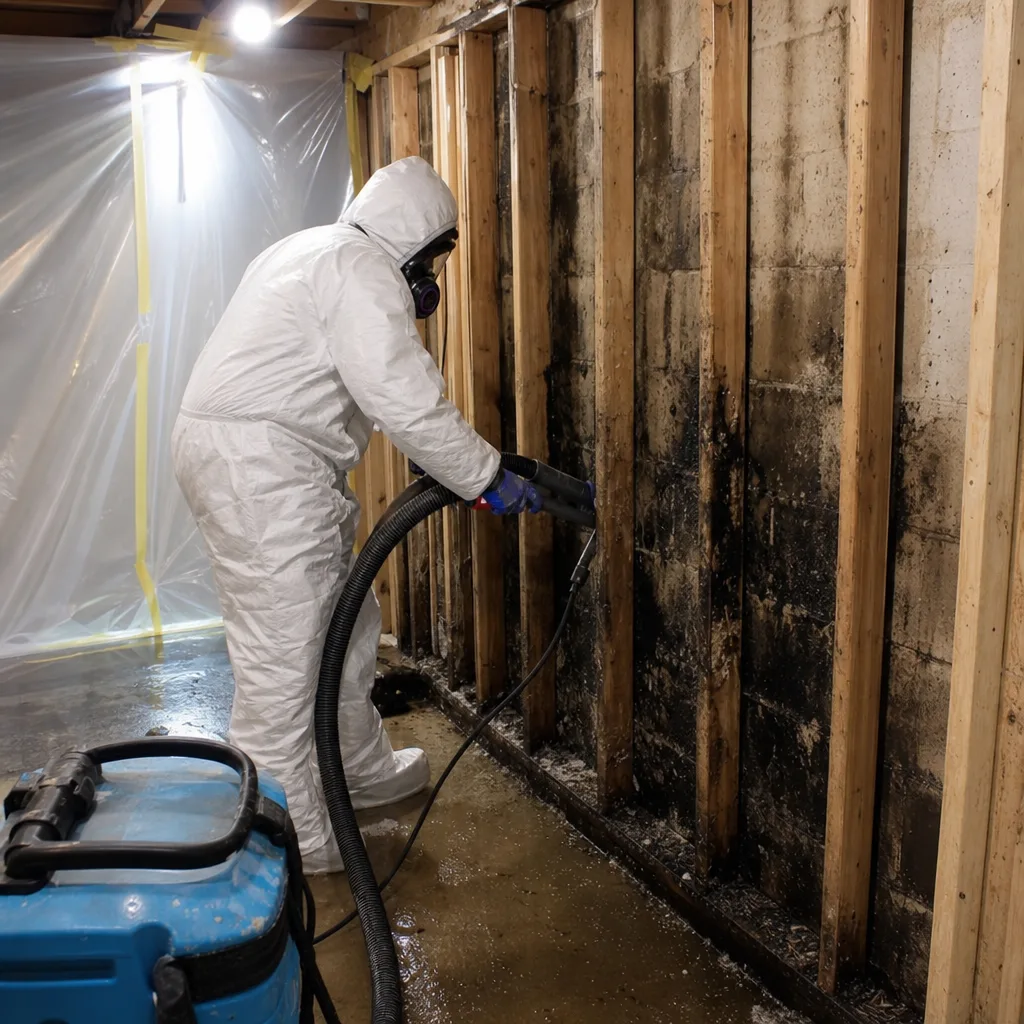
What happens when you call
- 1
A real person answersNo phone trees - you reach a local pro.
- 2
You get an upfront price rangeHonest numbers before anyone is dispatched.
- 3
A background-checked tech heads outLicensed & insured, dispatched right away.
- 4
You approve before work beginsNothing starts until you say go.
Storm & Disaster Restoration Costs in Lower Manhattan, NY
Storm and disaster restoration pricing in Lower Manhattan runs higher than the metro average for a simple reason: saltwater, sub-basements, and vertical logistics. A typical emergency board-up on a Financial District storefront or lobby window runs $400-$900, depending on opening size and access. Roof tarping on a cast-iron Tribeca loft or Battery Park City townhouse runs $600-$1,400, with anchor and wind-loading considerations. Flood damage restoration in a Lower Manhattan sub-basement - extraction, salt neutralization, structural drying, and Category 3 material removal - typically runs $3,200-$9,500, and elevator pit salt neutralization can add $1,500-$4,000 to the scope depending on how much equipment was submerged. Debris removal starts around $250-$600 for small events and scales with volume. Most storm surge events are insurance-covered, so the out-of-pocket piece is usually your deductible plus anything the carrier excludes. Our free visual inspection gives you a written scope and a firm number before any work starts, and we bill the carrier directly.
We Also Serve Cities Near Lower Manhattan
Floodline Restoration Co. crews serve all of Lower Manhattan and the surrounding neighborhoods: Storm & Disaster Restoration in Lower Manhattan, plus Midtown Manhattan, Midtown West, Murray Hill, and Washington Square. If you’re anywhere in the lower half of the island, we’re close by. One call to (518) 314-5660 gets a live person and a crew moving.
Lower Manhattan Storm & Disaster Restoration Questions, Answered
How does saltwater from a nor’easter differ from freshwater flooding in Lower Manhattan?
Saltwater flood damage requires chemical salt neutralization before any drying is considered complete, because salt residue left in concrete, electrical panels, and wall cavities keeps absorbing moisture and corroding metal for months after the water is gone. Freshwater flooding is primarily a drying and microbial remediation problem. Saltwater is a drying problem plus a corrosion problem, and skipping the corrosion control step means elevator failures, switchgear arc faults, and structural steel degradation emerge weeks after everyone thought the building was restored.
Can you restore a sub-basement mechanical room in Battery Park City after a 4-foot surge without replacing the elevator pit equipment?
Often yes. We coordinate with the elevator contractor to chemically neutralize salt residue from the pit, hydraulic lines, and electrical connections before the system is re-energized. If equipment was submerged in saltwater, it needs a certified electrical inspection and potentially component replacement. We were called to a Battery Park City residential tower after a nor’easter pushed a 5-foot surge into the sub-basement, flooding the elevator pit and electrical switchgear room with saltwater. Our crew coordinated with the elevator company to chemically neutralize salt residue from the pit and hydraulic lines before re-energizing, then set up containment, structural drying, and dehumidification with Dri-Eaz and Phoenix equipment, logging moisture readings daily until the space returned to pre-loss condition. Full replacement is only necessary when corrosion has already damaged components beyond safe operation.
When does FEMA’s Special Flood Hazard Area designation change how you handle a restoration in Lower Manhattan?
In FEMA-designated Special Flood Hazard Areas - Zones AE and VE, which cover large portions of Lower Manhattan - the restoration scope often includes structural elevation requirements, flood-resistant materials below the base flood elevation, and stricter documentation for the carrier. If your building sits in a Zone AE or VE floodplain, your restoration may need to include flood openings, flood-resistant insulation, and materials rated for flood exposure rather than standard drywall and fiberglass. That’s a code-driven scope difference most general contractors miss, and it directly affects what your insurance will cover.
How do you dry out a converted cast-iron loft in Tribeca after a storm surge where the floor is 100 years old?
We use injection drying through the original subfloor rather than surface treatment, because 100-year-old timber floor systems in Tribeca’s cast-iron lofts wick moisture differently than modern plywood subfloors. Penetrating moisture meters map the full depth of water migration through the original floor system, then we set up contained in-place drying with Injectidry panels and dehumidifiers sized to the room volume and the material’s moisture content. Forced air alone won’t reach the interior of a century-old heart pine floor system. The same logic applies to the brick party walls, which hold moisture and release it slowly.
What’s the biggest mistake Lower Manhattan building owners make after a nor’easter flood?
Skipping salt neutralization, assuming that visible water extraction plus air movement constitutes a full restoration. The concrete and fill in sub-basements hold salt for months, and once the dehumidifiers come out, the salt keeps pulling moisture back into the space. That’s how boiler rooms, elevator pits, and switchgear rooms in Battery Park City and the Financial District develop corrosion failures and secondary mold growth weeks after the storm. The second mistake is treating Category 3 harbor water as if it were freshwater - that leaves contaminated drywall and insulation in place, and mold follows within 48 hours. Call (518) 314-5660 before cutting corners; a free inspection costs nothing and tells you what actually needs doing.
How fast can Floodline Restoration Co. actually get to Lower Manhattan?
We commit to a 45-minute response from the moment you call. Our Lower Manhattan crews are already stationed in and around the area, and live dispatch means a human being confirms your address and sends the nearest available team immediately. In a coastal surge event when roads near South Street and the FDR are partially flooded, our crews know the alternate routes and which building service entrances are still accessible. Call (518) 314-5660 and a live person answers, day or night.
Will insurance cover saltwater flood damage in a Lower Manhattan sub-basement?
Coverage depends on your policy and whether you carry flood insurance, which most standard homeowners policies in New York exclude. If you have a FEMA-based flood policy or a broader windstorm rider, sub-basement flood damage is typically covered, including salt neutralization and elevator pit coordination when we document the necessity and provide the line-item scope. We bill your carrier directly, photograph everything in the first hour, and coordinate with your adjuster to make sure salt-specific line items don’t get denied because the adjuster isn’t familiar with coastal restoration protocols.
Can I stay in my Lower Manhattan apartment during storm damage restoration?
It depends on the extent of the damage and which systems are affected. Water damage isolated to a sub-basement mechanical room usually lets upper-floor units stay occupied while we work below. If a surge reached your unit through a broken window or roof opening, or if electrical systems were submerged, we may recommend temporary relocation until drying and safety inspections are complete. In co-op and condo buildings, the building’s engineer and your board often have final occupancy authority. We give you an honest answer after the first inspection, and we move fast so you’re back in place quickly.
Serving Lower Manhattan, NY - Our Local Coverage Area
We’re based in the Lower Manhattan area and know this community well. Use the map below to see our service coverage - if you’re nearby, we can almost certainly help.
Call Floodline Restoration Co. for Storm & Disaster Restoration in Lower Manhattan
When the water comes up in Lower Manhattan, call (518) 314-5660 and a live person answers. Floodline Restoration Co. has been restoring storm-damaged homes and buildings with the same Storm & Disaster Restoration team from first extraction through final rebuild, backed by our 90-Day Done Right Promise. We’re the company that hands you a written moisture log, coordinates with your elevator contractor and adjuster, and stands behind the result in writing. Storm damage on a narrow island at sea level demands a restoration crew that knows saltwater. We do, because we work in Lower Manhattan every week. Call us today for a free inspection and a firm, written scope before work starts. Done right, and backed in writing.
Written by Curt Bowman, Owner at Floodline Restoration Co., serving Lower Manhattan with storm and disaster restoration since 2010.