
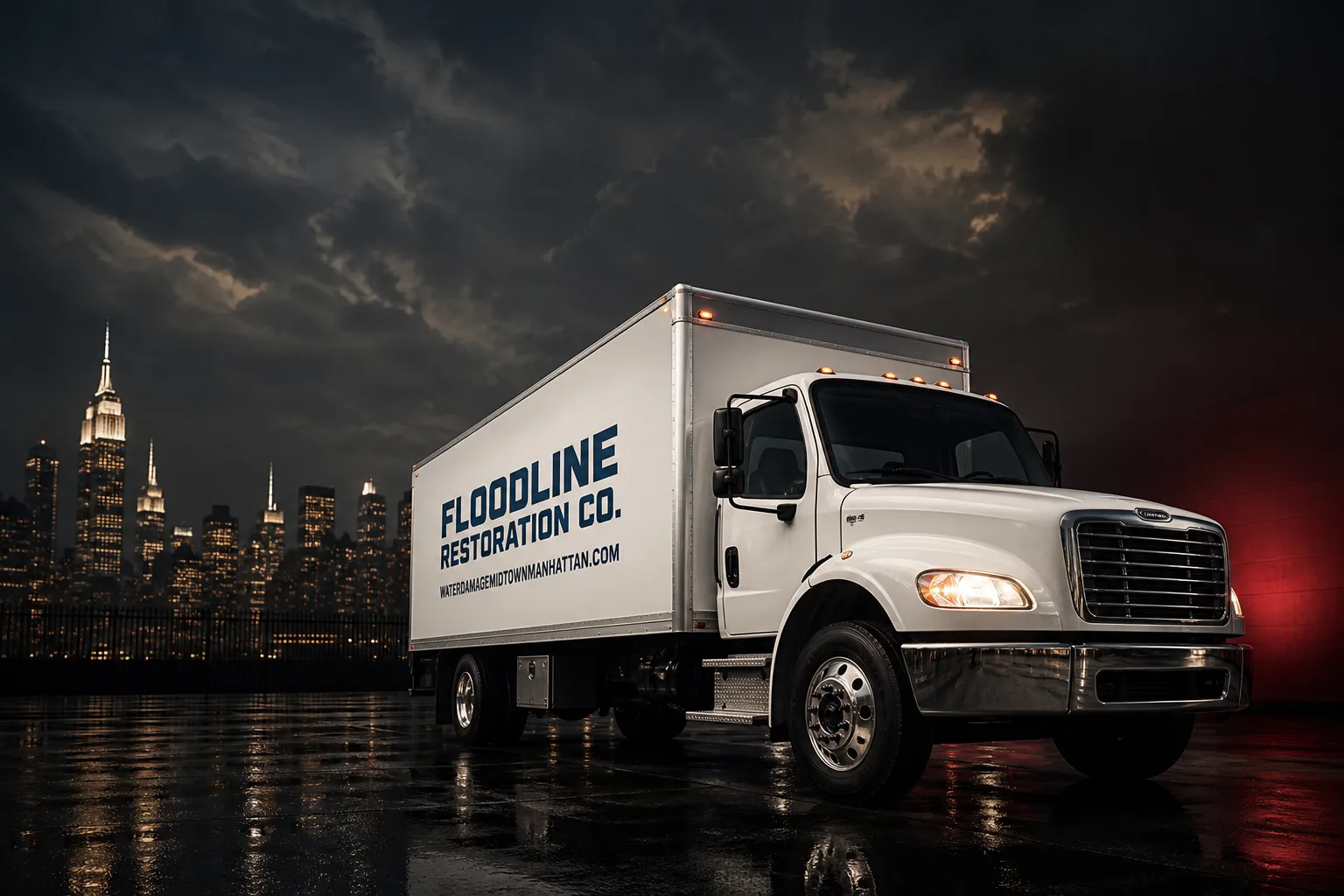
Free visual inspection and a written scope of work before any mitigation begins - photos, moisture readings, and drying logs go in your claim file
The scope we write is the scope we bill. Anything new gets shown to you, in writing, before we touch it.
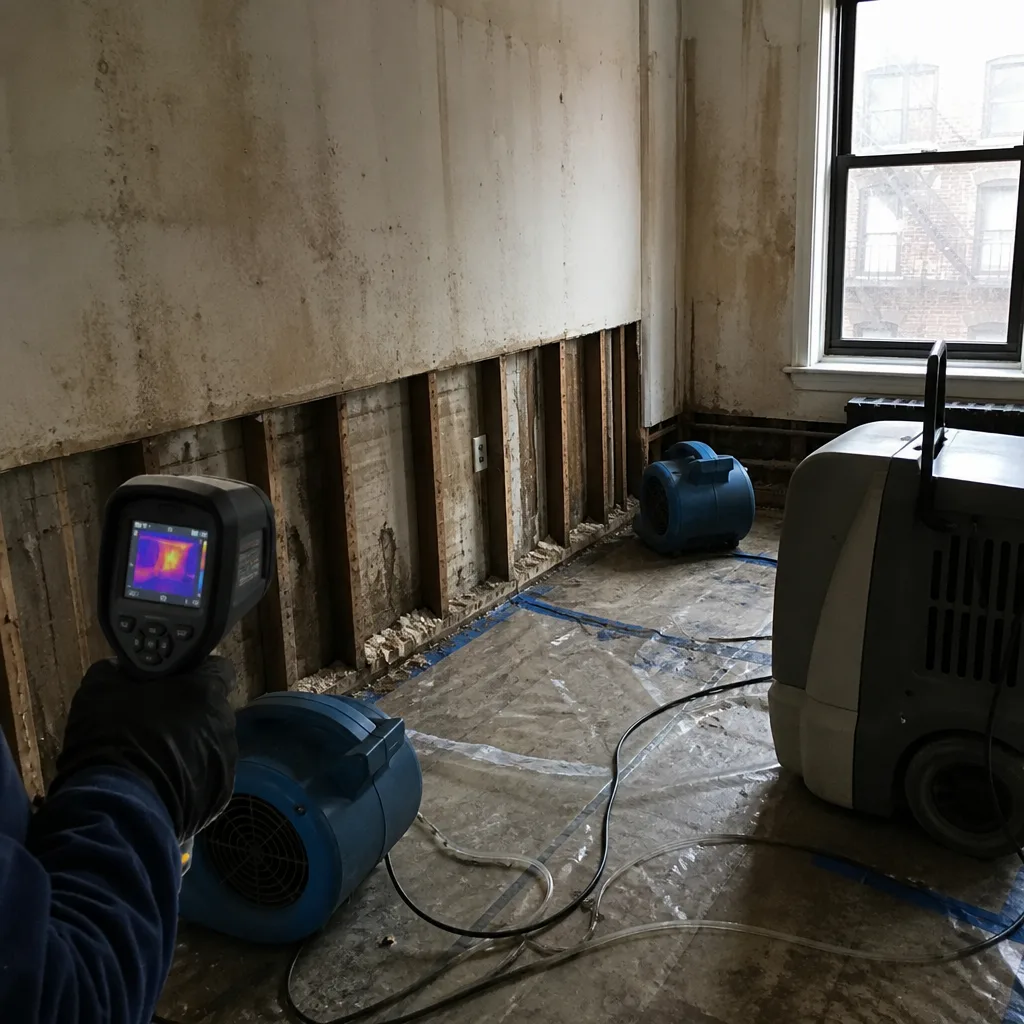 Before
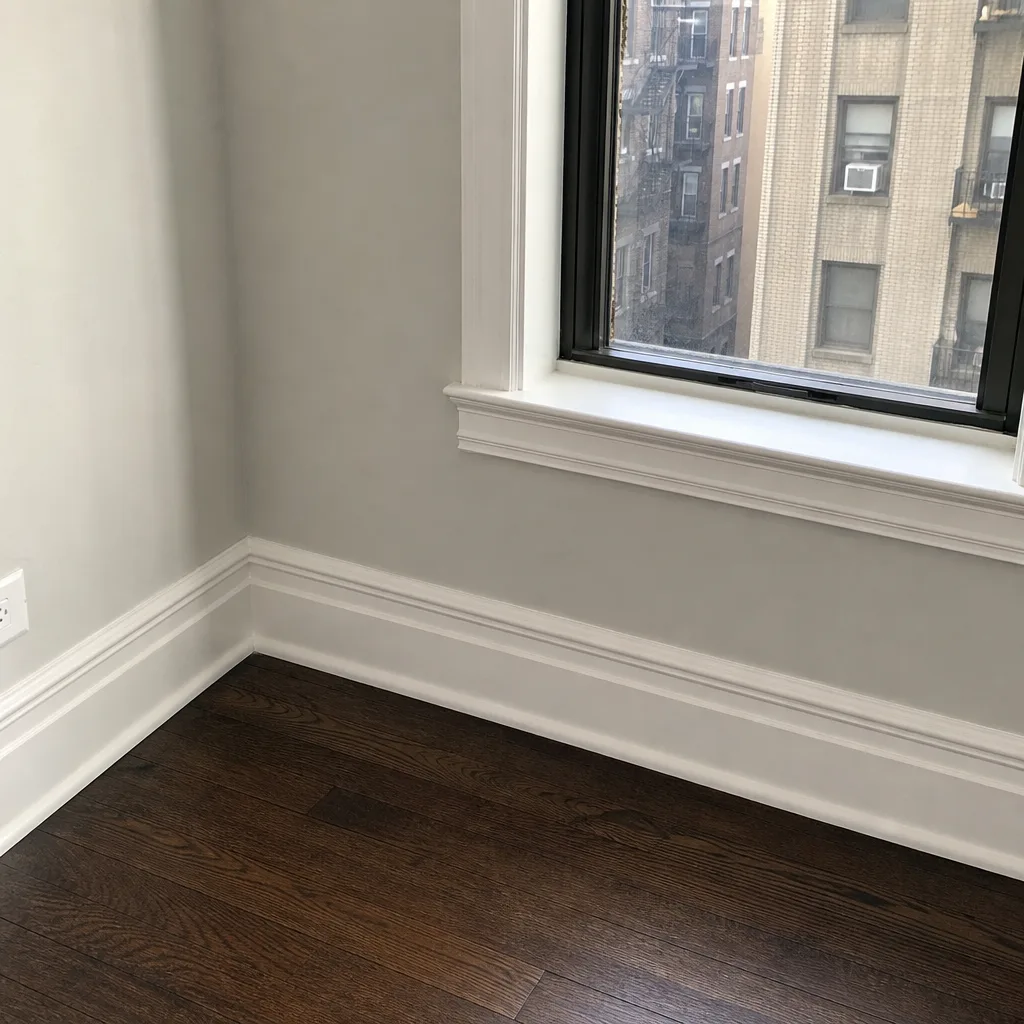 After
After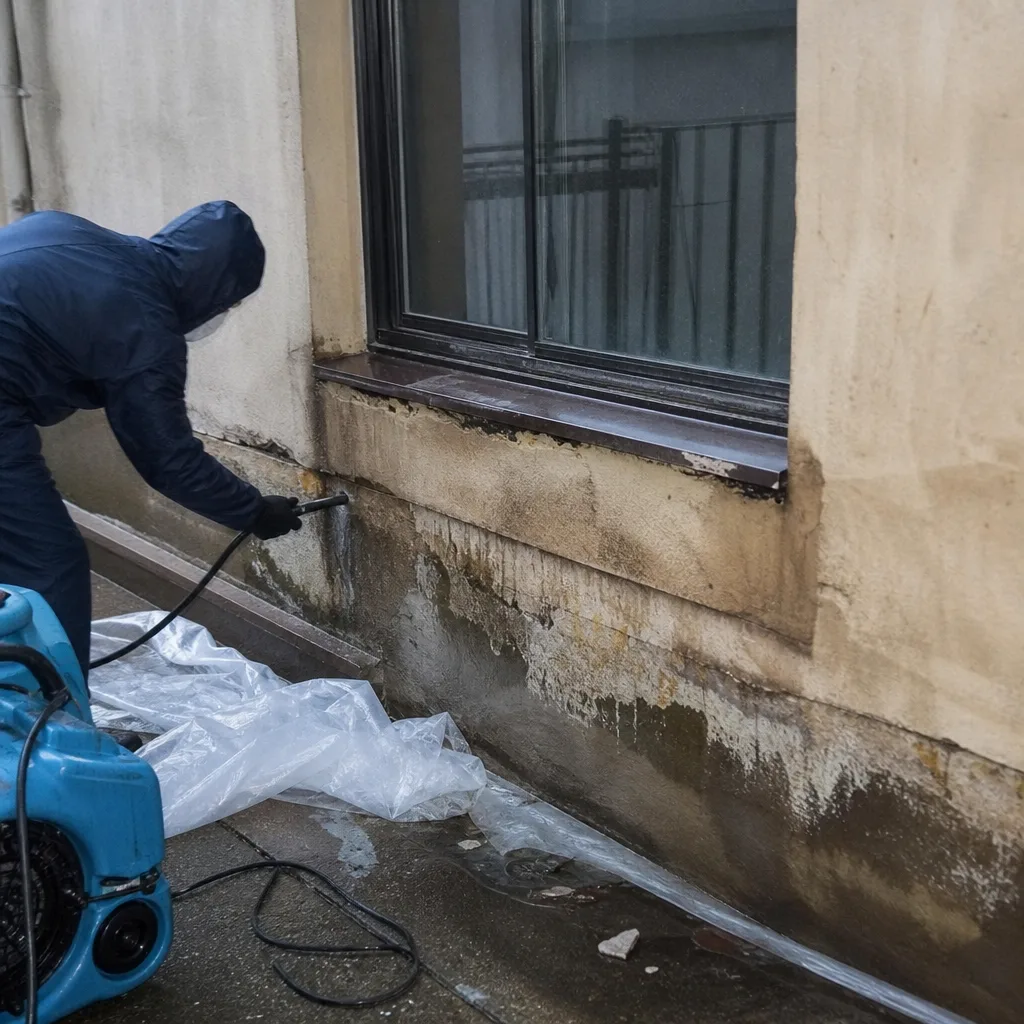 Before
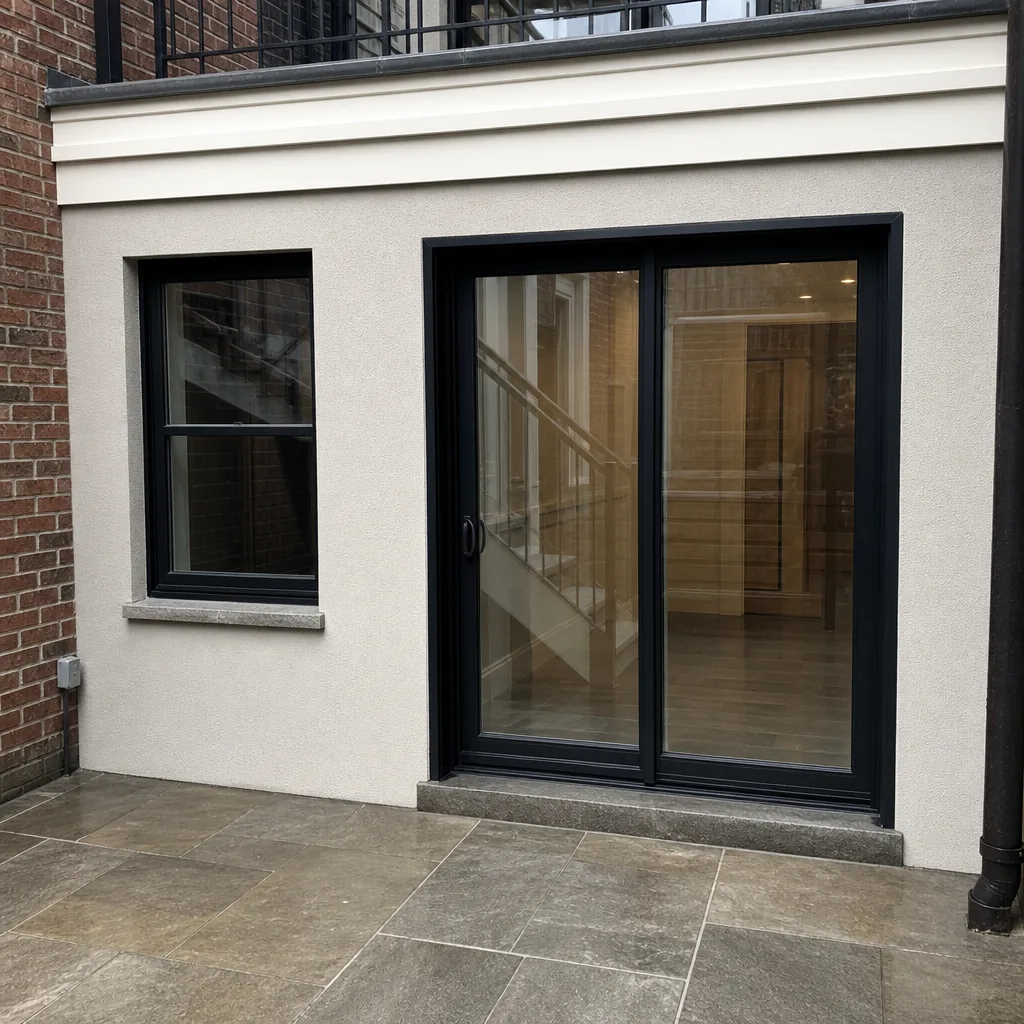 After
After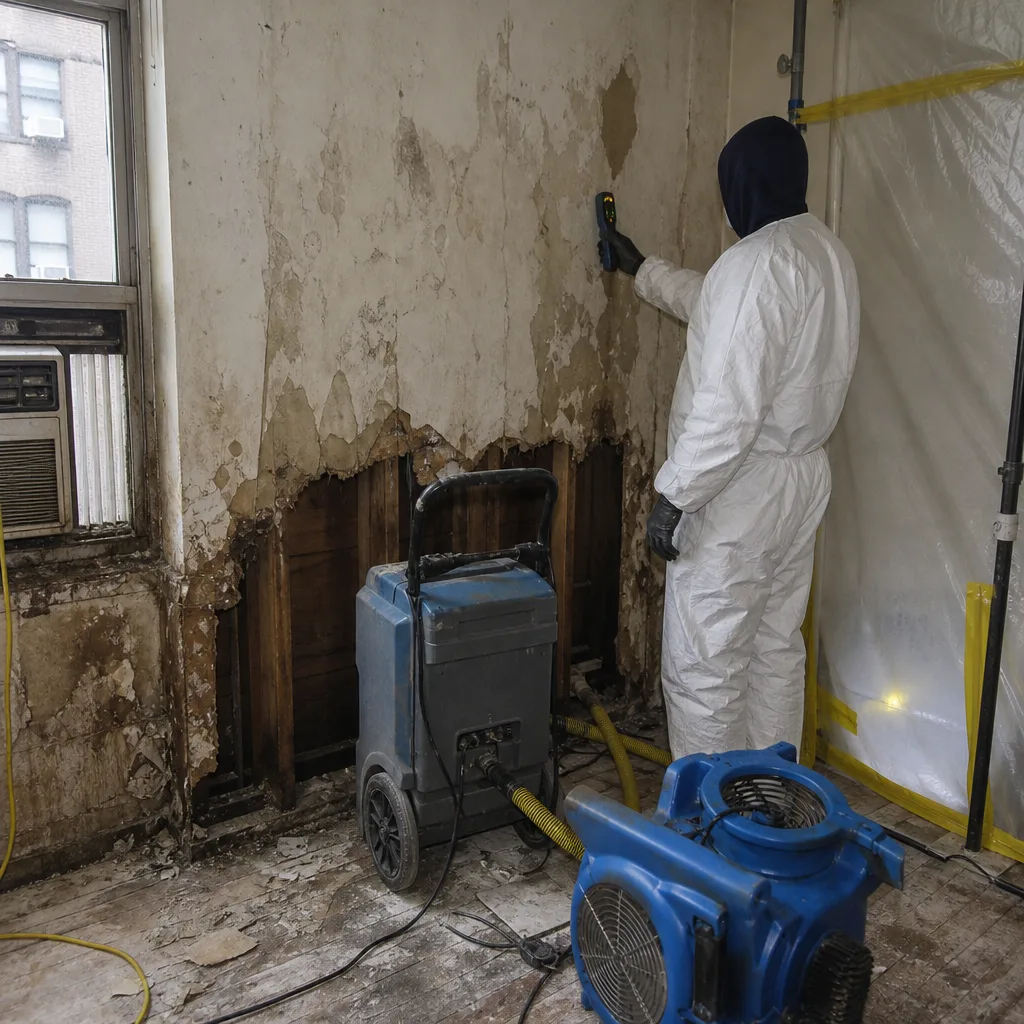 Before
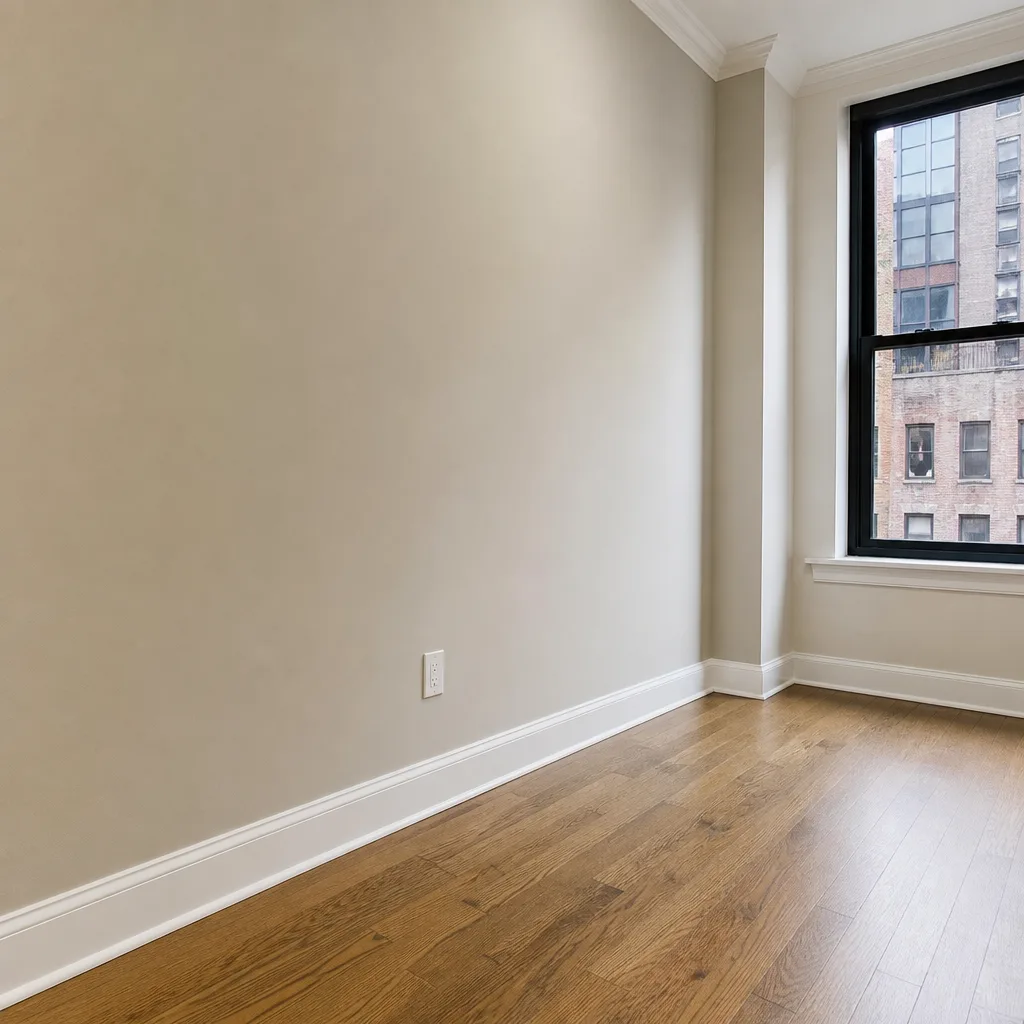 After
After24/7 Emergency Fire & Smoke Damage Restoration in Long Island City
A kitchen fire in a Court Square loft or an electrical fire in a Hunters Point tower doesn’t wait for business hours, and neither do we. Floodline Restoration Co. runs live dispatch around the clock, so when you call (518) 314-5660 at 2 a.m., a real person answers and a certified crew starts moving toward Long Island City immediately. The first hour after a fire matters more than most homeowners realize: soot is acidic and starts etching glass, corroding metal fixtures, and working into paint and textiles within days, not weeks. We arrive for a free visual inspection, set emergency containment so contamination doesn’t spread through your building, and give you a straight answer about what you’re facing. No recording, no call center, no waiting until morning.
Understanding Fire & Smoke Damage Restoration Severity in Long Island City Properties
Not all fire damage is the same, and Long Island City’s building stock makes severity assessment more complicated than in most Queens neighborhoods. Light-to-moderate damage typically involves dry soot residue from a contained stovetop fire or an overheated appliance: surfaces look gray or black, and odor is noticeable but not overpowering. Moderate-to-heavy damage means wet smoke residue, the sticky, acrid byproduct of smoldering synthetics, which bonds to walls and requires chemical cleaning, not just wiping. Severe damage involves structural charring plus fire-suppression water, which is where LIC’s converted lofts create a problem most restoration contractors don’t know how to handle. In pre-war factory conversions, original concrete slabs were poured directly on grade with no vapor barrier. Fire-hose water soaks into that slab and wicks upward for weeks, holding moisture long after surfaces feel dry to the touch. A contractor who closes out early leaves hidden moisture that feeds mold and re-releases smoke odor. We read moisture deep into the slab before we call a fire & smoke damage restoration job done.
Why Long Island City Property Owners Choose Floodline Restoration Co.
- 45-minute response commitment for Long Island City addresses. We’re positioned to reach Court Square, Hunters Point, and Queens Plaza fast, because the longer soot sits, the deeper it etches.
- Live answer, 24/7. A real dispatcher picks up the phone at any hour. You’re never routed to voicemail during an emergency.
- IICRC-certified crews with FSRT and OCT certifications for fire and smoke restoration and odor control. Background-checked, uniformed technicians in your home.
- Free visual inspection with a written scope before any work starts. You know what we’re doing, why, and what it costs before we begin.
- Direct insurance billing. We document everything from the first hour and coordinate with your adjuster, so you don’t play messenger.
- One team from board-up to rebuild. The same crew that sets containment handles structural repairs, so nothing gets lost between contractors.
Our Fire & Smoke Damage Restoration Process
Inspection & Assessment
We walk the full loss site, map smoke migration paths, test soot residue type, and identify every surface affected, including hidden cavities. In LIC loft buildings, that includes checking masonry party walls and original timber joists where smoke travels invisibly.
Emergency Board-Up & Stabilization
We secure openings, tarp damaged roofing, and seal off affected areas to prevent weather intrusion and unauthorized entry. In high-rise buildings, we coordinate with building management on containment placement so smoke doesn’t spread through shared shafts.
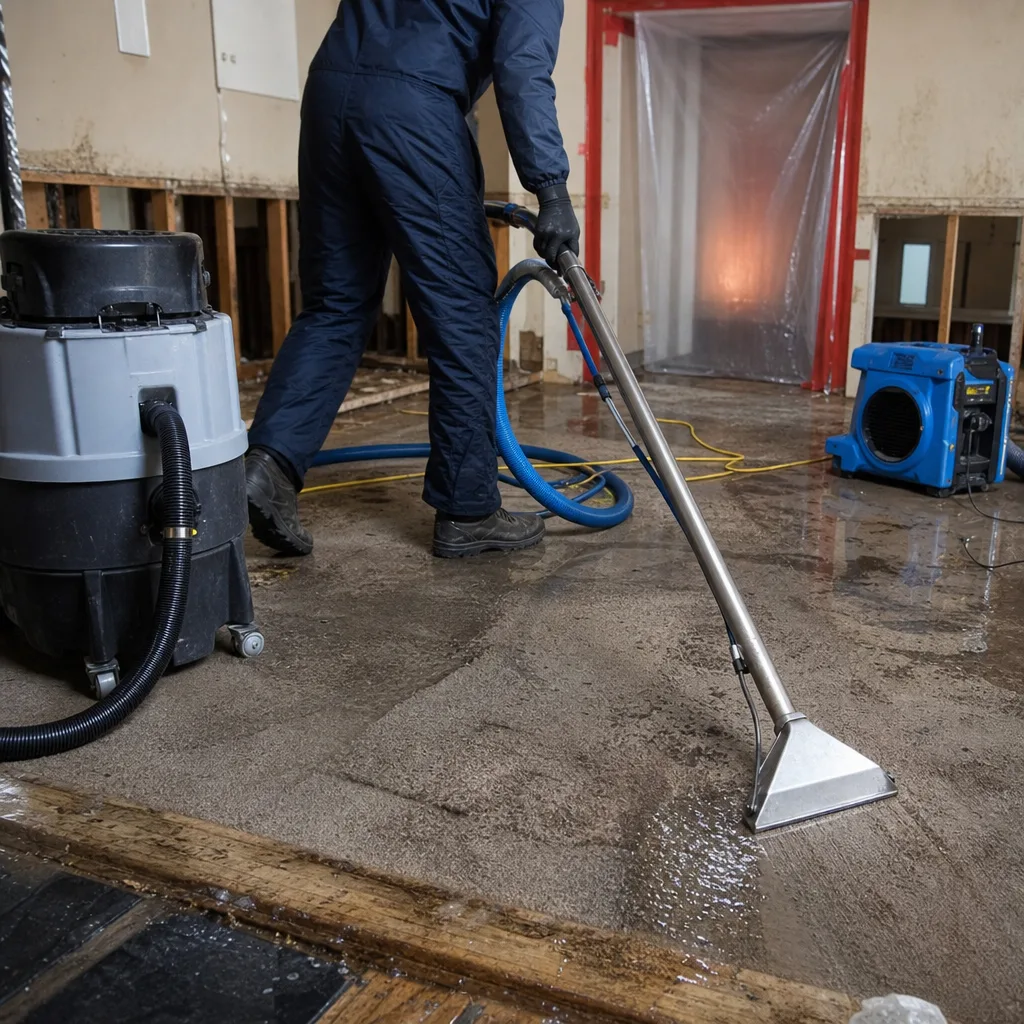
Water Extraction & Deep-Slab Drying
Fire-suppression water gets extracted with truck-mounted equipment, then we run Dri-Eaz dehumidifiers and Phoenix air movers on a drying plan mapped from moisture readings. For slab-on-grade lofts, we take readings down to 4 inches and keep drying active until the slab is actually dry.
Smoke & Soot Removal
We clean all surfaces using the correct method for the soot type: dry sponge for dry soot, chemical agents for wet smoke residue. Porous brick in century-old party walls needs specialized treatment, not just surface wiping, or odor will return.
Odor Removal & Deodorization
We use hydroxyl generators and ozone treatment where appropriate, plus sealing of porous materials, to eliminate odor at the source. In LIC’s converted industrial buildings, standard thermal fogging often fails because smoke penetrates deep into masonry and timber.
Structural Repair & Restoration
We rebuild what fire and water damaged: framing, drywall, flooring, cabinetry, and finishes, through our Reconstruction & Cleanup in Long Island City. The same crew handles it, so there’s no handoff, no new subcontractor to brief, and no gap in accountability.
Need Emergency Fire & Smoke Damage Restoration in Long Island City Now?
Crews minutes away, answering live 24 hours a day. The sooner we start, the less it costs.
Working With Your Insurance Company
Fire claims are complicated enough without a homeowner forced to translate between a restoration crew and an adjuster. Floodline Restoration Co. has billed carriers directly for over a decade, and we handle the communication from the first day. Our documentation starts the moment we arrive: photos of every affected room, moisture readings, soot residue notes, and a line-item scope of work written in the format insurers expect. If your adjuster pushes back on a line item, we talk to them directly, with the data to back it up. You get a copy of everything, and Curt Bowman’s team stays accountable for the full job, from first extraction to finished rebuild. Done right, and backed in writing.
What We Provide Your Insurer
- Thorough documentation of the loss
- Photos of all damage, room by room
- Moisture readings and drying logs
- A detailed, line-item scope of work
- Direct coordination with your carrier
Built for Long Island City’s Loss Calendar
Long Island City sees fire losses year-round, but the patterns shift with the seasons. January and February bring space-heater and overloaded-circuit fires in older loft buildings, where original wiring wasn’t built for modern loads. Spring and summer in Hunters Point and along Vernon Boulevard mean construction-related fires as the neighborhood’s continuous redevelopment moves forward, plus cooking fires in dense residential towers. Nor’easter season from October through March adds a coastal layer: wind-driven rain enters through damaged roofs and curtain-wall weep systems, and when a storm knocks out power, candle and generator fires follow. And throughout the year, the East River’s humidity accelerates post-fire corrosion on exposed metal and drives smoke odor deeper into porous brick and plaster. We plan drying and odor treatment around these conditions, because a restoration plan that works in inland Queens doesn’t work the same way at sea level.
Fire & Smoke Damage Restoration Across Long Island City’s Neighborhoods
From the converted warehouses around Court Square to the glass towers of Hunters Point South, every part of Long Island City presents different fire restoration challenges. In the Court Square corridor, century-old industrial buildings with original timber joists and masonry party walls hold smoke odor stubbornly, and fire-suppression water pools in slab-on-grade concrete. Over in Hunters Point, post-2010 high-rises with curtain-wall systems face stack effect after fires: smoke travels upward through elevator shafts, stairwells, and weep systems, contaminating units far from the original fire. The Queens Plaza area mixes pre-war lofts with newer mid-rise construction, meaning one block can require two completely different drying and odor protocols. Down along Vernon Boulevard and the 11101 waterfront, FEMA flood-zone buildings face the compound risk of fire plus storm-surge water intrusion, where moisture comes from above and below at the same time. Our crews know these routes, these buildings, and what each one demands.
Specialized Fire & Smoke Damage Restoration Services We Offer in Long Island City
Fire Damage Cleanup
Every burned surface, every charred beam, every waterlogged floor gets cleaned or removed based on a written scope. In LIC’s loft conversions, that often means carefully cleaning original timber that can be saved while replacing what can’t, preserving the character of the building without compromising safety.
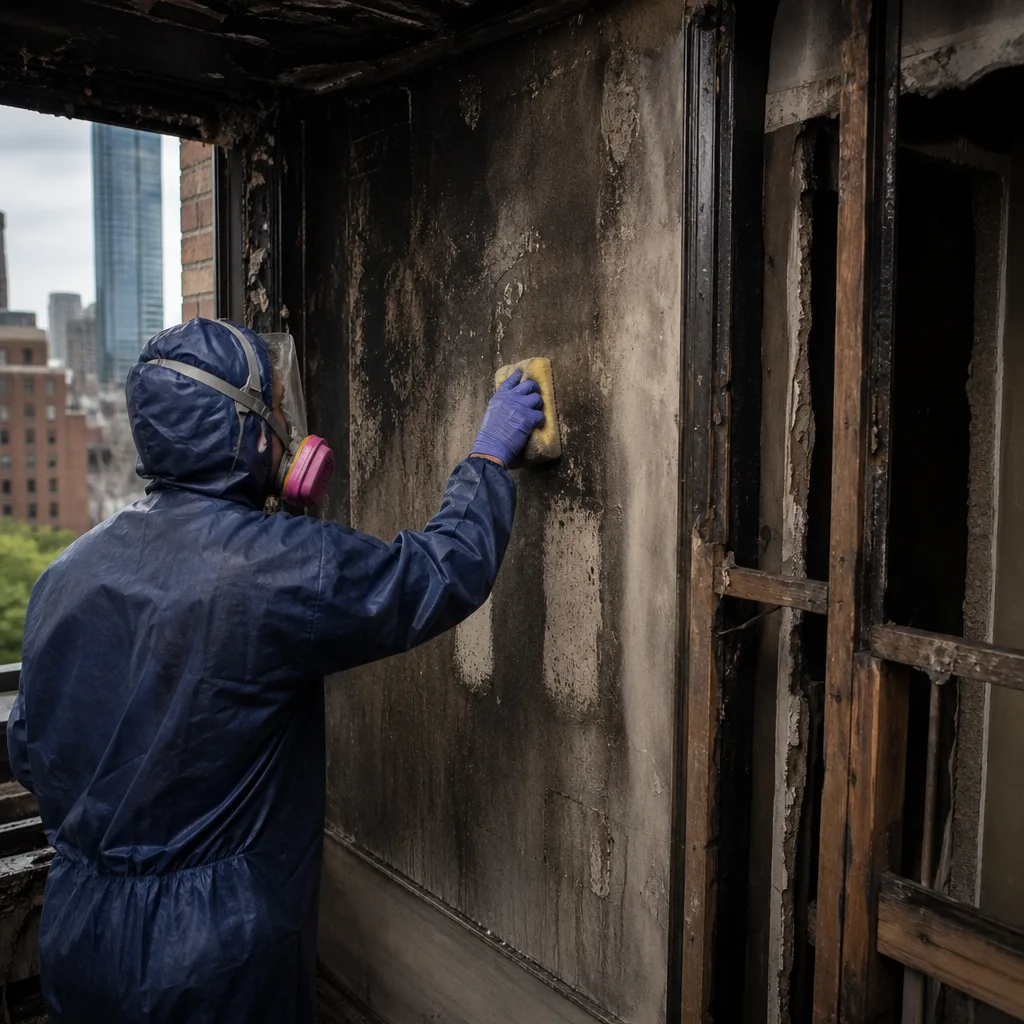
Smoke & Soot Removal
Soot etches glass, pits metal, and bonds to painted surfaces within days. We clean using the right method for the residue type, including chemical sponges for dry soot and solvent-based agents for wet smoke residue. In pre-war buildings, we pay particular attention to porous brick party walls, which hold soot far deeper than drywall ever will.
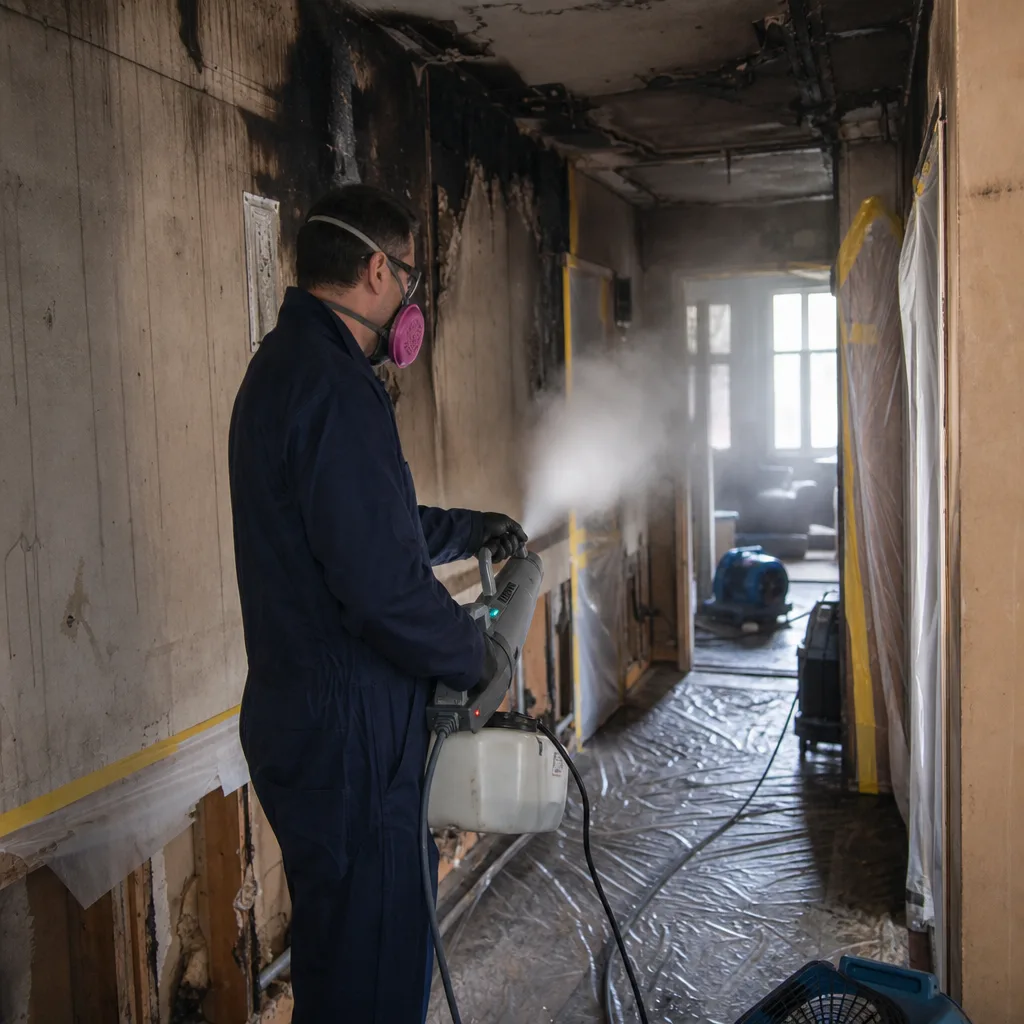
Odor Removal & Deodorization
Smoke odor in LIC’s older buildings migrates through shared walls, floor cavities, and original ventilation paths. We run hydroxyl and ozone treatment cycles as needed, seal porous surfaces before repainting, and verify odor elimination with a third-party clearance test when the job requires it.
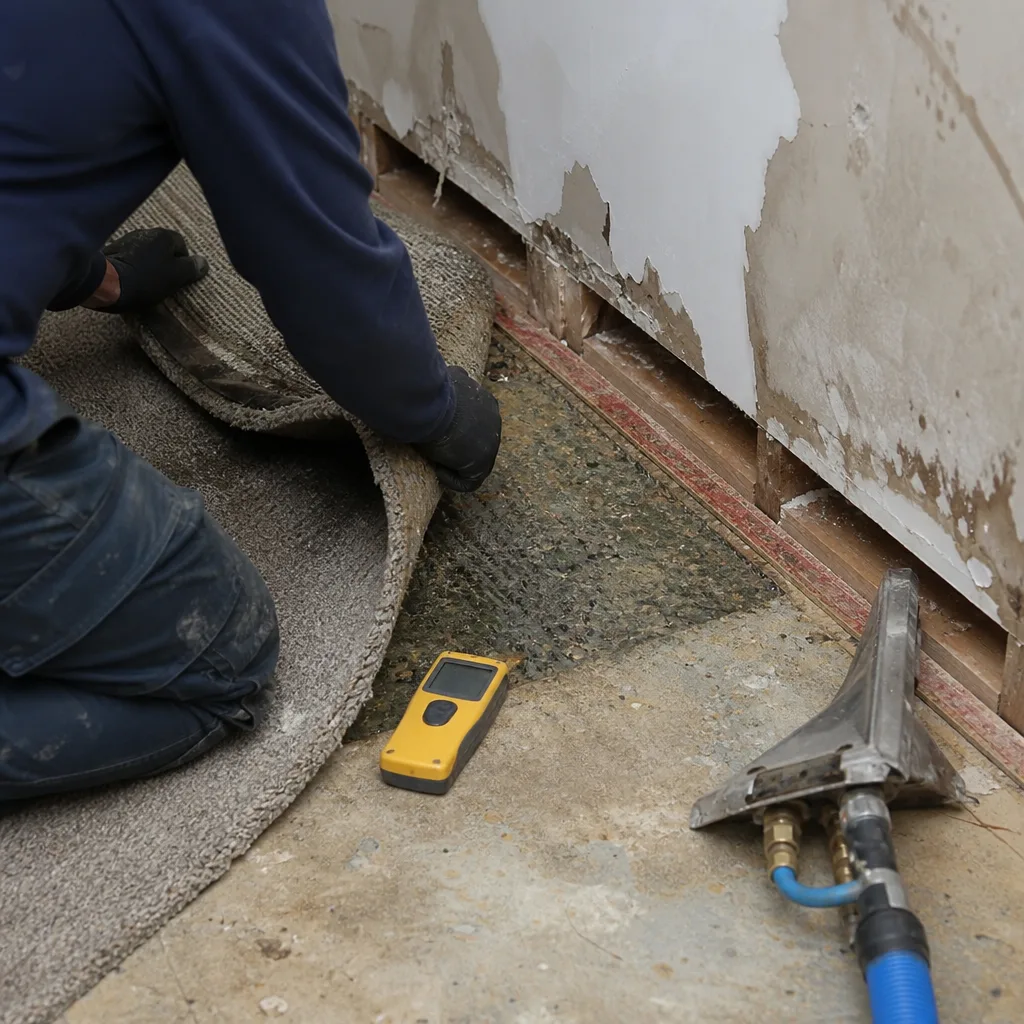
Contents Cleaning & Pack-Out
Furniture, clothing, documents, electronics, art: we inventory, pack out, clean, treat for odor, and store everything until your space is ready. For a converted warehouse loft with original fixtures and personal effects, that means careful handling, not just moving boxes.
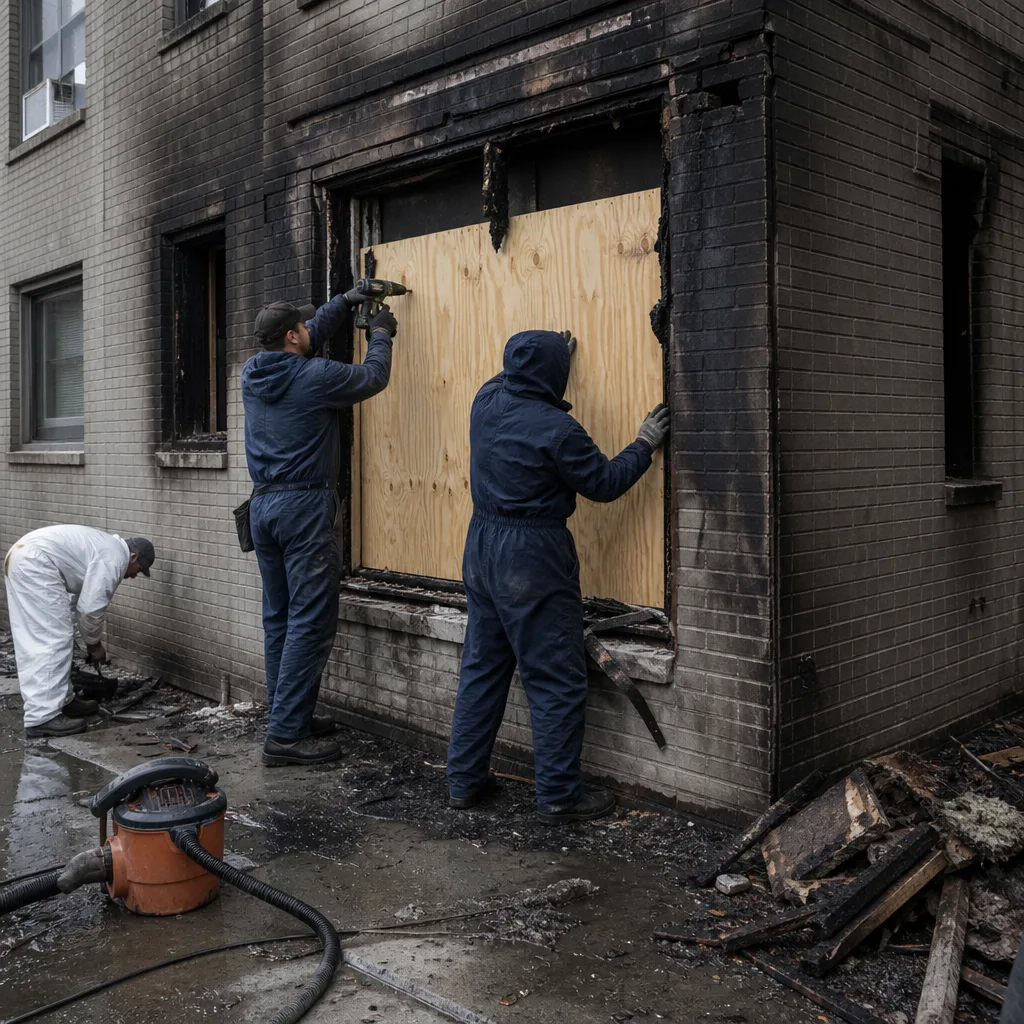
Emergency Board-Up & Tarping
Fire-damaged windows, burned-out doors, compromised roofing: we board and tarp immediately so weather, trespassers, and further damage stay out. In dense LIC blocks, that also means working with building management and the FDNY on access and safety.
What happens when you call
- 1
A real person answersNo phone trees - you reach a local pro.
- 2
You get an upfront price rangeHonest numbers before anyone is dispatched.
- 3
A background-checked tech heads outLicensed & insured, dispatched right away.
- 4
You approve before work beginsNothing starts until you say go.
Fire & Smoke Damage Restoration Costs in Long Island City, NY
What does fire and smoke damage restoration actually cost in Long Island City? For a contained kitchen fire with moderate soot and no structural damage, expect $2,500 to $6,500 for cleaning, odor treatment, and repainting. A fire with significant smoke migration through multiple rooms, requiring pack-out and deodorization, typically runs $8,000 to $18,000. Full structural fire repair, including rebuild of framing, electrical, and finishes, ranges from $20,000 to $75,000+ depending on square footage and the building’s construction type. LIC-specific factors that move the price: slab-on-grade drying in pre-war lofts adds days and equipment costs; asbestos abatement in pre-1974 factory conversions adds compliance expense; high-rise access and building-management coordination add labor hours. Most fire losses are covered under homeowners or condo insurance, subject to your policy limits and deductible. The fastest path to a firm number is a free visual inspection and written scope: call (518) 314-5660 and we’ll come out, assess, and put the numbers in your hand before anything is signed.
Our Fire & Smoke Damage Restoration team handles the full cycle, from first board-up to final coat of paint. If you’re searching for Fire & Smoke Damage Restoration in Long Island City, we’re the crew that knows these buildings down to the slab.
We Also Serve Cities Near Long Island City
Our crews cover Long Island City and the surrounding area, including Astoria. If you’re nearby and dealing with fire, smoke, or water damage from a related loss, we’ll get a certified team to you fast.
Serving Long Island City, NY - Our Local Coverage Area
We’re based in the Long Island City area and know this community well. Use the map below to see our service coverage - if you’re nearby, we can almost certainly help.
Long Island City Fire & Smoke Damage Restoration Questions, Answered
Why does fire & smoke damage restoration in a Long Island City loft building often take longer than in a framed wood-floor home?
Long Island City’s converted factory lofts were built with concrete slabs poured directly on grade, with no vapor barrier underneath. Fire-suppression water soaks into that slab and wicks upward for weeks, so drying timelines nearly double compared to a framed wood-floor building, and we keep moisture readings going deep into the slab before closing out the job. Call (518) 314-5660 for a free inspection of your specific building.
Will NYC asbestos rules affect my fire damage restoration if my LIC apartment is in a former factory?
Yes, if your building predates 1974, NYC DEP asbestos rules may require abatement before restoration work touches certain materials, including pipe insulation, transite panels, and 9-inch vinyl floor tiles common in LIC’s industrial conversions. We identify these materials during inspection and coordinate abatement through licensed professionals so your restoration stays compliant and doesn’t stall. If the loss involves sewage contamination, we also provide our Sewage Cleanup in Long Island City.
Do you handle smoke odor removal in LIC high-rise units where neighbors have the same smell?
Yes. Stack effect in high-rise towers pulls smoke through elevator shafts, stairwells, and curtain-wall weep systems, contaminating units far from the fire source. We set containment across affected floors, run hydroxyl or ozone treatment in shared cavities, and coordinate with building management so the odor doesn’t return through common spaces. For hazardous materials or trauma scenes, we also offer Long Island City Biohazard & Crime Scene Cleanup.
Can you clean and pack out contents from a fire in a converted LIC warehouse loft while structural repairs are ongoing?
Yes. We inventory, pack out, and clean contents off-site while structural drying and repairs continue in your unit. That way your belongings are treated for soot and odor separately, and you’re not living with boxes stacked in a construction zone longer than necessary.
What’s different about fire damage restoration in LIC’s flood-zone high-rises near the East River?
Waterfront high-rises face compound risk: fire-suppression water from above and storm-surge or groundwater intrusion from below. These buildings often sit in FEMA AE or VE flood zones, and their mechanical systems and lower floors are exposed to salt air corrosion that accelerates post-fire metal damage. We plan drying and repair around both moisture sources, not just the fire damage.
How fast can you actually get to my Long Island City building?
We commit to a 45-minute response for Long Island City addresses, with crews dispatched from the New York City area and routed through the most direct access points, including the Queensboro Bridge and 21st Street corridors. A live dispatcher confirms the timeline the moment you call (518) 314-5660.
Will my insurance cover fire and smoke damage restoration in Long Island City?
Most homeowners, condo, and co-op policies cover fire and smoke damage, subject to your deductible and policy limits. We document everything from the first hour, bill your carrier directly, and talk to your adjuster so you’re not caught in the middle. Bring us your policy details and we’ll walk you through what’s covered before work begins.
What should I do in the first 30 minutes after a fire in my Long Island City home?
Get everyone out safely and call 911 if you haven’t already. Don’t touch or wipe any surfaces, because soot smears and sets into paint and fabric when disturbed. Don’t turn on electrical systems. Then call (518) 314-5660. The sooner we set containment and start assessment, the less damage spreads and the less restoration costs.
Written by Curt Bowman, Owner at Floodline Restoration Co., serving Long Island City and the New York City metro area since 2010.