
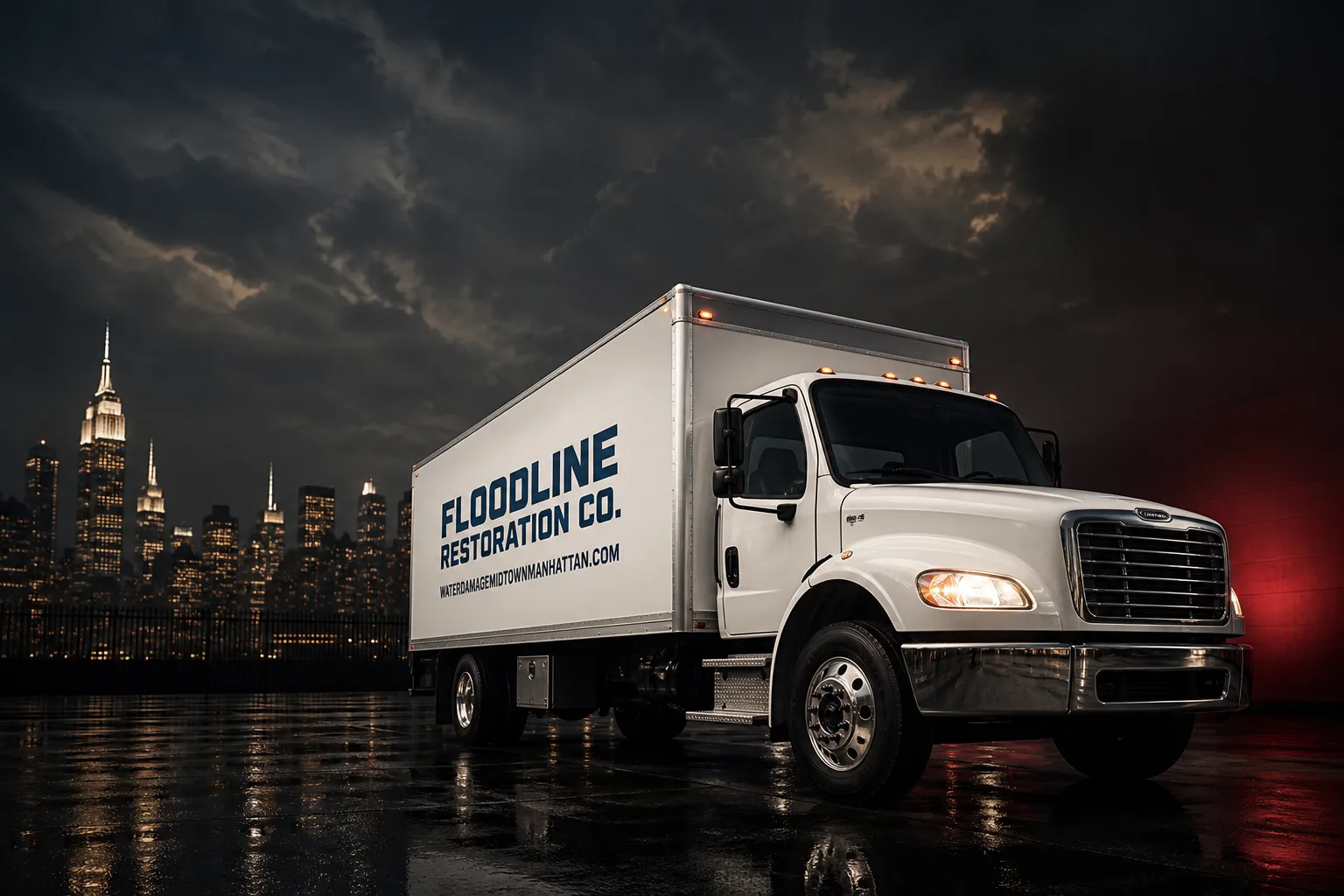
Free visual inspection and a written scope of work before any mitigation begins - photos, moisture readings, and drying logs go in your claim file
The scope we write is the scope we bill. Anything new gets shown to you, in writing, before we touch it.
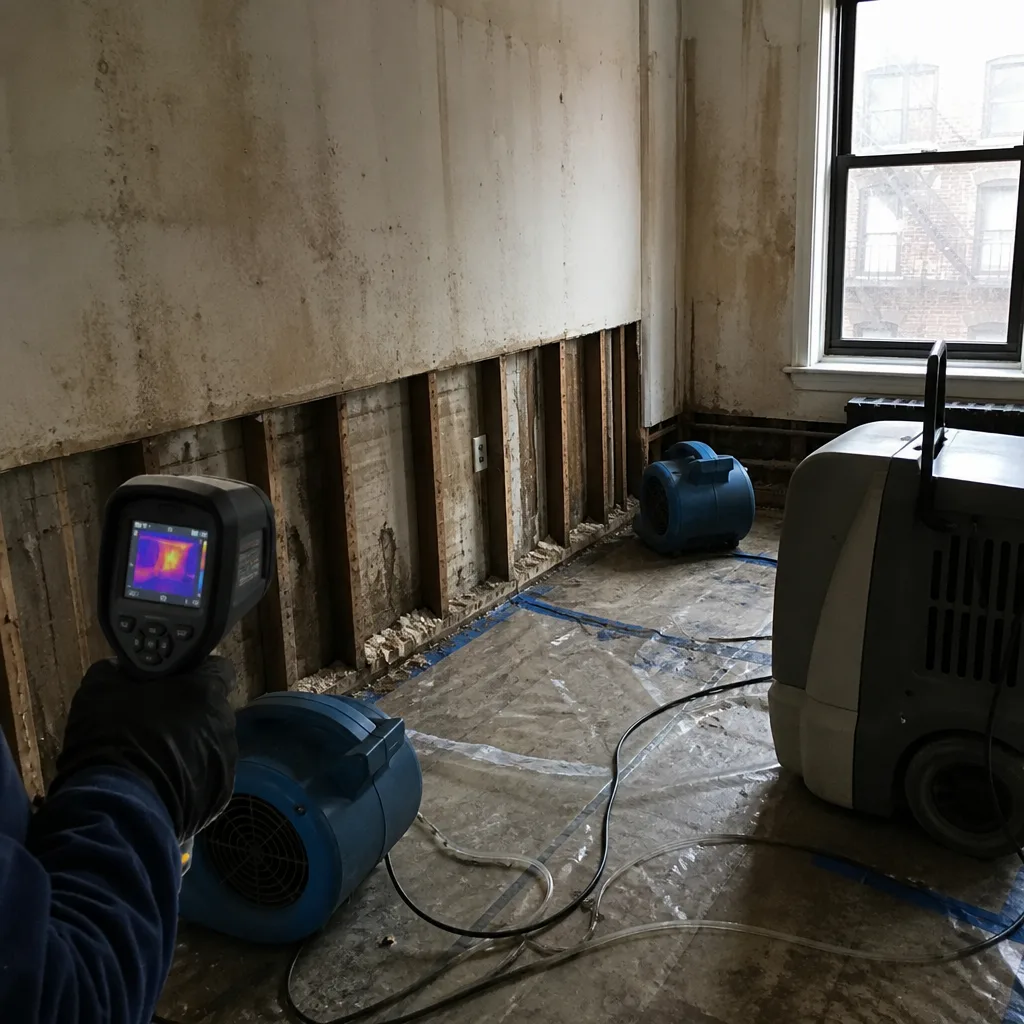 Before
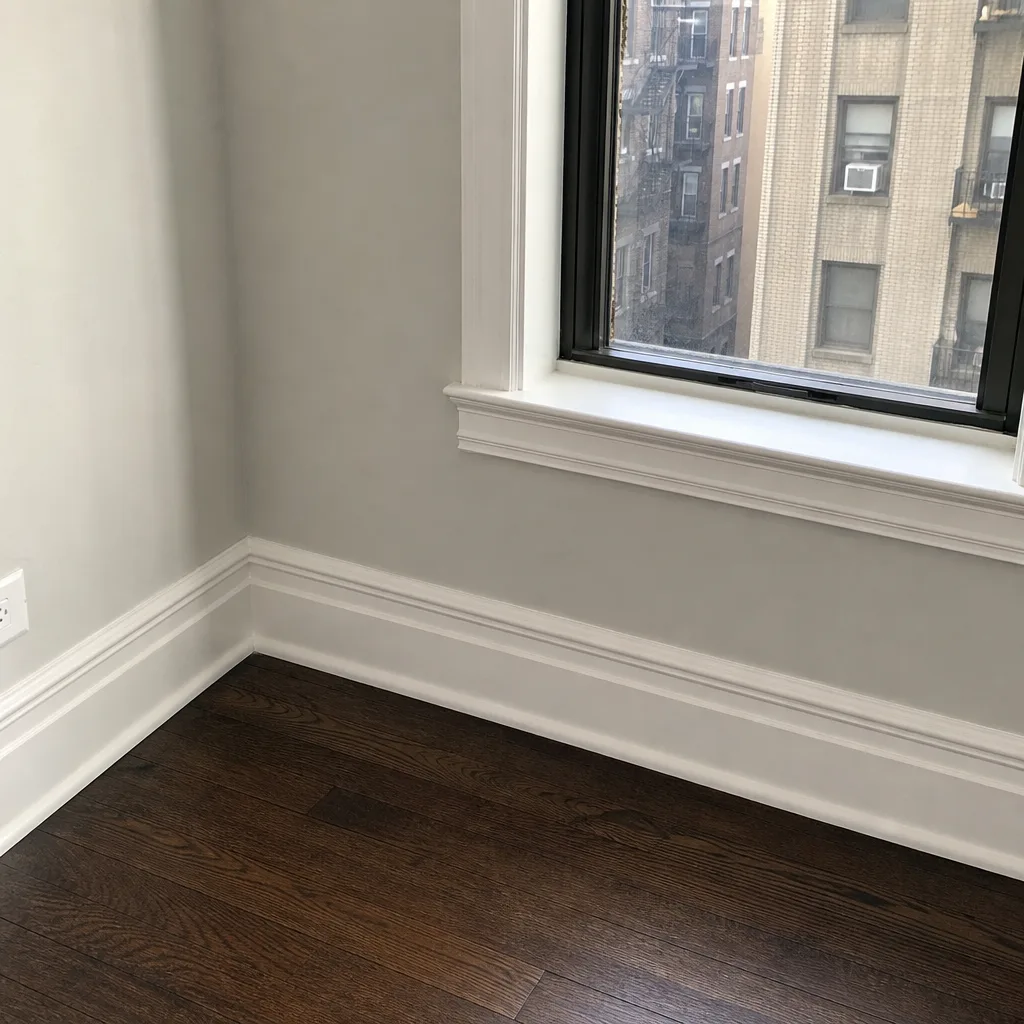 After
After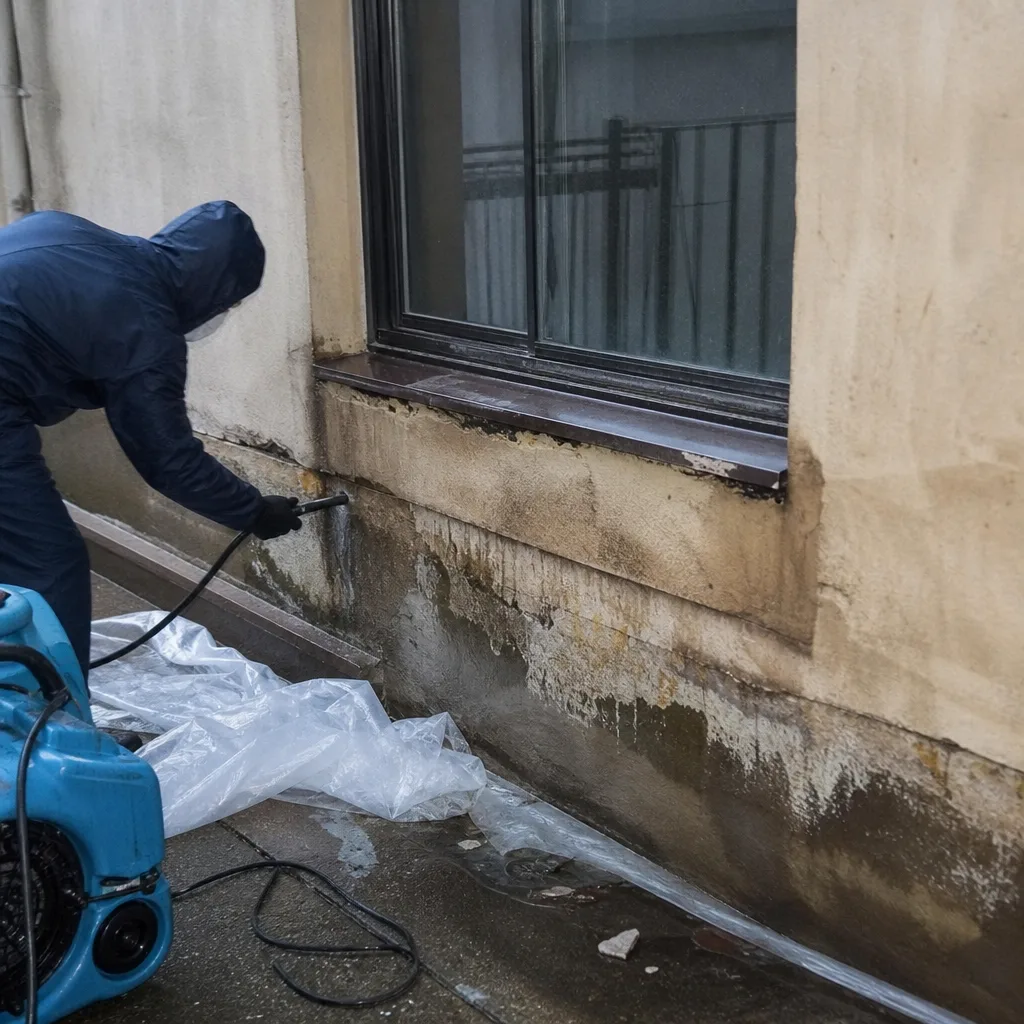 Before
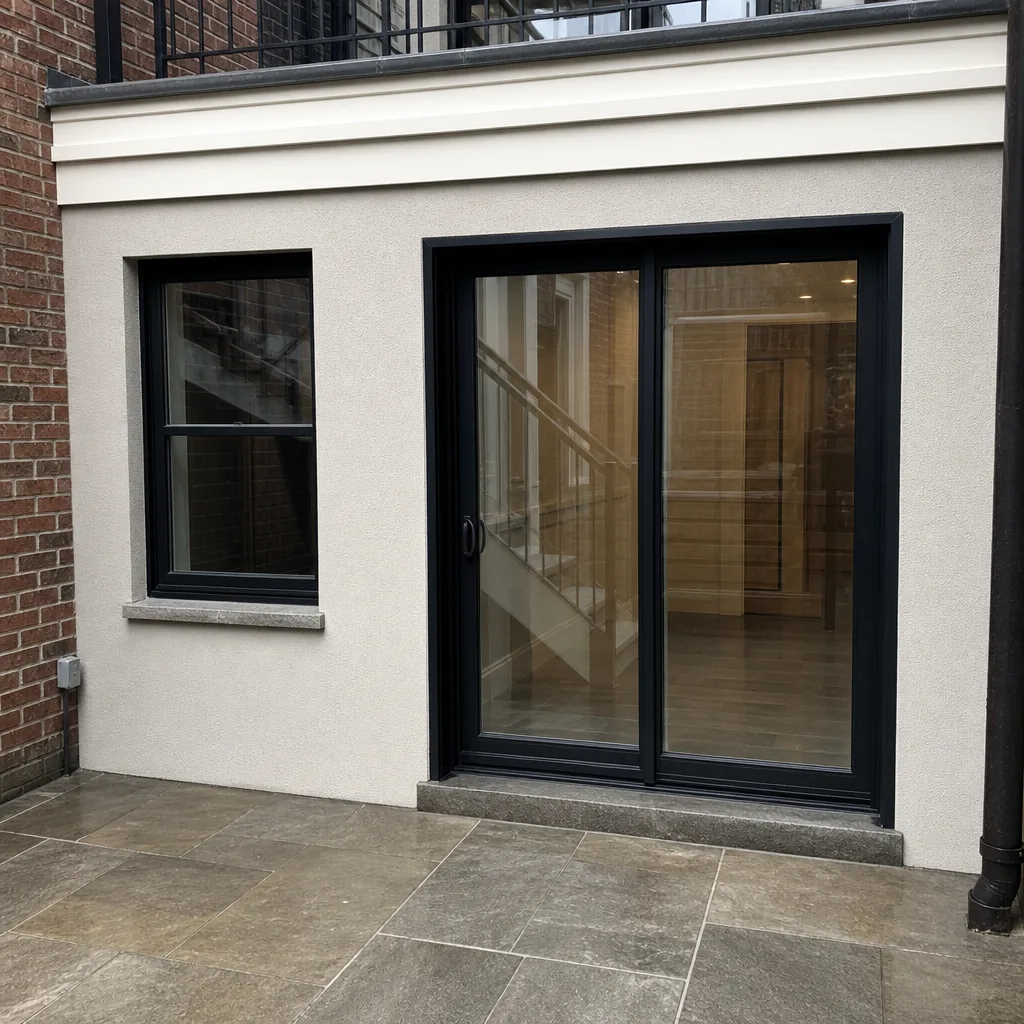 After
After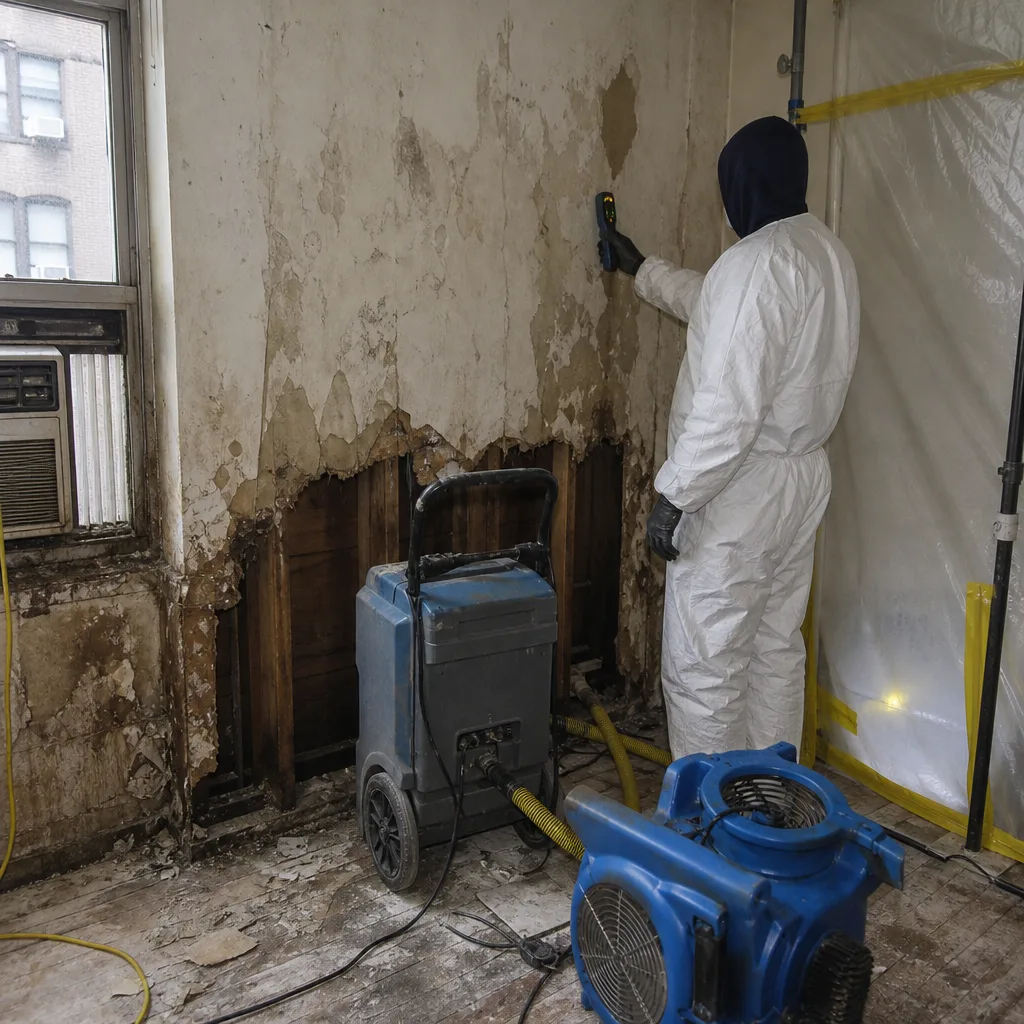 Before
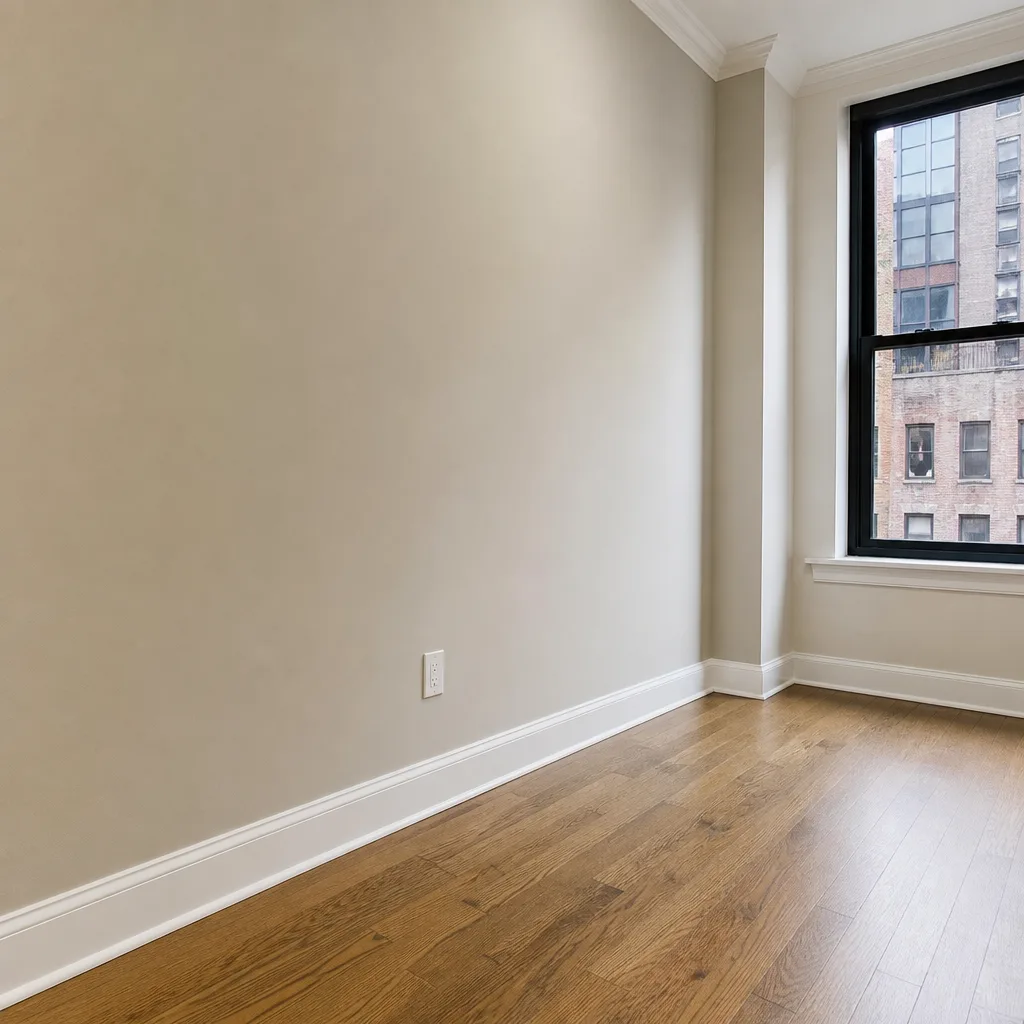 After
After24/7 Emergency Sanitization Services in Long Island City
Sanitization services in Long Island City typically run $0.35 to $0.65 per square foot for full interior fogging, with post-illness or virus decontamination jobs in a standard one-bedroom loft landing between $400 and $900. We answer the phone live at (518) 314-5660 around the clock, and our crews reach most Long Island City buildings within 45 minutes. When you’re dealing with a sewer backup in a Court Square basement or a confirmed virus exposure in a Hunters Point apartment, the first hour matters because airborne contaminants settle into porous surfaces fast. Our team arrives, assesses, seals off the affected area, and starts treatment the same visit. No answering service, no callback queue. A real person picks up, and a real crew shows up.
What happens when you call
- 1
A real person answersNo phone trees - you reach a local pro.
- 2
You get an upfront price rangeHonest numbers before anyone is dispatched.
- 3
A background-checked tech heads outLicensed & insured, dispatched right away.
- 4
You approve before work beginsNothing starts until you say go.
Understanding Sanitization Services Severity in Long Island City Properties
Sanitization work in Long Island City falls into distinct severity categories, and the building stock here shapes every one of them. A Category 1 event, clean water from a supply line, still demands antimicrobial treatment on affected drywall and framing if it sat for more than 24 hours, and without prompt Long Island City Water Damage Restoration it can escalate quickly. Category 2 brings gray water from washing machines or dishwashers, which carries bacteria and needs full surface disinfection plus drying. Category 3, black water from sewage or East River storm surge, is the one we treat as a biohazard every time. In Long Island City’s converted factory lofts around Court Square and Hunters Point, the original concrete slabs were poured directly on grade with no vapor barrier beneath them. Water wicks upward through those slabs indefinitely, which means we run moisture readings deep into the concrete before any fogging or antimicrobial application. In the glass towers that went up after 2010, curtain-wall leaks hide behind vanities and along window lines, and the moisture migrates laterally through wall cavities before anyone sees staining. Both conditions extend drying timelines and change the sanitization protocol. A wood-frame house in Astoria dries differently than a slab-on-grade loft in ZIP 11101, and we treat them differently.
Why Long Island City Property Owners Choose Floodline Restoration Co.
- 45-minute response commitment: Our Long Island City crews stage equipment nearby and dispatch as soon as you call, so mitigation starts within the hour, not the next day.
- A live person answers at 2 a.m.: We run a dispatch desk, not an answering service. You’ll speak to someone who can send a crew, every time.
- IICRC-certified technicians: Our crews carry WRT, FSRT, and AMRT certifications and follow the standards those letters require, on every job, no exceptions.
- Free visual inspection: We walk the space, explain what we see, and give you a written scope before any work begins. You know the number before we start.
- Direct insurance billing: We document from the first hour, bill your carrier directly, and talk to your adjuster so you don’t have to play messenger.
- One team, start to finish: The same Floodline crew that sets containment runs the drying, applies the antimicrobial, and handles any rebuild. No handoffs, no strangers showing up mid-job.
Our Sanitization Services Process
Inspection & Assessment
We walk the property, run thermal imaging to find hidden moisture, and take humidity readings with hygrometers. In slab-on-grade lofts, we check moisture deep into the concrete. You get a clear explanation of what we found and what it costs before we touch anything.
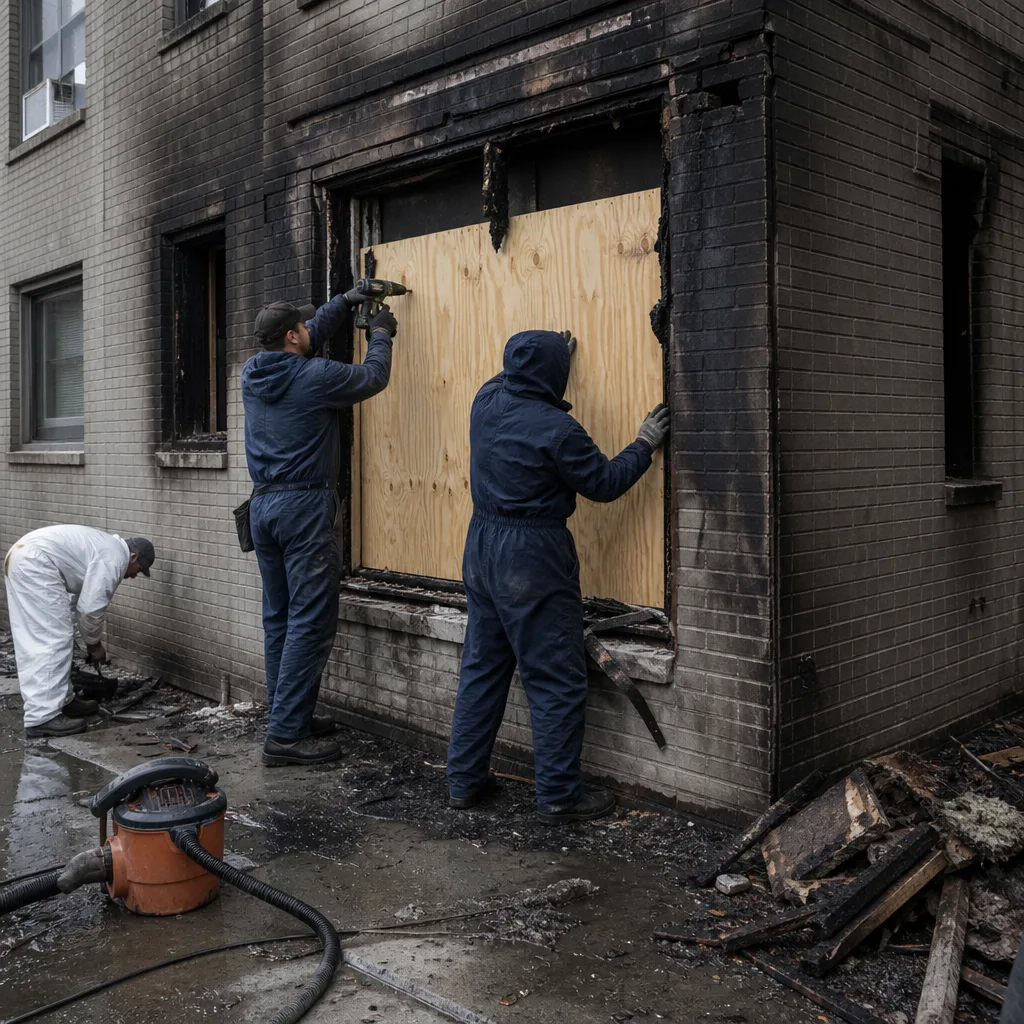
Containment & Stabilization
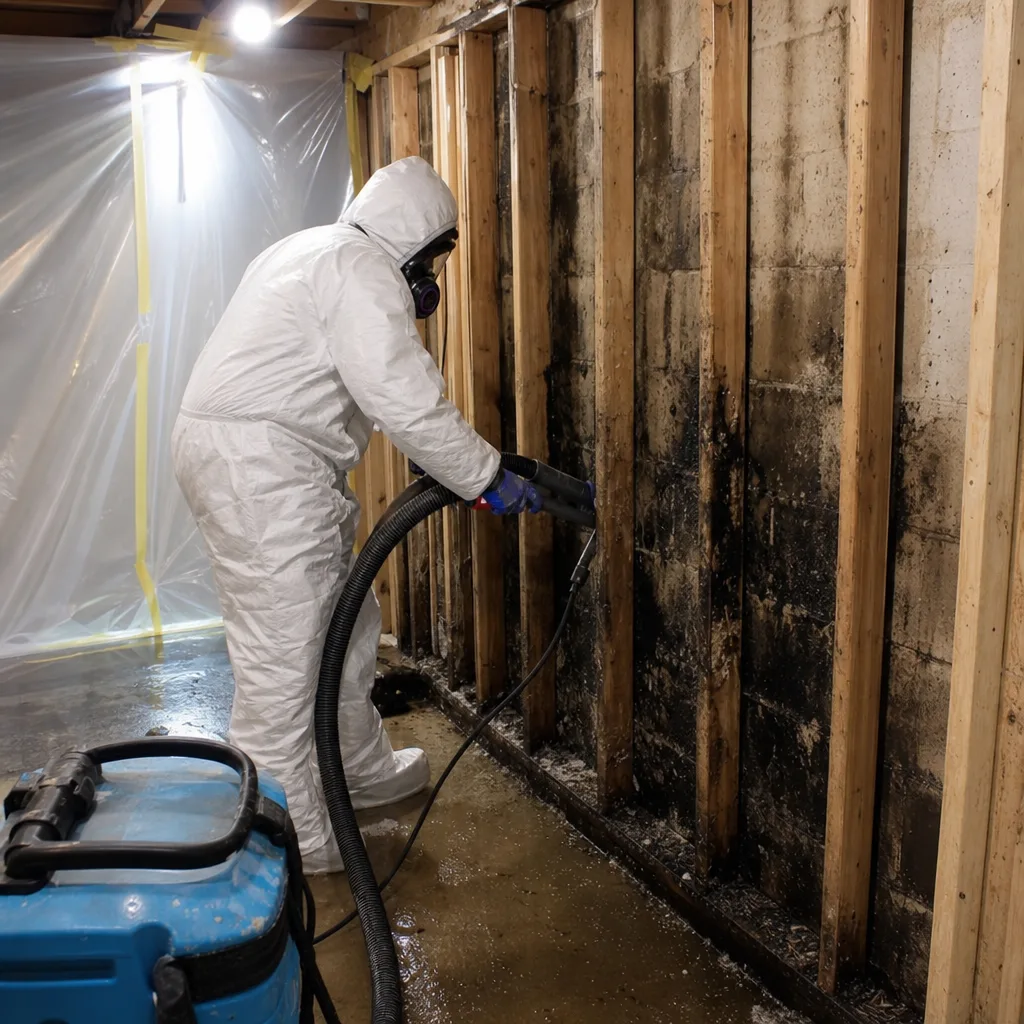
We seal the affected area with 6-mil poly sheeting and set up negative air pressure so contaminants don’t migrate to clean rooms. For Category 3 water, this happens before anything else moves.
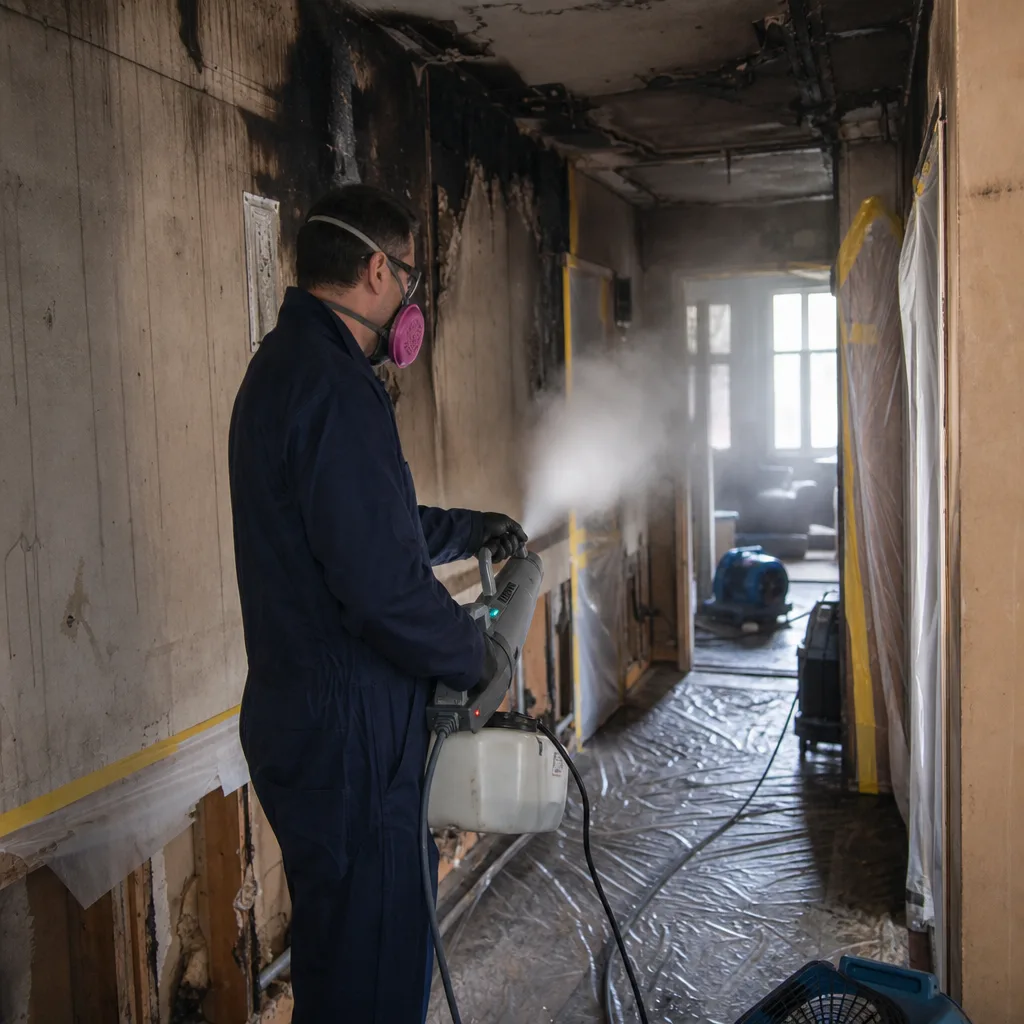
Drying & Dehumidification
We place Dri-Eaz dehumidifiers and air movers based on a calculated drying chamber, not guesswork. In Long Island City loft conversions, we extend this phase because concrete slabs release moisture slowly. Daily readings go into a log you and your insurer receive.
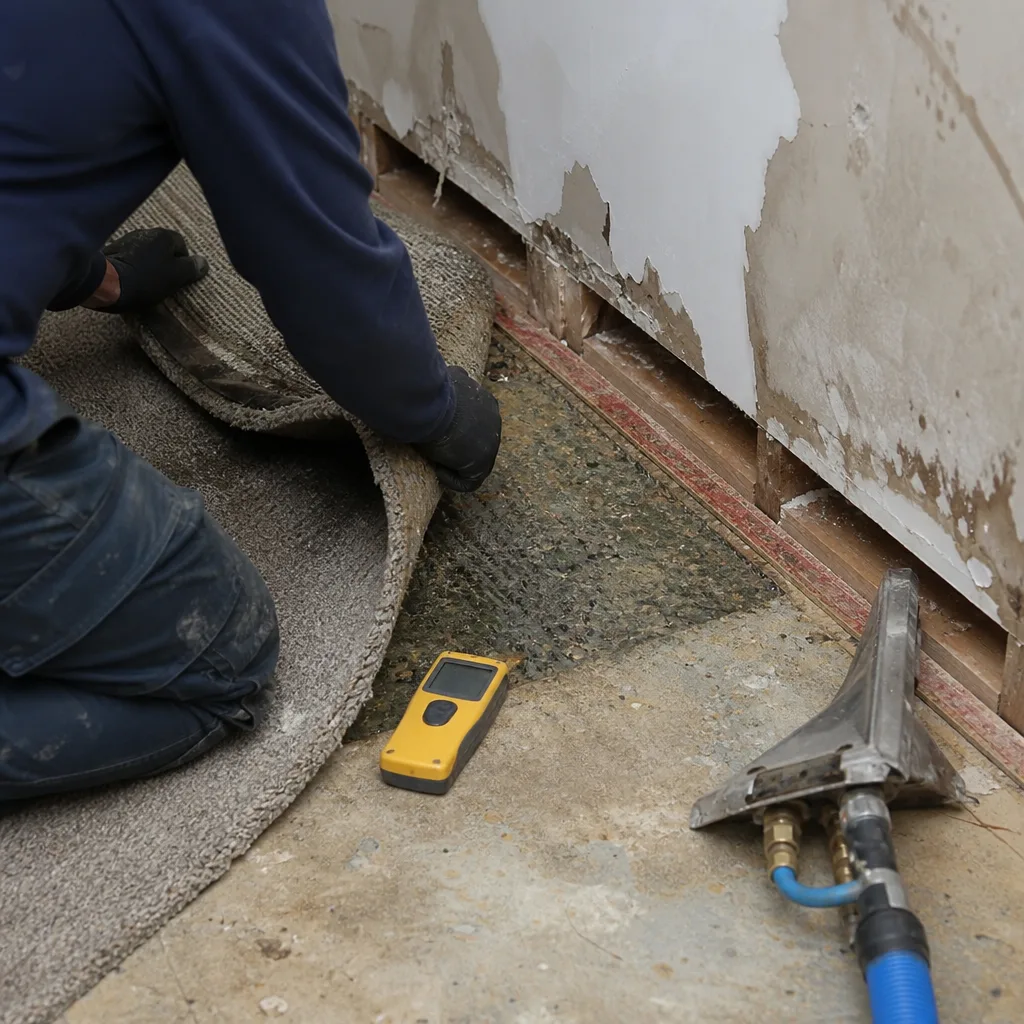
Cleaning & Sanitization
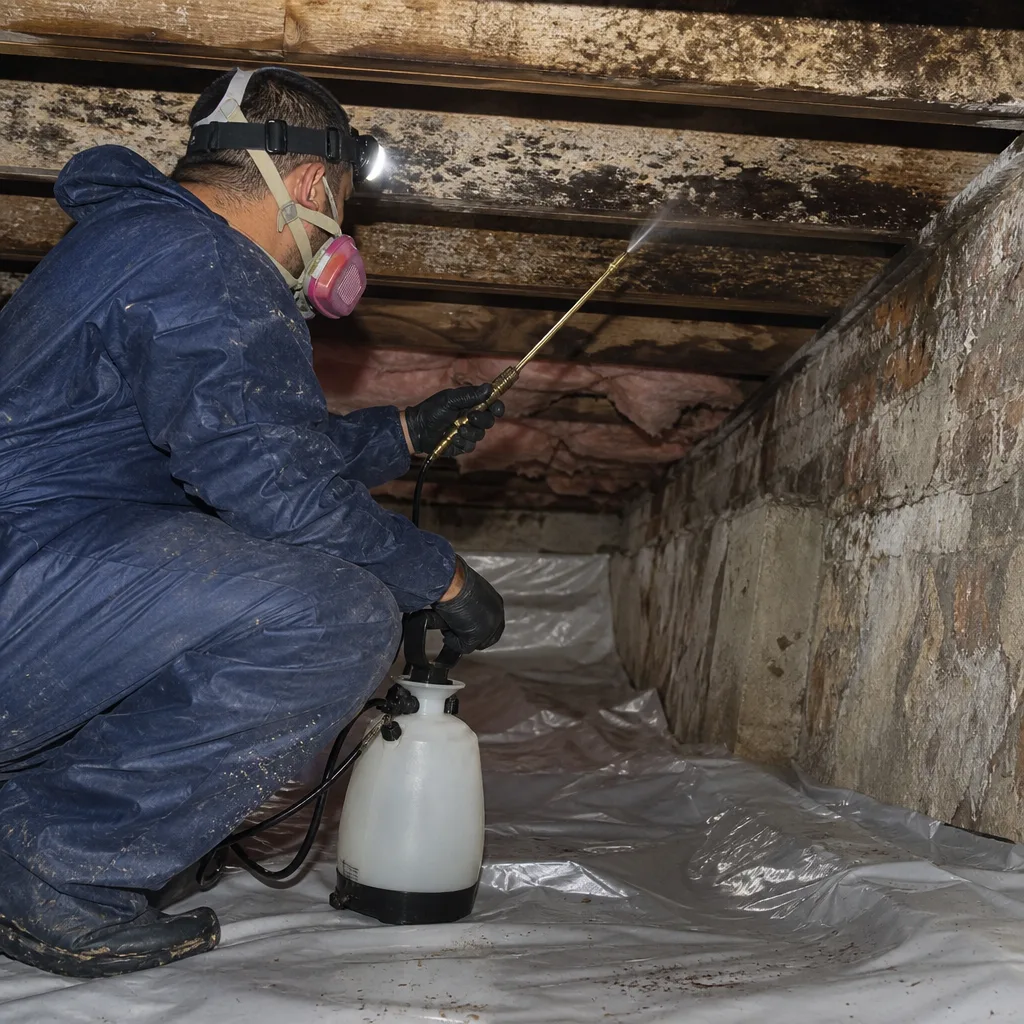
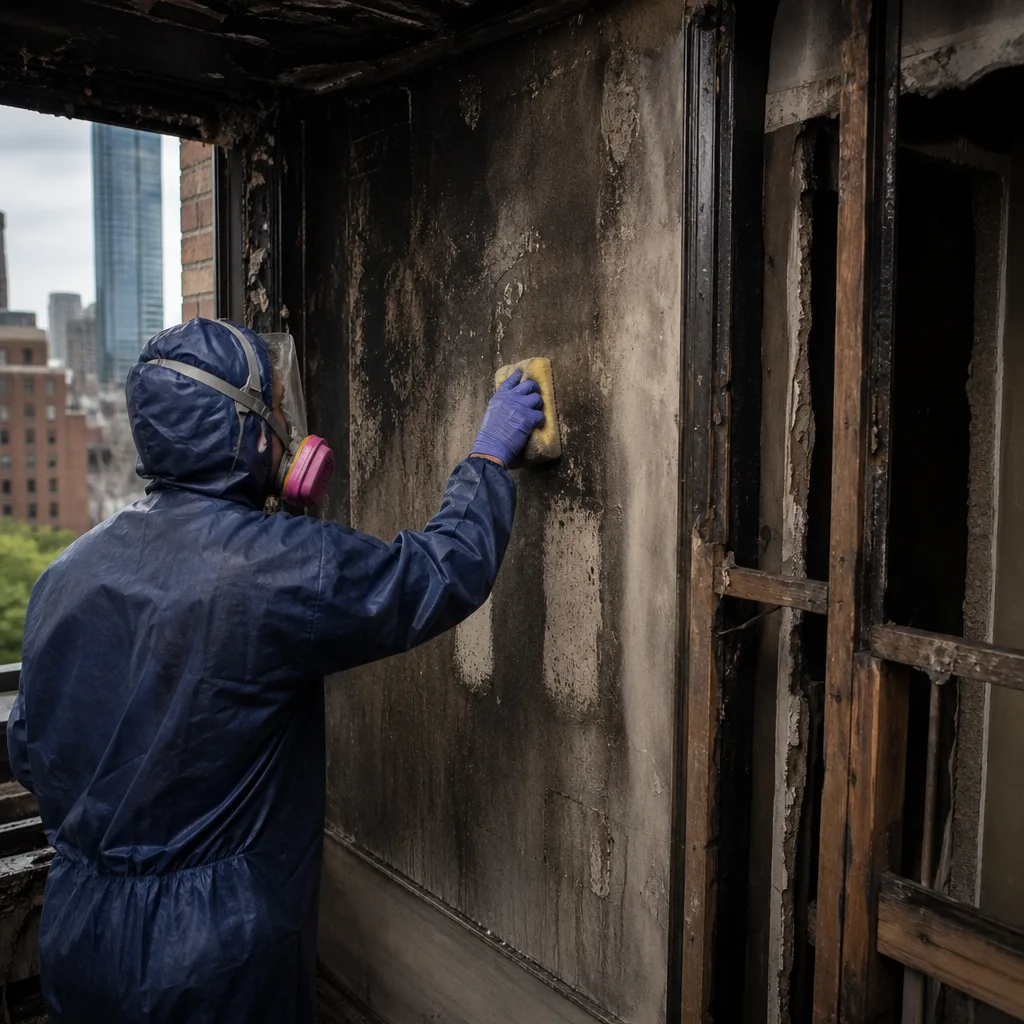
All affected surfaces get cleaned, then treated with an EPA-registered antimicrobial. We wipe, fog, or spray depending on the surface and the contaminant. In post-illness jobs, every touchpoint gets addressed, not just the obvious ones.
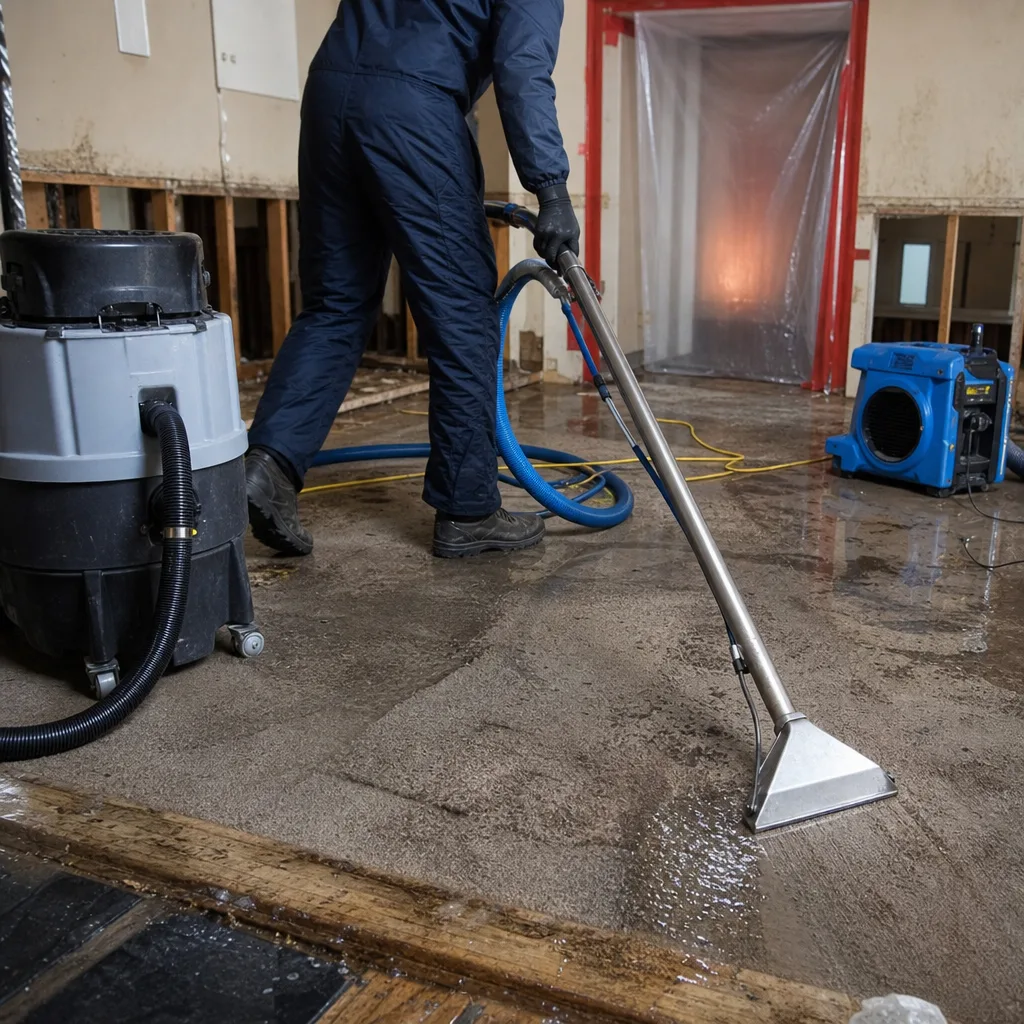
Specialty Treatment
For virus decontamination, we run commercial-grade fogging with a hospital-grade disinfectant through the entire unit. For odor issues, we may pair fogging with hydroxyl generation. Air duct sanitization gets scheduled after the room treatment so the system doesn’t recirculate what we just killed.
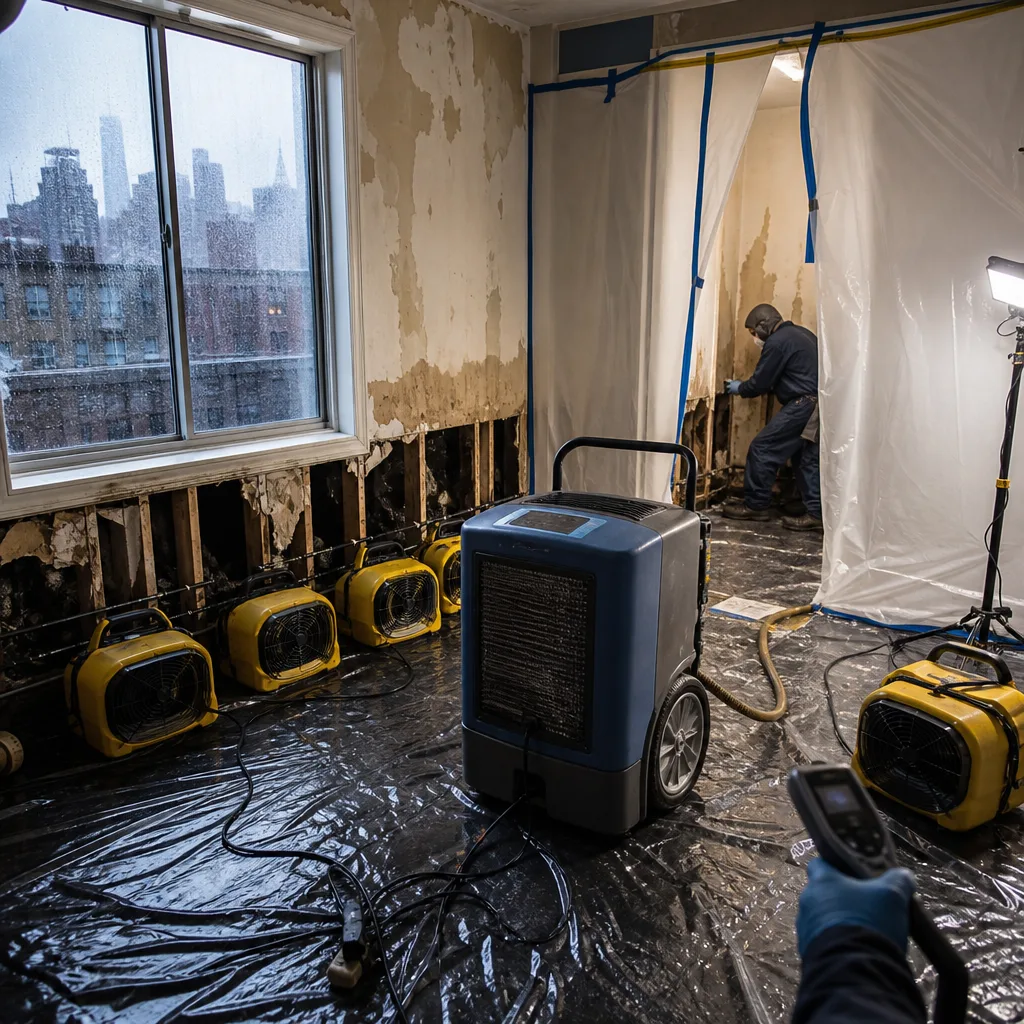
Clearance & Restoration
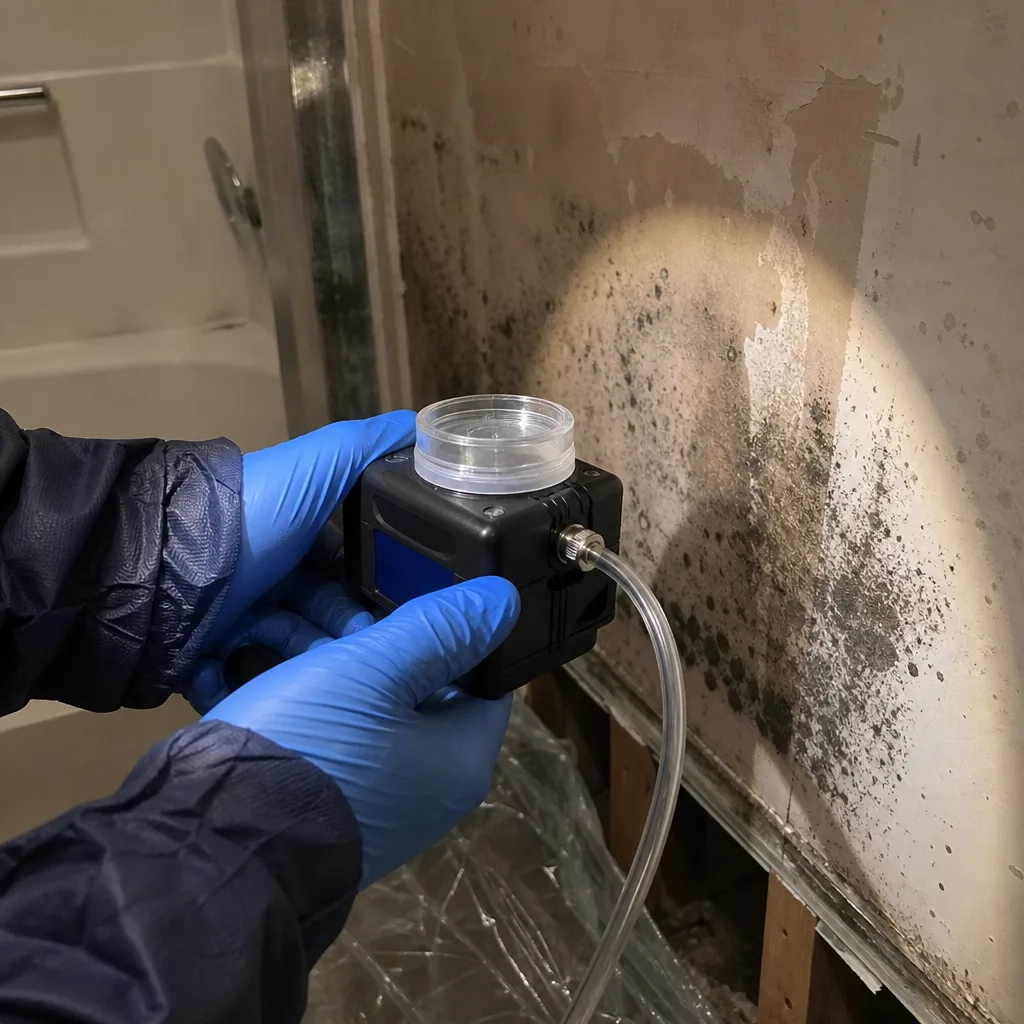
We run final air sampling where the job calls for it, hand you the moisture log and clearance documentation, and rebuild anything we removed. The 90-Day Done Right Promise covers the full scope, in writing.
Need Emergency Sanitization Services in Long Island City Now?
Crews minutes away, answering live 24 hours a day. The sooner we start, the less it costs.
Working With Your Insurance Company
Most sanitization work in Long Island City gets triggered by something your policy already covers: a sewer backup, a supply line failure, a storm surge event. We document everything from the first hour so your claim moves cleanly. Our team photographs every room before and after treatment, logs moisture readings daily, and writes a line-item scope in industry-standard format. Your adjuster gets direct access to our documentation, and we speak with them on your behalf. You never have to translate trade language into insurance language because we already speak both. The goal is a claim that closes fully and a home that’s actually clean, not just visually dry.
What We Provide Your Insurer
- Thorough documentation of the loss
- Photos of all damage, room by room
- Moisture readings and drying logs
- A detailed, line-item scope of work
- Direct coordination with your carrier
Built for Long Island City’s Loss Calendar
Long Island City doesn’t have a quiet season for sanitization work. January deep freezes push supply lines past their limit in pre-war loft conversions along Jackson Avenue, and the water that follows a burst pipe in an unheated stairwell soaks into the same slab-on-grade concrete we’ve been talking about, making Fire & Smoke Damage Restoration in Long Island City relevant when heating systems fail and spark secondary damage. Spring brings nor’easter-driven storm surge up the East River, pushing brackish water into basements and sub-grade spaces across ZIP 11101 and 11109. Summer thunderstorms overwhelm combined sewers, and basement backups in the old factory buildings around Court Square are a near-annual event. Fall shoulder seasons bring construction-defect leaks in the curtain-wall towers along Center Boulevard, where driving rain finds a path behind the glass. Every one of these events needs drying plus sanitization, because moisture that sits in LIC’s dense housing stock breeds bacteria and odor fast. We run crews year-round because the calendar here demands it.
Sanitization Services Across Long Island City’s Neighborhoods
Our crews know the difference between a Hunters Point high-rise and a Dutch Kills row house because the access and the building systems are nothing alike. In Hunters Point, we work within building management rules for freight elevator bookings and after-hours work, and we deal with curtain-wall leaks that run down inside wall cavities. Around Court Square, the converted factory lofts demand something else entirely: NYC DEP asbestos protocol checks before we pull a single baseboard, because pre-1974 pipe insulation and transite panels are common here. In Dutch Kills, we move through narrow stairwells and tight doorways with smaller footprint equipment, and we’re used to carrying gear up three flights because there’s no service elevator. Over in Queens Plaza and the blocks near the Pulaski Bridge, the mix of new construction and old industrial stock means we might handle a post-illness fogging in a studio one morning and a full sewer backup sanitization in a converted warehouse that afternoon. Each area has a rhythm, and we’ve learned it by working it for years.
Specialized Sanitization Services Services We Offer in Long Island City
Commercial-Grade Fogging
For virus, bacteria, and odor problems that have gotten into every surface, we run ULV and electrostatic fogging with EPA-registered disinfectants. In Long Island City lofts with open floor plans and exposed brick, fogging reaches into mortar joints and beam pockets that wiping can’t. In the glass towers, we fog full units after category 2 or 3 water events so the entire space clears, not just the visible damage area.
Air Duct Sanitization
Long Island City’s converted industrial buildings often run ductwork through original factory shafts, and those ducts collect decades of dust, moisture, and biological growth. After any water event or illness in a unit, we inspect the ducts, clean what needs cleaning, and apply a sanitizing treatment so the HVAC system stops recirculating contaminants. In pre-1974 buildings, we check for asbestos wrap before we touch anything, and we pause the job to bring in abatement if the material tests positive.
Post-Illness Cleanup
When someone in a Long Island City household has been through a serious illness, the question is how thoroughly to clean and what to discard. We treat every touched surface, fog the space, and run air duct sanitization where the system is shared or older. In tight studios around Queens Plaza, we also manage containment carefully so the work doesn’t force the resident out longer than necessary. The standard is clearance, not just a fresh smell.
Deep Disinfection
For households that want a reset after a long tenancy, a water event, or a period of neglect, we provide full-surface disinfection covering counters, cabinets, floors, walls, fixtures, and high-touch points. In Long Island City lofts with exposed concrete and brick, we use products rated for porous masonry so the disinfectant actually penetrates, not just sits on the surface.
Virus & Bacteria Decontamination
Confirmed exposure changes the protocol. We treat the space as a biohazard job: full containment, HEPA air scrubbing, complete surface disinfection, and fogging of the entire air volume. The procedure follows IICRC standards and produces a written record you can show to a landlord, a co-op board, or a health department inspector. Long Island City co-op buildings often require this documentation before an apartment can return to normal use.
Odor Neutralization
Persistent odor in Long Island City loft buildings often traces to the slab, not the air. We run moisture readings into the concrete, identify the source, dry it properly, then treat with antimicrobials and hydroxyl or ozone generation as the final step. Skip the drying and the smell comes back. We don’t skip it.
Sanitization Services Costs in Long Island City, NY
Full-unit virus decontamination with fogging in a one-bedroom Long Island City apartment runs $400 to $900. Air duct sanitization in a typical loft adds $300 to $600 depending on system size and access. Commercial-grade fogging alone, without full disinfection prep, runs $0.35 to $0.65 per square foot, so a 900-square-foot Hunters Point one-bedroom lands around $315 to $585. Post-sewage sanitization after a Category 3 basement backup in ZIP 11101 runs higher, $1,500 to $4,000, because it includes extraction, drying, demolition of contaminated materials, and full antimicrobial treatment. What moves the price: whether asbestos testing or abatement is required before we can open walls, whether the building is slab-on-grade with extended drying time, and whether your insurer covers the loss. Most Long Island City sanitization work after a water event is covered by homeowner or co-op policies. We give a free visual inspection and a written scope before you commit.
We Also Serve Cities Near Long Island City
Our crews cover Long Island City and the surrounding Queens waterfront, including Long Island City proper and the neighboring community of Astoria. If you’re across the Pulaski Bridge or just north of Queens Plaza, the same team and the same 45-minute response commitment apply.
Serving Long Island City, NY - Our Local Coverage Area
We’re based in the Long Island City area and know this community well. Use the map below to see our service coverage - if you’re nearby, we can almost certainly help.
Long Island City Sanitization Services Questions, Answered
How does New York City’s asbestos abatement rule affect sanitization work in a converted Long Island City loft?
In any building constructed before 1974, NYC DEP rules require an asbestos survey before you disturb drywall, flooring, or pipe insulation. Many Long Island City loft conversions fall into this category, and they frequently contain asbestos pipe wrap, transite panels, or 9-inch vinyl floor tile. If our sanitization scope requires opening walls or pulling flooring, we pause and run the survey first. If asbestos is present, abatement happens before sanitization proceeds. Skipping this step can trigger a regulatory stop-work order and cross-contamination.
Why do sanitization jobs in Hunters Point high-rises often take longer than similar work in other Queens neighborhoods?
The curtain-wall systems on post-2010 Long Island City towers allow slow water intrusion behind exterior walls, often without visible staining for weeks. By the time the problem shows, moisture has migrated through wall cavities and under flooring. Finding the full extent requires thermal imaging and moisture mapping, and structural drying in a high-rise with building management access rules simply takes longer than a single-family home. We set realistic timelines and log daily readings so the job doesn’t close early.
What is the correct water category for a sewer backup in a Long Island City basement, and does it change sanitization?
Category 3. That’s black water, carrying sewage, bacteria, and potential pathogens. Sanitization after a Category 3 event in a Long Island City basement includes full extraction, removal of porous materials that absorbed the water, antimicrobial treatment on remaining surfaces, and clearance testing before the space is usable again. You cannot simply mop and fog a Category 3 loss. The protocol is different, and it’s the standard we follow.
Can you sanitize air ducts in a converted loft without triggering NYC DEP asbestos rules?
If the ductwork is modern and no asbestos-containing materials are present, yes. In many Long Island City loft conversions, however, original factory ducts are wrapped in asbestos insulation, and those ducts trigger survey and abatement requirements before sanitization can proceed. We check first, and we don’t proceed until the material is cleared or removed. If you’re unsure about your building’s ductwork, call Sanitization Services and we’ll help you figure out what applies.
How do you manage containment in a small Long Island City studio during a virus decontamination?
We run containment in a studio the same way we run it in a loft: 6-mil poly sheeting, negative air pressure, and HEPA air scrubbing. The difference is layout. In a 450-square-foot studio, we often isolate the entire unit rather than one room, and we schedule the fogging and drying so the resident can return sooner. We’ve handled post-illness decontamination in tight Queens Plaza apartments where there’s nowhere to stage equipment except the hallway.
How fast can someone actually get here for a sanitization emergency in Long Island City?
We answer live 24/7 and crews typically reach Long Island City within 45 minutes of your call. In a Category 3 sewer backup or a confirmed virus exposure, the first hour matters because contaminants settle and spread. We stage equipment near Queens so the trip is short. Call (518) 314-5660 and you’ll speak to a dispatcher who can send a crew immediately.
Will insurance cover sanitization services after a water or sewer event in Long Island City?
Most homeowner and co-op policies cover sanitization when it’s part of a covered loss, like a sewer backup, a burst pipe, or a storm surge event. We document from the first hour, write the scope in insurance-standard format, and bill your carrier directly. You don’t play messenger. The exact coverage depends on your policy’s water damage and backup endorsements.
What should I do in the first 30 minutes after discovering a sewage backup or water leak in Long Island City?
Shut off the water if you can do so safely, turn off electricity to the affected area if there’s standing water, and keep people and pets away from the affected space. Do not run fans or try to dry it yourself; that spreads contaminants. Then call (518) 314-5660. We’ll walk you through what to do over the phone and have a crew on the way. The first 30 minutes determine how much surface area gets contaminated.
Call (518) 314-5660 for a free visual inspection and a written scope on any sanitization job in Long Island City. Curt Bowman and the Floodline Restoration Co. team answer live, 24 hours a day. Done right, and backed in writing.
Written by Curt Bowman, Owner at Floodline Restoration Co., serving Long Island City with certified sanitization and restoration since 2010.
Why Long Island City Chooses Floodline Restoration Co.
We set the standard for sanitization services in Long Island City.
Documented for Your Claim
Every job is photographed before, during and after, with moisture logs where they apply. We hand the full file to your adjuster and bill your insurance directly - you are never the one relaying it.
Licensed & Insured
Fully certified technicians who meet all local and state licensing requirements.
Upfront Pricing
No hidden fees, no surprises. You approve the price before any work begins.
Guaranteed Work
Every repair and installation is backed by our workmanship warranty and satisfaction guarantee.
How It Works in Long Island City
Getting your sanitization services handled is simple and fast.
Call or Request a Free Estimate
Tell us about your sanitization services needs and we provide an upfront, transparent quote - no obligation, no hidden fees.
Licensed Technician Dispatched
A background-checked, certified technician arrives in Long Island City - typically within 30-60 minutes, with parts stocked on the truck.
Problem Solved, Guaranteed
We complete the job to your full satisfaction, backed by our warranty and 100% satisfaction guarantee.
What happens when you call
- 1A real person answersNo phone trees - talk to a local sanitization services pro.
- 2You get an upfront price rangeHonest numbers before anyone is dispatched. No surprises.
- 3We come out and measureLicensed & insured, at a time that suits you - the visit and the quote are both free.
- 4You get the price in writingLine-itemed, yours to keep, and nothing starts until you say go.
What Long Island City Customers Say
Trusted by homeowners across Long Island City and surrounding areas.
"Water heater flooded the finished side of the basement at two in the morning. A person answered, not a machine, and a crew was pulling water before sunrise. Everything got photographed before they moved a thing, which made the insurance claim painless."
"Second property they have dried out for us. Same process both times, meter readings logged on every visit and the log handed over at the end. Our adjuster said it was the cleanest file he had seen all year."
"We had a musty smell in the hall closet for months. He tested first, found the leak inside the wall, sealed the area off with plastic before opening anything, and put the whole scope in writing before asking for a signature."
Our Work in Long Island City
A look at recent damage restoration projects across Long Island City and surrounding areas.
Ready for Sanitization Services in Long Island City?
Call now for a free estimate - or request one below. Licensed, insured, and here with fast after-hours help in Long Island City.
(518) 314-5660Request a Free Estimate in Long Island City
Tell us about your sanitization services needs - we'll respond within the hour.