
Free visual inspection and a written scope of work before any mitigation begins - photos, moisture readings, and drying logs go in your claim file
The scope we write is the scope we bill. Anything new gets shown to you, in writing, before we touch it.
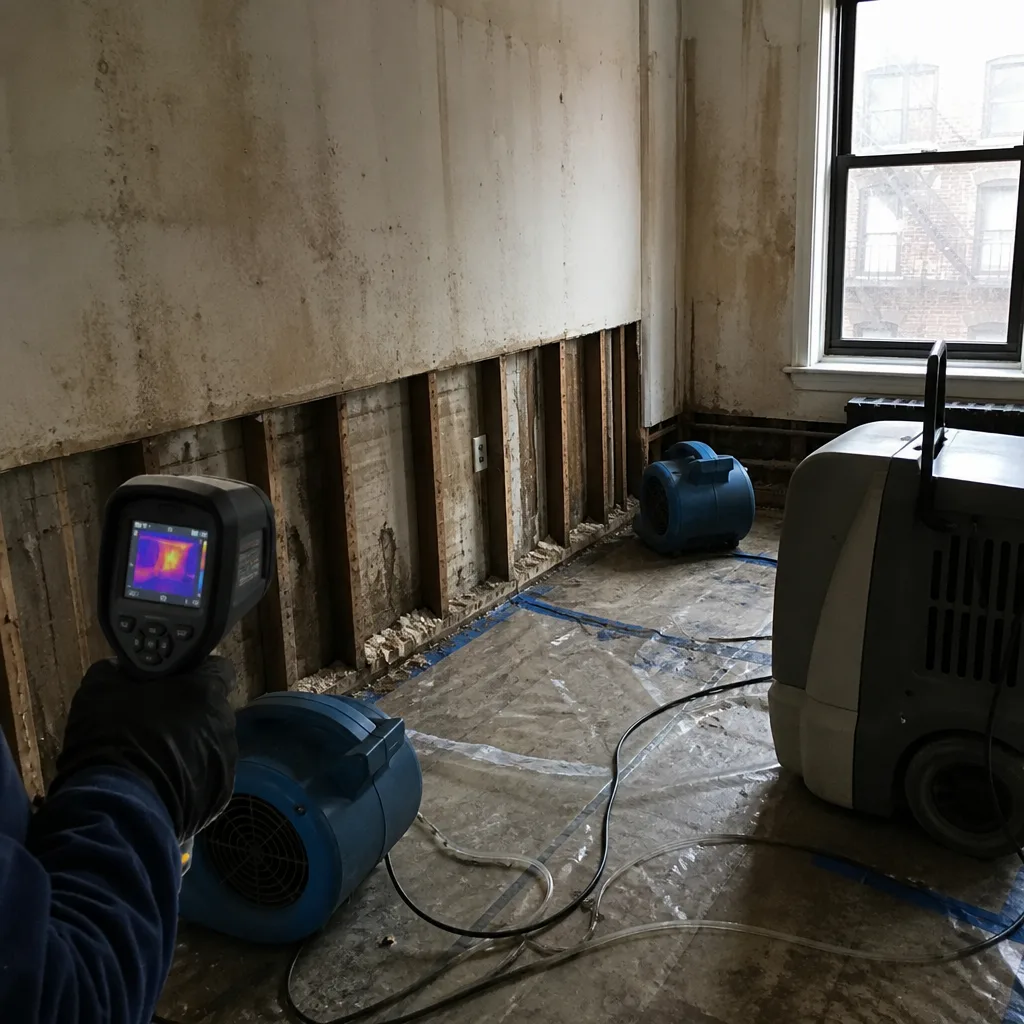 Before
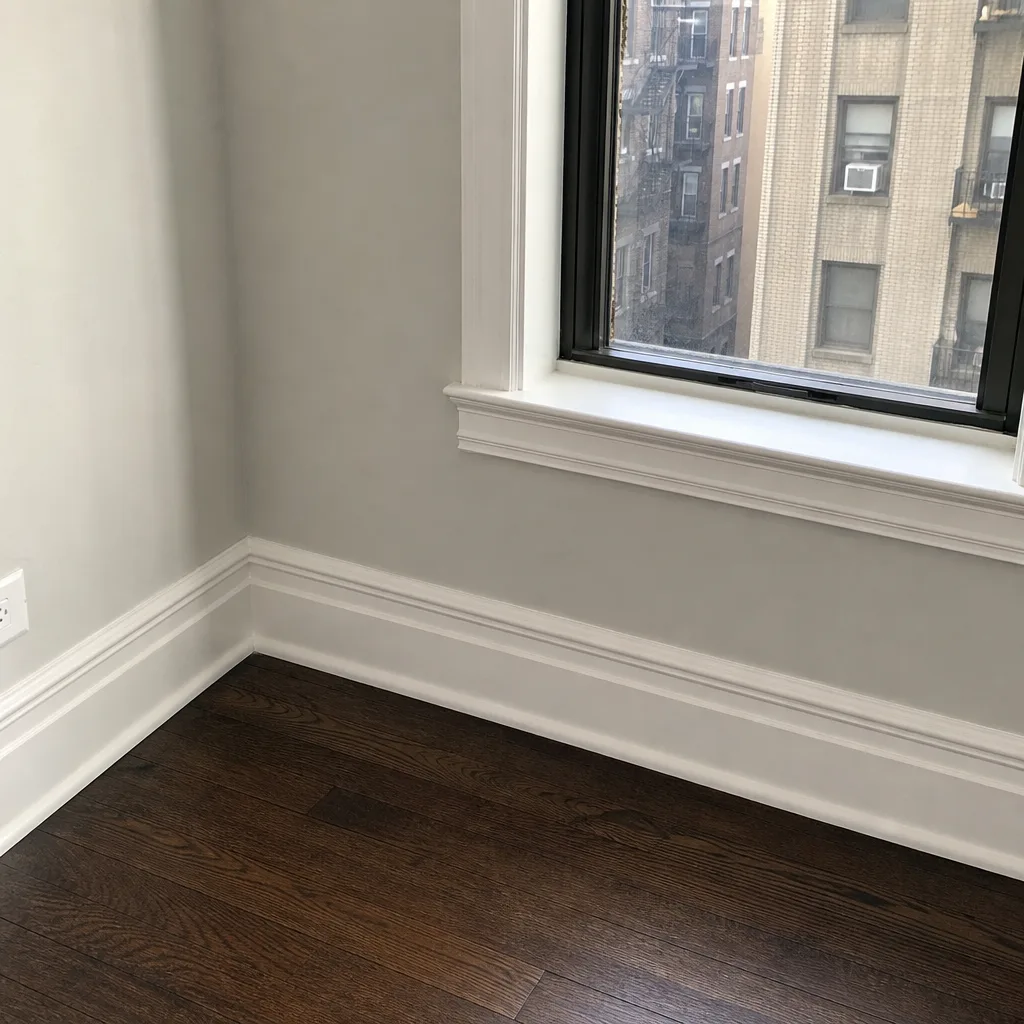 After
After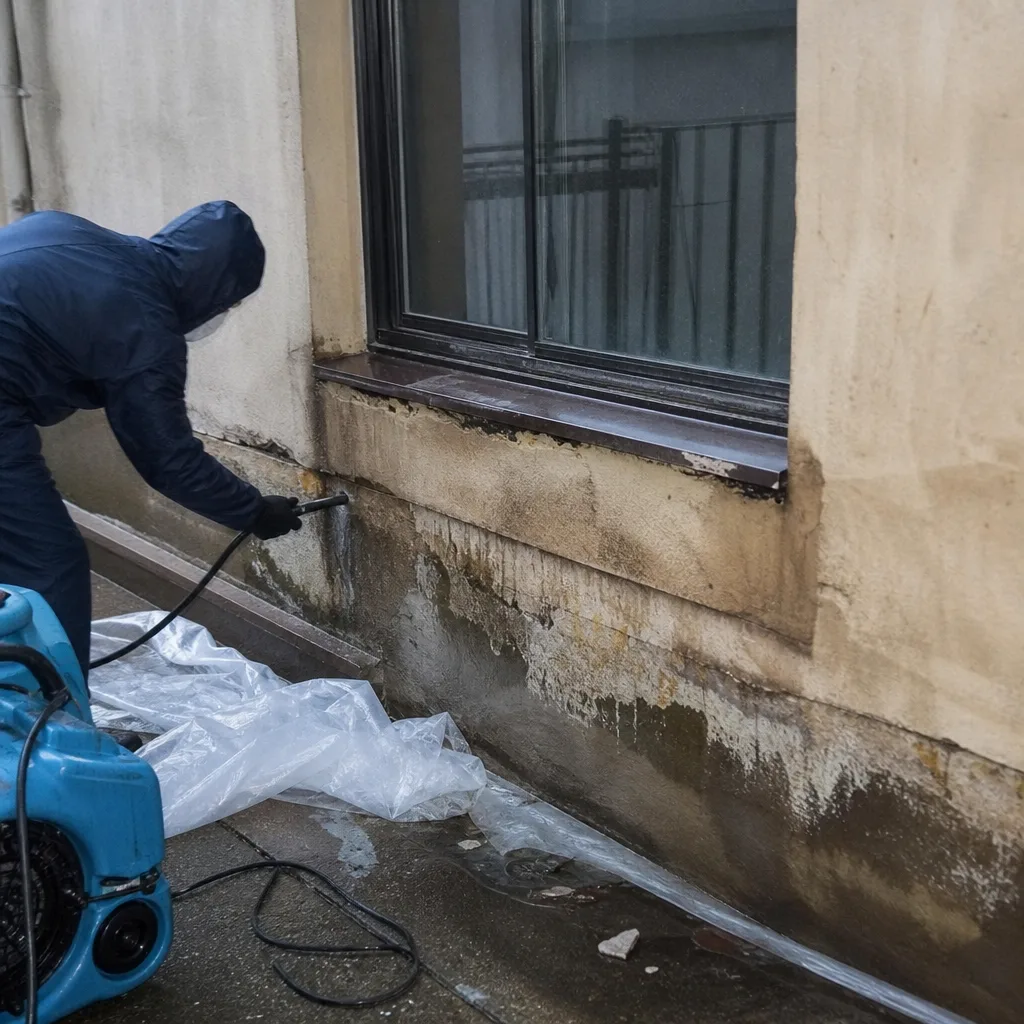 Before
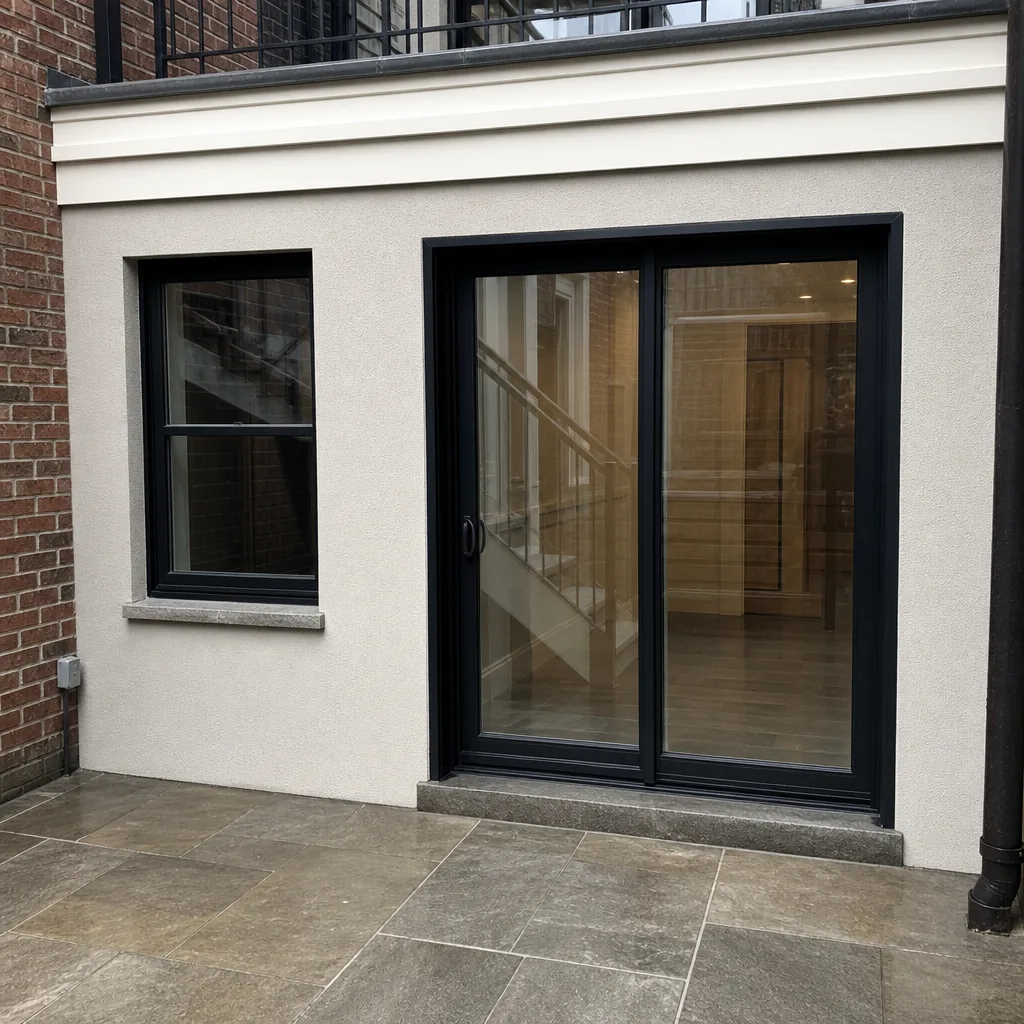 After
After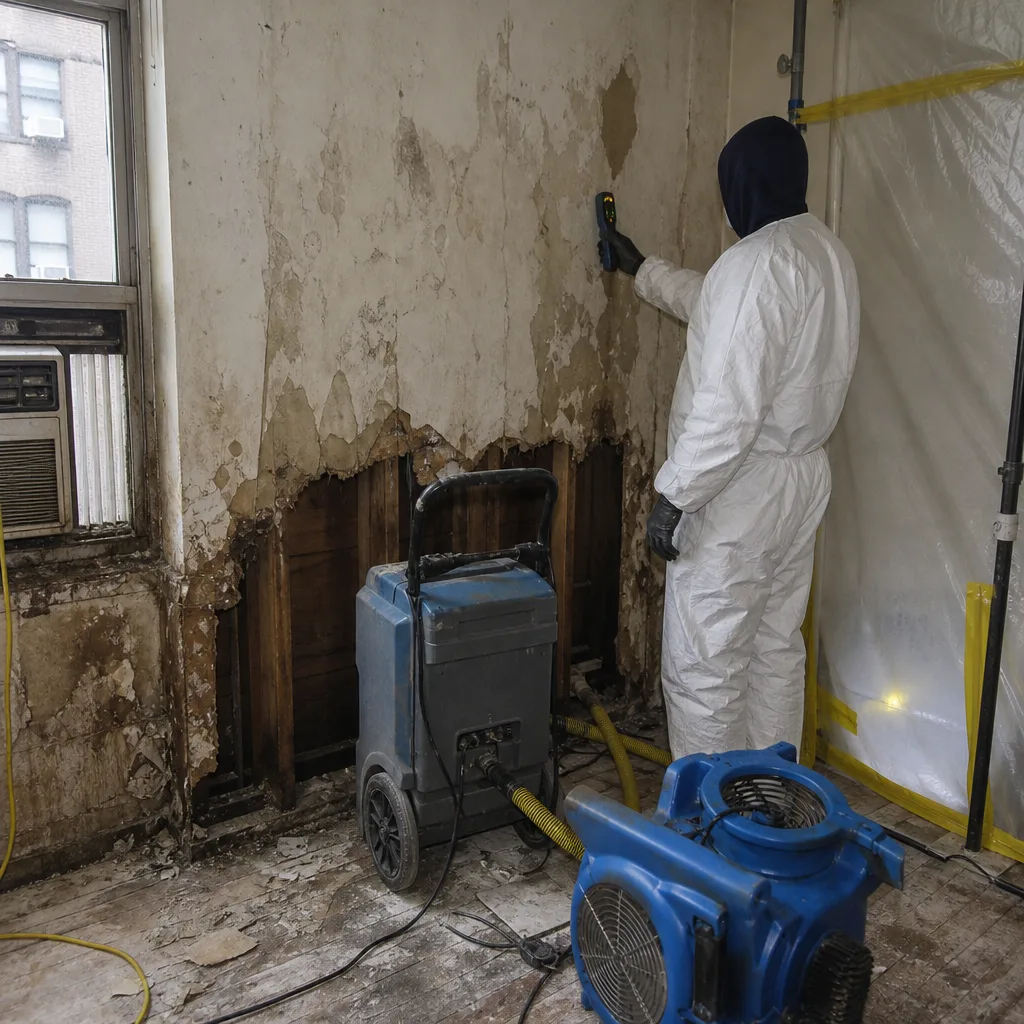 Before
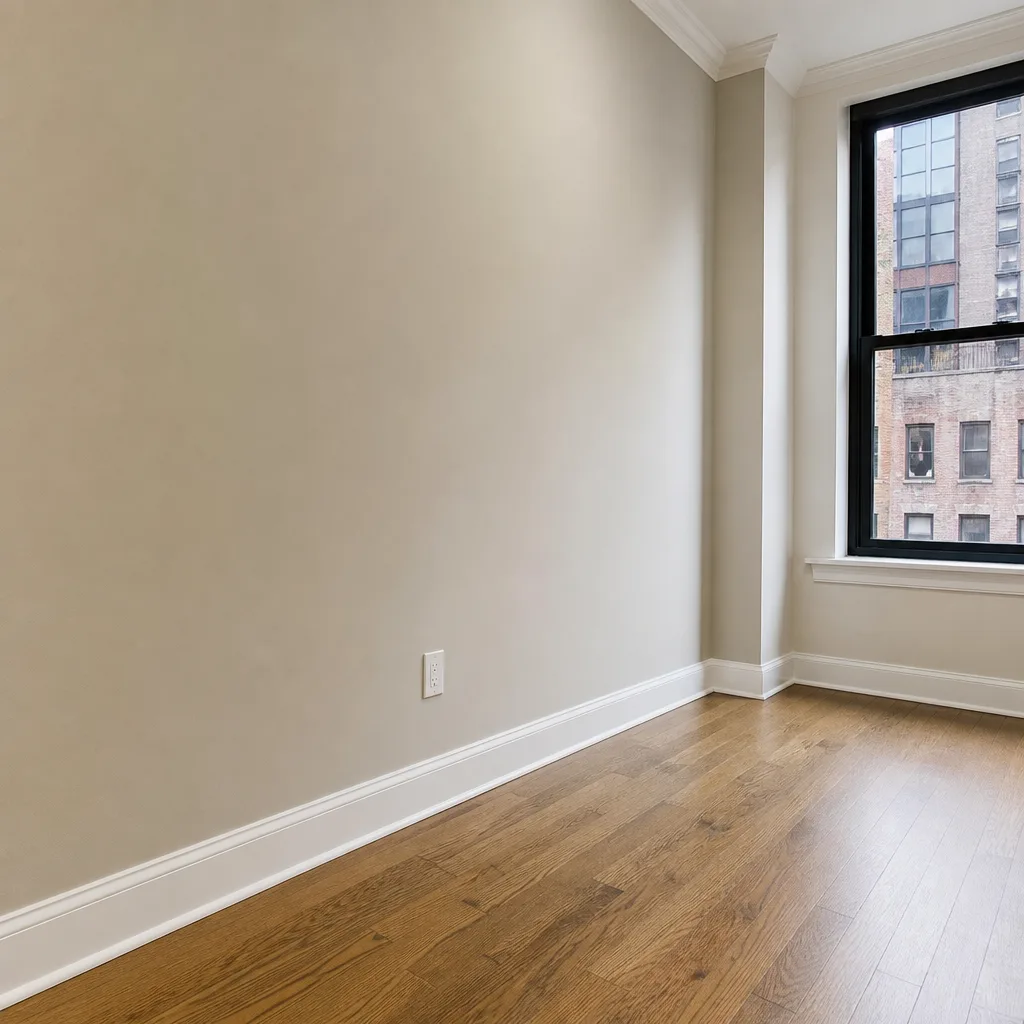 After
After24/7 Emergency Mold Remediation in West New York
Mold in a West New York apartment or row house is rarely a one-unit problem. The stacked brick buildings along Bergenline Avenue and the side streets off Kennedy Boulevard share plumbing chases and plaster wall cavities, so what starts as a slow leak behind a third-floor bathroom wall becomes a four-floor containment job before anyone sees a spot. We answer the phone with a live dispatcher at (518) 314-5660, any hour, and a certified crew can be inside your building the same day. The first call costs you nothing: we walk the affected area, take moisture readings, and tell you honestly whether you need full remediation or a targeted cleaning. In a town this dense, the first hour spent correctly is the difference between treating one unit and gutting three.
Understanding Mold Remediation Severity in West New York Properties
Mold severity follows moisture, and moisture in West New York follows the building. The 1920s-to-1960s brick walk-ups that dominate the town were built with thick original plaster and lathe, galvanized supply lines that have been corroding for sixty years, and cast-iron drains now at the end of their service life. When a toilet supply line lets go in a third-floor bathroom, the water doesn’t pool on a slab; it saturates the plaster, travels along the floor joists, and drips through the ceiling of the unit below. We classify what we find using the same moisture mapping and structural drying standards used across the industry: elevated moisture readings in drywall versus saturation in structural framing, surface mold versus colonization inside wall cavities, and confirmed spore presence versus water staining that looks like mold but isn’t. In West New York specifically, we treat any visible mold in a shared wall as a cross-unit concern until moisture readings prove otherwise. The housing stock tells us where to look before we even open a wall.
The dense construction has another consequence: drying takes longer here. Plaster-and-lath walls hold water differently than modern drywall, and the shared masonry party walls between units slow evaporation. A remediation job that dries in four days in a suburban sheetrock house might need seven or eight in a West New York walk-up. Anyone who promises you a two-day turnaround without running daily moisture readings is guessing, and guessing in a multi-unit building is how mold comes back in the unit next door.
Why West New York Property Owners Choose Floodline Restoration Co.
- 45-minute response commitment to West New York addresses. Our dispatch board tracks crews by neighborhood, not by truck lot, so the tech closest to your block is the one who shows up.
- A live person answers, 24/7. No phone tree, no callback queue. You reach a dispatcher who knows the difference between a contained leak and a saturated chase, and who can route a crew accordingly.
- IICRC-certified crews with the right WRT and AMRT credentials. Mold remediation requires specific training in containment and air scrubbing, not just water damage response. Our techs carry both.
- Free visual inspection with moisture readings. Before any work is scoped, we map the moisture in the affected area and show you the readings. No charge for the look, and no obligation.
- Direct insurance billing. We document everything from the first hour, submit our own line-item estimate to your carrier, and talk to the adjuster so you don’t have to. You never play messenger between Floodline and the insurance company.
- One crew from containment to rebuild. We don’t remediate and then hand you a contractor to patch the walls. The same certified techs who set up containment put the plaster back when the readings clear.
Every job we do in West New York carries the 90-Day Done Right Promise. It’s in writing. If the mold returns or the repair fails within 90 days, we return and make it right. No arguing, no paperwork battle. Curt Bowman founded this company on that promise, and it’s the reason property owners in this town call us when the building is old and the problem is layered.
Our Mold Remediation Process
Inspection & Assessment
We start with thermal imaging and moisture meters, not hammers. In West New York’s plaster walls, mold often lives behind surfaces that look dry. We map the moisture across the affected unit and any adjacent units that share a wall or ceiling cavity. You get a written scope before any demolition starts.
Stabilization & Containment
Before removing anything, we seal the work area with negative-pressure containment and run HEPA air scrubbers. In tight apartment hallways and stairwells, this keeps mold spores from migrating into common areas and neighboring units. If the affected area is small, we use local containment to avoid disrupting the whole floor.
Drying & Dehumidification
We set Dri-Eaz and Phoenix dehumidifiers and air movers to dry the affected framing, plaster, and subflooring. In thick plaster-and-lath construction, this phase takes longer than in drywall, and we don’t close a wall until daily moisture readings confirm the structure is dry. The log goes to you and your carrier.
Cleaning & Sanitization
Surfaces that can be salvaged are cleaned with professional-grade antimicrobial treatments. Surfaces that can’t, like saturated plaster or mold-colonized drywall, are removed under containment and bagged for disposal. We clean what stays and cut out what can’t be cleaned.
Specialty Treatment for Mold Remediation
After removal, we treat the exposed framing, stud bays, and any remaining plaster with antimicrobial coatings specifically rated for interior structural use. In shared wall cavities common to West New York’s apartment buildings, this treatment extends into the neighbor’s cavity where moisture readings indicated migration.
Repairs & Restoration
Once the treated areas are cleared, we rebuild. Plaster patches, paint, trim, flooring, and any structural repairs are handled by the same crew. We leave the building the way it should have been before the leak, not with a remediation patch and a phone number for someone else to finish the job.
Need Emergency Mold Remediation in West New York Now?
Crews minutes away, answering live 24 hours a day. The sooner we start, the less it costs.
Working With Your Insurance Company
Mold remediation in a West New York rental or co-op usually involves at least two insurance policies, and often three: the unit owner’s, the adjacent unit owner’s, and sometimes the building’s master policy. We’ve handled enough of these to know exactly what adjusters need to approve a claim cleanly. The first photos matter. So do the moisture readings from day one, the daily drying logs, and the line-item scope that separates mold remediation from the rebuilding that follows. We provide all of it without you having to chase paperwork.
What We Provide Your Insurer
- Thorough documentation of the loss
- Photos of all damage, room by room
- Moisture readings and drying logs
- A detailed, line-item scope of work
- Direct coordination with your carrier
Photographs and daily readings aren’t just for the insurance file; they’re also how we protect you from being underpaid on a multi-unit claim. If the mold started in the unit above yours, we can document that path clearly enough that your carrier doesn’t have to guess. And because we bill the carrier directly, you’re not floating a remediation bill while the claim works through approval.
Built for West New York’s Loss Calendar
The calls come in seasonal waves, and after fifteen years of dispatching into this town, we know the calendar. January and February bring frozen pipes in unheated stairwells and poorly insulated chase walls, especially in the older buildings off Palisade Avenue where plumbing runs along exterior brick. Spring thaw and heavy April rains pool on the flat roofs of the 1950s-era apartments, and the water finds its way down interior walls to the top-floor units first. Summer thunderstorms overwhelm aging roof drains and send water down through ceiling cavities from the parapet inward.
Then there are the year-round calls: the slow supply-line leaks that go unnoticed behind kitchen cabinets until a tenant in the unit below sees a brown stain spreading across the ceiling. By the time anyone calls, the source unit is usually the smallest part of the job. Mold in West New York doesn’t respect lease lines, and neither does the water that feeds it. The only fix that lasts is one that maps the moisture across every affected unit, not just the one with the visible spot.
Mold Remediation Across West New York’s Neighborhoods
The buildings change block by block, and so do the job requirements. Along Bergenline Avenue, the commercial corridor runs through the heart of town, and the residential units above storefronts often have flat roofs, parapet walls, and decades of patch jobs. Water intrusion from the roof finds its way down through multiple floors before pooling in a basement or rear apartment. Parking for our trucks is tight, so we stage equipment efficiently and keep the footprint small.
Up on Kennedy Boulevard and the side streets running east toward the Palisades, the six- and eight-story brick buildings from the 1930s and 1940s present a different challenge: shared plumbing stacks that run vertically through every floor. A slow leak in a fifth-floor kitchen can travel the entire stack, and containment sometimes has to happen on four floors at once. We’ve done jobs where the source unit was a third of the total affected area.
Down along River Road at the base of the escarpment, the buildings sit closer to the Hudson River storm-surge footprint. Basement and ground-floor units here carry higher humidity year-round, and even without an active leak, porous plaster absorbs ambient moisture. Crawl space treatment and whole-unit dehumidification matter more in these lower parcels than anywhere else in West New York.
In the residential blocks west of Palisade Avenue, the converted row houses and smaller four-unit buildings have their own patterns: finished basements with poor ventilation, shared cellar drainage, and original cast-iron waste lines that are finally failing. We’ve seen more mold in the cellars of these buildings than anywhere else in town, usually because a drain line cracked behind a finished wall and nobody knew until the baseboards warped.
Specialized Mold Remediation Services We Offer in West New York
Mold Inspection & Testing
Before any remediation starts, we identify the moisture source and the extent of the contamination. In West New York’s multi-unit buildings, that means checking not just the visible mold but the shared wall cavities, the ceiling plenum above the unit, and the plumbing chase that serves the floors above and below. We take air and surface samples where needed and send them to an independent lab. You get the results in writing, and the scope is built from data, not guesswork.
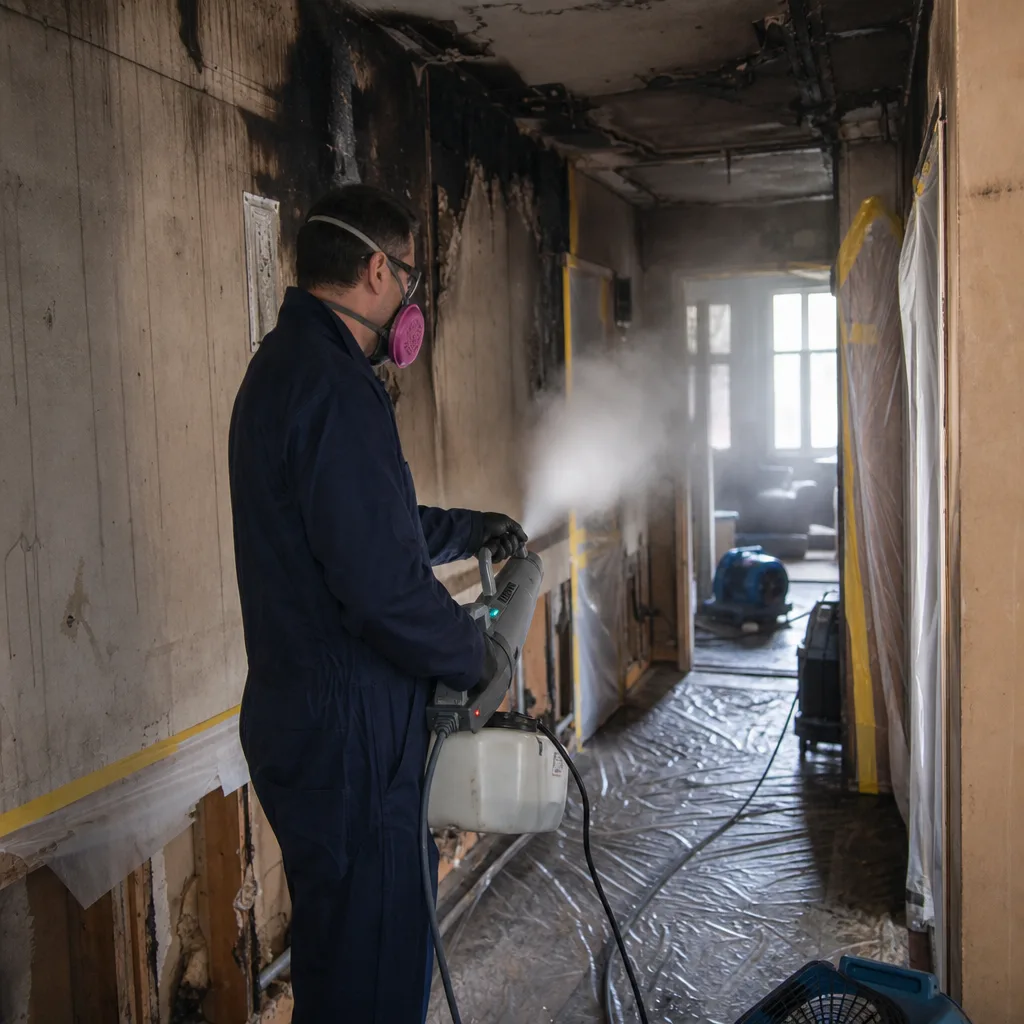
Mold Removal
Removal in a plaster-and-lath apartment is a different job than in a drywall house. We often have to cut out saturated plaster in sections, bag it under containment, and treat the underlying framing before rebuilding. In tight West New York hallways and stairwells, we run negative-pressure containment with HEPA filtration so spores don’t spread through the common areas. The building keeps living while we work.
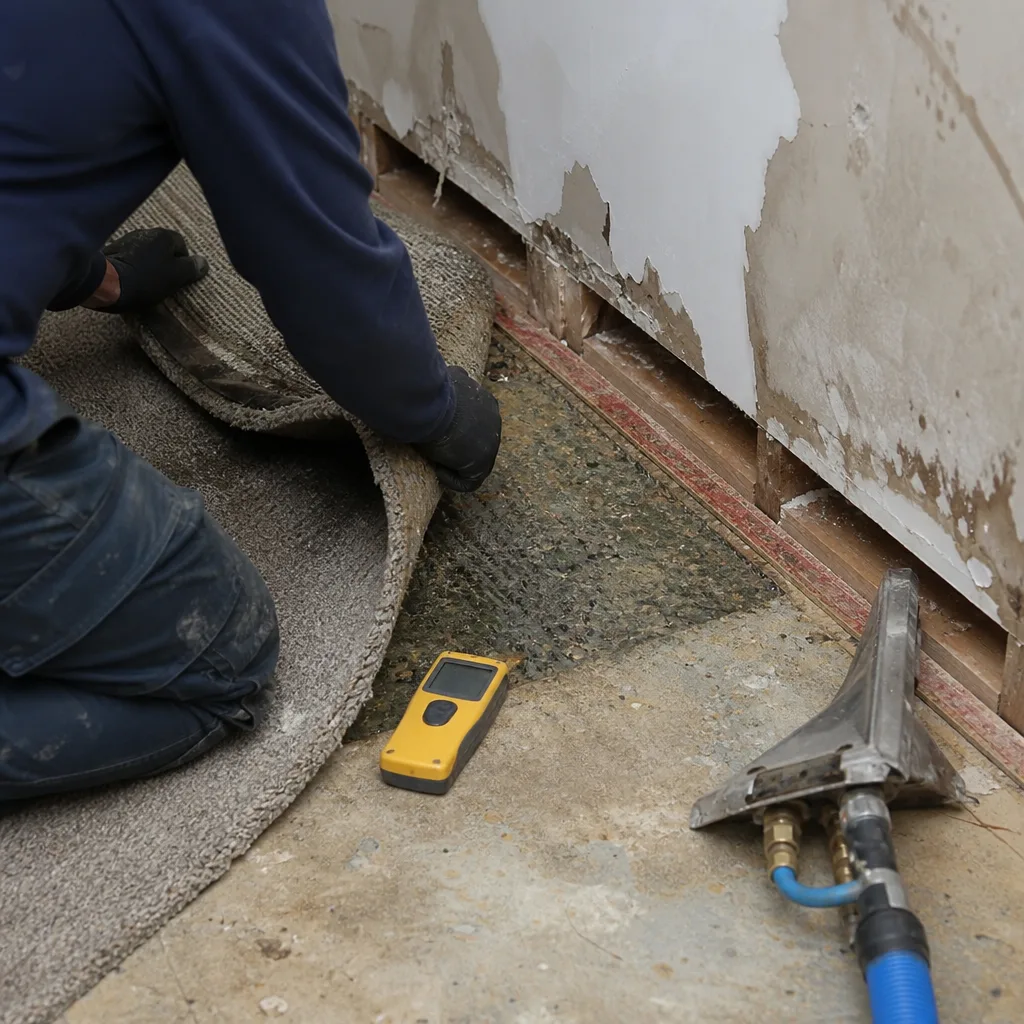
Black Mold Remediation
Black mold, or Stachybotrys, gets the attention, but the risk profile depends on the individual and the extent of the growth, not just the color. We treat any significant mold colonization the same way: contain it, remove it, treat it, and verify with clearance testing. In West New York, we’ve found black mold in bathroom ceilings, behind kitchen cabinets, and in the shared stud bays of party walls. The approach doesn’t change because the building is old; it just takes longer to dry.
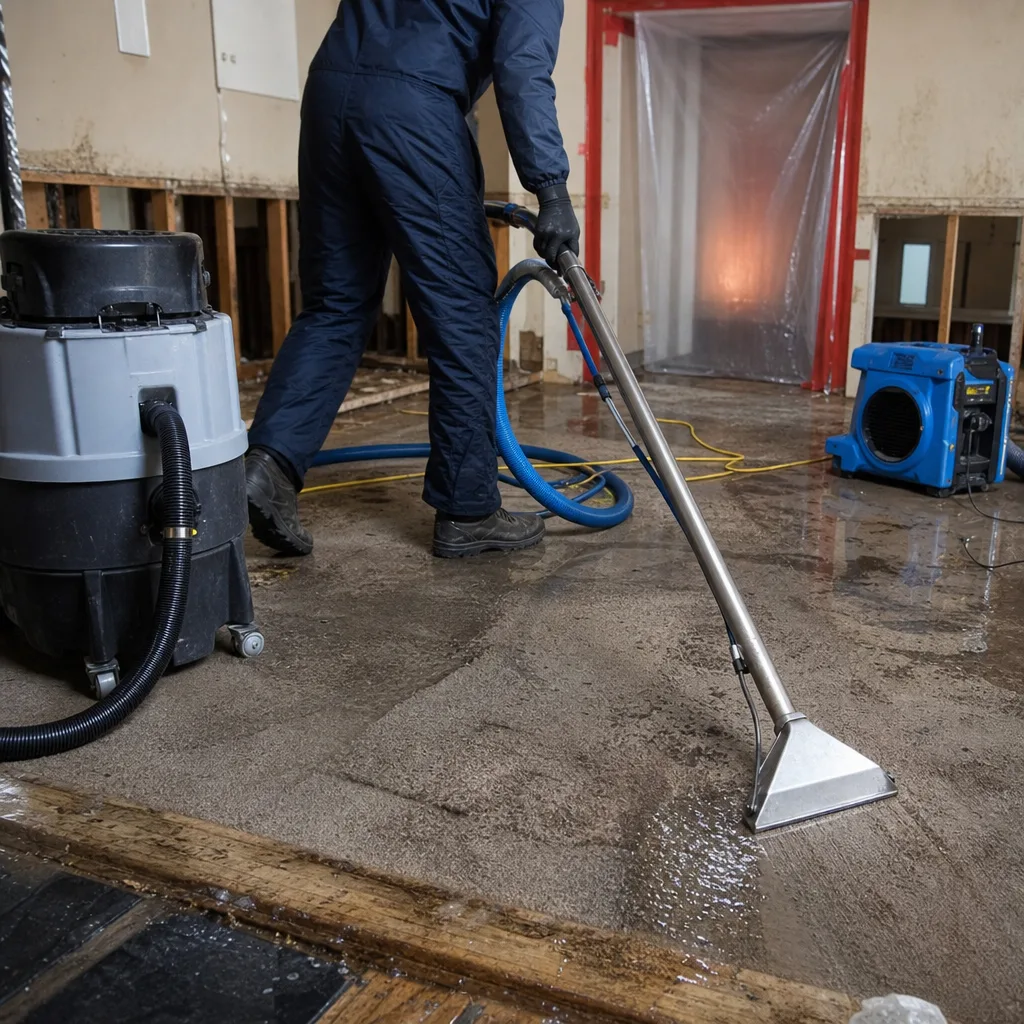
Air Quality Restoration
Mold spores travel, especially in buildings with shared air shafts and open stairwells. After remediation, we run air scrubbers and ventilation improvements to bring the indoor air back to normal. For units with chronic humidity problems, usually along the lower-elevation parcels near River Road, we recommend and install whole-unit dehumidification as part of the scope. The goal is a space that doesn’t feed mold, not just one that looks clean for a month.
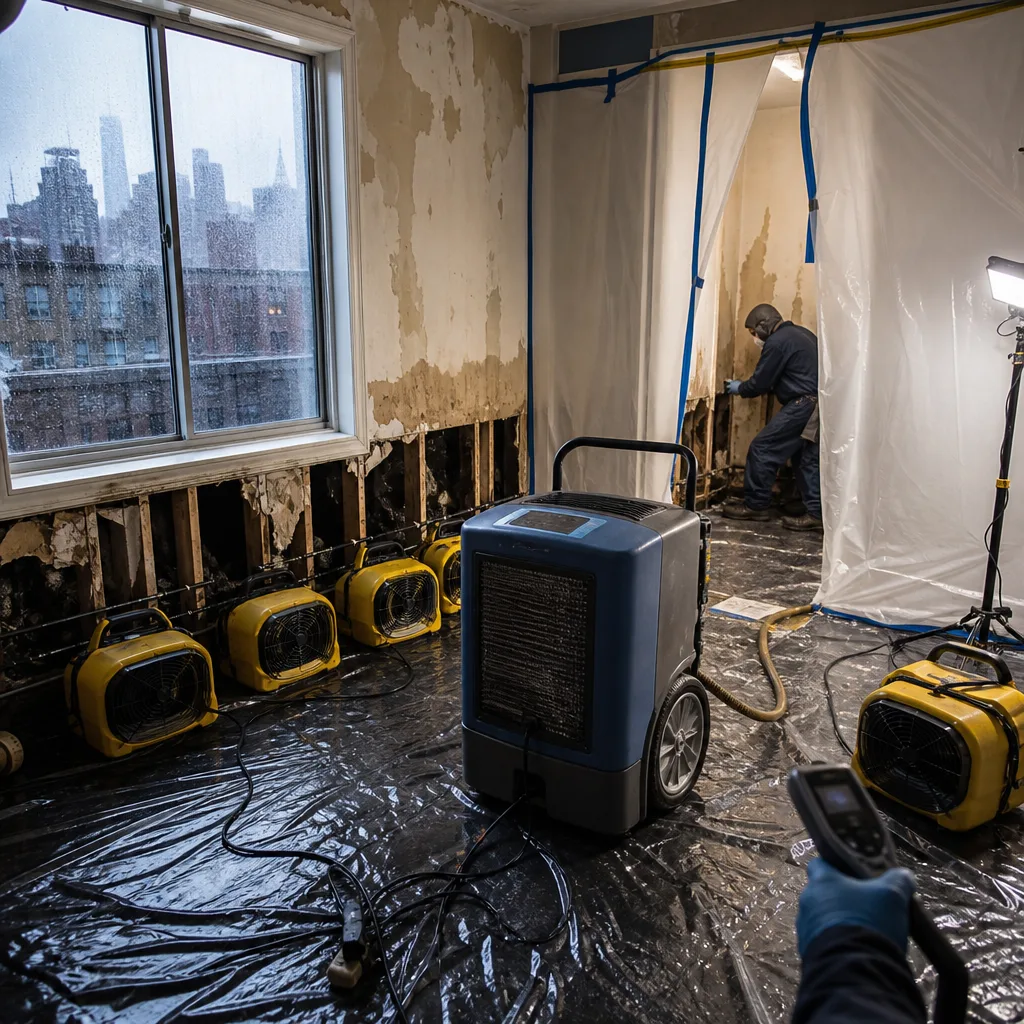
Crawl Space Treatment
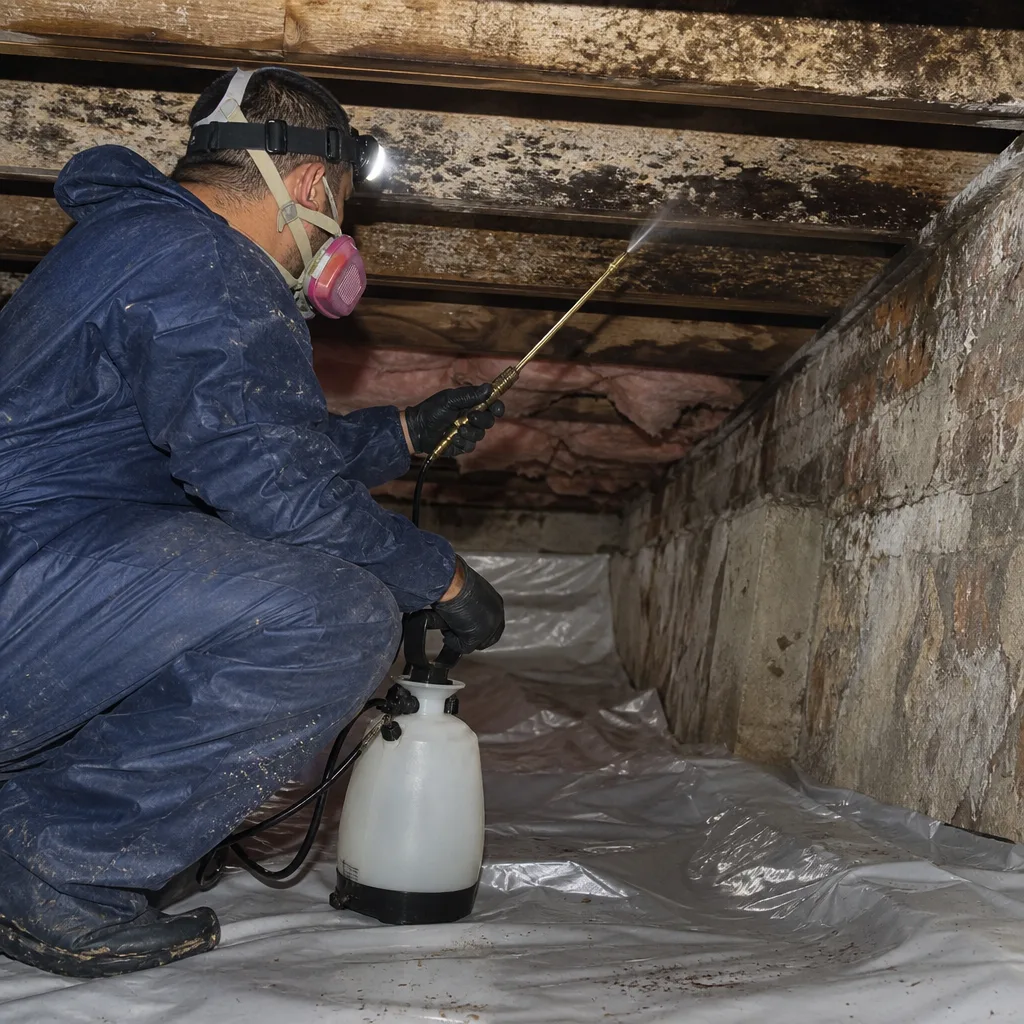
Many West New York row houses and smaller buildings have shallow crawl spaces under the first floor, and those spaces are almost always damp. We clean the debris, treat the framing and subflooring with antimicrobial products, and install or repair vapor barriers and ventilation. In these tight, low-clearance spaces, our techs work with handheld inspection cameras and portable drying equipment sized for confined access.
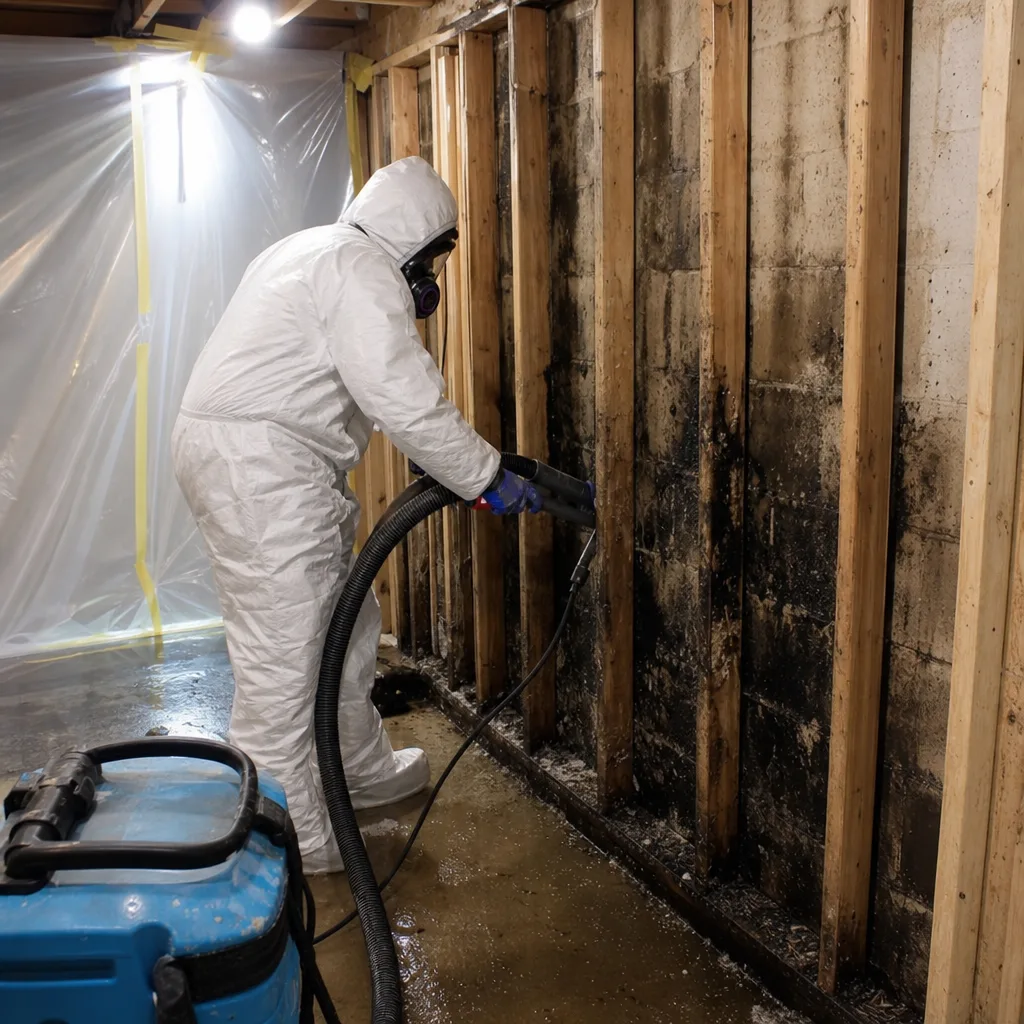
Moisture & Humidity Control
The Palisades bluff creates microclimates within West New York itself. Units on the east side near the cliff face sit drier than the low parcels along River Road, and the difference shows up in baseline humidity readings. We map your unit’s normal humidity range before recommending a fix, because the right solution for a fifth-floor unit near Kennedy Boulevard is not the same as the right solution for a garden apartment down by the river.
All of this work falls under the same umbrella as our broader Mold Remediation practice, and every job is backed by the 90-Day Done Right Promise in writing. In a building where adjacent units share air and structure, that promise matters more than it does anywhere else.
What happens when you call
- 1
A real person answersNo phone trees - you reach a local pro.
- 2
You get an upfront price rangeHonest numbers before anyone is dispatched.
- 3
A background-checked tech heads outLicensed & insured, dispatched right away.
- 4
You approve before work beginsNothing starts until you say go.
Mold Remediation Costs in West New York, NJ
Honest numbers, because you deserve them before anyone opens a wall. A small, contained bathroom mold job in a West New York apartment typically runs $800 to $2,500, depending on whether the damage extends into the framing or just the surface. A mid-sized remediation involving one full room and partial ceiling work in a plaster-and-lath unit usually falls between $3,000 and $7,500. A full multi-unit remediation with cross-unit containment, structural drying, and rebuild of saturated plaster can run $12,000 to $35,000 or more, with the insurance claim handling most of it in covered scenarios.
What moves the price here more than anywhere else is the building itself. Plaster-and-lath demolition costs more than cutting drywall. Containment in shared hallways costs more than sealing a single room in a detached house. And the drying timelines stretch because the materials are dense and old. All of that shows up in the estimate. Insurance typically covers mold remediation only when it results from a covered peril, like a sudden pipe burst or storm damage. Long-term leaks that went unaddressed for months are often excluded. We’ll tell you which side of that line your situation falls on, and we’ll do it with a free inspection and a written scope before any work begins. Call (518) 314-5660 and we’ll come look.
We Also Serve Cities Near West New York
Our crews cover the full Hudson County waterfront and the ridge towns above it, including Weehawken, Hoboken, Union City, and North Bergen. If you own or manage property in any of these towns, the same IICRC-certified techs and the same 90-Day Done Right Promise apply. West New York is where we spend a lot of our working days, but the building stock and the problems don’t stop at the municipal line.
Serving West New York, NJ - Our Local Coverage Area
We’re based in the West New York area and know this community well. Use the map below to see our service coverage - if you’re nearby, we can almost certainly help.
West New York Mold Remediation Questions, Answered
How does mold spread between apartments in West New York’s brick walk-ups?
Through the shared wall and ceiling cavities that connect units in most of West New York’s older brick buildings. When a slow leak saturates the plaster behind one unit’s wall, the moisture and mold spores can travel along the floor joists and through the open stud bays into the adjacent unit’s walls and ceiling. This is why we always check adjacent units before scoping a remediation job here. Treating only the visible mold without mapping the shared cavities is how recurrences happen. Call (518) 314-5660 and we’ll check your building’s specific layout.
Can you remediate mold in a unit without a full pack-out of the tenant’s belongings?
Often, yes. We use local containment barriers and negative-pressure HEPA filtration to seal off the work area from the rest of the unit, so furniture and belongings outside the affected room usually stay in place. In tight West New York apartments, full pack-outs are sometimes necessary when mold extends into closets, behind kitchen cabinets, or across multiple rooms. We’ll tell you honestly after the inspection, and we build the scope around doing as little disruption as possible while still getting the job done right.
What’s the typical timeline for mold remediation in a plaster-and-lath apartment?
Most single-unit jobs in West New York run seven to ten days from containment setup to final clearance. The drying phase is what takes longer here: thick original plaster and masonry party walls hold moisture longer than modern drywall, and we don’t close a wall until daily readings confirm the structural materials are dry. Multi-unit jobs with cross-unit containment can stretch two to three weeks. We’ll give you a written timeline with the scope, and we’ll call ahead if the drying readings require extending it.
Are there building-specific access challenges you handle in West New York?
Yes, and they’re part of why we know this town well. Narrow stairwells, fifth-floor walk-ups with no elevator, alley entrances around the back, and parking restrictions along Bergenline Avenue all shape how we stage equipment and run hoses. We send crews sized for the building, not the job type, and we coordinate with supers and building managers on where equipment can live during the drying phase. If your building has a service entrance or freight elevator, tell us on the call and we’ll route accordingly.
Do you test for mold before and after remediation in multi-unit buildings?
We test when it matters for your claim and your health. Pre-remediation testing identifies the type and extent of contamination, which is especially useful in multi-unit buildings where liability may fall across multiple policies. Post-remediation clearance testing verifies that spore counts in the treated area have returned to normal background levels. We send samples to an independent lab, and you get the results in writing. The clearance test is the only honest way to know the job is actually done, and we won’t call it done without one when the scope warrants it.
How fast can you actually get someone to West New York?
Most calls are answered live and a crew can be at your building within 45 minutes to a few hours, depending on where our nearest techs are working. We maintain dispatch coverage across Hudson County, and West New York is a core service area, not an outlying stop. For active leaks, our priority is stopping the water and setting containment the same day. Call (518) 314-5660 and the dispatcher will give you a straight answer on timing.
Will my insurance cover mold remediation in a West New York apartment?
Coverage depends on the cause, not the mold itself. If a sudden, covered peril like a burst pipe or a storm caused the moisture that led to mold, your policy likely covers the remediation and rebuild. If the moisture came from a slow leak that went unreported for months, carriers often deny the mold portion of the claim. We document everything from the first hour so your carrier sees exactly what happened and when, and we bill them directly. If your claim is denied, we’ll give you a straight answer on the out-of-pocket scope before we start.
What should I do in the first 30 minutes after discovering mold in West New York?
First, stop the water source if you can safely identify it and shut the supply line. Then, close off the affected room if possible, turn off any HVAC or fan running through that space, and call us at (518) 314-5660. Don’t wipe or disturb the mold, don’t run a household fan on it, and don’t open the walls unless water is actively spreading. The first 30 minutes are about limiting spore dispersion and stopping further moisture. We’ll handle the rest from the moment we arrive.
Written by Curt Bowman, Owner at Floodline Restoration Co., serving West New York since 2010.