
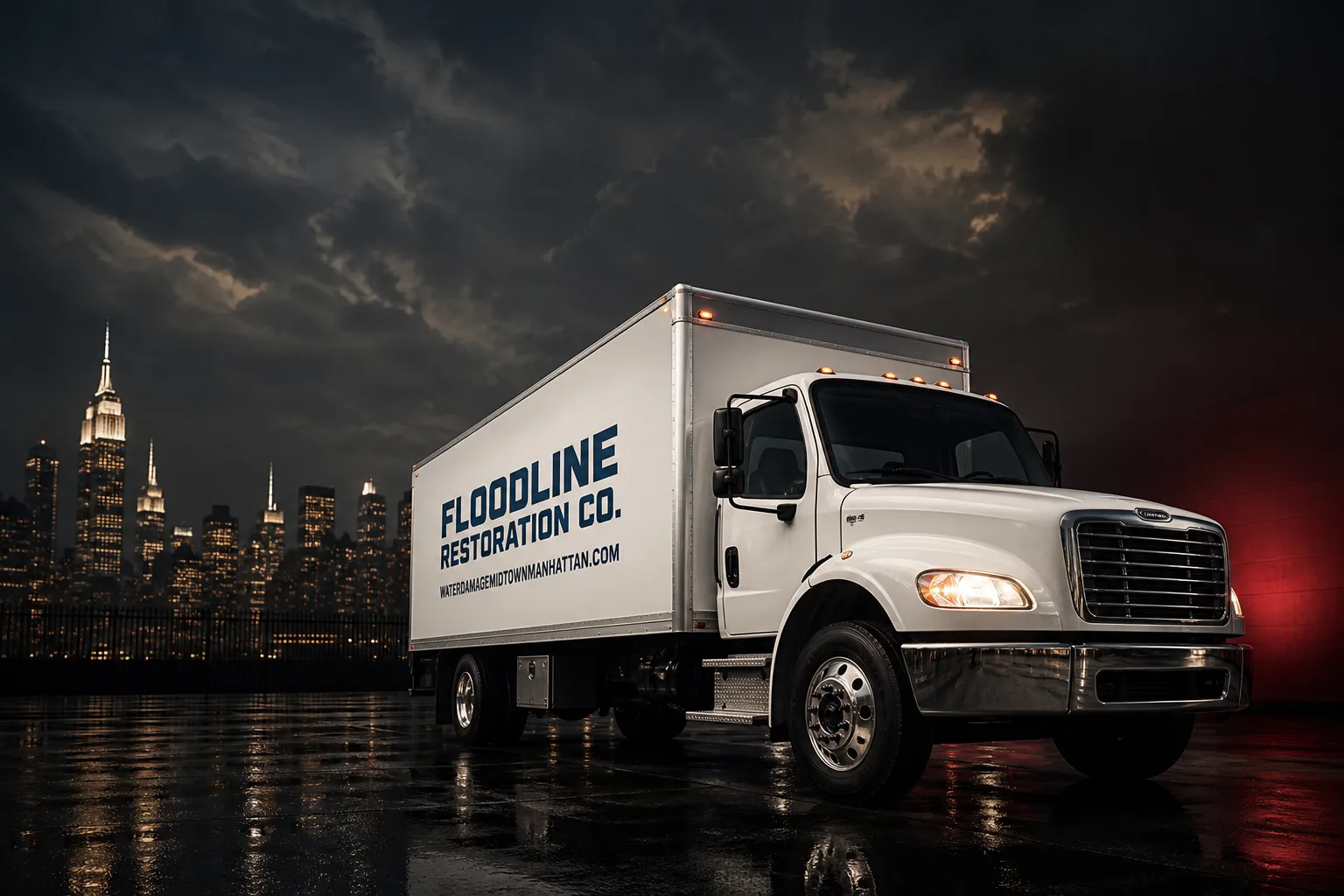
Free visual inspection and a written scope of work before any mitigation begins - photos, moisture readings, and drying logs go in your claim file
The scope we write is the scope we bill. Anything new gets shown to you, in writing, before we touch it.
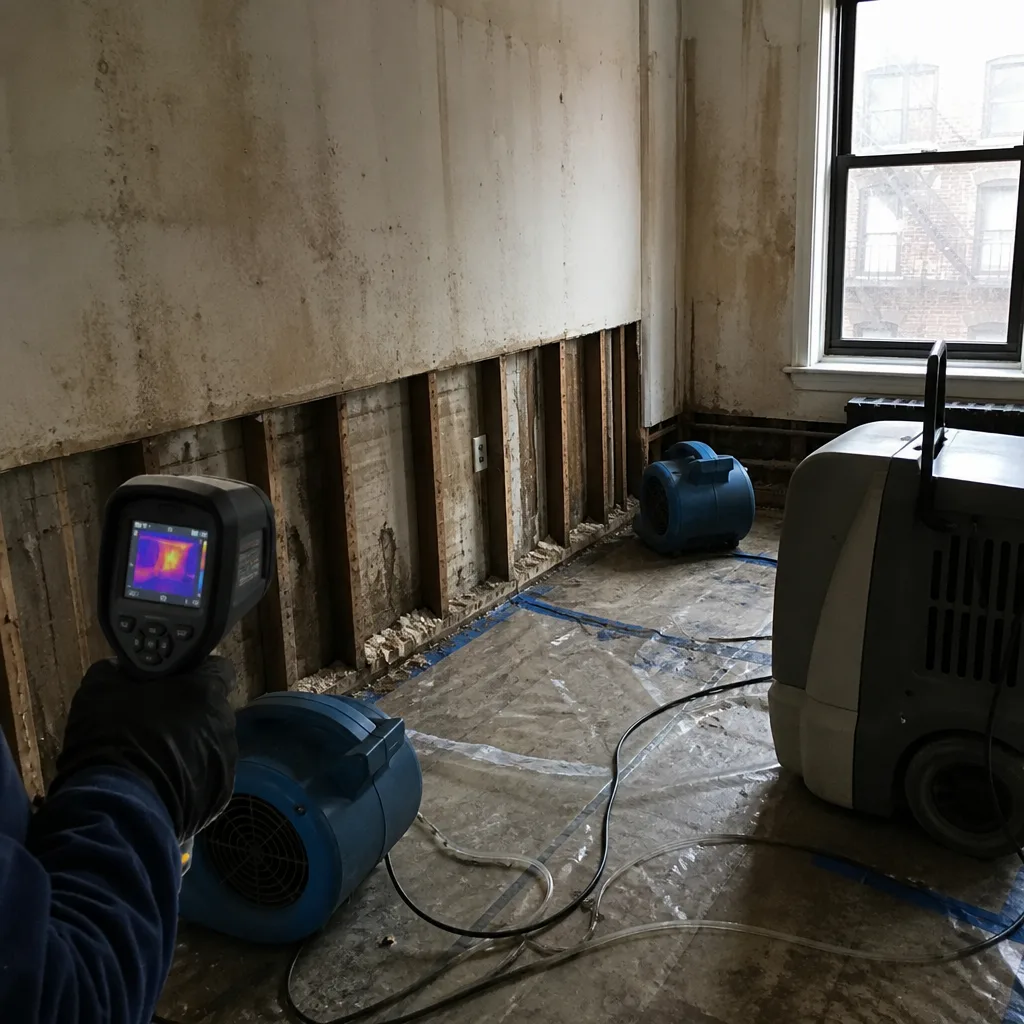 Before
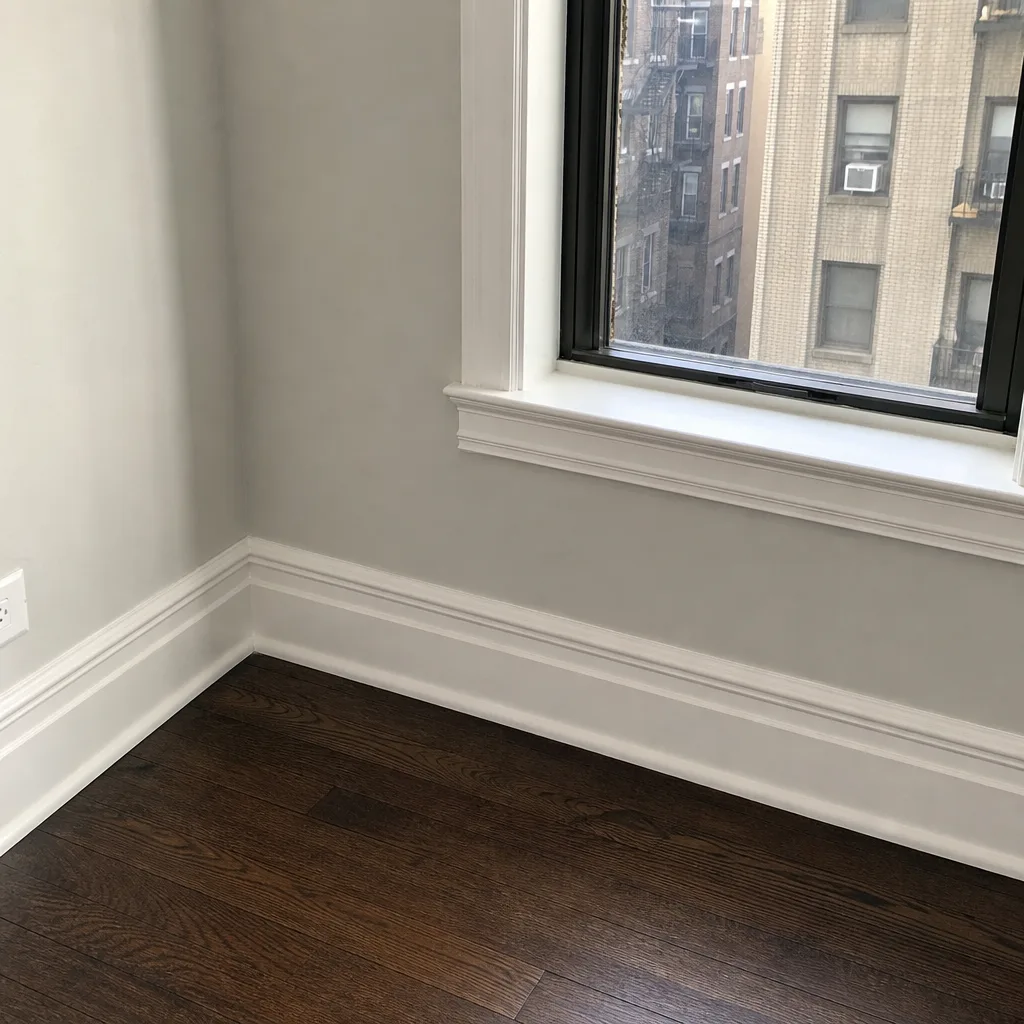 After
After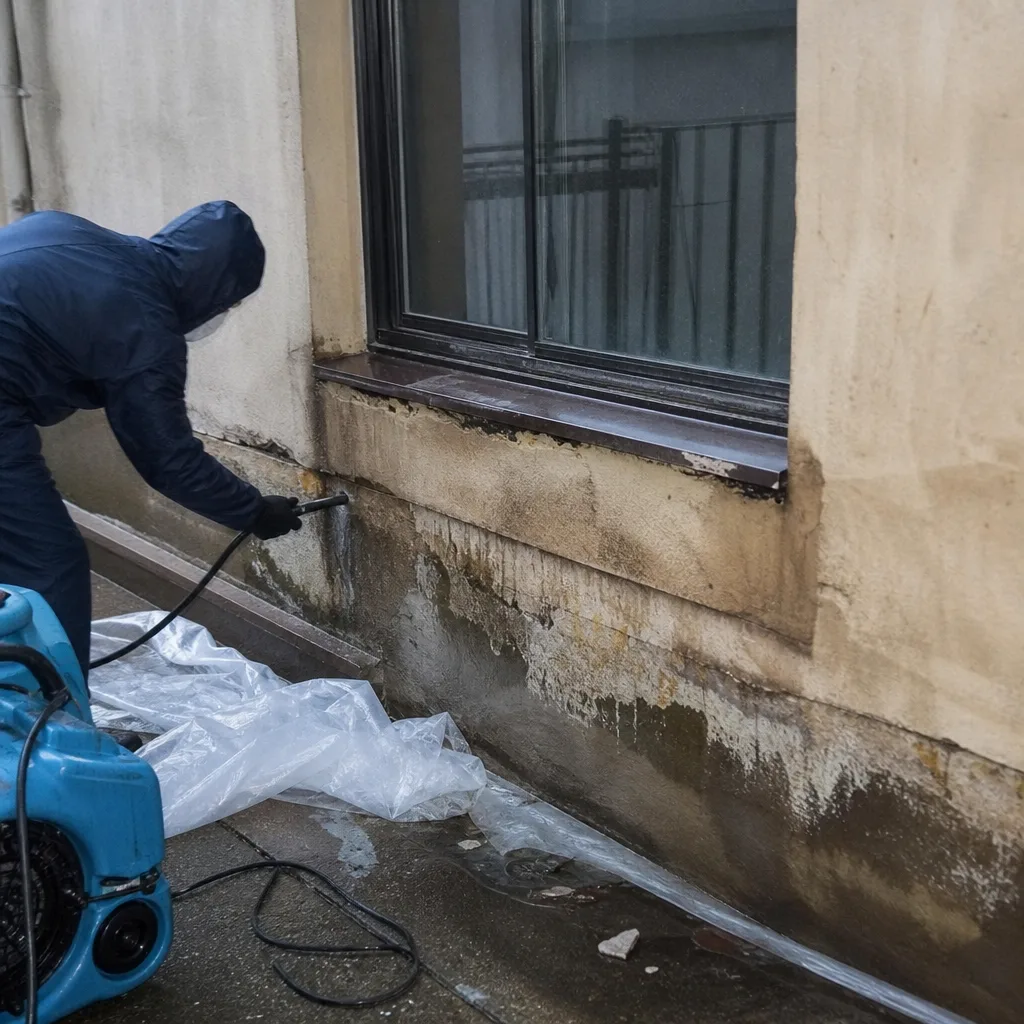 Before
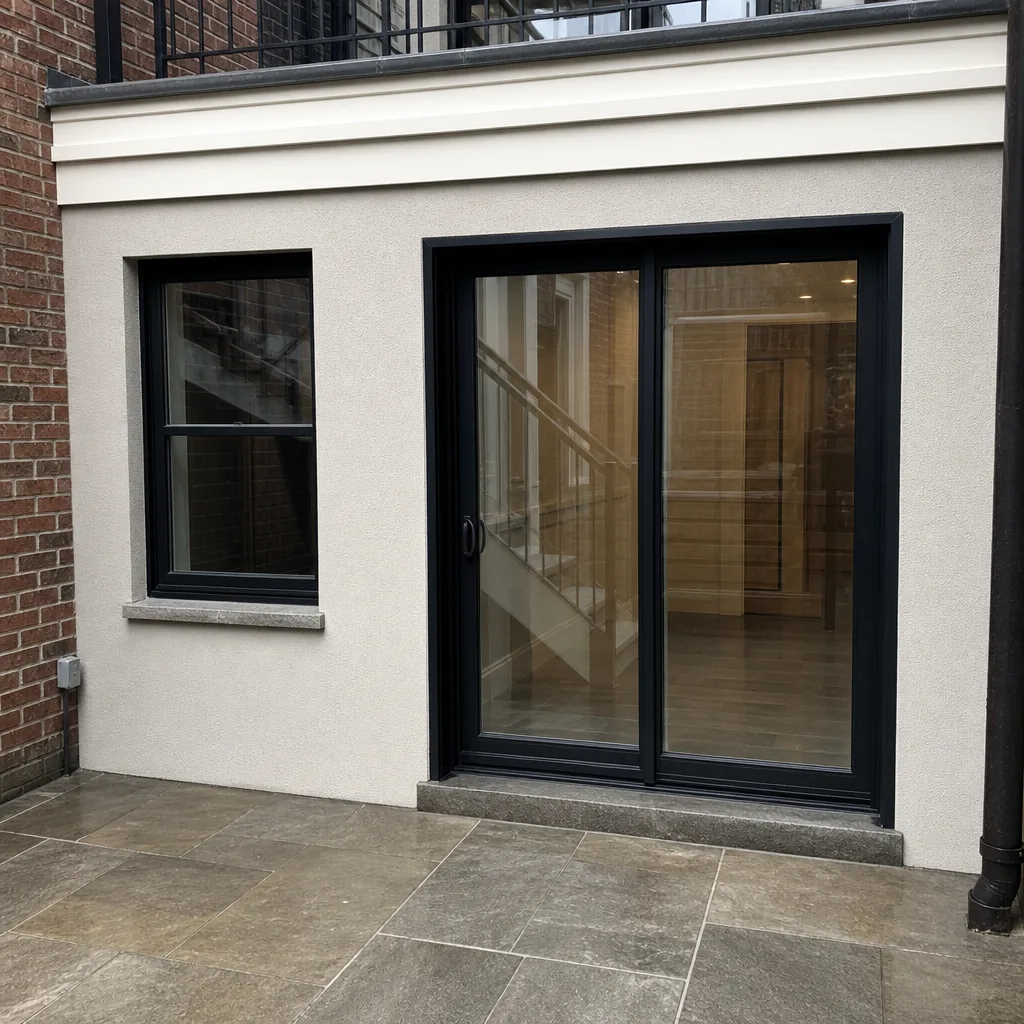 After
After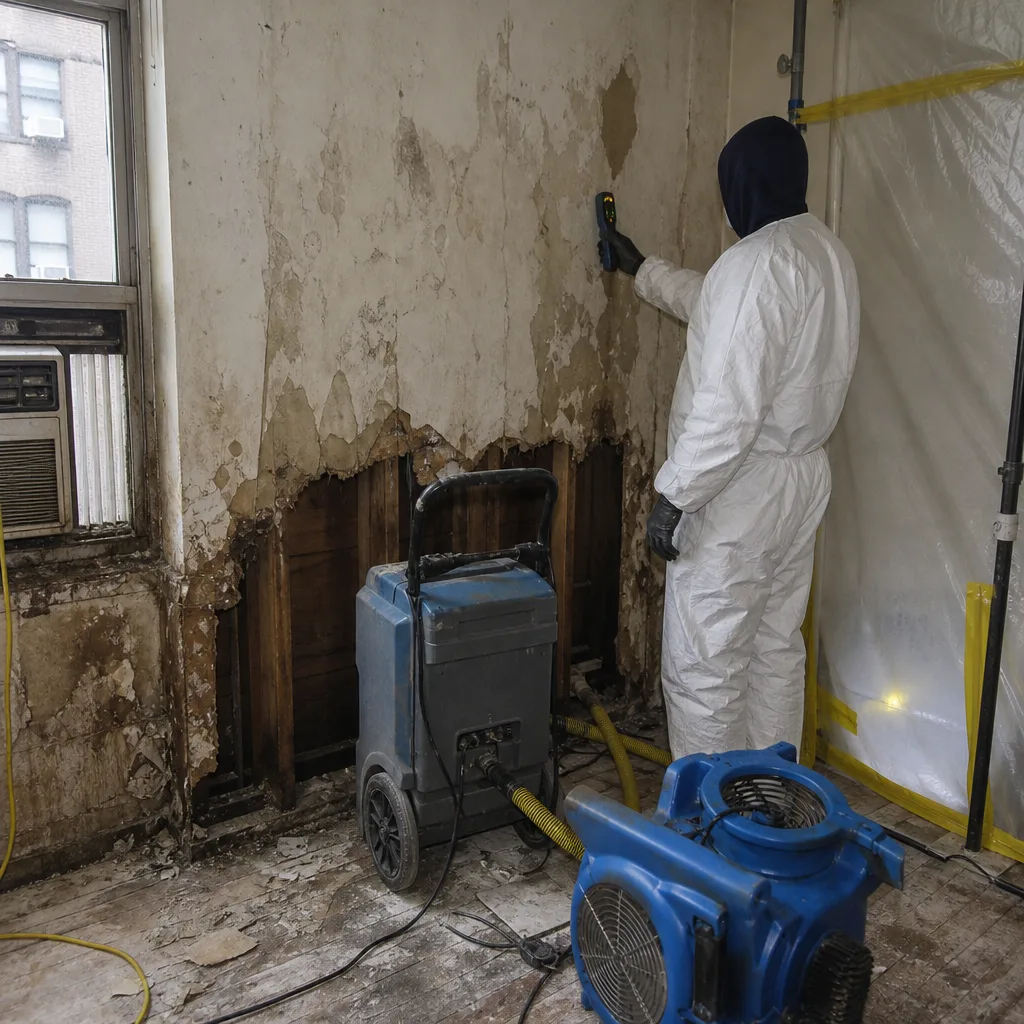 Before
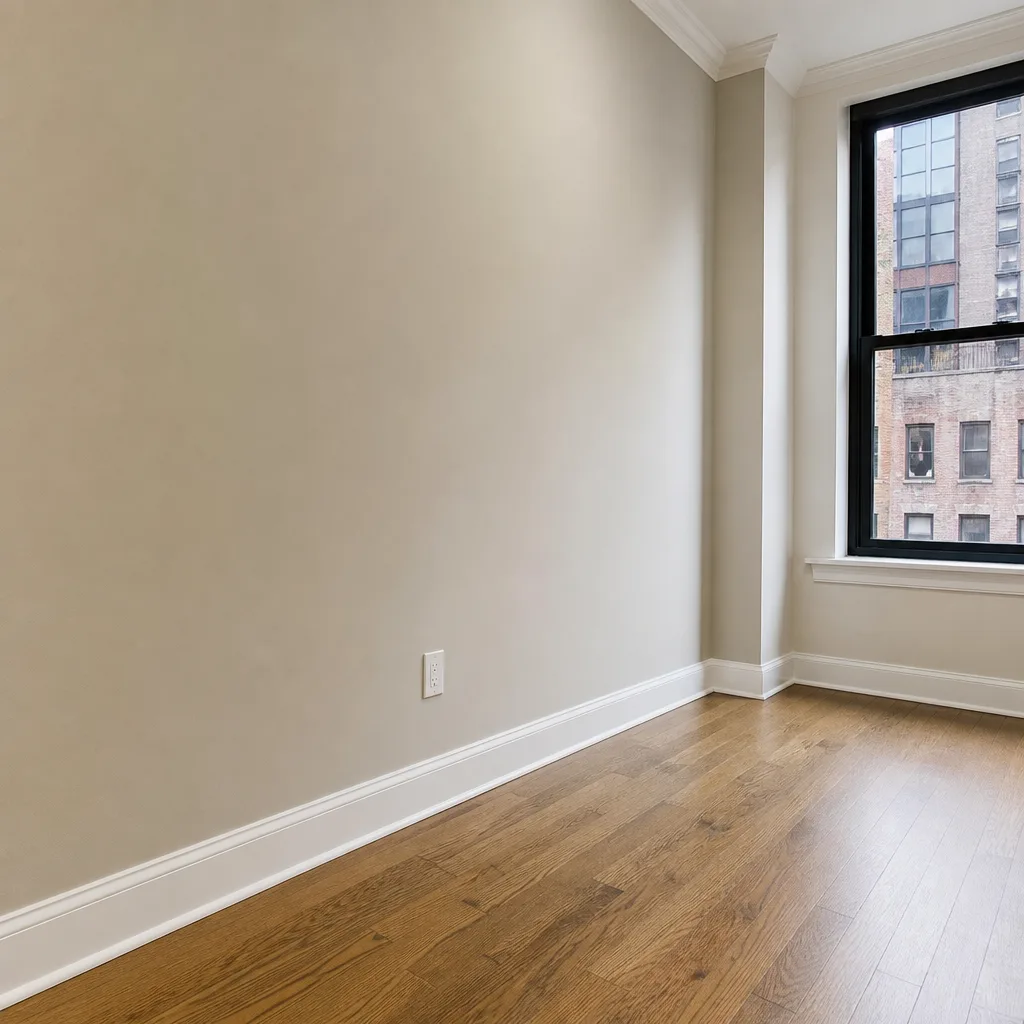 After
After24/7 Emergency Mold Remediation in Financial District
Mold remediation in Financial District costs $1,800-$6,500 for a typical contained removal, with inspection and testing running $350-$700 and full black mold remediation in converted tower spaces reaching $8,000-$15,000 when sub-grade vaults and shared utility chases are involved. Our crews reach the Financial District within 45 minutes, any hour, any day. Call (518) 314-5660 and a live dispatcher answers. Not a recording. Not a call-back service. A person who can put a background-checked, IICRC-certified crew on the road immediately. When mold is active in a FiDi tower, every hour of delay lets spores ride the building’s HVAC and elevator-shaft air columns into units that were dry yesterday.
Understanding Mold Remediation Severity in Financial District Properties
The Financial District does not do simple mold jobs. The building stock is pre-WWII steel-frame and masonry office towers, most from the 1910s through 1930s, converted to luxury condos and rentals since the late 1990s. Those conversions left behind commercial-grade mechanical chases, oversized concrete utility cores, and sub-grade vaults never designed for residential occupancy. Mold hides in those spaces. A musty smell in a 14th-floor unit on Wall Street can trace back to a failed sump pump two buildings away, feeding spores through a shared utility tunnel that crosses three ownership parcels. Severity here is not measured in square feet of drywall. It is measured in building infrastructure: whether the moisture source is Category 1 clean water or Category 3 sewage-tainted floodwater, whether the affected materials include legacy concrete that wicks moisture for months, and whether containment must span property lines. We moisture-map every job with thermal imaging and hygrometers before we cut anything, because in a converted tower, opening the wrong wall releases spores into a chase that services forty units.
Why Financial District Property Owners Choose Floodline Restoration Co.
- 45-minute response commitment. Our FiDi dispatch board has crews staged across Lower Manhattan. We are on-site before most property managers finish their first insurance call.
- 24/7 live answer. Curt Bowman built this company in 2010 around a dispatch board, not a sales desk. At 2 a.m., a human picks up. Always.
- IICRC-certified crews. Technicians hold WRT, FSRT, and AMRT certifications. They show up uniformed and background-checked, with a moisture log started the minute they walk in.
- Free visual inspection. We walk the affected space, identify the moisture source, and give you a written scope before any work begins. No charge for the assessment.
- Direct insurance billing. We bill your carrier directly and send adjusters photo documentation, drying logs, and line-item scopes. You never play messenger.
- One team, start to finish. The same crew that sets containment handles daily moisture readings, removes affected material, and rebuilds what was torn out. No mid-job handoff to a subcontractor you never vetted.
Our Mold Remediation Process
Inspection & Assessment
We start with thermal imaging and hygrometer readings across the affected unit, then trace the moisture path. In FiDi towers this often means walking shared utility tunnels and sub-grade vaults to find the true source, which may be in an adjacent building’s footprint.
Containment & Stabilization
We set HEPA-filtered negative air containment before disturbing any material. In converted towers we routinely hang containment across ownership boundaries, with written authorization from both boards, to stop cross-building spore migration.
Drying & Dehumidification
Dri-Eaz dehumidifiers and high-volume air movers run continuously, with daily moisture reads logged against a dry standard. Concrete cores and masonry chases take longer than drywall, so we schedule readings accordingly and document for your insurer.
Cleaning & Sanitization
We HEPA-vacuum all affected surfaces, apply EPA-registered antimicrobial treatments to structural members, and run air scrubbers through the completion of the job. Air quality restoration includes post-remediation clearance testing.
Mold-Specific Treatment
For black mold and deep-seated contamination in concrete vaults, we apply penetrating treatments rated for masonry and monitor humidity levels for weeks afterward to prevent regrowth. Crawl space treatment includes vapor barrier installation and dehumidifier placement where the building envelope allows.
Repairs & Restoration
The same crew rebuilds what was removed: drywall, insulation, finishes, and any sub-floor or ceiling work. Your 90-Day Done Right Promise covers the entire job, in writing, with no arguing.
Need Emergency Mold Remediation in Financial District Now?
Crews minutes away, answering live 24 hours a day. The sooner we start, the less it costs.
Working With Your Insurance Company
Mold claims in the Financial District are rarely straightforward. Post-Sandy policies changed what carriers cover, and many FiDi condos carry master policies with mold exclusions that differ from the unit-owner’s individual coverage. We handle the documentation from the first hour so your claim has a foundation: photos of every affected surface, dated moisture readings from day one through clearance, and a line-item scope of work written in the format adjusters expect. Our team communicates directly with your carrier’s adjuster. You do not relay calls between us and them. If the loss involves a shared utility tunnel or a sub-grade vault serving multiple ownership entities, we document the cross-boundary scope separately, because most master policies apportion those costs between buildings. We have been doing this since 2010. We know where claims stall in converted towers, and we build the file so they don’t.
What We Provide Your Insurer
- Thorough documentation of the loss
- Photos of all damage, room by room
- Moisture readings and drying logs
- A detailed, line-item scope of work
- Direct coordination with your carrier
Built for Financial District’s Loss Calendar
The Financial District sits at the tip of Lower Manhattan, surrounded on three sides by tidal water. The water table is shallow here because so much of the district is built on 17th-through-19th-century landfill. That means even moderate nor’easters and King Tide events push groundwater and storm surge into basement mechanical rooms, underground parking, and the dense utility tunnels that connect adjacent towers. Sub-grade water intrusion is a near-annual event, not an anomaly. Winter brings a different pattern: January deep freezes burst supply lines in buildings whose plumbing was retrofitted through legacy concrete cores, sending Category 1 water into converted units where it saturates drywall and feeds dormant mold within 48 to 72 hours. Spring and summer thunderstorm flash flooding overwhelms aging drainage systems and post-Sandy perimeter barriers, pushing water through former loading-dock corridors and freight elevator pits. The buildings that flooded in 2012 carry mold histories in their bones, and the retrofits meant to protect them create failure modes of their own. We plan our FiDi staffing around this calendar, because the same buildings flood the same ways, year after year.
Mold Remediation Across Financial District’s Neighborhoods
Every block in the Financial District throws a different version of the same problem at us. Along Broad Street, the 1920s towers have legacy freight elevator pits that collect groundwater during King Tides, then feed moisture into adjacent mechanical rooms and shared utility tunnels. On Wall Street, the converted bank buildings have massive sub-grade vaults with concrete walls that hold moisture for months after a leak, and those vaults open into basement corridors that run under the sidewalk. Near South Street Seaport, the buildings closest to the East River sit in FEMA Flood Zone AE and take storm surge during every serious nor’easter, with seawater intrusion that requires Category 3 contamination protocols before any mold work begins. Around Battery Park and Greenwich Street, the post-9/11 residential towers have modern mechanical systems but sit on the same shallow water table, and their underground parking levels flood from below when the tide rises. In the older buildings along Water Street and Pearl Street, converted office floors have drop ceilings that hide slow pipe leaks for months, by which time the mold has climbed the wall cavity into the unit above. We know which buildings flood from the river and which flood from their own plumbing. It changes how we map the moisture, where we set containment, and which board we call first.
Specialized Mold Remediation Services We Offer in Financial District
Mold Inspection & Testing
In a FiDi tower, mold inspection means more than swabbing a patch of drywall. We test air quality in the affected unit, sample the return air at the HVAC riser, and inspect the shared chases and utility tunnels that connect your unit to the rest of the building. Post-remediation clearance testing is included, because if spore counts don’t clear, the job isn’t done. A typical inspection in the Financial District runs $350-$700.
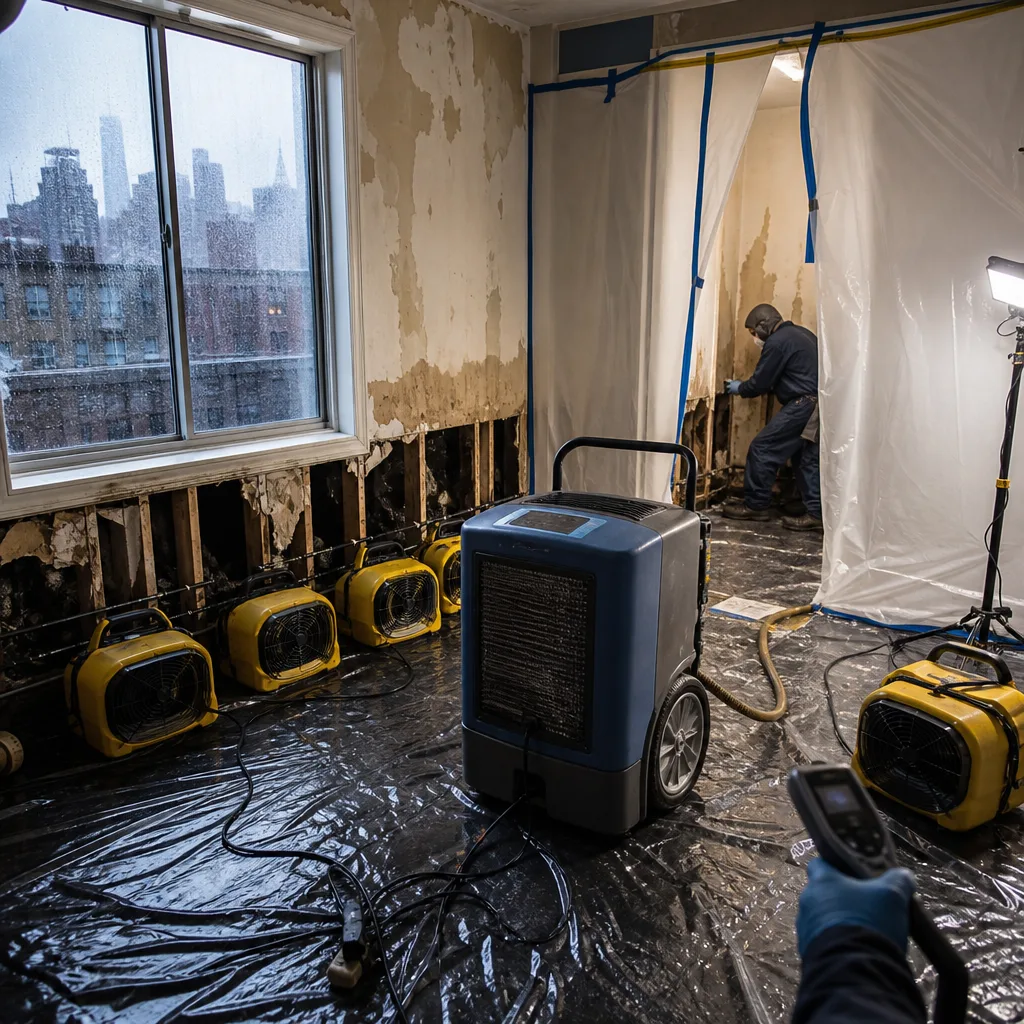
Mold Removal
We remove affected drywall, insulation, carpet, and finishes under full HEPA containment, with negative air pressure maintained until clearance is achieved. In converted towers we coordinate with building management to seal off the mechanical chases that act as spore highways between floors. Most containment and removal jobs in FiDi run $1,800-$6,500 depending on the square footage and how far the mold has traveled through the structure.
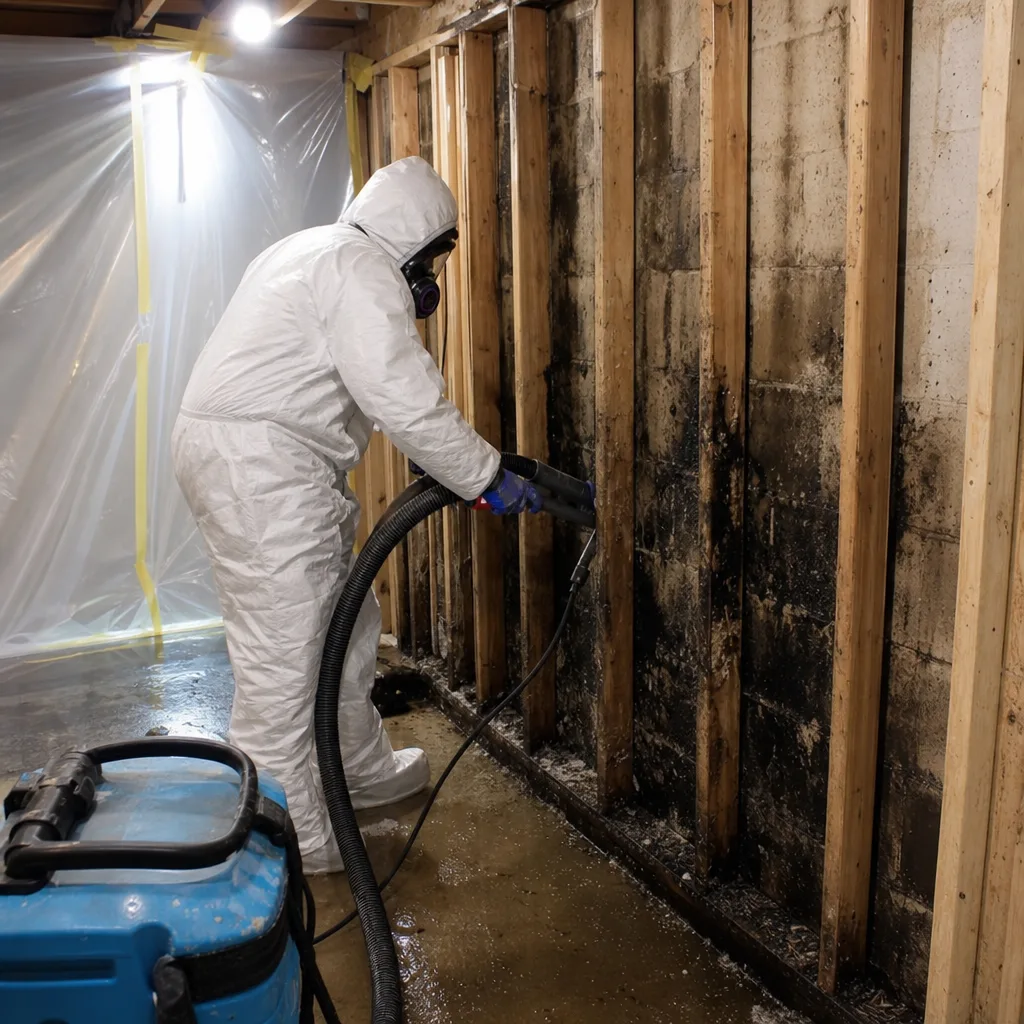
Black Mold Remediation
Black mold in a sub-grade vault or a mechanical chase is a different job from a bathroom patch. We run full containment, use penetrating antimicrobial treatments rated for masonry and concrete, and hold the affected space under negative pressure with HEPA air scrubbers until post-remediation testing clears it. These jobs in converted Financial District towers typically run $8,000-$15,000, driven by the cost of vault access, cross-boundary containment, and the extended drying time concrete demands.
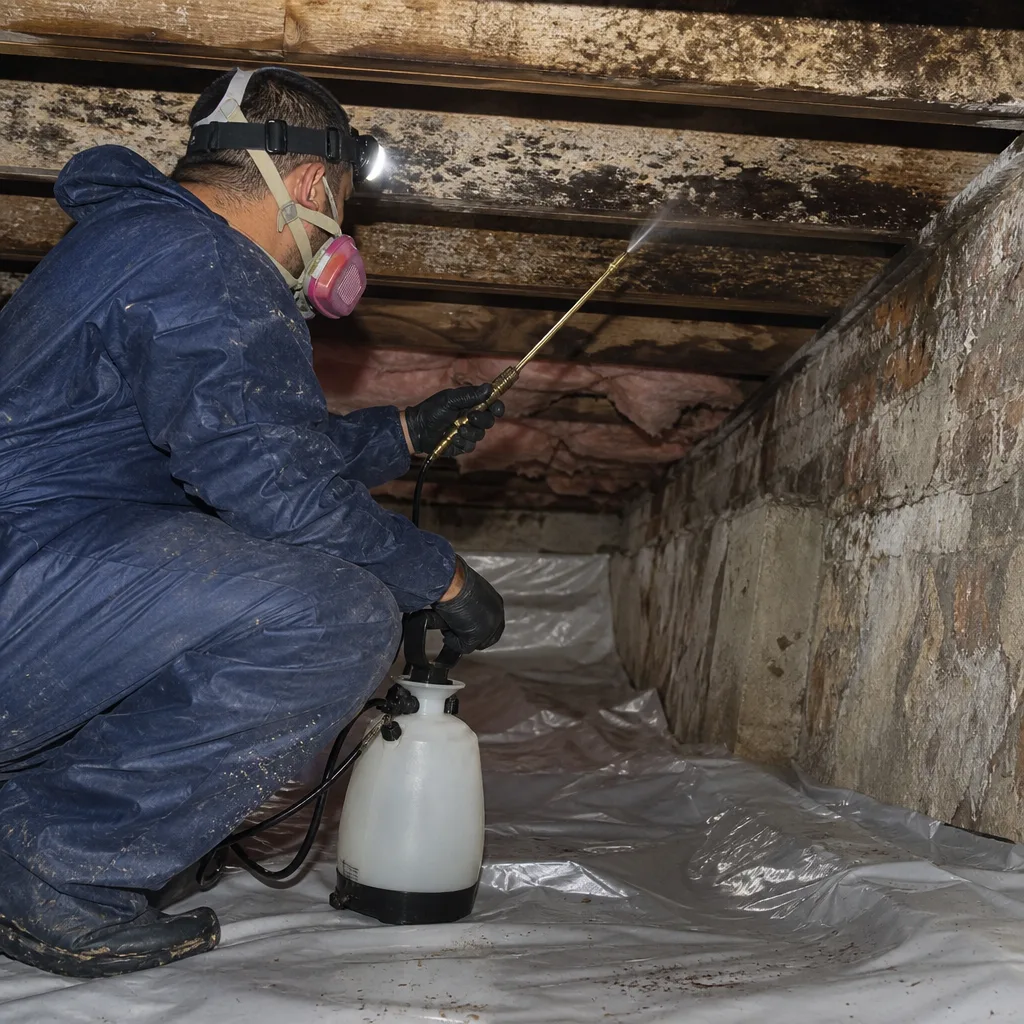
Air Quality Restoration
After removal, we run HEPA air scrubbers and filter the affected unit’s air supply until spore counts meet industry clearance standards. In towers with central HVAC, we coordinate with building engineers to survey the supply and return risers. Post-remediation air sampling is the proof the job is done. Air quality restoration is included in our full service and can also be scoped as a standalone task for $500-$1,200.
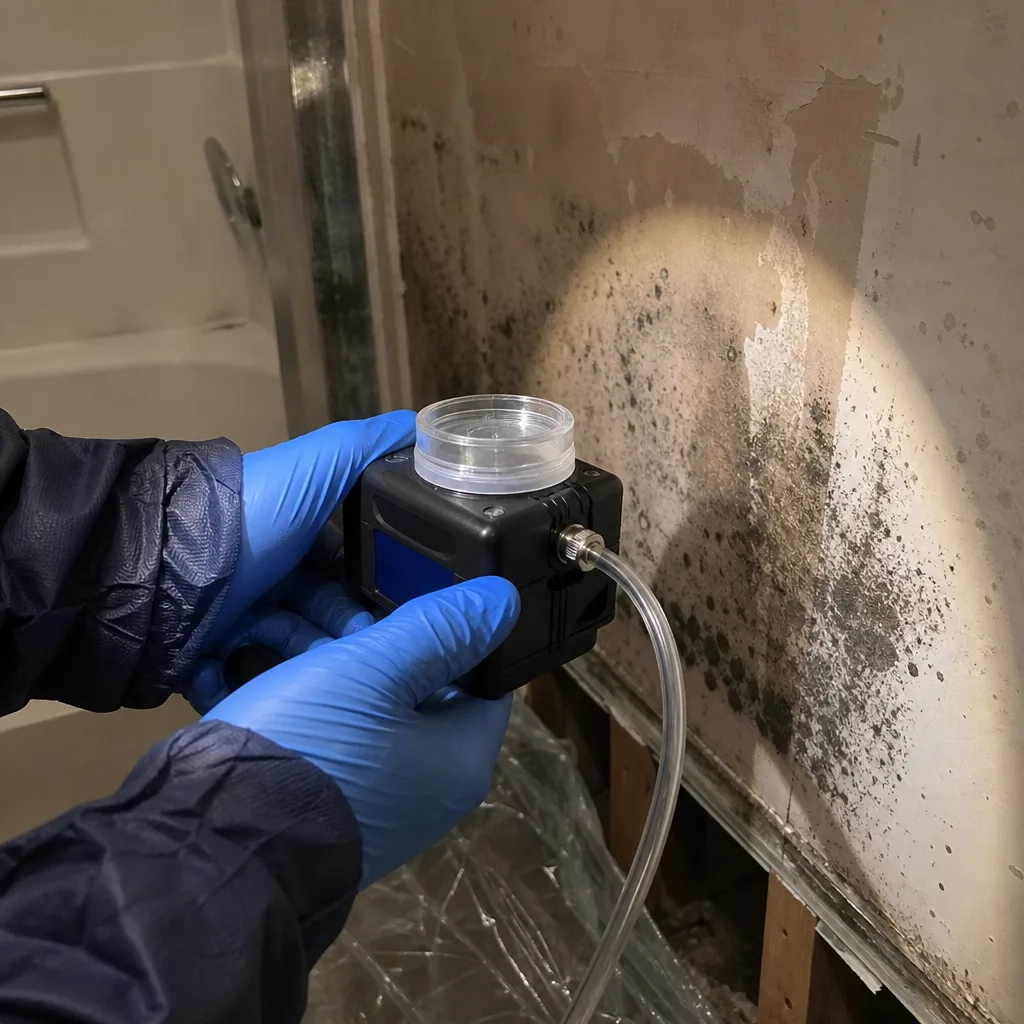
Crawl Space Treatment
Below-grade mechanical rooms and the interstitial spaces between a tower’s slab and its structural deck act like crawl spaces in a house. They trap humidity, feed mold, and reintroduce spores into occupied floors above. We install vapor barriers, place dehumidifiers, and map the moisture source. FiDi crawl space treatment runs $1,200-$3,500 depending on access and the square footage of the space.
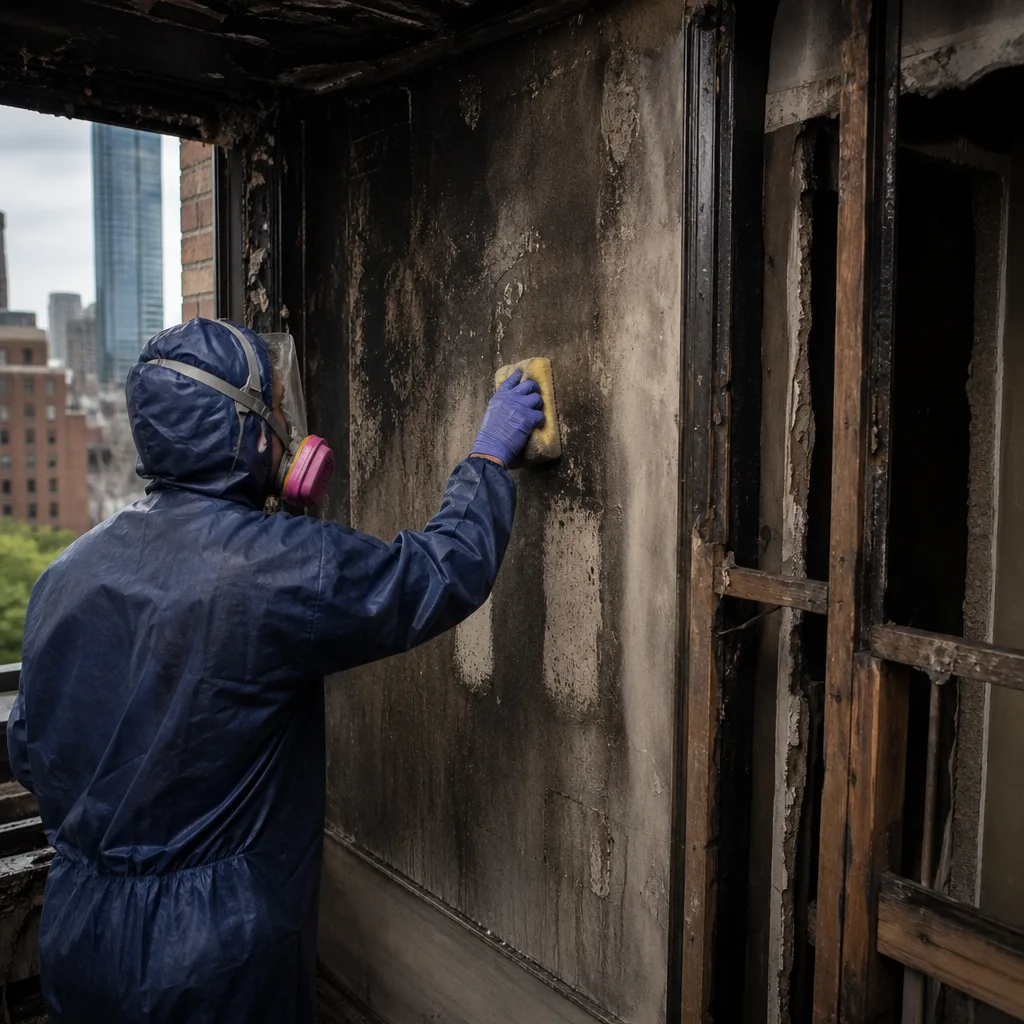
Moisture & Humidity Control
In a district where the water table sits just below the basement slab, humidity control is a year-round issue. We install and monitor dehumidification systems in sub-grade spaces, calibrate existing building dehumidifiers, and document humidity trends so building boards can act before mold takes hold. Ongoing moisture control programs for FiDi buildings run $200-$800 per month depending on the size of the space.
What happens when you call
- 1
A real person answersNo phone trees - you reach a local pro.
- 2
You get an upfront price rangeHonest numbers before anyone is dispatched.
- 3
A background-checked tech heads outLicensed & insured, dispatched right away.
- 4
You approve before work beginsNothing starts until you say go.
Mold Remediation Costs in Financial District, NY
Here is what you should expect to pay in the Financial District, based on the work we have done here:
- Inspection and air testing: $350-$700
- Containment and mold removal (single unit): $1,800-$6,500
- Black mold remediation in vaults or chases: $8,000-$15,000
- Air quality restoration (standalone): $500-$1,200
- Crawl space / below-grade treatment: $1,200-$3,500
- Monthly moisture control program: $200-$800
What moves the price is access. A vault under a 1920s bank building on Wall Street costs more to reach than a utility closet on a residential floor. Cross-boundary containment, where the mold has spread through a shared tunnel into an adjacent property, adds survey, legal coordination, and dual-board approval time. If your policy covers mold remediation, we bill the carrier directly and negotiate the scope with the adjuster. If it does not, you get a written price before we start. The free visual inspection is how most owners start: we walk the space, tell you honestly what we see, and give you a firm scope. No obligation. Call (518) 314-5660 to schedule.
We Also Serve Cities Near Financial District
Our crews handle mold remediation across Lower and Midtown Manhattan, including Mold Remediation in Financial District, Midtown Manhattan, Midtown West, Murray Hill, and Washington Square. If you are in any of those areas and need a crew today, the same 45-minute dispatch commitment applies.
Serving Financial District, NY - Our Local Coverage Area
We’re based in the Financial District area and know this community well. Use the map below to see our service coverage - if you’re nearby, we can almost certainly help.
Financial District Mold Remediation Questions, Answered
How do you prevent mold from spreading between adjacent Financial District buildings through shared utility tunnels?
We set containment at both ends of the shared tunnel and run negative air pressure across the affected section, then coordinate written authorization from both buildings’ management before any work begins. The containment stays in place until air sampling from both sides of the property line clears. Without cross-boundary containment, you can remediate one building and watch the mold come back through the tunnel six months later. Call (518) 314-5660 for a free inspection if you suspect a shared tunnel is involved.
Can black mold in a converted office tower’s sub-grade vault be fully removed without demolishing the concrete core?
Yes. Concrete is not a food source for mold the way drywall and cellulose insulation are. We clean the concrete surface, apply penetrating antimicrobial treatments rated for masonry, and monitor humidity levels until the vault holds a stable, dry condition. The vault does not need to be demolished unless structural damage exists. The key is controlling the humidity that caused the mold in the first place.
What is the typical timeline for mold remediation in a Financial District high-rise during King Tide season?
Most single-unit jobs in FiDi high-rises take three to seven days from containment to clearance, but jobs involving sub-grade vaults or shared tunnels can run two to four weeks because concrete dries slowly and cross-boundary coordination takes time. If the moisture source is tidal groundwater, we may need to hold the space under dehumidification until the next tide cycle passes before we can verify the dry standard holds. We will give you a written timeline after the inspection.
Does post-Sandy flood mitigation equipment in FiDi towers reduce the need for mold remediation?
It reduces flooding frequency, but not remediation need when it fails. Deployable perimeter barriers and submersible sump arrays work until a nor’easter exceeds their design capacity or a pump fails, at which point water enters through former loading docks and freight elevator pits that many remediation plans skip. Those systems also create a false sense of security: buildings with them often defer the routine moisture-monitoring that catches mold early. We recommend quarterly sub-grade humidity checks even in towers with full post-Sandy retrofits.
How do you handle a pack-out in a Financial District luxury condo with limited loading dock access?
We work with your building’s freight elevator schedule and consolidate pack-outs into scheduled windows, using floor-to-ceiling containment to protect common corridors. In buildings with no freight access after hours, we stage materials curbside and move them in smaller loads. The pack-out inventory is photo-documented item by item, and the scope is written before anything leaves the unit.
How fast can you actually get to a mold job in the Financial District?
Our commitment is 45 minutes from your call to a crew on site, day or night. We stage crews across Lower Manhattan specifically to honor that. Call (518) 314-5660 and a live dispatcher will tell you which crew is closest and when they will arrive.
Will my insurance cover mold remediation in the Financial District?
It depends on the source of the moisture and the specific policy language. Water damage from a sudden and accidental event, like a burst pipe, is often covered, including the mold remediation that results from it. Gradual leaks, groundwater intrusion, and pre-existing mold conditions are frequently excluded. Post-Sandy policy changes added sub-limits and exclusions on many Lower Manhattan master policies. We document every job with the detail adjusters require and bill your carrier directly, so you do not have to interpret policy language alone.
What should I do in the first 30 minutes after discovering mold in my Financial District unit?
Do not disturb the mold. Do not spray it with bleach, do not run fans, and do not wipe it. Every disturbance releases spores into the air column. Shut the door to the affected space if possible, turn off the HVAC serving that area, and call us at (518) 314-5660. Take photos from a distance for your records. A crew will be on the way within the hour.
Written by Curt Bowman, Owner at Floodline Restoration Co., serving the Financial District with mold remediation and full-cycle restoration services since 2010.