
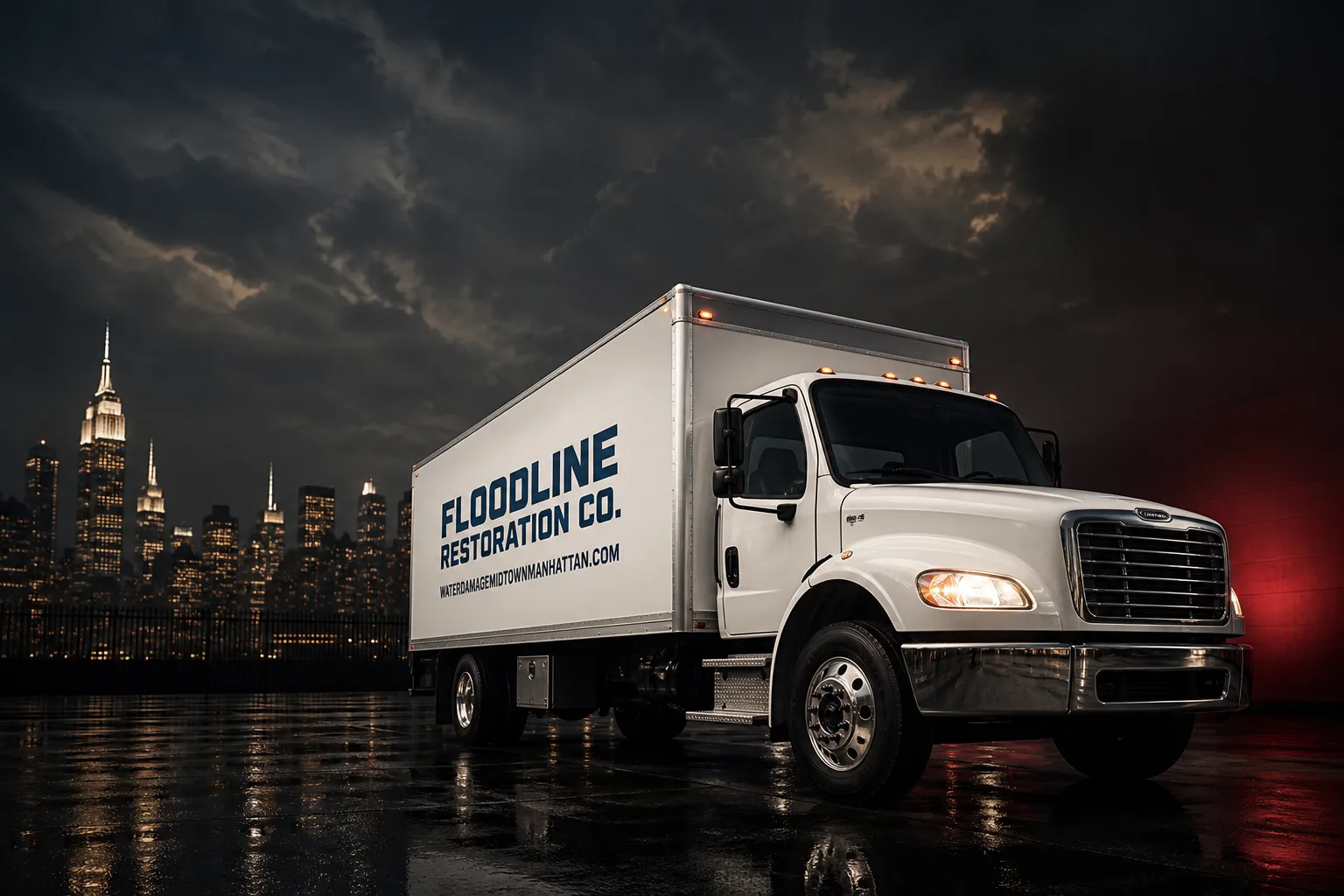
Free visual inspection and a written scope of work before any mitigation begins - photos, moisture readings, and drying logs go in your claim file
The scope we write is the scope we bill. Anything new gets shown to you, in writing, before we touch it.
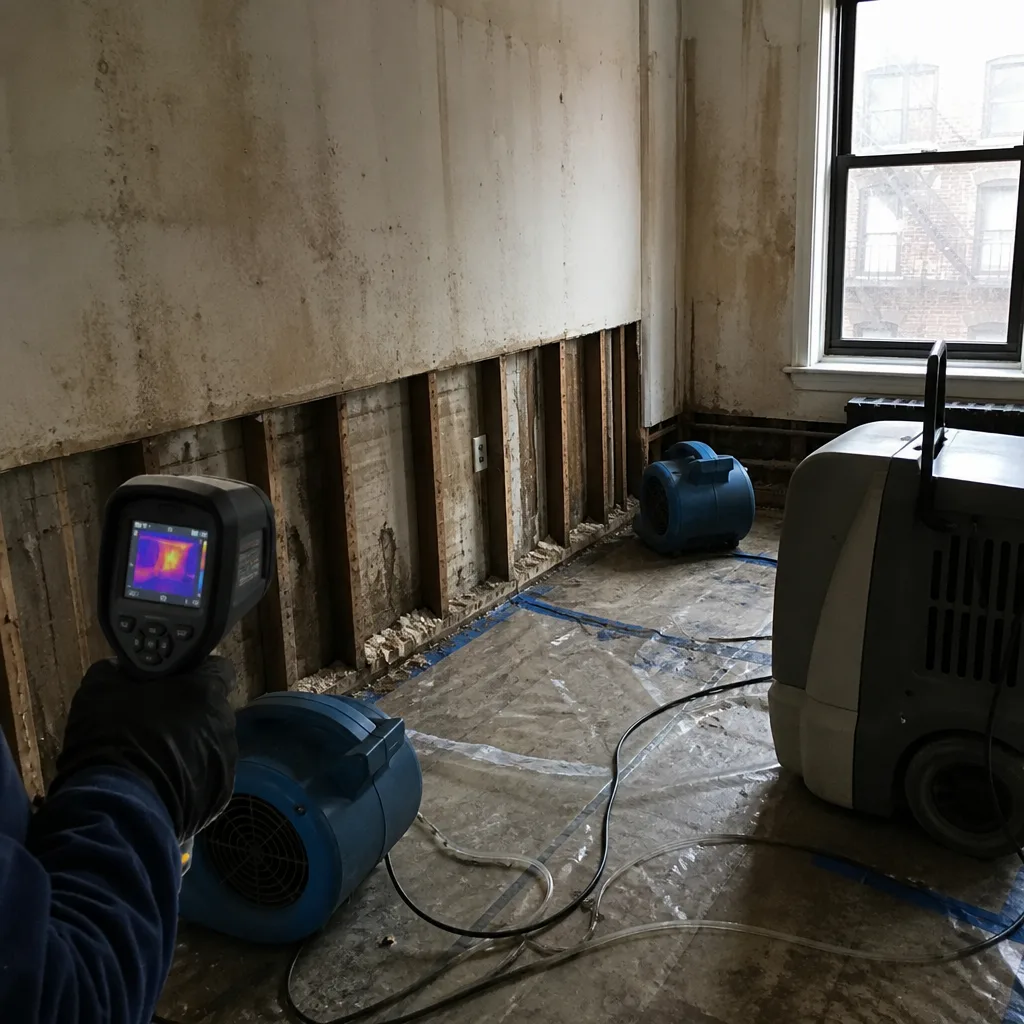 Before
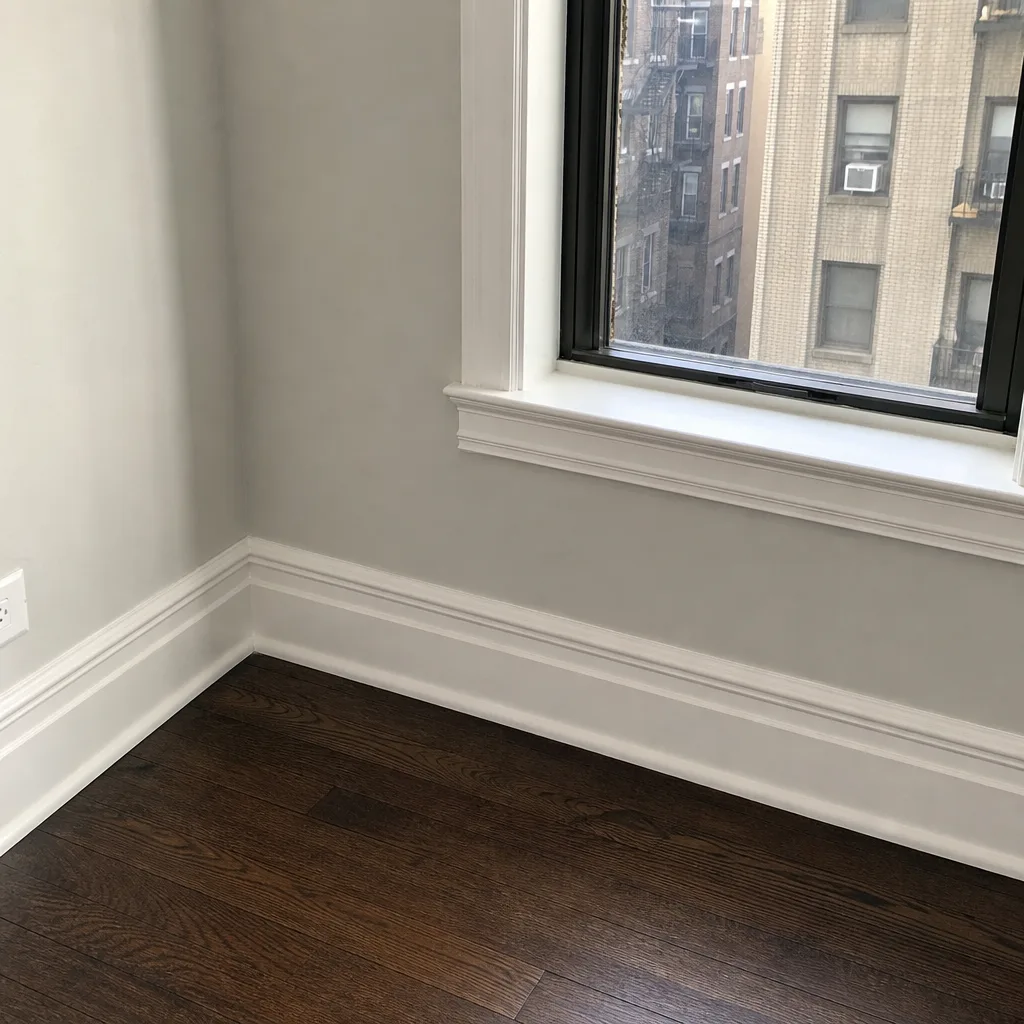 After
After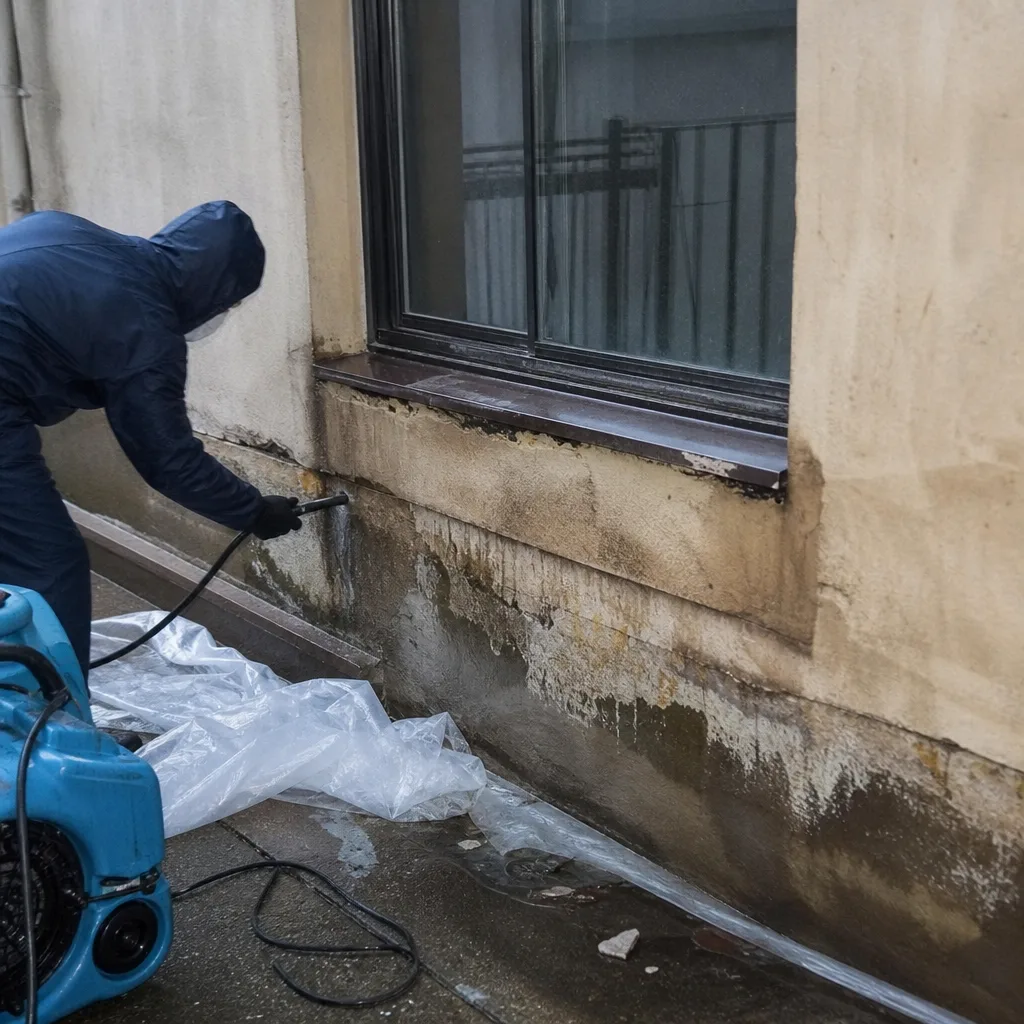 Before
 After
After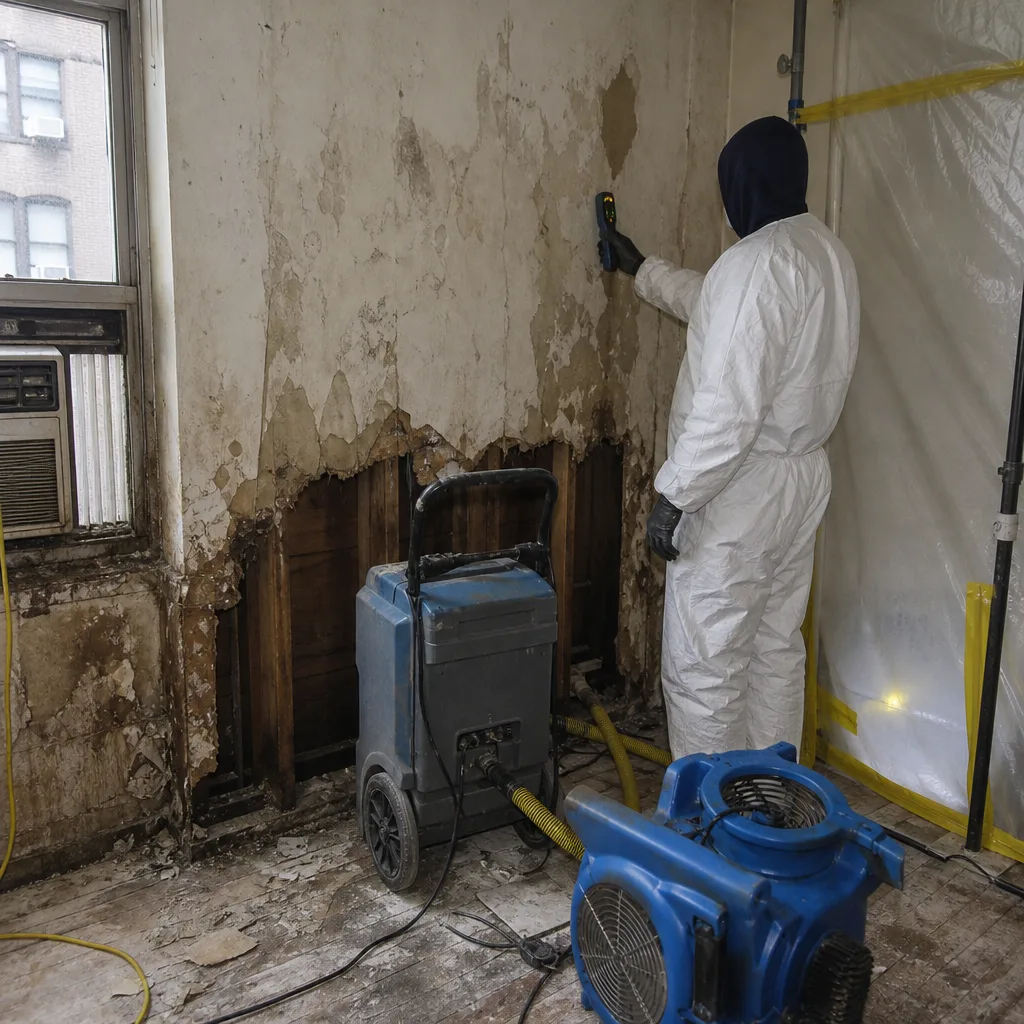 Before
 After
After24/7 Emergency Fire & Smoke Damage Restoration in Washington Square
When smoke has filled a Greek Revival parlor on Washington Square North or a kitchen fire has sent soot through three floors of a MacDougal Street brownstone, you need a crew that answers live and gets moving. Floodline Restoration Co. dispatches certified fire restoration technicians inside the Washington Square area around the clock, every day of the year. Call (518) 314-5660 and a real person picks up, not a recording. The first hour after a fire matters because acidic soot residues start etching glass, corroding metal fixtures, and driving odor deeper into horsehair plaster within 48 hours. We arrive, assess the smoke migration paths, and stabilize the property the same visit.
Our Fire & Smoke Damage Restoration team knows what pre-war construction does to smoke travel, and we bring the moisture meters, HEPA scrubbers, and drying equipment to stop the damage where it stands. A free visual inspection starts every job. That means you know what you’re facing before any work begins, with a written scope in hand.
Understanding Fire & Smoke Damage Restoration Severity in Washington Square Properties
Fire damage is never just what burned. Smoke migrates along the paths heat created: stairwells become chimneys, party walls act as wicks between adjoining brownstones, and the gap behind original baseboards carries soot far from the fire’s seat. In Washington Square’s 1830s-1840s row houses, this migration is worse than in modern drywall construction because the wall cavities are deeper, the lath-and-plaster assemblies are continuous across floors, and shared party walls offer a direct route into neighboring units.
We classify soot by residue type: dry protein soot from kitchen fires, wet chemical soot from burning synthetics, and fuel-oil soot from furnace puffbacks. Each needs a different cleaning agent and technique. Wet soot smeared into horsehair plaster with a sponge sets permanently, which is why we train crews to identify the residue before touching a wall. Post-fire moisture complicates severity too. Water from suppression systems and fire hoses saturates plaster, brick, and flooring. In Washington Square, where the buried Minetta Brook keeps basements perpetually damp, that water rarely dries on its own. It becomes a Category 2 or 3 water loss within hours, which changes equipment needs, drying targets, and the scope of antimicrobial work.
Why Washington Square Property Owners Choose Floodline Restoration Co.
- 45-minute response commitment: For fire and smoke calls in Washington Square, we commit to having a certified crew dispatched toward your block within 45 minutes of your call. Smoke damage compounds by the hour, and soot etched into window glass or stone mantels is irreversible.
- 24/7 live answer, never an automated system: A live dispatcher picks up at 2 a.m. Not a recording. When a fire breaks out, you talk to a person who can route a crew to Washington Square immediately.
- IICRC-certified crews: Our technicians hold IICRC FSRT (Fire and Smoke Restoration Technician) and WRT (Water Restoration Technician) certifications, plus RIA and IFA training. That certification matters when we’re handing your insurer a drying log from a pre-Civil War structure.
- Free visual inspection: Before any work starts, we walk the property with you, map visible smoke damage, and give you a written scope. No obligation, and no crew starts a fan without you seeing the plan first.
- Direct insurance billing: We bill your carrier directly and document everything the adjuster needs from the first hour. You never play messenger between us and the insurance company.
- One team from extraction to reconstruction: The same certified, background-checked crew that pulls soot from your parlor is the crew that rebuilds the wall. No mid-job handoff, no stranger showing up halfway through.
Our Fire & Smoke Damage Restoration Process
Inspection & Assessment
We map every smoke path using thermal imaging and visual inspection, checking wall cavities, the back of baseboards, and shared party wall seams. In a Washington Square rowhouse, we look specifically for soot migration into adjoining units and check whether Landmarks review will touch any structural work.
Extraction & Stabilization
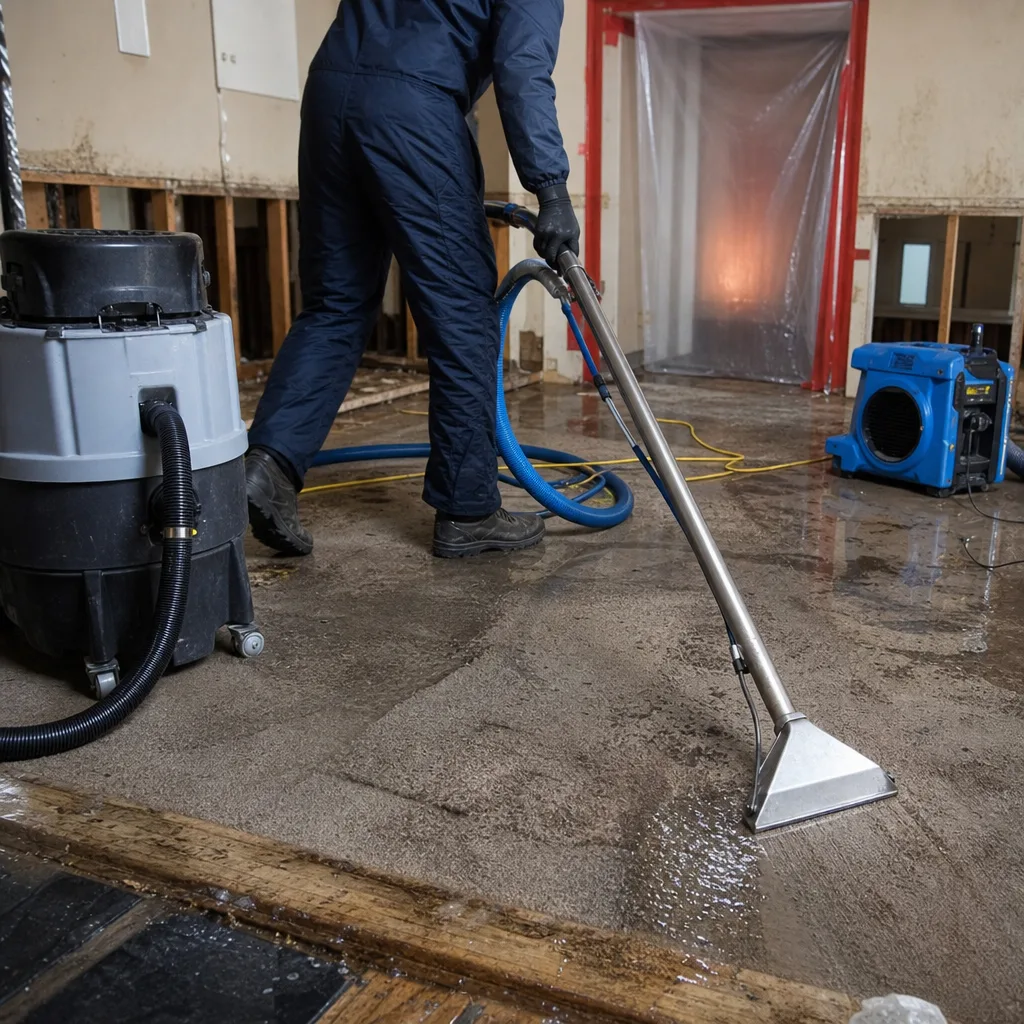
Standing water from fire suppression is extracted using truck-mounted and portable units. We check the source: Minetta Brook groundwater or a burst supply line behind the fire. Either way, water leaves the building fast, because Category 1 water over a Washington Square basement turns fast.
Drying & Dehumidification
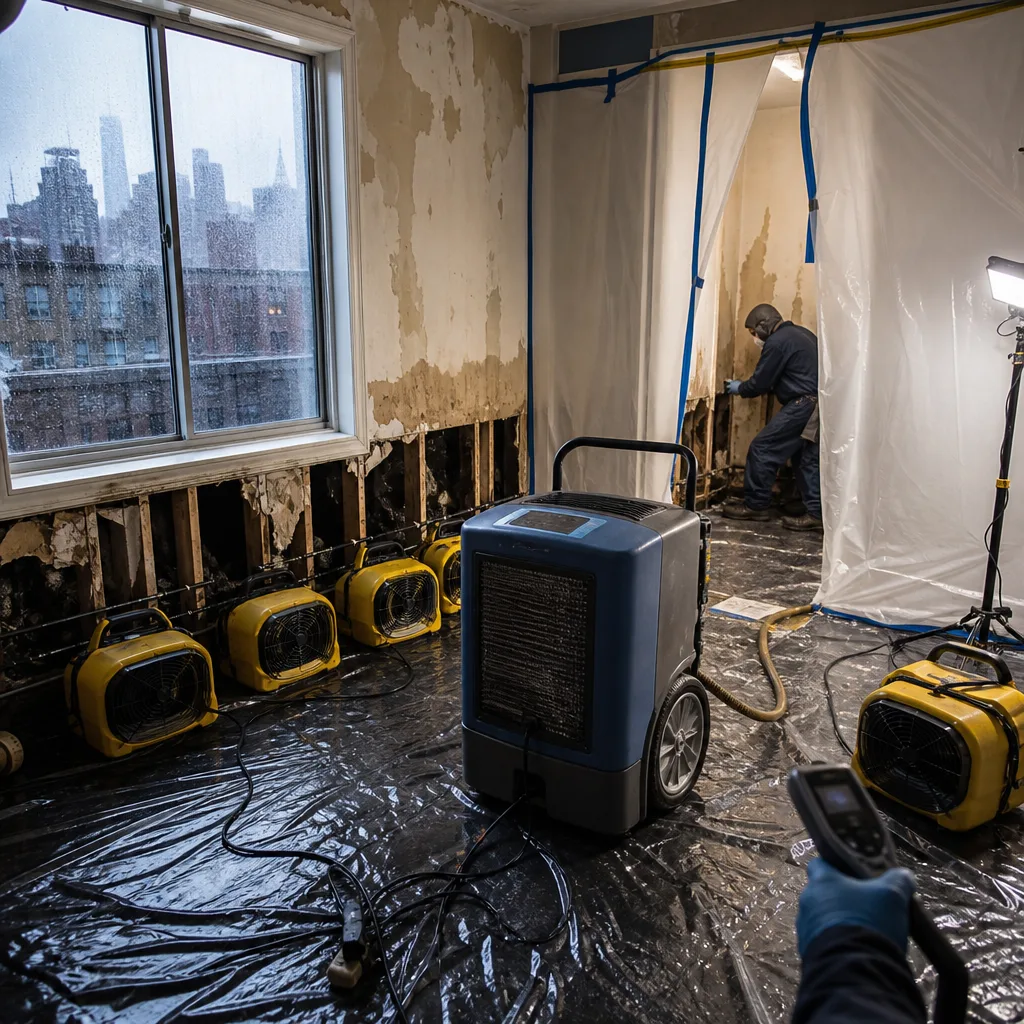
We place Dri-Eaz air movers and Phoenix dehumidifiers against affected walls and floors, logging moisture readings daily with hygrometers until the dry standard is met. On horsehair plaster and pre-war brick, that standard is tighter than modern construction, because those materials hold water differently and release it slowly.
Cleaning & Sanitization
Soot is removed from every surface using residue-appropriate cleaning agents, HEPA vacuums, and dry sponge techniques on plaster. We sanitize the damaged area with antimicrobial treatments, targeted where post-fire moisture meets the persistent dampness of lower Manhattan basements.
Odor Removal & Deodorization
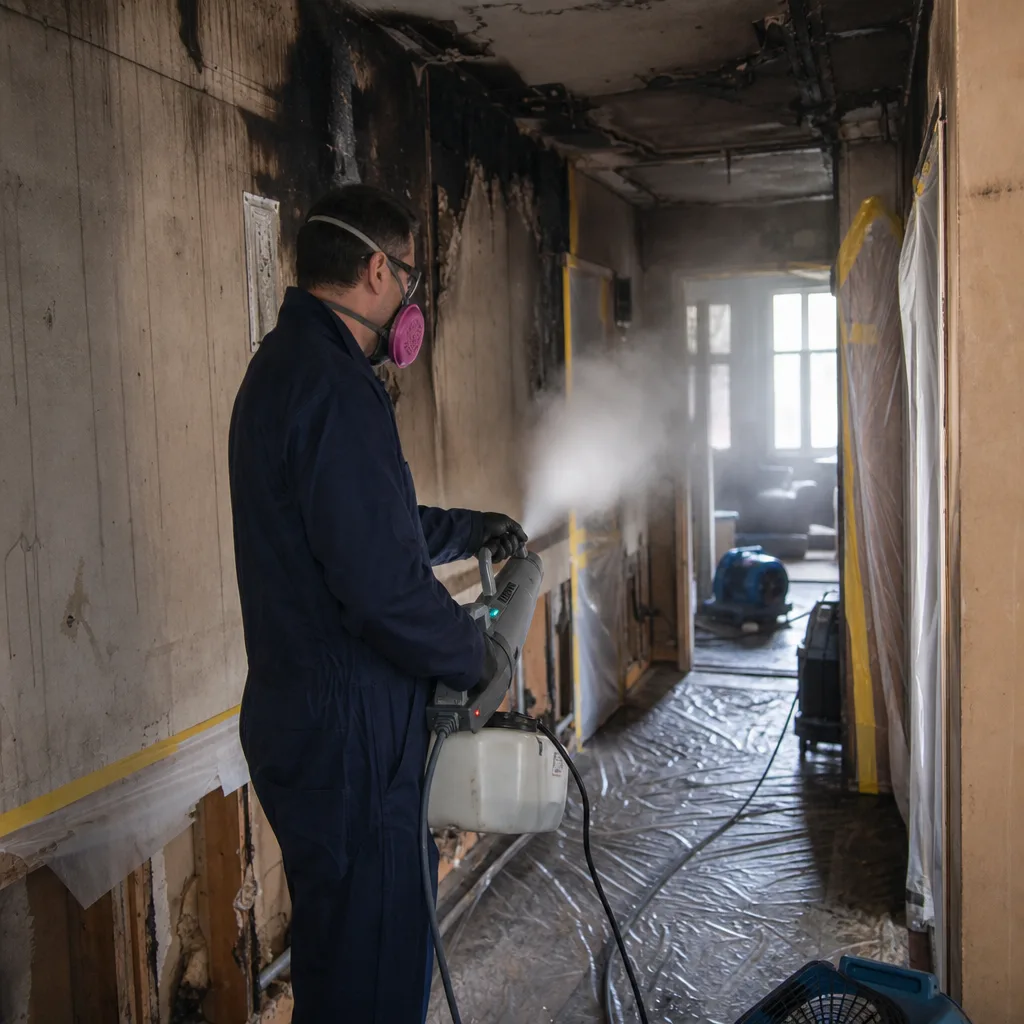
Smoke odor in Washington Square brownstones hides inside plaster, behind wainscoting, and within party wall voids. We use hydroxyl generators, thermal fogging, and sealed HEPA air scrubbing to neutralize odor at the source, not mask it. The goal is a unit that smells like before the fire.
Repairs & Restoration
Once dry and clean, we rebuild. Structural repairs, plaster restoration, trim replication, painting, and flooring all happen under one roof. If your building sits in the Greenwich Village Historic District, we coordinate any needed LPC review before structural work.
Need Emergency Fire & Smoke Damage Restoration in Washington Square Now?
Crews minutes away, answering live 24 hours a day. The sooner we start, the less it costs.
Working With Your Insurance Company
Fire claims in Washington Square often involve more than the burned room. Smoke migration through party walls, water from suppression reaching neighboring units, and Landmarks compliance all complicate what the adjuster needs to see. We build the claim file from the first hour: photos of every affected room, a room-by-room contents inventory, moisture readings, drying logs, and a line-item scope of work that matches the carrier’s software. Our team communicates directly with your adjuster, so when they call with a question, we answer it. You don’t carry paperwork between parties.
What We Provide Your Insurer
- Thorough documentation of the loss
- Photos of all damage, room by room
- Moisture readings and drying logs
- A detailed, line-item scope of work
- Direct coordination with your carrier
Built for Washington Square’s Loss Calendar
Washington Square’s fire loss pattern follows its seasons, and older buildings amplify each one. January freezes burst cast-iron supply lines, and the electrical repairs that follow bad amateur work spark short circuits behind original lath. Spring brings the thaw and the first serious groundwater push from the Minetta Brook watershed, turning any smoldering basement issue into a wet one. Summer’s convective storms hammer lower Manhattan with downpours that overwhelm the combined sewer around Washington Square East, and flooded basements meet active electrical panels. Fall and early winter bring the nor’easter wind-driven fire risk: old slate roofing, aging chimney flues, and space heaters in 1830s row houses that were never wired for modern loads.
In every season, our Washington Square teams see the same pattern: smoke and soot damage that started small and spread because a property owner waited a day to call. The fastest way to keep a small fire from becoming a full reconstruction is to call while the smoke is still clearing. We’ll tell you honestly what needs to happen now and what can wait.
Fire & Smoke Damage Restoration Across Washington Square’s Neighborhoods
Washington Square is small in footprint but dense in building types, and each corridor responds to fire differently. On the north side, the 1832-1833 Greek Revival row houses of Washington Square North, known as The Row, carry the heaviest landmark restrictions and the most original fabric. Fires there mean LPC review on any structural repair, and our crews know how to document damage before touching a historic facade. Around Washington Square South and West, the pre-war elevator buildings and converted carriage houses have steam risers and old plumbing chases that act as smoke flues across multiple floors. Near MacDougal and Sullivan Streets, the narrow party walls of 1840s rowhouses allow soot to push sideways into adjacent homes within hours. East of the Square, along University Place, the mix of old NYU buildings and residential co-ops means restoration schedules often have to work around building management rules and tight access points. And down toward the Greenmarket and the park’s southern edge, basement-level commercial spaces that once held coal chutes now struggle with Minetta Brook groundwater after fire-suppression water enters the same drains.
Specialized Fire & Smoke Damage Restoration Services We Offer in Washington Square
Smoke & Soot Removal
Soot in Washington Square brownstones settles into horsehair plaster, strips of original millwork, and the deep window reveals of pre-war construction. We clean each surface according to its residue type, using dry sponges on plaster and HEPA vacuuming on anything that could smear. The goal is removal, not just coating over a stain.
Odor Removal & Deodorization
Smoke odor in an 1830s rowhouse doesn’t leave with an open window. It sits inside plaster, behind wainscoting, in the cavities between floor joists, and in the shared wall between you and your neighbor. We use thermal fogging, hydroxyl generation, and sealed air scrubbing to drive odor out of those spaces permanently.
Emergency Board-Up & Tarping
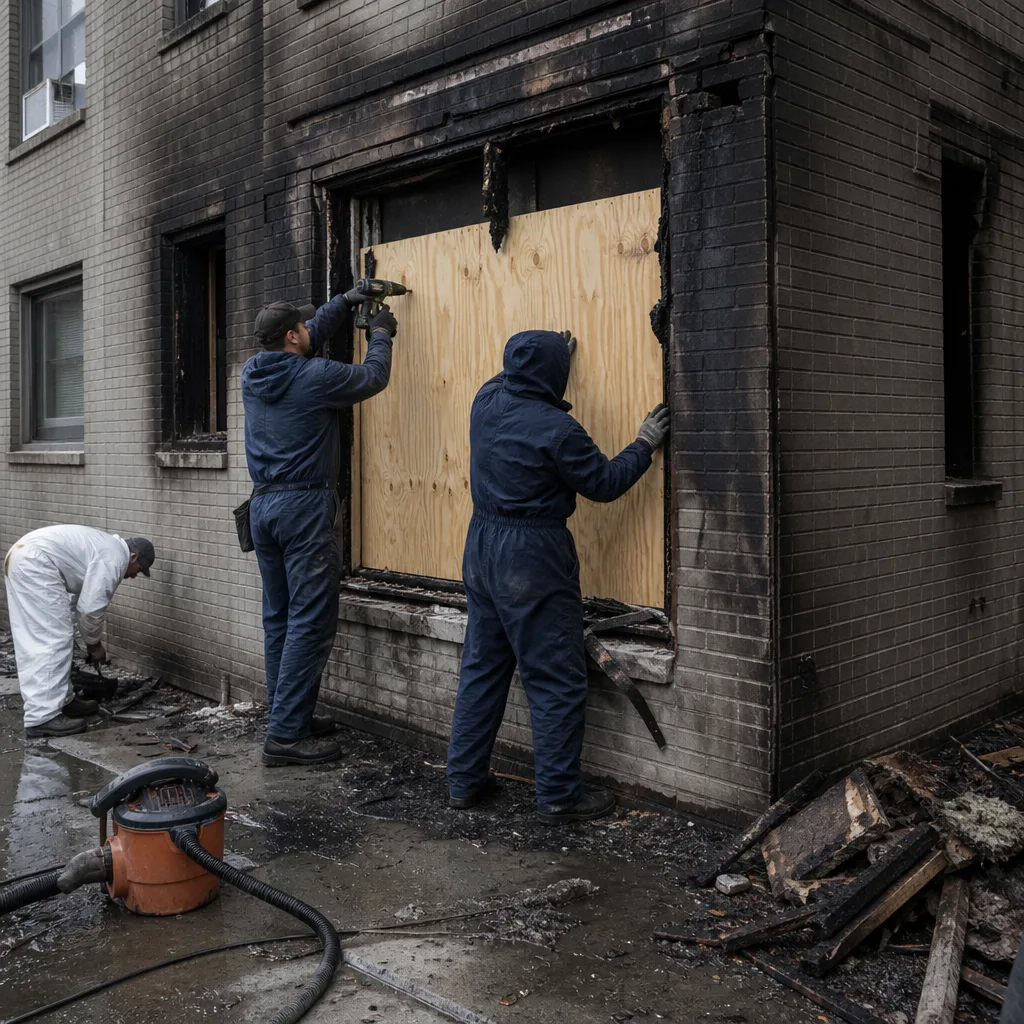
After a fire, an open window or a burned-through roofline invites weather, theft, and more damage. We secure the property with board-up and tarping that respects the building’s facade. On landmarked Washington Square North facades, we handle the emergency stabilization first and document everything so the LPC application is based on what we actually found.
Fire Damage Cleanup
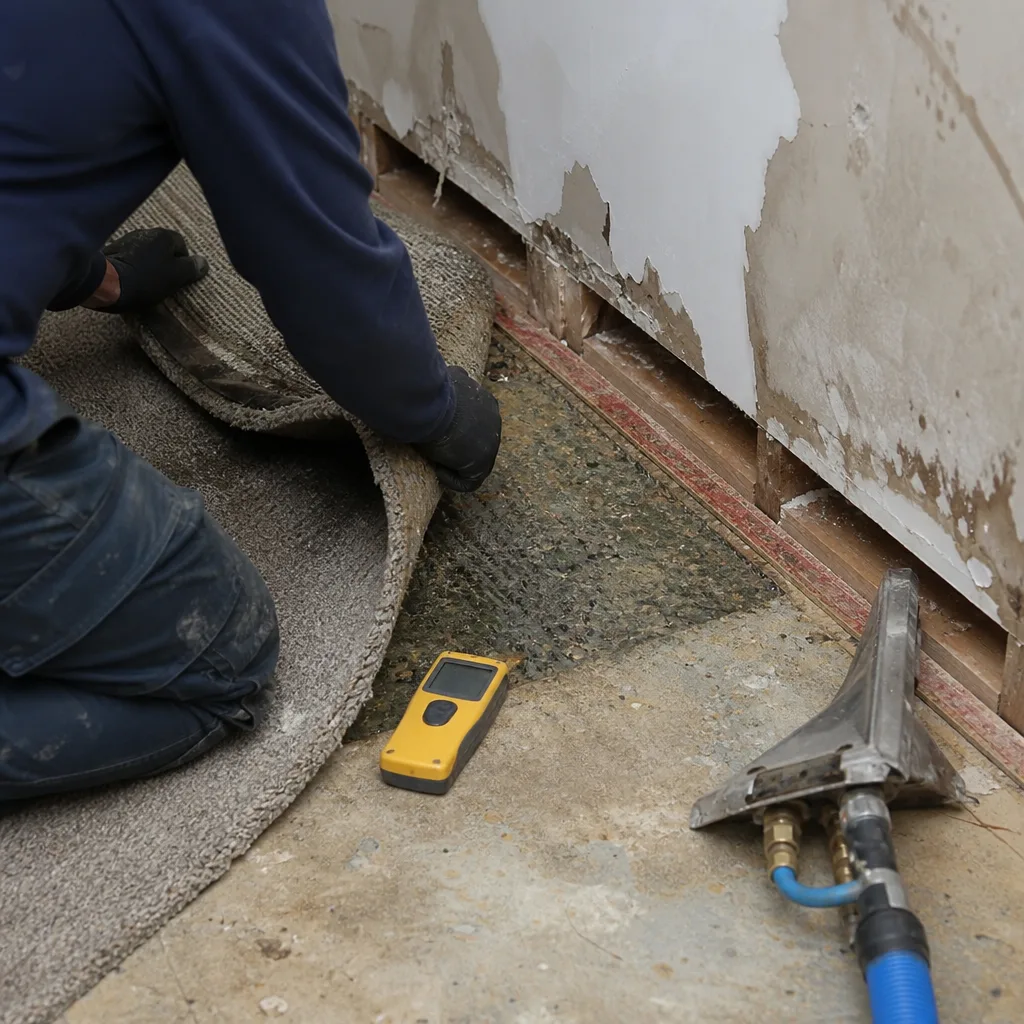
We remove charred debris, damaged drywall or plaster, ruined flooring, and anything the fire compromised. In older Washington Square buildings, that often means working carefully around original features that can be saved: mantels, plaster cornices, and wide-plank subfloors. We save what’s structurally sound and remove what isn’t.
Contents Cleaning & Pack-Out
Furniture, books, clothing, art, and the contents of a life absorb smoke fast. We pack out salvageable items, clean them off-site in a controlled environment, and inventory everything for your insurer. When you have a Washington Square apartment full of belongings that smell of smoke, pack-out often means the difference between keeping and replacing.
What happens when you call
- 1
A real person answersNo phone trees - you reach a local pro.
- 2
You get an upfront price rangeHonest numbers before anyone is dispatched.
- 3
A background-checked tech heads outLicensed & insured, dispatched right away.
- 4
You approve before work beginsNothing starts until you say go.
Fire & Smoke Damage Restoration Costs in Washington Square, NY
We believe in straight numbers. In Washington Square, emergency board-up and tarping typically runs $400 to $1,400 depending on the number of openings and whether scaffolding is needed on a landmarked facade. Smoke and soot removal across a single floor of a rowhouse averages $2,800 to $6,500, with odor removal and deodorization adding $900 to $2,800 when the smell has penetrated plaster and cavities. Full contents cleaning and pack-out for a two-bedroom apartment generally ranges $2,200 to $6,000. Structural fire repair varies with the scope, but a typical wall rebuild with plaster and trim replication in a Washington Square brownstone falls between $8,000 and $28,000. What moves the price: the age of the plaster, the extent of party-wall involvement, whether LPC review is required, and how quickly the smoke was addressed. Most policies cover fire and smoke restoration when the cause is sudden and accidental. We write a detailed scope so you know which number belongs to your home, and a free inspection gives you that number before you commit to anything. Call (518) 314-5660 for an exact quote.
We Also Serve Cities Near Washington Square
Floodline Restoration Co. handles fire and smoke damage restoration throughout lower and central Manhattan. If you’re in Midtown Manhattan, Midtown West, Murray Hill, or Upper Manhattan, our crews reach you quickly and bring the same live 24/7 dispatch, certified technicians, and direct insurance billing.
Serving Washington Square, NY - Our Local Coverage Area
We’re based in the Washington Square area and know this community well. Use the map below to see our service coverage - if you’re nearby, we can almost certainly help.
Washington Square Fire & Smoke Damage Restoration Questions, Answered
How does the buried Minetta Brook under Washington Square change fire and smoke restoration drying times?
The Minetta Brook creates persistent hydrostatic pressure under Washington Square basements, so post-fire suppression water that would dry in days on higher ground here lingers and migrates into pre-Civil War brick and horsehair plaster. Drying times in Washington Square basements typically run 20-40% longer than in neighboring areas on higher ground, and we set drying logs with that baseline in mind. Call (518) 314-5660 and we’ll assess your specific building’s groundwater load.
Do I need Landmarks Preservation Commission approval before emergency board-up on a Washington Square rowhouse?
No, emergency stabilization like board-up and tarping does not require prior LPC approval when the building’s safety or weatherproofing is at immediate risk. What matters is documenting the emergency condition clearly, because any subsequent structural repair on a landmarked Washington Square facade will need LPC review. We handle the documentation from the first visit. Call (518) 314-5660 for immediate board-up on a Washington Square landmark property.
Can smoke and soot travel between Washington Square brownstones through shared party walls?
Yes. In the 1830s-1840s row houses around Washington Square, shared masonry party walls often have open cavities, old chimney flues, and gaps where floor joists enter the wall. Soot and smoke push through those paths into adjacent units within hours of a fire. We inspect both sides of any party wall after a Washington Square fire and document what crossed, which matters for insurance claims. Call (518) 314-5660 if you smell smoke and your neighbor had a fire.
What restoration challenges come with original horsehair plaster in Washington Square fire-damaged rooms?
Horsehair plaster absorbs smoke deeply and releases it slowly, and it can’t be cleaned the way modern drywall can. Wet cleaning smears soot into the plaster’s lime base and sets the stain permanently. We dry-sponge the surface, then seal or remove the plaster depending on how far the smoke penetrated. In landmarked buildings, that call may require LPC input. Call (518) 314-5660 for a free inspection of fire-damaged plaster in your Washington Square home.
How do I know if post-fire water in my Washington Square basement is Category 1, 2, or 3?
Category 1 water is clean at the source, like a burst supply line. Category 2 carries significant contamination, and Category 3 is grossly contaminated, like sewage or floodwater. In Washington Square, clean fire-suppression water sitting in a basement over the Minetta Brook watershed picks up groundwater contaminants and what the aging combined sewer left behind, often shifting to Category 2 or 3 within hours. We test and classify the water before drying begins. Call (518) 314-5660 and we’ll tell you what class you’re dealing with.
How fast can you actually get to Washington Square after a fire?
We commit to a 45-minute dispatch window for fire and smoke calls anywhere in Washington Square and the surrounding blocks. Our live dispatcher runs the board 24 hours a day, so a certified crew is moving toward your address as soon as you hang up. The faster smoke residue is addressed, the less it costs. Call (518) 314-5660 for urgent response.
Will my insurance cover fire and smoke damage restoration in Washington Square?
Most homeowners policies in New York cover sudden and accidental fire damage, including smoke, soot, and water from suppression. Coverage for contents cleaning, pack-out, and structural repairs depends on your policy limits and cause of loss. We bill your carrier directly, provide them with the full documentation file, and coordinate adjuster communication so you don’t have to manage the claim. Call (518) 314-5660 and we’ll help you understand your coverage before any work starts.
Can we stay in our home during fire and smoke restoration work?
It depends on the extent of smoke and soot migration, the presence of hazardous residues, and whether structural systems were compromised. In many Washington Square cases, occupants can remain in unaffected floors while we contain and clean the damaged area. If smoke traveled through the central stairwell of a rowhouse, you may need temporary relocation until air scrubbing clears the shared space. We’ll tell you straight what’s safe.
Written by Curt Bowman, Owner at Floodline Restoration Co., serving Washington Square and the surrounding blocks. If your home has fire or smoke damage, call (518) 314-5660 and you’ll talk to a person who can help.