
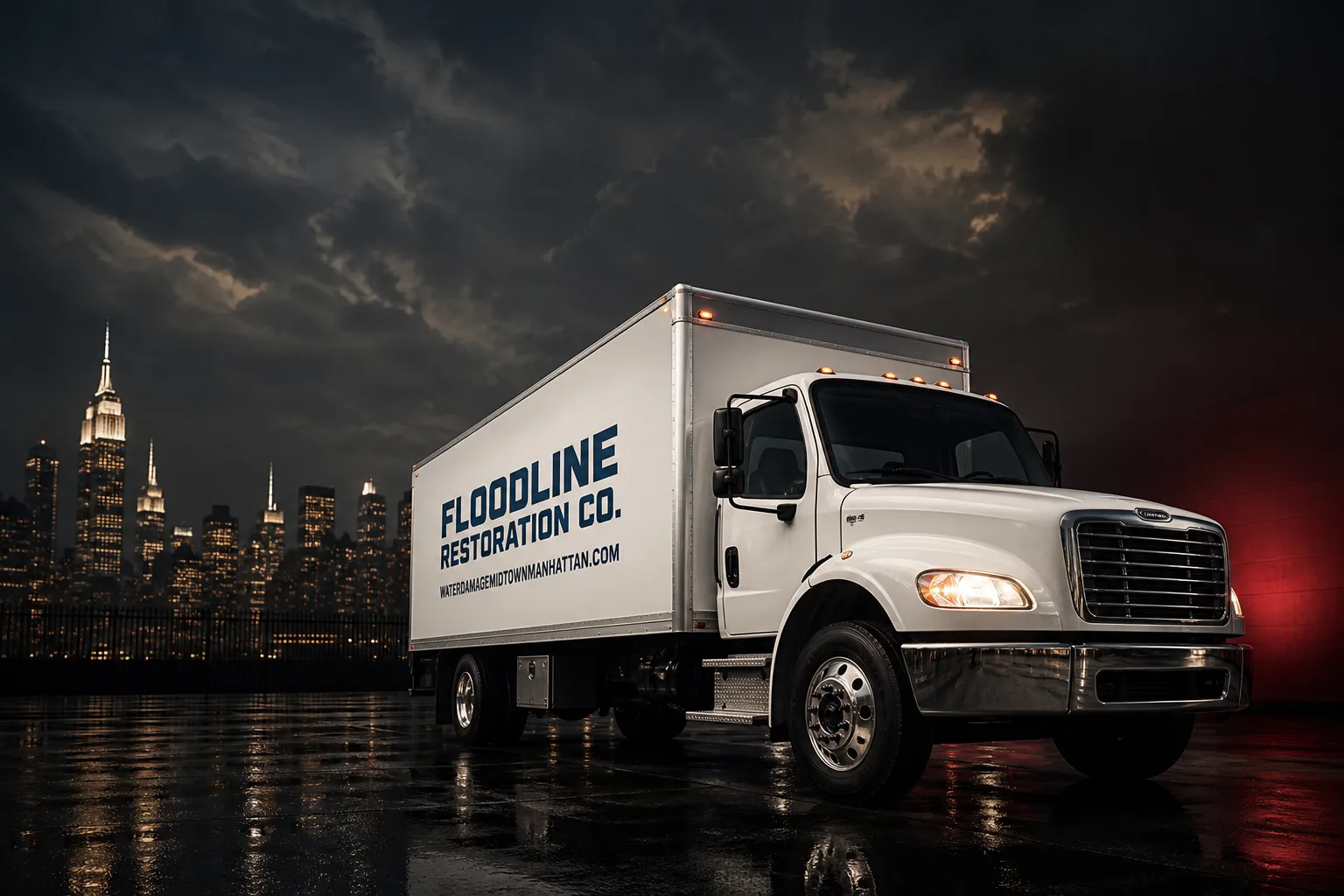
Free visual inspection and a written scope of work before any mitigation begins - photos, moisture readings, and drying logs go in your claim file
The scope we write is the scope we bill. Anything new gets shown to you, in writing, before we touch it.
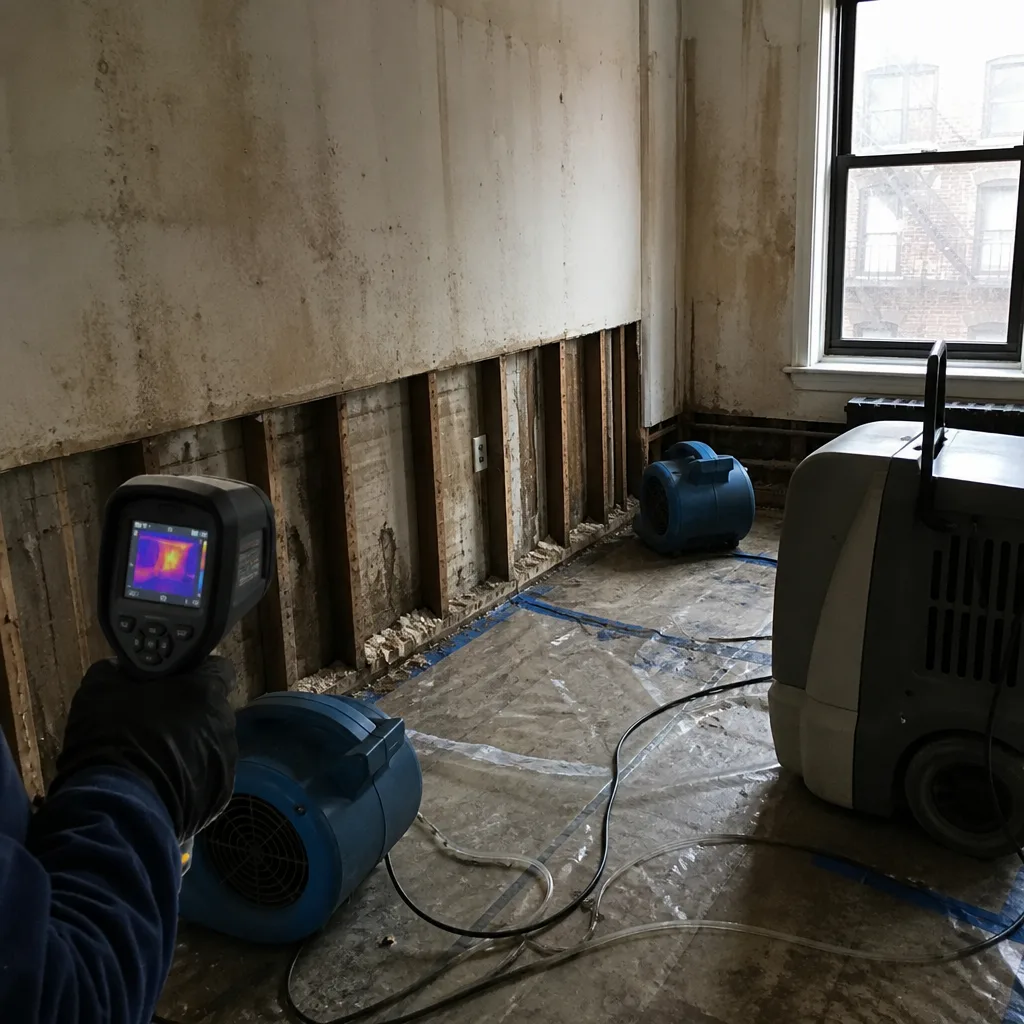 Before
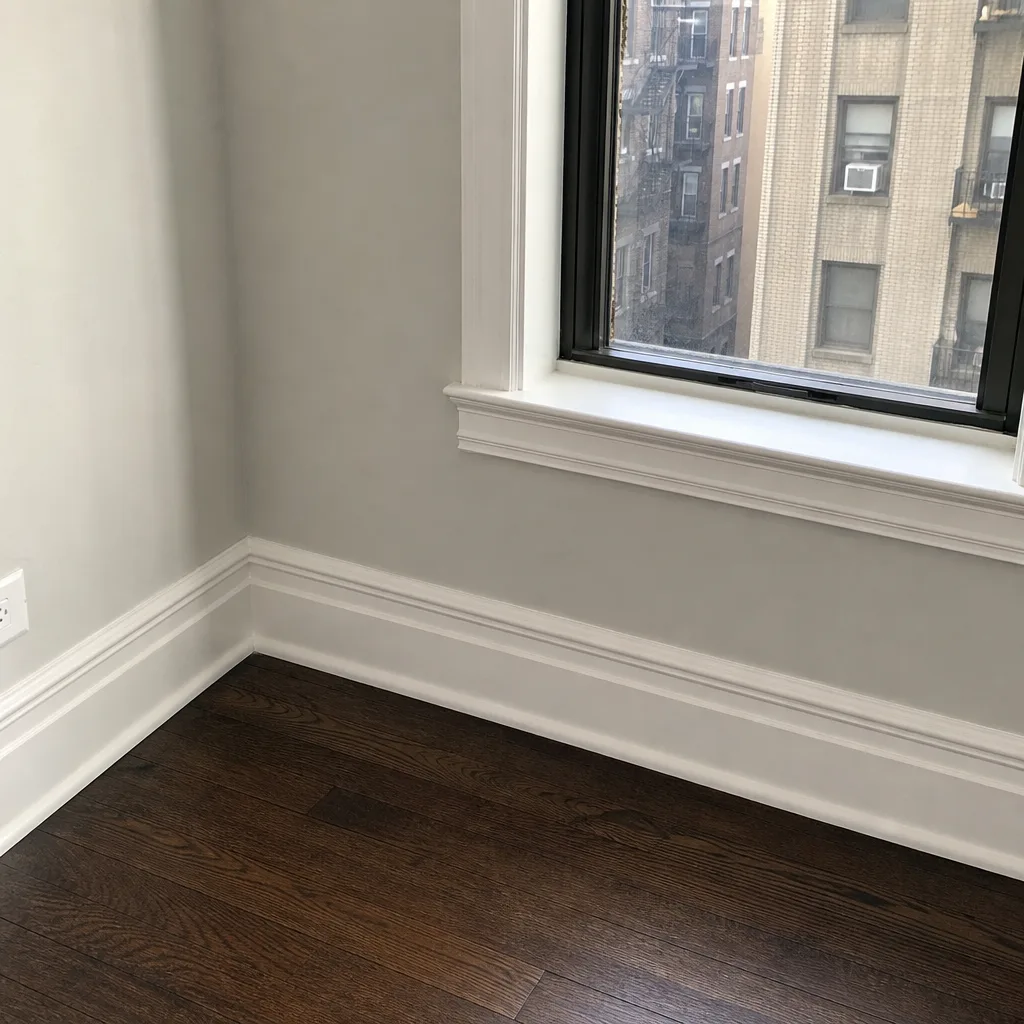 After
After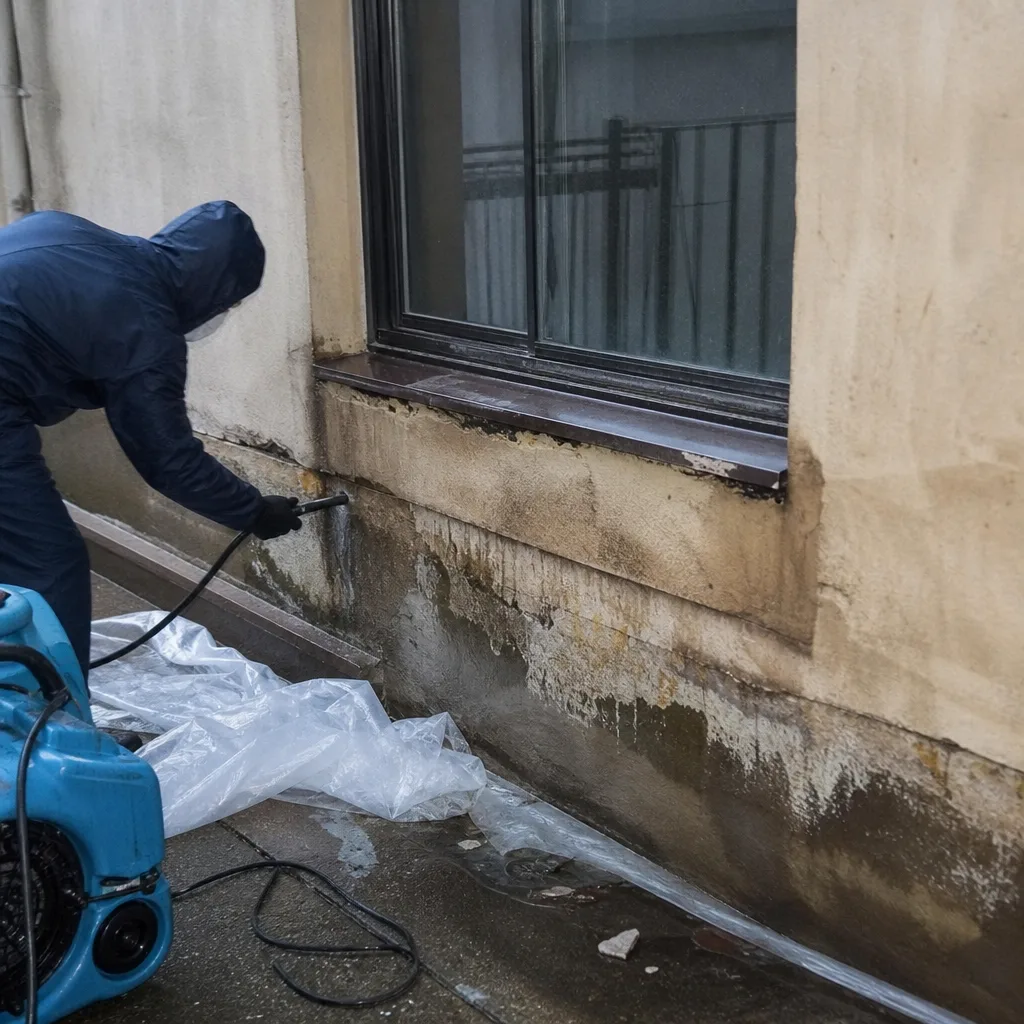 Before
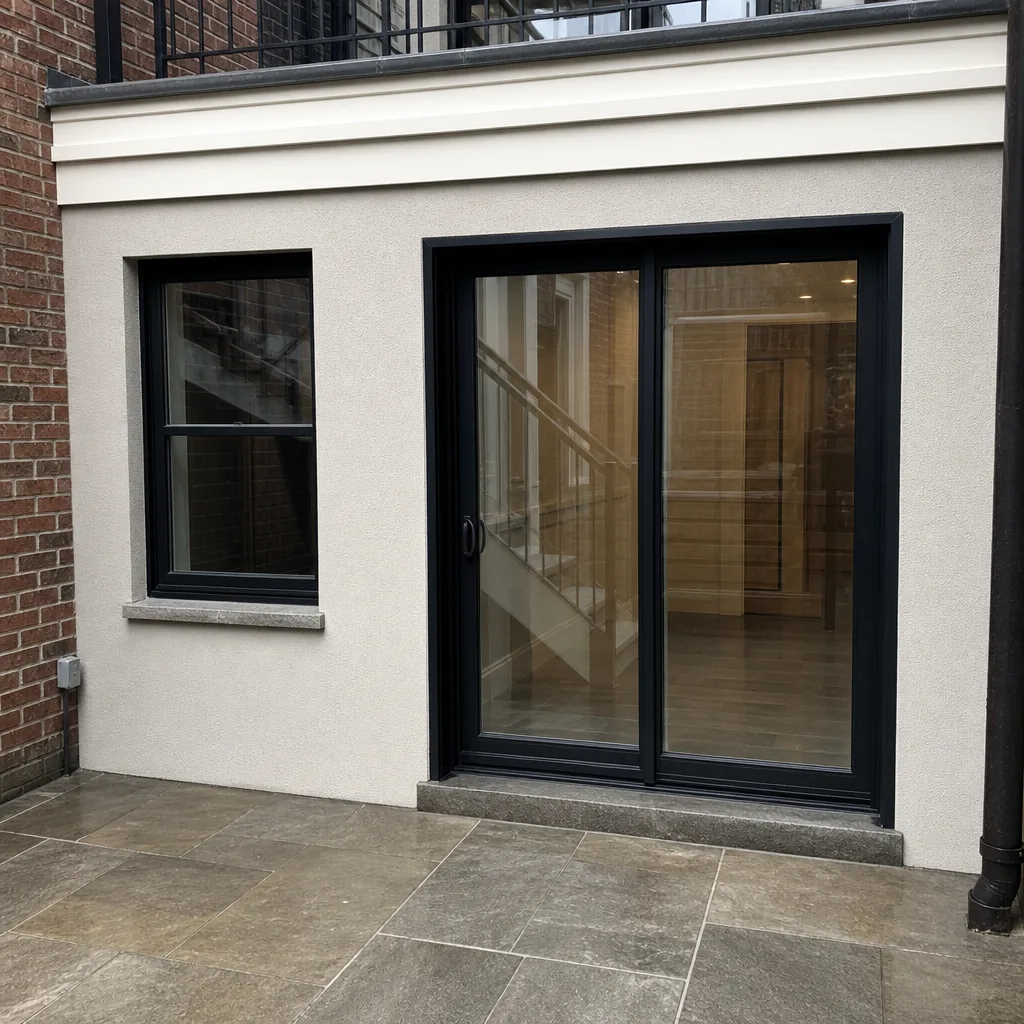 After
After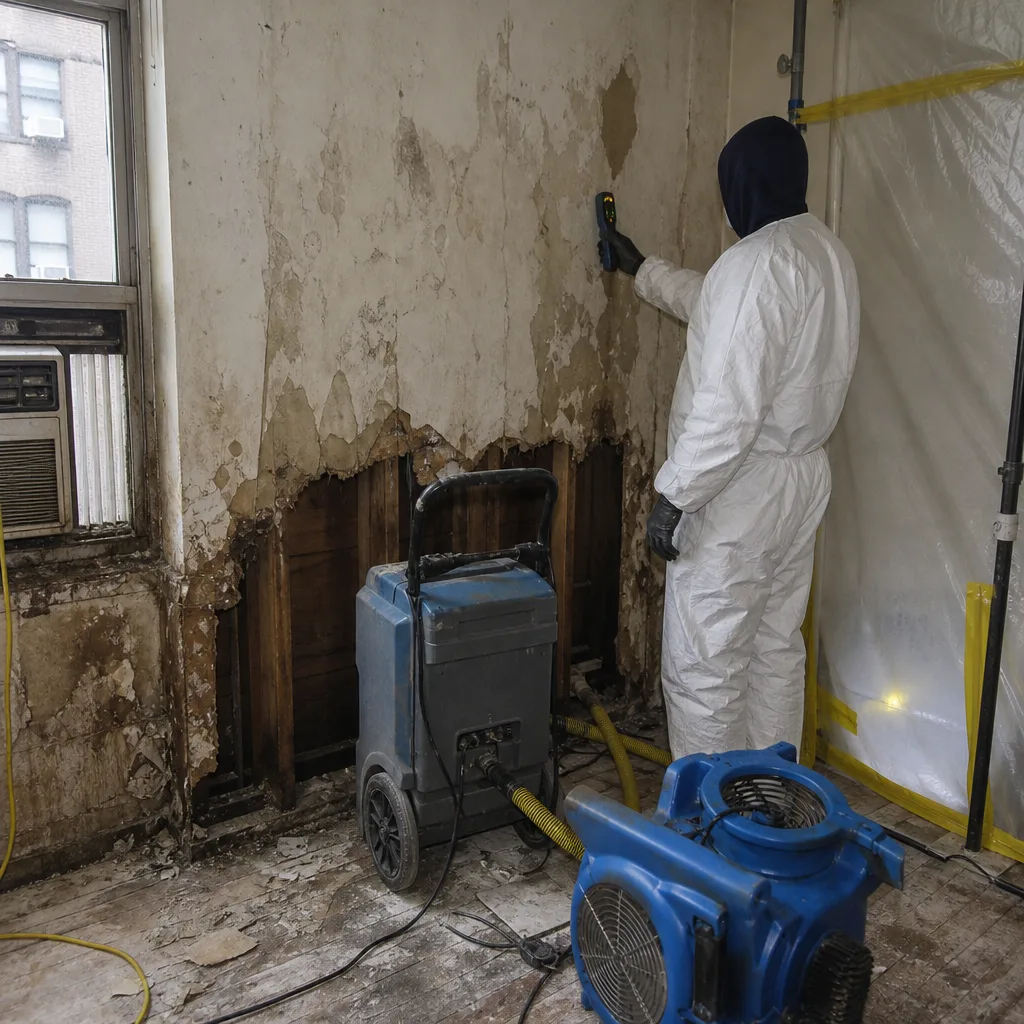 Before
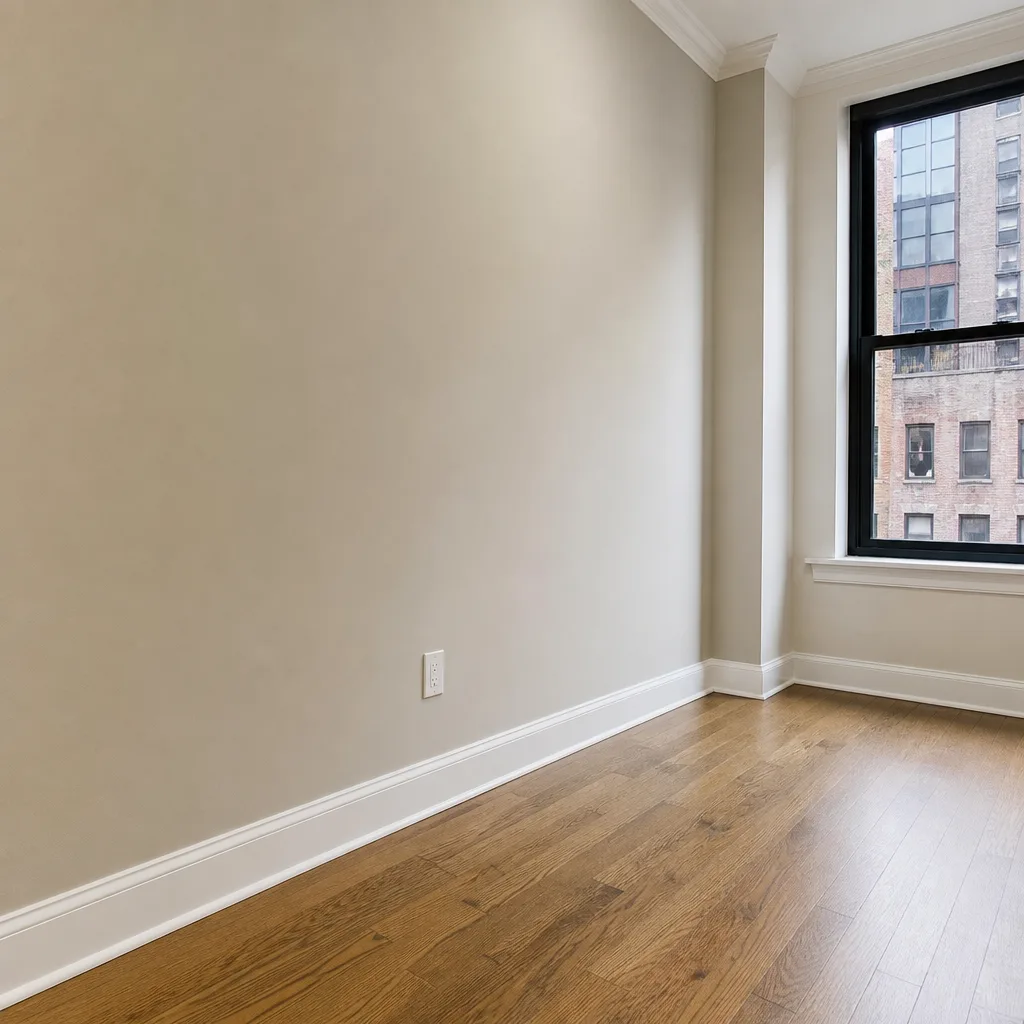 After
After24/7 Emergency Storm & Disaster Restoration in Hoboken
Storm and disaster restoration in Hoboken usually starts with a flooded garden-level apartment, a sewage backup, or a failed exterior door after a nor’easter. A certified crew can be on-site within 45 minutes most days, and extraction equipment is running before the hour is out. The first hour matters more here than in most towns, because Hoboken’s combined sewer system pushes Category 3 black water into below-grade units fast, and contaminated drywall starts growing mold inside 24 to 48 hours. Call (518) 314-5660 any hour of the day or night. A live dispatcher answers, not a recording, and we’ll get a crew rolling toward your block immediately. The line the water left is where we start.
Understanding Storm & Disaster Restoration Severity in Hoboken Properties
Storm damage in Hoboken splits into three categories of water, and knowing which one you’re dealing with changes everything about the restoration plan. Category 1 is clean water, usually from a burst supply line or a rain leak through a roof. Category 2 carries contaminants, like sump pump overflow or washing machine discharge. Category 3 is grossly contaminated water, and in Hoboken, that’s what comes up through basement floor drains when the combined sewer system backs up during heavy rain or a tidal surge. It carries raw sewage and pathogens, and it requires full cut-out of saturated drywall, not just extraction and drying. We moisture-map every affected surface on day one, then log drying readings daily until the structure meets the dry standard. In Hoboken’s century-old brownstones and brick rowhouses, wet plaster and lath dry differently than modern drywall, and the old cast-iron drains under garden-level units add a layer of risk new construction doesn’t have. That pre-war building stock is why we treat every basement flood here as a Category 3 event until proven otherwise.
Wind damage carries its own severity scale in Hoboken. Exterior doors and window frames on the upper floors of 4-to-6 story brownstones take full brunt from Hudson River wind gusts that squeeze between the buildings. A door that’s already racked or a frame with dry rot becomes a missile risk in the next coastal storm. We see it every season: the hardware looks fine until a wind-load test or a hard gust proves otherwise.
Why Hoboken Property Owners Choose Floodline Restoration Co.
- 45-minute response commitment - We dispatch crews across Hoboken from a metro office minutes away, and we commit to that window for emergency calls. When your garden-level unit is taking on sewage, speed is the restoration plan.
- A live person answers, 24/7 - Call at 2 a.m. during a nor’easter and you’ll reach a dispatcher, not a menu tree. Curt Bowman built this company around a dispatch board, not a sales desk.
- IICRC-certified crews on every job - Our technicians hold WRT, FSRT, and AMRT certifications and train to IICRC, RIA, and IFA standards. Background-checked and uniformed, every time.
- Free visual inspection - We walk the damage with you, explain what’s urgent and what’s not, and hand you a written scope before any work starts. No pressure, no upselling.
- Direct insurance billing - We bill your carrier directly and coordinate with your adjuster from the first day. You never play messenger between us and the insurance company.
- One team, start to finish - The same certified crew that extracts the water handles the drying, the cut-out, the antimicrobial treatment, and the rebuild. No mid-job handoff, no inherited crew you’ve never met.
Our Storm & Disaster Restoration Process
Inspection & Assessment
We arrive, map the damage, and classify the water category. Thermal imaging and moisture meters tell us where the water migrated inside wall cavities, even where surfaces look dry. You get a written scope and a straight answer about what needs to come out and what can be saved.
Extraction & Stabilization
Standing water comes out first. For Category 3 sewage backups in Hoboken basements, we set containment zones to keep pathogens from spreading into living space, then start extraction with truck-mounted and portable units. Emergency board-up and roof tarping happen at this stage if the storm opened the building envelope.
Drying & Dehumidification
Professional-grade Dri-Eaz dehumidifiers and XPOWER air movers run continuously, positioned according to the moisture map we built on day one. We return daily to log readings with hygrometers until the structure reaches pre-loss moisture levels. The drying log goes to you and your carrier.
Cleaning & Sanitization
After drying, every affected surface gets antimicrobial treatment. In Hoboken’s older rowhouses, that often means treating original joists and lath that have been wet before. We don’t skip this step, because a dried-out pathogen is still a pathogen.
Storm-Specific Remediation
For Hoboken’s repeat flood basements, this is where cut-out happens: saturated drywall, insulation, and baseboards come out, cavities are treated, and the space is prepared for rebuild. For wind damage, we re-hang exterior doors to wind-load rating, repair or replace damaged tracks and panels, and address any racked frames.
Repairs & Restoration
New drywall, new insulation, new trim. Replacement doors and windows if needed. The same crew that did the extraction handles the reconstruction, and the job is done when we hand you the moisture log and the 90-Day Done Right Promise in writing.
Need Emergency Storm & Disaster Restoration in Hoboken Now?
Crews minutes away, answering live 24 hours a day. The sooner we start, the less it costs.
Working With Your Insurance Company
Most Hoboken storm and flood damage claims involve a carrier’s adjuster, a deductible question, and a homeowner who’s never filed a flood claim before. We handle that conversation for you. From the first hour on-site, we document everything: photos of every affected room before and during work, moisture readings at each visit, and a line-item scope of work the adjuster can verify. We bill the carrier directly, and our project managers talk to your adjuster throughout the job. When the claim gets complicated - and Category 3 sewage backups in garden-level units often do - we advocate for the full scope, not the cheapest one.
What We Provide Your Insurer
- Thorough documentation of the loss from hour one
- Photos of all damage, room by room
- Moisture readings and drying logs at every visit
- A detailed, line-item scope of work
- Direct coordination with your carrier and adjuster
Built for Hoboken’s Loss Calendar
Hoboken’s storm damage seasons don’t look like the rest of the Jersey side. January and February bring deep freezes that burst supply lines in uninsulated brownstone walls, and those leaks run down through floors into garden-level units. Spring means nor’easter season, when a storm surge at high tide backs the combined sewers up through basement floor drains before local rain even accumulates. Summer thunderstorms, especially July and August downpours, overwhelm the city’s flat drainage grid within an hour, and two inches of rain can leave the western blocks near the rail yards standing in water for hours. September through November is tropical season, and Sandy taught everyone in ZIP 07030 what a tidal Hudson River can do to a one-square-mile bowl at sea level. We plan our Hoboken crews around this calendar, because most of the calls we take are not first-time floods. They’re the same basements, often the same addresses, flooding for the second or third time in a year.
Storm & Disaster Restoration Across Hoboken’s Neighborhoods
Hoboken’s mile-square grid means we can reach any address within 45 minutes, but the damage pattern changes block by block. The western blocks near the NJ Transit rail yards sit at the lowest elevation in the city, and those garden apartments take the first and deepest floodwater whenever the sewers back up. We know those basements well: the cast-iron drains date to the 1920s, the galvanized supply lines are original, and the drywall has likely been wet before. Downtown, near Washington Street and the river, the brownstones face a different risk: wind-driven rain and tidal surge, with driving gusts that rack exterior doors over time. Uptown, near the 14th Street viaduct and the North Hudson border, older brick rowhouses with flat roofs take wind uplift during nor’easters, and roof tarping is often the first call we make there. Along the numbered streets between Clinton and Adams, pre-war buildings with shared party walls are a common site for flood damage that starts in one basement and migrates horizontally into the neighbor’s.
Specialized Storm & Disaster Restoration Services We Offer in Hoboken
Storm Damage Cleanup
After a nor’easter or severe thunderstorm, we clear the water, the debris, and the damaged materials. In Hoboken, that often means pulling out soaked drywall and insulation from garden-level units, tearing out warped flooring, and hauling away wind-blown debris that landed in stairwells and light wells. We work fast because mold doesn’t wait.
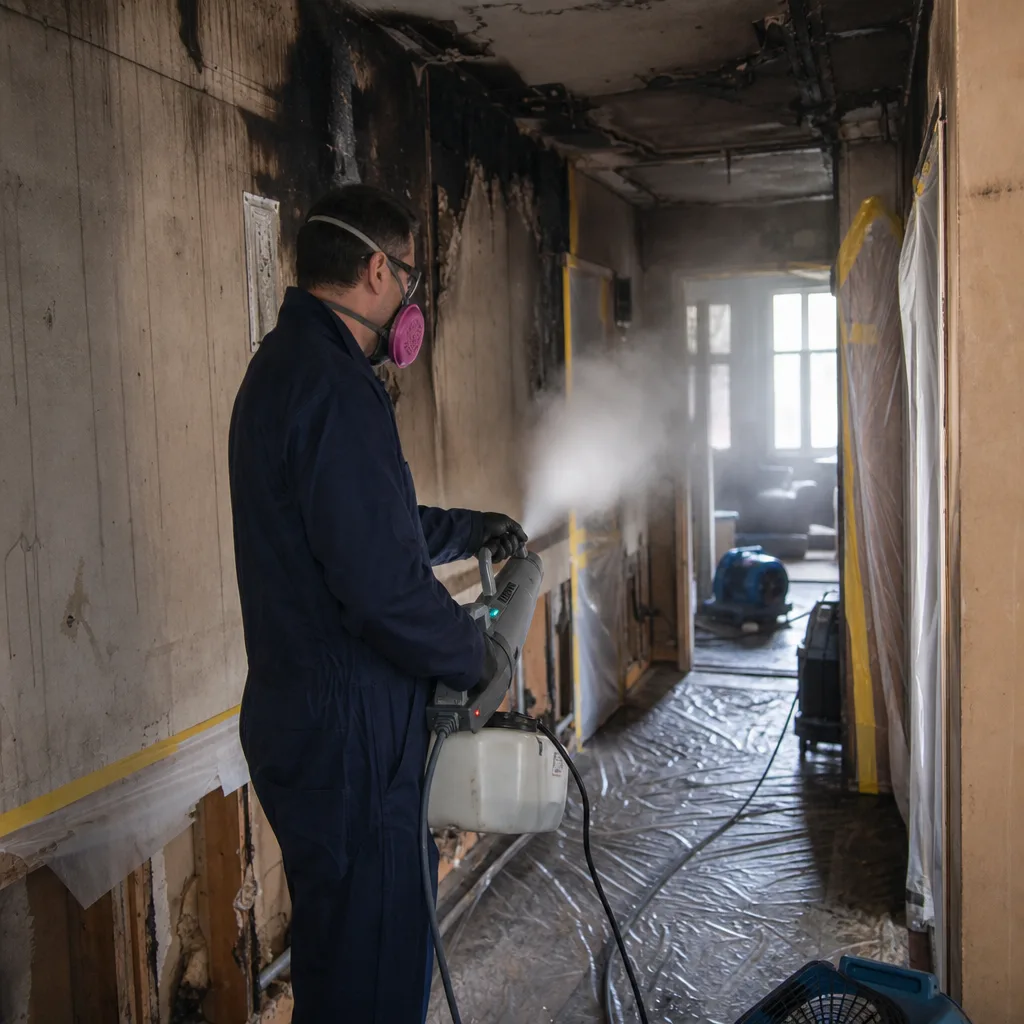
Flood Damage Restoration
Hoboken flood restoration is mostly basement work. Category 3 sewage backup, hurricane surge, rain-driven groundwater rising through the slab, or all three at once. We extract, contain, dry, treat, cut out, and rebuild. The same brownstones that flooded during Sandy still flood today when the sewer system backs up, and we’ve built our whole Hoboken response around that reality. Our Storm & Disaster Restoration team handles these calls constantly.
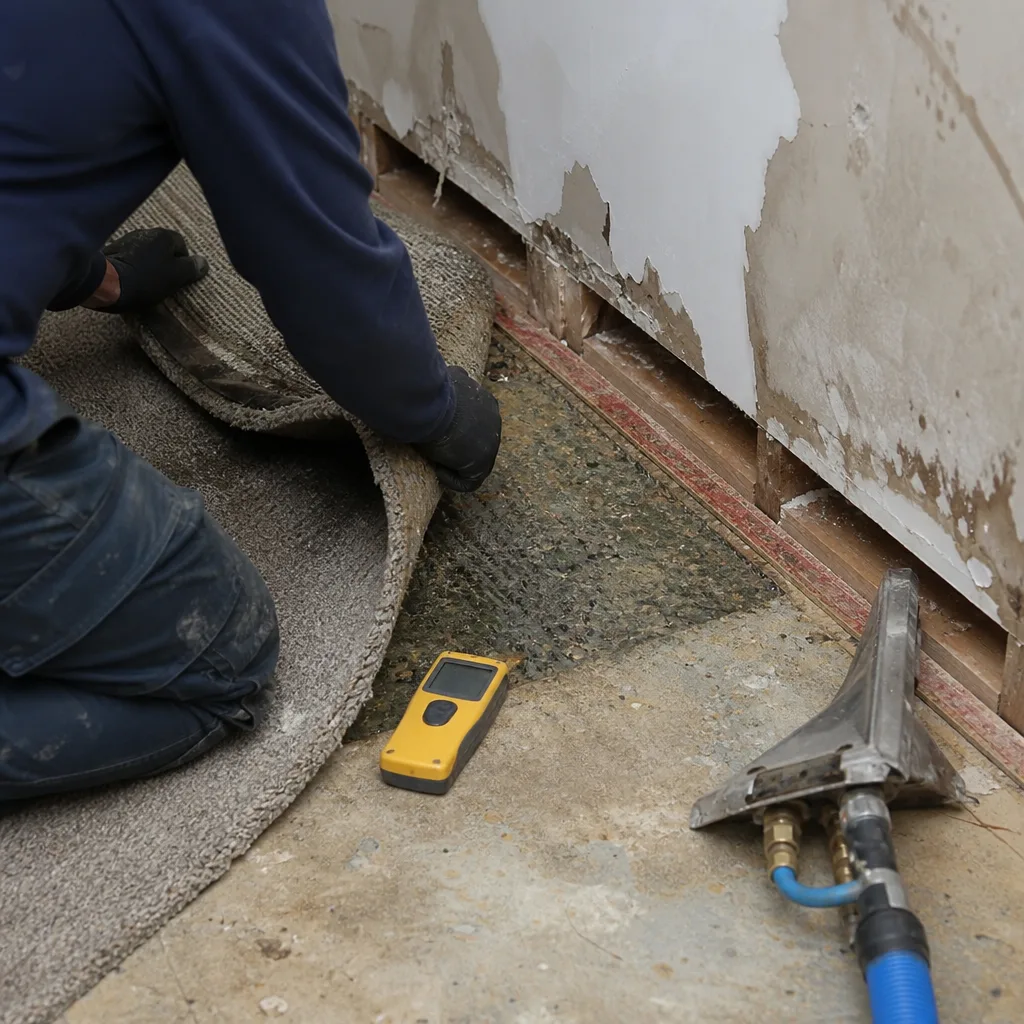
Emergency Board-Up
When a storm blows out a window or a facade element fails, the building envelope is open to weather and intruders. We board up within hours using code-compliant materials, secure the openings, and document everything for your carrier. For Hoboken’s tightly spaced rowhouses, securing one unit often means protecting the adjoining one too.
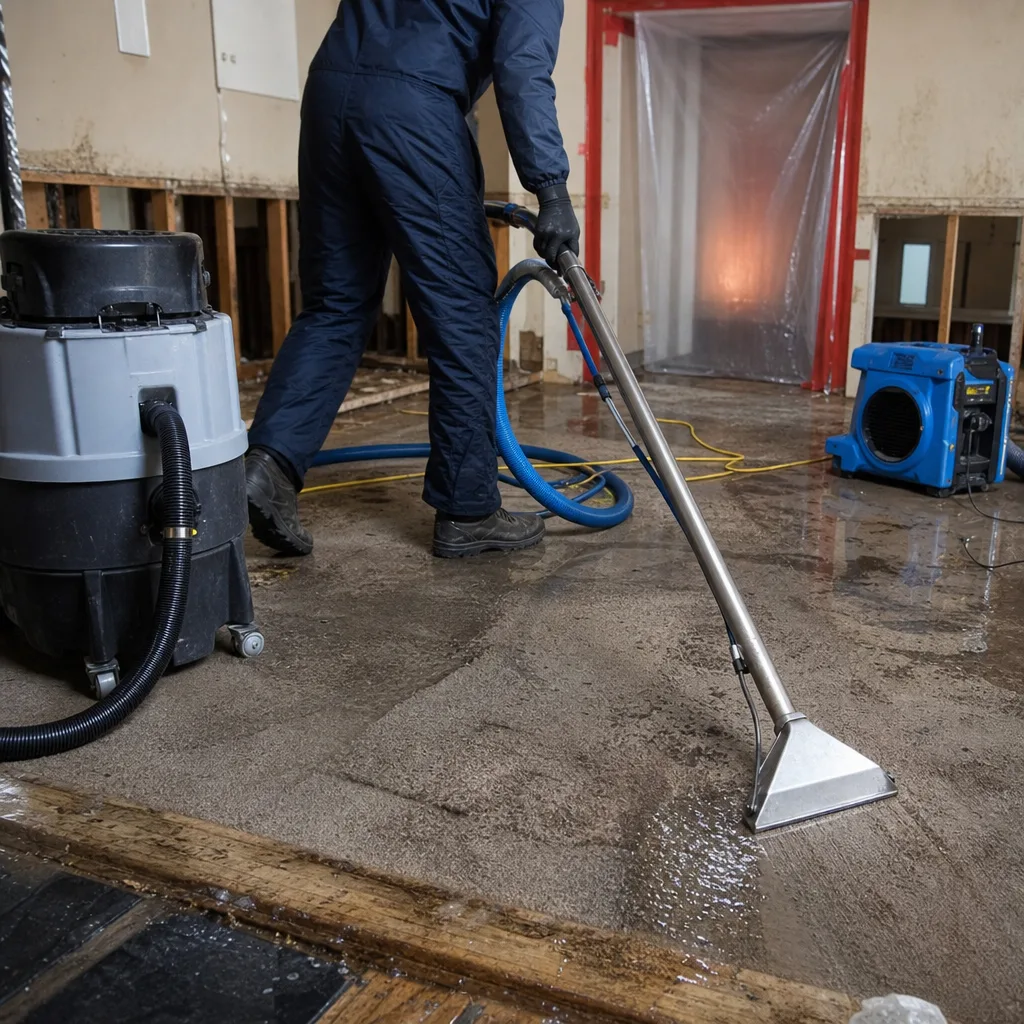
Roof Tarping
Flat roofs on Hoboken’s pre-war buildings take wind uplift along the edges, and once the membrane lifts, rain pours into the top-floor units and runs all the way down. We tarp quickly, seal the penetration, and map the interior water damage before it spreads through party walls. In the city’s dense housing stock, a small roof breach becomes a multi-floor claim in under a day.
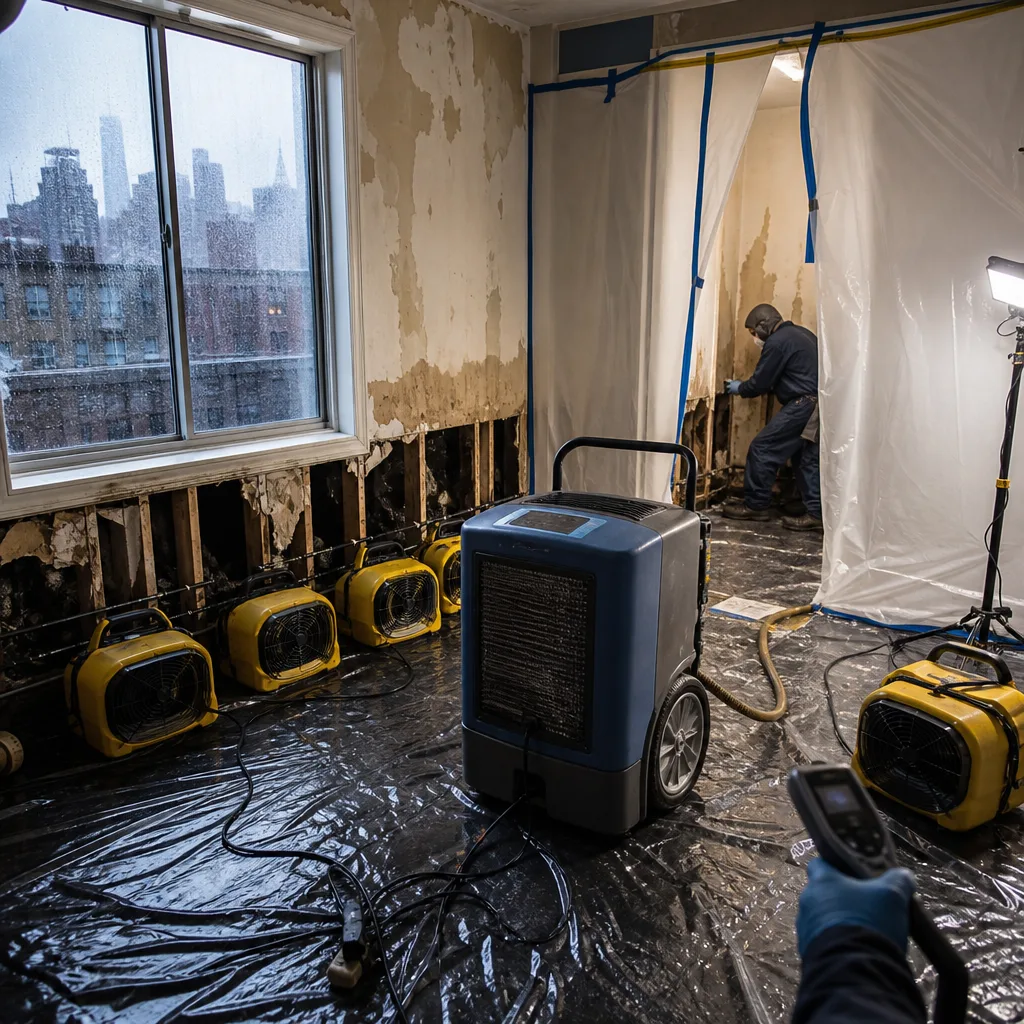
Debris Removal
Storm debris in Hoboken collects in the odd places: light wells, basement areaways, rooftop bulkheads. We clear it as part of the restoration scope, not as an afterthought. Anything that blocks a drain or holds moisture against a wall gets hauled off and documented.
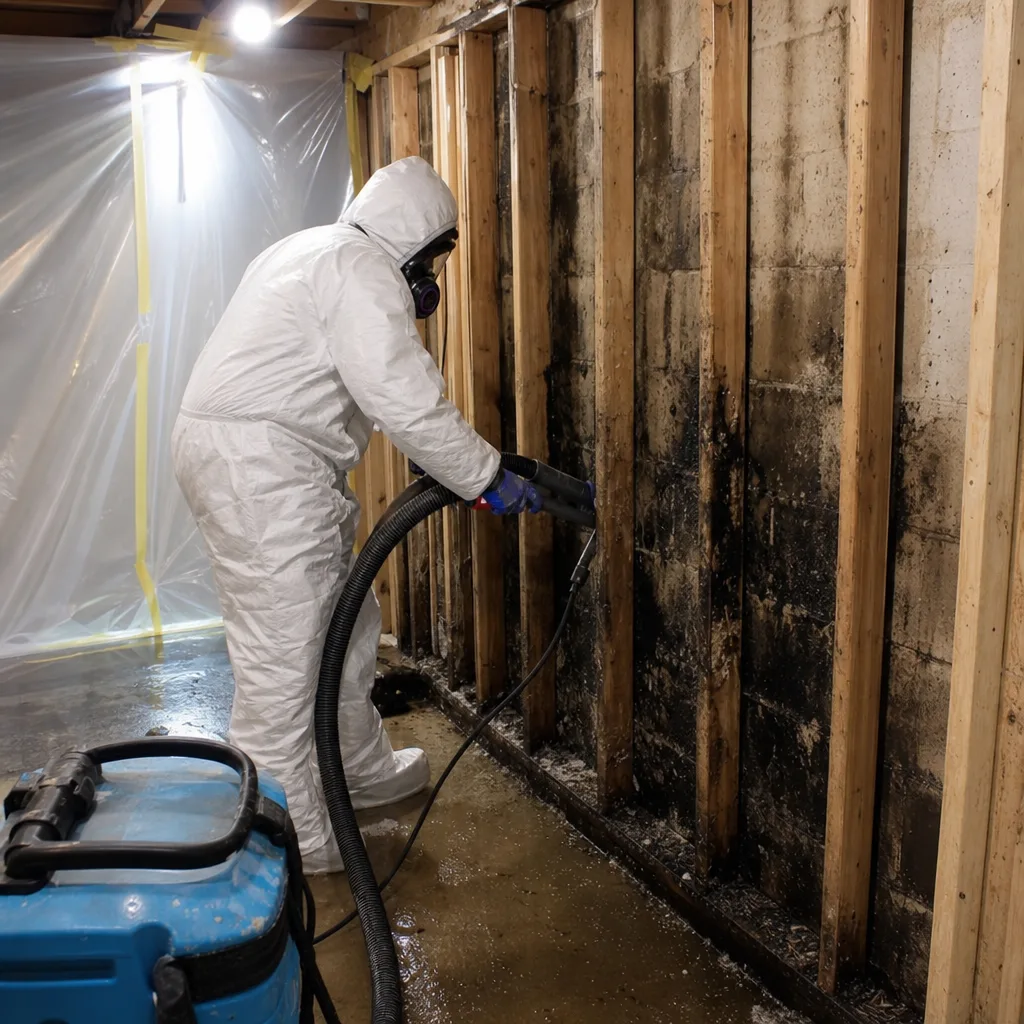
What happens when you call
- 1
A real person answersNo phone trees - you reach a local pro.
- 2
You get an upfront price rangeHonest numbers before anyone is dispatched.
- 3
A background-checked tech heads outLicensed & insured, dispatched right away.
- 4
You approve before work beginsNothing starts until you say go.
Storm & Disaster Restoration Costs in Hoboken, NJ
Here’s what you can expect to pay for storm and disaster restoration in Hoboken. Emergency flood extraction from a garden-level unit runs $1,800 to $4,500 depending on square footage and water category. Category 3 sewage cleanup with containment, cut-out, and antimicrobial treatment typically lands between $4,000 and $12,000 for a basement apartment. Roof tarping after wind uplift runs $350 to $800 for an emergency seal. Emergency board-up usually costs $250 to $500 per opening. Wind-rated exterior door replacement, when storm damage requires it, runs $1,200 to $3,800 installed depending on the door rating and frame condition. What moves the price is mostly the water category, the depth of contamination, and how far moisture migrated into wall cavities. We give you a written scope from the free visual inspection before any billable work starts, and we bill your carrier directly for covered losses. Call (518) 314-5660 for an exact quote.
We Also Serve Cities Near Hoboken
Floodline Restoration Co. runs crews into Hoboken and the surrounding Hudson County communities every day. If you’re in Union City, Weehawken, or North Bergen and the same storm system hit your block, the same live dispatch line reaches us. Same crews, same 45-minute response window, same written scope before work begins.
Serving Hoboken, NJ - Our Local Coverage Area
We’re based in the Hoboken area and know this community well. Use the map below to see our service coverage - if you’re nearby, we can almost certainly help.
Hoboken Storm & Disaster Restoration Questions, Answered
How soon after a basement sewage backup in Hoboken does mold start, and does it matter if the water was only an inch deep?
Mold starts colonizing wet drywall and organic materials within 24 to 48 hours in Hoboken’s humid, below-grade conditions, regardless of water depth. An inch of Category 3 water wicks up into drywall cavities fast, and the relative humidity inside a closed basement can hit 80% within a day. Even shallow sewage backup requires cut-out of saturated drywall and antimicrobial treatment, because the pathogens are in the water, not just on the surface. Call (518) 314-5660 the day you see it, not the day it smells.
Does Hoboken require wind-rated replacement doors after storm damage, or can I just rehang the old one?
Yes, Hoboken’s coastal flood and wind zones require exterior doors to meet current wind-load and pressure ratings when they’re replaced after storm damage. Rehanging a racked or weakened door without addressing the frame or upgrading to a wind-rated unit will fail inspection and leave the opening vulnerable in the next storm. Our crews re-hang to code, and we document the rating for your insurer.
Why do the same basements near the Hoboken rail yards flood with sewage multiple times a year?
The western blocks near the NJ Transit rail yards sit at the lowest elevation in Hoboken’s bowl topography, which means the combined sewer system backs up through their floor drains first. The infrastructure there is aging, the terrain has no natural drainage gradient, and a routine 2-inch rain can push Category 3 water into those garden-level units within an hour. These are repeat service relationships for us, not one-time catastrophe calls.
Can you dry out wet drywall after a Category 3 flood in a Hoboken brownstone, or does it always need to come out?
Category 3 water means the drywall comes out. Drying it is not enough because the sewage contaminants and pathogens remain embedded in the gypsum and paper face even after it’s dry. In a Hoboken brownstone basement, we cut out the saturated drywall up to the water line plus a margin, treat the framing and cavity with antimicrobial, and replace with new material. The rule is clean water can sometimes be dried. Contaminated water cannot.
How fast can you get a crew to a flooded garden apartment in Hoboken during a nor’easter?
We commit to 45 minutes for emergency calls in Hoboken, including during nor’easters and heavy storms. Our crews are staged locally, and the dispatch line is answered by a live person 24/7. When the sewer system is backing up across the city, wait times can stretch, but we plan our storm staffing around Hoboken’s loss calendar specifically because we know these events hit fast and hard. Call (518) 314-5660 and a dispatcher will tell you exactly where the crew is.
Will my insurance cover storm damage and sewage backup in Hoboken?
Most cases, yes, but it depends on your policy’s specific water damage and sewer backup endorsements. Homeowners policies typically cover storm and wind damage, but sewer backup or flood may require a separate rider. The majority of Hoboken homeowners carry these endorsements, since the city’s flood history is well known. We bill your carrier directly, provide photo documentation, moisture logs, and line-item scopes, and our project managers speak to your adjuster directly. You won’t have to act as go-between.
Do I need to leave my Hoboken brownstone while you do the restoration work?
Not always. For minor extraction and drying, you can stay in the upper floors while we work the basement. For Category 3 sewage cleanup with containment and cut-out, we recommend relocating temporarily, because the containment zones and the antimicrobial treatments make the lower level unsafe to occupy. Your carrier may cover living expenses if the home is uninhabitable, and we’ll document the conditions for the claim.
What should I do in the first 30 minutes after floodwater or sewage enters my Hoboken basement?
Shut off the power to the affected area if you can do so without stepping in water. Move valuables and documents upstairs. Do not enter standing water that may be Category 3, and do not run a wet vac or your own fans. Take photos for your carrier. Then call us at (518) 314-5660. The sooner we start extraction and drying, the less drywall has to come out, and the lower your total cost will be.
Written by Curt Bowman, Owner at Floodline Restoration Co., serving Hoboken, NJ and the surrounding Hudson County communities since 2010.