
Free visual inspection and a written scope of work before any mitigation begins - photos, moisture readings, and drying logs go in your claim file
The scope we write is the scope we bill. Anything new gets shown to you, in writing, before we touch it.
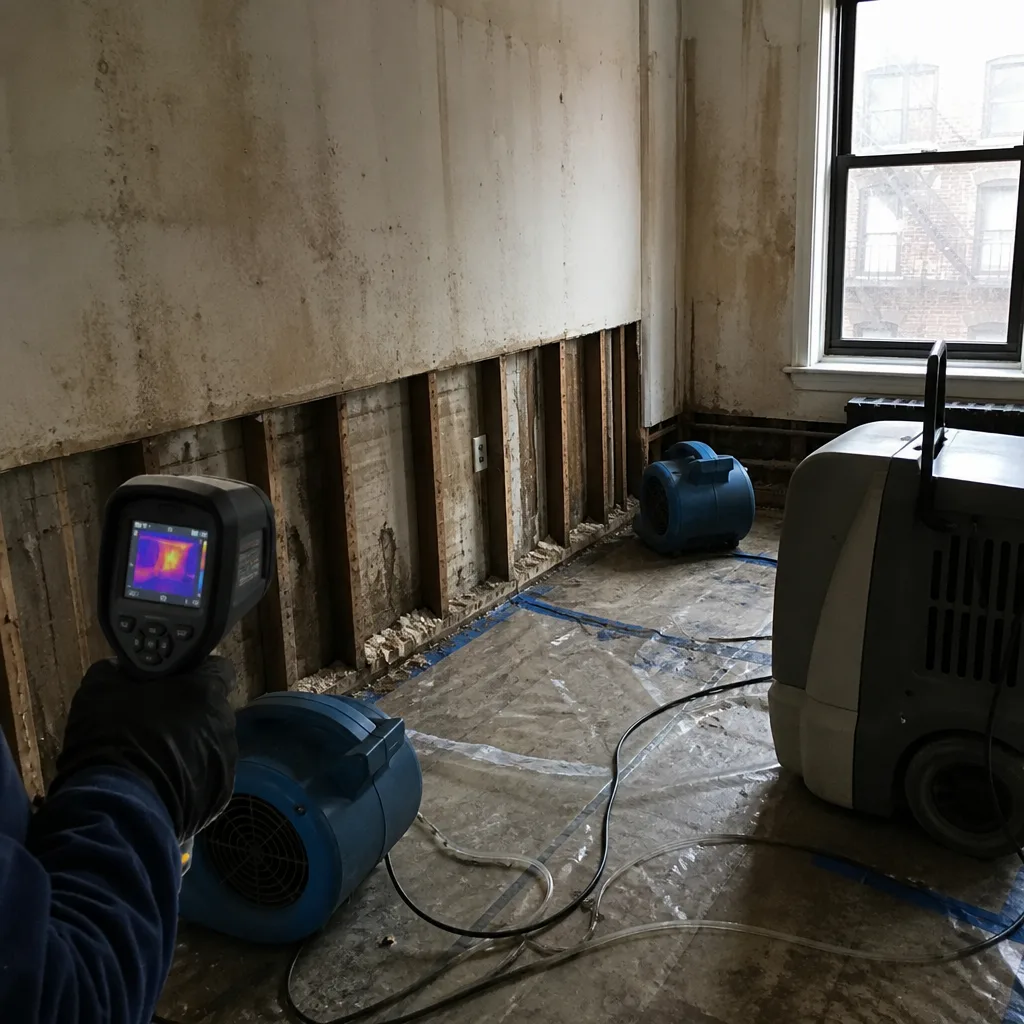 Before
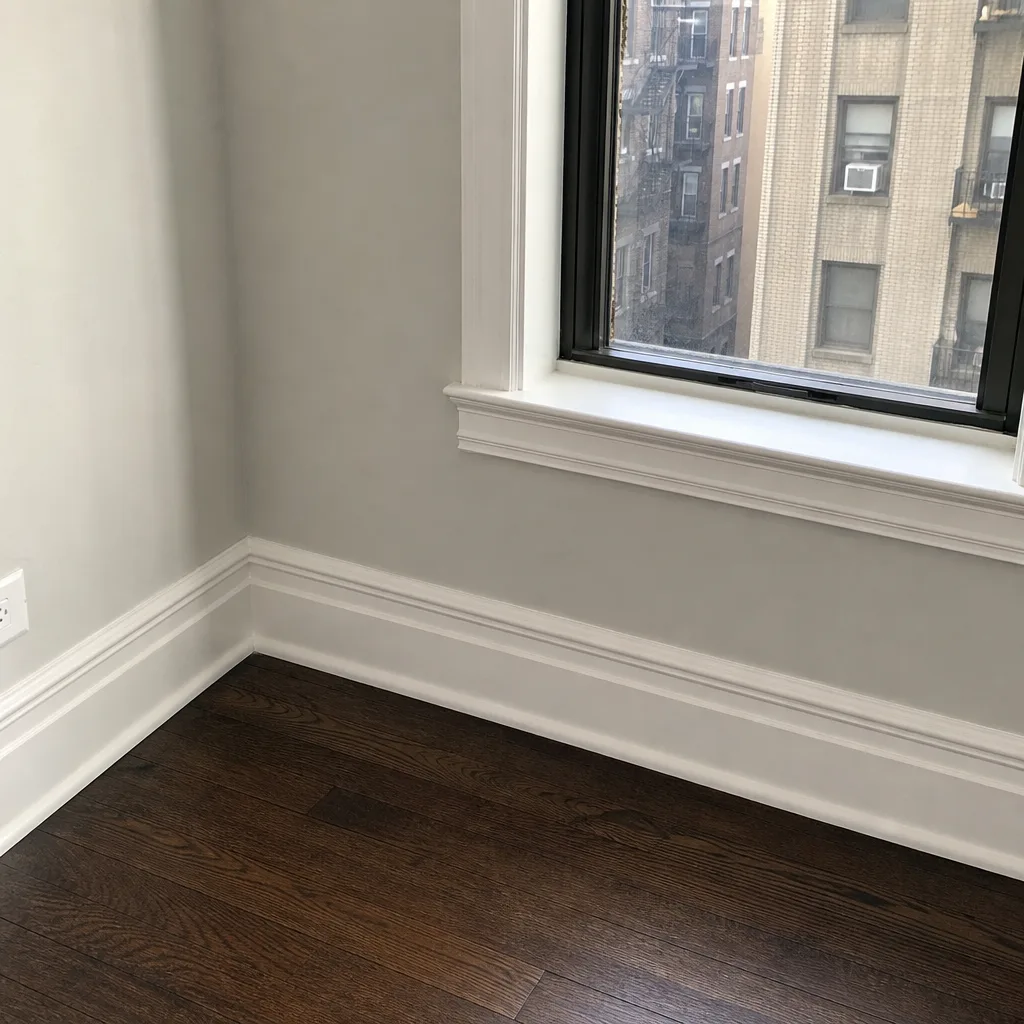 After
After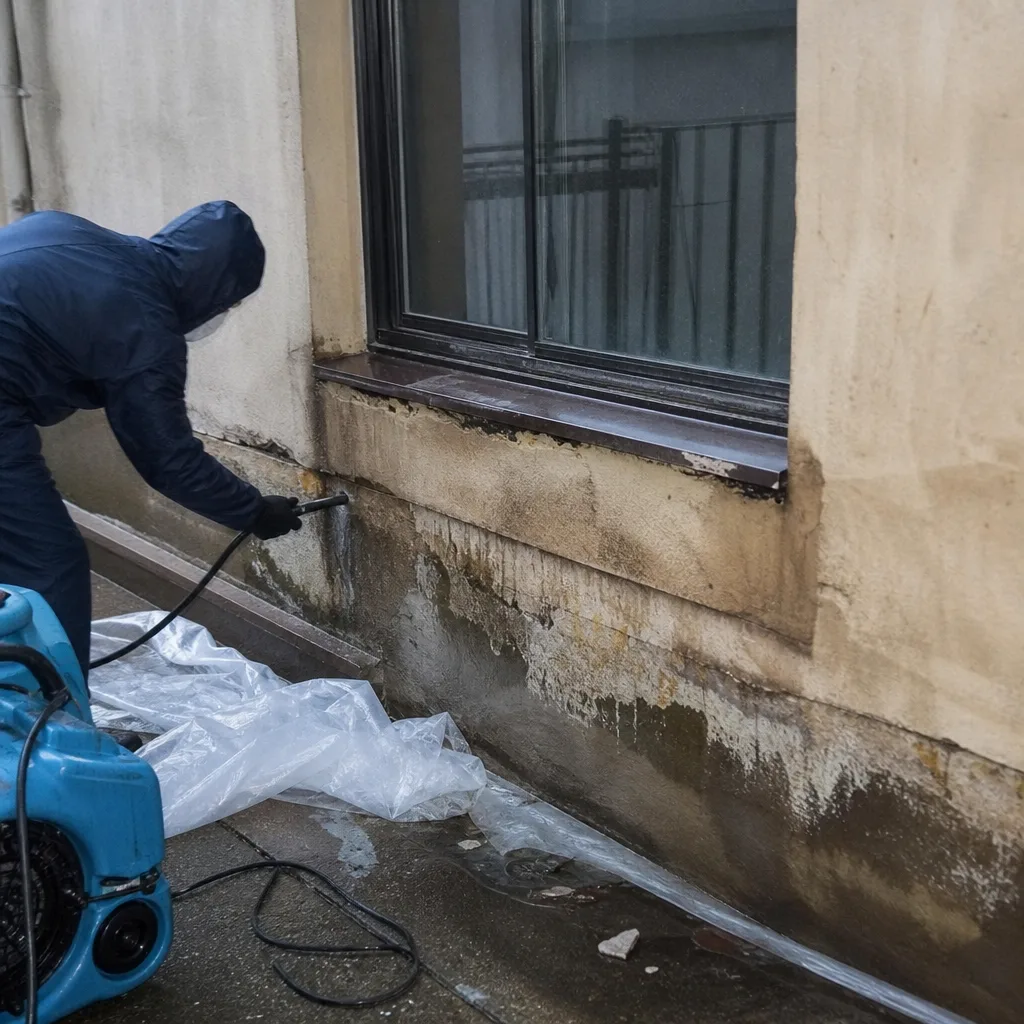 Before
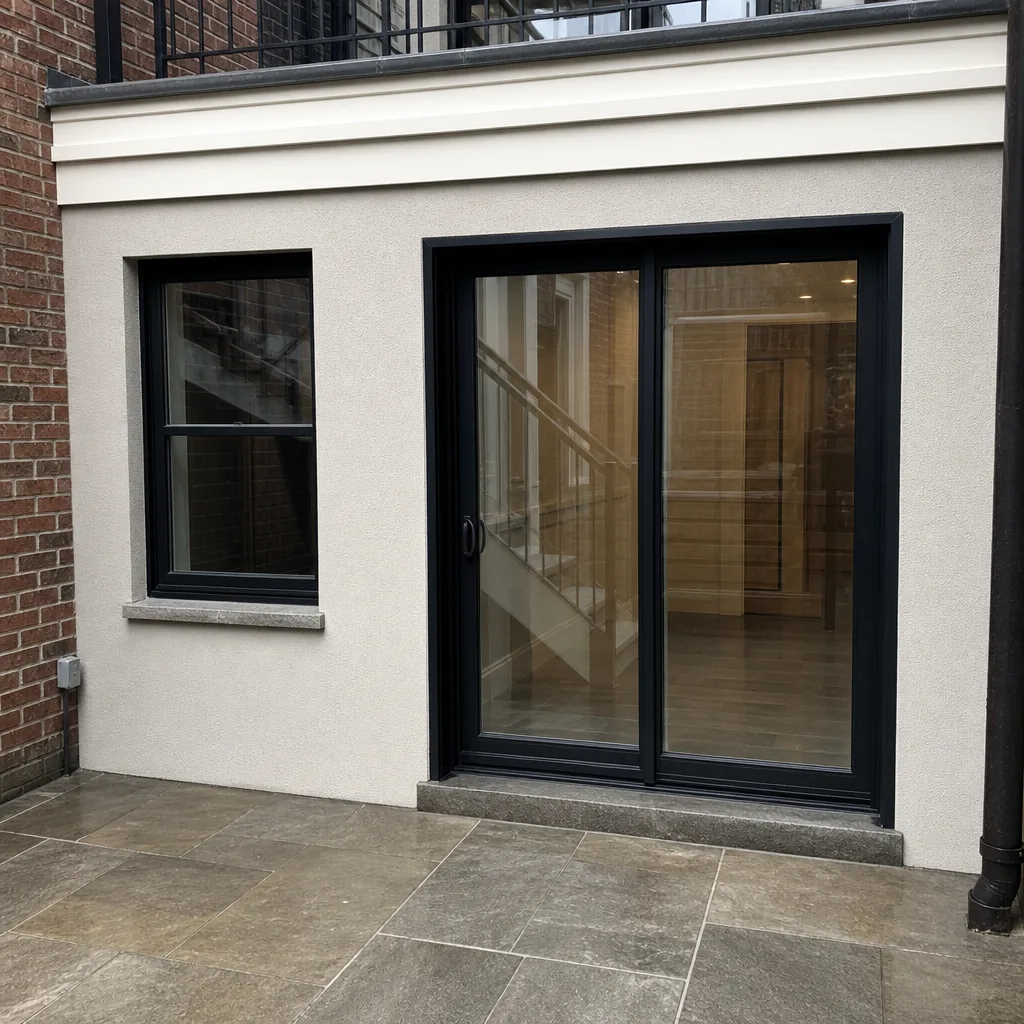 After
After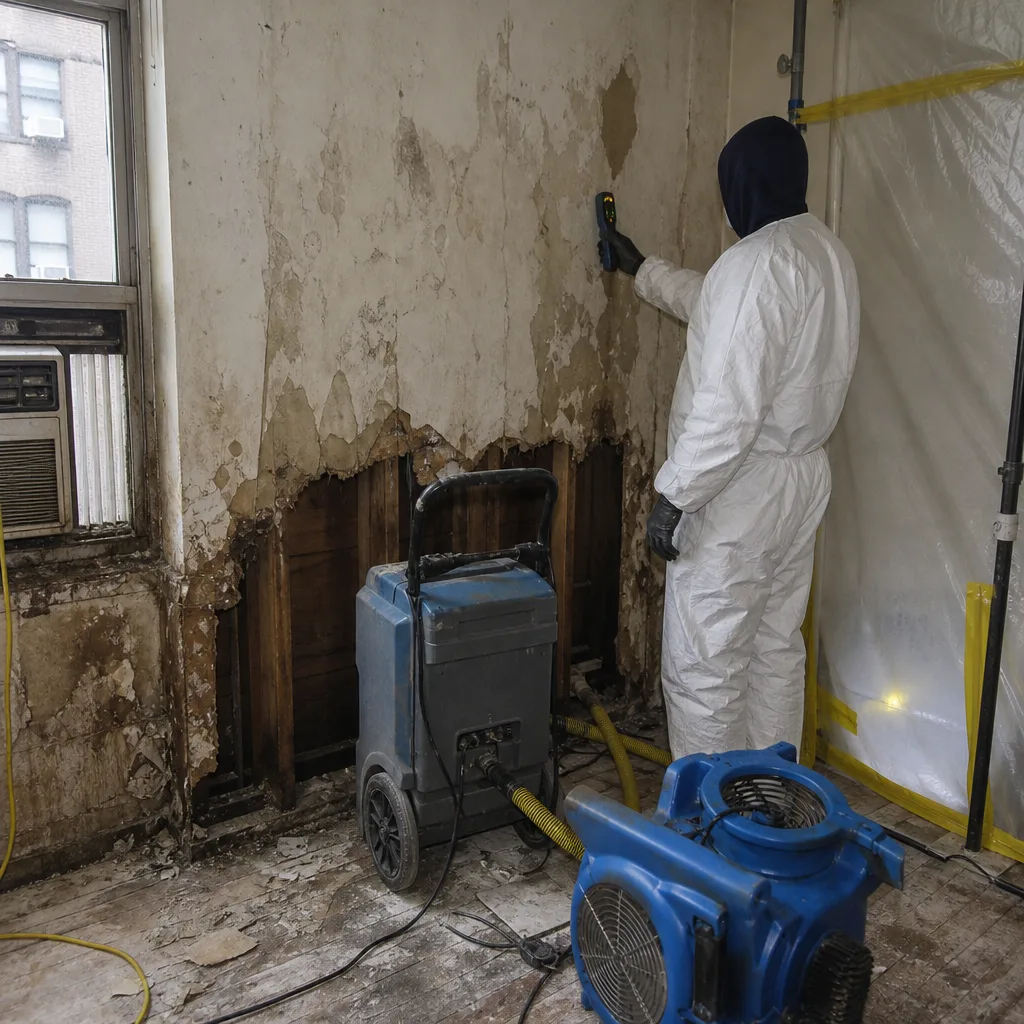 Before
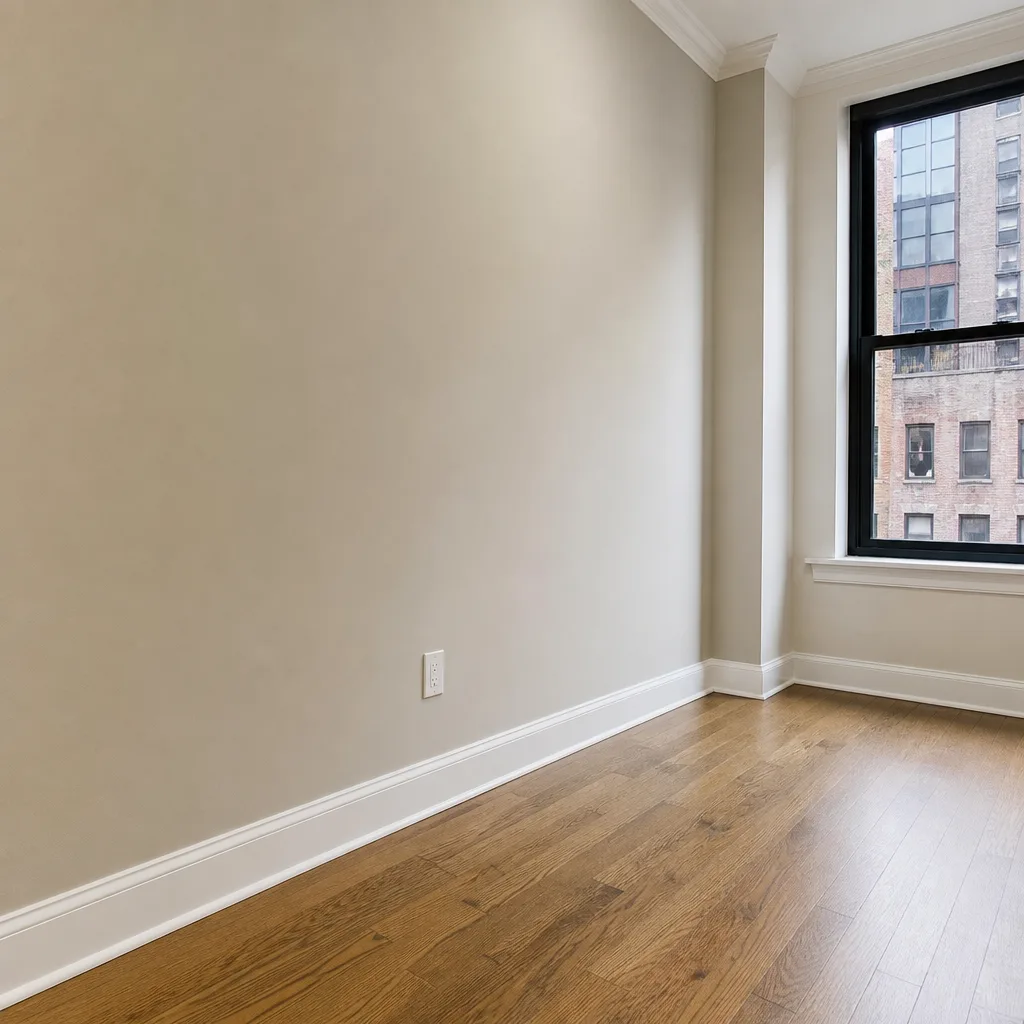 After
After24/7 Emergency Reconstruction & Cleanup in Williamsburg
When a nor’easter pushes the East River over its banks or a roof gives way in a pre-war tenement, Williamsburg property owners need a crew that answers the phone and gets moving. Floodline Restoration Co. runs live dispatch around the clock. Call (518) 314-5660 and you’ll reach a person, not a recording, no matter the hour. We send background-checked, uniformed technicians into Williamsburg for a free visual inspection, and in most storm, water, and fire cases we begin extraction and stabilization during that first visit. The first hour matters more than most people realize: saltwater from the East River starts corroding electrical systems and wicking through brick party walls fast, and the longer a saturated assembly sits, the more aggressive the mold profile becomes. Our Reconstruction & Cleanup team handles the whole job, from first extraction to finished rebuild, so you never carry messages between a mitigation crew and a separate contractor. One team. One scope. Done right, and backed in writing.
Understanding Reconstruction & Cleanup Severity in Williamsburg Properties
The severity of any Reconstruction & Cleanup in Williamsburg job turns on two things most generic restoration companies miss: the building’s age and its position relative to the East River. Williamsburg layers 1890s brick tenements next to converted factory lofts along Kent Avenue, then tops them off with post-2000s glass towers. Each reacts differently to the same storm. A Category 3 water loss (sewage or storm surge) in a ground-floor loft near the waterfront means contaminated masonry, saturated subfloor, and corrosion inside electrical panels. Moisture mapping on dense brick reads inconsistently, so we rely on thermal imaging and hygrometer data rather than a single meter reading. Fire damage in pre-war buildings carries its own complications: original lath-and-plaster walls hold smoke differently than modern drywall, and protein soot residues from kitchen fires demand different chemistry than synthetic soot from burning plastics. Saltwater intrusion is its own category entirely. It leaves behind chlorides that keep pulling moisture long after the standing water is gone. Our IICRC-certified technicians scope every Williamsburg job to the building type, not a national average.
Why Williamsburg Property Owners Choose Floodline Restoration Co.
- 45-minute response commitment for emergency calls anywhere in Williamsburg, with a live dispatcher routing the nearest certified crew the moment you hang up.
- A real person answers, 24 hours a day. No automated systems, no “leave a message.” When the East River surges at 2 a.m., you speak to someone who can send help.
- IICRC-certified crews trained to WRT, FSRT, and AMRT standards. We know which certification applies to your loss and we don’t guess.
- Free visual inspection with photo documentation from the first hour. You see what we see before any demolition starts.
- Direct insurance billing. We document, we communicate with your adjuster, and we hand you a line-item scope. You never play messenger.
- One team from extraction to reconstruction. The same crew that dries the walls rebuilds them. No mid-job handoff, no inherited subcontractor.
Our Reconstruction & Cleanup Process
Inspection & Assessment
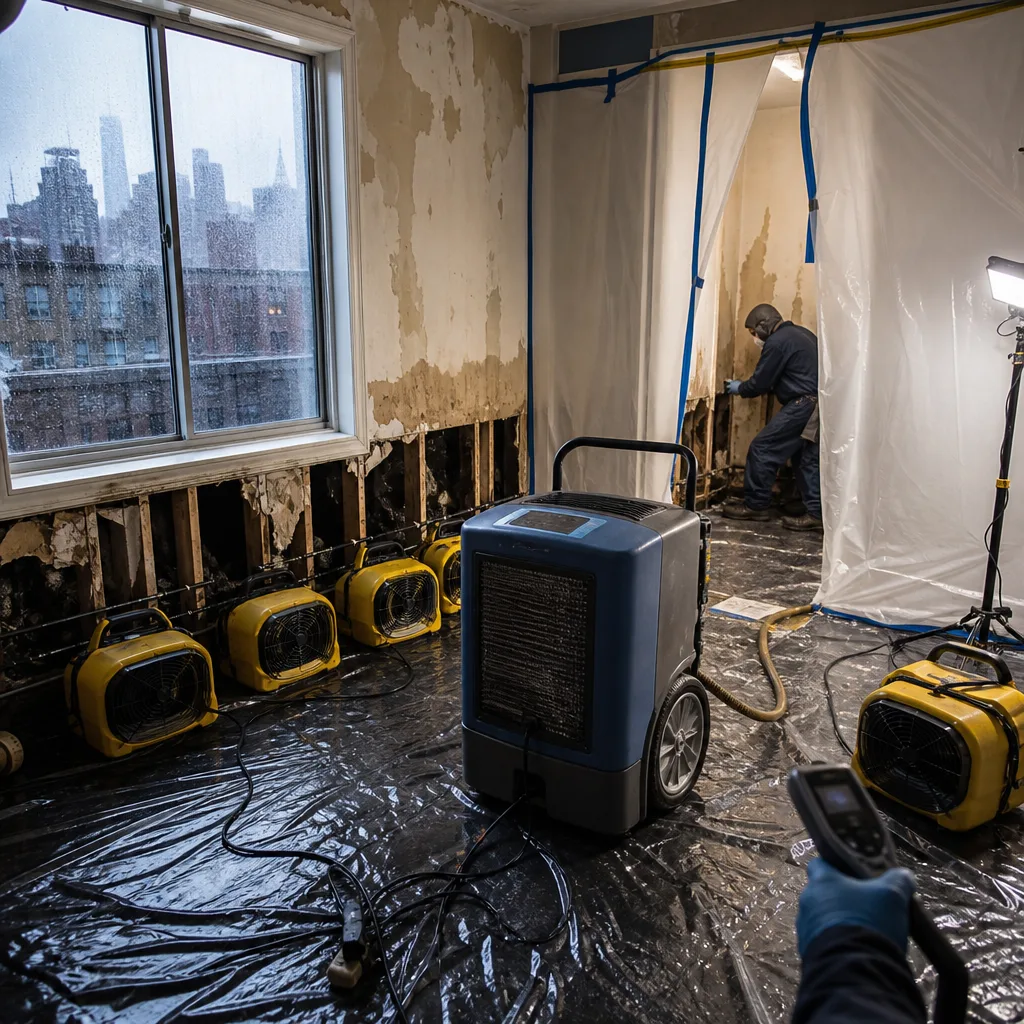
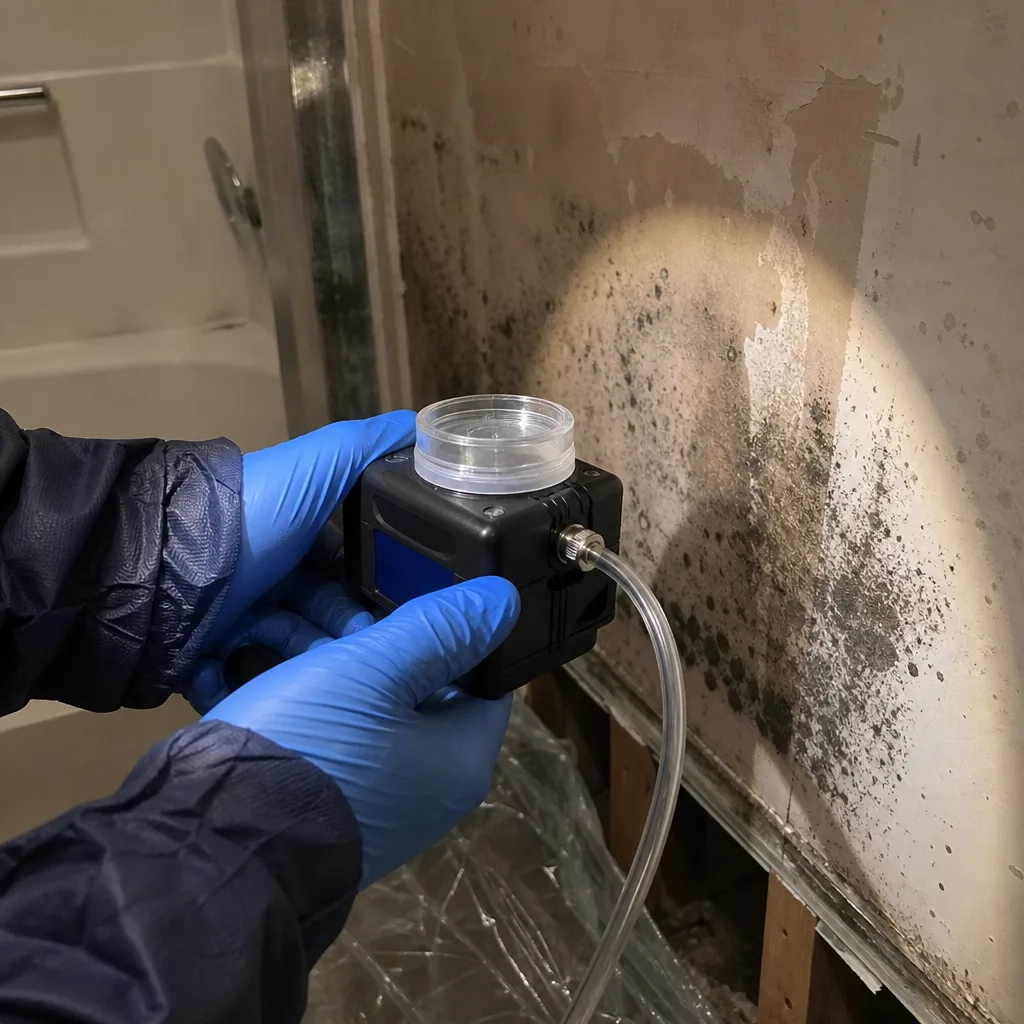
We arrive, document the damage room by room, and mark the water line or soot line. Thermal imaging and moisture meters give us a map before any work begins. In Williamsburg Commercial Restoration projects like converted lofts, this includes checking for concealed asbestos before demolition.
Extraction & Stabilization
Standing water comes out first. For storm surge from the East River, Water Damage Restoration in Williamsburg means treating it as Category 3 water from the start and setting containment accordingly. Stabilization means securing the structure so the damage stops spreading.
Drying & Dehumidification
We run professional-grade Dri-Eaz dehumidifiers, XPOWER air movers, and Injectidry panels on saturated brick, plaster, and concrete. Daily moisture readings get logged until the dry standard is met. On Williamsburg’s brick party walls, that can take two to three weeks longer than a wood-frame building.
Cleaning & Sanitization
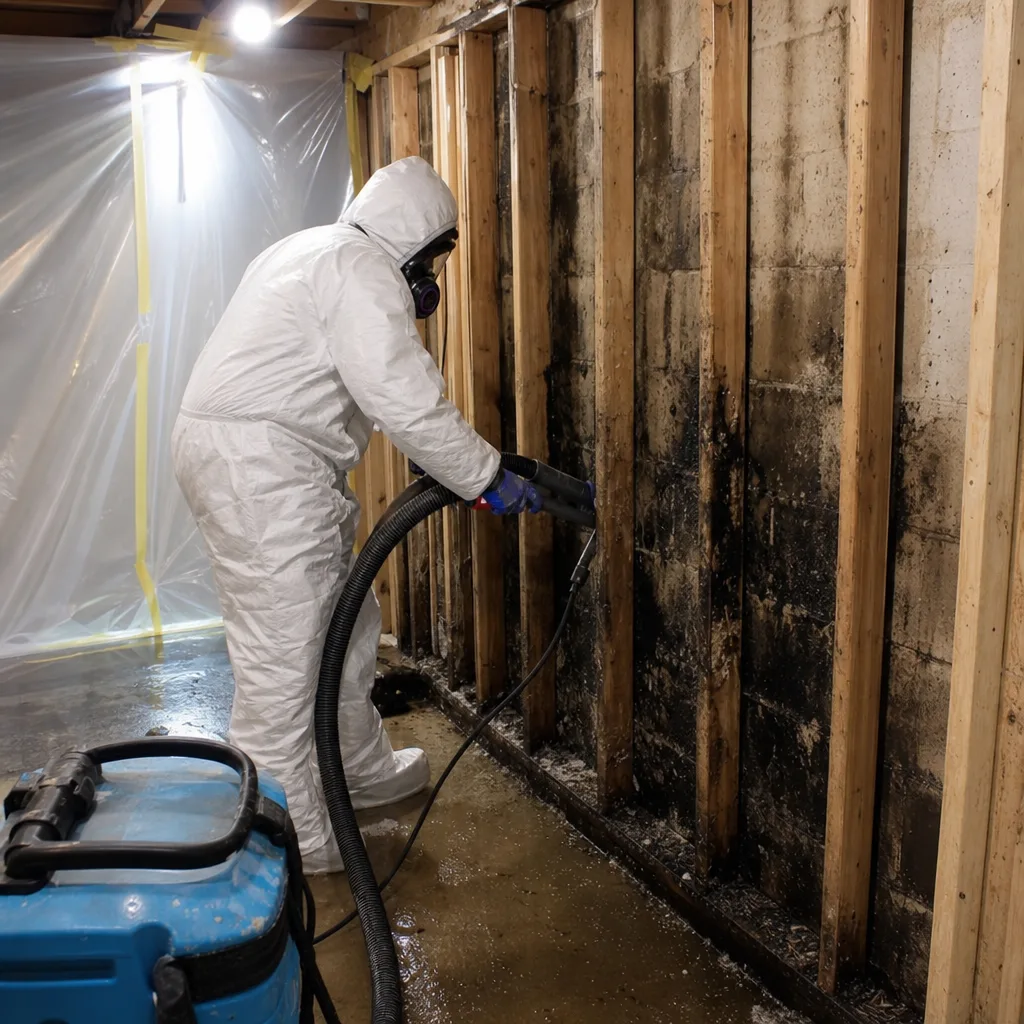
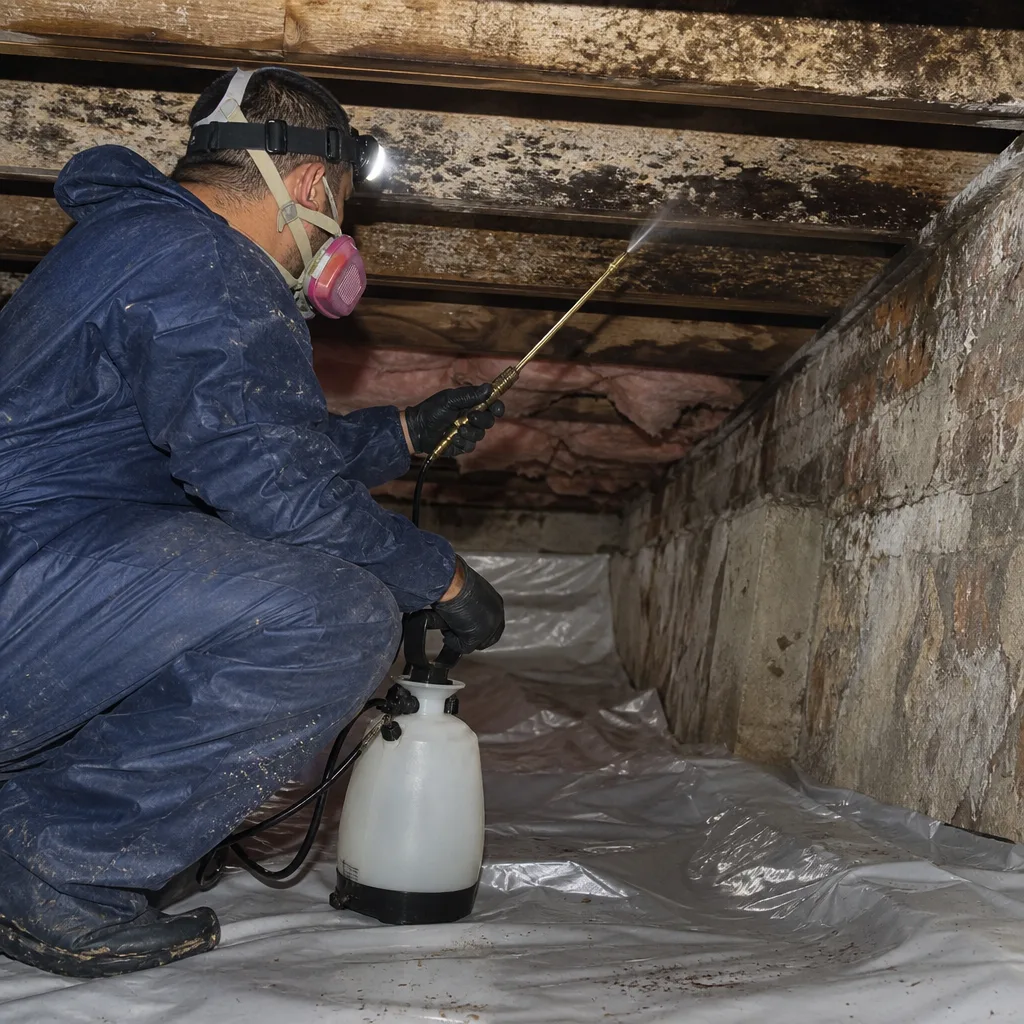
HEPA air scrubbers run throughout the affected space. Non-salvageable materials come out under containment. We apply antimicrobial treatments where saltwater or sewage made contact, and clean salvageable contents on site when possible.
Specialty Treatment
Saltwater means corrosion. We inspect and treat electrical, plumbing, and mechanical systems that salt water touched. In waterfront loft conversions, this step includes checking steel beams, elevator shafts, and concrete slab floors for chloride intrusion.
Repairs & Restoration
Drywall, flooring, trim, paint. We rebuild to pre-loss condition using materials matched to the building’s age and style. The final walkthrough includes your drying log, your documentation package, and our 90-Day Done Right Promise in writing.
Need Emergency Reconstruction & Cleanup in Williamsburg Now?
Crews minutes away, answering live 24 hours a day. The sooner we start, the less it costs.
Working With Your Insurance Company
Insurance claims after a Williamsburg storm or fire work best when the documentation starts in the first hour. We photograph everything before we move anything. Our line-item estimates follow the same format your carrier expects, which speeds review and reduces back-and-forth. When your adjuster has questions, we answer them directly, and we bill the carrier directly for covered work. You stay out of the middle. The 90-Day Done Right Promise extends through the entire rebuild: if something we touched fails inside ninety days, we fix it without a paperwork battle. That’s the Keystone Standard, and it’s in writing. For Williamsburg homeowners who have been burned by a contractor before, that’s the difference between hoping for the best and having a name to hold accountable.
What We Provide Your Insurer
- Thorough documentation of the loss
- Photos of all damage, room by room
- Moisture readings and drying logs
- A detailed, line-item scope of work
- Direct coordination with your carrier
Built for Williamsburg’s Loss Calendar
Williamsburg has a loss calendar, and it runs on the East River. Late summer brings tropical storm remnants that push water into the lowest-lying blocks around the waterfront. Fall and winter nor’easters drive surge over bulkheads and under doors on Kent Avenue, Berry Street, and Wythe Avenue. Then January arrives. Deep freezes snap supply lines in unheated stairwells and mechanical rooms across the neighborhood’s pre-war masonry buildings, flooding upper floors while the outside temperature stays below freezing. Spring thaw saturates the cellars of older tenements as decades-old drain tile gives out. Add in the post-2000s glass towers near the river, where wind-driven rain finds its way through window gaskets and curtain wall seams during winter storms, and you get a year-round pattern that rewards property owners who address a small leak before it becomes a Category 2 or 3 loss. We restore it regardless. But knowing when Williamsburg takes its hits means we staff accordingly.
Reconstruction & Cleanup Across Williamsburg’s Neighborhoods
The Northside’s converted warehouses and loft buildings along Kent Avenue and North 3rd through 12th Streets present one set of problems: raw concrete slabs with no subfloor, freight elevator shafts repurposed as plumbing chases, and brick party walls that drink water. South Williamsburg’s older wood-frame and masonry walk-ups run smaller losses more frequently: kitchen fires, bathroom supply-line breaks, and cellar seepage after heavy rain. The blocks around McCarren Park and the Graham Avenue corridor see a higher share of apartment-level water losses from aging plumbing risers in 1920s buildings. Over on Grand Street and near Domino Park, the post-2000s towers deal with wind-driven storm damage and mechanical-room failures more than ground flooding. Each corridor has its own response route and its own typical loss profile, and our dispatchers know which crew to send where. When you call a Williamsburg plumber for a burst pipe, you want someone who knows your building. Same principle applies to restoration.
Specialized Reconstruction & Cleanup Services We Offer in Williamsburg
Full-Service Reconstruction
When the drying is done, we rebuild. That means framing, drywall, flooring, cabinetry, and paint, all matched to the building’s period. A converted loft near Kent Avenue gets different materials than a 1930s tenement on Graham Avenue. We handle both, and we don’t hand the job off to a separate contractor. The crew that dries your walls rebuilds them.
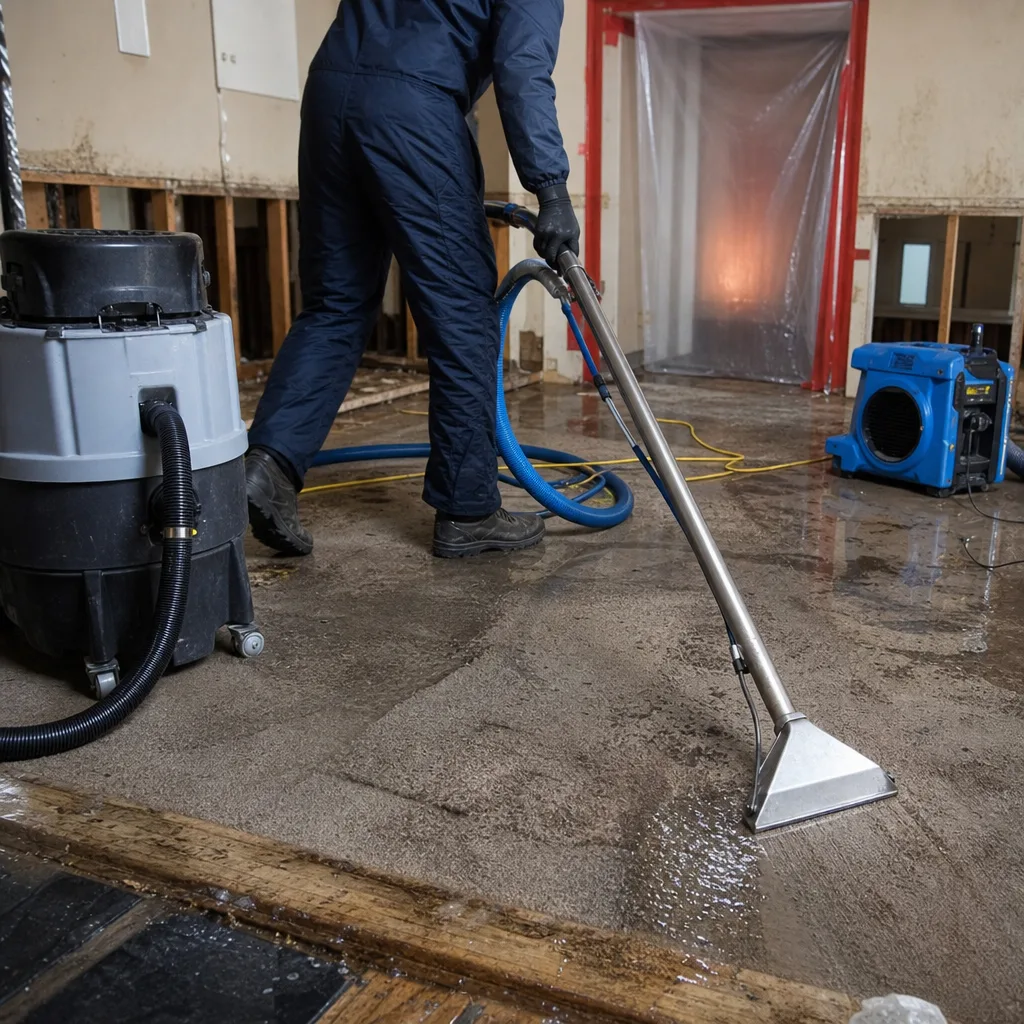
Drywall & Flooring Repair
Saturated drywall comes out; new board goes up, taped, mudded, and sanded to a finish that matches the room. For flooring, we repair and replace water-damaged hardwood, tile, and concrete slabs. Raw concrete slab floors common in Williamsburg loft conversions need specific drying and surface treatment before finishing goes back down.
Contents Restoration & Pack-Out
When a loss makes a unit unlivable, we pack out salvageable contents, clean them at our facility, and store them until the rebuild is finished. In many Williamsburg duplexes and loft layouts, this is the difference between a three-week displacement and a three-month one. We log every item, photograph it, and return it in the same shape you’d expect.
Carpet & Upholstery Cleaning
Not every water loss requires demolition. A clean Category 1 supply-line break in a Williamsburg high-rise may mean extraction, drying, and professional cleaning of carpet and upholstery in place. We run Phoenix and XPOWER equipment to push air through materials until the dry standard is met, then clean and deodorize.
Post-Construction Cleanup
After reconstruction comes the dust. Gypsum dust, sawdust, stray insulation fibers, and the fine particulates that settle into every surface. We run HEPA air scrubbers during final cleaning so you walk into a finished space, not a construction site. This is standard on every Floodline rebuild in Williamsburg, not an add-on.
Insurance Claim Documentation
Your carrier needs a scope of work they can verify. We provide room-by-room photography, moisture reading logs, a line-item estimate, and direct adjuster communication. Homeowners in Williamsburg who face a hurricane, fire, or sewage loss are dealing with enough. We carry the claim paperwork.
What happens when you call
- 1
A real person answersNo phone trees - you reach a local pro.
- 2
You get an upfront price rangeHonest numbers before anyone is dispatched.
- 3
A background-checked tech heads outLicensed & insured, dispatched right away.
- 4
You approve before work beginsNothing starts until you say go.
Reconstruction & Cleanup Costs in Williamsburg, NY
Williamsburg restoration pricing runs higher than inland Brooklyn neighborhoods, and the reason is structural: masonry drying takes longer, saltwater requires specialty treatment, and many buildings carry concealed hazards that demand extra containment during demolition. A small Category 1 water cleanup in a high-rise unit typically starts around $1,500 and runs to $3,500. A full-scale Category 3 storm surge restoration in a waterfront loft, including drying, demolition, and rebuild, commonly runs $15,000 to $45,000 depending on square footage and the extent of saltwater damage. Post-storm drywall and flooring repair in a standard Williamsburg apartment usually lands between $4,000 and $9,000. Fire damage reconstruction ranges from $8,000 for a contained kitchen fire to $60,000 or more for a full-unit rebuild. The fastest path to a firm number is a free visual inspection. We scope the job, line-item the estimate, and you approve a written plan before any work begins. Call (518) 314-5660 and we’ll set it up.
We Also Serve Cities Near Williamsburg
Our crews cover Williamsburg and the surrounding area, including Midtown Manhattan, Midtown West, Murray Hill, and Washington Square. If your property sits just across the bridge or a few blocks outside the neighborhood line, the same team, the same equipment, and the same written guarantee apply.
Williamsburg Reconstruction & Cleanup Questions, Answered
How does saltwater flooding from the East River change the reconstruction scope for a Williamsburg waterfront loft?
Saltwater flooding changes everything, because salt never leaves the building on its own. It corrodes electrical components, attacks steel fasteners and structural members, and keeps pulling moisture into masonry for months after the water is gone. A waterfront loft in Williamsburg that took East River surge during a nor’easter needs chloride testing, potentially invasive drying of brick party walls, treatment or replacement of any wiring and mechanicals the water touched, and longer containment timelines than a freshwater loss would require. Skipping the saltwater protocol means trapping contamination inside the walls and rebuilding over active corrosion. That’s the exact failure we see from out-of-neighborhood crews who treat surge like a plumbing leak.
Why do our moisture meters read inconsistently on the brick party walls common in Kent Avenue converted warehouses?
Dense brick with a century of industrial paint layers and no vapor barrier holds moisture in pockets, not in smooth gradients. A pin meter gives different readings depending on whether the pins hit mortar, brick face, paint, or a void. We don’t rely on a single reading. We run thermal imaging to spot temperature anomalies behind the surface, use deep-wall probes where building material allows, and let daily drying logs show us the trend over time. On one converted loft near Kent Avenue after a nor’easter storm surge, standard moisture mapping was nearly useless through the saturated party wall. It took Injectidry panels and Dri-Eaz dehumidifiers running for close to three weeks before the assembly hit the dry standard. A wood-frame building would have dried in a third of that time.
What does a post-storm track or panel damage repair involve on a Williamsburg glass tower near the waterfront?
Wind-driven rain and flying debris damage window gaskets, curtain wall seams, door tracks, and glass panels in Williamsburg’s waterfront high-rises. A proper repair means removing damaged glazing, assessing the track and frame for warping, replacing failed seals, and testing the opening under wind load. If water penetrated behind the curtain wall, we open the interior finish to dry the cavity before reinstalling drywall and trim. For a ground-floor or cellar unit in that same tower, storm surge through a door track often means replacing the threshold, evaluating the frame for saltwater corrosion, and repairing the flooring inside the entry. Call (518) 314-5660 and we’ll scope it properly.
Before a nor’easter, what reinforcement should a Williamsburg ground-floor unit have on its doors?
Ground-floor and cellar doors in Williamsburg’s flood zone should have storm-rated or reinforced frames, sill heights that account for expected surge, and proper weatherstripping that actually seals. Exterior doors in flood-prone buildings ideally sit above the base flood elevation with water-resistant framing materials below the floodline. We inspect door frames for rot and corrosion before storm season, recommend wind-rated hardware where building code requires it, and document the pre-storm condition for your insurance record. For properties that have already taken surge damage once, reinforcing the entry is the single best dollar you’ll spend before the next nor’easter.
When Category 3 black water has flooded a basement unit, what must be removed rather than dried?
Anything porous that black water touched comes out. Drywall, insulation, carpet, pad, upholstered furniture, and any soft contents that absorbed contaminated water get removed and disposed of under containment. Semi-porous materials like structural wood can sometimes be cleaned and dried after aggressive treatment and antimicrobial application, but drywall and carpet never survive Category 3. In Williamsburg basement units, Mold Remediation - Williamsburg also means treating the concrete slab and any masonry walls the water reached, because sewage and storm surge contaminants penetrate concrete surfaces and off-gas if left untreated. Non-porous items like tile and glass get cleaned and disinfected. The rule is simple: porous goes, non-porous gets cleaned.
How fast can a crew actually reach a property in Williamsburg after a water or fire loss?
Our commitment is 45 minutes from your call to a crew arriving at your Williamsburg address. The dispatcher routes the nearest available certified technicians the moment you hang up. For storm surge events, we prioritize the lowest-lying blocks near the East River where Category 3 water causes the fastest corrosion and mold growth. For fire losses, the same response clock applies, because smoke residue becomes more difficult to clean as it cures. Every hour of delay expands the scope and the final bill, which is why we staff around the clock so no Williamsburg call ever waits until morning.
Will my insurance cover reconstruction costs after a Williamsburg flood or fire?
Most standard policies cover reconstruction after fire, wind, burst pipes, and other sudden losses. Flood coverage through FEMA or a private flood policy is what applies to East River storm surge in Williamsburg, and the terms differ from a standard homeowner policy. We document every loss in insurance-ready format from the first inspection: photos before demolition, moisture logs, line-item scopes, and direct adjuster communication. For covered work, we bill the carrier directly. For items that fall outside coverage, you’ll know exactly what they cost before we start. Our goal is a claim file that gives your adjuster no reason to stall. Call (518) 314-5660 for a free inspection and documentation from day one.
What should I do in the first 30 minutes after discovering a water loss in my Williamsburg unit?
Call us before you do anything else. Then, if it’s safe to do so, shut off the water source, cut power to affected areas, and move small items up off the floor. Do not enter a flooded basement or cellar if electrical panels, outlets, or wiring are submerged, and do not wade through standing water that could be sewage or storm surge. Do not turn on heaters or fans to “help it dry” – uncontrolled airflow spreads mold spores through the building. Take photos of the standing water and visible damage from a safe position. Then let the extraction equipment do what it’s designed to do.
Which certifications do your Williamsburg technicians hold?
Our crews are certified to IICRC standards in water damage restoration, fire and smoke restoration, and applied microbial remediation. Technicians also train to RIA and IFA standards, and every tech on your property is background-checked and uniformed. Curt Bowman founded Floodline Restoration Co. in 2010 around a simple principle: the person who reads your moisture map on day one should be the same person who hands you the finished scope. No subcontractors, no untrained day labor, no certification theater. This matters in Williamsburg because saltwater, pre-war building components, and converted factory layouts punish amateurs hard.
Serving Williamsburg, NY - Our Local Coverage Area
We’re based in the Williamsburg area and know this community well. Use the map below to see our service coverage - if you’re nearby, we can almost certainly help.
Call Floodline Restoration Co. for Williamsburg Reconstruction & Cleanup
When you need a square deal and a finished job, not a sales pitch, call (518) 314-5660. We answer live, day or night. We inspect for free. We document everything your insurer needs and we stand behind the rebuild in writing with the 90-Day Done Right Promise. Senior and veteran customers save 5% always, and any repair over $250 takes $50 off. Whether it’s a nor’easter surge through your ground-floor door or a fire that took your kitchen, our Reconstruction & Cleanup team in Williamsburg is ready now.
Written by Curt Bowman, Owner at Floodline Restoration Co., serving Brooklyn and the New York metro area since 2010.