
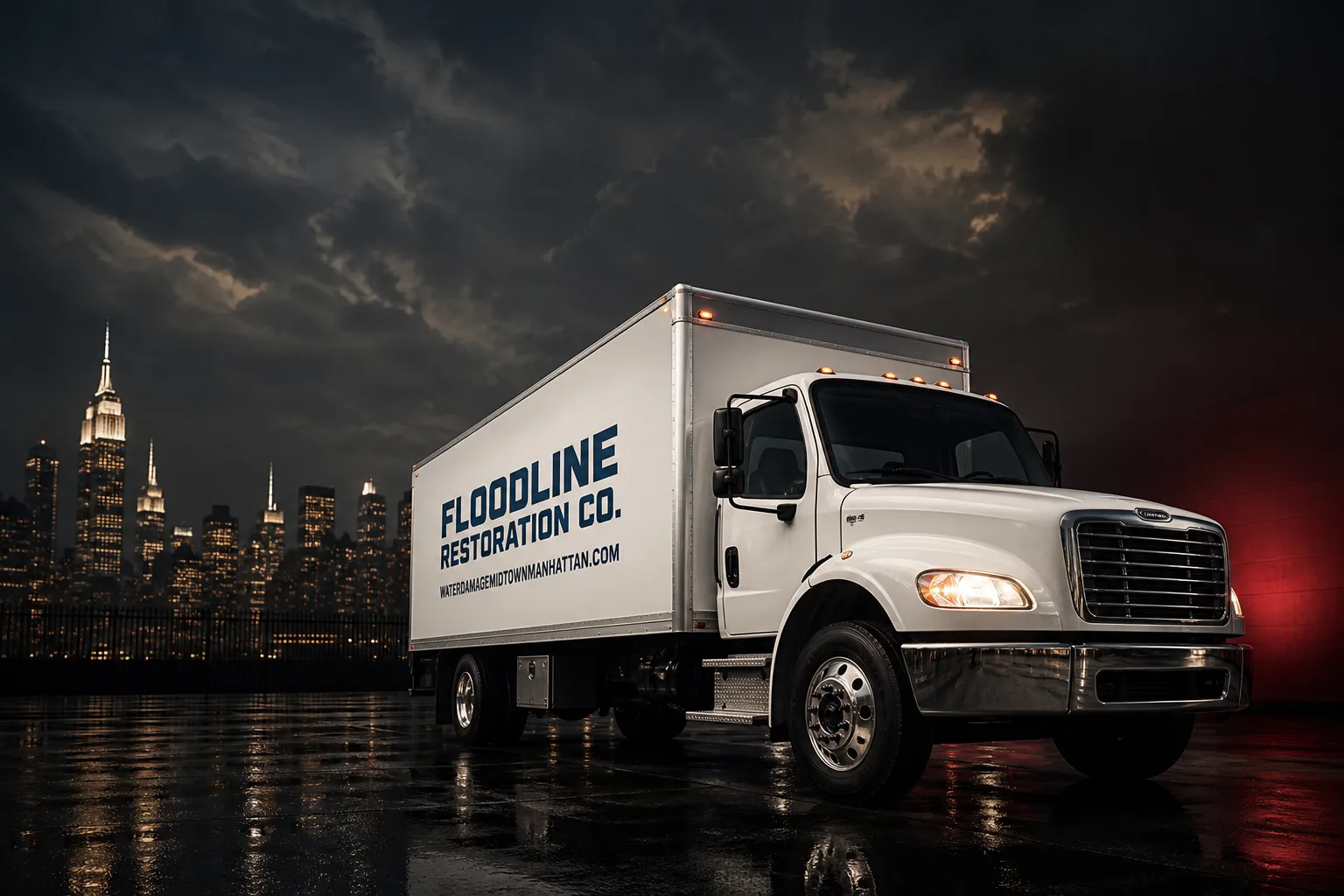
Free visual inspection and a written scope of work before any mitigation begins - photos, moisture readings, and drying logs go in your claim file
The scope we write is the scope we bill. Anything new gets shown to you, in writing, before we touch it.
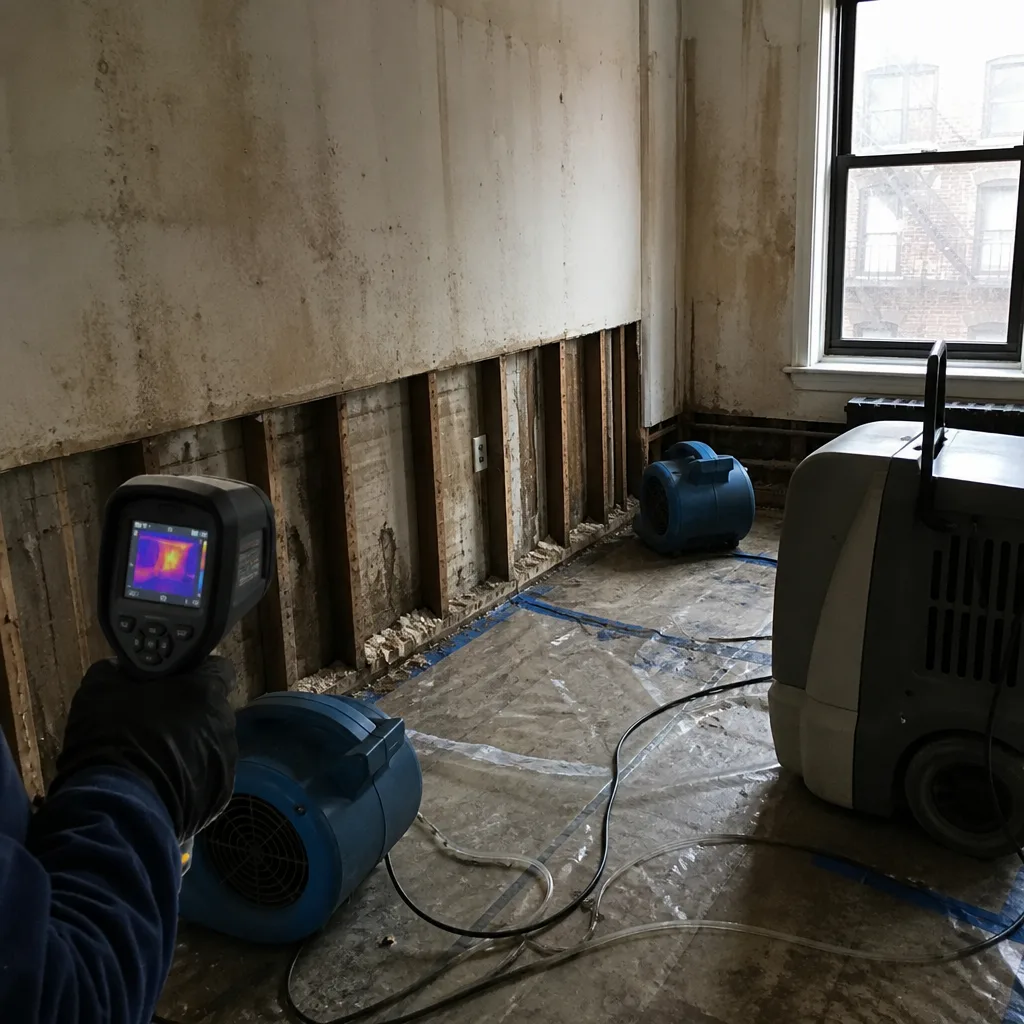 Before
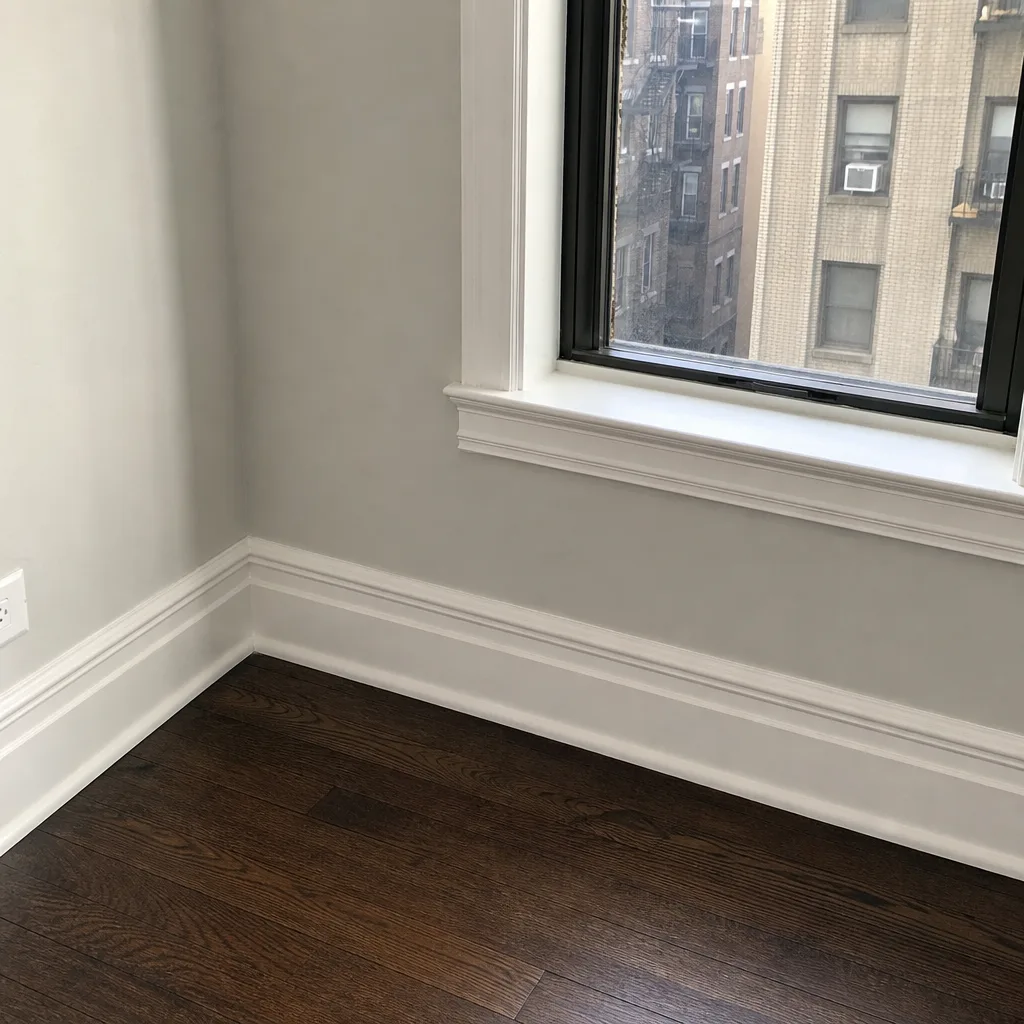 After
After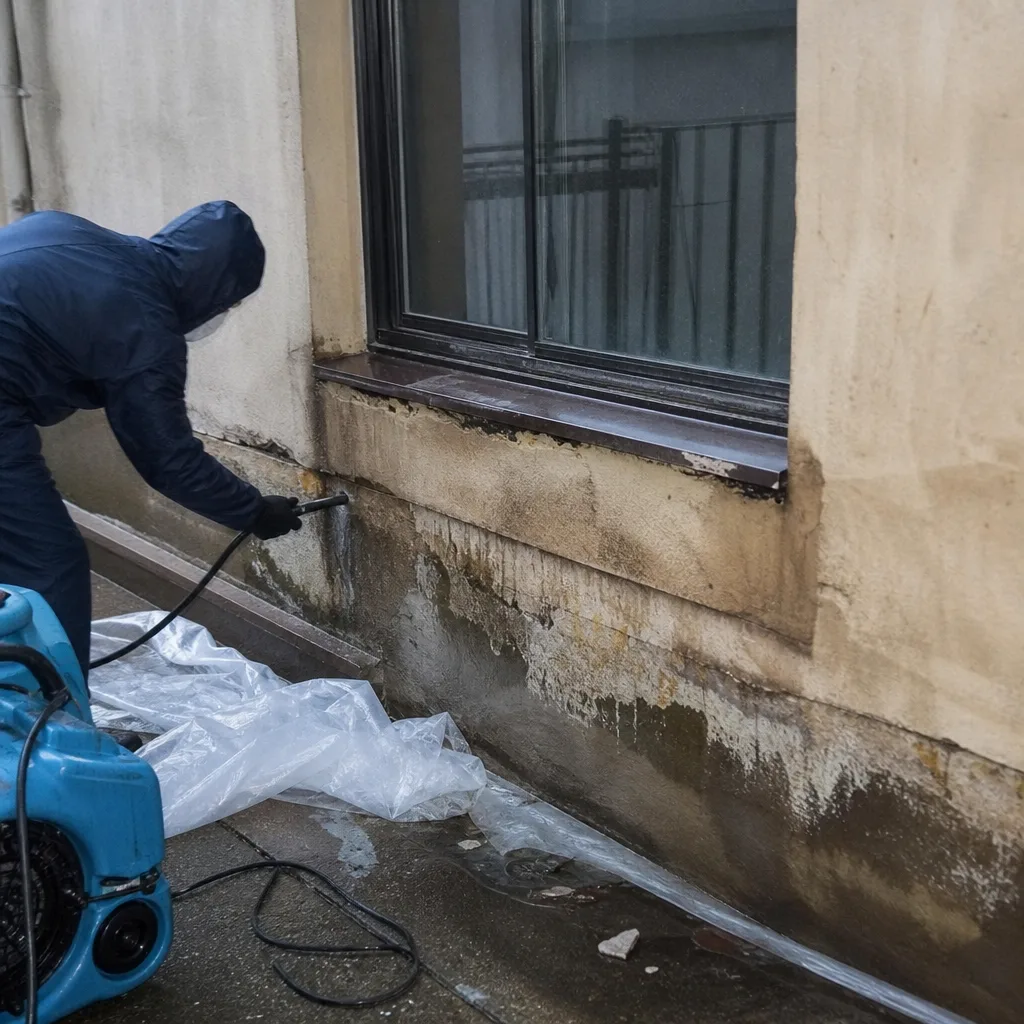 Before
 After
After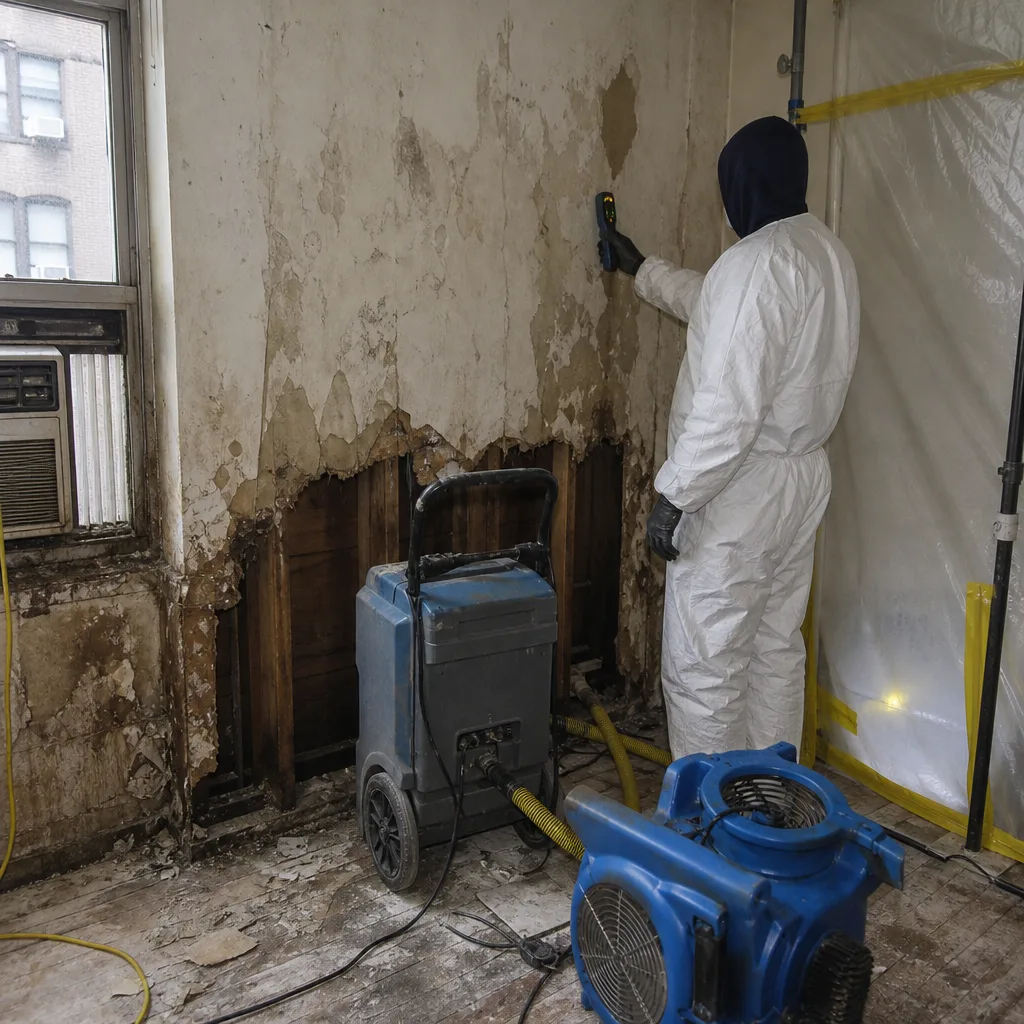 Before
 After
After24/7 Emergency Mold Remediation in Washington Square
Mold remediation in Washington Square typically runs $1,800 to $6,500 depending on how far the colony has spread and whether landmarked surfaces are involved. If you can see it or smell it, call (518) 314-5660 right now. A live dispatcher answers at 2 a.m. and a background-checked, IICRC-certified crew reaches Washington Square fast, usually within 45 minutes. We start with a free visual inspection, map the moisture that is feeding the growth, and get containment set up the same visit. Every hour of delay lets mold spread deeper into horsehair plaster, party walls, and the old timber behind them. The sooner we read the moisture and shut it down, the less wall we have to open.
Understanding Mold Remediation Severity in Washington Square Properties
Mold is not one problem. It is a moisture problem with a biological symptom. We classify what we find by how much water is present and how long it has been there, because that changes the entire job. A small surface colony on a bathroom ceiling, under 10 square feet, is a containment-and-clean job. A hidden bloom inside a party wall cavity, fed by groundwater, is a structural event. Washington Square’s pre-Civil War brownstones and brick row houses, including Washington Square North’s Washington Square row of 1832-1833 Greek Revival townhouses, have original horsehair plaster, cast-iron supply lines, and shared masonry walls that wick water horizontally across unit lines. That means a neighbor’s slow pipe leak can become your mold problem. The buried Minetta Brook, still flowing beneath Greenwich Village, raises basement humidity in ways dehumidifiers alone cannot fix. When our techs run a moisture map and find readings above 20 percent in a party wall, we treat that as a Category 2 water intrusion with microbial growth, and we set containment accordingly.
Why Washington Square Property Owners Choose Floodline Restoration Co.
- 45-minute response commitment – When you call about mold in Washington Square, a crew is dispatched immediately from our New York City operations. We are close enough to walk the last blocks if traffic on Fifth Avenue is jammed.
- A real person answers, 24/7 – No phone trees, no “leave a message.” A live dispatcher picks up at any hour and starts the process.
- IICRC-certified crews – Our technicians hold WRT, FSRT, and AMRT certifications through the IICRC. They are background-checked and uniformed. No subcontractor surprises.
- Free visual inspection – Before any work is authorized, we walk the property with you, show you what we are seeing, and explain the moisture source behind it.
- Direct insurance billing – We handle the carrier from start to finish. You never play messenger between us and the adjuster.
- One team, start to finish – Floodline Restoration Co. handles extraction, drying, remediation, and reconstruction. Nobody hands the job off mid-way because it is inconvenient.
Our Mold Remediation Process
Inspection & Assessment
We start with moisture mapping using thermal imaging and hygrometers, plus a visual inspection of wall cavities, crawl spaces, and basement foundations. In Washington Square, we also check whether the building falls inside the Greenwich Village Historic District boundaries before any intrusive work begins.
Containment & Stabilization
HEPA-filtered negative air machines and 6-mil poly sheeting seal off affected rooms so spores do not travel through shared walls or ductwork. We stabilize the water source first, whether that is groundwater, a pipe leak, or roof runoff.
Drying & Dehumidification
Using Dri-Eaz dehumidifiers and air movers, we bring wall cavities and structural wood down to the dry standard. Daily moisture readings are logged and shared with you and the carrier. Nothing gets sealed back up until the numbers prove it is dry.
Cleaning & Sanitization
Affected surfaces are HEPA-vacuumed, wire-brushed where needed, and treated with an EPA-registered antimicrobial. We remove moldy plaster, insulation, and wood that cannot be saved, rather than painting over it.
Moisture & Humidity Control
In Washington Square basements over the Minetta Brook, this step matters more than anywhere else. We address hydrostatic pressure, seal foundation penetrations, install vapor barriers in crawl spaces, and specify dehumidification where recurring groundwater is part of the equation.
Repairs & Restoration
We rebuild what we opened: plaster repair, insulation, paint, trim, and any structural work. For landmarked buildings on Washington Square North or elsewhere in the historic district, we work within LPC requirements from the first cut to the final coat.
Need Emergency Mold Remediation in Washington Square Now?
Crews minutes away, answering live 24 hours a day. The sooner we start, the less it costs.
Working With Your Insurance Company
Mold claims require proof of causation, and proof starts in the first hour. We photograph everything before we touch it, room by room. We log moisture readings on day one and every day after until the dry standard is met. Our line-item scope of work uses the same estimating software your carrier’s adjusters recognize, so the conversation stays on facts rather than opinion. We speak with your adjuster directly. You do not carry paperwork back and forth. If the mold traces back to a covered water event, like a burst pipe, a roof leak, or a sewage backup, your policy likely contributes. We document the chain so the carrier sees it clearly. For Washington Square owners dealing with groundwater intrusion from the old Minetta Brook watershed, we note that many policies exclude flood or rising groundwater, but a sudden pipe failure or storm-driven water entry is a different conversation. Call (518) 314-5660 and we will look at what is actually covered.
What We Provide Your Insurer
- Thorough documentation of the loss
- Photos of all damage, room by room
- Moisture readings and drying logs
- A detailed, line-item scope of work
- Direct coordination with your carrier
Built for Washington Square’s Loss Calendar
Washington Square has a mold season, and it runs longer than most people think. Winter brings deep freezes that burst aging supply lines inside pre-war walls, soaking plaster and insulation. Spring snowmelt and heavy April rain push the buried Minetta Brook up through foundation cracks, saturating basements and crawl spaces on Washington Square South and MacDougal Street. Summer convective thunderstorms dump two inches in an hour, and the combined sewer system under Greenwich Village backs up into lower-level drains. Fall nor’easters drive wind-driven rain against 185-year-old brick facades and slate roofs that were never designed to shed water perfectly forever. Each event is a moisture spike. Once relative humidity in a brownstone basement stays above 60 percent for a few days, dormant spores wake up. The owners who call us early are the ones who need remediation, not reconstruction. We have been answering that phone around the clock since 2010, and the seasonal pattern has not changed.
Mold Remediation Across Washington Square’s Neighborhoods
Washington Square is not one building type. It is several, all within walking distance, all with different mold failure patterns. Washington Square North is the Landmarks Commission’s ground zero, a row of 1830s Greek Revival townhouses with shared party walls and original plaster that holds moisture like a sponge. Washington Square South runs along the NYU corridor, where older residential buildings converted for institutional use often have deferred maintenance in basement mechanical rooms, the exact place groundwater from the old Minetta Brook feeds mold colonies behind boiler tanks. MacDougal Street and the blocks toward the park’s west side are denser, with converted carriage houses and rear-yard additions that trap moisture against shared masonry. The east side, toward University Place, has taller late-19th-century walk-ups where roof leaders and drain lines buried in walls have been patched for decades. Each area responds to the same weather differently. Our crews know the difference between a Washington Square North party wall, a Washington Square South cellar, and a MacDougal carriage house, and we respond accordingly.
Specialized Mold Remediation Services We Offer in Washington Square
Mold Inspection & Testing
We start with moisture mapping, a visual inspection, and air sampling only when it clarifies the scope, not as a sales tool. In Washington Square’s landmarked buildings, the inspection also tells you which parts of the work trigger LPC review before we open a single wall.
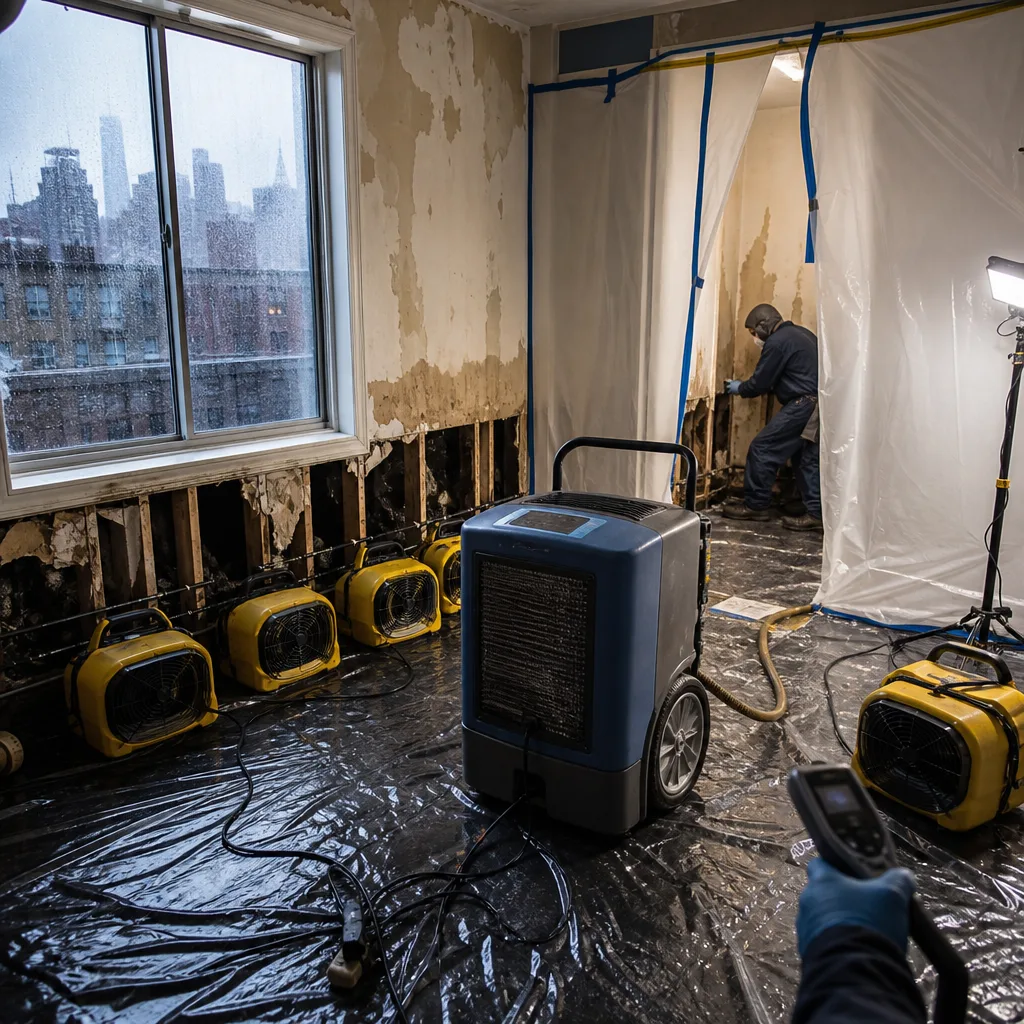
Mold Removal
Surface mold on non-porous materials is removed and treated. Mold in plaster, insulation, or rotted wood is cut out and properly disposed of under containment. We do not paint over it. We do not “kill” mold on porous material and call it done.
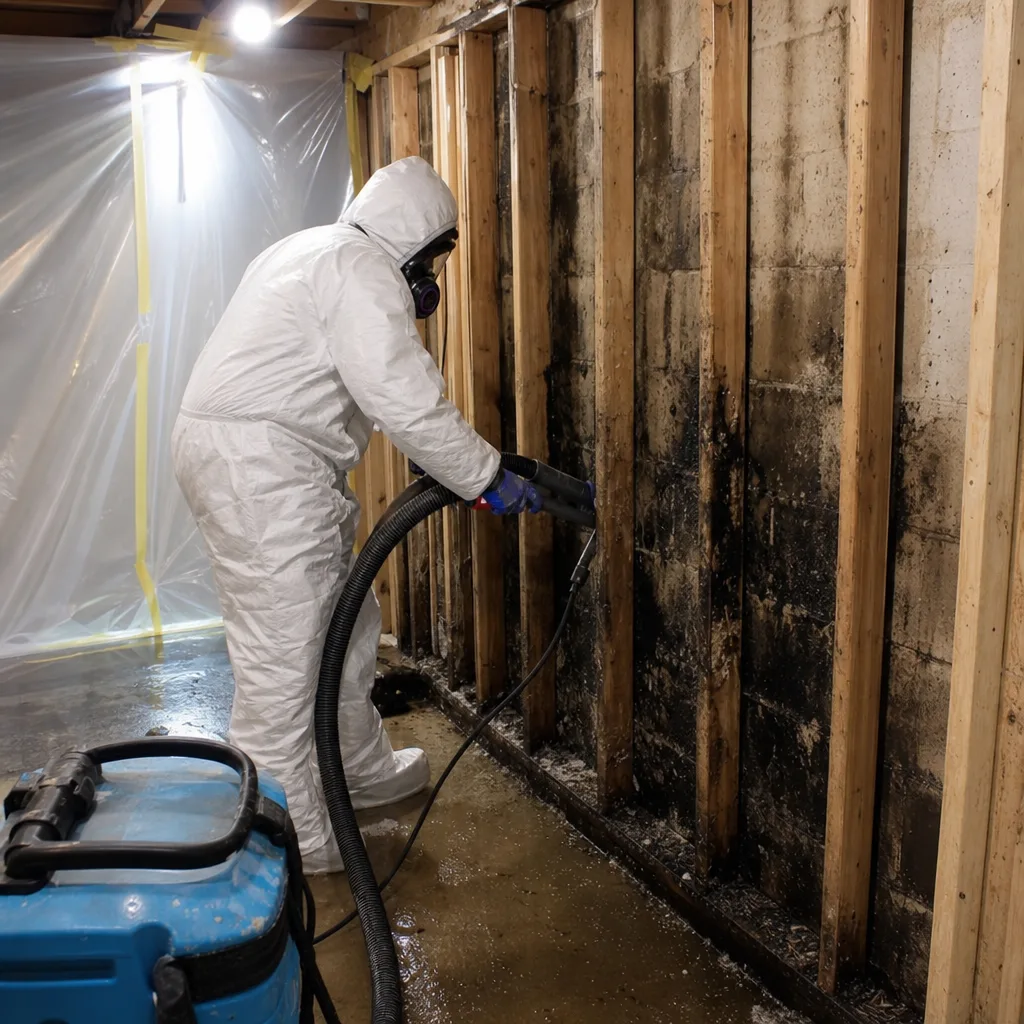
Black Mold Remediation
Stachybotrys, the one people call black mold, loves chronically wet cellulose: old plaster backing, paper-faced drywall, horsehair insulation, and wood lath. It is common in Washington Square basements with persistent groundwater intrusion. Full containment and clearance testing apply here, and we walk you through why.
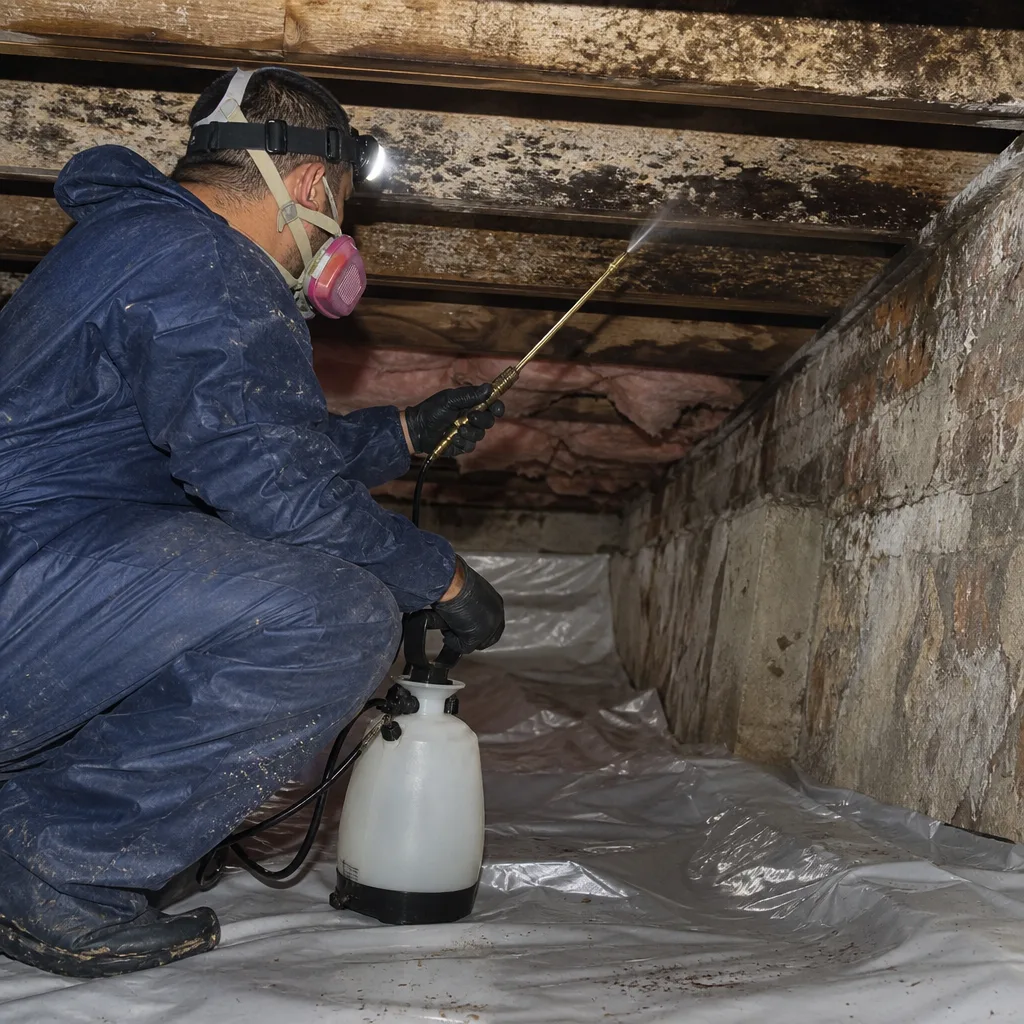
Air Quality Restoration
After source removal, we run HEPA air scrubbers and negative air machines to pull spores from the indoor air. For owners with respiratory concerns or landmarked buildings where demolition is limited, we adjust the approach to maximize air quality while minimizing LPC-triggering interventions.
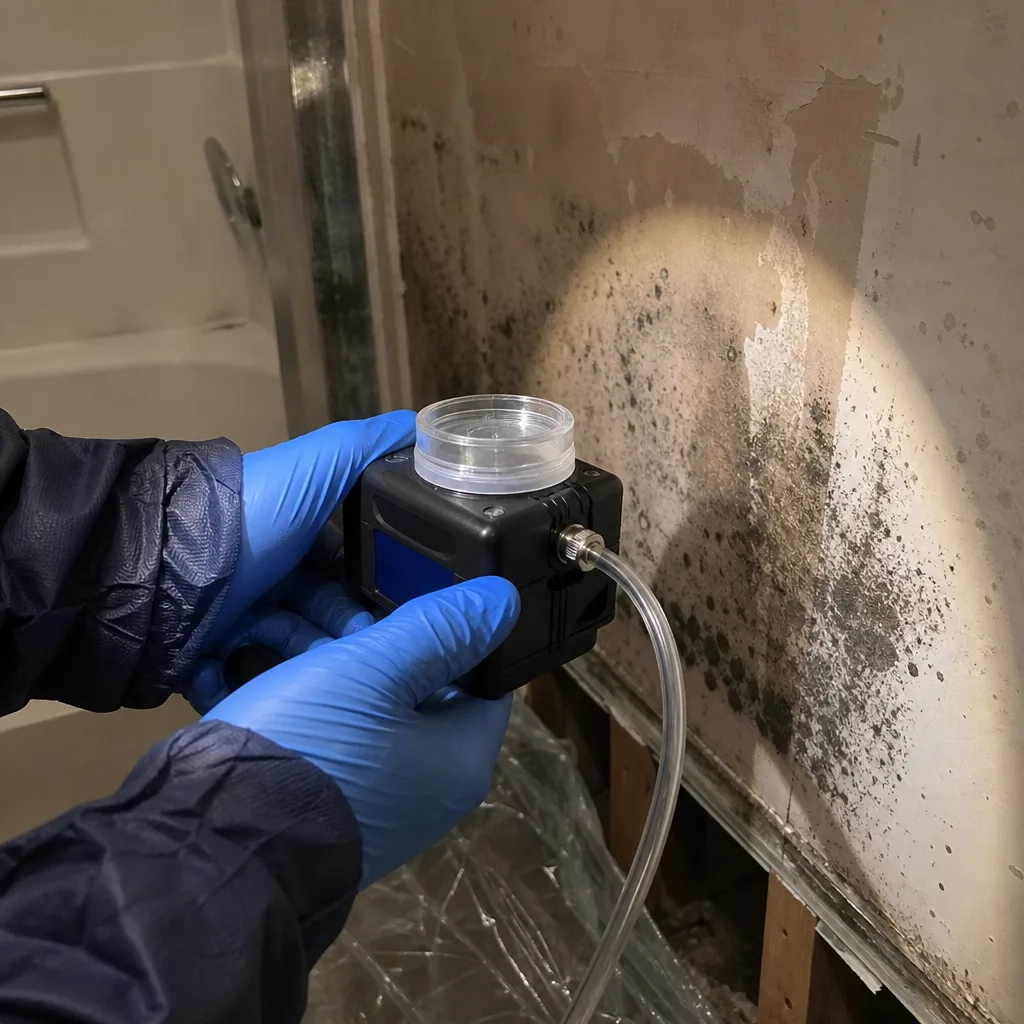
Crawl Space Treatment
Crawl spaces over the Minetta Brook watershed are a chronic problem. We install vapor barriers, address foundation drainage where the LPC allows it, and treat framing wood. If groundwater is the source, we say so plainly and plan for recurrence, rather than selling a one-time fix that will fail.
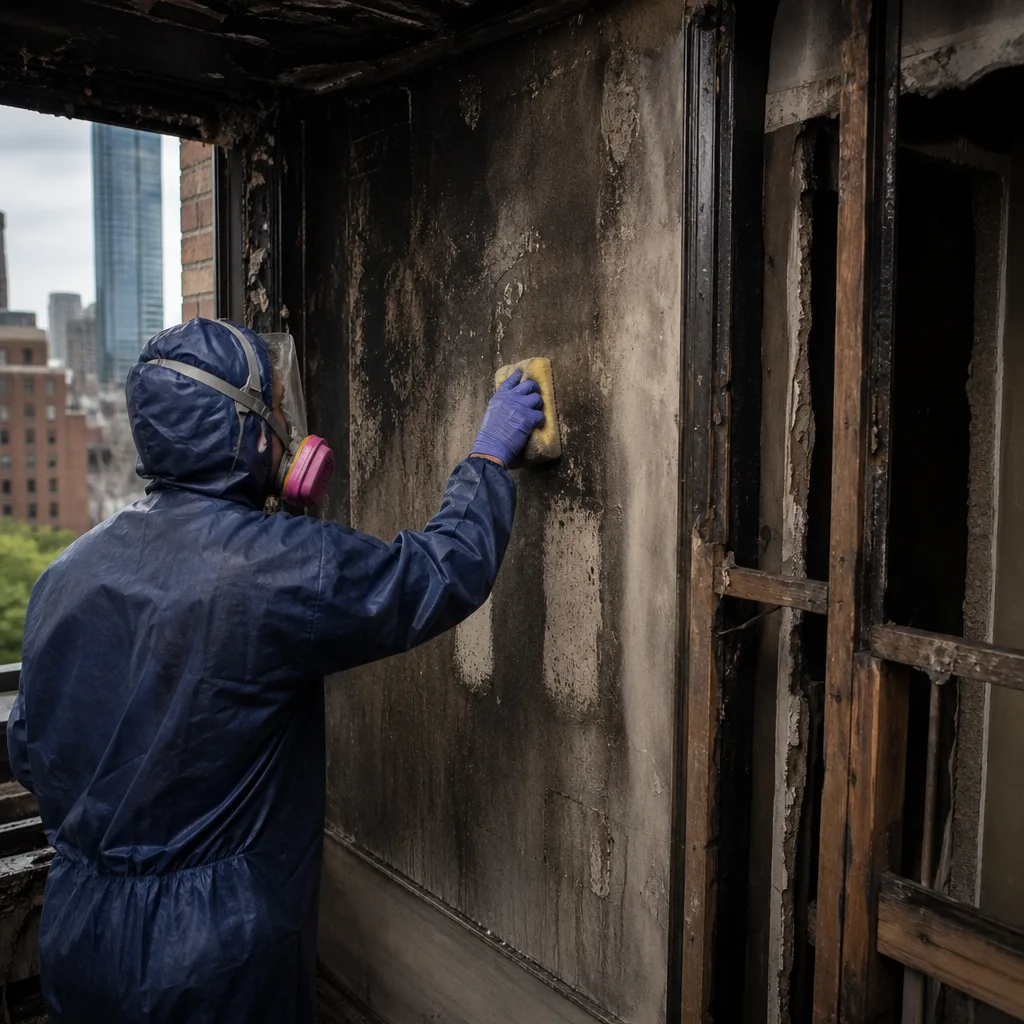
Moisture & Humidity Control
This is the most important service we offer in Washington Square. Without controlling the moisture source, remediation is temporary. We look at groundwater, building envelope, HVAC, and occupancy patterns, and we design a plan that keeps the building dry enough that mold cannot return.
What happens when you call
- 1
A real person answersNo phone trees - you reach a local pro.
- 2
You get an upfront price rangeHonest numbers before anyone is dispatched.
- 3
A background-checked tech heads outLicensed & insured, dispatched right away.
- 4
You approve before work beginsNothing starts until you say go.
Mold Remediation Costs in Washington Square, NY
A small, contained mold job in a Washington Square apartment, under 10 square feet, typically runs $1,800 to $3,200. A mid-size remediation involving one full wall, the cavity behind it, and drying runs $3,200 to $5,500. Larger jobs, where mold has spread through multiple units, party walls, or an entire basement, run $5,500 to $12,000 and up. What moves the price here more than anything is building age and landmark status. Horsehair plaster removal is slower than drywall. LPC-required documentation adds coordination hours. Groundwater-driven mold in a Minetta Brook basement is different from a single bathroom leak: the source has to be addressed, not just the symptom. Our inspections are free. The scope you receive is written, line-item, and agreed to before work starts, with our 90-Day Done Right Promise behind it. Seniors and veterans get 5 percent off, always, and any repair over $250 takes $50 off.
We Also Serve Cities Near Washington Square
Floodline Restoration Co. crews serve the blocks around Washington Square and the neighborhoods around it: Midtown Manhattan, Midtown West, Murray Hill, and Upper Manhattan. Same live answer, same IICRC-certified crews, same written promise.
Serving Washington Square, NY - Our Local Coverage Area
We’re based in the Washington Square area and know this community well. Use the map below to see our service coverage - if you’re nearby, we can almost certainly help.
Washington Square Mold Remediation Questions, Answered
Does mold remediation in Washington Square require approval from the NYC Landmarks Preservation Commission?
Yes, if the building is within the Greenwich Village Historic District or is an Individual Landmark, and the work involves demolition, alteration of protected surfaces, or changes to exterior elements. Interior remediation that does not alter protected fabric often proceeds without LPC review, but anything that touches original plaster, woodwork, or masonry planned for replacement can trigger a permit requirement. We check the LPC maps before we start, so the job does not get stop-worked mid-drying.
Why does mold keep coming back in my Washington Square basement even after remediation?
Because the moisture source was never addressed. In much of Washington Square, the buried Minetta Brook keeps groundwater pressing against old foundations, and unless hydrostatic pressure is managed, the basement stays damp enough for mold to regrow every storm season. Remediation without moisture control is cleanup, not a fix. Call (518) 314-5660 and we will identify the real source before we touch a wall.
Can mold in a Washington Square brownstone spread to my neighbor’s apartment through shared walls?
Yes. Party walls in the 1830s and 1840s row houses around Washington Square are shared masonry assemblies with cavities, chases, and old pipe runs that create channels between units. Mold can migrate through those cavities, especially when one side has a slow leak or high-humidity conditions. We inspect the full party wall, not just the side showing visible mold.
How quickly does mold start growing after a water event in this area?
Colonization typically starts within 24 to 48 hours on wet organic surfaces, given Washington Square’s summer humidity and the slow-drying nature of old plaster and wood lath. In basements over the Minetta Brook, surfaces may already carry dormant spores, so visible growth can appear faster than in a dry modern building.
Do I need different mold testing for a landmarked Washington Square building?
The testing itself is the same: air sampling, surface sampling, moisture mapping. What changes is the reporting. For LPC-protected buildings, we document which surfaces are original fabric and which are later alterations, so the scope of work can be reviewed cleanly. That level of documentation is standard for our Washington Square jobs.
How fast can you actually get to a Washington Square mold emergency?
Our commitment is 45 minutes or less to most Washington Square addresses. We dispatch from our New York City operations, and a live person answers the phone at 2 a.m. the same way they do at noon. The inspection is free.
Can I stay in my home during mold remediation?
It depends on the size of the affected area and your health. Containment with negative air pressure usually allows you to stay in unaffected parts of the home. If the remediation spans your only bathroom, kitchen, or bedroom, or if you have respiratory conditions, we may recommend temporary relocation. We tell you the truth at inspection, not after we open a wall.
What should I do in the first 30 minutes after I discover mold?
Do not disturb it. Do not wipe it, do not spray bleach on it, and do not run a fan on it. That spreads spores. Shut the door to the room if you can, turn off the HVAC if it serves that area, and call (518) 314-5660. We will walk you through the next 30 minutes.
Floodline Restoration Co. provides full-cycle Mold Remediation in Washington Square and throughout the surrounding neighborhoods. We started at the floodline in 2010 and we have not stopped taking the calls. Senior and Veteran 5% Discount, $50 off any repair over $250, $89 Seasonal Tune-Up. Call (518) 314-5660 for a free estimate, any hour, any day.
Written by Curt Bowman, Owner at Floodline Restoration Co., providing full-cycle restoration services across New York City since 2010.