
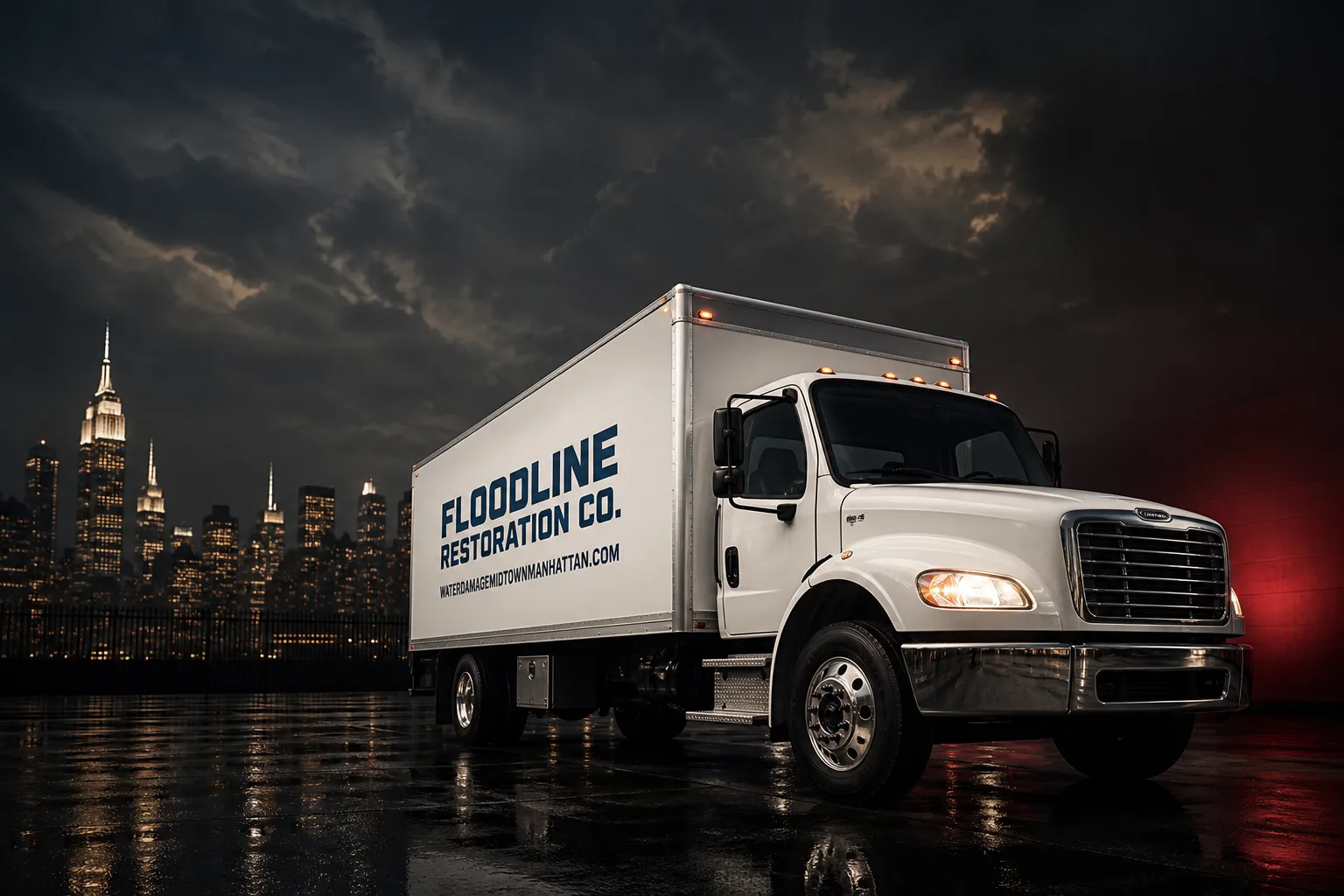
Free visual inspection and a written scope of work before any mitigation begins - photos, moisture readings, and drying logs go in your claim file
The scope we write is the scope we bill. Anything new gets shown to you, in writing, before we touch it.
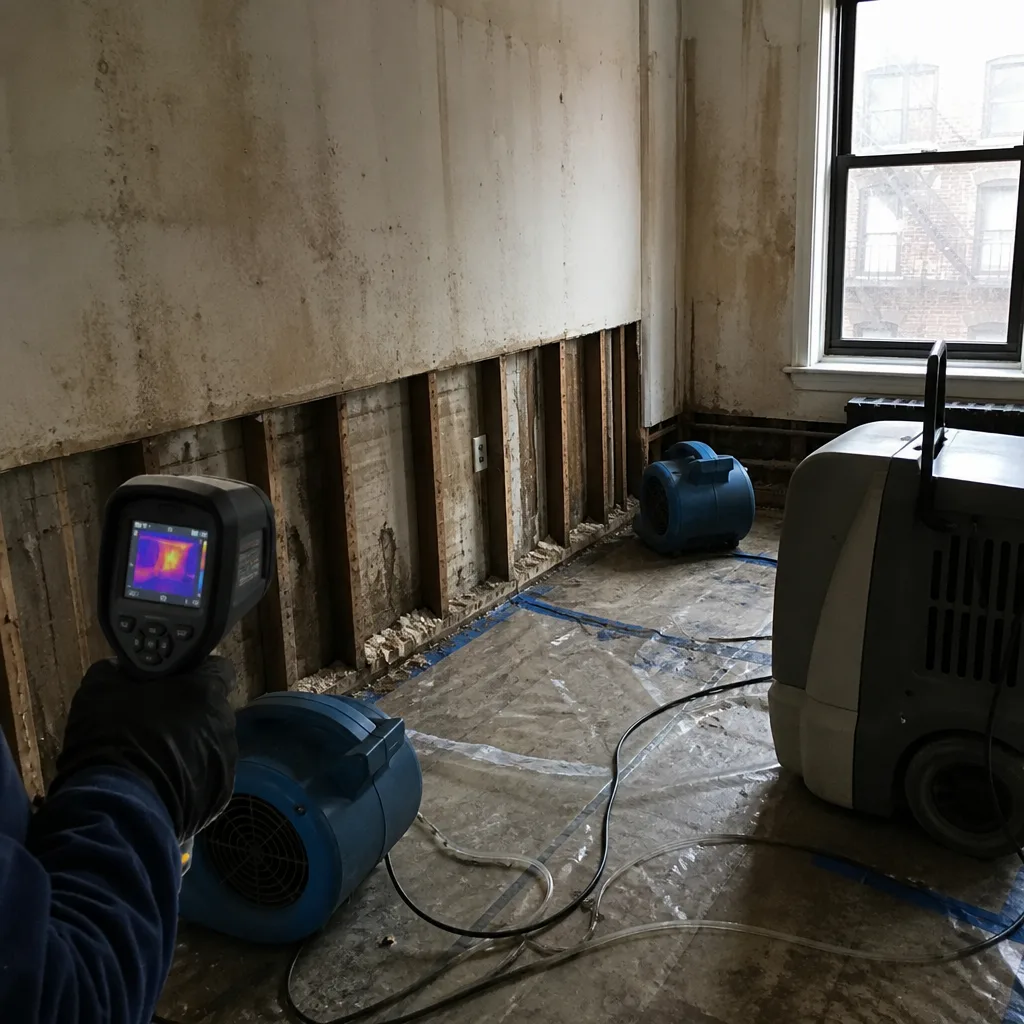 Before
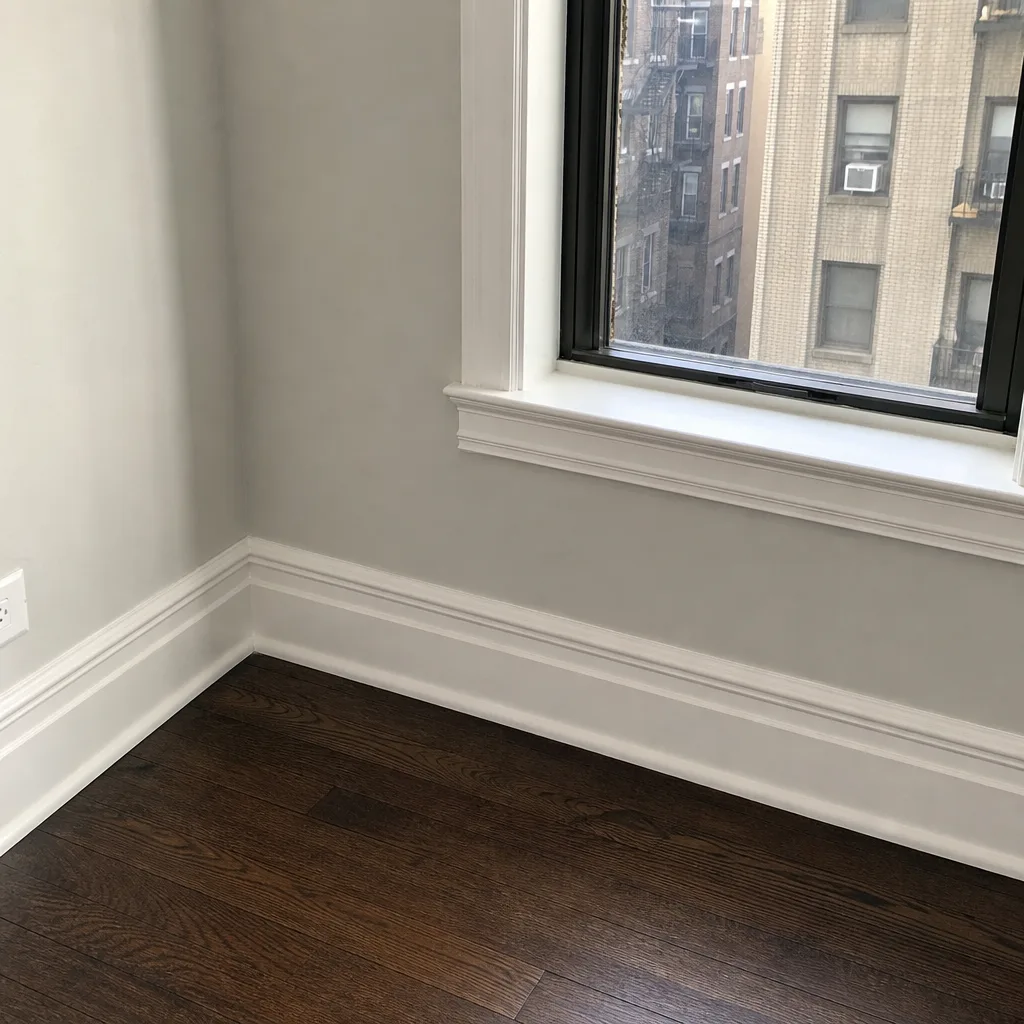 After
After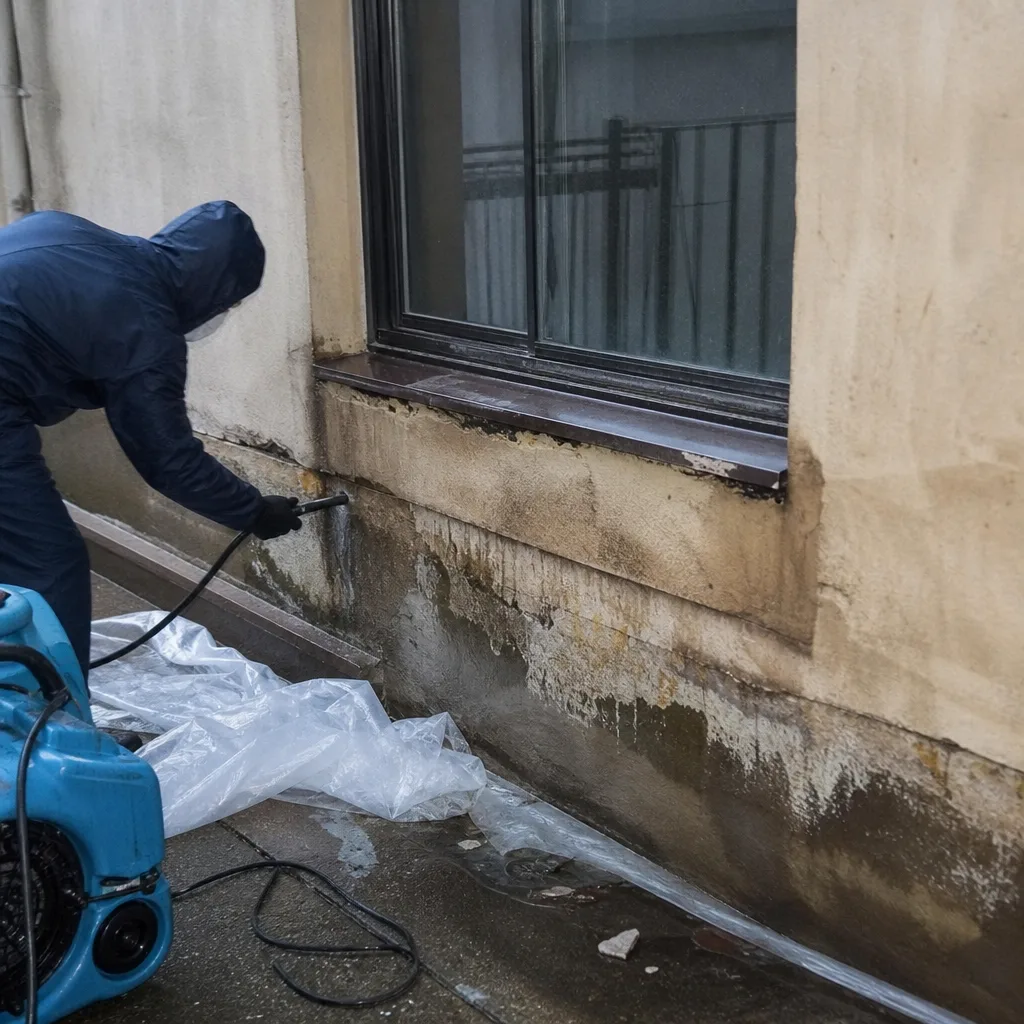 Before
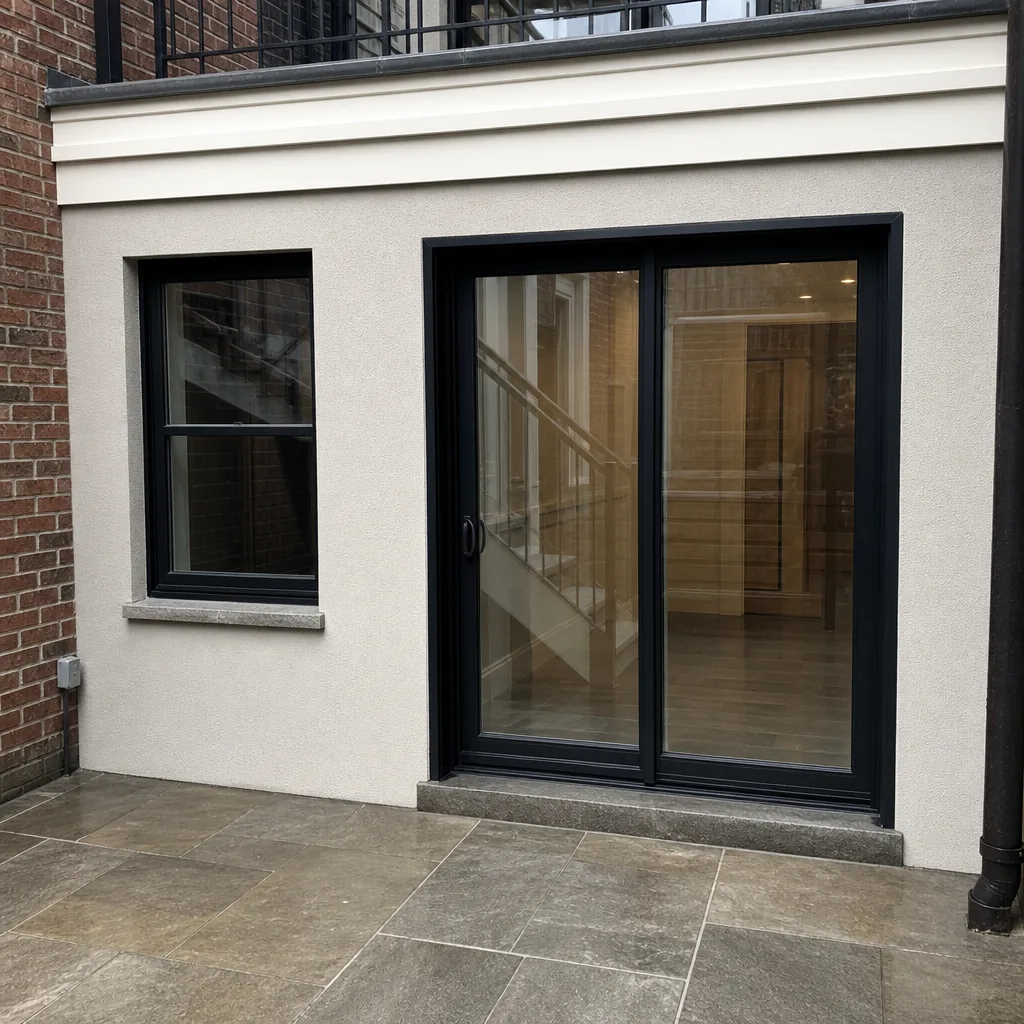 After
After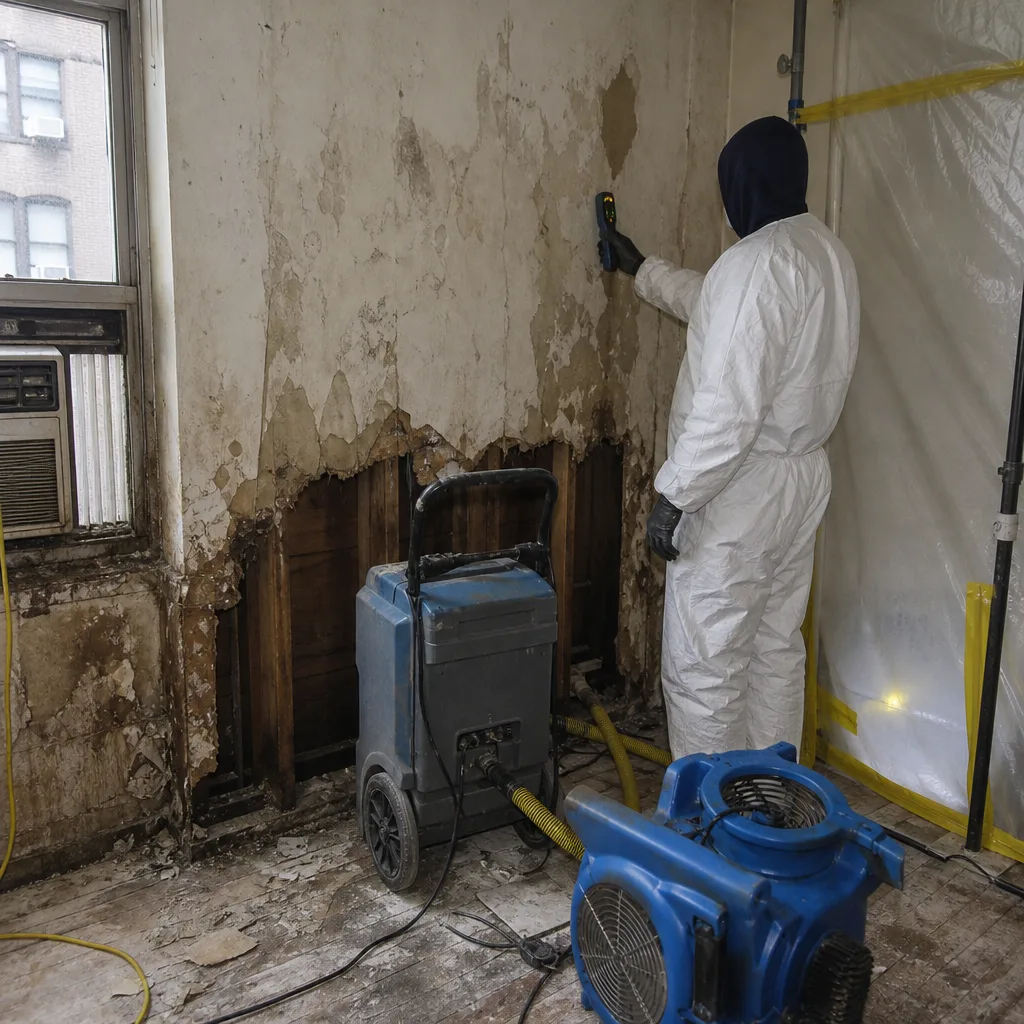 Before
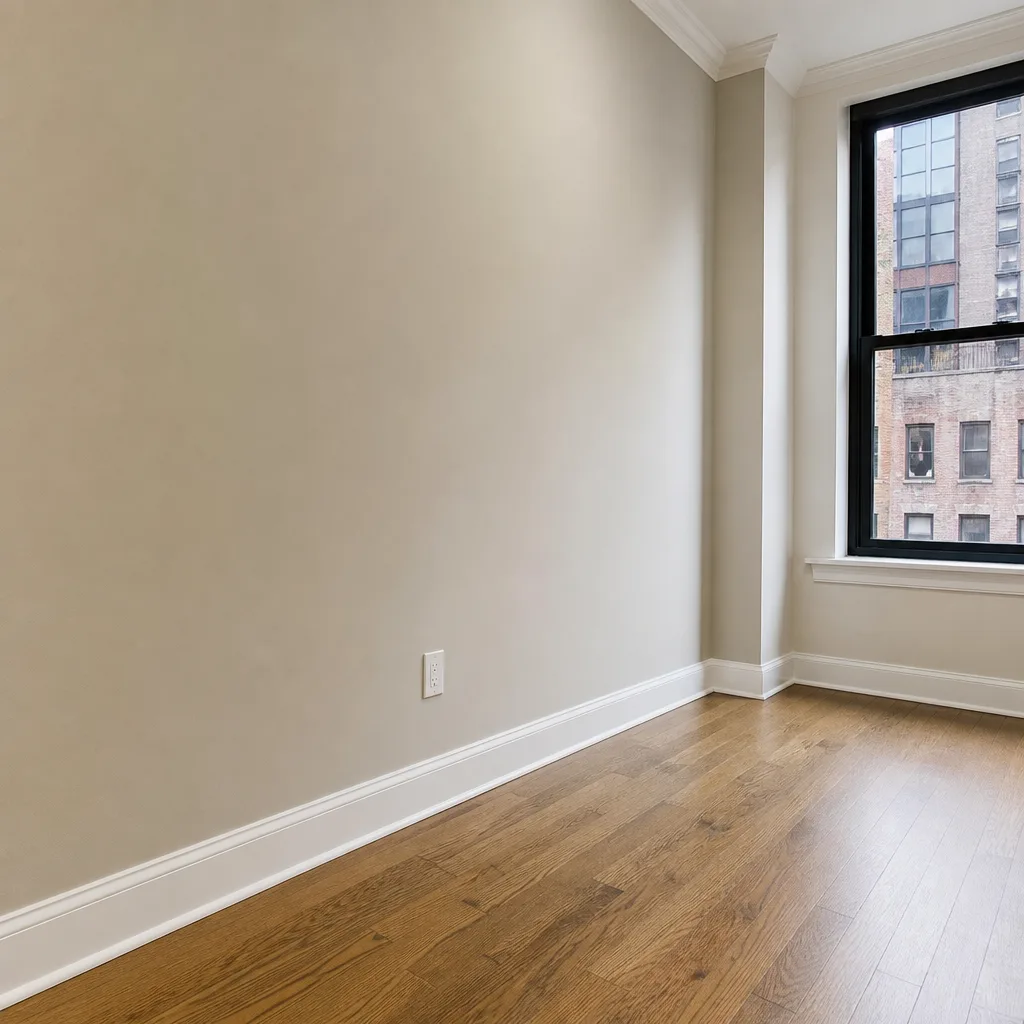 After
After24/7 Emergency Mold Remediation in Union City
Mold remediation in Union City typically runs $1,800-$4,200 for a contained bathroom or closet job, and $6,500-$14,000 when the colony has spread through original plaster-and-lath wall cavities across multiple rooms. We answer the phone live at (518) 314-5660, any hour, and a certified crew can be inside your building the same day. In a pre-war tenement, mold does not sit still: every day of delay lets spores move through wall cavities, joist bays, and shared hallway air, which means a third-floor leak becomes a building-wide problem faster than most owners expect.
Floodline Restoration Co. has been handling full-cycle restoration since 2010, led by Curt Bowman. We do not hand your building off between an extraction crew and a rebuild crew. The same certified technicians who set containment and run air scrubbers also handle the tear-out, the drying, and the reconstruction, with a written 90-Day Done Right Promise behind every job.
Understanding Mold Remediation Severity in Union City Properties
Mold severity in Union City is not just about square footage. It is about wall assembly, building age, and how many units share the affected cavity. A 400-square-foot colony behind a modern drywall partition is a contained job. The same-size colony inside an 1890s-1940s tenement wall, where horsehair insulation, original lath, and unsealed joist bays connect three floors, is a different problem entirely. Spores travel along those connected cavities, and moisture wicks through plaster long after the visible surface looks dry.
We classify every job by containment needs, not just visible staining. Level 1 covers small surface growth under 10 square feet, isolated to one room. Level 2 involves colonies between 10 and 100 square feet or growth inside wall cavities, which requires full containment, negative air pressure, and HEPA air scrubbing. Level 3 means cross-unit spread, contaminated HVAC ducts, or moisture readings above 20% in structural wood, common in Union City walk-ups where a supply line failure above a dropped ceiling has been running, unnoticed, for weeks. Level 4 is reserved for extensive contamination across multiple floors or buildings with active water intrusion still in play. In Union City’s tenements, we rarely see a Level 1 that has been there long; by the time you smell it or see it, the wall cavity has usually been wet for a month.
Why Union City Property Owners Choose Floodline Restoration Co.
- 45-minute response commitment. When you call from Union City, our dispatch targets crew arrival within 45 minutes for emergency containment. Live answer, no phone tree.
- 24/7 live answer, always a person. A real dispatcher picks up at 2 a.m. on a Sunday, not a recording. You tell us what you see, we tell you what to do next, and a crew is rolling.
- IICRC-certified crews. Our techs hold IICRC certifications including AMRT (Applied Microbial Remediation Technician) and WRT (Water Damage Restoration Technician). Background-checked, uniformed, and trained to the same standard on every job.
- Free visual inspection. We walk the property before any work is scoped. You get a written assessment and a firm price, not a surprise after we open the wall.
- Direct insurance billing. We coordinate with your carrier from day one, send the adjuster our photos and moisture readings, and bill the insurer directly where the policy applies. You never play messenger between us and the insurance company.
- One team from extraction to reconstruction. The crew that sets containment is the crew that rebuilds the wall. No mid-job handoff, no inherited subcontractor who never read the moisture map.
Our Mold Remediation Process
Inspection & Assessment
We start with thermal imaging and moisture meters, not guesswork. In Union City row houses, that means reading wall cavities, joist bays, and the shared partitions between units. We map the full extent of the moisture before any wall is opened.
Containment & Stabilization
We seal off the affected units, set negative air pressure, and run HEPA air scrubbers so spores don’t migrate through shared hallways during the work. In multi-tenant buildings, containment often means securing access across two or three leaseholds before demolition begins.
Demolition & Material Removal
Wet plaster, horsehair insulation, and affected lath are removed to the point of dry, sound structure. Where lead paint or friable asbestos is present, certified abatement runs concurrently, before drying equipment goes in and blasts particles around.
Drying & Dehumidification
We set Dri-Eaz and XPOWER air movers, plus Phoenix and B-Air dehumidifiers sized to the affected cubic footage. Daily readings are logged: surface moisture, wall cavity moisture, humidity. We hand you and your carrier the same log. We dry to the IICRC dry standard, not to a schedule.
Cleaning, Sanitization & Antimicrobial Treatment
Remaining structural wood is wire-brushed, HEPA-vacuumed, and treated with an EPA-registered antimicrobial. Air scrubbers keep running through the cleaning phase. Then we run air sampling, or work with a third-party hygienist, until clearance is documented.
Repairs & Restoration
The same Floodline crew rebuilds the wall. New lath or drywall, matching plaster profiles, paint matched to the unit. In a 1920s Union City walk-up, that often means matching cove moldings and trim profiles so the repair disappears into the building.
Need Emergency Mold Remediation in Union City Now?
Crews minutes away, answering live 24 hours a day. The sooner we start, the less it costs.
Working With Your Insurance Company
Mold claims are scrutinized harder than almost any other restoration work, and Union City’s multi-unit buildings complicate things further when four tenants and three insurers are involved. We document everything from the first hour: the source of the water, the moisture readings, the size of the containment zone, the lab results if testing was ordered. That documentation is what gets a claim paid.
We write line-item scopes using the same estimating platforms your carrier recognizes. When the adjuster calls, we talk to them directly, walk them through the photos, and send the drying logs. You do not sit on hold with your insurance company. We handle that. And with our 90-Day Done Right Promise, if mold returns in a wall cavity we treated, we come back and make it right, in writing, no arguing.
What We Provide Your Insurer
- Thorough documentation of the loss
- Photos of all damage, room by room
- Moisture readings and drying logs
- A detailed, line-item scope of work
- Direct coordination with your carrier
Built for Union City’s Loss Calendar
Union City sits atop the Palisades, not at river grade, so we do not get the Hudson River surge flooding that hits Hoboken or Jersey City. What we get is rainwater moving downhill fast. In a hard summer thunderstorm, water sheets down Bergenline Avenue and the side streets, overwhelms aging foundation drains, and finds its way into century-old basements. Those basements then stay damp for weeks, which is exactly the environment mold needs. We handle the mold, but we also read the building: a foundation drain that backed up last July will back up again next July unless it is addressed.
January is the other Union City season we know by name. Cast-iron supply lines and galvanized risers in 1910s walk-ups freeze along exterior walls, then fail when they thaw. In February, our mold calls are almost always the second chapter of a January pipe burst. The water was cleaned up, but the wall cavity never dried. By the time you smell it in April, the colony behind the plaster has been growing for three months. The mold didn’t start the problem; it finished it.
Mold Remediation Across Union City’s Neighborhoods
Along Bergenline Avenue, the commercial corridor, we work in mixed-use buildings where a salon or restaurant leak on the first floor migrates into the apartments above through shared joists. These jobs run on business schedules: containment at night, cleanup before opening, and signage that keeps tenants and customers out of the work zone.
In the residential blocks around New York Avenue and Palisade Avenue, the housing stock is mostly 1910s-1930s walk-ups, four to six stories, with original plaster and lath. Mold here is almost never a one-unit job. A bathroom exhaust fan that never vented properly, or a supply line that drip-dripped inside a wall for a year, sends moisture into the units above and below. We coordinate access across multiple apartments, often with tenants who speak Spanish or Portuguese and a landlord who lives in Florida. That coordination is the job.
West of Kennedy Boulevard, toward Washington Park and the 07087 blocks, the buildings get lower, more row houses, some single family. The mold problems shift from shared stacks to basement moisture: foundation seepage, unsealed crawl spaces, and the old coal chutes that now let in groundwater every time it rains hard.
Up near the Weehawken line on the north end, we see the same tenement stock, but the hillside drainage is even steeper. Runoff from the Palisades escarpment pushes silt and water through foundation walls that were never waterproofed. Any mold remediation in this corridor has to start with where the water is coming from, or it is a cleaning, not a fix.
Specialized Mold Remediation Services We Offer in Union City
Mold Inspection & Testing
Before we tear anything out, we document what we are dealing with. In Union City tenements, that often means air sampling in multiple units, surface samples from suspected colonies, and moisture mapping across the shared wall. If you need a third-party hygienist for clearance, we coordinate with one and include those results in your claim file.
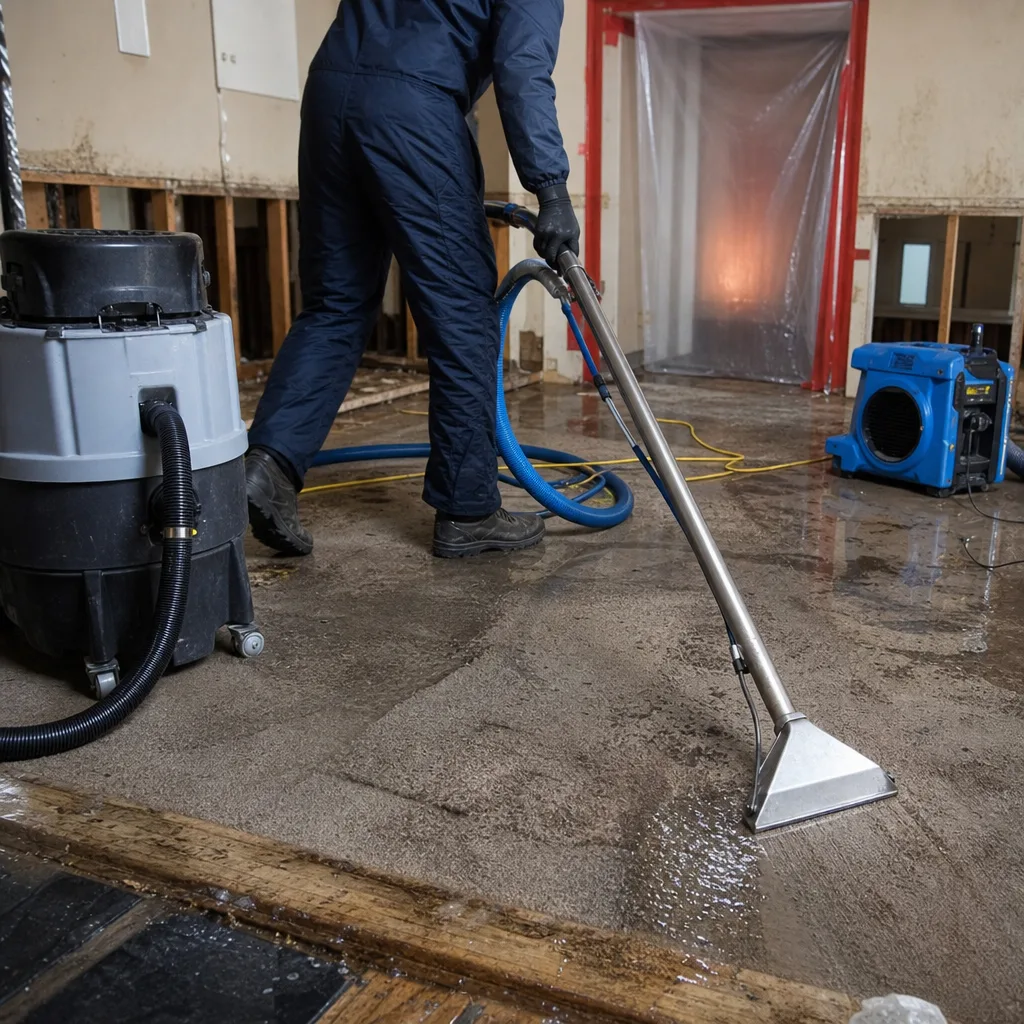
Mold Removal
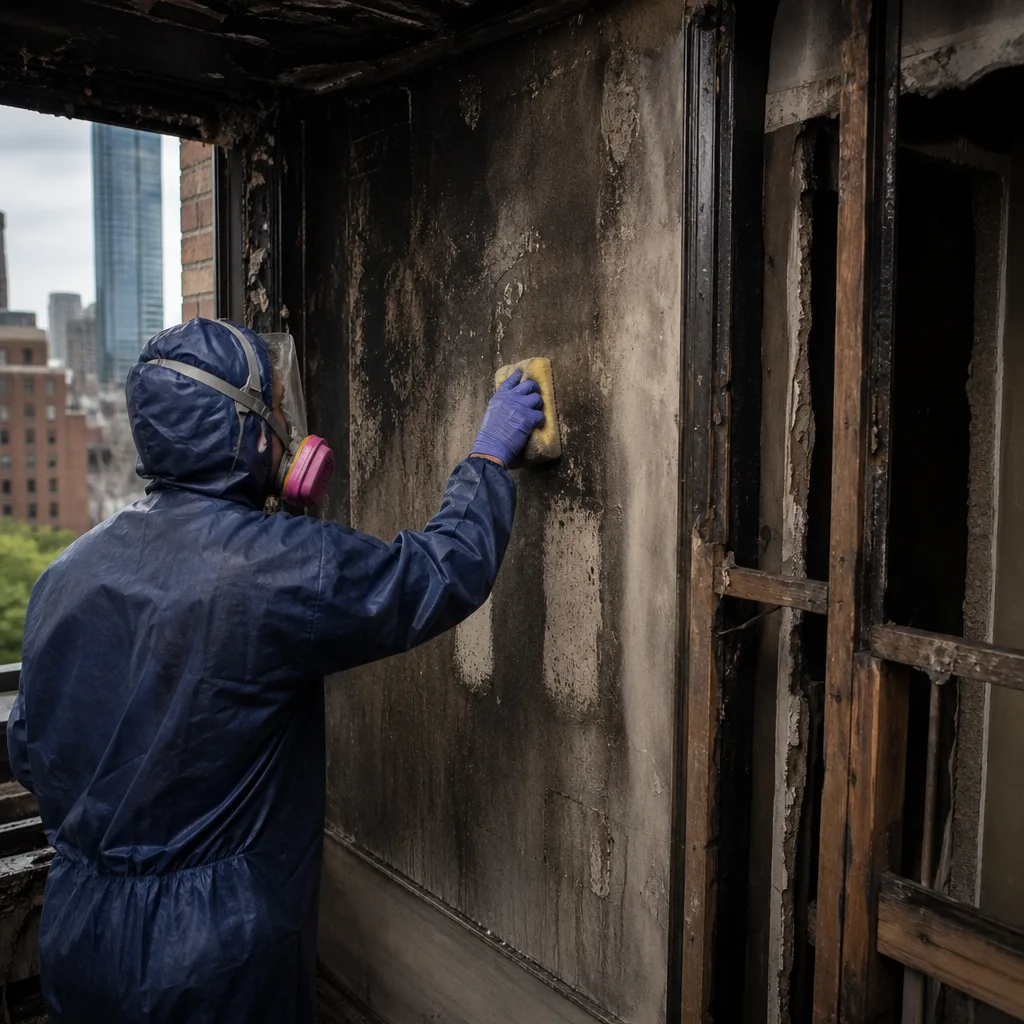
Removal means physically taking out affected material, not bleaching it. In pre-war buildings, that usually means removing wet plaster, horsehair insulation, and lath to expose the framing, then treating the wood. We contain the area through every phase so spores never reach the hallway or adjacent apartments.
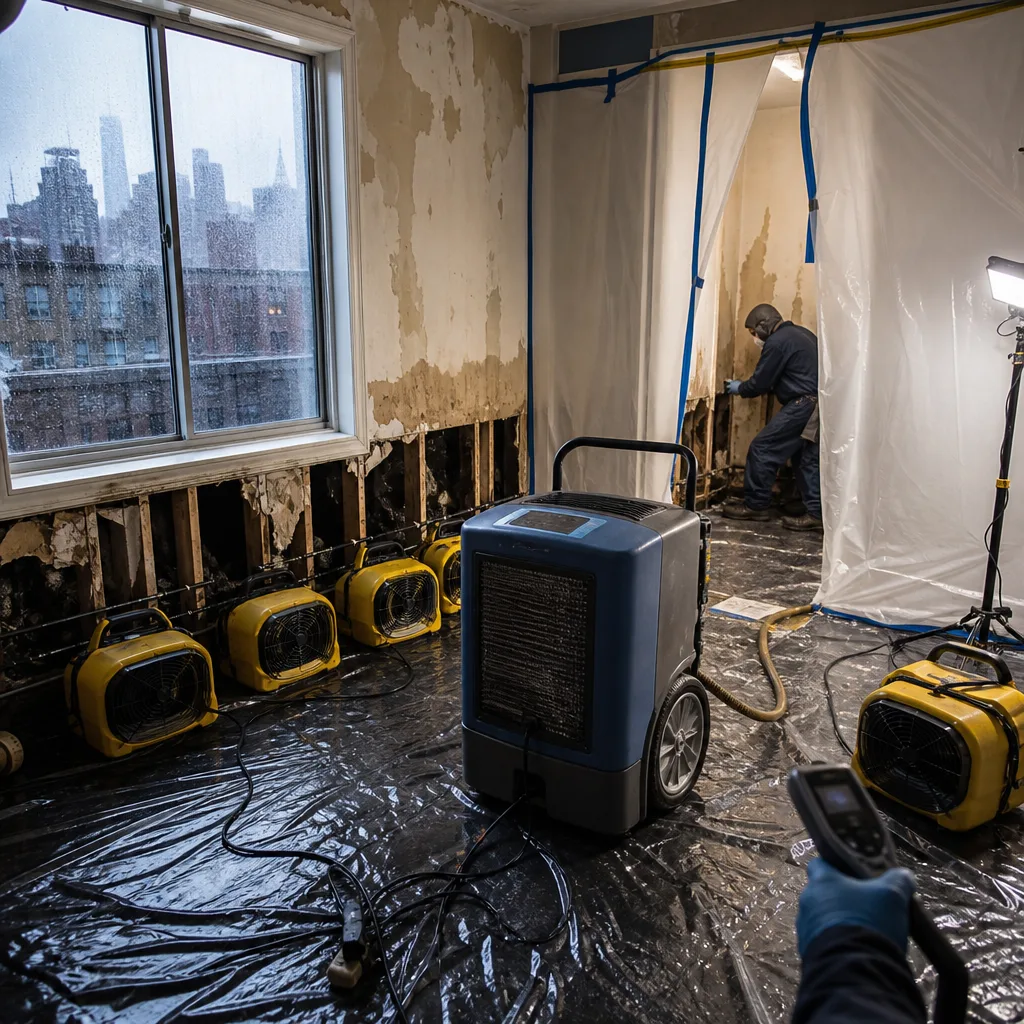
Black Mold Remediation
Stachybotrys chartarum, what people call black mold, grows on cellulose that has been wet for weeks: paper-faced drywall, wood, the paper backing on old plaster. Union City’s old buildings give it plenty of food. If testing confirms black mold, we treat it as Level 2 or higher, with full containment, HEPA scrubbing, and clearance sampling before anyone reoccupies the space. No shortcuts on this one.
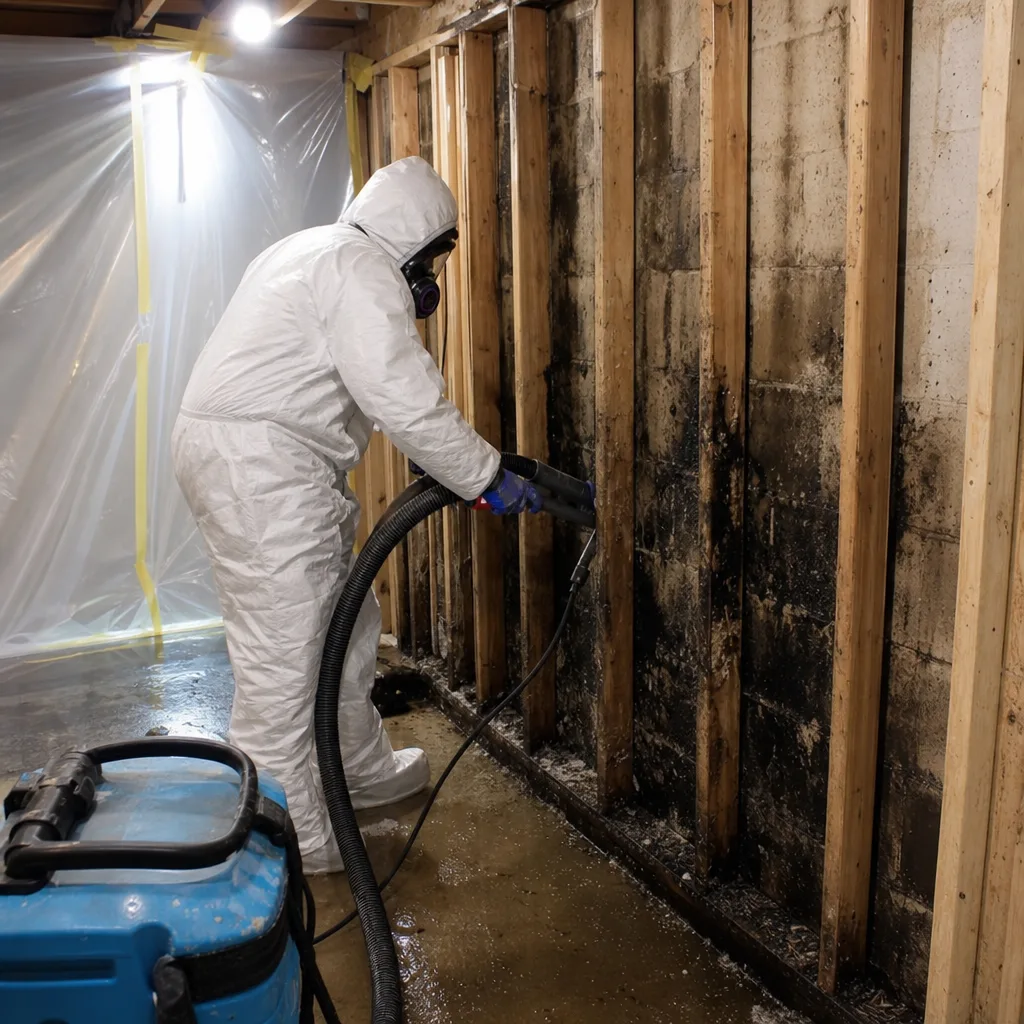
Air Quality Restoration
After the source is removed and the materials are dry, the air still holds spores from the demolition. We run HEPA air scrubbers rated for the cubic footage of the affected units, replace contaminated HVAC filters, and can run post-remediation verification sampling so you have documentation that the air is clean, not just the walls.
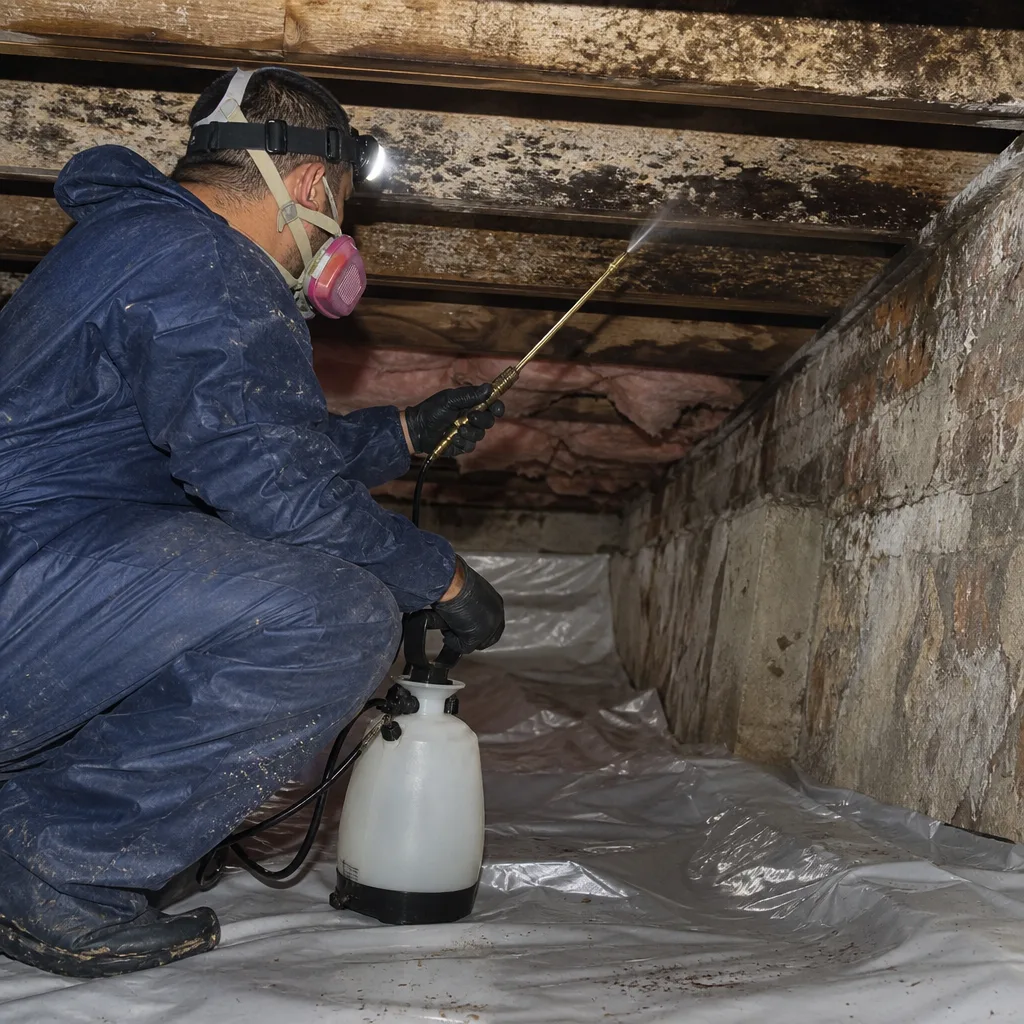
Crawl Space Treatment
Row houses in the 07087 zip code often have a crawl space under the rear addition, and those crawl spaces stay damp year round. We remove mold from the floor joists, treat the wood, install vapor barriers where appropriate, and set dehumidification if the space warrants it. The goal is a crawl space that stays dry, not one we have to clean every spring.
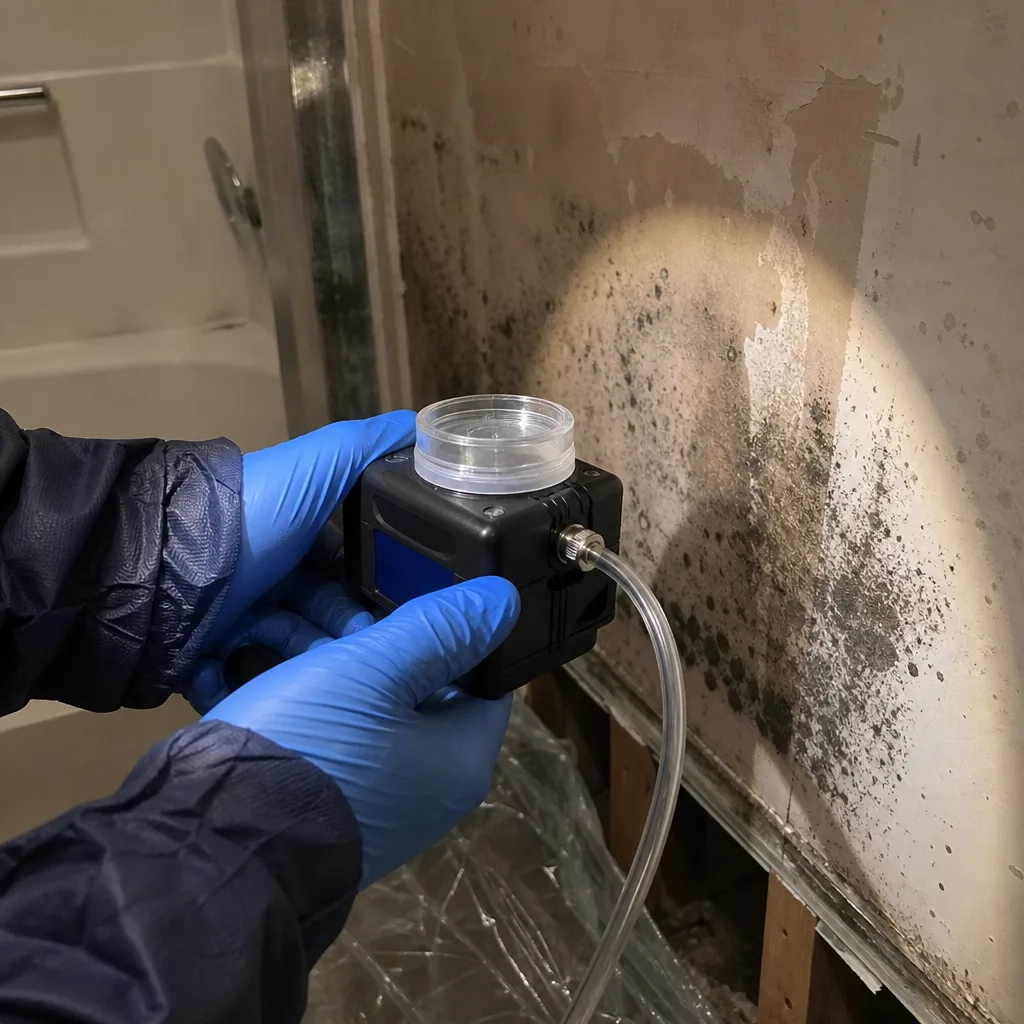
Moisture & Humidity Control
Every mold job ends with the same question: what kept this wet? In Union City, the answer is usually a sweating cold-water riser, a foundation drain that backs up, or a bathroom fan venting into a wall cavity instead of outside. We fix the moisture source as part of the remediation, because mold removal without moisture correction is just delaying the next colony.
What happens when you call
- 1
A real person answersNo phone trees - you reach a local pro.
- 2
You get an upfront price rangeHonest numbers before anyone is dispatched.
- 3
A background-checked tech heads outLicensed & insured, dispatched right away.
- 4
You approve before work beginsNothing starts until you say go.
Mold Remediation Costs in Union City, NJ
What you pay depends on how far the colony has spread and how much of your building’s original material has to come out. Here are honest ranges for Union City’s market:
- Contained bathroom or closet mold: $1,800-$3,400. Small containment zone, one to two days of equipment, minimal rebuild.
- Single room with wall cavity spread: $3,500-$7,200. Opening plaster-and-lath walls, removing insulation, drying, re-plastering or drywall.
- Multi-unit spread through shared walls or joists: $8,000-$18,000. Containment across two or three leaseholds, asbestos abatement coordination, structural drying, and reconstruction to match original profiles.
- Whole-floor or building-wide remediation: $20,000-$45,000+. Common after a long-running supply line failure in a six-unit walk-up.
Insurance covers mold when the colony is tied to a covered water event, a burst pipe, an appliance failure, and the claim is documented from day one. Long-term condensation or neglected maintenance is usually excluded. That is why the free visual inspection matters. We tell you what the scope is, what your policy is likely to cover, and what the out-of-pocket piece looks like before you sign anything. Call (518) 314-5660 and we will walk the building with you.
We Also Serve Cities Near Union City
Our crews serve the whole Hudson waterfront. If you own property in Union City and also rent units in Weehawken, own a building in Hoboken, or manage a property in North Bergen, the same Floodline team handles all of it. One phone number, one crew, one standard.
Serving Union City, NJ - Our Local Coverage Area
We’re based in the Union City area and know this community well. Use the map below to see our service coverage - if you’re nearby, we can almost certainly help.
Union City Mold Remediation Questions, Answered
How do you handle mold remediation in a Union City walk-up when access to the affected wall cavity requires entering multiple tenants’ apartments?
We coordinate access with each leaseholder directly, working around their schedules and documenting everything in writing before we touch a wall. In a 1910s four-story walk-up, the affected cavity often runs from a third-floor bathroom down through the second-floor ceiling and into the first-floor wall. We set containment in each affected unit, seal the shared hallway openings, and schedule demolition so no tenant is living next to an open, spore-laden wall cavity overnight. We have done this across four separate leaseholds on a single job, including coordinating with Spanish-speaking tenants and an out-of-state landlord. It is slower than a single-family job, but it is the only way to do it without spreading the problem.
Can you dry mold behind original plaster-and-lath walls in a 1910s Union City row house, or does that material always have to be removed?
Plaster and lath that has held mold for weeks usually has to come out, not be dried in place, because the paper backing on the lath and the horsehair in the wall cavity hold spores that air movement alone will not eliminate. If moisture readings are moderate and the colony is superficial, we can sometimes dry, treat, and re-seal, but in a 1910s wall with horsehair insulation, the practical answer is almost always controlled removal to the nearest sound framing, followed by reconstruction that matches the original profile. Trying to salvage mold-embedded horsehair is false economy; it re-blooms.
What extra steps do you take because Union City basements are prone to below-grade water intrusion from runoff down the Palisades?
We start every Union City basement mold job by finding where the water is coming in before we treat anything. Runoff from the Palisades hits foundation walls on the downhill side of Palisade Avenue and New York Avenue hard, and if the drain tile is original or collapsed, no amount of dehumidification solves the problem. We remove the mold, dry the structure, and then fix the intrusion: grading, drain repair, waterproof coatings, or a vapor barrier. If you only remediate the mold and ignore the runoff, you will call us again next spring.
Is black mold common in Union City tenements, and how do you test for it?
Black mold, Stachybotrys chartarum, is common anywhere there is cellulose that has stayed wet for weeks, and Union City’s original plaster, wood lath, and horsehair insulation are exactly that. We test for it with surface tape lifts and air samples sent to an accredited lab, not with a home test kit. If black mold is confirmed, we escalate to full containment with HEPA air scrubbing and run post-remediation clearance sampling before you reoccupy. The test results go in your claim file either way.
How quickly do you need to start mold remediation in a Union City apartment building after a pipe leak?
Within 24 to 48 hours is when invasive mold growth starts, and in a multi-story tenement with shared cavities, every day after that means more surface area affected. A pipe leak on the fourth floor of a Bergenline Avenue building can reach the second-floor wall cavity within a week. That is why we answer the phone live 24 hours a day and target 45-minute response in Union City. The faster we set containment, the smaller the job stays, which matters when four tenants and three insurance policies are involved.
Does insurance cover mold remediation in Union City rental buildings?
It depends on the source. Mold tied to a sudden, covered water event, like a burst supply line or a failed water heater, is generally covered under the landlord’s property policy. Mold from chronic condensation, a long-running leak, or deferred maintenance is usually excluded. In multi-unit buildings, each tenant’s renters policy may also respond to their personal property damage. We document the source, the timeline, and the scope in a way that supports the claim, and we coordinate with all carriers directly.
Will my family or tenants need to leave the unit during remediation?
For a contained bathroom or closet job, usually not, though we seal the work area and ask that no one enters until clearance testing is done. For mold that has spread through wall cavities, especially with black mold present, we typically recommend the affected units be vacated for one to three days while we demolish, dry, and run air scrubbers. In a Union City walk-up, the residents above and below the unit are usually fine to stay, as long as containment is airtight and the hallway is protected. We will tell you honestly on day one, not after we open the wall.
What should I do in the first 30 minutes after I find mold in my Union City building?
Do not disturb it. Do not scrub it, do not spray bleach on it, and do not rip out the wall to “see how bad it is.” Disturbing a colony releases spores into the air and into the building’s shared ventilation. Close the door to the affected room, shut off any fans or HVAC serving the space, and call (518) 314-5660. We will walk you through what to check while a crew is on the way, and give you a straight answer about what you are looking at.
One more thing that matters in Union City specifically. This town is among the most densely populated municipalities in the country, and its tightly packed pre-war tenements mean damage restoration here almost never stays a single-unit job. A burst pipe or slow leak on the fourth floor of a 1910s building on New York Avenue routinely cascades through original plaster-and-lath floors into two or three units below, creating multi-tenant, multi-insurance-policy restoration scenarios that are more complex than anything you would see in a suburban single-family home. We were called to one such walk-up after a third-floor toilet supply line failed, sending category 2 water through original plaster-and-lath ceilings into two units below. Our techs set containment across three separate tenant spaces, coordinated access with four leaseholders, and ran dehumidification and air movers while an asbestos-certified subcontractor handled the wet horsehair insulation. Moisture mapping showed readings above 20% in the second-floor bathroom wall cavities, so we removed affected lath and performed antimicrobial treatment before reconstructing to match the building’s 1920s profile.
That is the work we do. Mold Remediation in Union City is not a generic checklist job. It is a building-specific, tenant-specific, code-specific job, and it requires a crew that understands pre-war construction, lead and asbestos protocols, and how to keep four different households safe while the work is happening. That is the Floodline Restoration Co. crew, led by Curt Bowman, and backed by the 90-Day Done Right Promise, the Keystone Standard, in writing. If mold is already in your building, or you suspect it after a leak, call (518) 314-5660. We answer live, we come the same day, and we give you a straight answer and a written scope before any wall comes open. Done right, and backed in writing.
Written by Curt Bowman, Owner at Floodline Restoration Co., serving Union City with full-cycle mold remediation and restoration.