
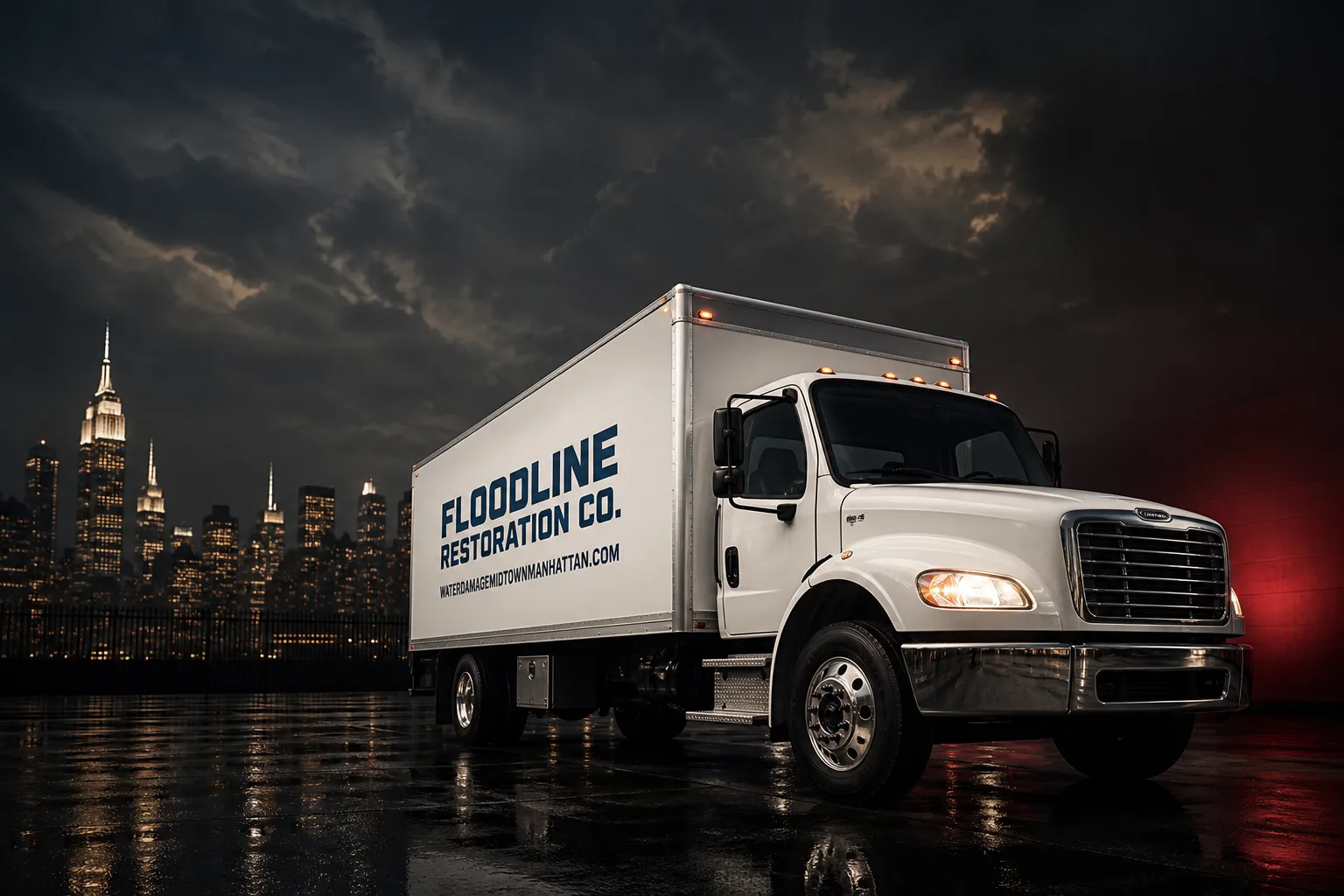
Free visual inspection and a written scope of work before any mitigation begins - photos, moisture readings, and drying logs go in your claim file
The scope we write is the scope we bill. Anything new gets shown to you, in writing, before we touch it.
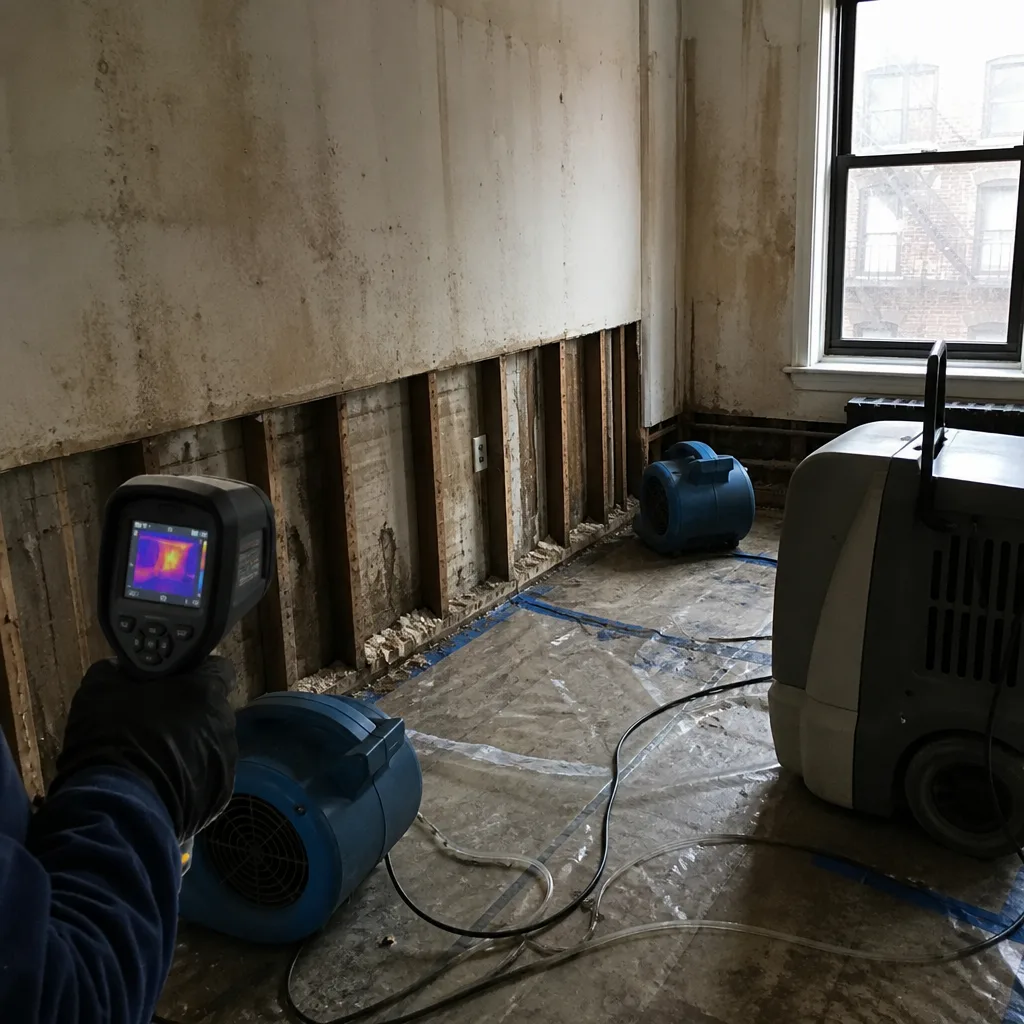 Before
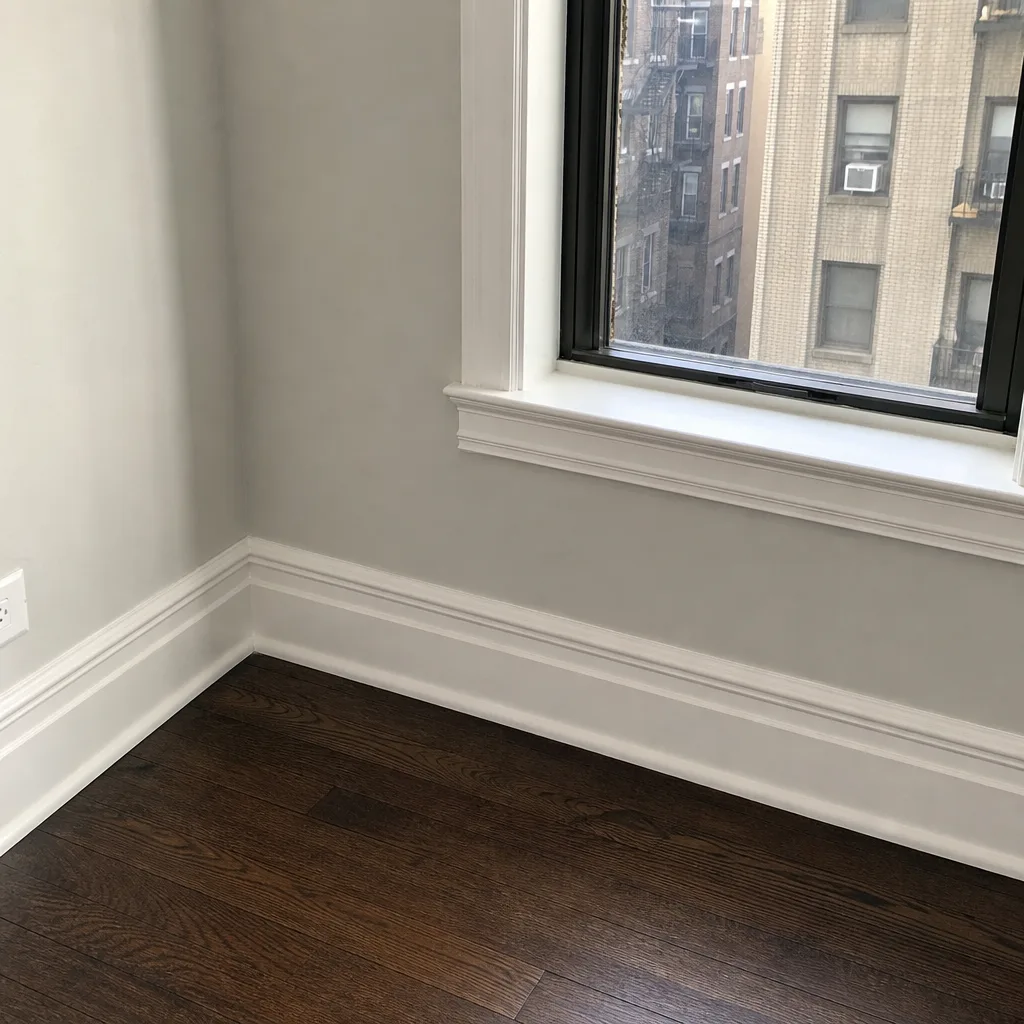 After
After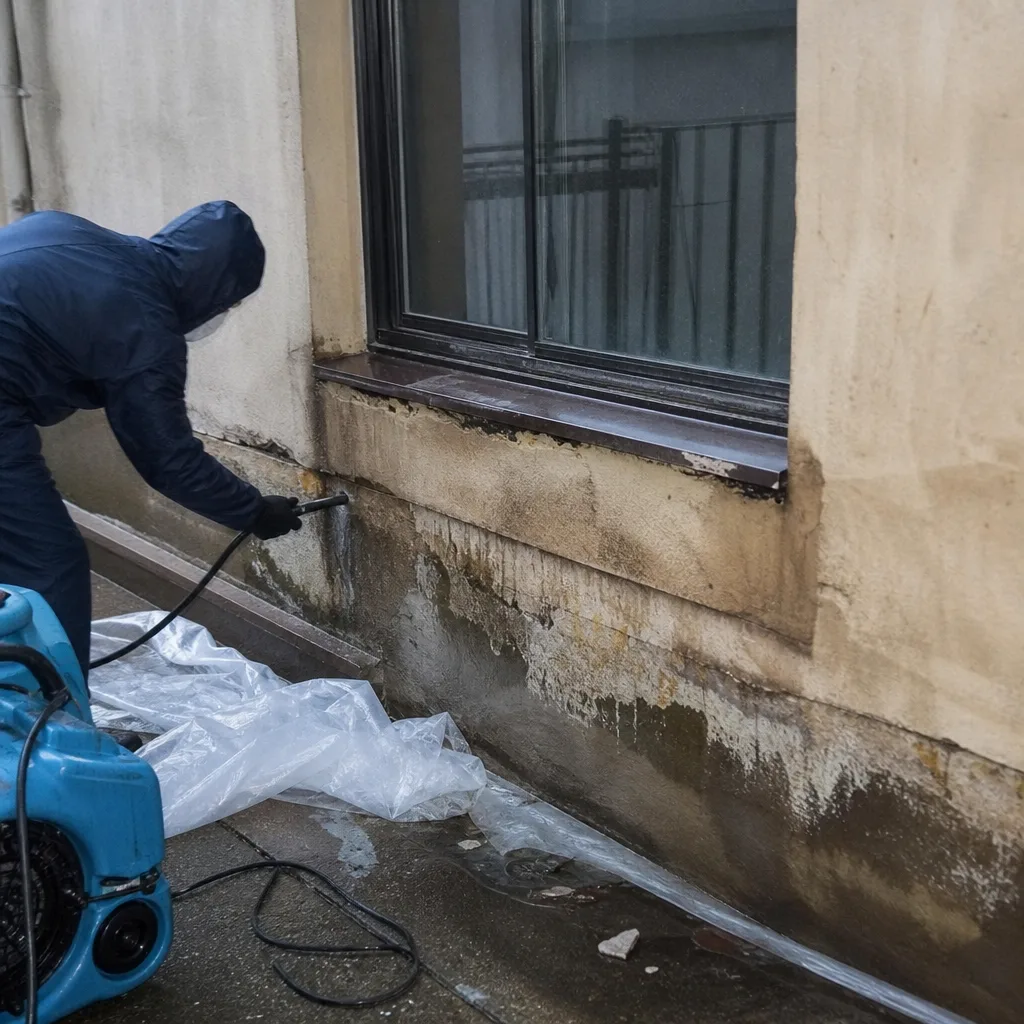 Before
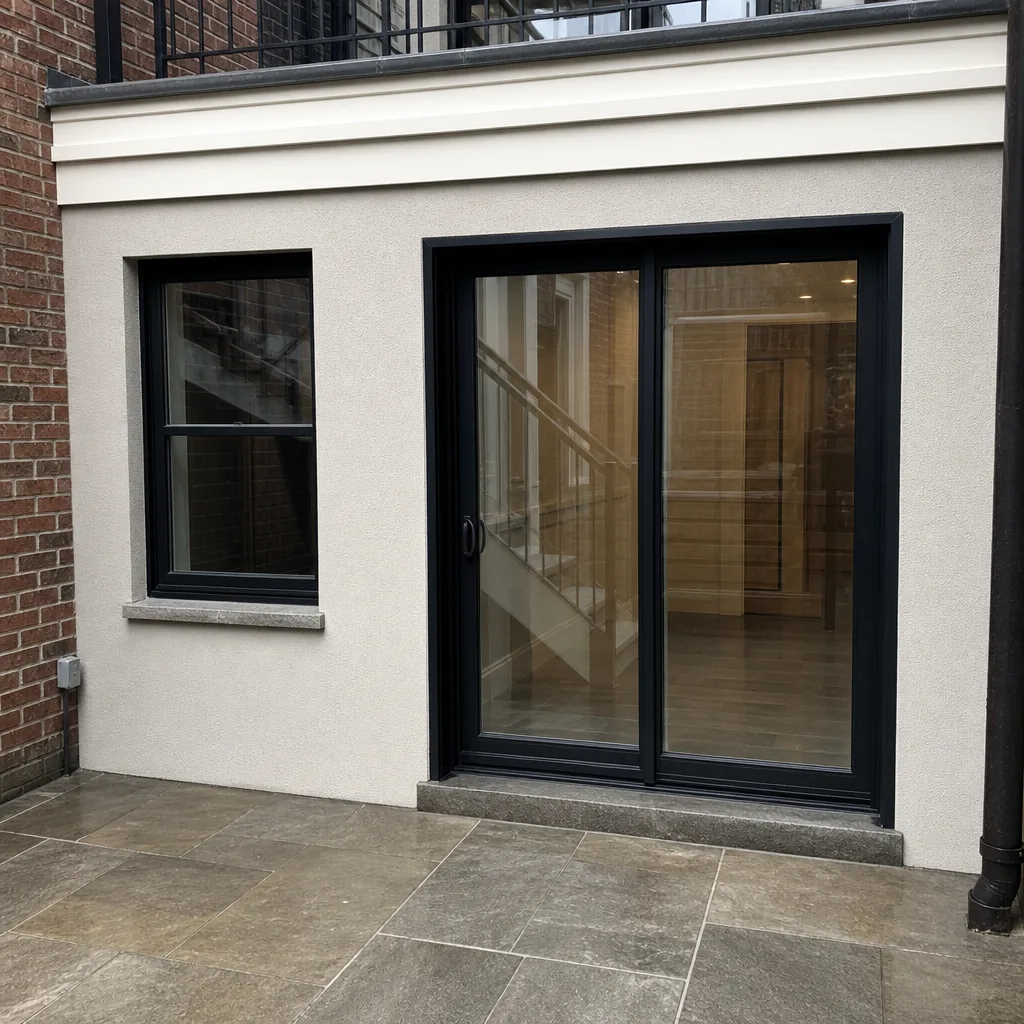 After
After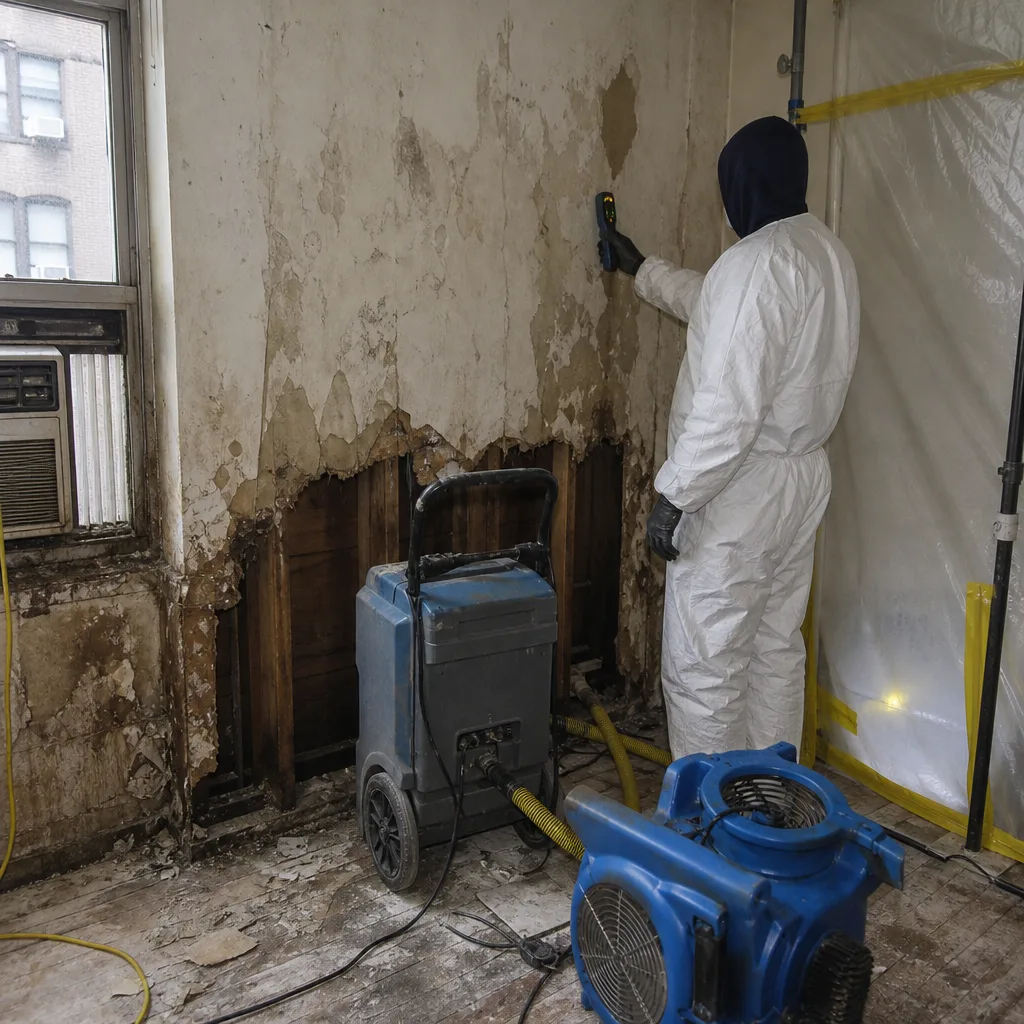 Before
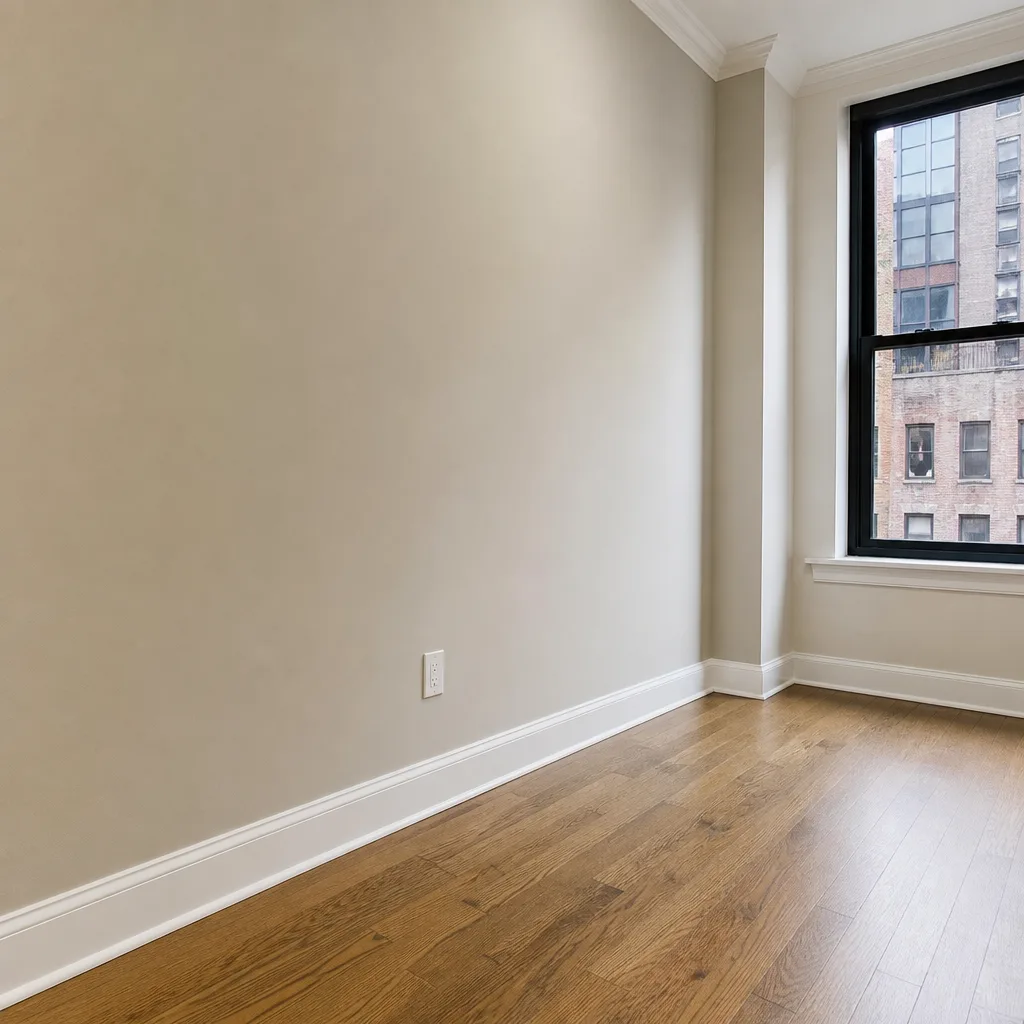 After
After24/7 Emergency Mold Remediation in Long Island City
Mold moves fast in Long Island City, and so do we. When water finds its way into a Hunters Point loft or a Court Square conversion, visible mold can appear within 24 to 48 hours, and the spores behind your walls spread faster than most homeowners realize. Call (518) 314-5660 any hour, any day. A live dispatcher answers, not a recording, and a Floodline Restoration Co. crew familiar with LIC’s building stock gets dispatched to your door. We start with a free visual inspection, then walk you through exactly what we found, what it means, and what comes next. The first hour after a leak matters most. The sooner we set up containment, the less chance mold has to colonize your drywall, your insulation, and the framing behind it. Long Island City’s older industrial conversions give mold plenty of hidden places to grow. We know where to look.
Understanding Mold Remediation Severity in Long Island City Properties
Not all mold problems carry the same weight, and in Long Island City the building itself often tells you how serious the job will be before we open a single wall. A surface mildew patch on gypsum in a 2015 glass tower off Center Boulevard is usually a contained issue, treatable with cleaning and targeted air scrubbing. But the same visual patch inside a 1920s factory conversion near Jackson Avenue can mean moisture has been traveling through original concrete, transite, and plaster for weeks, feeding hidden colonies behind finished surfaces. That’s why we classify severity by moisture source, material type, and air sample results. In LIC’s pre-war loft stock, a slow plumbing leak behind a kitchen wall often carries Category 2 water, the kind that starts clean but turns contaminated as it sits. Mold that develops from that water requires full containment, HEPA air filtration, removing affected porous materials, and clearance testing before the space is safe again. In the newer high-rises, curtain-wall leaks can channel water across multiple floors behind finished walls, meaning what looks like a small spot on one ceiling is actually a building-wide intrusion path. We treat each job by what the moisture map tells us, not by what the visible stain suggests.
Why Long Island City Property Owners Choose Floodline Restoration Co.
- 45-minute response commitment. When you call with an active leak or visible mold in Long Island City, a background-checked, uniformed technician arrives quickly. We don’t make you wait through a call-back queue.
- Live answer, 24 hours a day. A real person picks up the phone at 2 a.m. Same at noon on a Sunday. You’ll never leave a message when water is spreading through your home.
- IICRC-certified crews. Our technicians train to IICRC standards including WRT and AMRT, the credentials that matter for water and mold work. Floodline Restoration Co. has stood behind its work since 2010.
- Free visual inspection. We show up, we look, and we explain what we see. The estimate comes after the inspection, and there’s no charge for it.
- Direct insurance billing. We document everything, send the file to your carrier, and coordinate with the adjuster. You don’t play messenger between two parties.
- One team from start to finish. The same Floodline crew that sets containment handles the drying, the remediation, and the rebuild. No mid-job handoff to a subcontractor you’ve never met.
Our Mold Remediation Process
Inspection & Assessment
We start with a visual walkthrough, checking for moisture sources, visible growth, and hidden intrusion paths. In LIC lofts, that means probing walls, checking under original baseboards, and taking moisture readings from concrete slabs where vapor barriers were never installed.
Containment Setup
Before we open any wall, we seal the affected area with 6-mil poly sheeting and run HEPA-filtered negative air machines. This stops spores from spreading into living spaces during the work.
Moisture Extraction & Drying
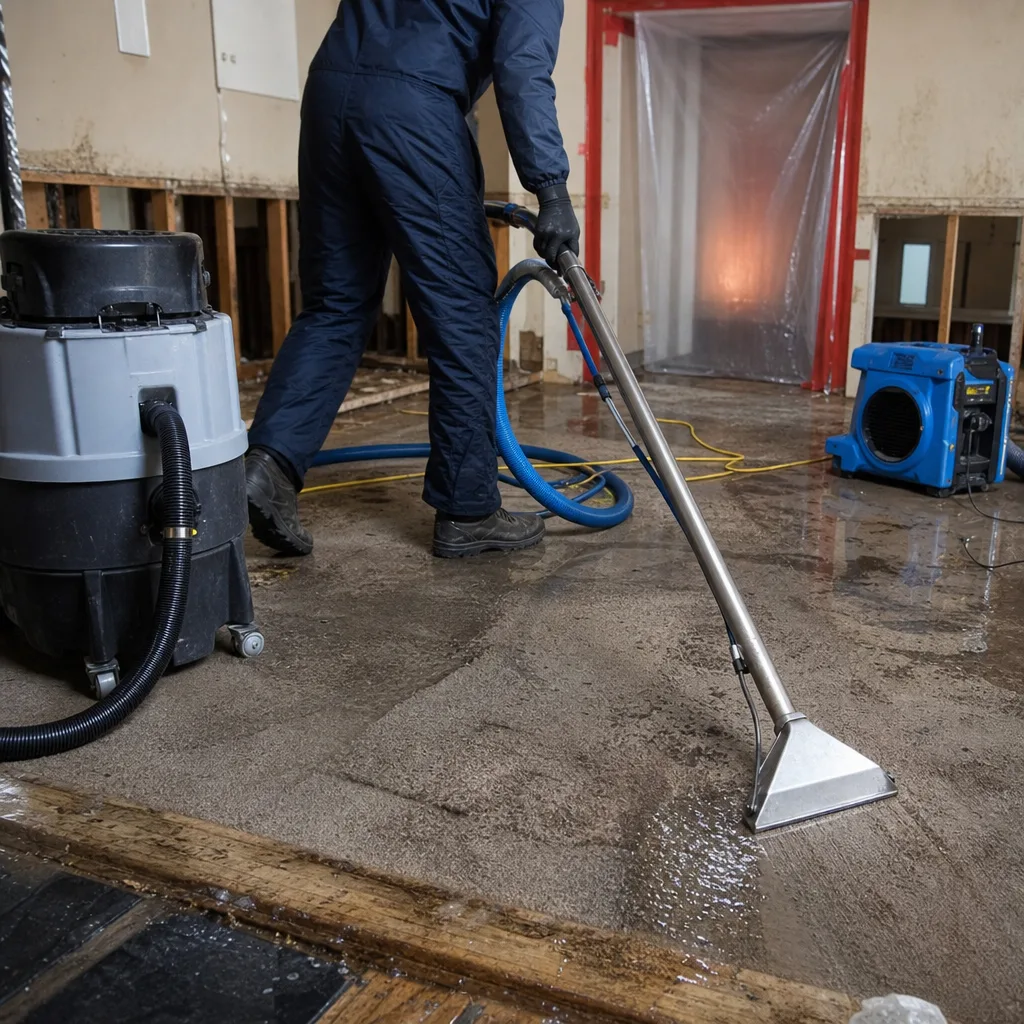
Standing water comes out first, then structural drying begins. For slab-on-grade concrete, we use Injectidry mats and XPOWER air movers. Daily moisture readings track progress until the dry standard is met, not just until the surface feels dry.
Cleaning & Demolition
Porous materials that can’t be cleaned, like soaked drywall and insulation, get removed. Salvageable surfaces get HEPA-vacuumed and treated. In pre-1974 LIC buildings, this is the step where asbestos protocols may apply before cutting.
Antimicrobial Treatment
We apply EPA-registered antimicrobial products to affected framing, concrete, and other structural materials. This addresses mold at the root level, not just cosmetically.
Clearance Testing & Restoration
After remediation, we run post-remediation verification or bring in a third-party industrial hygienist for clearance air sampling. Then we rebuild what we removed, from drywall to trim. The job ends with a moisture log in your hands and the 90-Day Done Right Promise in writing.
Need Emergency Mold Remediation in Long Island City Now?
Crews minutes away, answering live 24 hours a day. The sooner we start, the less it costs.
Working With Your Insurance Company
Most Long Island City homeowners don’t realize their mold remediation is covered under a standard homeowners policy when the mold traces back to a covered water loss, like a burst pipe, a roof drain failure, or storm-driven intrusion. We handle the documentation from hour one. Photos of the affected area before we touch anything. Moisture readings logged every day we’re on site. A line-item scope of work that a claims adjuster can read without a translator. We’ll talk to your carrier directly, adjuster to project lead, so you’re not stuck relaying questions between parties. And because we’ve worked across all of Long Island City’s building types, we know what documentation carriers expect for slab-on-grade concrete drying versus standard wood-frame work. That matters when the claim is being reviewed.
What We Provide Your Insurer
- Thorough documentation of the loss
- Photos of all damage, room by room
- Moisture readings and drying logs
- A detailed, line-item scope of work
- Direct coordination with your carrier
Built for Long Island City’s Loss Calendar
Long Island City’s waterfront position on the East River shapes its mold season differently than inland Queens. January and February bring deep freezes that burst supply lines in older loft buildings, where original plumbing runs through unheated spaces and along exterior walls. Spring thaw pushes groundwater up through basement slabs and foundation cracks, especially in the low-lying areas of ZIP 11101 near the Pulaski Bridge. Summer thunderstorms roll off the harbor with enough force to overwhelm roof drains on flat industrial roofs, the standard on LIC’s converted warehouses. And nor’easters, the same storms that pushed Sandy’s surge into Hunters Point in 2012, can drive water through aging windows and masonry seams in pre-war buildings along Vernon Boulevard. When any of that water sits for more than a day or two, mold follows. The pattern is predictable to anyone who’s worked this neighborhood for years. We schedule extra crews during these windows because we know what’s coming.
Mold Remediation Across Long Island City’s Neighborhoods
Hunters Point, the stretch along the East River from about 44th Drive south to Newtown Creek, mixes converted lofts with newer towers. The conversions there, especially the pre-war factory buildings off Jackson Avenue, give us most of our deep-slab drying work. Court Square sits at the heart of LIC’s commercial district, with a dense cluster of early-20th-century buildings that share party walls. Mold in one unit can travel through shared wall cavities, which is why we often recommend air quality testing in adjacent units when a serious infestation shows up. Queens Plaza and the blocks around Queens Boulevard toward Sunnyside have a mix of converted industrial spaces and mid-rise residential, many with basements that fight persistent humidity year-round. Along Center Boulevard and the high-rise corridor near Gantry Plaza State Park, we see curtain-wall leaks in glass towers that require building-wide moisture mapping before we even set containment. Each area has its own building DNA, and the approach changes with it.
Specialized Mold Remediation Services We Offer in Long Island City
Mold Inspection & Testing
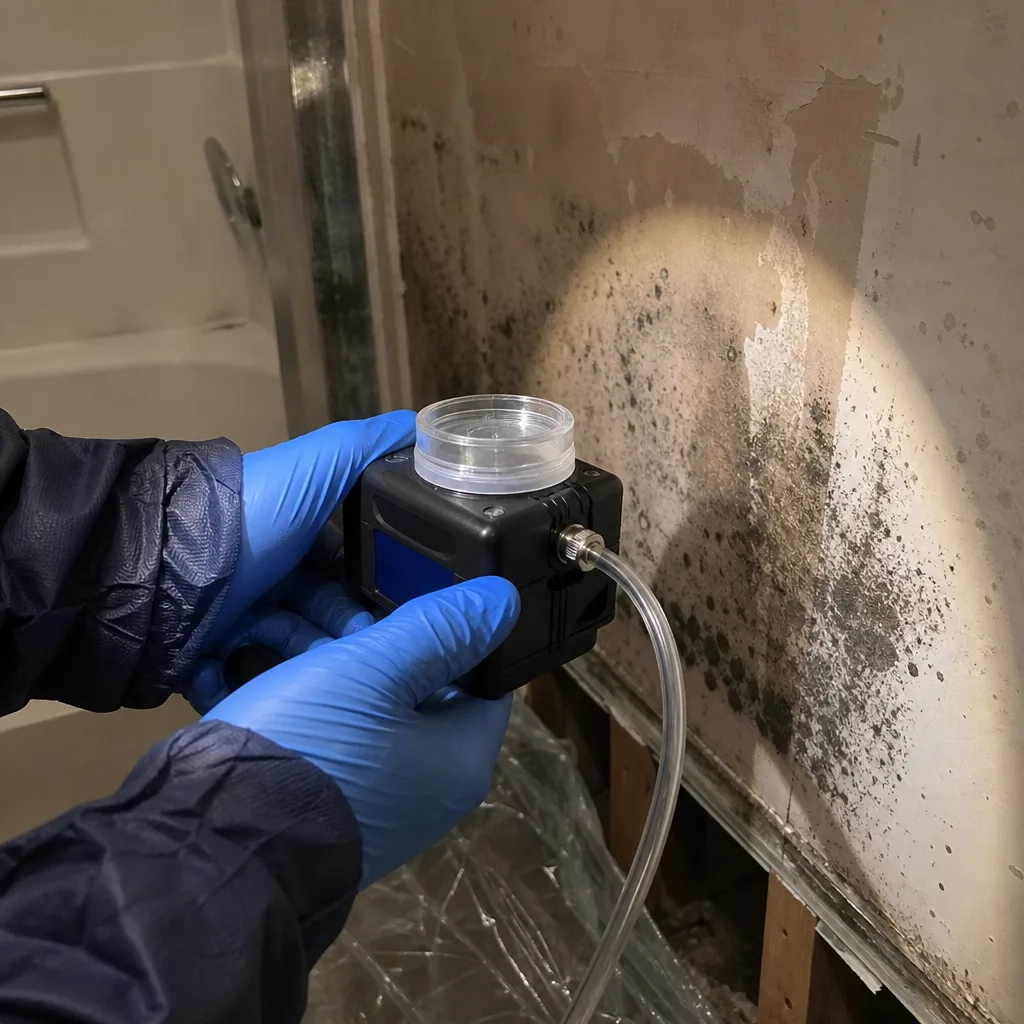
In Long Island City, a visual inspection isn’t always enough. Pre-war lofts hide moisture inside original walls, and glass towers hide it behind curtain-wall finishes. We use moisture meters, thermal imaging, and air sampling to find what’s growing out of sight and to establish baseline spore counts before work begins.
Mold Removal
This is the core of the work: containment, demolition of affected materials, HEPA cleaning, antimicrobial application, and air scrubbing. In LIC’s converted factory spaces, we remove and replace contaminated drywall and insulation while protecting original structural elements that can be saved.
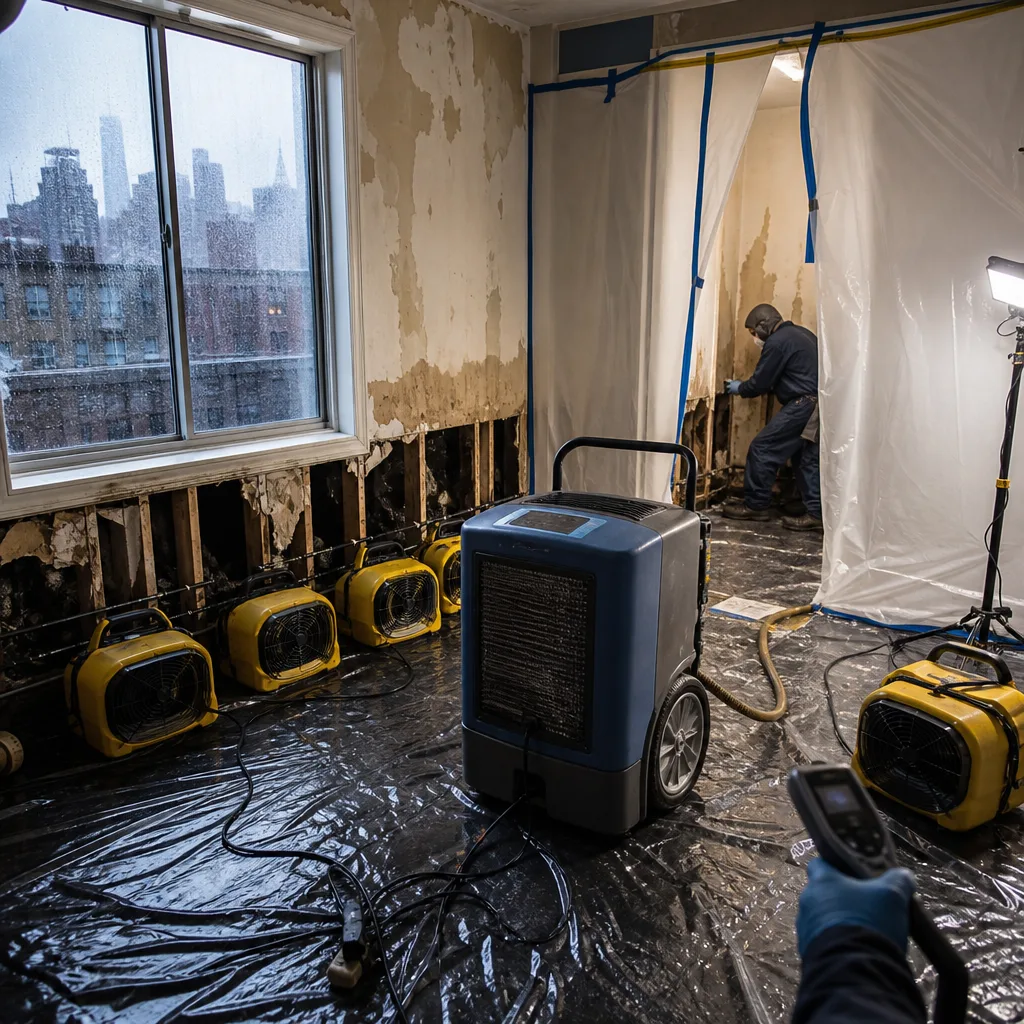
Black Mold Remediation
Black mold, or Stachybotrys, thrives on consistently wet cellulose: drywall paper, wood framing, ceiling tile. LIC’s older buildings with chronic roof leaks and poor ventilation are prime habitat. We treat black mold with full containment and clearance verification, never with a surface wipe and a promise.
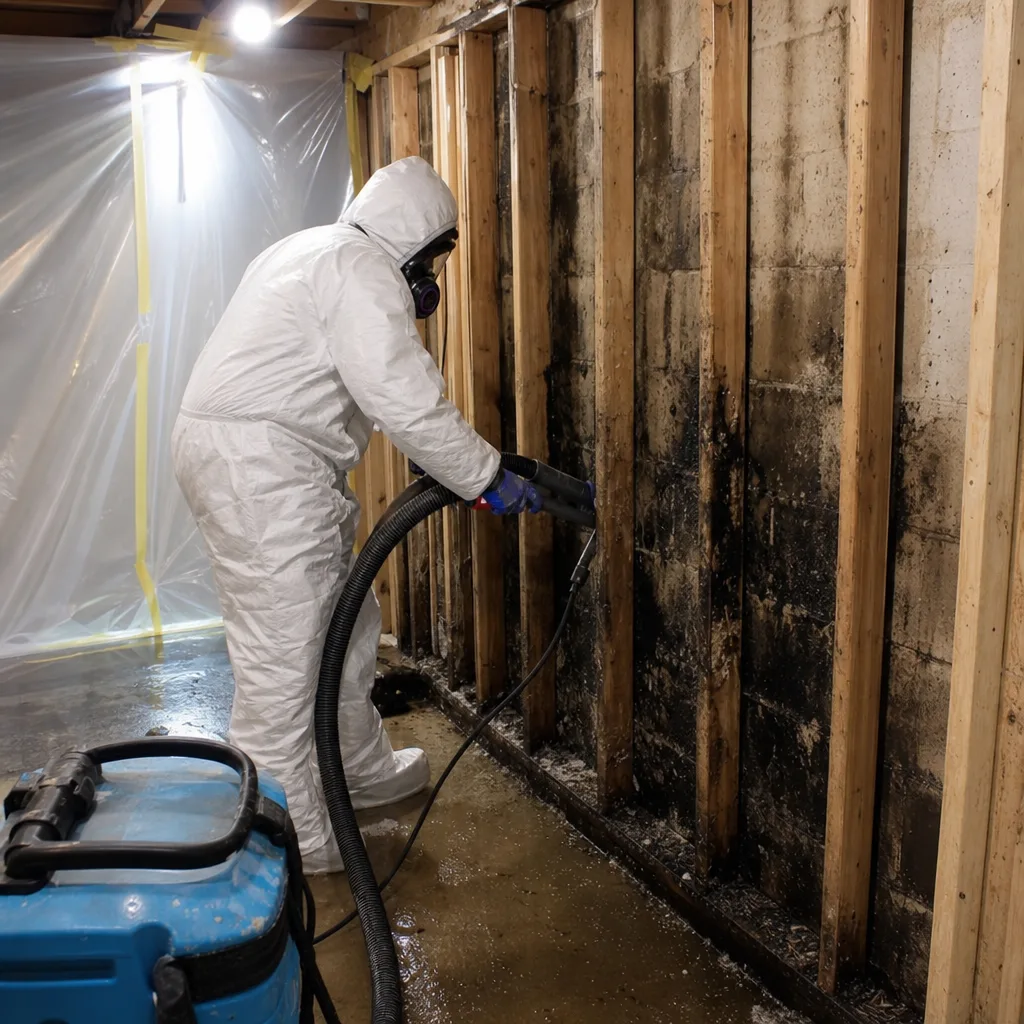
Air Quality Restoration
After remediation, we run HEPA air scrubbers and ventilate the affected space until airborne spore counts drop to acceptable levels. For LIC homeowners with respiratory concerns, especially in tightly sealed newer high-rises, this step is the difference between a finished job and a lingering problem.
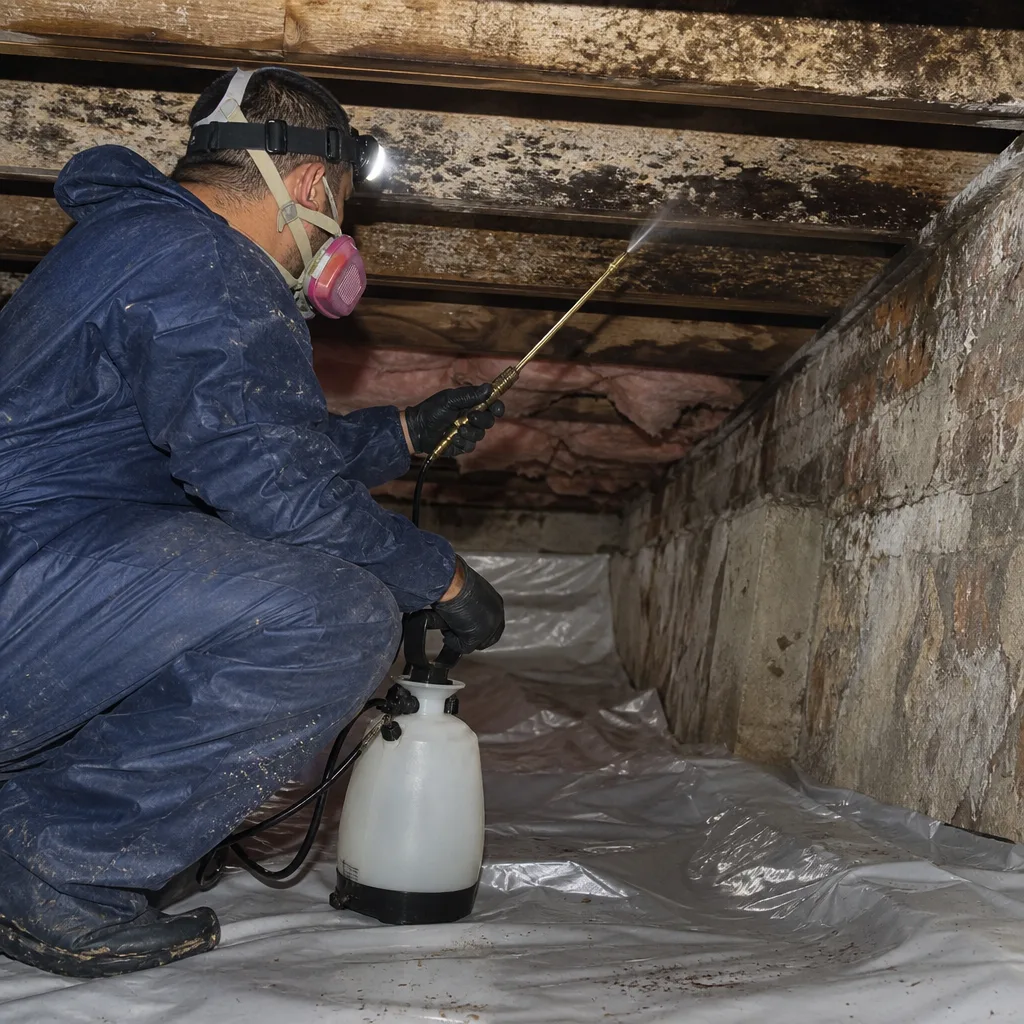
Crawl Space Treatment
Some older Long Island City homes and converted commercial buildings have shallow crawl spaces that never dry out. We treat these with vapor barriers, dehumidifiers, and targeted antimicrobial application, addressing the moisture source rather than just the symptom.
What happens when you call
- 1
A real person answersNo phone trees - you reach a local pro.
- 2
You get an upfront price rangeHonest numbers before anyone is dispatched.
- 3
A background-checked tech heads outLicensed & insured, dispatched right away.
- 4
You approve before work beginsNothing starts until you say go.
Mold Remediation Costs in Long Island City, NY
Mold remediation in Long Island City typically runs between $1,200 and $6,000 depending on the size of the affected area and the building type. A small contained job, like a bathroom wall in a Center Boulevard tower unit, often falls in the $1,200 to $2,500 range. Full-room remediation with containment, demolition, drying, and rebuild in a converted loft near Court Square typically runs $3,500 to $6,000 or more. Deep-slab drying adds cost because it adds time. Running Injectidry mats over slab-on-grade concrete for eight days costs more than drying a wood-framed floor over three. The free visual inspection is how you get a firm number. We don’t quote blind over the phone, and we don’t pad the scope once we’re inside. Most Long Island City mold jobs that trace to a covered water loss are handled through your insurance, with the carrier paying the bill directly. Call (518) 314-5660 to schedule a free inspection and get a written scope before any work begins.
We Also Serve Cities Near Long Island City
We serve Long Island City and the surrounding communities, including Astoria, where our crews regularly handle mold remediation in wood-framed rowhouses that present different challenges from LIC’s concrete lofts. If you own property in either area, the same certified crews and the same 90-Day Done Right Promise apply. Visit our Mold Remediation page to learn more about the full range of services, or see what homeowners across the neighborhood have experienced on our Mold Remediation in Long Island City page.
Serving Long Island City, NY - Our Local Coverage Area
We’re based in the Long Island City area and know this community well. Use the map below to see our service coverage - if you’re nearby, we can almost certainly help.
Long Island City Mold Remediation Questions, Answered
Why does mold remediation in Long Island City converted lofts require checking moisture deep in the concrete slab before signing off?
Because the original concrete slabs in buildings around Court Square and Hunters Point were poured directly on grade with no vapor barrier, moisture wicks upward through the concrete indefinitely after a leak. Surface readings will look dry while moisture still sits inches below, waiting to fuel mold regrowth. We take moisture readings at multiple depths before we close out a job.
Does mold remediation in LIC’s high-rise luxury towers require different containment than in converted lofts?
Yes, because curtain-wall systems channel water behind finished walls across multiple floors. In a converted loft, a leak usually stays within one unit’s wall cavities. In a glass tower, what looks like a single ceiling stain can be part of a building-wide intrusion path, so containment often needs to expand to multiple wall sections and sometimes multiple units.
Are there special asbestos rules for cutting into walls during mold remediation in Long Island City?
Yes. Any building in Long Island City constructed before 1974 falls under NYC DEP asbestos abatement requirements. Many converted factory lofts around Jackson Avenue and Hunters Point retain asbestos pipe insulation, transite panels, and older floor tiles. Cutting into those materials without proper testing and abatement can halt a job and create legal exposure. We test before we cut.
How quickly does mold start in a flooded Long Island City basement near the East River?
Within 24 to 48 hours in most cases. The basements in ZIP 11101 sit close to the water table, so even a minor flood keeps feeding moisture up through the concrete floor. Mold spores that land on wet drywall or cardboard boxes germinate fast. The key is extracting water and starting drying immediately, then checking slab moisture for weeks after.
Why do we need a mold inspection even if we don’t see visible mold after a leak in our LIC loft?
Because in Long Island City’s converted lofts, mold grows inside wall cavities, behind original plaster, and under slab-on-grade concrete where no vapor barrier exists. You won’t see it until it surfaces. Air sampling and moisture mapping catch the problem while it’s still containable. Call (518) 314-5660 to schedule a free inspection.
How fast can you get to a Long Island City home with active mold or a fresh leak?
Our crews serving Long Island City respond in roughly 45 minutes for emergency calls. A live dispatcher answers 24/7, and we dispatch from our New York City office to LIC neighborhoods including Hunters Point, Court Square, and Queens Plaza.
Will my insurance cover mold remediation in Long Island City?
In most cases, yes, when the mold traces back to a covered water loss like a burst pipe, a roof drain failure, or storm-driven intrusion. We document from the first visit and work directly with your adjuster, so the claim moves without you acting as the go-between. For an exact answer on your policy, call us and we’ll help you navigate it.
Can my family stay in the home during mold remediation in LIC?
It depends on the scope. A small contained job with HEPA air scrubbers running usually allows you to stay in other parts of the home. Full-remediation jobs with demolition and widespread contamination often require vacating for a few days. We’ll tell you straight before work starts, and we’ll tell you exactly when it’s safe to return.
Written by Curt Bowman, Owner at Floodline Restoration Co., serving Long Island City since 2010.
When mold takes hold in a Long Island City loft or tower, don’t wait. Call (518) 314-5660 for a free estimate from a crew that knows this neighborhood’s buildings. We’re here around the clock, and we stand behind every job with the 90-Day Done Right Promise.