

Free visual inspection and a written scope of work before any mitigation begins - photos, moisture readings, and drying logs go in your claim file
The scope we write is the scope we bill. Anything new gets shown to you, in writing, before we touch it.
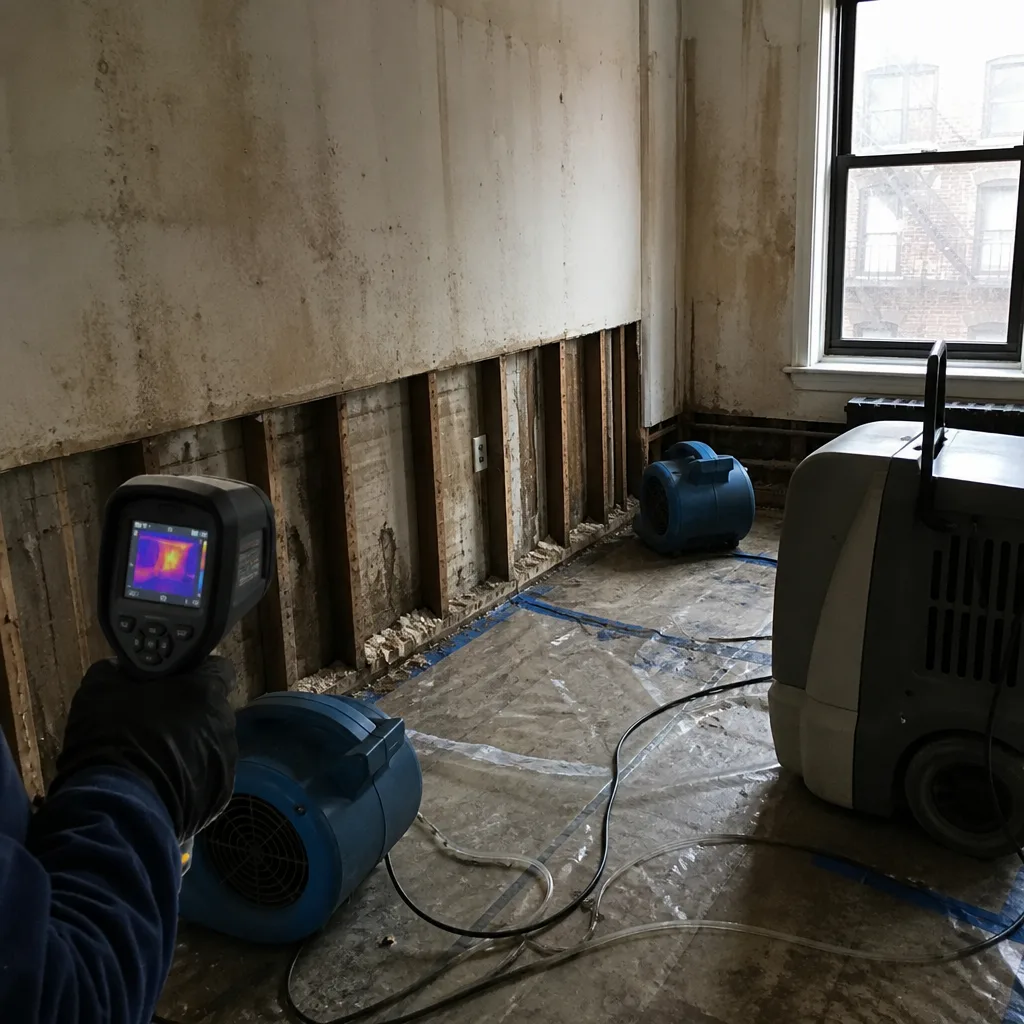 Before
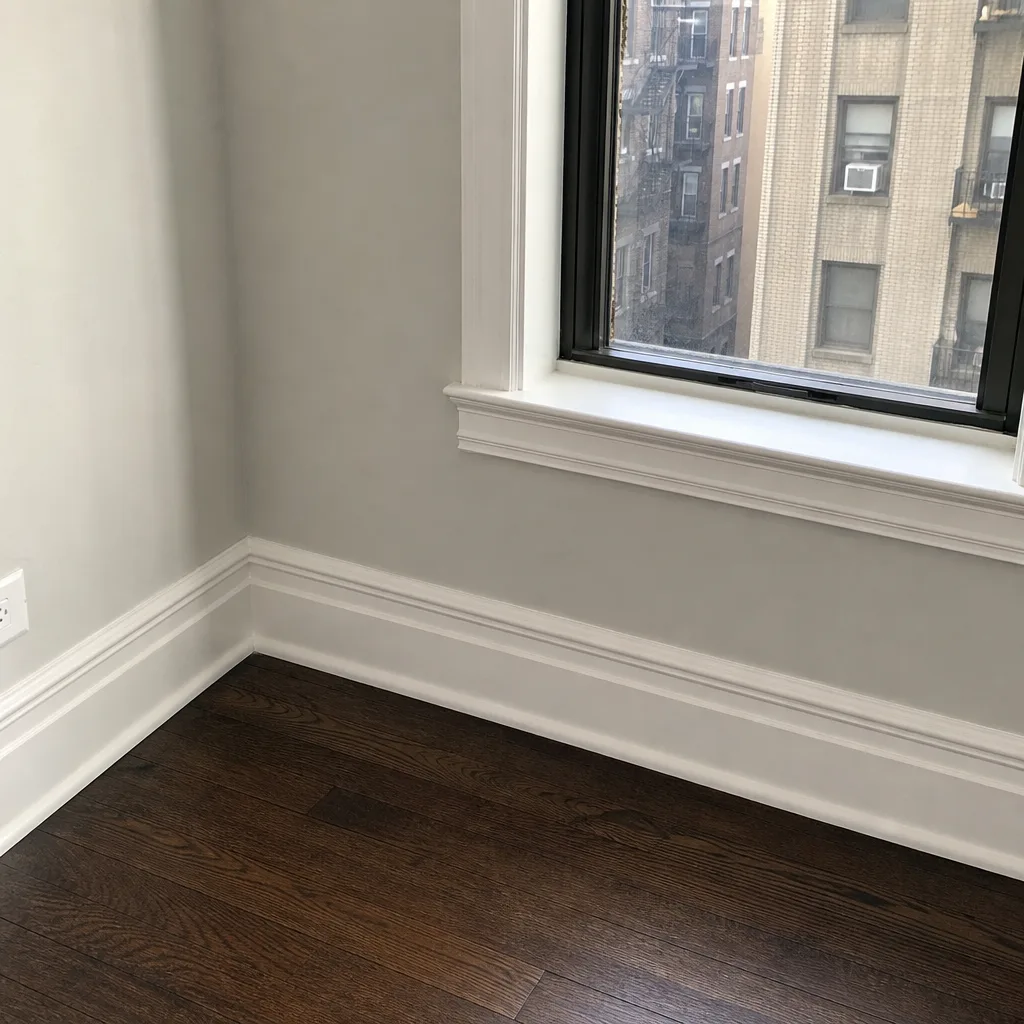 After
After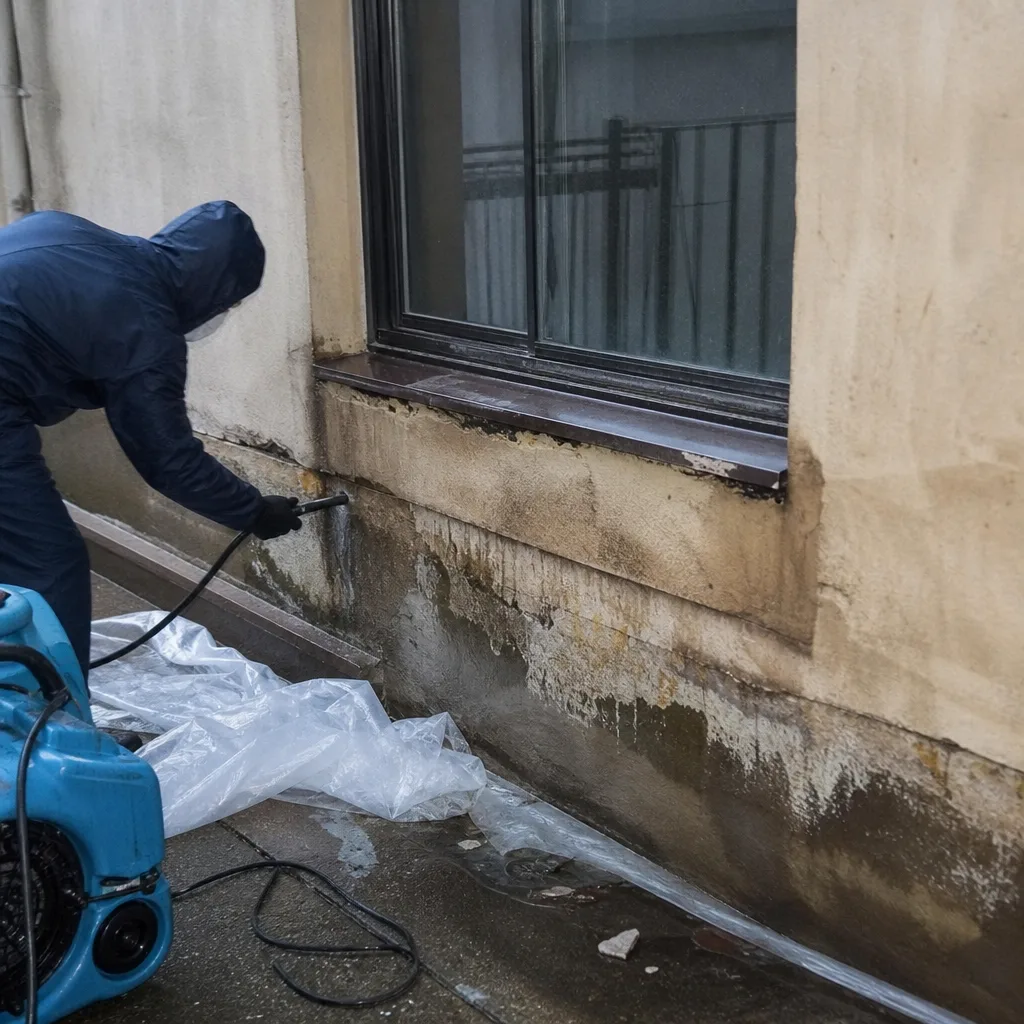 Before
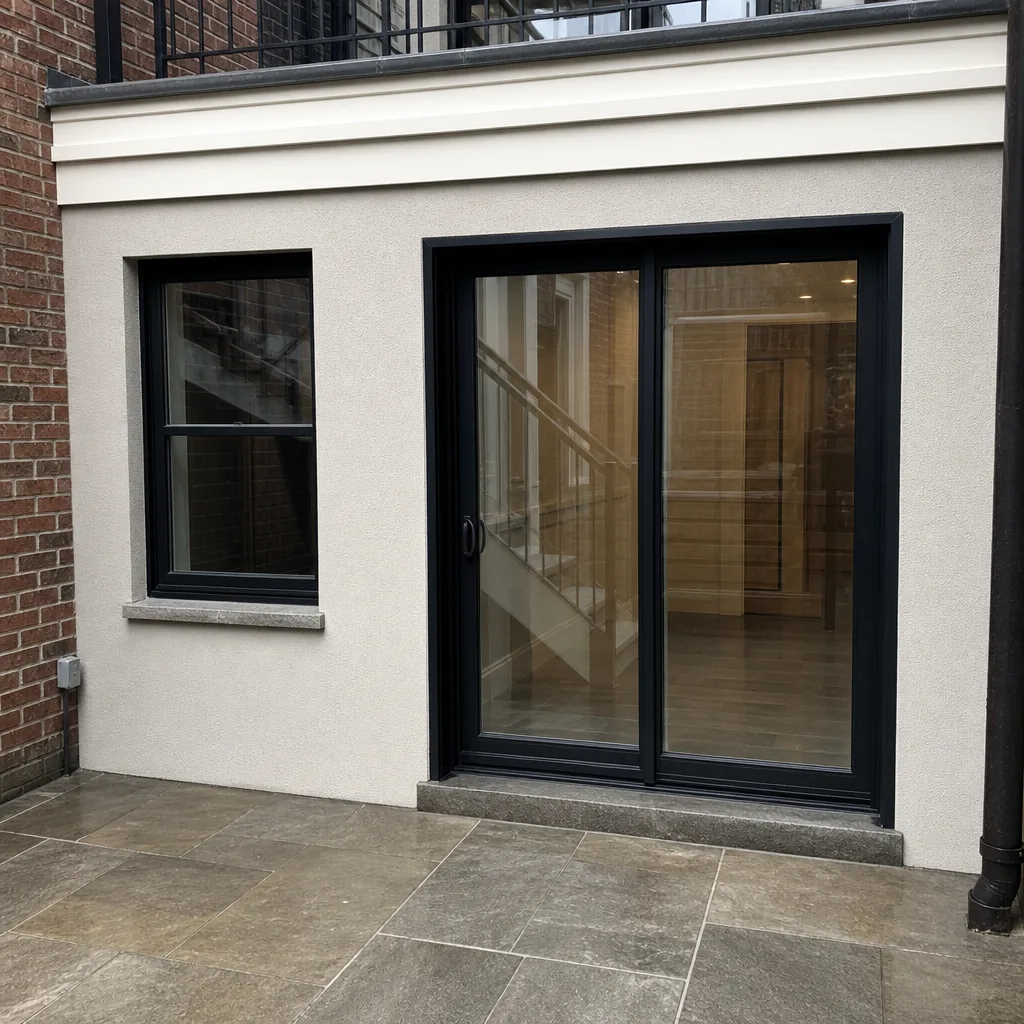 After
After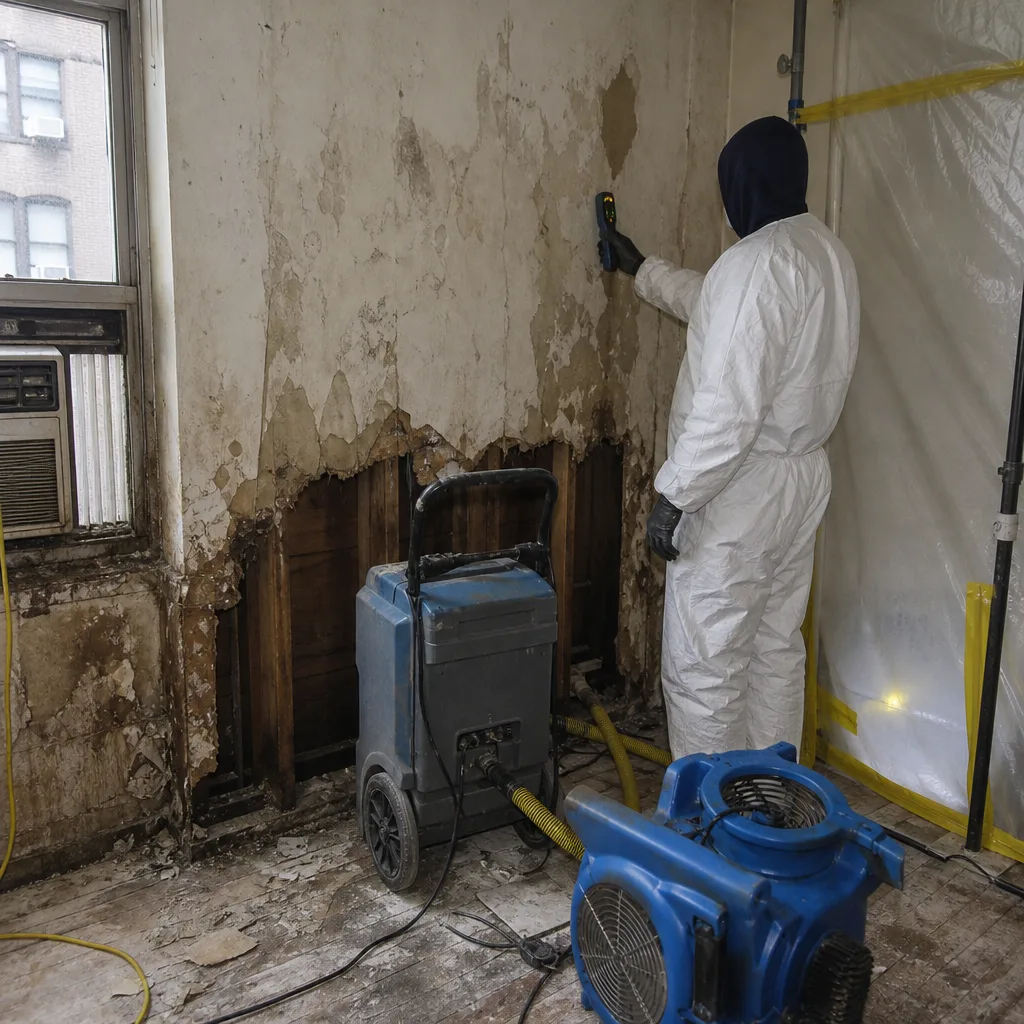 Before
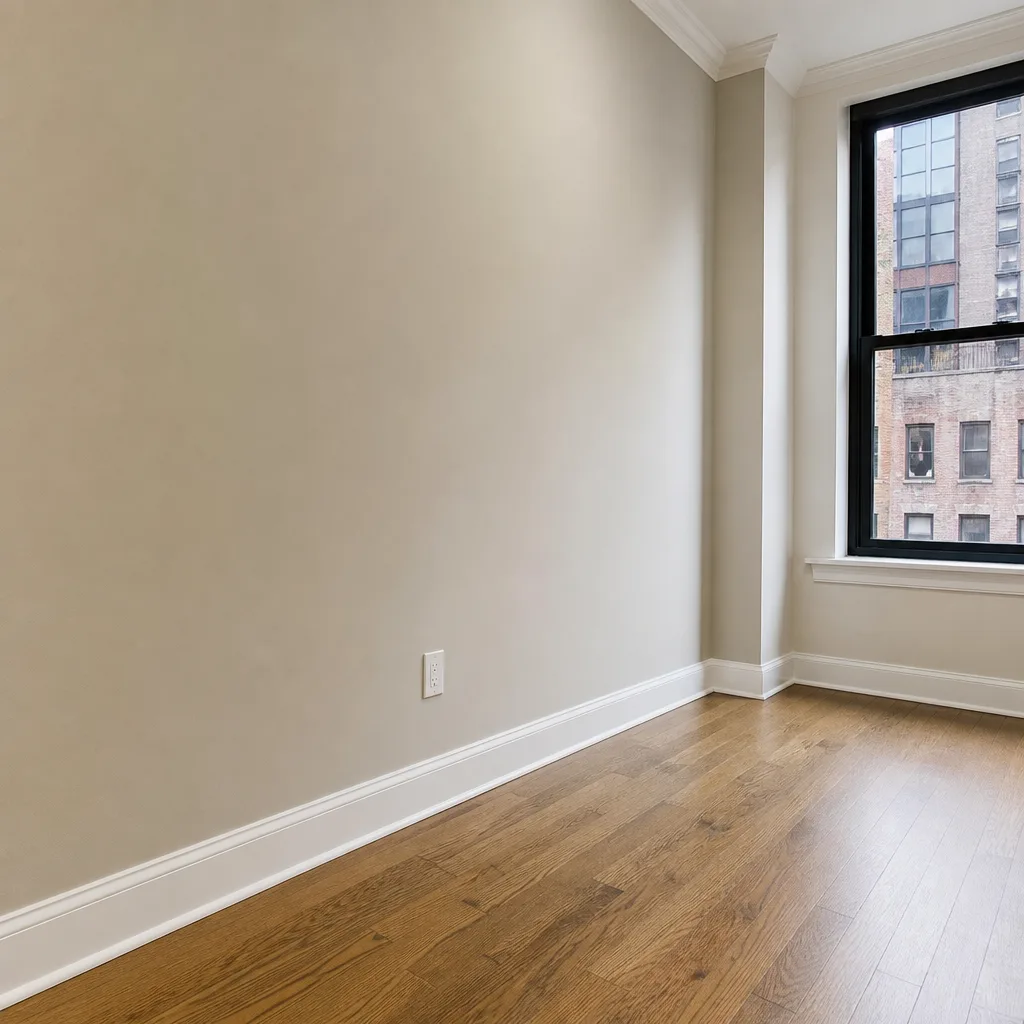 After
After24/7 Emergency Storm & Disaster Restoration in Greenpoint
When a nor’easter rips through Greenpoint or a squall line tears roofing off a 1920s rowhouse, you need a crew that answers the phone at 2 a.m. and gets boots on the ground fast. Call (518) 314-5660 and a live dispatcher picks up, every time. No recording, no callback list. We dispatch certified crews into Greenpoint around the clock, because the first hour after wind damage or floodwater intrusion determines whether you’re looking at three days of structural drying or a full gut-and-rebuild.
Our first-visit assessment is free. We look at the roof, the sheathing, the plaster, the basement slab, and we tell you straight what needs to happen. No pressure. The sooner extraction and board-up start, the less the job costs, and the less damage compounds behind horsehair plaster and original joists that have stood since the Tammany Hall era. Greenpoint’s housing stock will not wait for Monday morning.
Understanding Storm & Disaster Restoration Severity in Greenpoint Properties
Greenpoint’s building stock shapes every storm restoration decision we make. The neighborhood is dense with 1880s to 1920s brick rowhouses, three-to-five-story tenement walk-ups, and converted industrial loft buildings. Most retain their original horsehair plaster walls, galvanized or cast-iron supply lines, and asbestos-containing floor tiles and pipe insulation. When wind tears off a roof membrane or drives rain around a window header, water does not pool politely on the surface. It soaks into plaster keys, wicks through a century of dust and coal soot inside wall cavities, and saturates original wood lath.
We categorize water the same way every IICRC-certified firm does: Category 1 is clean water from a broken supply line or rain that has not touched building materials. Category 2 carries significant contamination: roof runoff that picked up pigeon guano, dirt, and whatever was on the roof deck before it entered the home; a flooded basement where water pushed up through a slab and picked up residual petroleum from the plume beneath the neighborhood is often Category 3. That classification determines everything downstream: whether plaster gets structurally dried or removed, whether wall cavities need sealed containment, whether foam insulation meets the standard or has to be cut out.
Moisture mapping is not optional in these buildings. We use thermal imaging and penetrating moisture meters to trace water migration behind plaster that looks dry to the eye but is holding 20 percent moisture inside. The dual-waterway geography of Greenpoint, flanked by the East River and Newtown Creek, means ambient humidity stays high. It is the reason mold can colonize behind a century-old plaster wall within 48 hours, and why commercial dehumidification matters more here than almost anywhere else in the borough.
Why Greenpoint Property Owners Choose Floodline Restoration Co.
- 45-minute response commitment for Greenpoint calls. When you call with storm damage, we give you a live dispatch window, and the crew shows up with equipment on the truck that same visit. Not an estimator who returns days later; a working crew.
- 24/7 live answer, every single time. A real person picks up at 2 a.m., not an answering service or a bot. Floodline Restoration Co. has operated that way since Curt Bowman founded it in 2010 around a dispatch board, not a sales desk.
- IICRC-certified crews trained to WRT, FSRT, and AMRT. Our technicians carry water restoration, fire and smoke, and applied microbial remediation certifications, and they follow EPA lead-safe and asbestos-abatement protocols on every pre-1980s property.
- Free visual inspection before any commitment. We walk the damage with you, explain what we’re seeing, and put the scope in writing. If you decide not to proceed, you owe nothing.
- Direct insurance billing. We document everything from the first hour, build a line-item scope using industry-standard estimating software, and bill your carrier directly. You never play messenger.
- One team from extraction to reconstruction. The same Floodline crew that reads the moisture map on day one handles daily readings, hands the log to you and your adjuster, and rebuilds what needs rebuilding. No mid-job handoff.
Our Storm & Disaster Restoration Process
Inspection & Assessment
We arrive with thermal imaging cameras, penetrating and non-penetrating moisture meters, and hygrometers to map where the water went and where it’s heading. For Greenpoint properties built before 1980, we flag suspected lead paint and asbestos-containing materials immediately, because testing changes the sequence of every step after.
Extraction & Stabilization
Before any drying starts, standing water is extracted with truck-mounted units or high-volume portable extractors. We tarp damaged roofs, board up broken windows and doors, and secure the envelope so no more water enters. Stabilization shuts off the damage meter.
Drying & Dehumidification
Dri-Eaz, Phoenix, and XPOWER air movers go in alongside professional dehumidifiers sized for the cubic footage and starting moisture load. In a Greenpoint rowhouse with horsehair plaster and closed cavities, this often means injectidry systems pushing dry air directly into wall cavities. Daily moisture readings get logged until the dry standard is met.
Cleaning & Sanitization
Everything the water touched gets cleaned or disposed of properly. Hard surfaces are scrubbed and treated with professional-grade antimicrobials. Porous materials that cannot be dried - saturated plaster, soaked insulation, some 1920s-era wood lath - get cut out and bagged for disposal.
Asbestos & Environmental Compliance
This is the step that catches outsiders off guard in Greenpoint. Before we open a storm-damaged wall on a pre-1980s building, we confirm asbestos testing on pipe insulation, floor tiles, and plaster. When basement flooding shows signs of groundwater intrusion, we coordinate with DEP and arrange environmental sampling. Skipping this step can halt a job mid-mitigation and trigger violations.
Repairs & Restoration
The same Floodline crew that did the extraction rebuilds the damage: new drywall, lath and plaster repairs, flooring, trim, paint, cabinetry if needed. We stand behind the work with the 90-Day Done Right Promise, in writing, no arguments.
Need Emergency Storm & Disaster Restoration in Greenpoint Now?
Crews minutes away, answering live 24 hours a day. The sooner we start, the less it costs.
Working With Your Insurance Company
Insurance claims for storm and disaster damage in Greenpoint follow a pattern: wind damage is covered, flood damage usually is not unless you carry a separate flood policy through the NFIP. Either way, your first call after the emergency is to us, and we document everything before you ever talk to the adjuster.
Our crew photographs every room, every damaged surface, every piece of debris before it moves. We log moisture readings from the first hour through the final dry standard, and we build a line-item scope of work in the same format your carrier’s adjusters expect. When the adjuster calls, we talk to them directly. You don’t summarize, translate, or chase anyone. From first extraction to final invoice, Floodline Restoration Co. handles the carrier communication. It’s how we’ve handled thousands of claims since 2010.
What We Provide Your Insurer
- Thorough documentation of the loss
- Photos of all damage, room by room
- Moisture readings and drying logs
- A detailed, line-item scope of work
- Direct coordination with your carrier
Built for Greenpoint’s Loss Calendar
Greenpoint’s storm damage season runs November through April, with distinct peaks. Nor’easters in December and January drive wind-driven rain into rowhouse roofs, parapets, and window headers. The same storms push storm surge up Newtown Creek and into low-lying blocks near the waterfront. January deep freezes burst galvanized supply lines in unheated tenement basements, and when the thaw comes, the water that pooled behind frozen pipes lets go all at once. Spring brings the second wave: saturated soil, higher water tables, and basement seepage through fieldstone foundations and old brick party walls. Summer thunderstorms in July and August hit fast, flooding streets and forcing water under basement doors. Greenpoint’s real storm calendar is a series of overlapping risk windows, and each one demands a restoration firm that has seen the neighborhood’s buildings fail and knows what that failure looks like before it gets worse.
Storm & Disaster Restoration Across Greenpoint’s Neighborhoods
Our crew knows Milton Street for what it is: three-story brick rowhouses built tight to the sidewalk, most of them with original tin cornices and parapet walls that catch wind like a sail. After a nor’easter tore loose a section of roof membrane on one of those Milton Street rowhouses, our crew arrived within the hour to tarp the exposed deck and perform emergency board-up. The wind-load damage had already allowed rain to saturate the top-floor ceiling. Moisture mapping confirmed Category 2 water in the original plaster. We set up Dri-Eaz dehumidifiers and air movers for structural drying, and coordinated with a local lab for asbestos testing on the original pipe insulation before any tear-out. The owner avoided a full pack-out, and we returned the pre-loss condition within five days.
Up near McCarren Park, the housing shifts to mid-rise co-ops and converted lofts, where storm damage usually shows up as wind-driven leaks around roof drains and bulkhead doors rather than basement flooding. Along Commercial Street and the Industrial Business Zone, the old factory floors sit low and take on water fast when Newtown Creek rises during coastal storms. Each patch of Greenpoint has its own failure signature. We plan routes through Greenpoint Avenue, McGuinness Boulevard, and Manhattan Avenue so response time stays inside the commitment we make, even in bad weather.
Specialized Storm & Disaster Restoration Services We Offer in Greenpoint
Emergency Board-Up
Boarded windows and doors do not just keep the rain out. They keep our team and your building safe while the next step happens. On Greenpoint rowhouses, boarding up broken sashes means anchoring plywood to original masonry reveals, not just nailing into trim. We cut, fit, and secure everything so the building envelope holds until permanent repairs are permitted and scheduled.
Roof Tarping
Storm winds tear off roof membranes in the same predictable places on Greenpoint roofs: the leeward corners, the parapet lines, the flashing seams around chimneys and vent pipes. We carry heavy-duty polyethylene, furring strips, and enough ladders and harnesses to tarp a three-story rowhouse roof quickly. Tarping is an emergency measure, not a permanent fix. It buys the time needed for proper membrane repair or replacement.
Storm Damage Cleanup
After the wind stops and the water recedes, someone has to deal with what is left: soaked drywall, fallen plaster, broken glass, saturated insulation, downed branches on a rooftop deck. Our crew does the cleanup in the right sequence, tagging what’s unsalvageable and documenting it for your carrier before it goes to the curb.
Flood Damage Restoration
When Greenpoint basements flood, the question is almost never whether to dry them. The question is what the water carried in. Groundwater rising through a slab in this neighborhood can carry dissolved petroleum from the plume beneath the surface. If the water has an oily sheen, a fuel odor, or an unknown source, our crews collect samples and hold containment until testing tells us it is not a hazmat scenario. That is not how things are done in Williamsburg or Long Island City. It is how they are done here.
Debris Removal
Storm debris piles up quickly: torn roofing, broken tree limbs, sections of fence, the occasional airborne patio umbrella impaled through a window well. We separate storm debris from building material that needs to stay on site for insurance documentation, and we haul the rest. The goal is to clear access for the restoration work while keeping the adjuster’s paper trail intact.
What happens when you call
- 1
A real person answersNo phone trees - you reach a local pro.
- 2
You get an upfront price rangeHonest numbers before anyone is dispatched.
- 3
A background-checked tech heads outLicensed & insured, dispatched right away.
- 4
You approve before work beginsNothing starts until you say go.
Storm & Disaster Restoration Costs in Greenpoint, NY
Storm and disaster restoration in Greenpoint runs a wide range because the damage itself runs a wide range. What moves the number is the extent of hidden water migration, the presence of asbestos containing materials, and whether groundwater contamination is in play.
Entry-level jobs like a single boarded window and minor tarping run $400 to $900. A standard roof tarp over a rowhouse section costs $800 to $1,800, depending on roof pitch, access, and how much membrane has to be secured. Emergency board-up of multiple openings on a three-story building typically lands between $1,500 and $4,000. Full storm damage cleanup with structural drying, containment, and environmental testing on a Category 2 or 3 flooded basement in Greenpoint generally falls in the $8,000 to $35,000 range. Wind-damaged wall remediation with asbestos testing, plaster repair, and repainting runs $6,000 to $25,000 depending on scope.
Most property owners pay a deductible and let us bill the carrier directly. If the loss is flood-related and there is no flood policy, the full scope often shifts out of pocket. That is exactly why we do a free visual inspection and put a firm, line-item scope in writing before any work begins. Call (518) 314-5660 and we will walk you through it, straight.
We Also Serve Cities Near Greenpoint
Our crews cover the surrounding neighborhoods in the same 45-minute commitment: Storm & Disaster Restoration for Midtown Manhattan, Midtown West, Murray Hill, and Washington Square. If you’re on the border of Greenpoint or just across the creek, the same live dispatch line rings us, and the same crew responds.
Greenpoint Storm & Disaster Restoration Questions, Answered
How does Greenpoint’s petroleum plume affect storm flood restoration in basements?
The plume beneath Greenpoint means floodwater coming up through a basement slab can carry dissolved petroleum, which changes restoration from cleanup to a potential hazmat scenario. We look for an oily sheen and fuel odor, sample the water when there’s any doubt, and hold containment until test results confirm the contamination level. DEP coordination is often required. Call (518) 314-5660 and we’ll tell you what your specific basement looks like before any work proceeds.
Do I need asbestos testing before repairing wind-damaged walls in a Greenpoint rowhouse?
Yes. Pre-1980s Greenpoint buildings routinely contain asbestos in pipe insulation, floor tiles, and some plaster compounds. Local regulations require testing before any tear-out or disturbance of those materials. We arrange the lab work, and we factor the results into the scope and schedule so the job does not stall mid-demolition.
What wind rating should storm-rated entry doors have in Greenpoint?
Greenpoint sits in a wind zone that demands exterior doors rated for at least 110 mph wind loads when they are replaced, depending on exposure. For doors on waterfront or high-exposure facades, we recommend units with impact-rated glazing and reinforced frames. A failing door before a nor’easter is a liability; a properly rated door is a structural asset.
How quickly does mold start after a roof leak in a Greenpoint brick building?
In Greenpoint’s humidity, mold can colonize behind original plaster within 48 hours of a roof leak, especially in the warm months. That is why the first 48 hours matter more than the next two weeks. The faster your roof is tarped and structural drying starts, the less likely you’ll face remediation downstream.
Do storm restoration crews in Greenpoint need to coordinate with DEP for flood cleanup?
When groundwater contamination from the petroleum plume is suspected, yes, DEP notification and testing are standard practice. Our crews carry environmental sampling kits as standard equipment in the truck in this neighborhood. We handle the coordination and the paperwork. You should not have to.
How fast can you actually get to my Greenpoint property?
We commit to 45 minutes from the time you call (518) 314-5660. In the middle of a nor’easter, that commitment still holds. The crew that arrives has equipment on the truck, not just a clipboard.
Will my insurance cover storm damage cleanup?
Wind damage is generally covered by standard homeowners policies. Flood damage usually requires a separate NFIP policy. Either way, we document everything from the first hour and coordinate directly with your adjuster, so the claim moves on facts, not on your memory of the damage.
Can we stay in the home during storm damage restoration?
It depends on severity. Minor roof leak drying usually allows occupancy. A flooded basement with possible petroleum contamination or a Category 3 water event may require temporary relocation until containment and clearance testing are complete. We tell you the truth on the first visit, before you make any decisions.
Serving Greenpoint, NY - Our Local Coverage Area
We’re based in the Greenpoint area and know this community well. Use the map below to see our service coverage - if you’re nearby, we can almost certainly help.
Call Floodline Restoration Co. Now
If a storm has just damaged your Greenpoint property, the worst thing you can do is wait. Call (518) 314-5660. A live dispatcher answers, and a Floodline Restoration Co. crew starts moving toward Greenpoint before you hang up. We bring 42 years of combined local experience, IICRC-certified technicians, and the 90-Day Done Right Promise in writing. The line the storm left is where we start.
Written by Curt Bowman, Owner at Floodline Restoration Co., serving Greenpoint and the surrounding New York City boroughs since 2010.