
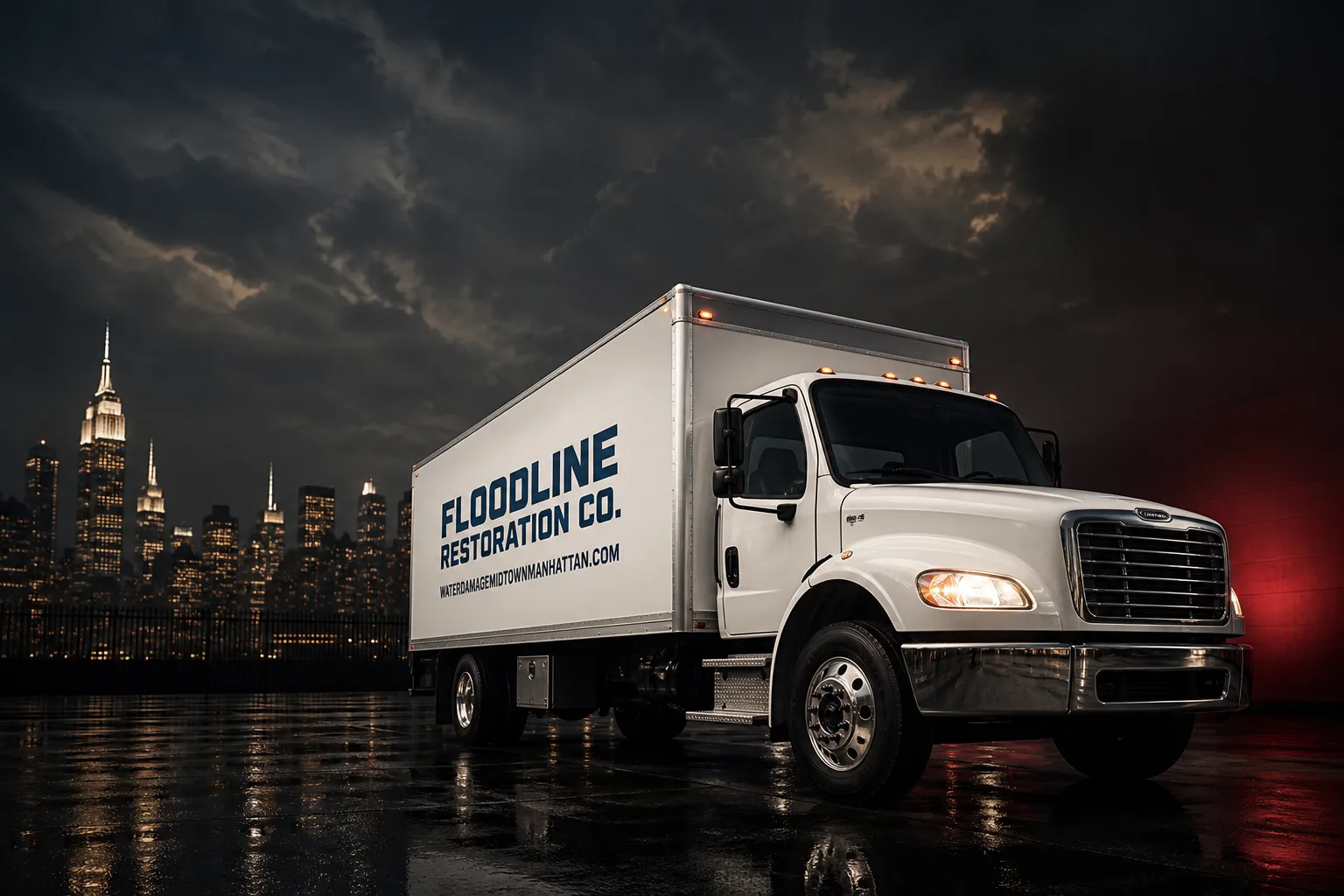
Free visual inspection and a written scope of work before any mitigation begins - photos, moisture readings, and drying logs go in your claim file
The scope we write is the scope we bill. Anything new gets shown to you, in writing, before we touch it.
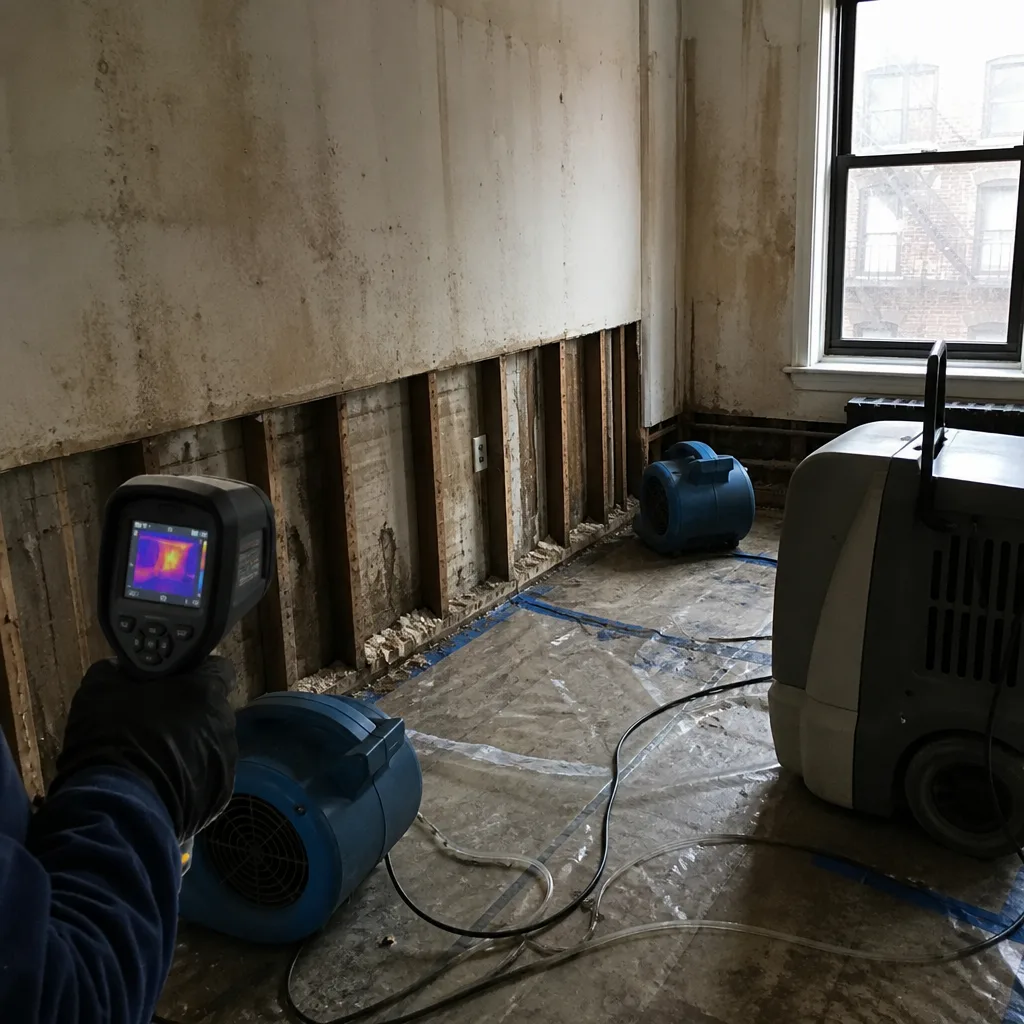 Before
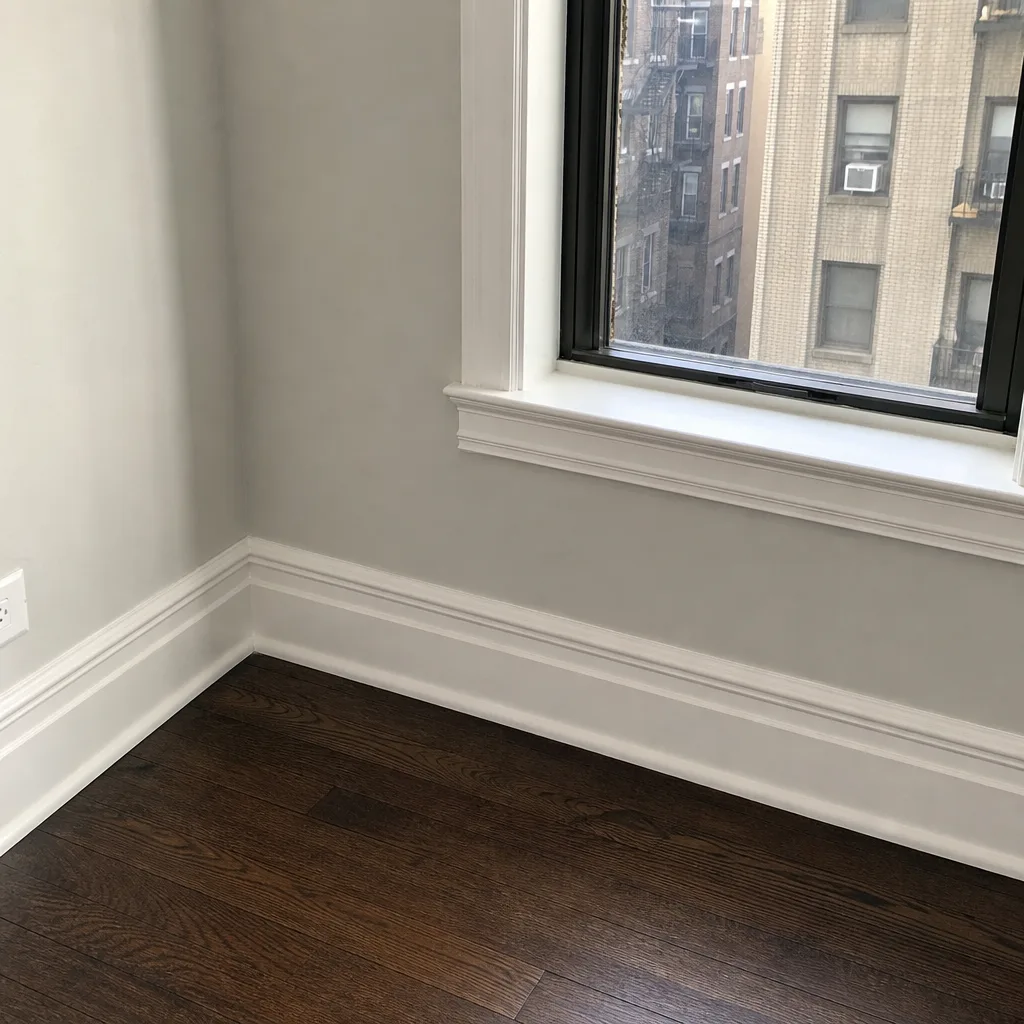 After
After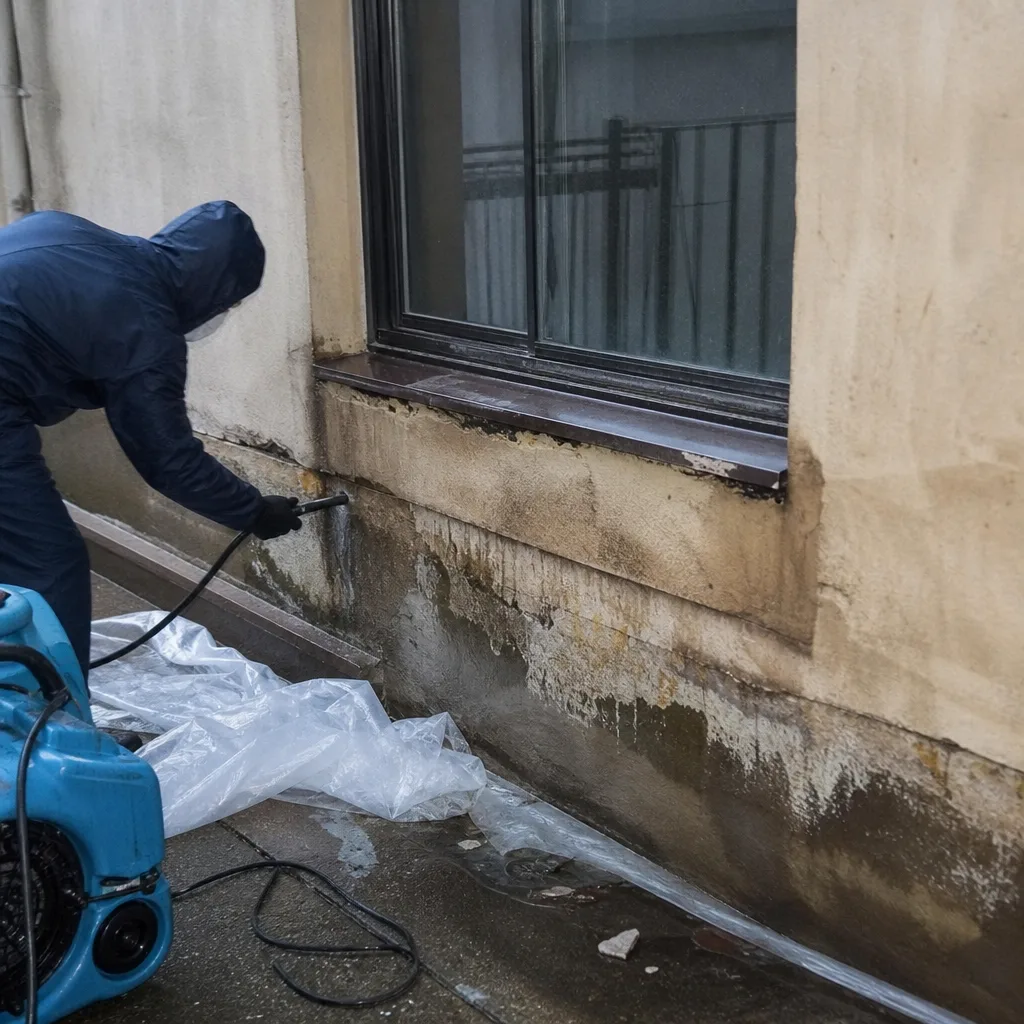 Before
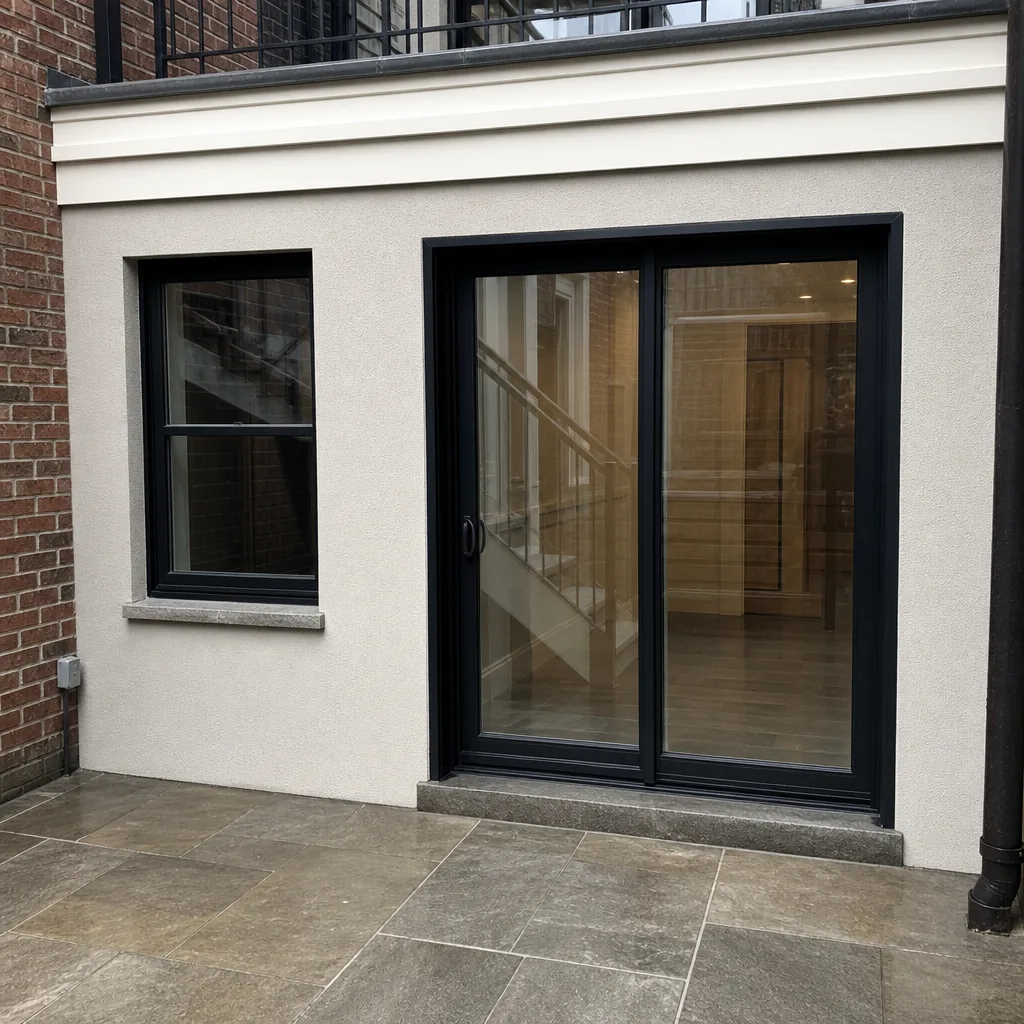 After
After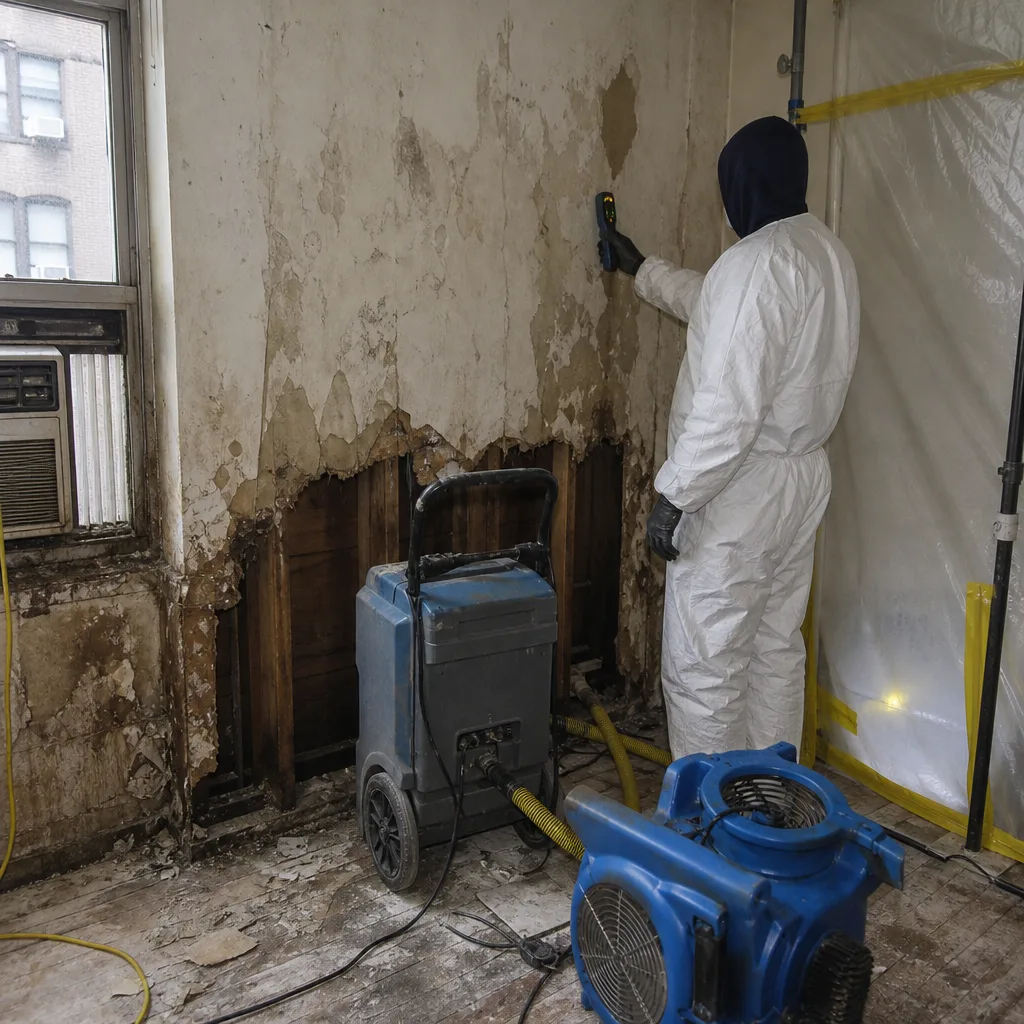 Before
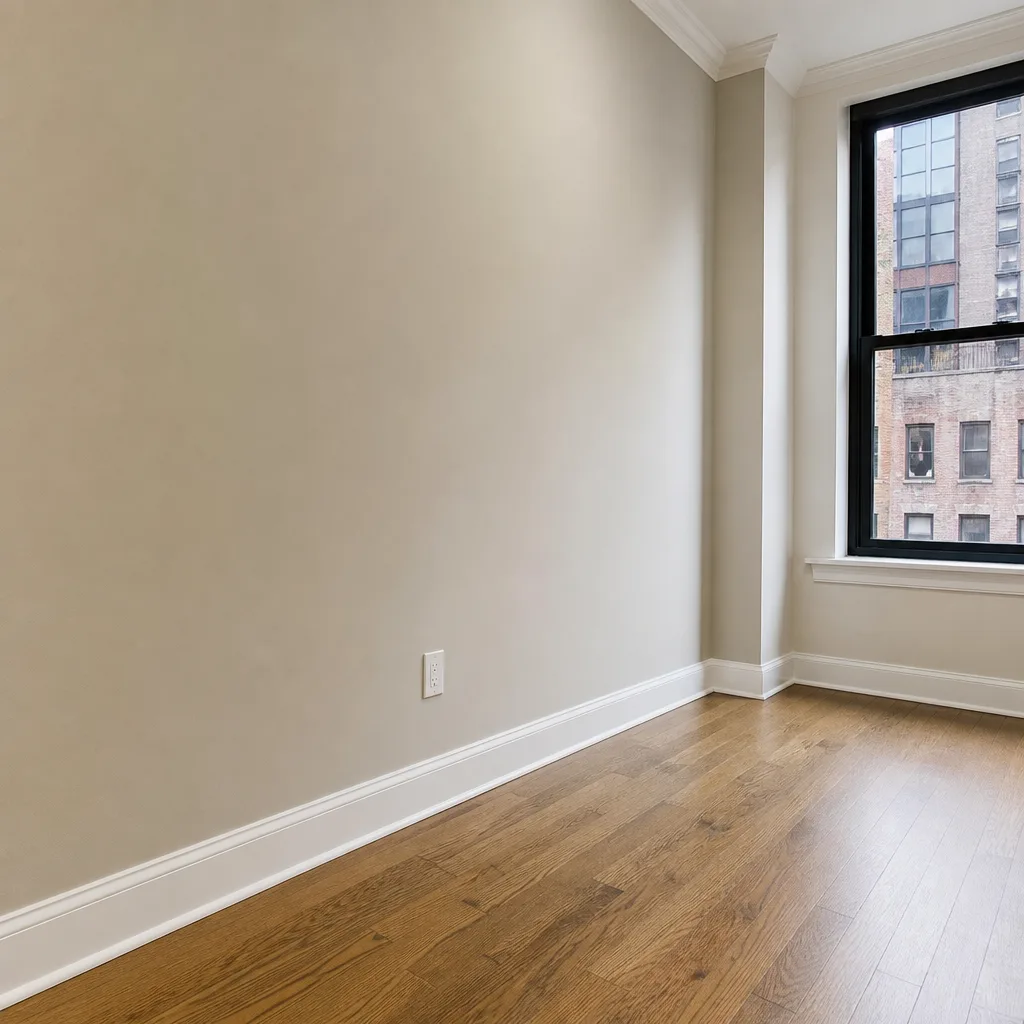 After
After24/7 Emergency Sewage Cleanup in East Harlem
Sewage backup in an East Harlem tenement or NYCHA tower can push Category 3 water through walls, floors, and into the unit below within the first hour. Our crews answer live around the clock and dispatch into East Harlem immediately. Call (518) 314-5660 and a real person picks up, not a recording. We schedule a free visual inspection, locate the source, and start extraction the same visit in most cases. The first hour matters because black water carries bacteria, viruses, and parasites that saturate porous building materials fast. Pre-war lath-and-plaster absorbs sewage like a sponge, and once it crosses into a neighboring apartment, the scope of the loss multiplies. We are Floodline Restoration Co., and we have handled sewage losses in East Harlem walk-ups, towers, and commercial spaces for years. No answering service. No callbacks at 9 a.m. A live dispatcher at two in the morning, and a certified crew on the way.
Understanding Sewage Cleanup Severity in East Harlem Properties
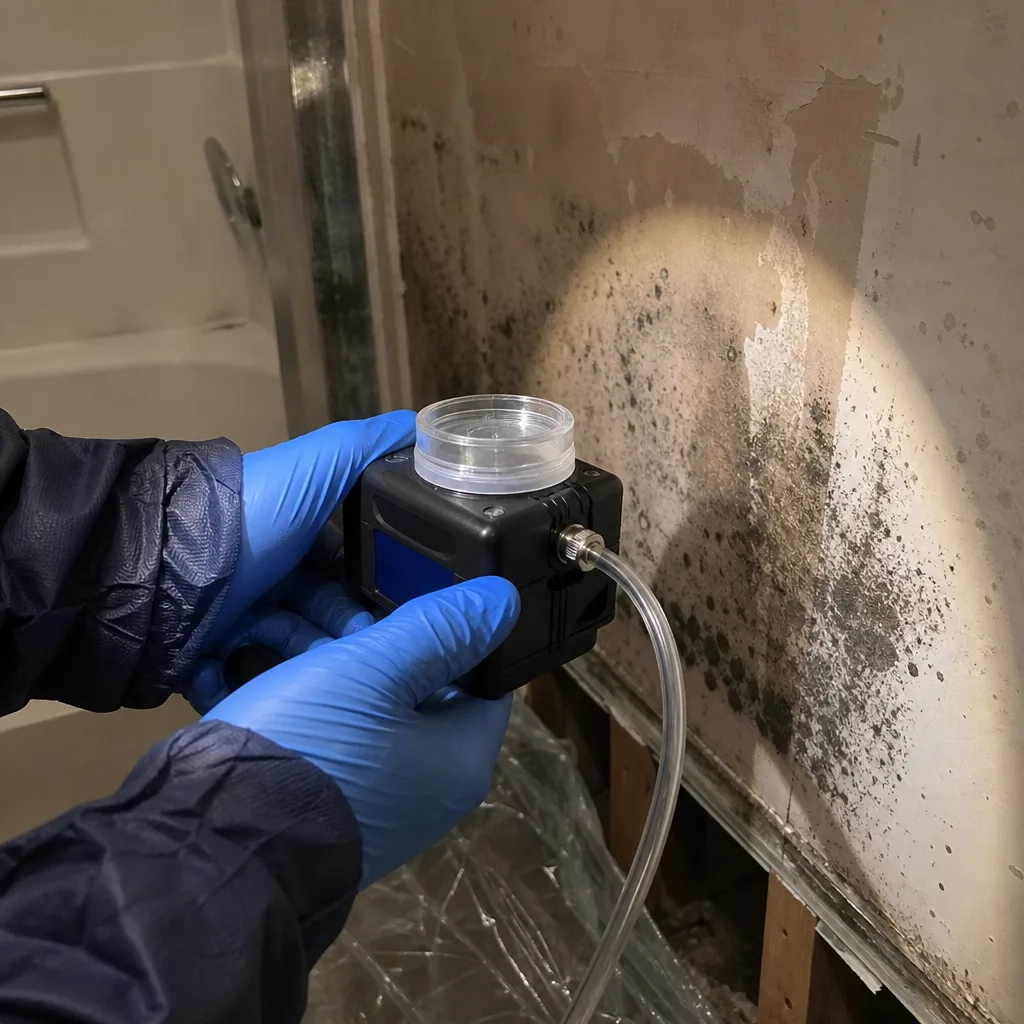
Sewage cleanup is not one problem with one price tag. The restoration industry classifies water into three categories, and sewage is always Category 3: grossly contaminated, carrying pathogens that require full personal protective equipment and controlled disposal. In East Harlem, the severity rises because of the building stock itself. A fifth-floor walk-up off Lexington Avenue with a shared cast-iron waste riser can spread Category 3 water down four floors before anyone smells it. Moisture mapping matters here more than in newer construction because lath-and-plaster walls hide saturation behind finished surfaces. We use thermal imaging and penetrating moisture meters to find water that is not visible yet. Then we set containment, run HEPA air scrubbers to control aerosolized contaminants, and remove saturated materials that cannot be salvaged. Antimicrobial treatment follows on every affected surface, and we log daily moisture readings until the structure hits the dry standard. In East Harlem’s pre-war tenements, structural drying often takes longer than in drywall buildings because plaster and old-growth lumber release moisture slowly. Rushing that process leads to hidden mold inside wall cavities weeks later.
Why East Harlem Property Owners Choose Floodline Restoration Co.
- 45-minute response commitment: our East Harlem crews are dispatched the moment you hang up, not after a sales rep calls you back.
- 24/7 live answer from a real person: a dispatcher picks up at 3 a.m. and can tell you exactly when the truck rolls.
- IICRC-certified crews, including WRT and ASD credentials: technicians trained to the standard your insurance carrier recognizes.
- Free visual inspection: we assess the loss at no charge and give you a written scope before any work begins.
- Direct insurance billing: we document, photograph, and bill your carrier directly so you are not the messenger.
- One team from extraction to rebuild: the same Floodline crew that extracts sewage also handles drying, sanitization, and any reconstruction. No mid-job handoff to a different company.
We stand behind every job with the 90-Day Done Right Promise, known internally as the Keystone Standard. If it is not done right, we make it right. In writing. No arguing.
Our Sewage Cleanup Process
Inspection & Assessment
We locate the source of the backup first, because extraction without fixing the cause means the water returns. In East Harlem tenements, that often means inspecting a shared cast-iron stack, a failed wax ring, or a collapsed building drain. We gather moisture readings, take photos, and write the scope before we start.
Extraction & Stabilization
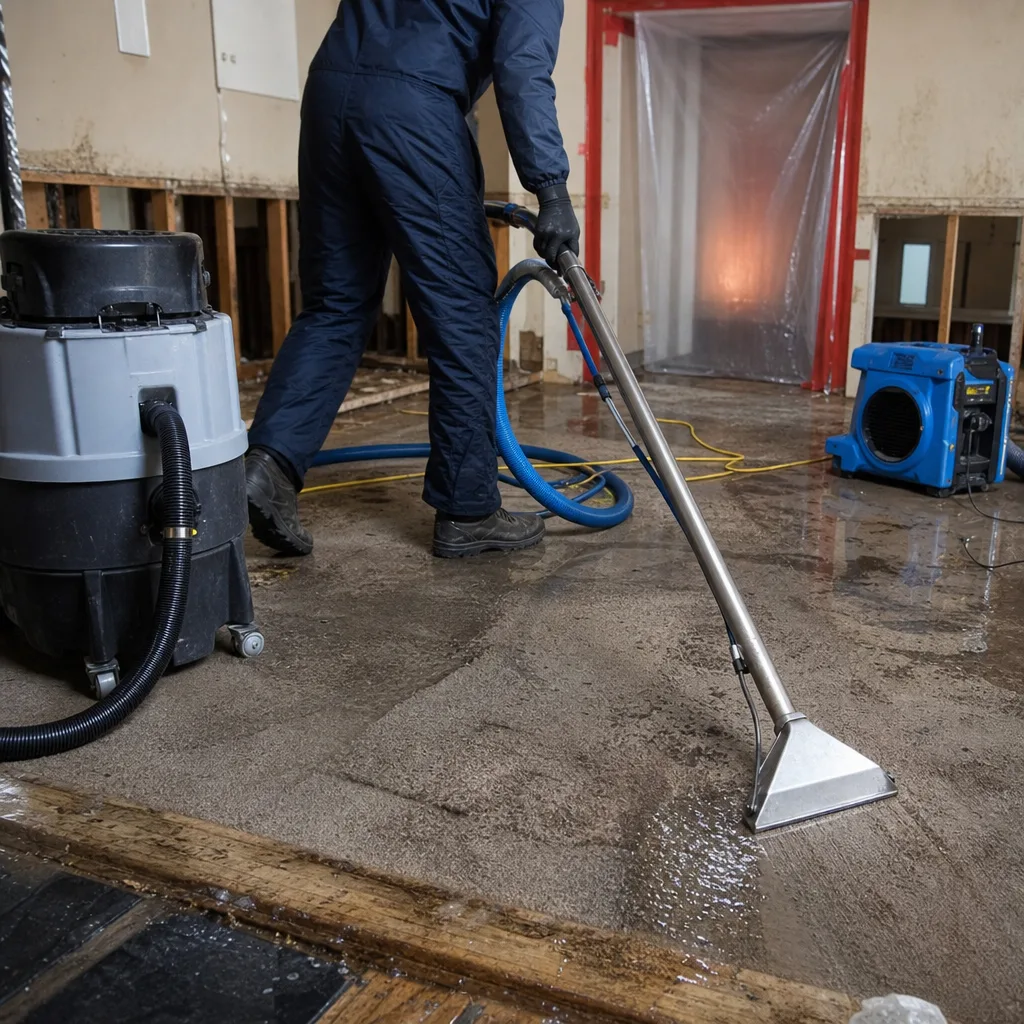
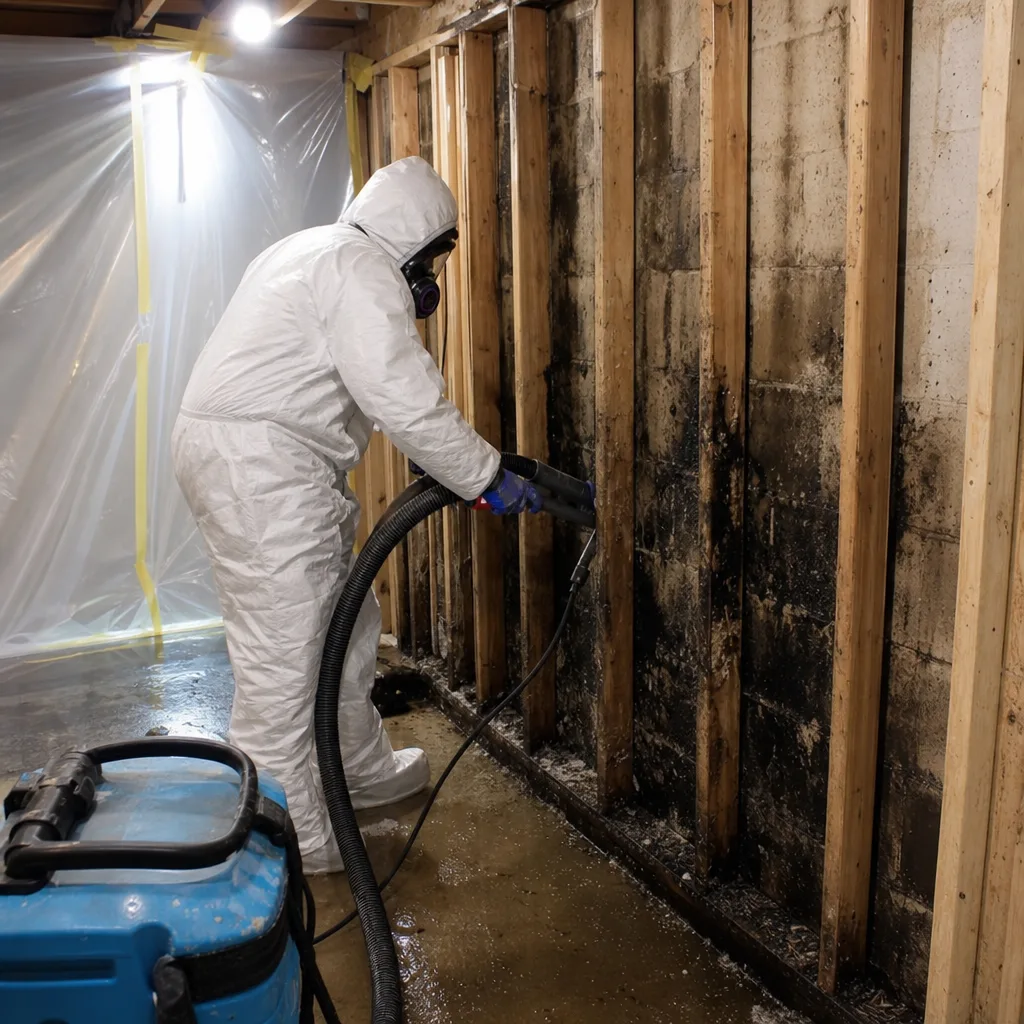
We remove standing black water using truck-mounted and portable extraction units sized for narrow hallways and walk-up staircases. Category 3 water is bagged and disposed of as contaminated waste. We stabilize the area immediately to stop migration into adjacent units.
Drying & Dehumidification
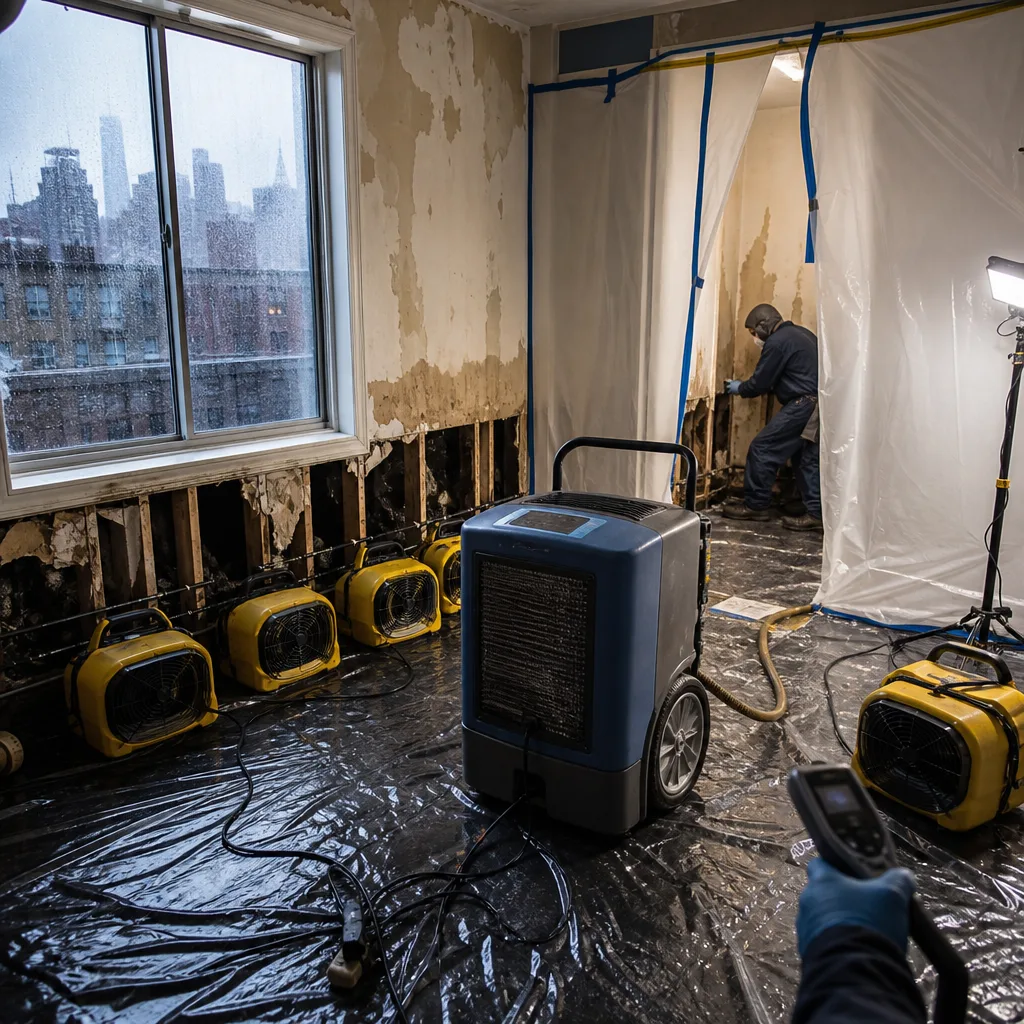
We place Phoenix and Dri-Eaz dehumidifiers and XPOWER air movers calibrated to the square footage and moisture load. Daily readings are logged and shared with you and your carrier. In pre-war plaster assemblies, drying can take several days. We do not call it dry until the meters prove it.
Cleaning & Sanitization
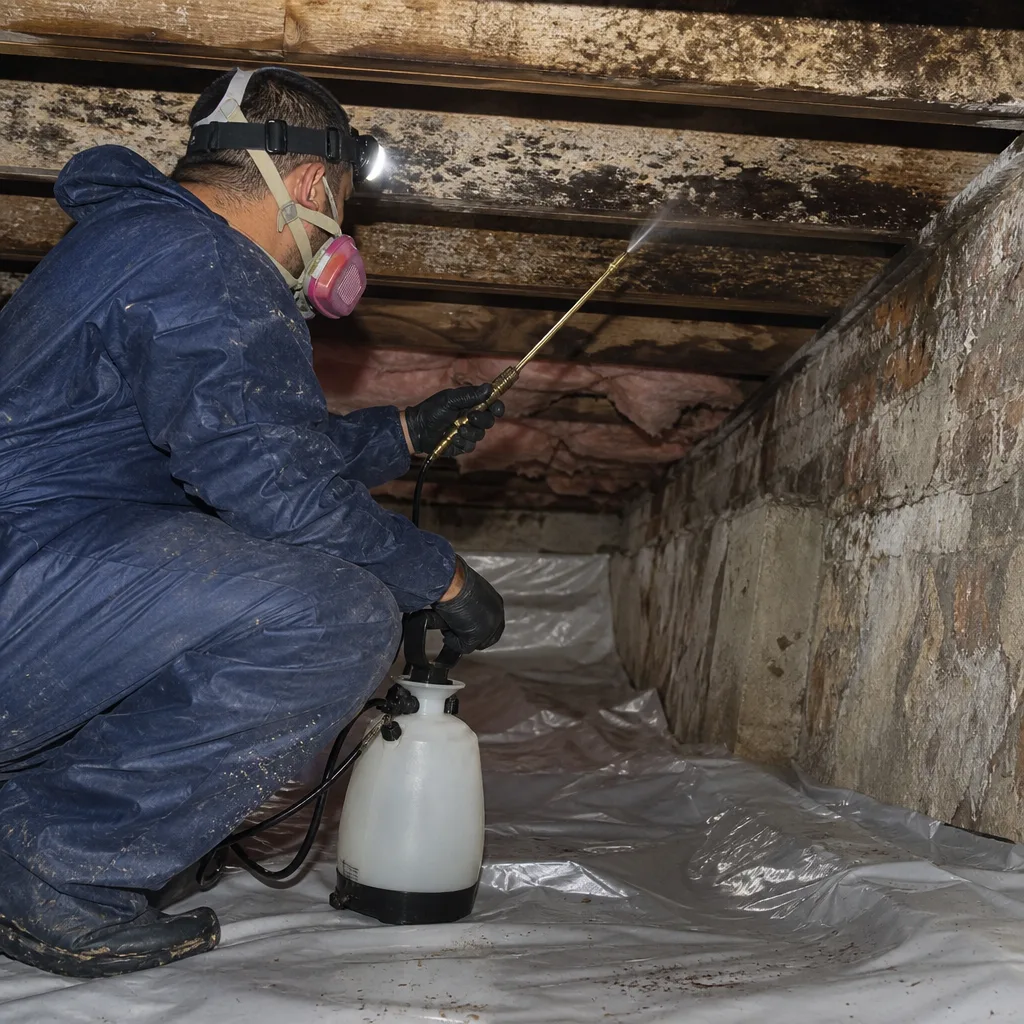
Every affected surface gets antimicrobial treatment rated for Category 3 contamination. We clean, not just dry. This step is where cheap restoration companies cut corners, and where months-later mold problems are born.
Containment & Air Scrubbing
We run HEPA-filtered air scrubbers and negative air where needed to keep contaminated aerosols from spreading through shared stairwells, hallways, and neighboring apartments. In multi-unit buildings, this protects tenants who never saw the water.
Repairs & Restoration
We rebuild what was removed: lath-and-plaster repairs, new drywall, flooring, baseboards, paint. The same crew that extracted the water handles the rebuild, so there is no finger-pointing between a mitigation company and a separate contractor. One name, one guarantee.
Need Emergency Sewage Cleanup in East Harlem Now?
Crews minutes away, answering live 24 hours a day. The sooner we start, the less it costs.
Working With Your Insurance Company
Most homeowner and co-op insurance policies cover sudden sewage backup, but the claim lives or dies on documentation from the first hour. We photograph every room before we touch anything. We log moisture readings, itemize the scope, and speak directly with your adjuster so you do not have to translate restoration language. The faster the claim is opened, the faster the work gets approved. Floodline Restoration Co. has spent over a decade handling Sewage Cleanup losses in multi-unit buildings, and we know what carriers ask for and what they push back on. We bill direct, submit the drying log, and keep the file moving.
What We Provide Your Insurer
- Thorough documentation of the loss
- Photos of all damage, room by room
- Moisture readings and drying logs
- A detailed, line-item scope of work
- Direct coordination with your carrier
Built for East Harlem’s Loss Calendar
East Harlem’s sewage losses follow a seasonal rhythm that any long-time resident would recognize. January and February bring deep freezes that crack old cast-iron drain lines behind uninsulated walls in tenements built between the 1890s and 1930s. When the heat comes back on, steam-condensate lines weep into cavities that have been untouched for decades. Then a sewage smell rises through the riser, and by the time anyone calls, two or three apartments are involved. Spring brings roof runoff from flat built-up roofs saturating top-floor units, and in older buildings that water finds the path of least resistance through wall cavities into drain chases. Summer is the mold acceleration window: humidity trapped in NYCHA tower units with inadequate mechanical ventilation allows mold colonization within 48 to 72 hours after any water event. Fall nor’easters test basement drains and combined sewer lines. The pattern is not random. It is the calendar of aging infrastructure in a dense urban neighborhood, and we schedule our East Harlem crews around it.
Sewage Cleanup Across East Harlem’s Neighborhoods
East Harlem is not one building type, and sewage losses do not behave the same in every part of the neighborhood. Around the Wagner Houses and Jefferson Houses near First Avenue and East 120th Street, NYCHA tower units have documented moisture problems tied to deferred maintenance, and restoration access requires working through the housing authority’s approval process. Over near East 116th Street, the corridor from Lexington to Third Avenue is dense with five- and six-story pre-war walk-ups where a shared cast-iron drain stack means one unit’s toilet overflow becomes a three-floor black water event. Up by Pleasant Avenue and the blocks east of it, many tenements still have original galvanized plumbing that has exceeded its service life twice over. Between 110th and 106th Streets, the older brick walk-ups near the East River have basement drains that back up during heavy rain when the combined sewer system overloads. We know the response routes along First, Second, and Third Avenues, the one-way streets off 116th, and the loading constraints at buildings without freight elevators. That local knowledge keeps extraction equipment moving up narrow staircases instead of sitting on the curb.
Specialized Sewage Cleanup Services We Offer in East Harlem
Sewage Backup Cleanup
When a shared cast-iron stack backs up in an East Harlem tenement, the contaminated water often surfaces in lower-floor tubs and floor drains before anyone sees it. We trace the backup to its source, contain the affected units, and extract Category 3 water fast. Our crews coordinate with building management and neighboring tenants to keep the work moving while contamination is still spreading.
Toilet Overflow Cleanup
A toilet overflow in a fifth-floor walk-up becomes a building-wide problem faster than most homeowners expect. We handle the visible mess and the unseen contamination in the floor assembly, wall cavity, and ceiling below. In older East Harlem buildings, that frequently means opening the ceiling from the unit beneath to dry the joist cavity properly.
Septic Failure Cleanup
Most of Manhattan is on municipal sewer, but a handful of East Harlem properties still connect through aging private lines that fail. We respond the same way we do to any sewage loss: identify the failure, stop the source, extract, sanitize, and document for the carrier. If the failure crosses property lines, we help establish exactly where the responsibility shifts.
Black Water Extraction
Black water is not just dirty water. It is water carrying human waste, and every minute it sits, contaminants bind deeper into porous materials. In pre-war East Harlem apartments, lath-and-plaster walls will hold that contamination long after the surface looks dry. We use truck-mounted extraction where accessible and portable units for upper floors, removing the water and the saturated materials it touched.
Sanitization & Disinfection
After extraction, every affected surface gets antimicrobial treatment appropriate for Category 3 exposure. We do not spray bleach and call it clean. We treat, dry to the standard, and then verify. In East Harlem housing with shared walls and common stairwells, this step protects people who never saw the water.
What happens when you call
- 1
A real person answersNo phone trees - you reach a local pro.
- 2
You get an upfront price rangeHonest numbers before anyone is dispatched.
- 3
A background-checked tech heads outLicensed & insured, dispatched right away.
- 4
You approve before work beginsNothing starts until you say go.
Sewage Cleanup Costs in East Harlem, NY
Sewage cleanup in East Harlem typically runs $2,800 to $7,500 for a single-unit backup with extraction, containment, sanitization, and structural drying. The price climbs when the loss crosses units and floors. A shared drain stack backup affecting three apartments in a tenement off 116th Street often lands between $9,000 and $18,000 because of containment requirements, access coordination, and demolition of saturated plaster assemblies. Black water extraction alone usually runs $1,200 to $3,000 per affected room. Asbestos abatement, when triggered by opening pre-war walls, adds $2,500 to $6,000 depending on the scope. Insurance typically covers the bulk of these costs when the loss is sudden, but co-ops and NYCHA units have their own filing rules. We provide a free visual inspection and a written, line-item scope before any work starts. Call (518) 314-5660 for an exact quote on your building.
We Also Serve Cities Near East Harlem
Floodline Restoration Co. crews respond to sewage losses across the surrounding area, including East Harlem, Midtown Manhattan, Midtown West, Murray Hill, and Washington Square. Same-day dispatch applies to all of these neighborhoods, and our live dispatchers know the routes and the buildings.
Serving East Harlem, NY - Our Local Coverage Area
We’re based in the East Harlem area and know this community well. Use the map below to see our service coverage - if you’re nearby, we can almost certainly help.
East Harlem Sewage Cleanup Questions, Answered
How does sewage cleanup work when a backup affects multiple apartments in an East Harlem tenement?
Multi-unit sewage losses start with a source inspection to determine which apartment or shared stack failed. We then set containment in every affected unit, extract standing water, and coordinate access with building management and each tenant. The key difference from a single-family job is that drying and sanitization must run concurrently across multiple floors, and tenants above and below need to understand what we are doing and why. Call (518) 314-5660 as soon as you suspect a shared stack has backed up.
What extra approvals are needed for sewage cleanup in NYCHA buildings like Wagner Houses?
NYCHA requires access approval through the housing authority before restoration crews can begin work in most tower units. That process can take days if you do not know how to file it. Floodline Restoration Co. has worked inside Wagner Houses and Jefferson Houses, and we handle the NYCHA communication directly, pushing the approval forward while we document the loss. That documentation is what gets the claim opened and the work authorized.
Can lath-and-plaster walls be saved after a sewage backup, or do they have to be removed?
Lath-and-plaster walls that absorbed Category 3 water are almost always removed. Plaster holds contamination differently than drywall, and once black water saturates the lime and wood lath, antimicrobial treatment will not reach deep enough to make the assembly safe. We cut out the affected section, dry the framing behind it, and rebuild to match the original wall profile. Attempting to save saturated plaster in an East Harlem tenement usually means mold inside the wall cavity within months.
How quickly should sewage cleanup start in an East Harlem tenement during summer?
Within hours, not days. East Harlem’s summer humidity, especially inside NYCHA tower units without strong mechanical ventilation, accelerates mold colonization within 48 hours of a water event. In a hot July week, that window tightens further. The sooner we extract and set drying equipment, the less demolition is required and the lower the total claim. Call (518) 314-5660 the moment you see or smell sewage.
What equipment do you use for black water extraction in pre-war buildings with narrow hallways?
We run portable extraction units sized for tight stairwells, along with truck-mounted systems where ground access allows. We use Phoenix and Dri-Eaz dehumidifiers, XPOWER air movers, and B-Air HEPA scrubbers for containment. In fifth-floor walk-ups off East 116th Street, our crews carry equipment up staircases by hand because there is no freight elevator. That is normal for us, and we plan for it.
How fast can someone actually get here from East Harlem?
We commit to a 45-minute response commitment for East Harlem addresses, day or night. Our dispatch coordinates from the brand’s New York City office, and crews are positioned in and around the neighborhood. A live person answers the phone at 2 a.m. and tells you exactly when the truck leaves.
Will my insurance cover sewage cleanup in an East Harlem co-op or rental?
Most co-op and homeowner policies cover sudden sewage backup, but the wording matters: some policies exclude backup unless a specific endorsement was purchased. In rentals, the building’s policy often covers the structure, while the tenant’s policy covers contents and temporary housing. We document everything, bill the appropriate carrier directly, and explain exactly what your policy says. Call (518) 314-5660 and we will walk through it.
What should I do in the first 30 minutes after discovering a sewage backup?
Stop using water in the affected unit. Do not flush toilets, run washing machines, or use sinks. If the water is spreading, shut off the water supply where you can. Move valuables and people away from the affected area. Do not attempt to clean Category 3 water yourself without proper protection. Then call us at (518) 314-5660. We talk you through containment steps while the crew is rolling.
One thing we have learned from years of sewage work in East Harlem: the buildings here share a lot more than walls. A failed cast-iron stack on the fifth floor is a claim on every floor below it, and the difference between a contained loss and a building-wide event is how fast someone makes the call. We answer live, we show up, and we stay until the job is done. Not because it is a nice thing to say, but because the 90-Day Done Right Promise means we have to.
Written by Curt Bowman, Owner at Floodline Restoration Co., with crews serving East Harlem and the surrounding neighborhoods.
Sewage backup in East Harlem? Call now.
Live answer, free visual inspection, direct insurance billing. Senior and veteran discounts always apply.