
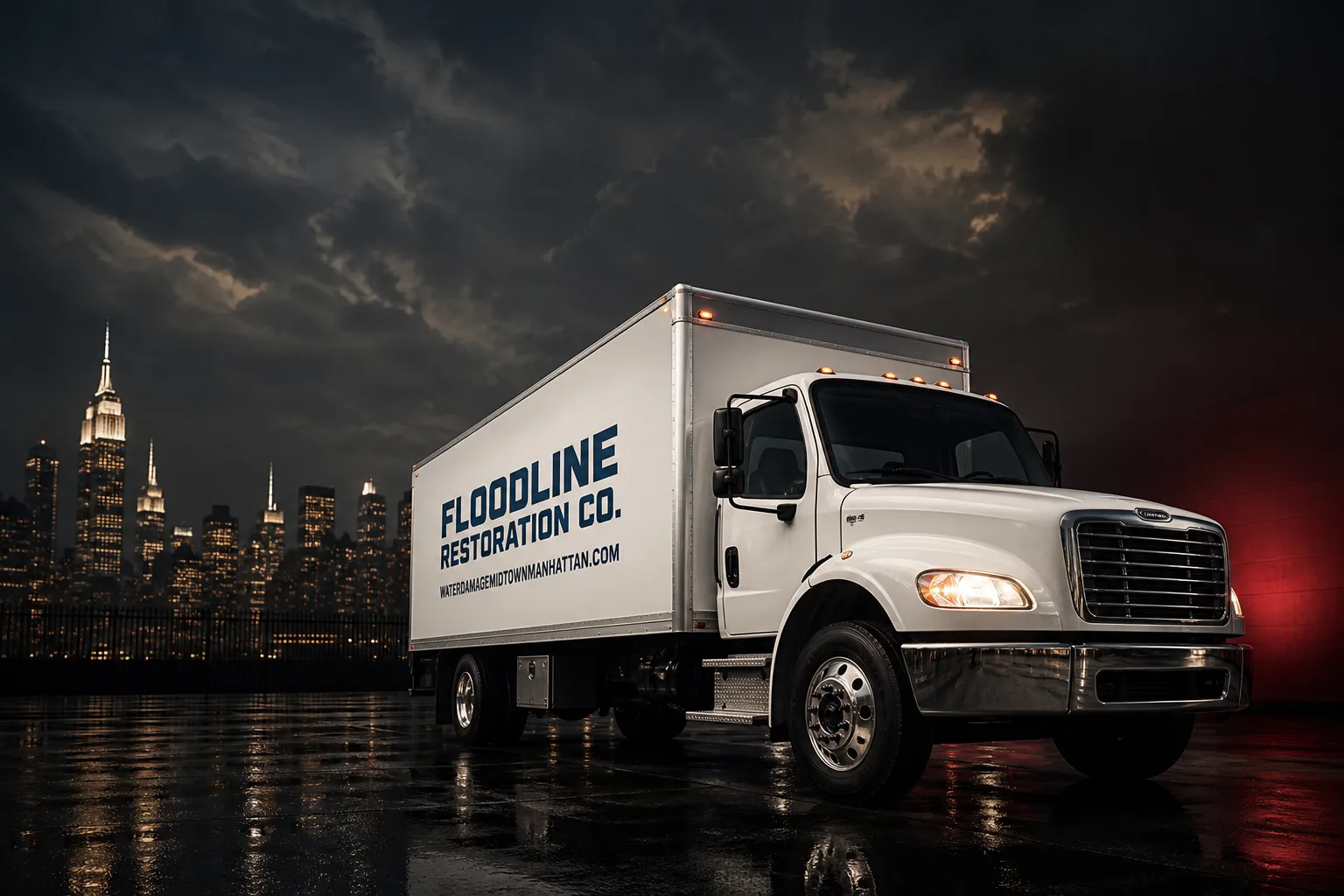
Free visual inspection and a written scope of work before any mitigation begins - photos, moisture readings, and drying logs go in your claim file
The scope we write is the scope we bill. Anything new gets shown to you, in writing, before we touch it.
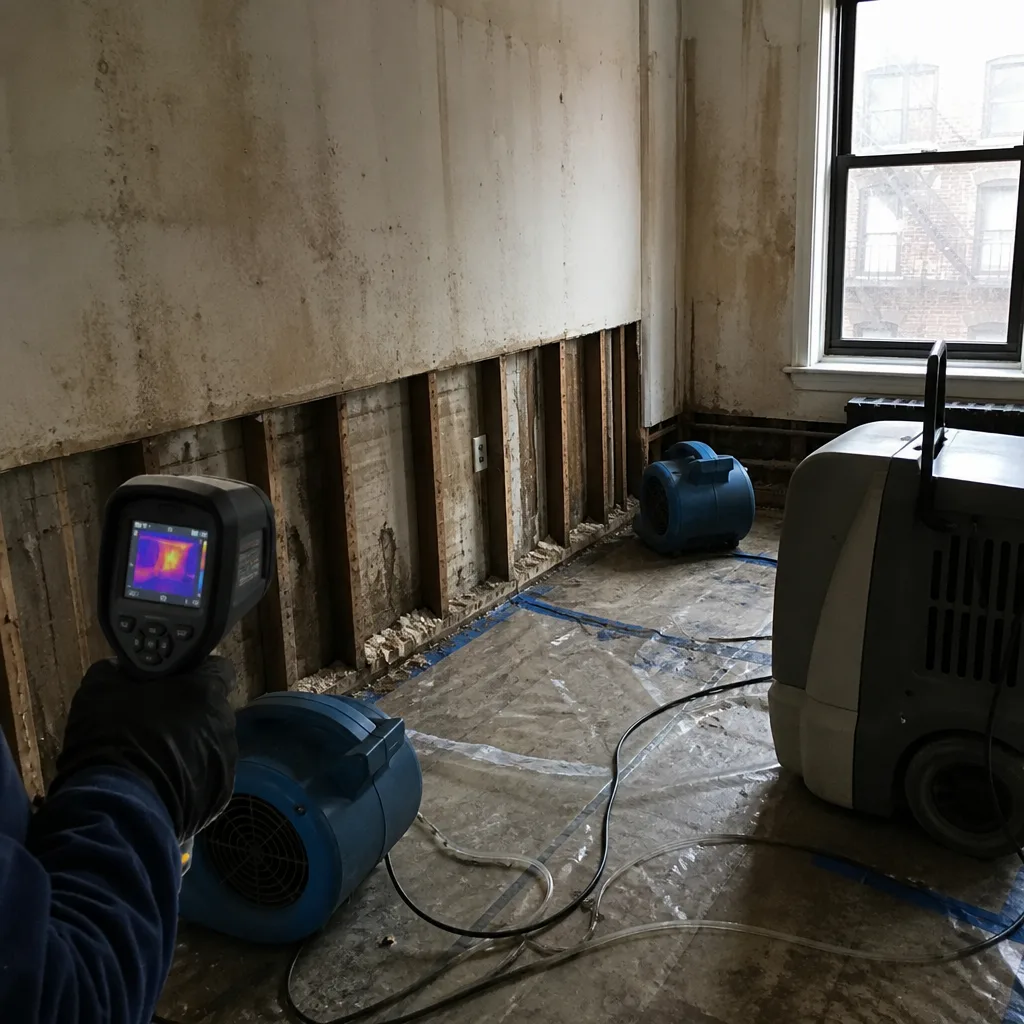 Before
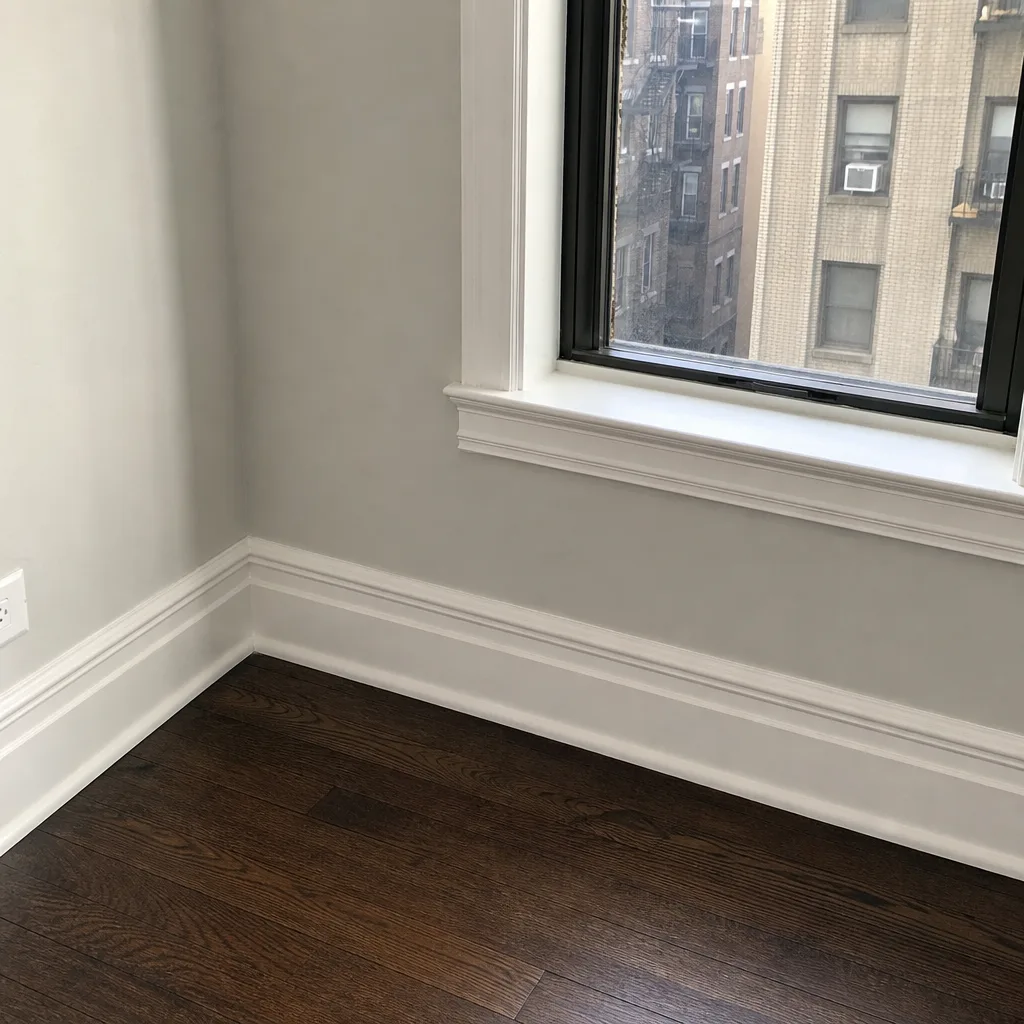 After
After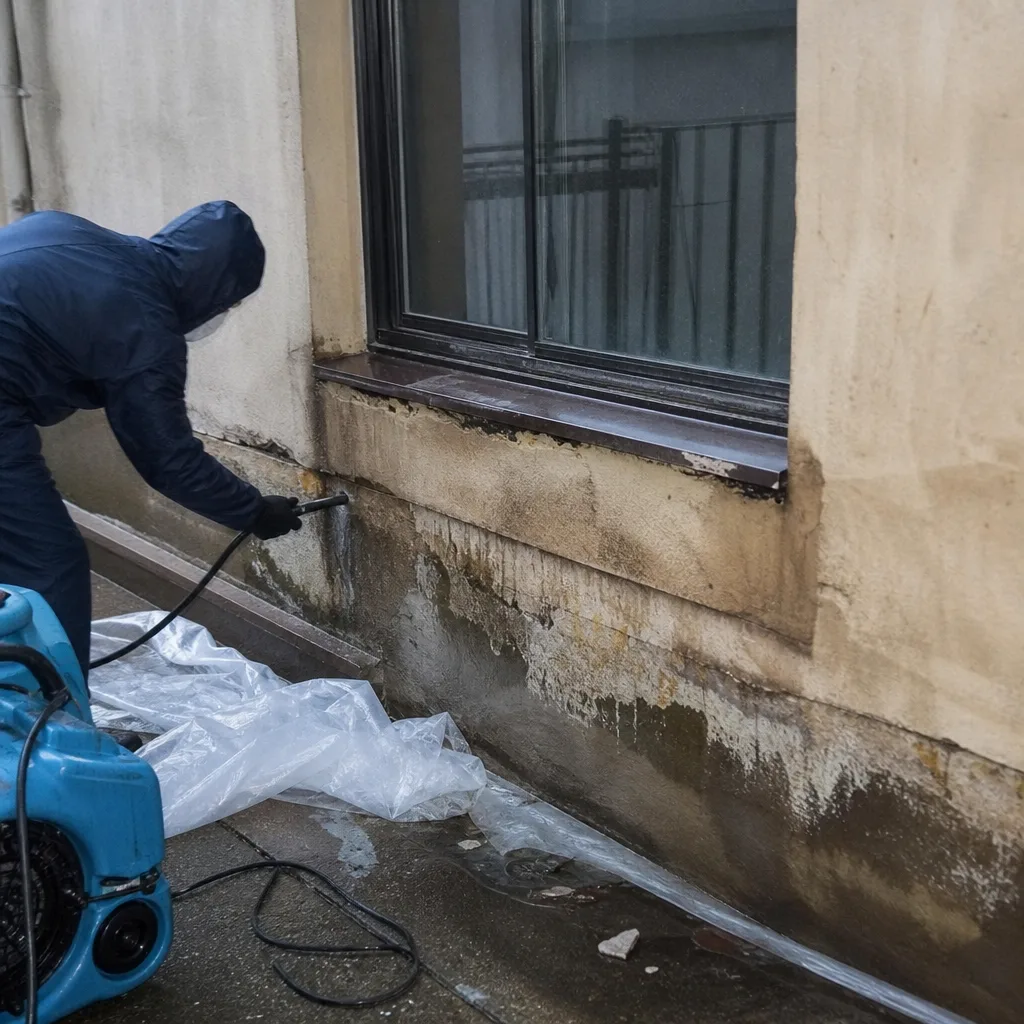 Before
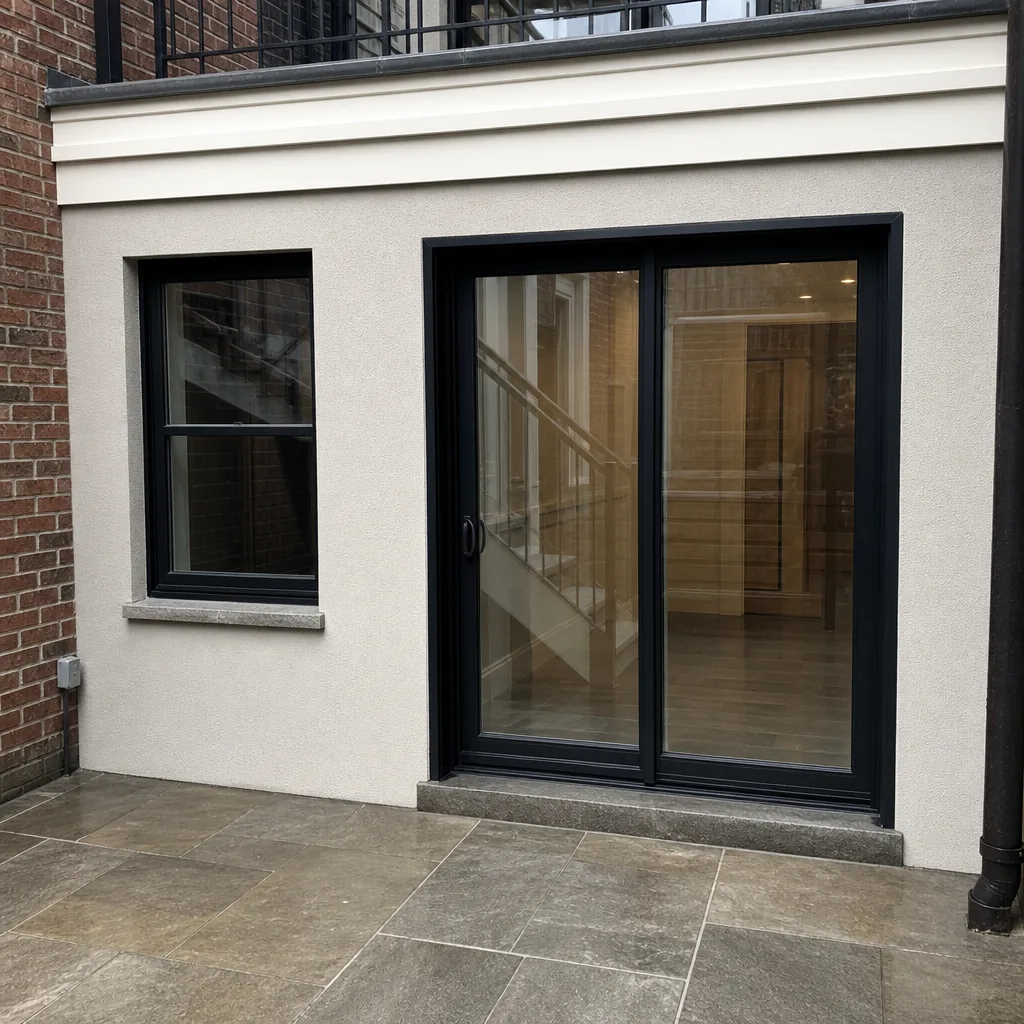 After
After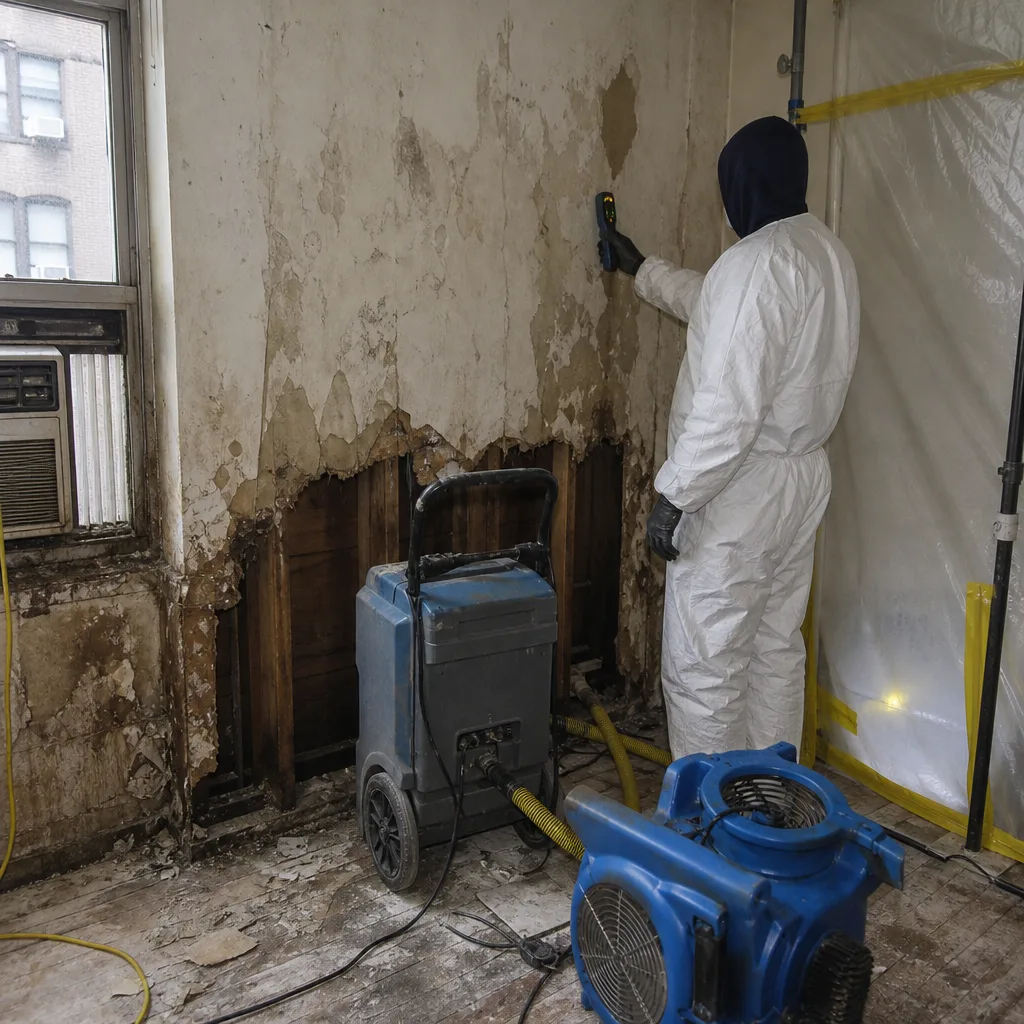 Before
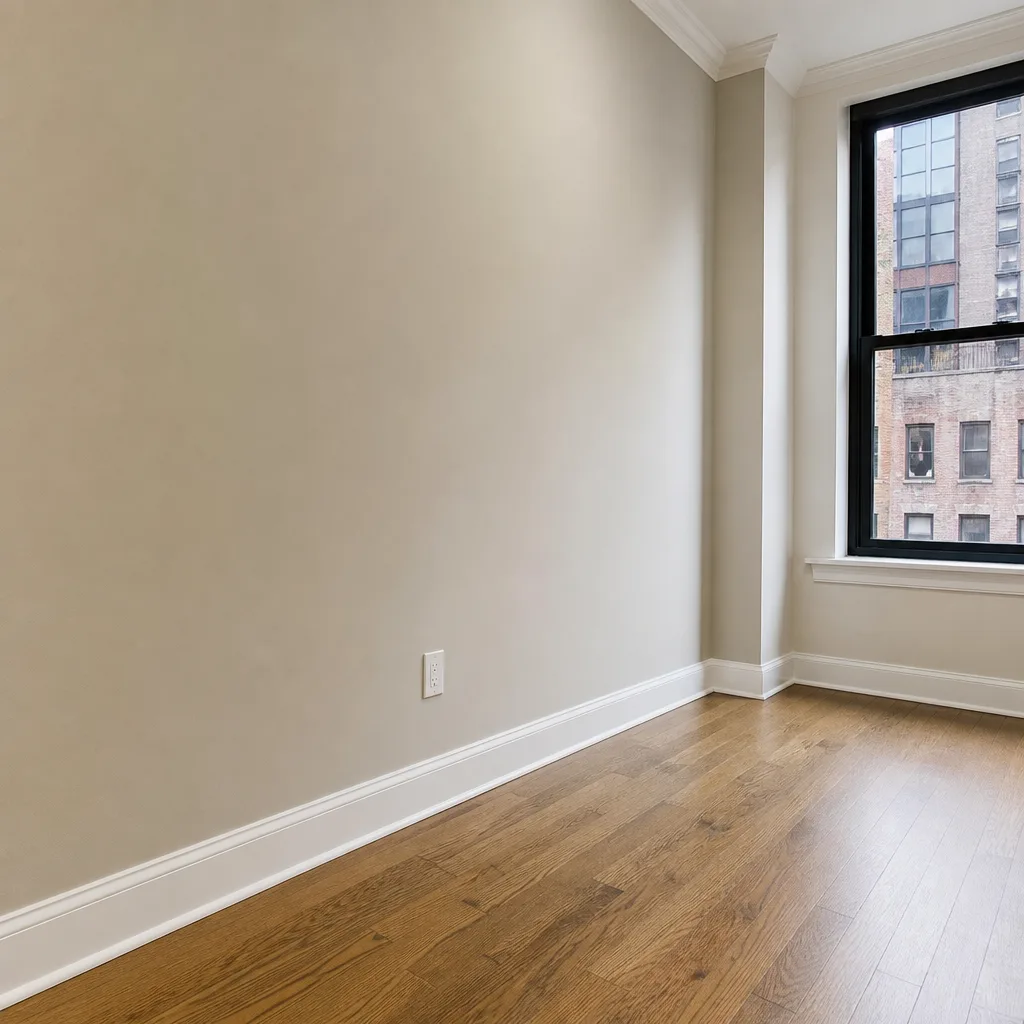 After
After24/7 Emergency Commercial Restoration in Weehawken
When a sprinkler line lets go above a retail space on Park Avenue, or Hudson River surge finds its way into a Port Imperial parking garage, the first call needs to reach a live person. It will at Floodline Restoration Co. We answer the phone at (518) 314-5660 with a dispatcher, not a recording, at any hour. A certified crew is dispatched into Weehawken the same visit, because the first hour after water or fire touches a commercial property decides whether you’re looking at cleanup or a full gut rebuild. We perform a free visual inspection before any work begins, so you know the scope in writing before equipment rolls in. One team handles extraction, drying, and reconstruction. No mid-job handoff, no inherited subcontractors, no finger-pointing between a mitigation company and a rebuild firm. That is the difference between a square deal and an expensive lesson.
Understanding Commercial Restoration Severity in Weehawken Properties
Not all water behaves the same way in a commercial building, and Weehawken’s building stock forces you to respect the differences. Clean water from a ruptured supply line, what the industry calls Category 1, requires extraction and drying but carries low contamination risk. Category 2 water, the gray water from a dishwasher backup or failed sump pump, carries biological and chemical contaminants, and demands antimicrobial treatment alongside drying. Category 3 is what our crews saw push into Port Imperial garages during past nor’easters: brackish Hudson River surge loaded with sewage, fuel residue, and salt. That water requires full containment, disinfection, and corrosion remediation, because salt accelerates rebar decay and electrical panel damage on a schedule freshwater never does. In upper Weehawken’s 1910s and 1920s brick row houses converted to storefronts and offices, the older cast-iron drainage and shared party walls mean water migrates laterally between units within hours. Moisture mapping must extend beyond the unit where water first appeared, or mold colonizes the neighbor’s plaster-and-lath walls inside 48 hours. Fire tells the same story. Soot from a kitchen fire in a 1950s commercial storefront behaves differently from the synthetic-heavy smoke of burning signage and inventory, and each requires a different residue removal protocol. Curt Bowman trained our teams to read the building before reading the room, because severity is a function of structure, age, and water source, not just how many inches of water sat on the floor.
Why Weehawken Property Owners Choose Floodline Restoration Co.
- 45-minute response commitment. We dispatch crews into Weehawken immediately, not after a callback window. You’ll get a live ETA, and our trucks arrive when we say they will.
- 24/7 live answer. A person picks up at two in the morning. Always. Not a voicemail tree. The dispatcher who answers knows Weehawken’s streets and building types.
- IICRC-certified crews. Our technicians hold WRT, FSRT, and AMRT certifications. They know the difference between drying a Port Imperial concrete deck and a 1920s plaster-and-lath wall.
- Free visual inspection. Before any mitigation begins, we walk the loss with you and put the scope in writing. You decide with numbers in front of you, not pressure behind you.
- Direct insurance billing. We bill the carrier directly and speak adjuster-to-adjuster, so you’re not playing messenger between a mitigation company and an insurance desk.
- One team from start to finish. The same certified crew that reads the moisture map on day one handles daily readings, hands the log to you and your carrier, and rebuilds what needs rebuilding. No handoff. No inherited subs.
Our Commercial Restoration Process
Inspection & Assessment
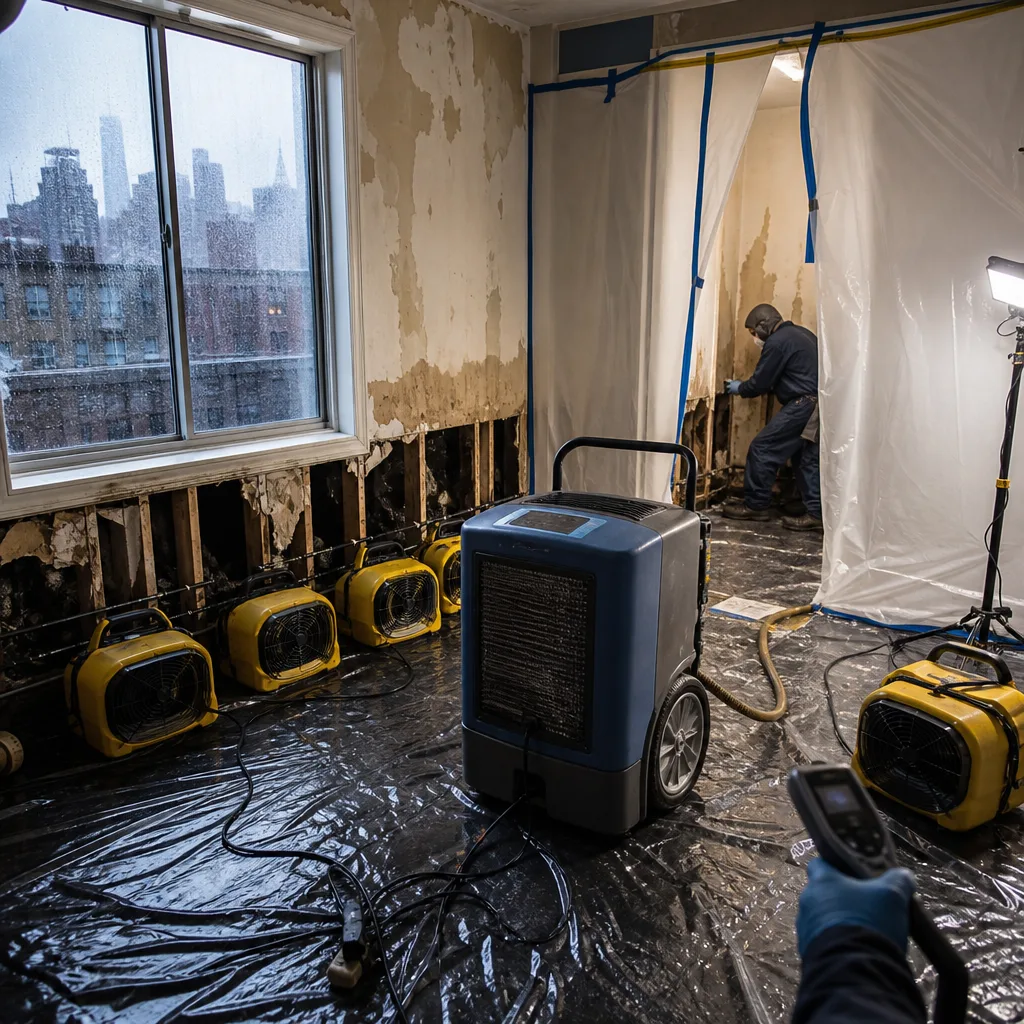
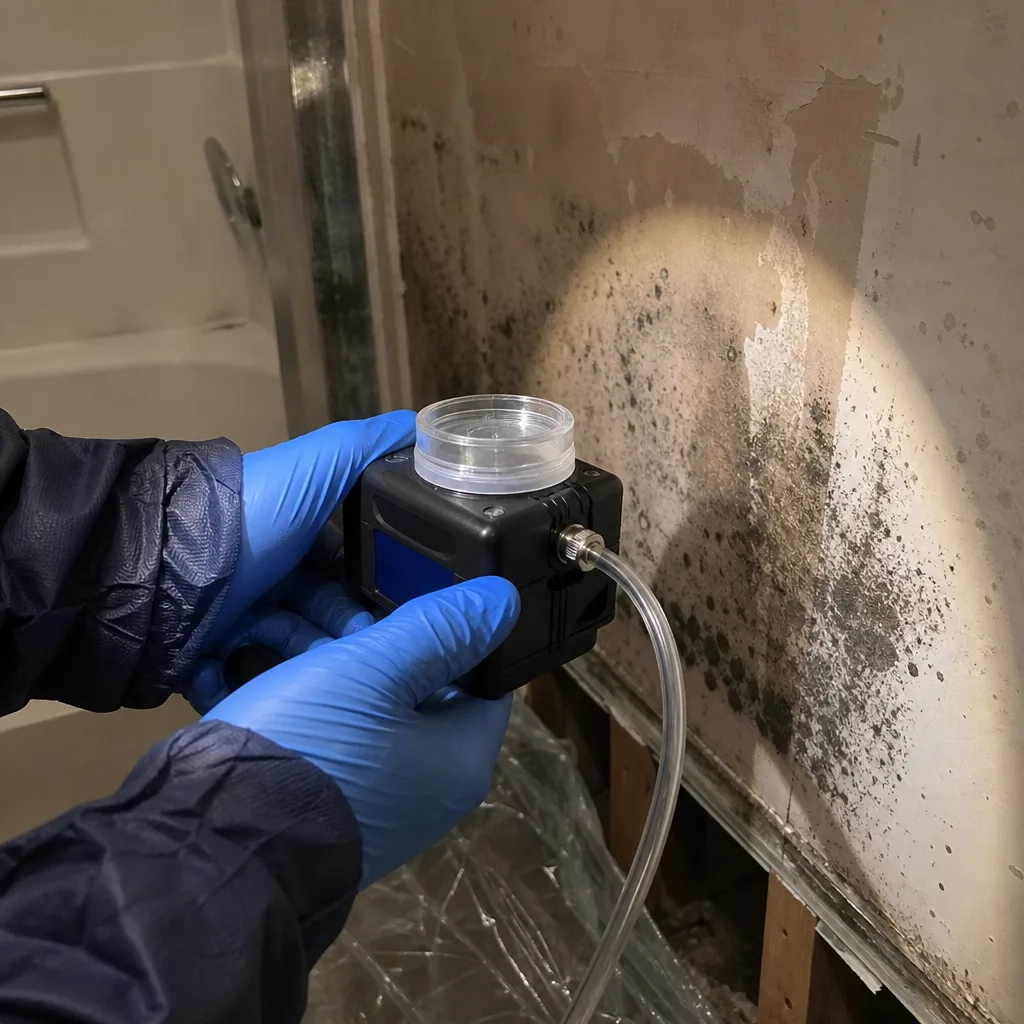
We arrive, walk the property, and document everything. Thermal imaging and hygrometers map moisture behind walls and under floors. For Port Imperial structures, we specifically check elevator pits, electrical rooms, and below-grade mechanical spaces for saltwater intrusion. You get a written scope before equipment rolls in.
Extraction / Stabilization
Submersible pumps and truck-mounted extraction units remove standing water, including Category 3 brackish surge. Board-up and tarping secure the building if the envelope is compromised. Our goal is simple: stop the spread within the first visit.
Drying & Dehumidification
Dri-Eaz and Phoenix air movers, paired with desiccant dehumidifiers, drive structural drying. We take daily moisture readings and hand you the log. No guessing, no “it probably feels dry.” The dry standard is a number, and we hit it.
Cleaning & Sanitization
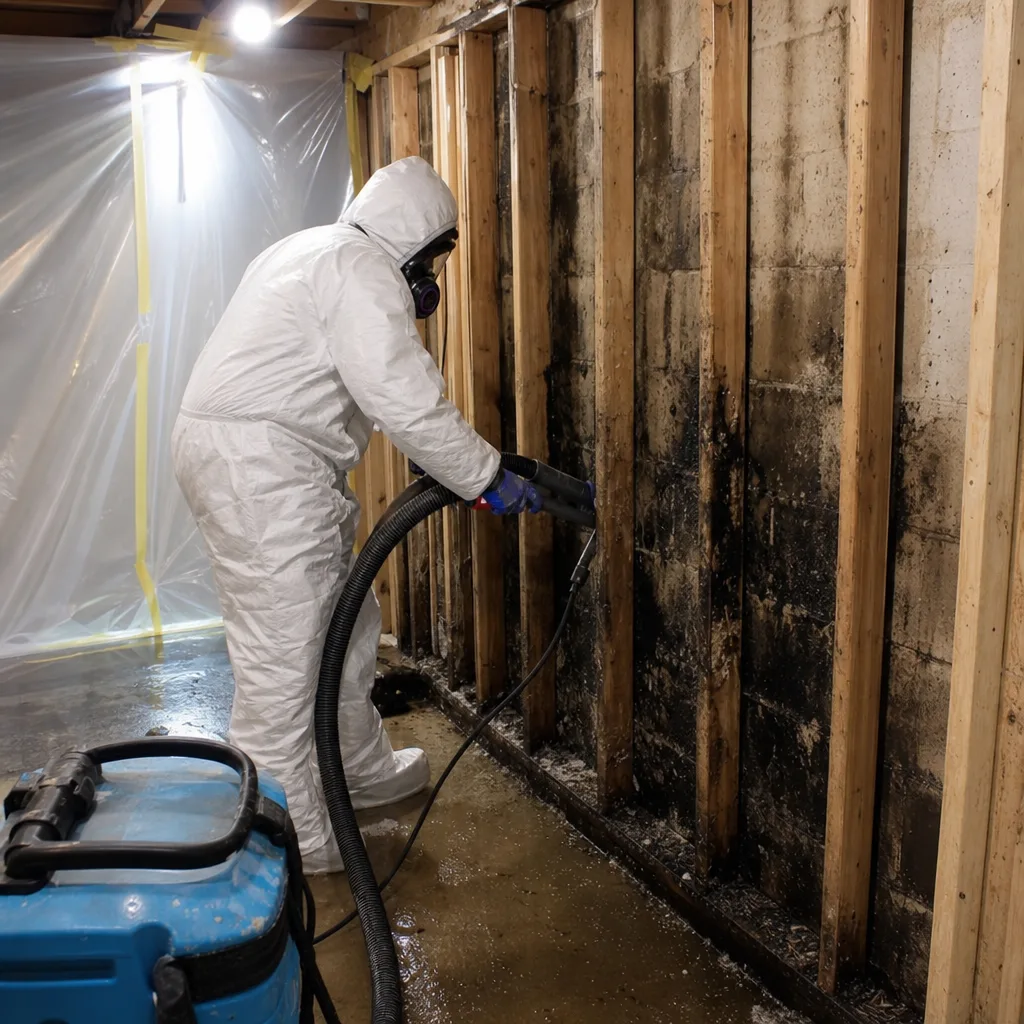
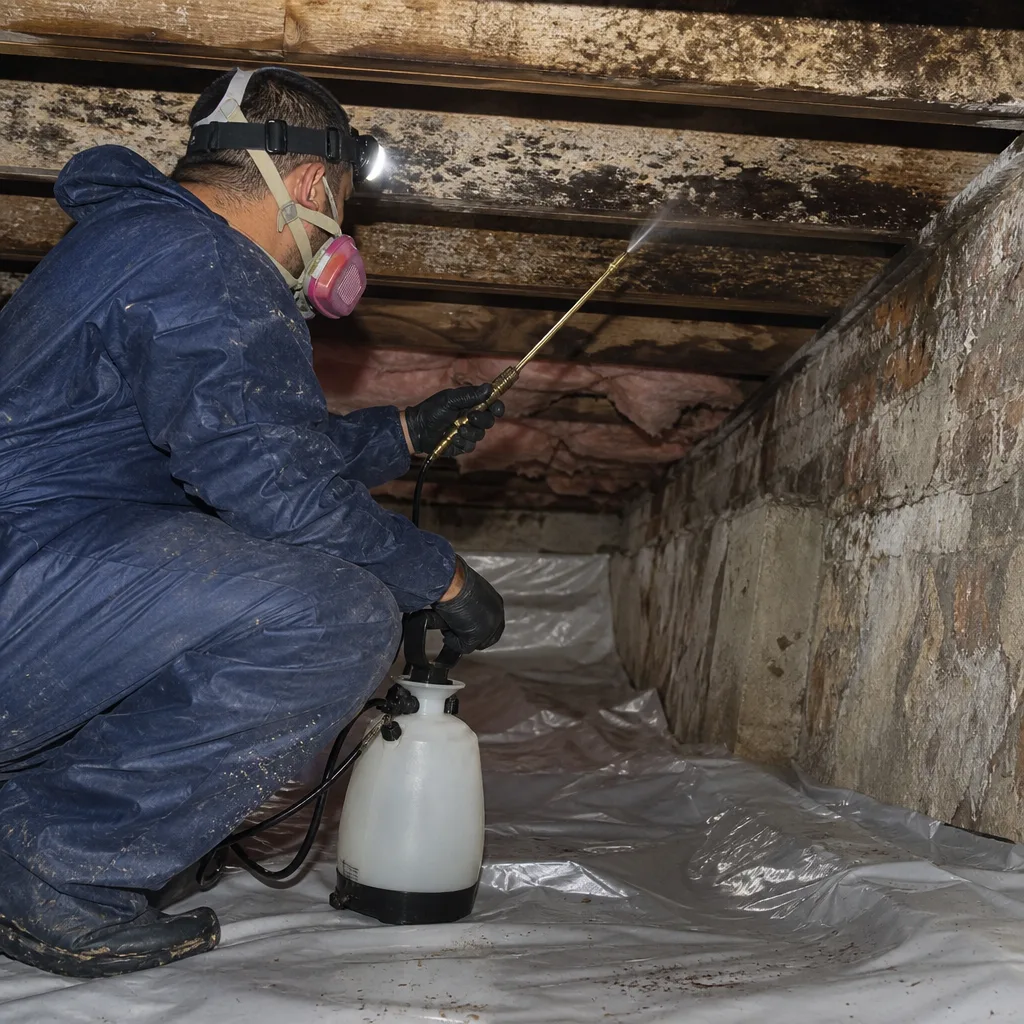
HEPA air scrubbers run to capture airborne particulates and mold spores. Antimicrobial agents treat affected surfaces, and we follow IICRC protocols for Category 2 and 3 water. Every surface gets cleaned before it gets rebuilt.
Specialty Treatment for Commercial Restoration
Document recovery, inventory triage, and corrosion remediation for salt-exposed metal and electrical components. We photograph everything room by room, because your carrier needs that documentation to authorize structural drying and corrosion work.
Repairs & Restoration
The same crew that dried the building rebuilds it. Drywall, flooring, electrical, paint, storefront glass. We handle commercial storefronts, office suites, and common areas. One team, one warranty, one phone number if anything ever needs attention.
Need Emergency Commercial Restoration in Weehawken Now?
Crews minutes away, answering live 24 hours a day. The sooner we start, the less it costs.
Working With Your Insurance Company
Commercial restoration claims in Weehawken live or die on documentation. The adjuster will never walk into a Port Imperial high-rise and smell the salt. They read the scope of loss, the moisture log, and the photographs. We produce all three from the first hour. Our team writes industry-standard estimates using the same software carriers use, so line items match what adjusters expect to see. We send photos of every affected room, moisture readings from every affected wall, and a detailed line-item scope before work starts. Then we coordinate directly with your adjuster and bill the carrier directly. You don’t chase paperwork, and you don’t spend hours on hold explaining the difference between brackish surge and freshwater seepage. We do that.
What We Provide Your Insurer
- Thorough documentation of the loss
- Photos of all damage, room by room
- Moisture readings and drying logs
- A detailed, line-item scope of work
- Direct coordination with your carrier
Built for Weehawken’s Loss Calendar
Weehawken’s commercial property losses follow a calendar, and the calendar follows the Palisades. January and February bring deep freezes that split supply lines in upper-town brick row houses built before modern insulation. A thaw in March sends runoff sheeting down the escarpment and into basements along Boulevard East, saturating foundations and party walls. April nor’easters push Hudson River surge into the Port Imperial waterfront, flooding below-grade parking structures and mechanical rooms with saltwater. Summer thunderstorms overwhelm aging storm drains in 07086, and a cloudburst over the Palisades can dump water into storefronts faster than municipal systems can carry it away. Fall brings the hurricane-track storms that test every flood mitigation measure the township has built since Sandy. Each season has a signature loss, and each loss requires a different playbook. A contractor who treats a January clean-water pipe burst like an April saltwater surge will under-specify the drying and miss the corrosion. Our crews know the calendar, and they know what each month’s water does to a building.
Commercial Restoration Across Weehawken’s Neighborhoods
Weehawken packs two different restoration realities into one square mile. The Port Imperial waterfront along River Road holds the glass-and-concrete high-rises and mid-rise commercial buildings that dominate the Hudson River edge. When surge water enters those below-grade garages and mechanical rooms, the job is a large-loss event: desiccant dehumidification, elevator pit extraction, corrosion remediation, and structural drying that takes weeks, not days. A few blocks uphill, Boulevard East runs along the top of the Palisades. Buildings here sit directly above the cliff edge, and hillside runoff chronically saturates their foundations and basement walls. The water is freshwater, but it never stops coming during a wet season. Around Park Avenue and the older streets leading up from the waterfront, commercial storefronts and converted row houses share party walls and original plumbing. A kitchen fire in one unit migrates smoke through the shared wall cavities into the unit next door, and a pipe burst in one basement shows up in three basements by morning. The Hackensack River side near the northern edge of town sees its own pattern: older industrial and mixed-use buildings with aged drainage systems that back up during heavy rain. Each of these areas demands a different response route and a different drying strategy, and our dispatchers send crews who already know which building type they’re walking into.
Specialized Commercial Restoration Services We Offer in Weehawken
Office & Retail Restoration
A water event in a Weehawken storefront on Park Avenue is not just a cleanup, it’s a revenue clock. Every day the space is closed is a day of lost business. We restore occupied office suites and retail spaces with an eye toward keeping you operating where it’s safe, and closing you down only where it’s necessary. Our Commercial Restoration team handles everything from ceiling tile replacement to storefront glass to finished millwork, so we’re handing you back a working space, not a construction site.
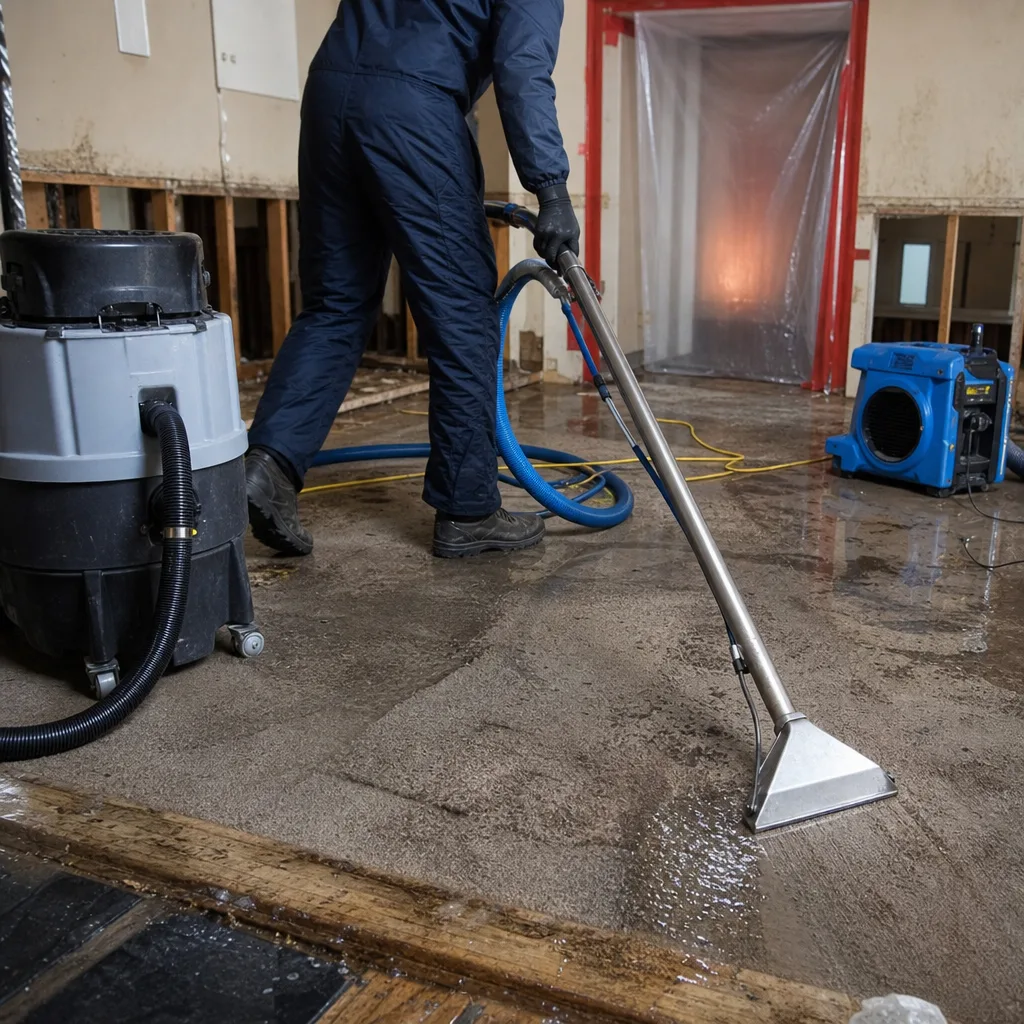
Multi-Unit & HOA Restoration
Weehawken’s upper-town rowhouses and lower-tier condo buildings put multiple owners under one roof. That means one leak affects five units, and one fire affects a hallway, a stairwell, and the shared mechanical room. We work directly with HOAs and property managers on restoration that respects shared walls, common areas, and the legal reality that no owner wants to pay for the neighbor’s damage. Our moisture mapping extends beyond the unit where water first appeared, because Weehawken’s party walls transport water laterally within hours.
Industrial Facility Cleanup
The industrial and warehouse spaces near the northern edge of Weehawken and along the rail corridor carry their own restoration profile: concrete floors, high-bay ceilings, electrical infrastructure, and inventory that must be triaged, not just thrown out. We bring extraction capacity, desiccant dehumidifiers, and HEPA air scrubbing scaled for large open volumes. Document and inventory recovery is part of the job, with photo documentation your insurer will accept.
Large-Loss Response
When a nor’easter pushes Hudson River surge into a Port Imperial parking structure, you’re not scheduling a service call. You need a large-loss crew on site within the hour. We run multiple crews, industrial-scale extraction and drying equipment, and a project manager who speaks adjuster. Saltwater intrusion in elevator pits, electrical rooms, and reinforced concrete requires a scope of work that names corrosion remediation explicitly, because without that language, the carrier will not authorize structural drying.
Business Interruption Minimization
Every closed day is a loss, and in Weehawken’s commercial corridor, a week of closure can outrun the cost of the restoration itself. We sequence the work to get revenue-generating spaces back online first, when it’s safe to do so. That might mean restoring the storefront and sales floor before the back office, or getting a restaurant’s kitchen functional while the dining room dries. We document the business interruption claim alongside the property claim, because your carrier needs both.
What happens when you call
- 1
A real person answersNo phone trees - you reach a local pro.
- 2
You get an upfront price rangeHonest numbers before anyone is dispatched.
- 3
A background-checked tech heads outLicensed & insured, dispatched right away.
- 4
You approve before work beginsNothing starts until you say go.
Commercial Restoration Costs in Weehawken, NJ
In Weehawken, a commercial water cleanup from a simple supply-line break in a single storefront typically runs $3,500 to $12,000. When a building is part of a larger Commercial Restoration response, that cost increases based on the damage class and the size of the affected area. A Port Imperial category 3 surge event in a below-grade parking structure or mechanical room pushes well past that range, often into the $35,000 to $150,000 range, because structural drying, corrosion remediation, and elevator pit restoration are not cosmetic priced work. Full commercial fire restoration for a 2,000-square-foot storefront commonly lands between $25,000 and $80,000, more if smoke migration affected neighboring units. Mold remediation on a previously undetected leak in a multi-unit property typically runs $4,500 to $18,000, depending on containment area and whether drywall, insulation, and framing must be removed. The free visual inspection gives us a chance to put a real, written scope in your hands before work begins. Call (518) 314-5660 and we’ll walk the loss with you, explain what the numbers mean, and help you file the claim if there’s one to file.
We Also Serve Cities Near Weehawken
Crews from our Weehawken service area regularly respond to commercial losses in Union City, Hoboken, and North Bergen as well. Same live dispatch, same certified crews, same 90-Day Done Right Promise. If your building sits across the township line, the phone number is the same, and so is the standard.
Serving Weehawken, NJ - Our Local Coverage Area
We’re based in the Weehawken area and know this community well. Use the map below to see our service coverage - if you’re nearby, we can almost certainly help.
Weehawken Commercial Restoration Questions, Answered
How does Weehawken’s two-tier geology change the drying plan for a commercial building?
It changes the water classification and the drying target. On the upper plateau, water is typically Category 1 or 2 freshwater, and the fight is against lateral migration through shared party walls. At Port Imperial, water is often Category 3 brackish surge, and the drying plan must include corrosion remediation and desiccant dehumidification for concrete and steel. A drying plan built for one tier fails on the other.
Why do Weehawken HOAs need saltwater intrusion documented separately from freshwater flooding?
Because insurers authorize structural drying and corrosion remediation only when the scope of loss names saltwater intrusion explicitly. If the adjuster sees “water damage” without “brackish surge,” they’ll price it as a freshwater cleanup and deny the rebar, elevator pit, and electrical remediation line items. We document saltwater intrusion in our moisture mapping from the first hour.
Can commercial restoration in upper Weehawken prevent recurring basement flooding from hillside runoff?
Yes, and it should. Restoration is not just cleanup; it’s also the opportunity to correct the drainage defect that let water in. We rebuild to keep water out, not just to replace what the water destroyed. For upper-town buildings, that often means addressing foundation waterproofing, downspout routing, and the saturated soil conditions that the Palisades runoff creates every wet season.
How fast can business interruption be minimized after a Port Imperial flood event?
Same visit. A crew is on site within 45 minutes of your call to (518) 314-5660. We start extraction immediately, set drying equipment, and sequence the work so occupied floors and revenue-generating spaces reopen first where it’s safe. The faster we start, the less you lose. We document the business interruption claim alongside the property damage claim.
What makes Weehawken multi-unit commercial restoration different from nearby Hoboken or Jersey City?
The escarpment. Weehawken’s upper-town rowhouses sit uphill from the waterfront, so runoff saturates foundations and party walls in a way Hoboken’s street-grid flooding doesn’t. And Port Imperial’s below-grade infrastructure is exposed to Hudson River surge in a way most inland Jersey City buildings are not. Contractors who treat the whole Hudson waterfront as one flood zone miss the distinction.
How fast can you actually get to my Weehawken property?
Within 45 minutes, generally faster. We have crews stationed to reach 07086 quickly, day or night. A live dispatcher gives you a real ETA when you call, and the truck arrives when promised. For active water flowing into a commercial space, that first hour is the difference between drying floors and replacing them.
Will my commercial insurance cover commercial restoration?
Most commercial property policies cover sudden and accidental water or fire damage, but coverage turns on documentation. We photograph every room, log daily moisture readings, and write the scope in the carrier’s language, including the brackish surge distinction where it applies. We bill the carrier directly and speak to your adjuster on your behalf. Call (518) 314-5660 and we’ll help you file it correctly the first time.
Do I need full restoration, or just a cleanup?
That depends on the water category and how far it migrated. Clean Category 1 water from a supply line, caught within hours, may only need extraction and drying. Category 3 brackish surge, or water that sat over 48 hours and soaked into drywall and framing, typically requires removal and full restoration. Our free visual inspection gives you the answer in writing, with moisture readings to back it up.
Written by Curt Bowman, Owner at Floodline Restoration Co., serving Weehawken and the surrounding communities with certified commercial restoration crews.