
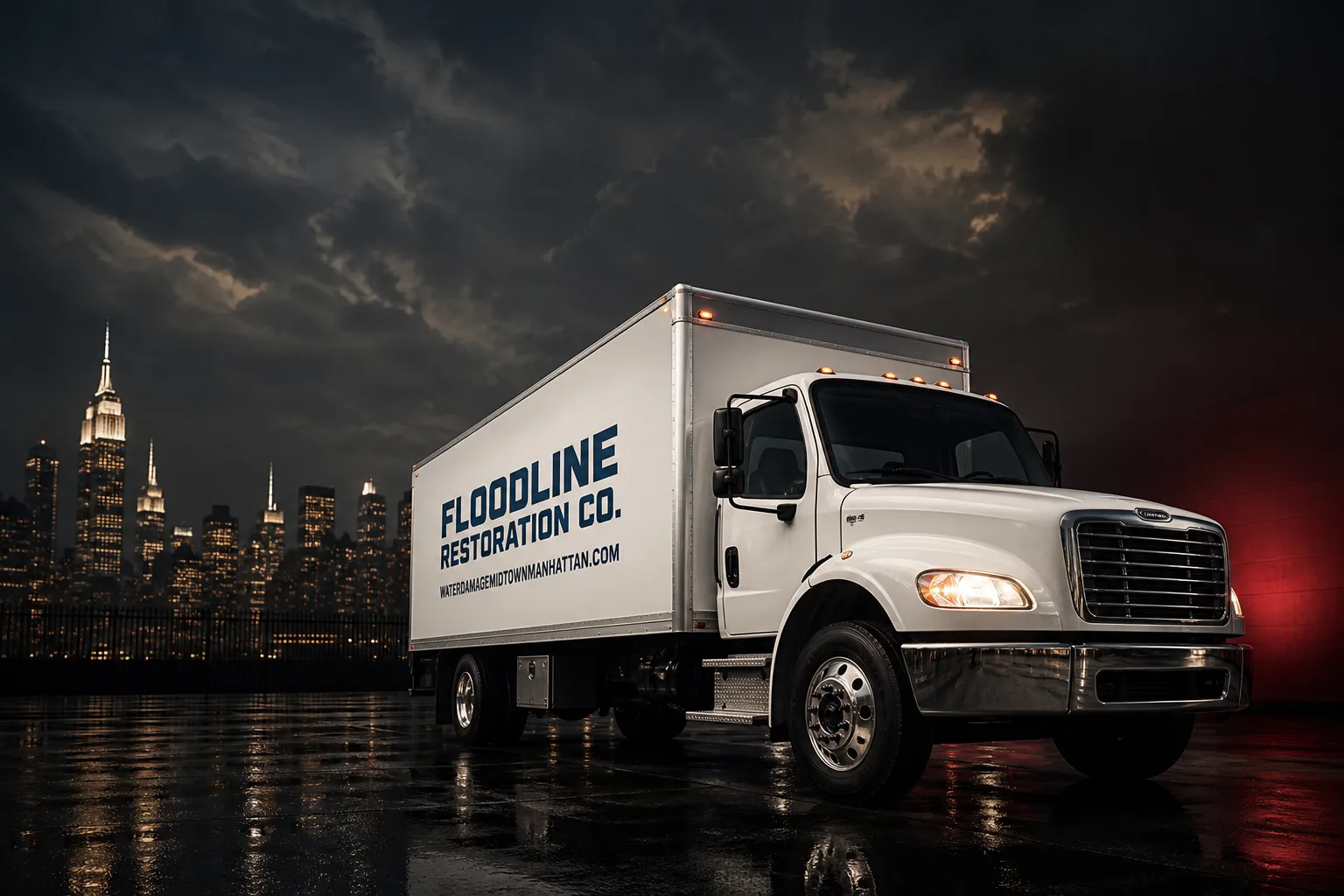
Free visual inspection and a written scope of work before any mitigation begins - photos, moisture readings, and drying logs go in your claim file
The scope we write is the scope we bill. Anything new gets shown to you, in writing, before we touch it.
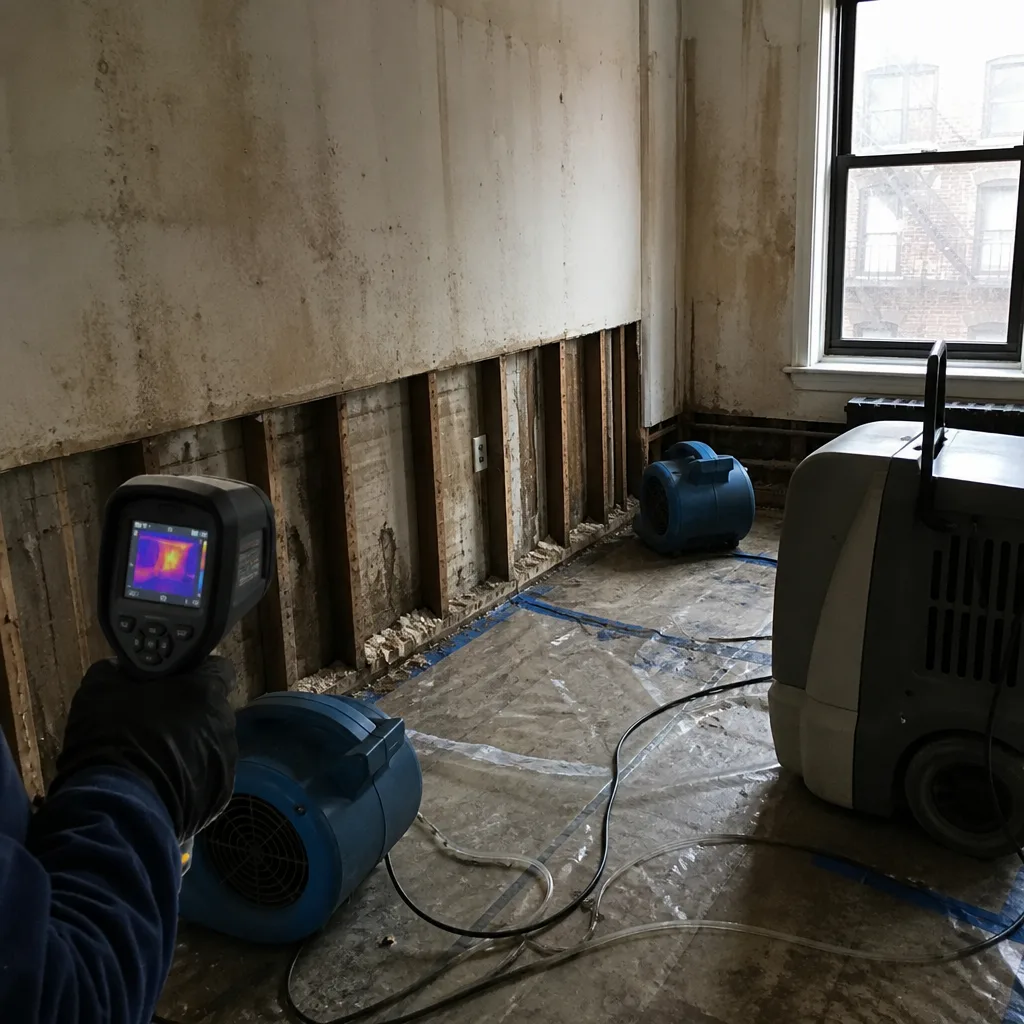 Before
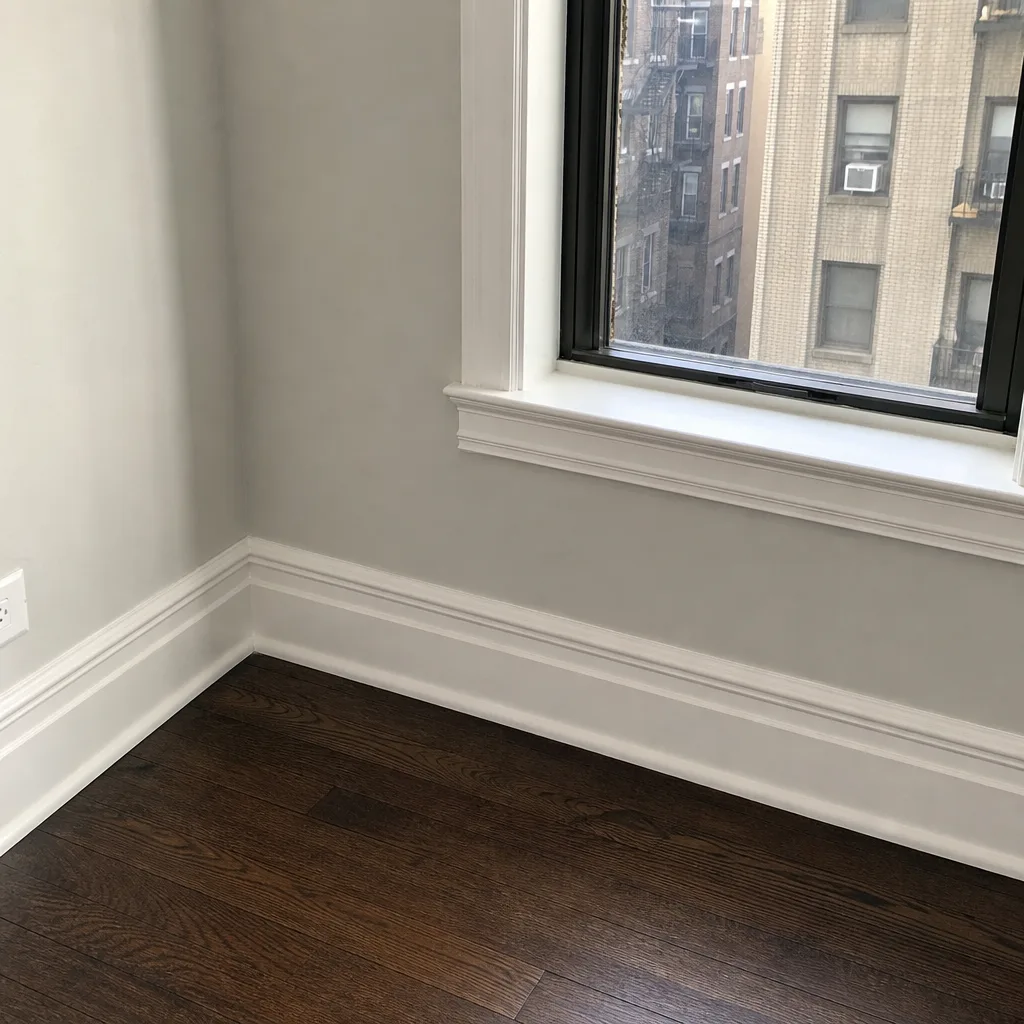 After
After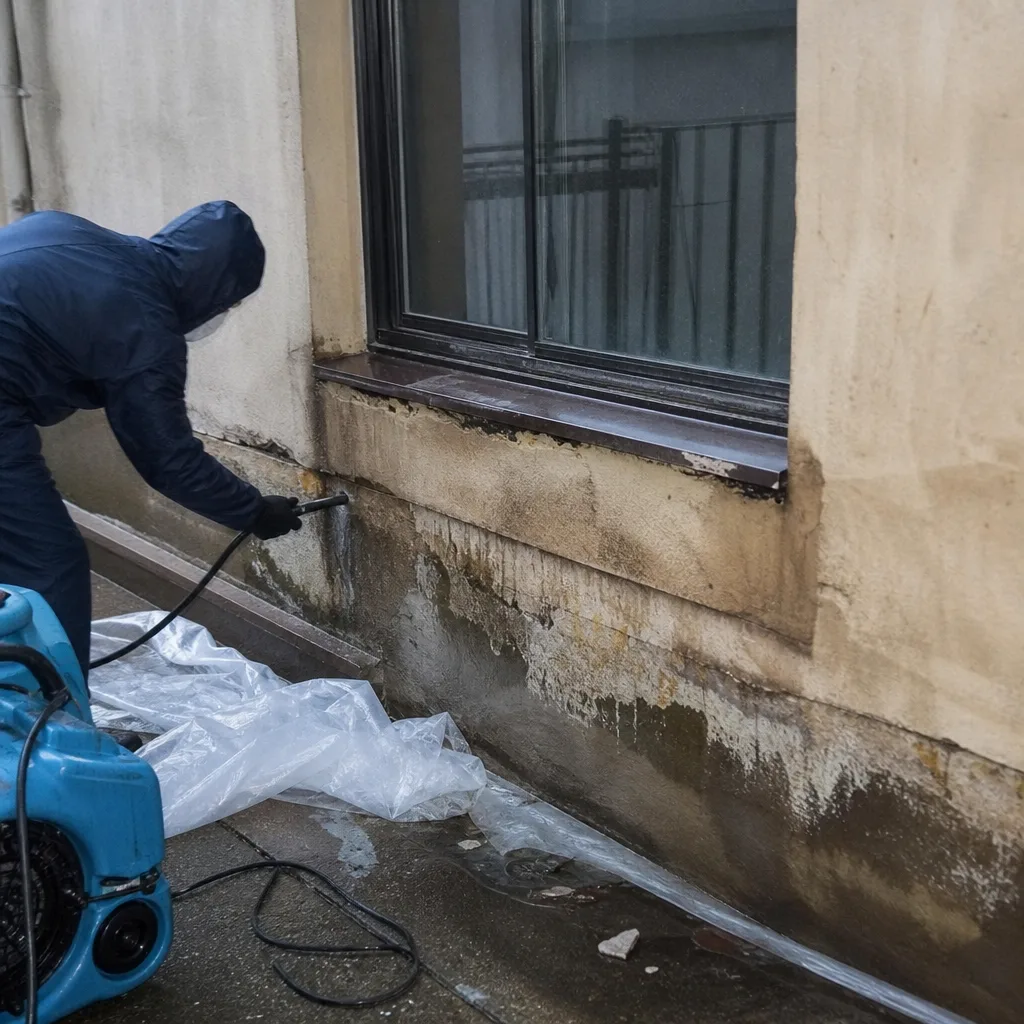 Before
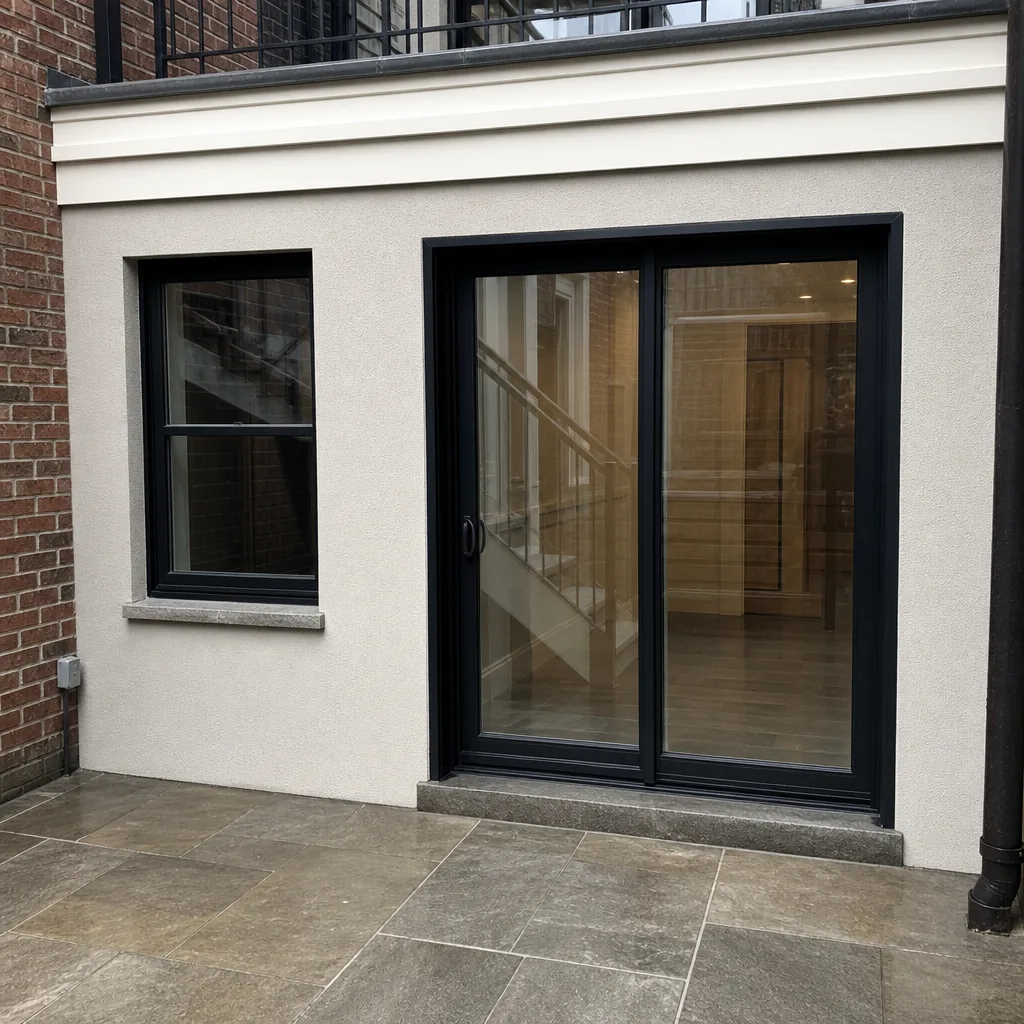 After
After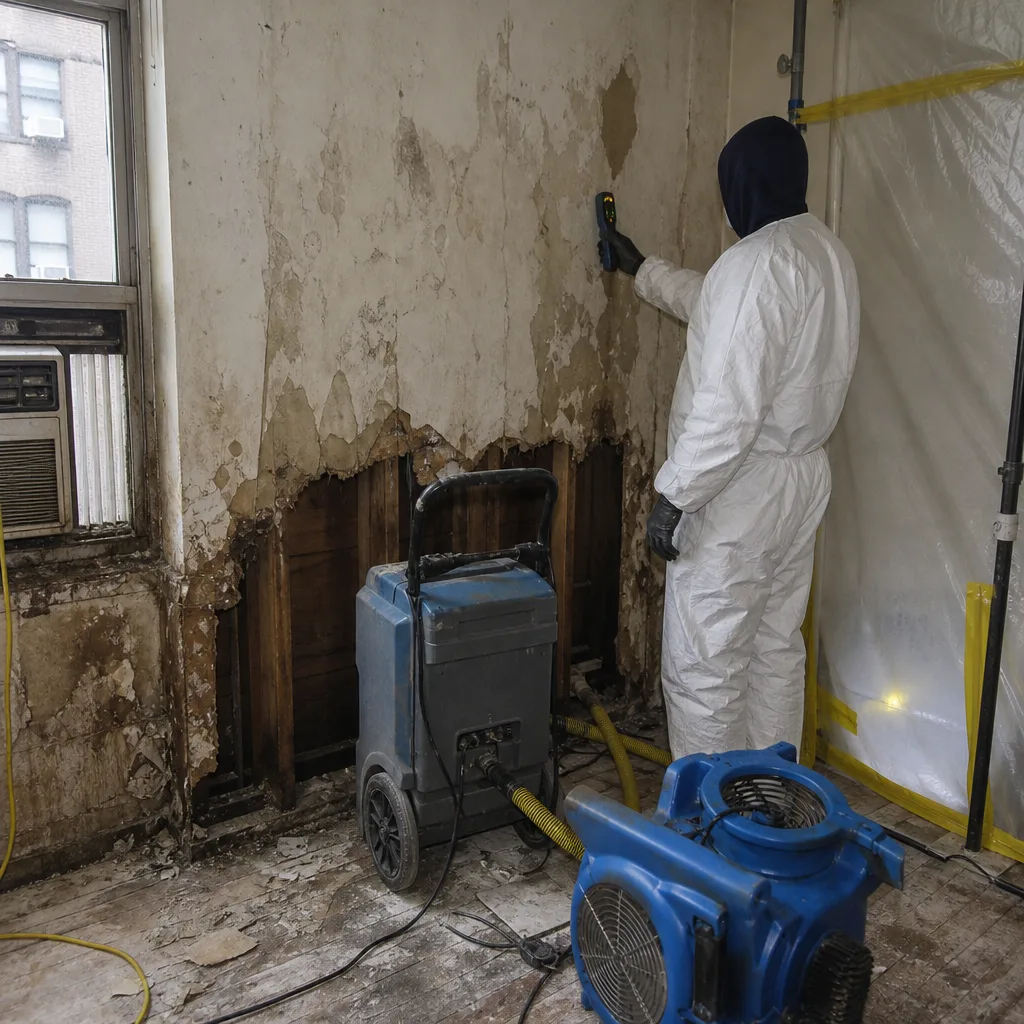 Before
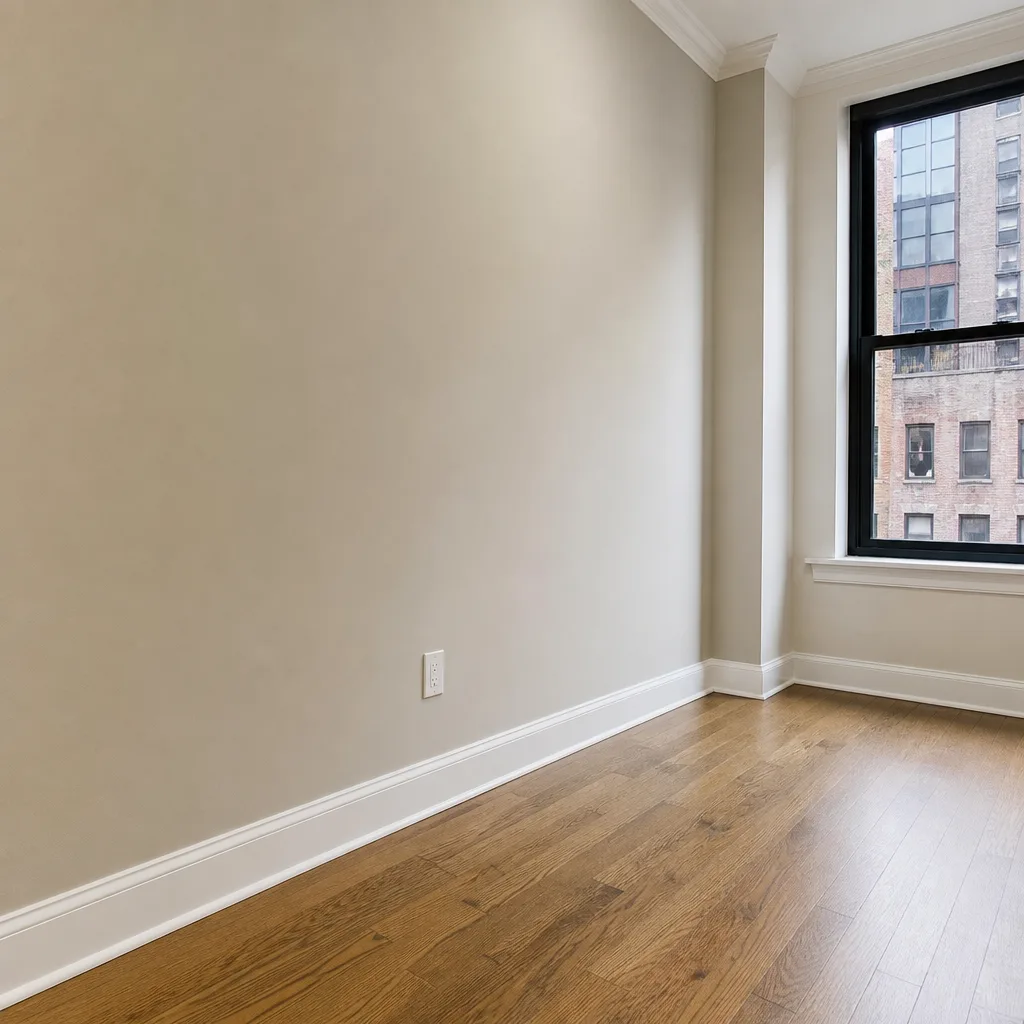 After
After24/7 Emergency Commercial Restoration in Midtown Manhattan
Commercial restoration in Midtown Manhattan starts with a phone call to a live dispatcher at (518) 314-5660, any hour of any day. Floodline Restoration Co. answers with a person, not a recording, and gets a certified crew moving toward your building within 45 minutes. A burst supply line in a pre-war tower near Grand Central or a failed curtain-wall gasket on a Sixth Avenue office building will not wait for business hours, and neither do we. The first hour after water intrusion, smoke migration, or sewage backup determines whether you are looking at a contained cleanup or a multi-floor remediation with asbestos abatement protocols. Call us while the water is still moving. We will be there when we say, and the line the water left is where we start, with a free visual inspection and a written scope before any work begins.
Understanding Commercial Restoration Severity in Midtown Manhattan Properties
Midtown Manhattan’s commercial buildings split into two distinct restoration profiles, and both demand different playbooks. Pre-war towers, built between 1900 and 1945, carry cast-iron supply lines, steam-heat distribution systems, and layered interior finishes that often contain asbestos in pipe insulation, floor tile, and plaster. A single pipe failure in these buildings sends water down vertical mechanical chases and elevator shafts, spreading across a dozen floors in minutes. Category 3 water, contaminated with sewage or steam condensate, requires full containment, HEPA air scrubbing, and often NYC DEP abatement coordination before drying can begin. Post-war curtain-wall towers face a different enemy: failed window gaskets at elevation. Nor’easter wind-driven rain penetrates at pressure differentials far exceeding ground-level exposure, wetting entire exposure-facing floor stacks behind finished interiors where mold establishes before anyone sees a stain. We classify water by category, moisture-map every affected surface with thermal imaging, and run structural drying with Dri-Eaz desiccants and Phoenix air movers until hygrometer readings hit the dry standard, logged every four hours. That log goes to you and your carrier. No guessing. No shortcuts.
Why Midtown Manhattan Property Owners Choose Floodline Restoration Co.
- 45-minute response commitment. A crew is dispatched and moving toward your Midtown Manhattan address within 45 minutes of your call, not “sometime today.”
- 24/7 live answer, always a person. At 2 a.m. on a Sunday, a live dispatcher picks up. No automated system, no call-back queue. You reach a human who can send help.
- IICRC-certified crews, WRT and FSRT. Our technicians hold IICRC Water Damage Restoration Technician and Fire & Smoke Restoration Technician certifications, plus AMRT where mold is present. They are background-checked and uniformed.
- Free visual inspection and written scope. We assess the damage, document it photo room by room, and put the scope of work in writing before any equipment rolls in. A square deal: no surprises on the bill.
- Direct insurance billing. We bill your carrier directly and coordinate with your adjuster. You never play messenger between Floodline and the insurance company.
- One team from extraction to reconstruction. The same certified crew that reads the moisture map on day one handles daily readings, hands the log to you and your carrier, and rebuilds what needs rebuilding. No mid-job handoff, no inherited subcontractors.
Our Commercial Restoration Process
Inspection & Assessment
We arrive, walk the affected floors, and identify water category, smoke residue type, or mold spread. Thermal imaging and hygrometers map hidden moisture behind walls and above ceilings. You get a written scope and a straight answer about what this will cost.
Extraction & Stabilization
For water losses, we pull standing water with truck-mounted and portable extraction units. For fire losses, we stabilize soot and seal off unaffected areas. For steam-tunnel events in Grand Central-area sub-basements, we coordinate containment and abatement before extraction begins.Done right, this step stops the spread within hours.
Drying & Dehumidification
Dri-Eaz desiccants and Phoenix air movers run continuously, with Injectidry systems drawing moisture from wall cavities and under floors. We log readings every four hours until the dry standard is met. You see the log. Your insurer sees the log.
Cleaning & Sanitization
HEPA air scrubbers filter affected air. Surfaces are cleaned, sanitized, and treated to prevent mold and odor. For fire damage, our Fire & Smoke Damage Restoration in Midtown Manhattan addresses soot residue by type and removes smoke odor from HVAC systems and porous materials.
Asbestos & Specialty Coordination
In Midtown Manhattan, many commercial losses require licensed asbestos abatement before restoration can legally proceed. We work alongside your building’s abatement contractor and NYC DEP inspectors, sequencing our work so drying starts the moment air-clearance testing passes. We have done this on steam-tunnel condensate events, cast-iron supply line failures, and curtain-wall envelope breaches, and we know the order of operations.
Repairs & Restoration
Once the affected areas are dry, clean, and cleared, we rebuild. Drywall, plaster, flooring, trim, paint, and full reconstruction if needed. The same crew, the same accountability. Backed by our 90-Day Done Right Promise in writing.
Need Emergency Commercial Restoration in Midtown Manhattan Now?
Crews minutes away, answering live 24 hours a day. The sooner we start, the less it costs.
Working With Your Insurance Company
Commercial restoration claims in Midtown Manhattan get complicated quickly, especially when asbestos abatement, multiple tenants, and vertical water spread are involved. Your carrier will want documentation from the first hour, industry-standard estimates, and a clear line between covered restoration and excluded maintenance. Floodline handles this directly. We photograph every affected room before and during work, log moisture readings daily, and produce a line-item scope your adjuster can approve without a fight. You called us to restore your building, not to become a claims negotiator. We bill your carrier directly and keep you informed, not involved. One team, one written scope, one conversation between us and your adjuster. Done right and backed in writing.
What We Provide Your Insurer
- Thorough documentation of the loss
- Photos of all damage, room by room
- Moisture readings and drying logs
- A detailed, line-item scope of work
- Direct coordination with your carrier
Built for Midtown Manhattan’s Loss Calendar
Midtown Manhattan’s commercial restoration calendar follows two hard seasons. Winter, from December through February, is the pipe-burst season. Deep freezes crack cast-iron supply lines in pre-war towers, and when a line lets go on the 30th floor of a 1920s office building, gravity does the rest. Water follows vertical chases and elevator shafts down through occupied floors, and by the time anyone notices, the damage runs from ceiling to sub-basement. Spring and fall bring nor’easters, and those storms do their worst at elevation. Sustained wind-driven rain presses horizontally against aging masonry facades and curtain-wall gaskets, forcing water through hairline cracks that would never leak under normal rainfall. A 1920s terra cotta or limestone facade with freeze-thaw cracked mortar joints lets moisture in behind finished interiors all winter, and by March, hidden mold is established behind plaster ceilings. Summer brings sudden thunderstorms and flash flooding that overwhelm aging roof drains and basement sumps. Every season has a failure mode, and every failure mode in Midtown Manhattan has a protocol. Ours starts with a live phone and a 45-minute response.
Commercial Restoration Across Midtown Manhattan’s Neighborhoods
Midtown Manhattan runs from roughly 34th Street to 59th Street, river to river, and the restoration picture shifts block by block. Around Grand Central, the pre-war towers on Lexington and Madison Avenues sit over Con Edison’s district steam tunnels. A steam main leak or condensate-line failure in these sub-basements means pressurized hot moisture coating surfaces with potential asbestos particulate, triggering a NYC DEP stop-work scenario until air-clearance testing passes. A restoration contractor in Brooklyn or Queens may never encounter this in a career. In Midtown West, the post-war curtain-wall towers near Eighth and Ninth Avenues fight wind-driven water at elevation, where failed window gaskets wet entire exposure-facing floor stacks. Murray Hill, with its mix of 1920s mid-rises and converted office buildings, sees more supply-line failures and vertical spread through mechanical chases. The Garment District and the blocks around Penn Station carry dense pre-war loft buildings with gravity-fed systems and shared vertical chases that move water between tenants fast. Our crews know the building types, the response routes, and the typical loss pattern for each corridor. That knowledge cuts hours off the response time when you need it most.
Specialized Commercial Restoration Services We Offer in Midtown Manhattan
Office & Retail Restoration
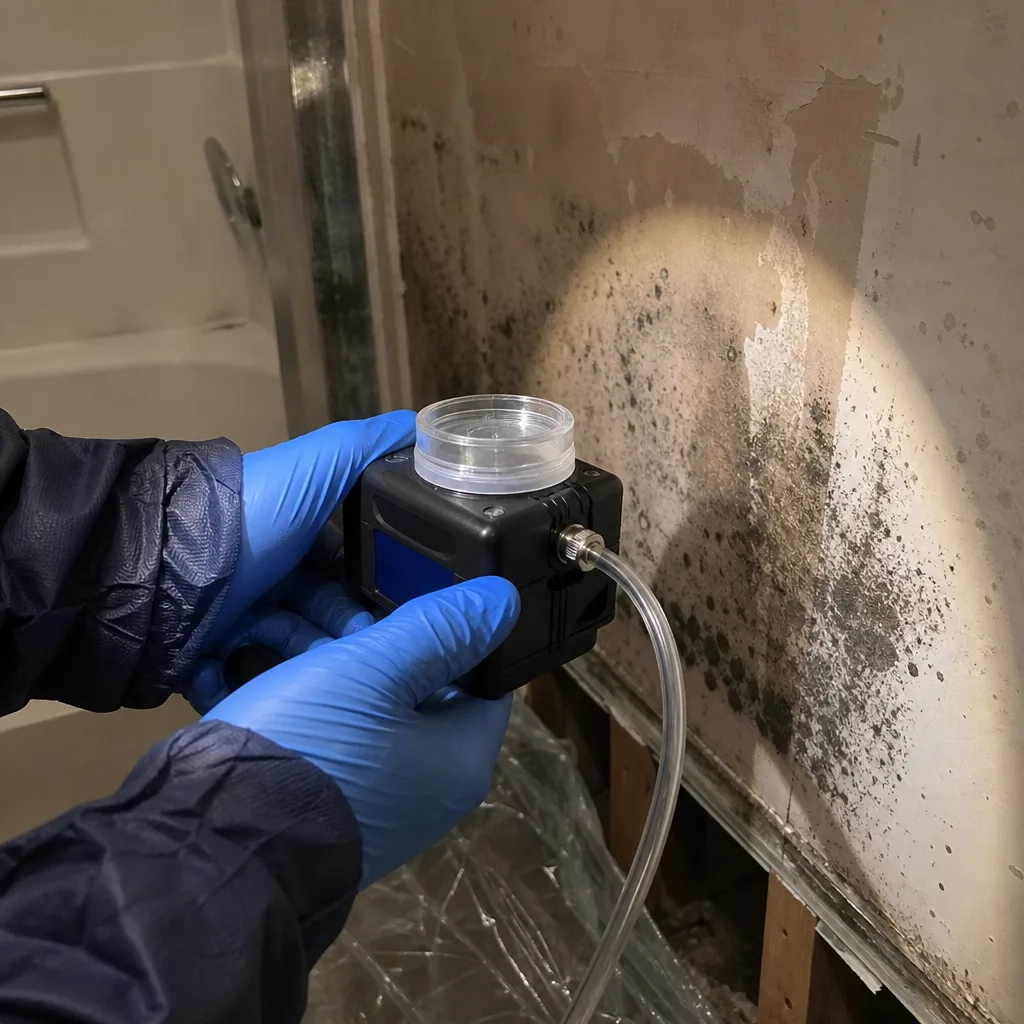
A water loss in a Midtown office tower or retail storefront does not just damage drywall. It shuts down payroll, inventory, and customer flow. We restore occupied commercial spaces floor by floor, with containment to keep unaffected areas open and air scrubbers running while work proceeds. Our goal is the same every time: get your business back to pre-loss condition without closing more floors than absolutely necessary. If your office or retail space near Fifth Avenue or Times Square takes on water, call us before the damage spreads.
Large-Loss Response
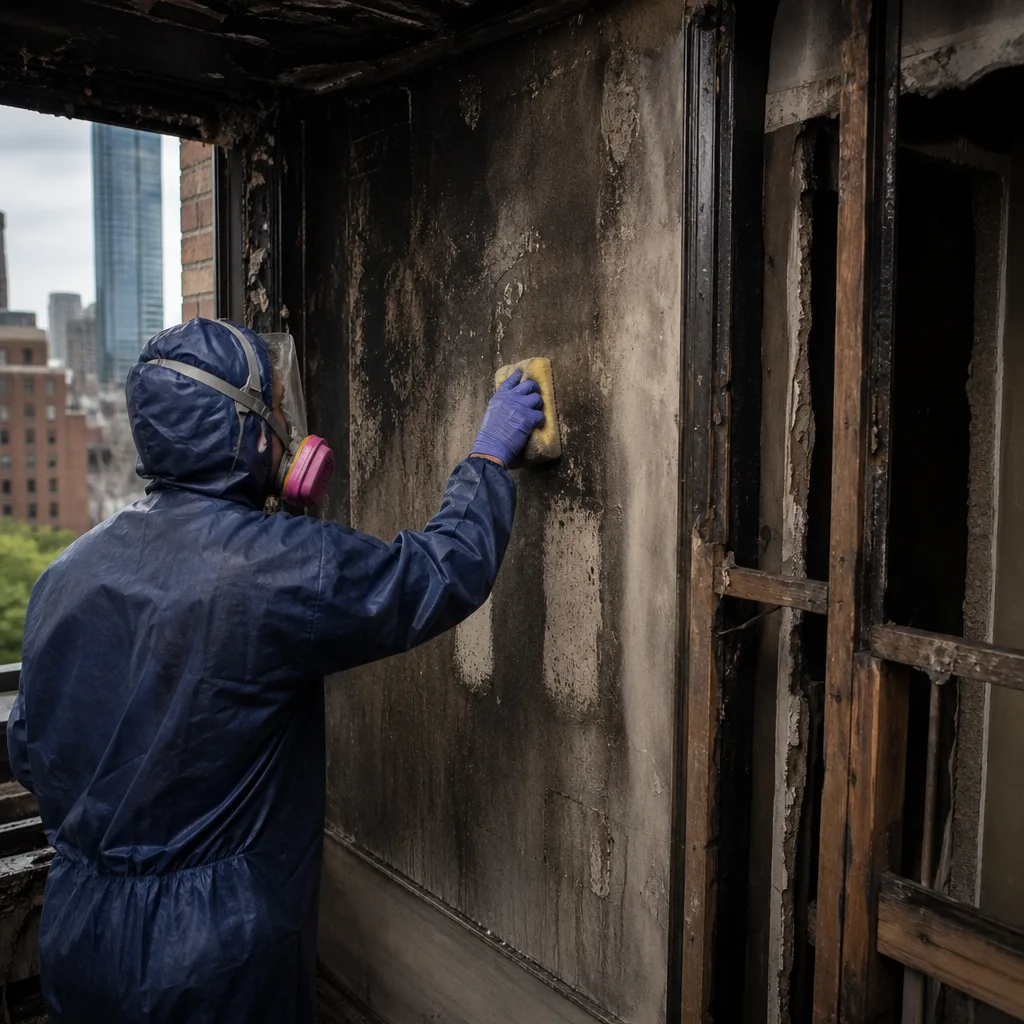
When water spreads across twelve floors of a pre-war tower, a two-truck crew and a few dehumidifiers will not cut it. Our Commercial Restoration team runs large-loss response with multiple crews, industrial desiccant systems, and a project manager on site coordinating containment, abatement sequencing, and daily moisture logging. We were called to a 1920s cast-iron supply line failure in a pre-war Midtown office tower near Grand Central, where water shot down a vertical chase and soaked twelve floors of original plaster and asbestos-containing pipe insulation. Our crew set up containment on three floors at once, ran HEPA air scrubbers, and began moisture mapping while the building’s abatement contractor removed asbestos materials under DEP oversight. Once air-clearance testing passed, we pulled Category 3 water from the basement, ran structural drying with Dri-Eaz desiccants, and logged readings every four hours. The tower was back to pre-loss condition before mold hit the 24-hour mark.
Business Interruption Minimization
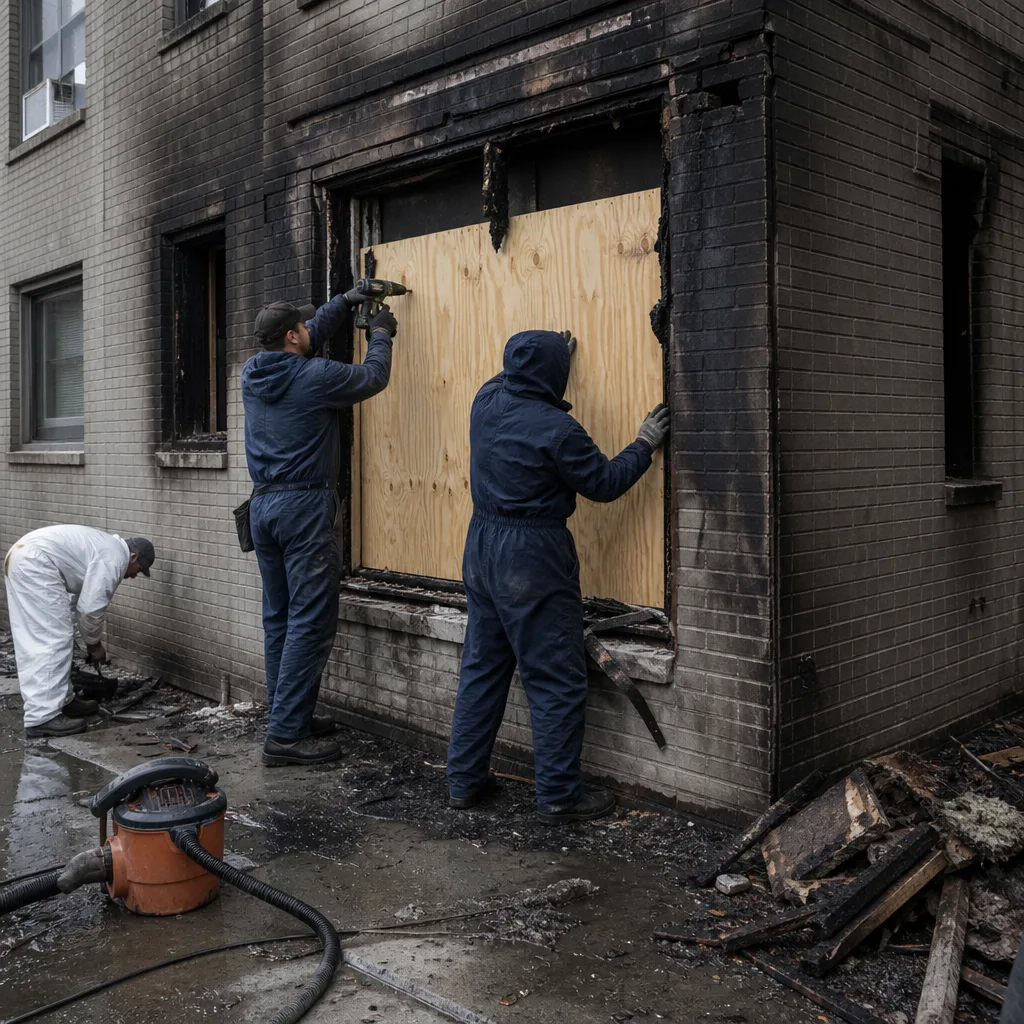
Every day your Midtown Manhattan commercial space is closed for restoration is a day of lost revenue, tenant complaints, and uncomfortable conversations with your own insurer about business interruption coverage. We sequence work so occupied floors stay open wherever code and safety allow. Containment barriers, negative air pressure, and phased drying let us isolate the affected zone while the rest of the building keeps operating. The written scope you approve includes a schedule, and we hold to it. Less downtime, fewer surprise discoveries, a faster return to revenue.
Multi-Unit & HOA Restoration
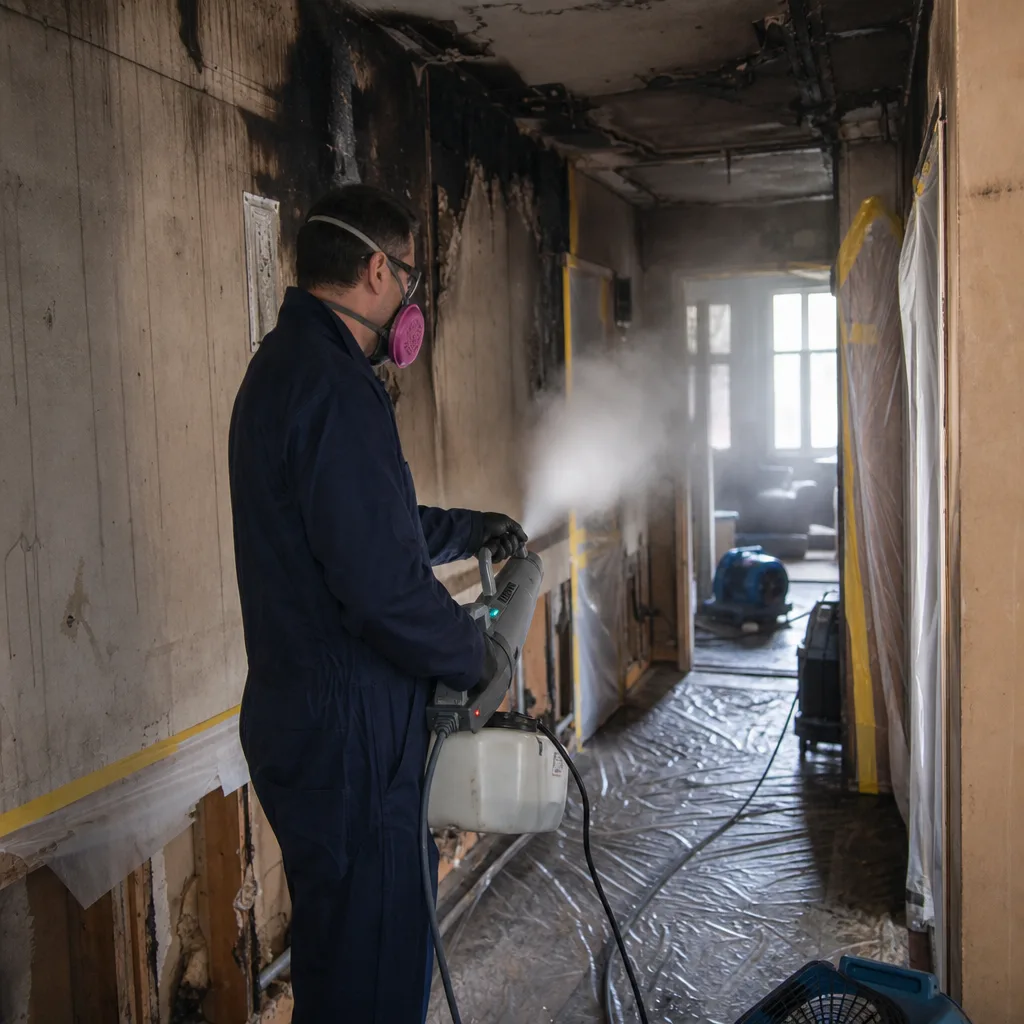
Midtown Manhattan’s co-ops, condos, and commercial HOAs share walls, risers, and vertical chases no single unit owner controls. A sewage backup in one commercial kitchen can contaminate common areas on three floors. A supply line failure above a retail tenant floods the spaces below. We work with boards, property managers, and multiple affected owners, coordinate with building engineers, and document everything so each owner’s carrier receives exactly what they need. The result is a restoration that does not become a boardroom fight.
Industrial Facility Cleanup
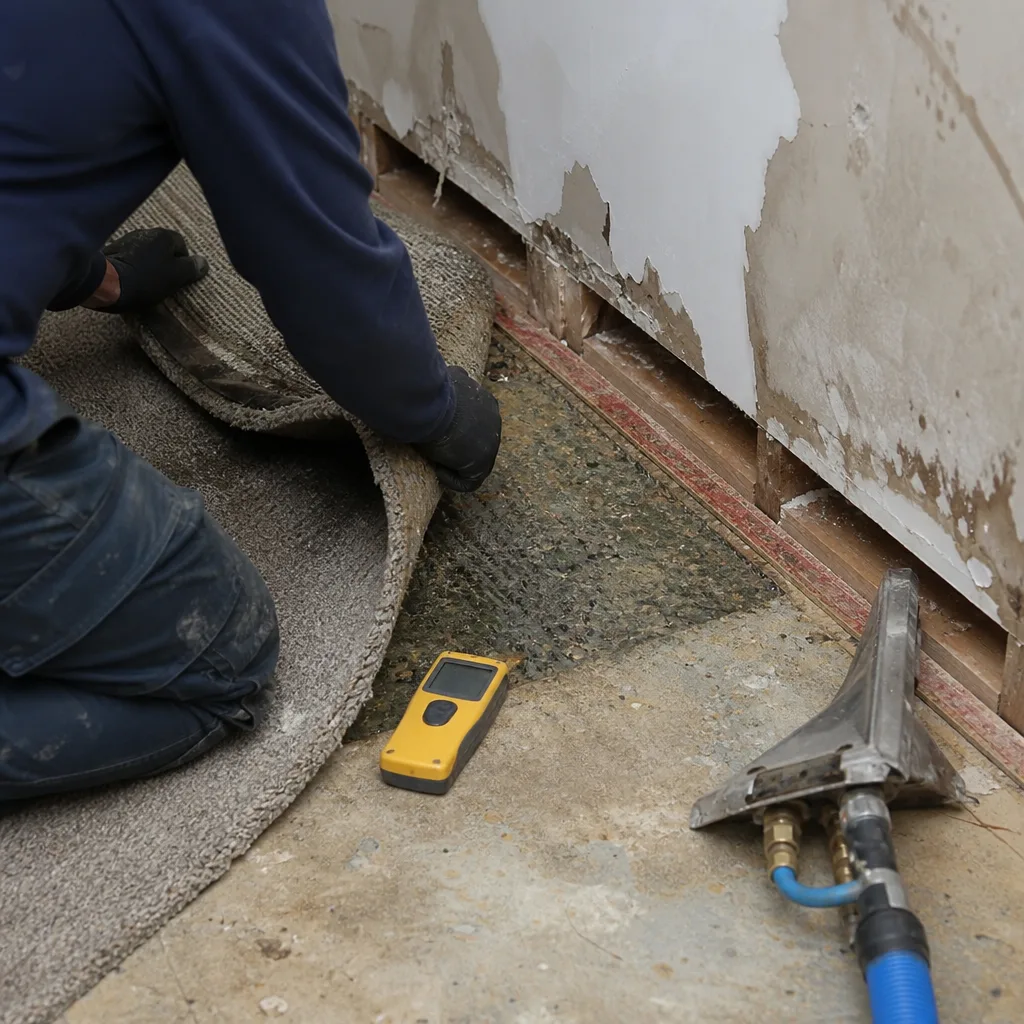
Midtown is not all office towers and hotel lobbies. Printing plants, commercial kitchens, parking structures, and mechanical spaces below grade face their own restoration profile: grease-laden water, fuel contamination, heavy floor loadings, and ventilation systems that spread odor and particulates. We bring the same certified crews and professional-grade Dri-Eaz, Phoenix, and XPOWER equipment to industrial spaces that we bring to a Fifth Avenue lobby, plus the containment and safety protocol an active industrial environment requires.
What happens when you call
- 1
A real person answersNo phone trees - you reach a local pro.
- 2
You get an upfront price rangeHonest numbers before anyone is dispatched.
- 3
A background-checked tech heads outLicensed & insured, dispatched right away.
- 4
You approve before work beginsNothing starts until you say go.
Commercial Restoration Costs in Midtown Manhattan, NY
Commercial restoration in Midtown Manhattan runs higher than the boroughs and suburbs, and for honest reasons: asbestos abatement coordination, vertical access, building security requirements, and after-hours freight elevators all add cost. A basic single-room water cleanup in a Midtown office suite typically runs $1,800 to $4,500. A multi-floor supply-line failure with vertical spread, containment, asbestos sequencing, and structural drying lands between $25,000 and $85,000 depending on floors affected and finishes. A steam-tunnel condensate event with DEP stop-work and air-clearance testing pushes $50,000 to $150,000 or more on large floor plates. If your carrier covers the loss, we bill directly and you pay your deductible, nothing hidden. The free visual inspection gets you a written scope and a firm number before any equipment arrives. Call (518) 314-5660 for a straight answer on your specific building and situation.
We Also Serve Cities Near Midtown Manhattan
Floodline serves Midtown Manhattan and the surrounding commercial districts, including Midtown West, Murray Hill, Washington Square, and Upper Manhattan. If your building sits on the edge of our service area, call anyway. Our dispatch is live 24 hours and we will tell you honestly whether we can reach you within the 45-minute window. Most calls, we can.
Serving Midtown Manhattan, NY - Our Local Coverage Area
We’re based in the Midtown Manhattan area and know this community well. Use the map below to see our service coverage - if you’re nearby, we can almost certainly help.
Midtown Manhattan Commercial Restoration Questions, Answered
How do you handle asbestos abatement coordination on a Midtown commercial water loss?
We sequence our restoration work around your building’s licensed abatement contractor and NYC DEP requirements, setting containment and beginning moisture mapping only after asbestos materials are removed and air-clearance testing passes. We have done this on steam-tunnel condensate events, vertical chase failures, and pre-war plaster ceiling losses. You get one point of coordination and a written sequence of operations, not a three-way argument between contractors.
What is your protocol for water descending through vertical chases in a Midtown high-rise?
We treat vertical water spread as a multi-floor loss from the first hour. Crews set containment on every affected floor, run HEPA air scrubbers to control airborne particulates, and moisture-map each floor’s wall cavities with thermal imaging. Drying equipment is staged floor by floor, and readings are logged daily until every floor hits the dry standard. You and your carrier receive the full log.
Can you restore a Midtown commercial space without closing offices for days?
In most cases, yes. We use containment barriers and negative air pressure to isolate the affected zone, keep unaffected floors and suites operational, and phase drying so occupied areas stay usable. The scope of work you approve includes a schedule, and we hold to it. Business interruption minimization is built into how we plan, not an add-on you have to request.
How do you know if water damage behind a Midtown pre-war plaster wall is category 1 or 3?
We classify water by source, not by appearance. Clean supply-line water is Category 1. Water that has traveled through cast-iron plumbing, steam condensate lines, or sewage-contaminated systems is Category 2 or 3. Pre-war plaster walls hide the truth, so we cut inspection openings, test moisture content with hygrometers, and sample where contamination is suspected. The category determines the entire remediation approach, so we get it right before drying starts.
What documentation do you provide for insurance claims on a Midtown commercial restoration?
You and your adjuster receive photo documentation of all damage room by room, moisture readings and drying logs from day one through the dry standard, a line-item scope of work, and direct communication between our team and your carrier. We bill directly. You never play messenger, and the paper trail is complete enough for any commercial claim.
How fast can a crew actually get to a Midtown Manhattan address?
Within 45 minutes of your call, a certified crew is dispatched and moving. Our Commercial Restoration team is stationed to serve Midtown Manhattan specifically, with live dispatch around the clock. For steam-tunnel events, vertical water spread, or sewage backup, that first hour is the difference between a contained cleanup and a building-wide remediation. Call (518) 314-5660 and a person answers.
What does the 90-Day Done Right Promise actually cover?
If the restoration is not done right, we make it right, in writing, with no paperwork battles and no arguing. It is our Keystone Standard, tied to our K.E.Y.S. values code: Krafted right, Every time, Your home first, Standing behind it. We hand it to you with the moisture log and the final scope. A written guarantee, not a handshake.
What should I do in the first 30 minutes after discovering commercial water damage in Midtown?
Call (518) 314-5660. Do not enter standing water in a commercial basement or sub-basement, especially in buildings connected to Con Edison’s district steam tunnels, where water may be pressurized, hot, or contaminated. Shut off electricity to affected areas only if you can do so safely and without standing in water. Then wait for our crew. We will walk you through the next 30 minutes on the phone while dispatch routes the nearest team.
Written by Curt Bowman, Owner at Floodline Restoration Co., coordinating Commercial Restoration in Midtown Manhattan with crews answering live 24/7.