
Last updated August 25, 2026
Free visual inspection and a written scope of work before any mitigation begins - photos, moisture readings, and drying logs go in your claim file
The scope we write is the scope we bill. Anything new gets shown to you, in writing, before we touch it.
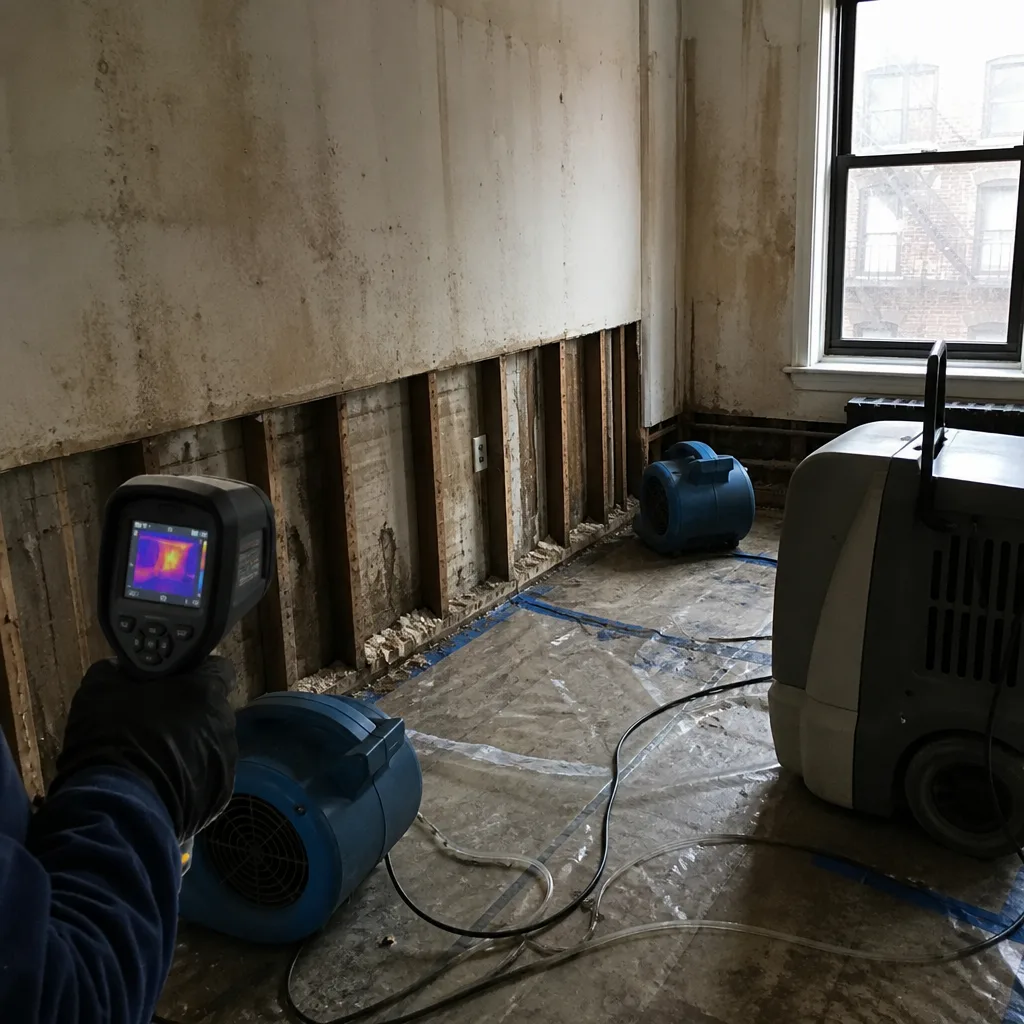 Before
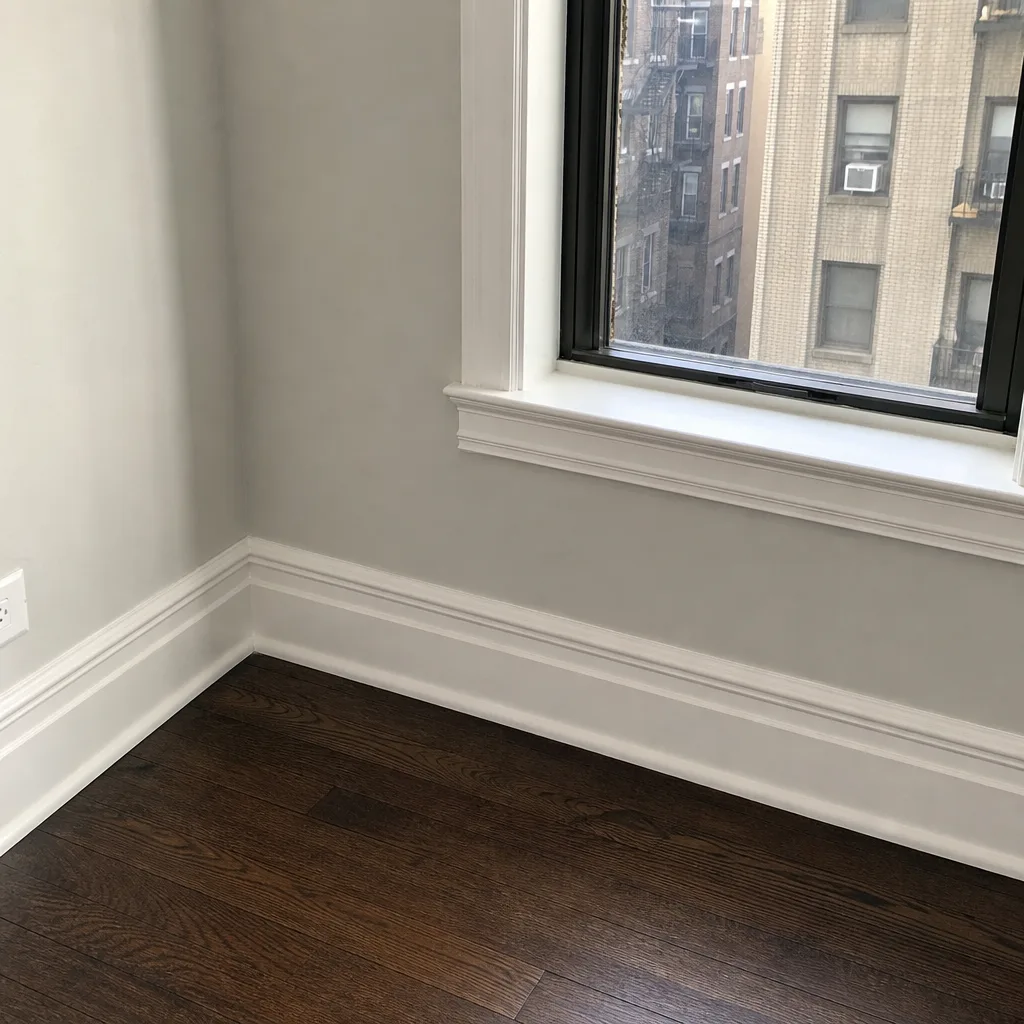 After
After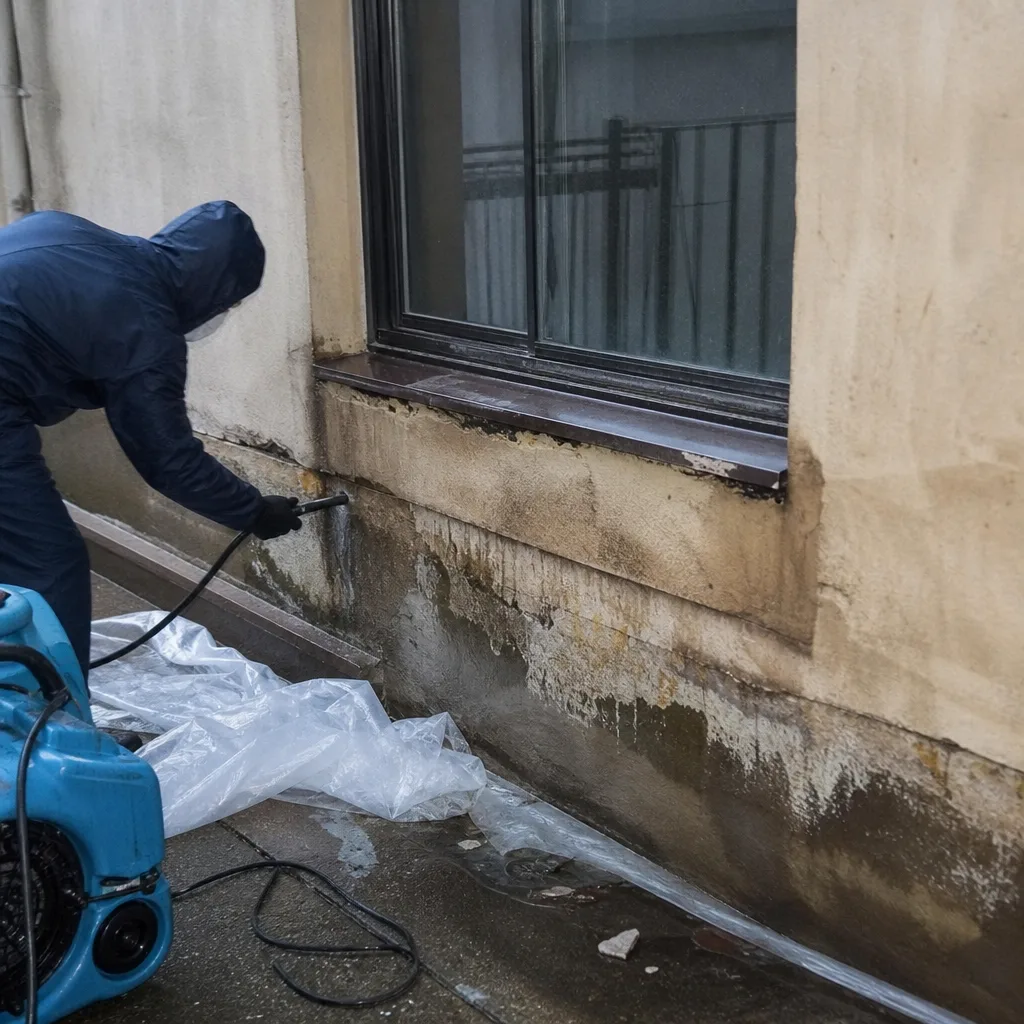 Before
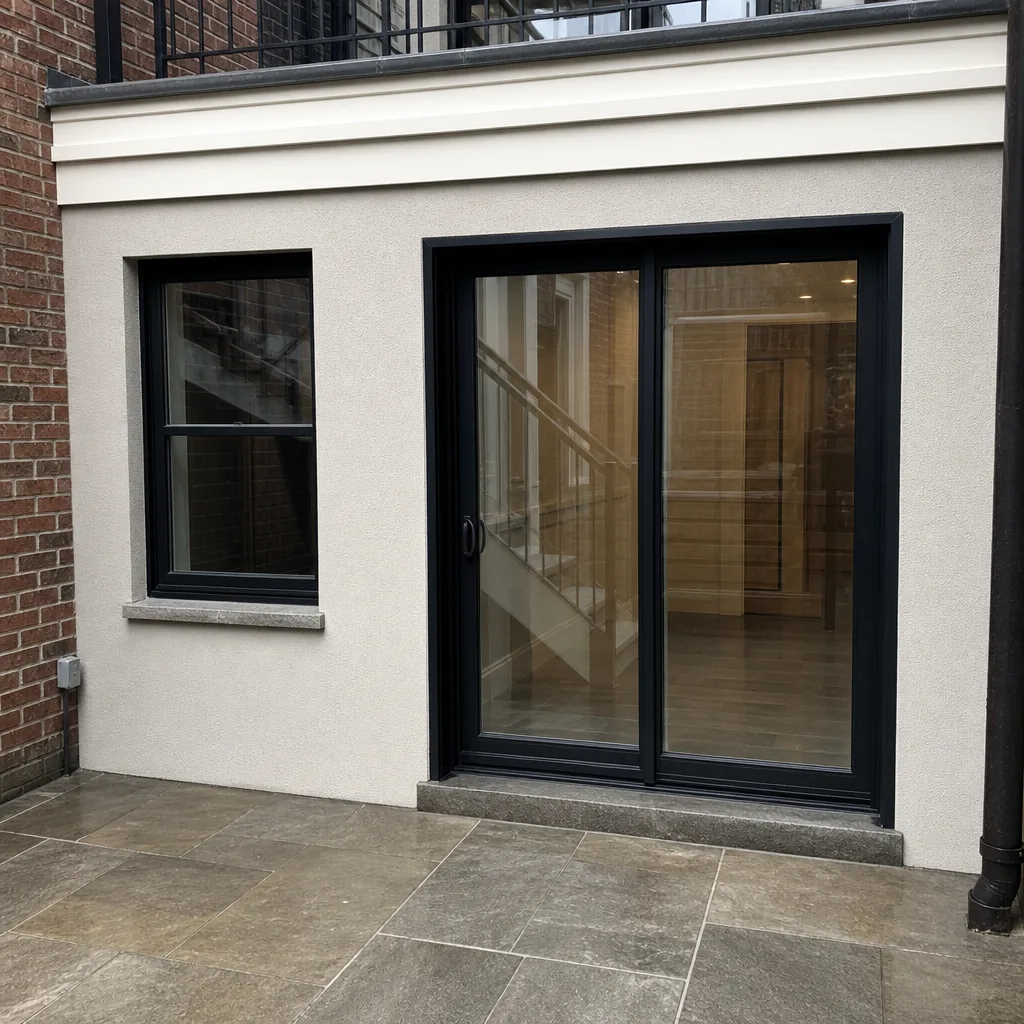 After
After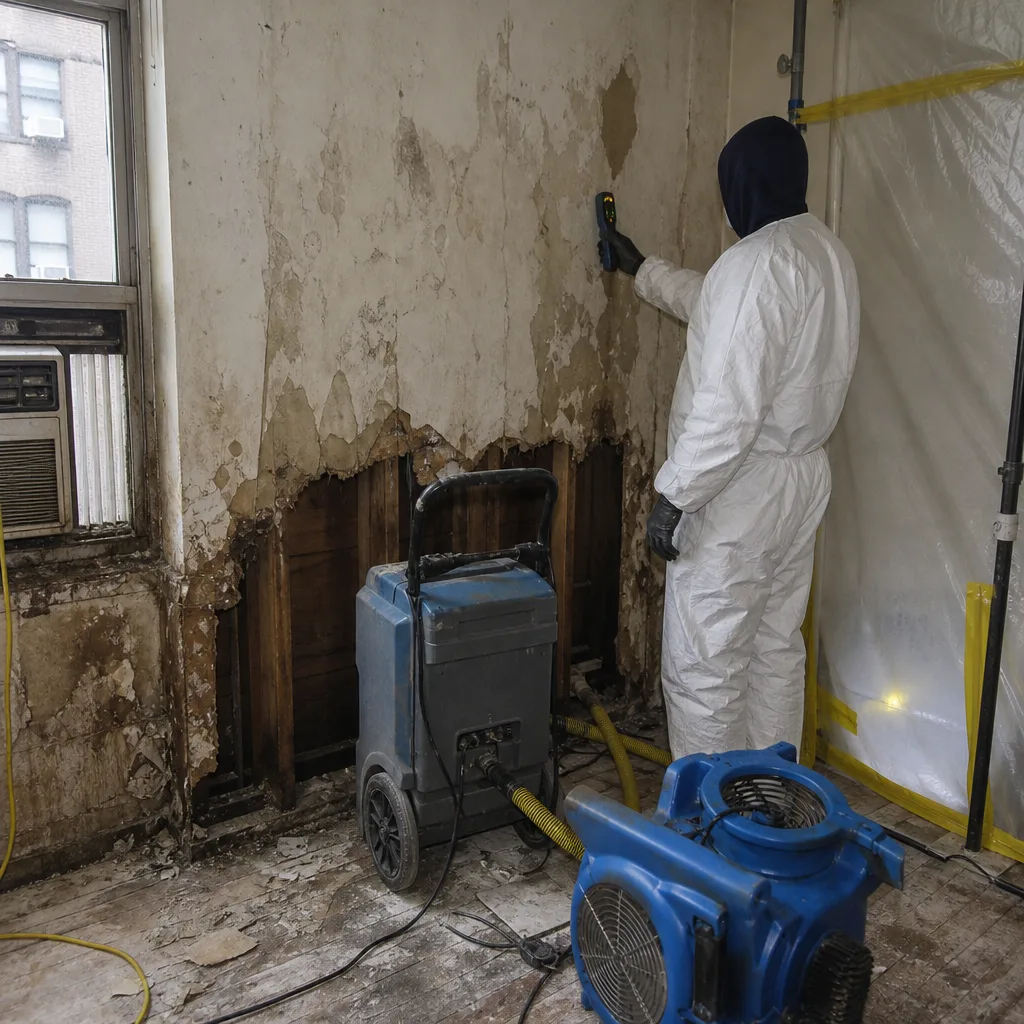 Before
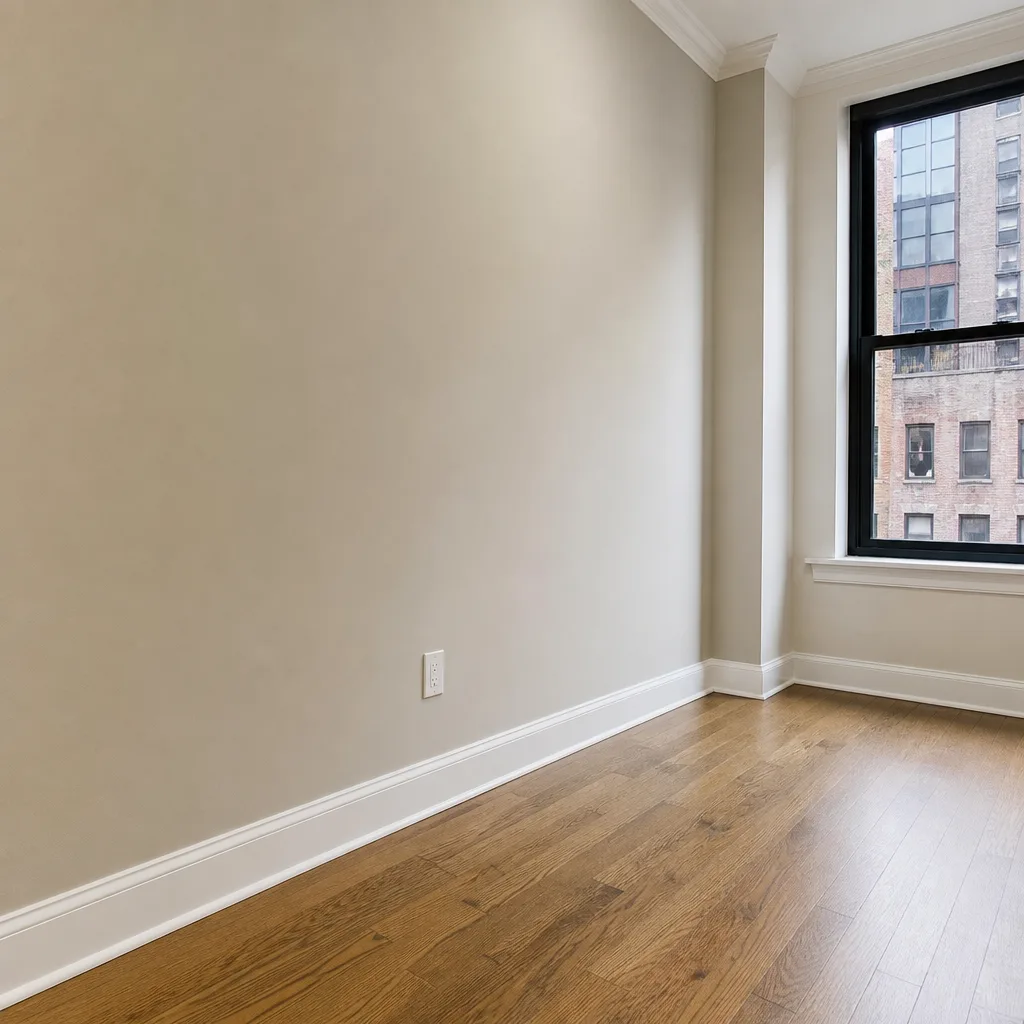 After
AfterSeasonal Damage Restoration Care for Midtown Manhattan: Year-Round Homeowner’s Guide
Midtown Manhattan homeowners lose more money to slow, undetected water damage than to headline storms. The truth is that a pinhole leak behind a Terra Cotta-tiled bathroom wall on East 52nd Street can do more long-term harm than a nor’easter that makes the evening news. That’s because storm damage is obvious, and the restoration starts immediately. Hidden moisture from ice dams, air conditioner condensate lines, and aging plumbing stacks works quietly for months. This guide explains the seasonal risks that affect Midtown Manhattan homes specifically, what to watch for in each season, and when to call for help from a company like Floodline Restoration Co. home.
Quick Answer
Midtown Manhattan’s seasonal damage cycle follows a pattern: winter freeze-thaw on flat roofs and parapets, spring rain against aging brick and brownstone foundations, summer humidity and AC condensate backups, and autumn leaves clogging rooftop drains on walk-ups and townhouses. The most important homeowner habit is a seasonal walk-through with a written checklist, because most restoration work begins as a small, reversible problem. If you see a water stain, musty smell, or bubbling paint, call (518) 314-5660 for a free assessment before the damage spreads behind plaster and into joists.
Table of Contents
- Winter: Freeze-Thaw, Ice Dams, and Steam Pipe Leaks
- Spring: Rain, Roof Drains, and Foundation Seepage
- Summer: Humidity, AC Condensate, and Hidden Mold
- Autumn: Leaf-Clogged Drains and Pre-Winter Prep
- How Moisture Moves Through a Midtown Manhattan Home
- Working With Insurance on Seasonal Damage Claims
- Common Mistakes to Avoid
- When to Call a Professional
- Frequently Asked Questions
- The Bottom Line
Winter: Freeze-Thaw, Ice Dams, and Steam Pipe Leaks
Winter in Midtown Manhattan is harder on buildings than most homeowners realize. The swing between daytime temperatures in the low 40s and overnight drops into the teens creates a freeze-thaw cycle that tests every seam, crack, and flashing point on a roof. Water gets into a small gap during the day, freezes overnight, expands, and widens the gap. Repeat that thirty times between December and March, and you have a roof leak that no amount of patching will stop without a proper restoration scope.
Flat and low-slope roofs, which cover many Midtown Manhattan townhouses and pre-war apartment buildings, are especially vulnerable. Snow sits on the roof, melts from heat loss below, and refreezes at the cold roof edge, forming an ice dam. The dammed water then backs up under the membrane and finds its way into the top-floor ceiling. We’ve seen ice dam leaks in Midtown Manhattan present as a small brown stain in January that, by March, has rotted through the plaster and begun saturating insulation. The homeowner thought it was cosmetic. It was not.
Another winter-specific risk in this neighborhood is steam heat. Midtown Manhattan has some of the oldest residential steam systems in the country. A failed radiator valve, a cracked steam riser, or a pinhole in a return line can release hot, pressurized water into wall cavities and under flooring. Because the heat is on all winter, the leak is often concealed by evaporation and by the dry indoor air. The first sign may be a warped floorboard or a faint hissing sound from inside a wall. Those are not noises to ignore.
- Inspect your roof and parapet in November. Walk the roof if you have access, or have a professional look at flashing, seams, and drain baskets. Document what you see with photos.
- Clear drains and scuppers of leaves before the first freeze. A single clogged roof drain can trap inches of standing water that freezes and expands against the membrane.
- Check radiator valves and visible steam piping monthly during winter. Look for rust bloom, mineral deposits, or paint bubbling at pipe joints. These are early signs of a slow steam leak.
- Monitor your ceiling corners and skylight surrounds after any snowfall. An ice dam leak rarely gushes. It seeps. The first visible sign is a faint yellow or brown outline where the ceiling meets the exterior wall.
Spring: Rain, Roof Drains, and Foundation Seepage
April and May bring steady rain to Midtown Manhattan, often in short, intense bursts that dump an inch of water on roofs and sidewalks faster than the city’s combined sewer system can handle. For homeowners in the low blocks east of Third Avenue, where the water table sits closer to the surface, spring is the season when basement seepage makes itself known. It starts as a subtle efflorescence, that white chalky powder on the foundation wall, and graduates to a visible water line after a hard rain.
Spring is also when roof drains that made it through winter begin to show their neglect. A drain basket packed with winter debris, construction grit, or pigeon nesting material backs up. Water ponds on the roof, finds the path of least resistance, and enters through any compromised seam. In Midtown Manhattan, where many buildings share party walls, a leak that starts on one side of a parapet often migrates and shows up on the other side of the wall, in a neighbor’s unit. That’s the kind of cross-property damage that becomes a legal and insurance headache.
One of the most common spring calls we take involves brick and brownstone facades. Midtown Manhattan has thousands of masonry buildings constructed between 1880 and 1930, and their lime mortar is porous by design. When spring rains drive against the facade for days, water absorbs into the brick, travels through the mortar joints, and wets the interior plaster. The fix is often not a new roof or a new gutter; it’s repointing the mortar with a compatible lime blend and then drying the affected interior wall with professional-grade equipment like the Dri-Eaz and Phoenix units we run on every job.
Summer: Humidity, AC Condensate, and Hidden Mold
Summer in Midtown Manhattan is humid. The combination of high outdoor dew points, older building envelopes, and window AC units running around the clock creates indoor humidity levels that will support mold growth. Mold needs three things: an organic food source, which is any drywall or wood surface; moisture, which summer air provides in abundance; and time. In a Midtown Manhattan apartment with a slow AC condensate leak, all three conditions are present by mid-July.
Condensate lines on through-the-wall and window AC units are frequently ignored. A clogged or cracked line will drip water into the wall cavity or down the face of the building for weeks before anyone notices. By the time a homeowner sees the staining on the floor or the blistered paint under the window, the wall cavity behind it may have been wet for a month. That timeline is enough for mold to colonize. We run a Phoenix dehumidifier on these jobs and log moisture readings daily until the affected materials reach the dry standard. The log goes to the homeowner and the insurance carrier. That’s how you prove the job was done correctly, not just quickly.
Summer is also the season for steam shower and bathroom exhaust issues. In older Midtown Manhattan buildings, bathroom fans are often underpowered for the size of the space, and some vent into the wall rather than to the exterior. That means every summer shower adds moisture to the wall assembly. Over a few seasons, that hidden moisture feeds mold inside the wall, and the homeowner smells it before they ever see it. A musty odor in a bathroom that has been cleaned recently is not a housekeeping problem. It’s a moisture problem with a biological response.
Autumn: Leaf-Clogged Drains and Pre-Winter Prep
Autumn in Midtown Manhattan looks beautiful from a townhouse window on a side street between Fifth and Madison, but those same leaves are the single most predictable cause of winter roof and balcony damage. London plane trees and ginkgoes drop enough foliage to clog roof drains, terrace drains, and basement areaways in the space of a week. If those drains are not cleared before the first freeze, the clog becomes an ice plug that seals off the drain entirely. Then the snowmelt has nowhere to go but under the roof membrane or into the masonry.
Autumn is also the time to address small masonry cracks before they become winter spalling problems. A hairline crack in a parapet or window lintel lets water in, and that water freezes in January. The expanding ice pops the face off the brick or stone. That spalling damage is expensive to repair, and in a landmark district like the one that covers much of Midtown Manhattan, the repair costs more because it must match the original material and be approved by the Landmarks Preservation Commission. A $400 repointing job in October beats a $4,000 lintel replacement in March.
We recommend a pre-winter checklist for every Midtown Manhattan homeowner: clear all roof and terrace drains, check downspouts and areaway grates, inspect all flashing around chimneys and skylights, and test your sump pump if you have one. These four steps take an afternoon and prevent the majority of the winter leak calls we answer.
- Clear every drain and scupper on your property. Roof drains, terrace drains, balcony drains, and areaway grates. Use a wet-dry vac if you have one, or call a professional. Standing water on a flat roof is an invitation to a leak.
- Inspect all exposed flashing. Flashing at chimneys, skylights, parapets, and roof penetrations is the most likely point of failure during winter. If the caulk is cracked or the metal is lifting, have it repaired now.
- Check your building’s exterior walls at eye level. Look for any cracks, especially around window lintels and corners. Mark them with painter’s tape, photograph them, and have a mason evaluate anything wider than a credit card edge.
- Test the sump pump and any interior drain lines. Pour a bucket of water into the sump pit and confirm the pump cycles. A dead pump in a January storm means a flooded basement in a neighborhood where most basements are finished living space.
How Moisture Moves Through a Midtown Manhattan Home
Understanding how water travels inside your home saves you from expensive surprises. Water moves in two ways through a Midtown Manhattan home: liquid flow along the path of gravity, and vapor diffusion through porous materials like plaster, brick, and drywall. The second one catches most homeowners off guard because there’s no visible leak. The moisture is in the air, and the air is moving through your walls.
Vapor diffusion is driven by differences in temperature and humidity between the inside and outside of your home. In winter, the warm, humid air inside your Midtown Manhattan apartment carries more water vapor than the cold, dry air outside. That vapor tries to move through the wall to equalize. When it hits a cold surface inside the wall cavity, the temperature drops below the dew point and the vapor condenses into liquid water. That condensation sits there, inside the wall, day after day. By spring, you have a wet wall cavity with mold and a homeowner who has no idea where the water came from.
That’s why the restoration approach matters as much as the repair. You can patch the visible water stain, paint over it, and call it done. The moisture inside the wall remains. It will find a new path, a new stain, and a new round of mold. Proper restoration means measuring the moisture content in the affected materials, calculating the drying load, and running the correct amount of dehumidification and air movement until the entire affected area is dry. Not just dry on the surface. Dry to the standard set by the IICRC. We log those readings daily and hand the log to the homeowner and the insurance adjuster. That’s the difference between a repair and a restoration.
Working With Insurance on Seasonal Damage Claims
Seasonal damage claims in Midtown Manhattan are often denied in the first round because the adjuster classifies the damage as “long-term seepage” rather than “sudden and accidental.” That distinction matters. Most homeowner policies cover sudden water damage, like a burst pipe or a wind-driven storm leak. They do not cover damage that accumulated slowly over months, like a foundation seepage problem that worsened over three winters. That’s the line insurance companies use to decline the claim.
This is where photo documentation changes the outcome. If you photographed your roof, your drains, your walls, and your basement areaway in October, and you have those dated photos, you can show the adjuster that the damage occurred after a specific storm or freeze event. That shifts the classification from “neglect” to “sudden and accidental.” We tell every Midtown Manhattan homeowner we work with to take seasonal photos and keep them on their phone. The photos are the claim.
Floodline Restoration Co. bills the insurance carrier directly on covered losses. That means you don’t front the money and wait for reimbursement. We handle the adjuster conversation, submit our moisture logs and photo documentation, and keep the job moving while the claim is processed. That’s a square deal, and it’s how restoration should work. No playing messenger between your contractor and your carrier. You call us, we document the damage, we restore the home, and we bill the carrier. The homeowner’s only job is to let us in and tell us your story.
Common Mistakes to Avoid
- Painting over a water stain without drying the cavity behind it. The stain comes back in three months, and the moisture that caused it has been feeding mold the whole time. A water stain on a ceiling or wall in Midtown Manhattan is an alarm bell from inside the wall, not a paint problem.
- Assuming a small leak is a small problem. A pinhole in a steam pipe or a slow drain leak can wet an entire wall cavity before you see the first sign. By the time the plaster bubbles, the drying job is measured in days and the scope includes removing finished surfaces.
- Relying on a home inspector’s four-season guarantee. Midtown Manhattan pre-war buildings hide their problems behind plaster and years of repairs. A one-time inspection cannot see behind walls. Seasonal self-inspections with photos are your real early warning system.
- Using a contractor who doesn’t carry industrial drying equipment. A shop vac and a fan are not a restoration plan. Without professional-grade dehumidification like the XPOWER and B-Air units we run, the moisture stays in the materials and the problem recurs within a year.
- Filing a claim without photo evidence. Insurance companies in New York see thousands of water claims annually. The claims that get paid are the ones with before-and-after photos, moisture logs, and a written scope of work. File with evidence, and you win more often.
- Delaying a repair because “it’s seasonal.” A spring seepage problem becomes a summer mold problem becomes a fall air quality problem becomes a winter spalling problem. The repair cost compounds with every season. The time to fix it is the day you see it.
When to Call a Professional
Call a restoration professional when you see any of these: water staining on a ceiling or wall that changes size after rain or after a freeze-thaw cycle, a musty smell that doesn’t resolve after cleaning, blistering or bubbling paint underneath a window or at the base of a wall, a visible water line in your basement after a storm, or any crack in your building’s exterior that is wider than the edge of a credit card. These are not DIY situations. The risks include hidden mold, structural damage, and insurance claim denials from improper documentation. Floodline Restoration Co. offers free estimates in Midtown Manhattan - call (518) 314-5660 and a live person will answer, any hour, any day.
Frequently Asked Questions
Water damage restoration in Midtown Manhattan typically ranges from $1,200 for a contained ceiling leak to $8,000 or more for a full room mitigation involving extraction, drying, and rebuild. The final number depends on how far the water traveled, how long it sat, and whether finished surfaces need to be removed. Call (518) 314-5660 for an exact quote after a free assessment - we give you a written scope before any work starts.
Floodline Restoration Co. answers the phone with a live dispatcher 24/7, and our certified crew reaches most Midtown Manhattan addresses within an hour of the call. Extraction begins on the same visit. We don’t schedule you for Tuesday and hope the water waits. Call (518) 314-5660 and a person picks up.
Homeowner policies typically cover sudden and accidental water damage, like a burst pipe or storm-driven leak, but not long-term seepage from neglect. Photo documentation of your seasonal maintenance, combined with a professional moisture log, is the strongest evidence you can provide. We bill your carrier directly and submit the documentation on your behalf.
If the affected area is larger than a single towel’s worth of water and the water is not from a clean source, you need professional drying. Cleanup without dehumidification leaves moisture in the wall cavity, and that leads to mold within weeks. A professional assessment takes an hour and tells you whether a simple cleaning is enough.
The 90-Day Done Right Promise, our Keystone Standard, is a written guarantee that if the work isn’t done right, we make it right within 90 days, with no paperwork battles and no arguing. It’s tied to our K.E.Y.S. values code: Krafted right, Every time, Your home first, Standing behind it. The promise is in writing on every job.
Yes. We’ve worked on pre-war walk-ups, brownstones, and converted commercial buildings throughout Midtown Manhattan. Our crew understands lime mortar, plaster walls, steam systems, and landmark district repair requirements. We’ve been doing this since 2010, and we plan to be here answering the phone in thirty years.
The Bottom Line
Seasonal damage in Midtown Manhattan follows a predictable rhythm, and the homeowners who get ahead of it are the ones who inspect early, document everything, and call for help at the first sign of trouble. Winter punishes roofs and steam systems. Spring exposes foundation seepage and masonry failure. Summer breeds hidden mold in humid wall cavities. Autumn demands drain clearing and exterior prep. The pattern doesn’t change, but the consequences shift dramatically based on how fast you respond. Keep your seasonal checklist, take photos every season, and call (518) 314-5660 when something looks wrong. The water line is where we start, and we don’t hand the job off until it’s dry, restored, and rebuilt.
Written by Curt Bowman, Owner at Floodline Restoration Co., serving Midtown Manhattan since 2010.