
Last updated August 25, 2026
Free visual inspection and a written scope of work before any mitigation begins - photos, moisture readings, and drying logs go in your claim file
The scope we write is the scope we bill. Anything new gets shown to you, in writing, before we touch it.
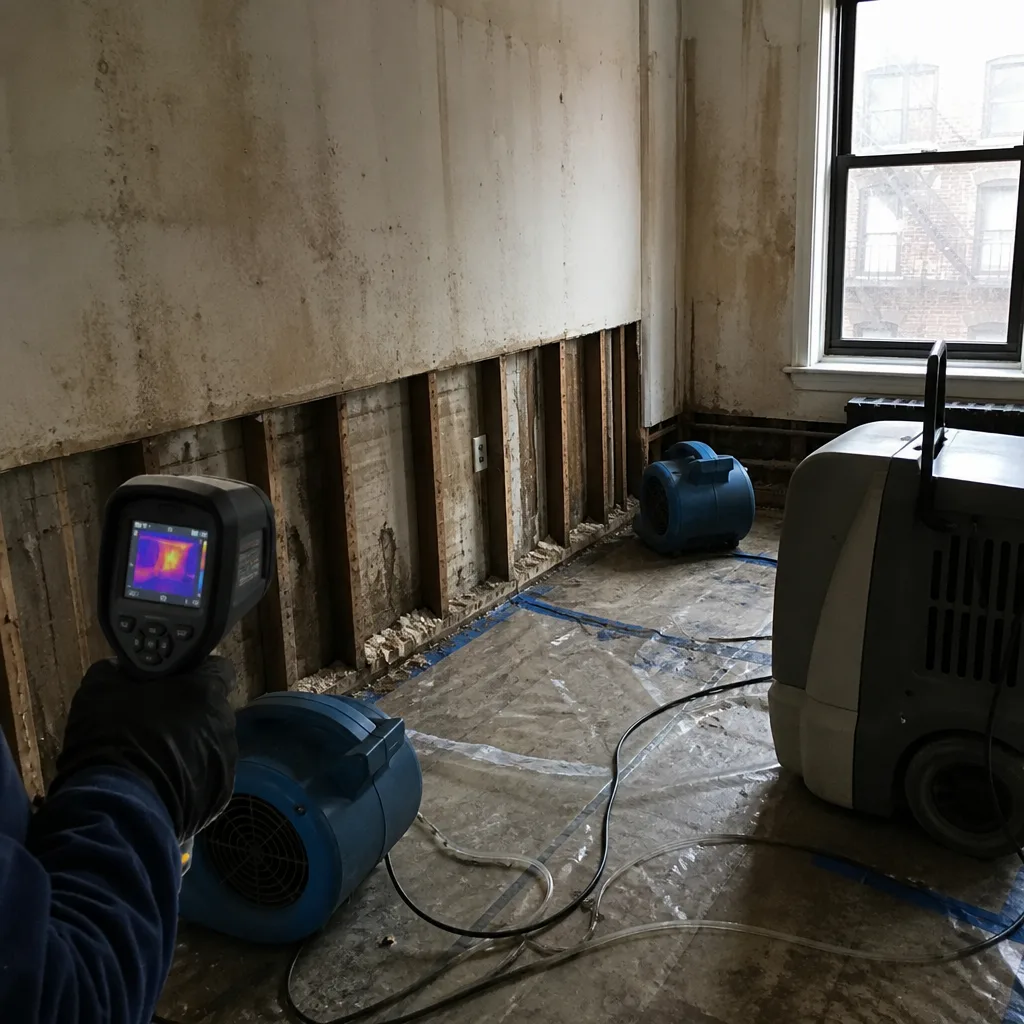 Before
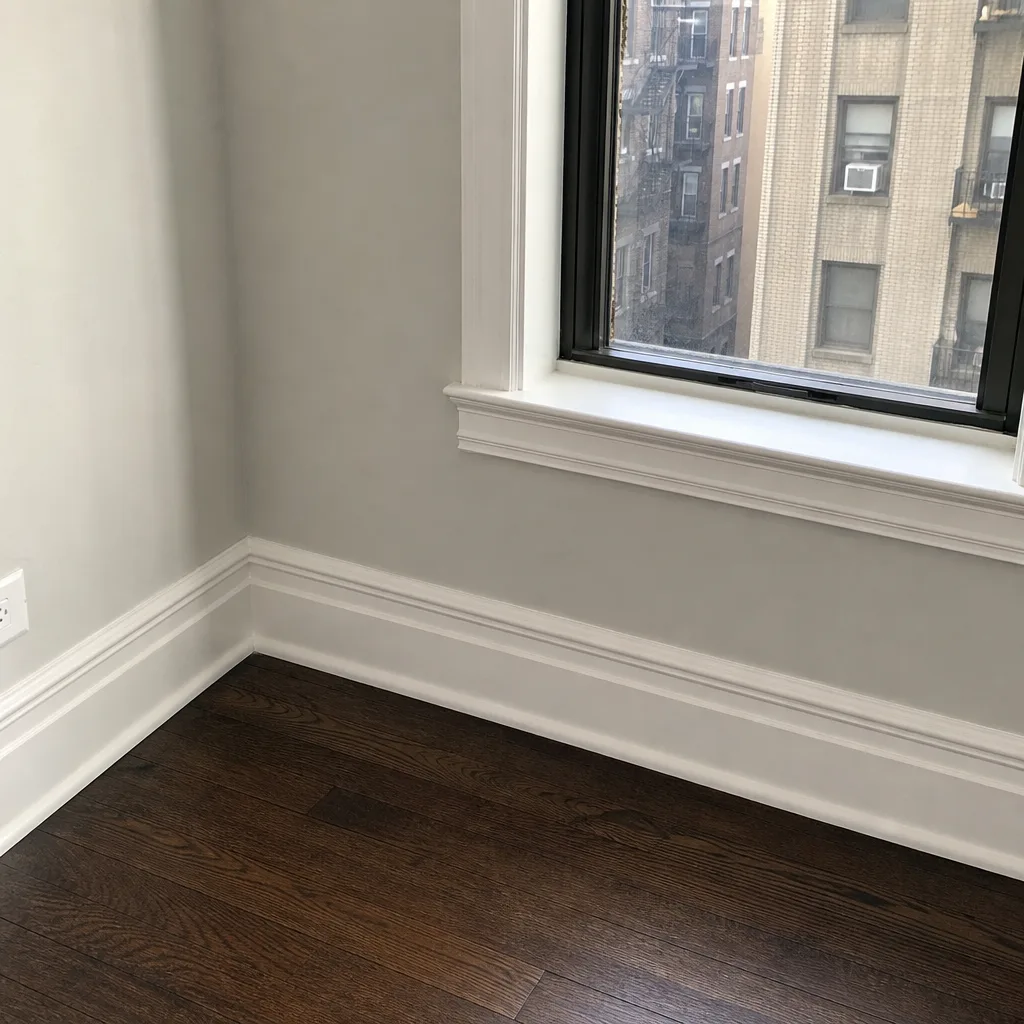 After
After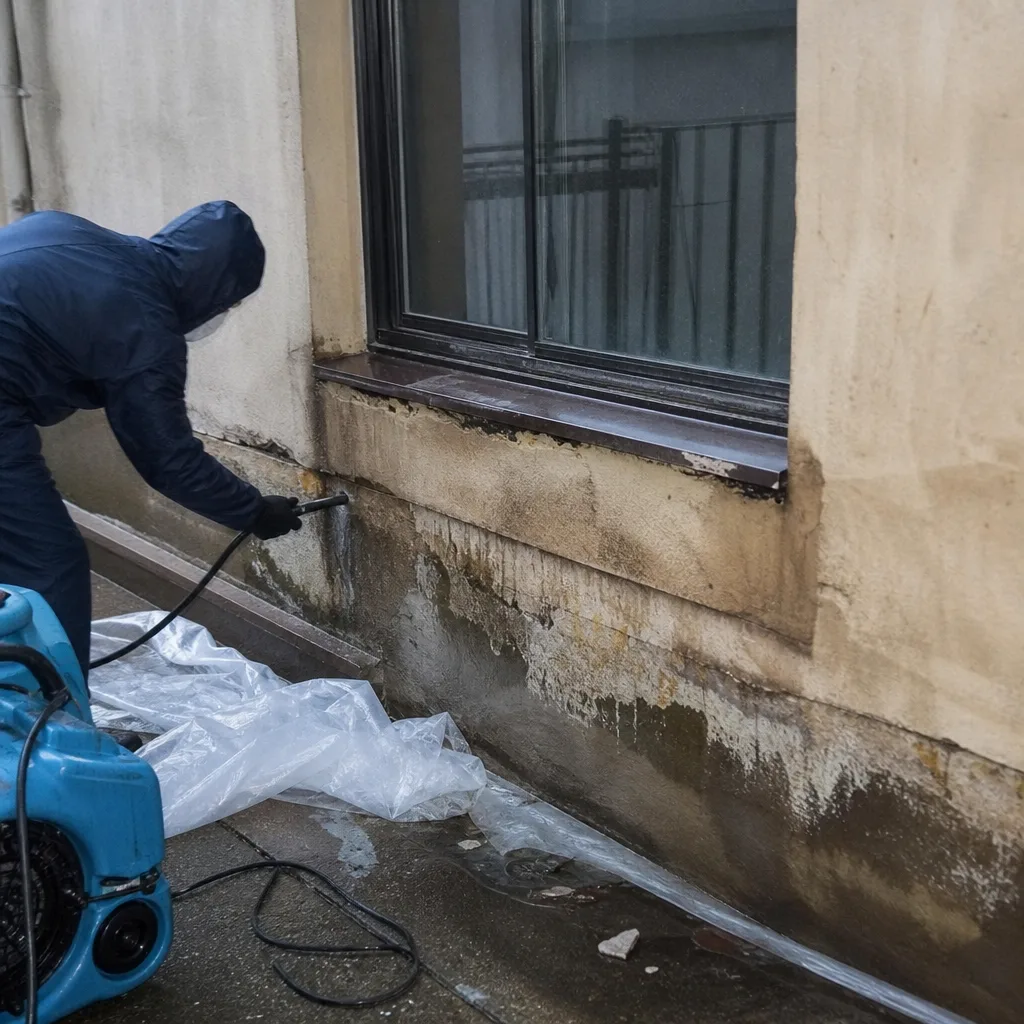 Before
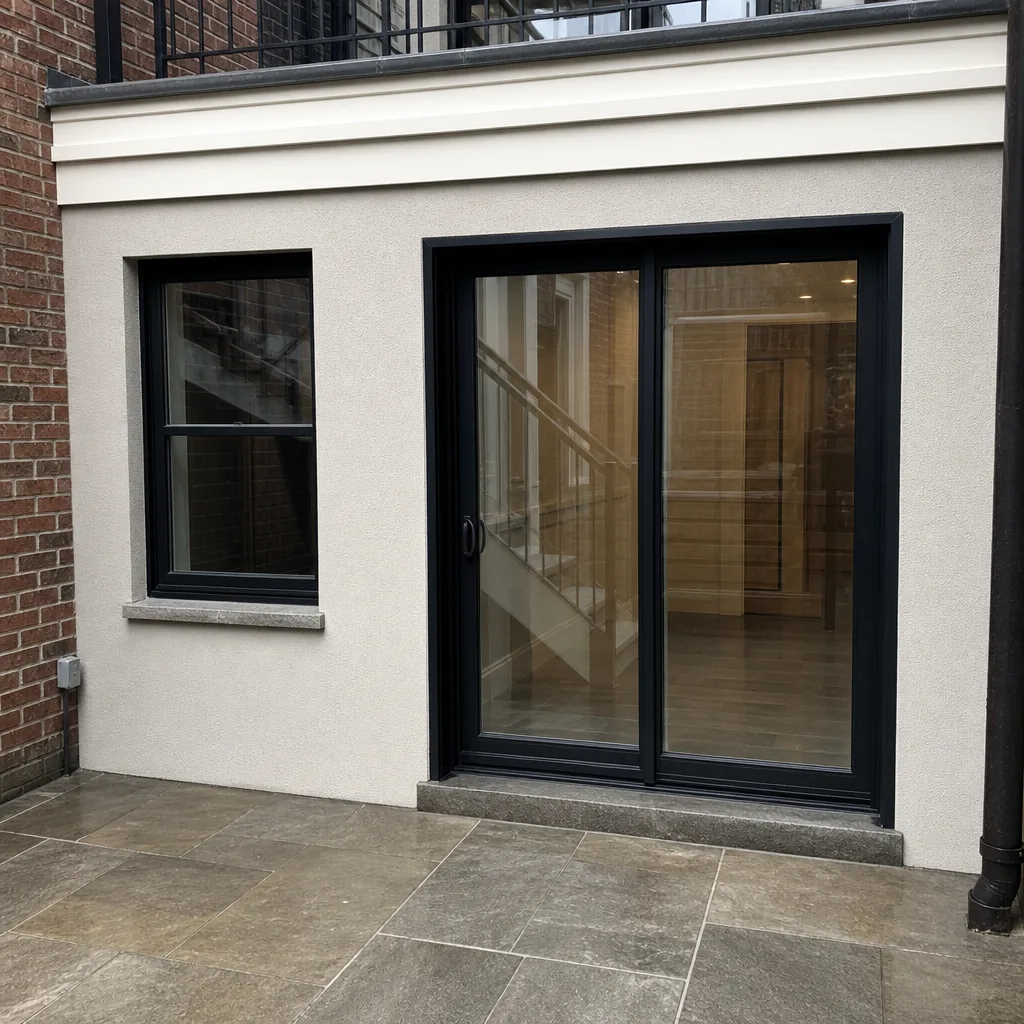 After
After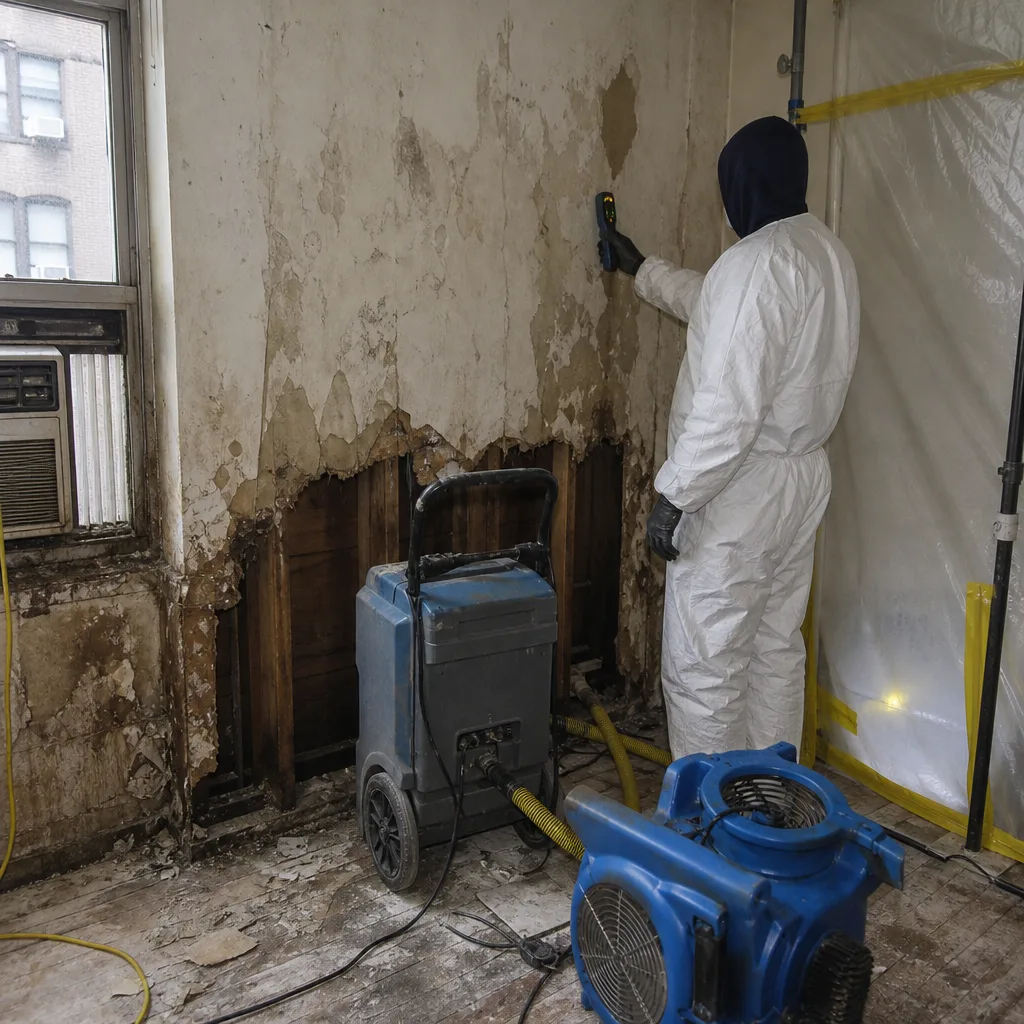 Before
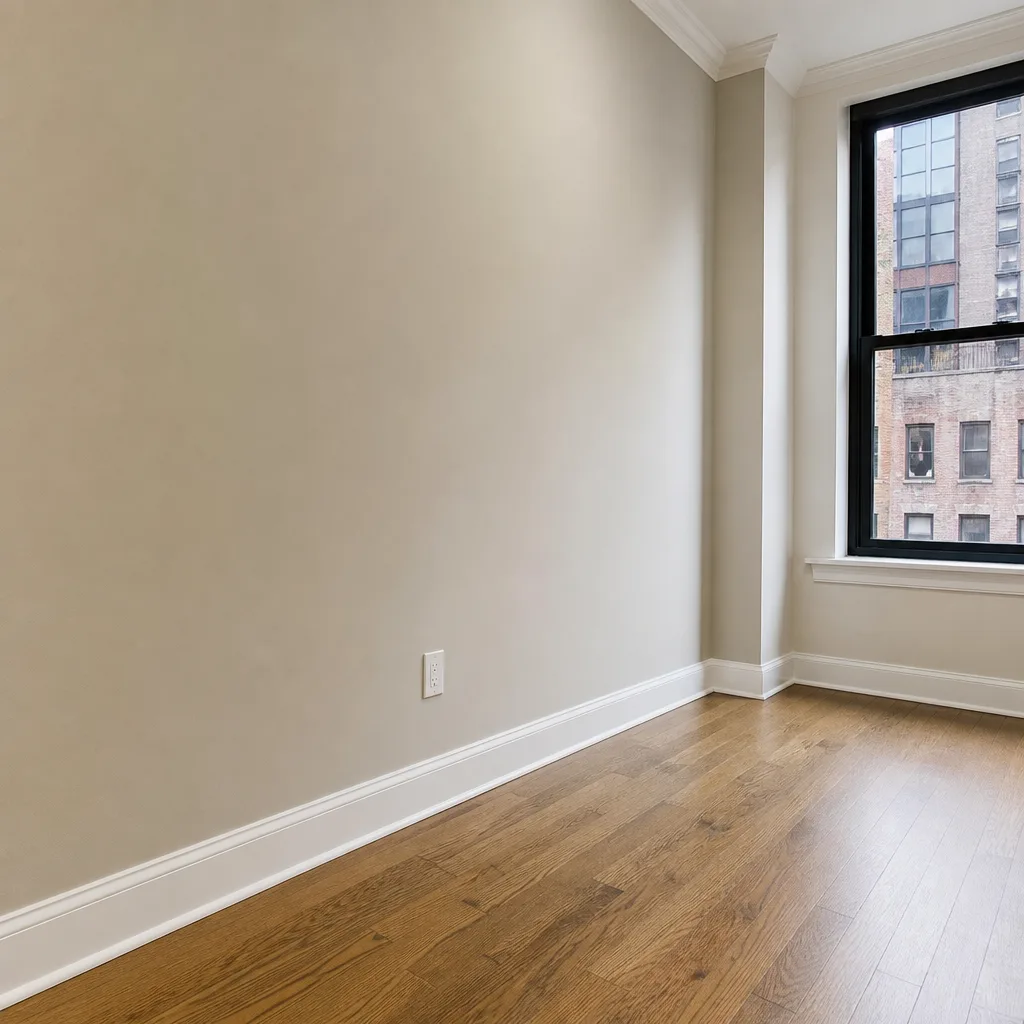 After
AfterHow to Hire a Damage Restoration Contractor in Midtown Manhattan: A Step-by-Step Guide
Most Midtown Manhattan homeowners don’t realize that the first 48 hours after water damage determine whether a repair costs $3,000 or $30,000. The difference comes down to one decision made under pressure: who you let through the door. This guide walks you through hiring a damage restoration contractor in Midtown Manhattan the way a careful homeowner should - with eyes open, questions ready, and no tolerance for vague promises. By the end, you’ll know what credentials matter, what pricing should look like, how insurance billing actually works, and when to walk away from a bid.
Quick Answer
Hiring a damage restoration contractor in Midtown Manhattan means verifying IICRC certification, getting a written scope of work before any equipment goes in, confirming direct insurance billing, and choosing a company that handles both mitigation and rebuild under one roof. Expect to pay $2,500 to $12,000 for typical water damage restoration in a Midtown Manhattan co-op or condo, with mold remediation running $1,500 to $6,000 and fire restoration starting around $4,000. The right contractor answers the phone with a person, shows up when promised, and stands behind the work in writing.
Table of Contents
- What Makes Midtown Manhattan Restoration Different
- Credentials That Actually Matter
- Get the Scope First: Written Estimates and Work Authorizations
- Insurance Billing: How Direct Billing Works
- Why Equipment and Drying Science Matter
- The Single-Visit Question: Mitigation and Rebuild Together
- Red Flags to Walk Away From
- Common Mistakes to Avoid
- When to Call a Professional
- Frequently Asked Questions
- The Bottom Line
What Makes Midtown Manhattan Restoration Different
Restoration in Midtown Manhattan is not the same job as restoration in a suburban single-family house. The building stock here runs to high-rise co-ops and condos built between the 1920s and the 1970s, with cast-iron risers, concrete slab floors, and neighbors above, below, and on both sides of every unit. Water in one apartment travels through the slab and shows up in the ceiling three floors down. That means a restoration contractor working in Midtown Manhattan has to understand building-wide water migration, not just the puddle in your living room.
We’ve watched water from a 14th-floor bathroom supply line make its way into the management office’s drop ceiling on the 9th floor because the chase between risers acted like a pipe. In Midtown, the drying plan has to account for the unit’s position in the stack, the presence of a drop ceiling, whether the slab has a mud bed, and how the building’s HVAC pressurizes hallways against apartment doors. A contractor who only ever dries slab-on-grade ranch houses in the outer boroughs is going to miss something. You want someone who reads the building’s layout before they place a single fan.
There’s also the access question. Midtown Manhattan co-op boards often require certificates of insurance with specific additional-insured language before any contractor brings equipment upstairs. Service elevators have booking windows. Freight entrances lock at 8 p.m. A restoration company that works Midtown regularly knows these rhythms. One that doesn’t will learn them on your dime, and that’s not acceptable when you’re paying for every extra day of drying.
The building codes in New York City are also the strictest in the country for a reason. Asbestos surveys are mandatory in most pre-1987 buildings before any drywall or flooring comes out. The New York City Department of Environmental Protection requires a variance for commercial drying equipment that exceeds noise limits in residential buildings during quiet hours. A local Midtown Manhattan restoration contractor knows the variance process and files it without you having to ask. That knowledge alone can save a week.
Credentials That Actually Matter
The restoration industry has a credential problem. Any handyman with a wet vac can print “water damage experts” on a truck. The credentials that actually separate professionals from opportunists are specific and verifiable.
IICRC certification is the floor, not the ceiling. The Institute of Inspection, Cleaning and Restoration Certification runs the standard training programs for water damage restoration, applied structural drying, mold remediation, and fire and smoke restoration. A technician who holds IICRC certification has passed written exams and demonstrated field competency. Ask for the certification number and verify it on the IICRC registry. Don’t accept “we’re trained to IICRC standards” as an answer. Either they have the paper or they don’t. At Floodline Restoration Co., every technician carries IICRC, RIA, and IFA certifications, and we’re happy to show them.
RIA certification, from the Restoration Industry Association, goes further into project management and building science. IFA covers forensic restoration, which matters on fire and smoke jobs where you need someone who understands soot chemistry, not just someone who owns a sponge. Background checks matter too. You are letting strangers into your home with expensive equipment and access to your belongings. In Midtown Manhattan, where many residents spend long days at the office or out of town, that trust matters more, not less. A reputable restoration company runs every technician through a background check before that person ever knocks on a door.
Uniformed, identifiable technicians are part of the same picture. The crew that shows up should look like employees of a company, not day laborers picked up that morning. It tells you that the business has enough institutional pride to put its name on the people it sends into your home.
Get the Scope First: Written Estimates and Work Authorizations
The single most important step in hiring a Midtown Manhattan restoration contractor happens before any work begins: get a written scope of work. Not a verbal promise. Not a handshake. A written document that says exactly what will be done, what materials will be used, what equipment will be placed, and what the job will cost.
Here’s the step-by-step process we recommend:
- Call and speak to a person. If you reach a recording during business hours, that tells you something. Floodline Restoration Co. has a live dispatcher answer the phone 24 hours a day, 7 days a week, including 2 a.m. on a Tuesday. That’s not a marketing gimmick. It’s the difference between extraction starting tonight and extraction starting tomorrow afternoon.
- Ask for an on-site assessment, not a phone quote. No honest contractor can price water damage without seeing it. The assessment should include moisture mapping with a thermal imaging camera and moisture meters, not just a visual walk-through.
- Get the scope in writing. The document should list every room affected, every piece of equipment to be placed, the drying goals (typically a moisture content reading below 15% on wood and below 4 on the moisture scale for gypsum), and the estimated duration. It should also state the price.
- Read the work authorization before signing. Some contracts give the contractor license to expand the scope without re-approval. That’s how a $4,000 estimate becomes a $16,000 invoice. In Midtown Manhattan, where one neighbor’s leak can turn into a building-wide investigation, a work authorization that allows unbounded scope growth is dangerous. The right contract requires your written sign-off before the scope grows.
- Ask who will be doing the work. You want the same crew from day one through the final day. Not a rotating cast of subcontractors who don’t know what the last team did. In our experience, jobs slow down and costs rise when ownership of the job is handed off.
We’ve seen too many Midtown Manhattan homeowners sign a work authorization under stress and then spend months arguing about charges for rooms that were never in the original scope. A square deal means a written scope agreed before work starts, and no surprises on the bill afterward. That’s not too much to ask. It’s the minimum.
Insurance Billing: How Direct Billing Works
Insurance is the quiet partner in almost every damage restoration job in Midtown Manhattan. The question is whether the contractor treats the carrier as a partner or as a payday.
Direct insurance billing means the restoration company submits its invoice to your insurance carrier, negotiates the claim, and waits for payment rather than asking you to float the full amount and chase reimbursement yourself. It sounds like a small convenience. It’s not. A water damage claim in New York City can involve a public adjuster, a carrier adjuster, supplementary payments for hidden damage discovered mid-job, depreciation schedules, and a dozen other moving parts. When the homeowner is the messenger between the contractor and the carrier, information gets lost and timelines slip. When the contractor bills the carrier directly and documents everything with photographs and daily moisture readings, the claim moves faster and the homeowner’s phone stays quiet.
A good restoration company also documents for the claim in the way the carrier expects. Carriers want photos, moisture maps, equipment logs, and a clear narrative of what was damaged, what was saved, and why the decision went one way rather than another. Floodline Restoration Co. provides that documentation as a matter of course and deals with the adjuster directly. That includes sending the adjuster copies of daily drying logs, before-and-after photos of every affected room, and a line-item scope that matches the industry standard software carriers already use. In our experience, claims with that level of documentation get approved in days, not weeks.
Ask any contractor you’re considering how they handle insurance. If they tell you that you’ll pay upfront and “the insurance will reimburse you,” find out why. Some contractors do that because they don’t want the paperwork of dealing with a carrier. Some do it because they’ve burned bridges with the major carriers and can’t get a direct-billing agreement. Neither reason is good for you.
Why Equipment and Drying Science Matter
A wet-dry vacuum and a box fan are not water restoration. That’s not an opinion; it’s physics. Water in a Midtown Manhattan apartment hides under hardwood, behind baseboards, inside wall cavities, and in the concrete slab itself. If the contractor doesn’t find it all, the visible part dries and the hidden part turns to mold within 72 hours.
The professional-grade equipment used on serious restoration jobs is a different class entirely. Dri-Eaz dehumidifiers pull 130 pints or more of water out of the air per day, compared to maybe 30 for a consumer unit. Phoenix air movers and axial fans generate the kind of focused airflow that actually accelerates evaporation from building materials. XPOWER air scrubbers filter mold spores and particulates out of the air during remediation. B-Air units handle the high-velocity drying on commercial-scale jobs. Injectidry systems force drying air into wall and ceiling cavities through small ports without tearing out the drywall. That last piece matters in Midtown Manhattan, where saving the original plaster or gypsum in a pre-war building is often required by the co-op board and always preferred by the owner.
Equipment is only as good as the science behind it. Moisture mapping means taking baseline readings with penetrating and non-penetrating moisture meters, recording them on a floor plan, and re-reading daily until the dry standard is met. That dry standard is documented in the drying log, and the log goes to the homeowner and the insurance carrier. If a contractor can’t show you a moisture log, they’re guessing. Guessing in Midtown Manhattan costs money.
The Single-Visit Question: Mitigation and Rebuild Together
The restoration industry has a structural inefficiency that costs homeowners thousands of dollars and months of stress. Most companies split the work. Company A shows up, extracts the water, tears out the damaged drywall, sets up drying equipment, and then leaves. Company B arrives two weeks later to rebuild what Company A tore out. The homeowner is left managing two vendors, two invoices, two schedules, and one very confused insurance claim.
The alternative is full-cycle restoration: one company handles extraction, drying, and rebuild from start to finish, with the same certified crew on the job the entire time. In Midtown Manhattan this matters more than anywhere else in the city, because access logistics for rebuilding a co-op unit are hard enough without coordinating two separate crews who’ve never met. The crew that reads the moisture map on day one handles daily readings, hands the log to the homeowner and carrier, and rebuilds what needs rebuilding. No mid-job handoff. No inherited crew. No phone calls where one contractor blames the other.
Floodline Restoration Co. was built around this model. Founded in 2010 by Curt Bowman around a dispatch board rather than a sales desk, the company keeps the job whole from first extraction to finished rebuild. It also puts the guarantee in writing. The 90-Day Done Right Promise, what we call the Keystone Standard internally, means that if the work isn’t done right, we make it right. No paperwork battles, no arguing. The promise is tied to a values code we actually use: Krafted right, Every time, Your home first, Standing behind it. Most jobs are completed in a single visit, using the professional-grade equipment described above.
Ask a prospective contractor who rebuilds after they dry. If the answer is “we have a guy we work with,” you’re about to become the project manager. You don’t have time for that, and more importantly, you shouldn’t need to.
Red Flags to Walk Away From
Not every restoration contractor in Midtown Manhattan deserves your business. Here’s what tells you to keep looking:
- The phone goes to voicemail during business hours. If a company can’t staff a phone during what it says are its working hours, what else does it understaff? A restoration emergency doesn’t wait for office hours. Floodline Restoration Co. answers the phone with a live dispatcher at every hour, every day of the year.
- They can’t show you certifications. IICRC, RIA, and IFA credentials are verifiable. If the technician won’t show you the paper, assume there is no paper.
- The price changes every time you talk to them. A written scope with a fixed price is the standard. Verbal updates that keep adding dollars are how homeowners get worn down.
- They won’t put the guarantee in writing. A verbal promise is worth the air it used. The 90-Day Done Right Promise is written, specific, and non-negotiable, and you should accept nothing less from anyone.
- They pressure you to sign today. A restoration emergency is urgent, but it’s not a used-car auction. A contractor who won’t give you time to read a contract is a contractor who doesn’t want you to read it.
- They don’t document anything. No photos, no moisture maps, no drying logs. That’s how claims get denied and disputes get ugly.
- They started doing “restoration” last year. Experience matters. A company that has been serving local communities for more than four decades and plans to be in town in thirty years hires local, trains apprentices into journeymen, and answers the phone with a person. A company that bought a truck and printed business cards last March will be gone when the warranty runs out.
Common Mistakes to Avoid
- Waiting to call. In Midtown Manhattan, high-rise water damage compounds fast. A delay of 12 hours can mean the difference between drying in place and tearing out sheetrock. The line the water left is where we start, but the clock starts the moment the water flows.
- Calling the cheapest name first. The cheapest bid often belongs to the company that doesn’t pay for training, doesn’t carry proper insurance, and doesn’t own professional-grade drying equipment. You don’t want the cheapest bid. You want a square deal from a name you can hold accountable.
- Paying the full amount upfront. A deposit may be reasonable on a large rebuild. The entire estimated cost of restoration up front is not. Reputable contractors bill in stages or invoice the insurance carrier directly.
- Assuming the insurance company will handle everything. Your carrier will pay what the policy and the documentation support. A contractor who doesn’t document properly costs you money you can’t recover. Ask how the company documents before you sign.
- Hiring a contractor for the drying and a different contractor for the rebuild. You inherit the project management, the scheduling, and the blame. One company, one crew, one guarantee.
- Ignoring the co-op or condo board’s insurance requirements. In Midtown Manhattan, boards routinely require contractors to name the building corporation as an additional insured on their certificates of insurance. If your contractor balks, the board can deny access and your job stalls on day one.
- Skipping the moisture log review. At the end of the drying phase, ask to see the daily readings. The numbers should trend down every day until they meet the dry standard. If the contractor can’t show you that log, you don’t know the job is actually done.
When to Call a Professional
Some damage you can handle with a mop and a fan. But call a professional when the water touches the walls, seeps under flooring, or comes from a sewage line. Call when you smell smoke after a fire or when you find mold behind a baseboard. Call when the water has been sitting for more than 24 hours and the building materials have begun to saturate. And call immediately when the source is a broken supply line on a high floor, because in Midtown Manhattan, your water becomes your downstairs neighbor’s ceiling. Floodline Restoration Co. offers free estimates in Midtown Manhattan, and a live dispatcher answers the phone at (518) 314-5660 any time, day or night.
Frequently Asked Questions
Water damage restoration in Midtown Manhattan typically costs $2,500 to $12,000 depending on the affected square footage, the category of water, and whether drying in place is possible or tear-out is required. Mold remediation runs $1,500 to $6,000 for a typical bathroom or closet. Fire and smoke restoration starts around $4,000 for a contained kitchen fire and rises sharply if structural framing is charred. Every job is different, which is why a written scope with fixed pricing is essential before work begins. Call (518) 314-5660 for a free estimate from Floodline Restoration Co., and we’ll give you the real number, not a range.
Most Midtown Manhattan co-op and condo policies cover sudden and accidental water damage, fire, and storm damage, but coverage depends on the cause, the policy language, and your deductible. Gradual leaks are frequently excluded. The best way to find out is to have a restoration contractor document the damage with photos, moisture readings, and a scope of work that the adjuster can review. Floodline Restoration Co. bills carriers directly and coordinates with your adjuster, so you’re not left translating between the two. Senior and veteran homeowners can also apply a 5% discount to their out-of-pocket portion at any time.
In Midtown Manhattan, a restoration company should be able to start extraction the same day you call, and often within hours. That’s the standard Floodline Restoration Co. operates by: a live dispatcher answers 24/7, and a certified crew reaches the job with extraction running the same visit. Same-day response matters because the longer materials stay wet, the more of them have to come out. We’ll be there when we say, and the guarantee is in writing.
If the affected area is small, the water is clean, and the material dried completely within 48 hours, a thorough cleaning may be enough. But in Midtown Manhattan’s high-rise buildings, hidden moisture behind walls and under flooring is common, and mold grows where you can’t see it. The only way to know is moisture mapping with proper equipment. A restoration company that offers a free, honest assessment will tell you when cleaning is sufficient and when full remediation is required. We’ll tell you straight either way.
The restoration contractor should deal with the adjuster directly on your behalf, providing documentation, answering questions, and negotiating the claim. That’s how Floodline Restoration Co. operates. The homeowner never plays messenger between the contractor and the carrier. Direct insurance billing means we submit the invoice, we handle the back-and-forth with the carrier, and you stay informed without being in the middle.
Mitigation is the emergency response: stopping the water, extracting it, removing unsalvageable materials, and drying the structure to a documented standard. Restoration is the rebuild: replacing drywall, flooring, trim, and paint. In Midtown Manhattan, most homeowners get stuck between a mitigation company and a separate general contractor. A full-cycle restoration company handles both under one roof, with the same certified crew from day one to the finished walk-through. That’s how we work, and it’s why the 90-Day Done Right Promise can be real: when one company owns the entire job, there’s no one else to blame and no reason not to stand behind it. Current offers include $50 off any repair over $250, an $89 seasonal tune-up, and a 5% senior and veteran discount, always.
The Bottom Line
Hiring a damage restoration contractor in Midtown Manhattan is a decision you make under pressure, which is exactly why you should know the standard before the emergency happens. Demand IICRC-certified, background-checked, uniformed technicians. Get a written scope with fixed pricing before equipment goes in. Choose a company that bills insurance directly and documents every day of drying with a moisture log. And above all, pick someone who handles the whole job from extraction to rebuild, so there’s never a mid-job handoff. Done right, and backed in writing. That’s the standard. Call Floodline Restoration Co. at (518) 314-5660 and we’ll meet it.
Written by Curt Bowman, Owner at Floodline Restoration Co., serving Midtown Manhattan since 2010.