
Emergency Water Damage Restoration Near Me: What Midtown Manhattan Homeowners Should Do First
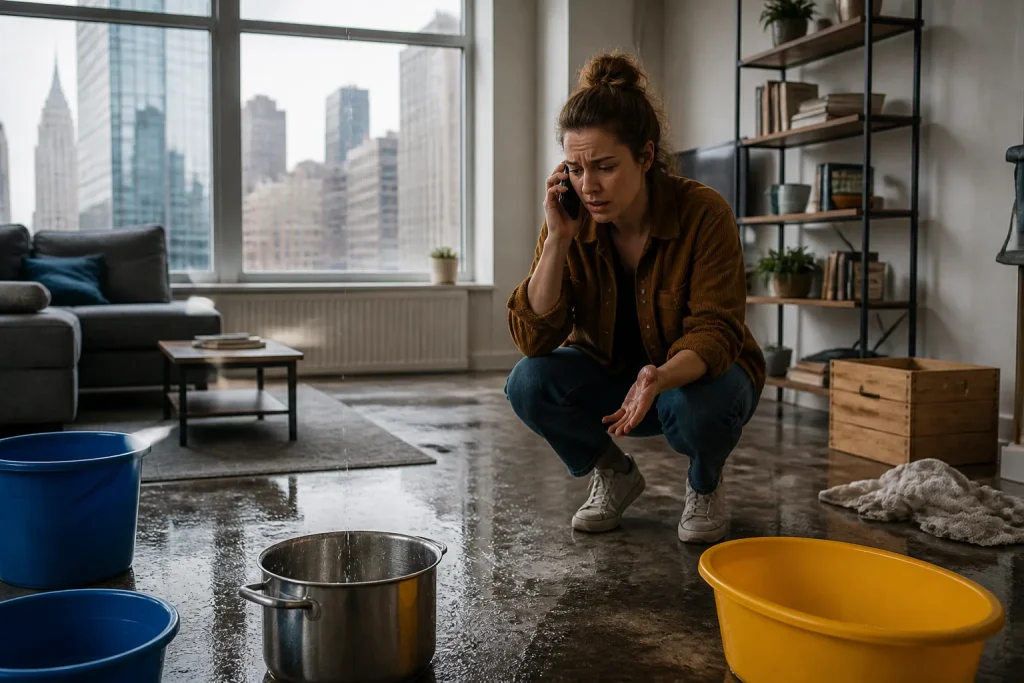
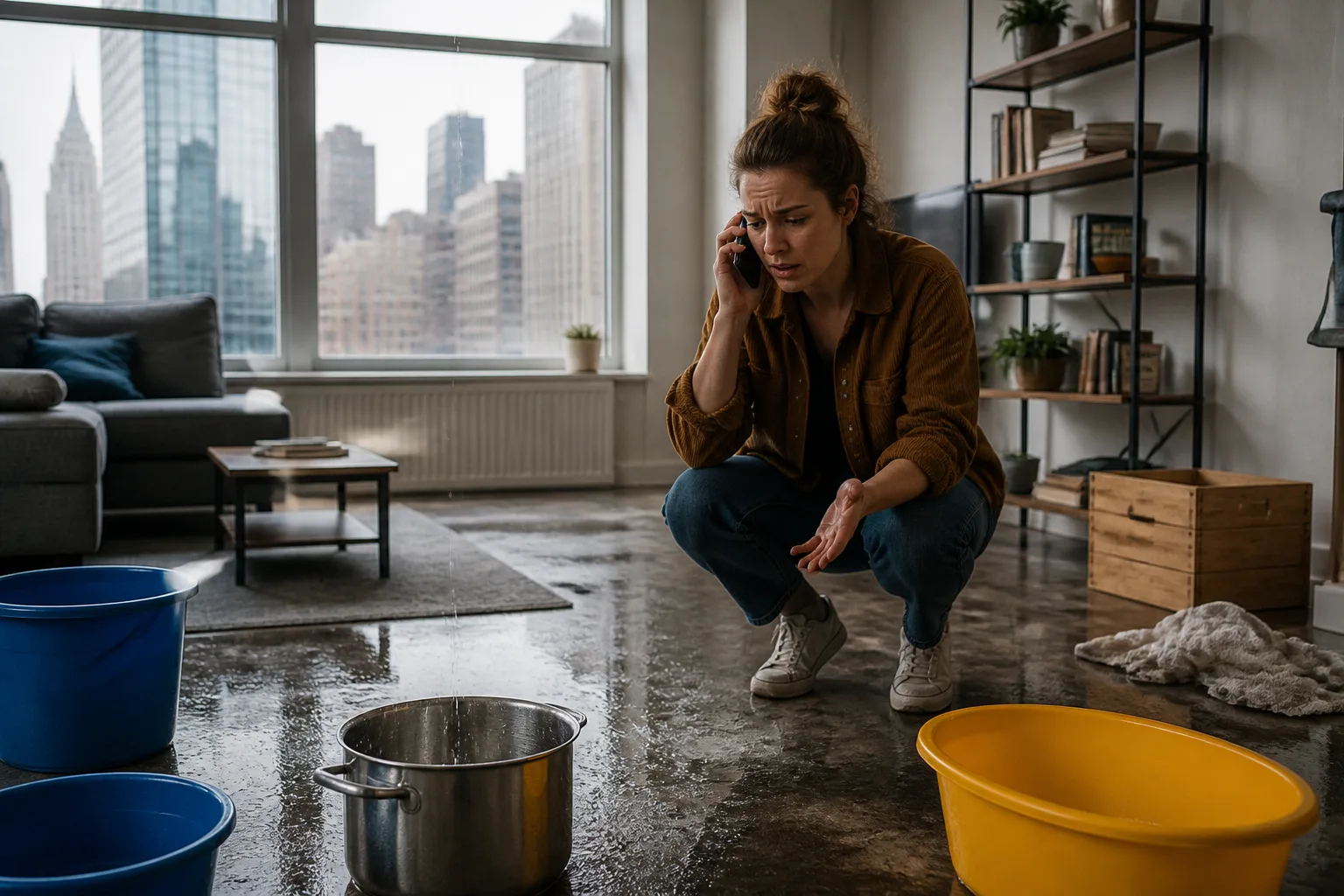
If water is spreading through your Midtown Manhattan apartment right now, the first move is not to grab towels. Turn off the water source if you can reach it safely, call your building management if you’re in a co-op or condo or rental, and then call a restoration company that can have a certified crew on site within hours. If you’d rather not piece this together yourself, call Floodline Restoration Co. at (518) 314-5660 and a live dispatcher will answer, day or night.
Turning on a ceiling fan to “help it dry out” after a pipe burst is one of the most common first responses in a water emergency. It’s also one of the worst. That fan can spread Category 2 water particles into adjacent dryrooms before extraction crews arrive, turning a single-room job into a multi-room remediation. The first 90 minutes after water enters a Midtown apartment determine more about the final cost and outcome than any decision made afterward, and most of what feels instinctive in those 90 minutes is exactly wrong.
What to Do in the First 20 Minutes in Midtown Manhattan
Midtown buildings run on rules. Whether you own in a prewar co-op on West 57th, rent a one-bedroom in a Kips Bay high-rise, or hold a condo in a new glass tower near Bryant Park, your building’s management has standing relationships with vendors, water shut-off protocols, and insurance reporting requirements. The order of operations matters.
Here is the sequence we recommend, and it’s the same one we walk customers through when they call our dispatch desk at two in the morning:
- Stop the source, if you can reach it safely. A supply line to a toilet or sink often has its own shut-off valve behind the fixture. A burst radiator riser or a supply line inside a wall usually requires the building shut-off. If you can’t reach the valve without wading through standing water near electrical outlets, don’t try. Call the super.
- Call building management or the super first. In a co-op or condo, the building’s insurance typically covers damage to the structure and common elements. Your own policy covers your contents and betterments. Management needs to know before a contractor starts cutting drywall, because the building may need to file its own claim and may want its own adjuster to see the loss. In a rental, the landlord’s policy covers the structure, but your renter’s insurance covers your belongings and may cover temporary relocation. Notifying management immediately creates a paper trail that protects your claim.
- Document everything on your phone in the first 20 minutes. Adjusters look for specific things, and most homeowners miss them. Shoot the standing water level against the baseboard, so the height is visible in the photo. Shoot the source area, even if you can’t identify the source. Shoot every affected room from two angles. Shoot the back of furniture legs and the bottom six inches of doors, where capillary action draws water upward. Shoot the ceiling directly below a bathroom or kitchen if you’re in a multi-story unit, before the stain fades or spreads. These photos establish the loss footprint before drying begins and before anyone moves a single item.
We also tell people to photograph the serial number on the water meter or the shut-off valve if it’s accessible. It sounds minor. It isn’t. When a claim adjuster asks when the water stopped, that photo answers the question.
Why “Near Me” Matters in a Dense Borough
A company 12 blocks away in Manhattan can take longer to reach your door than one staging from New Jersey, simply because of how Midtown traffic moves. Crosstown blocks are slow. Uptown avenues are slower at certain hours. A restoration company’s response time is not just about miles, it’s about routing and staging. And every hour past the four-hour mark pushes a Category 1 water loss toward Category 2.
Category 1 is clean water from a supply line or a faucet. Category 2 is “gray” water, water that has passed through building materials or sat long enough to pick up bacteria. After four hours of standing water, the classification can shift, and the remediation scope changes with it. This is why we dispatch from a board, not a sales desk. A live person answers the phone, a certified crew rolls, and the same visit includes extraction, because the clock is running on that Category 1-to-Category 2 conversion.
For a broader look at how we handle these losses, see our Water Damage Restoration in Midtown Manhattan page. It covers the full sequence from first extraction to final moisture-log sign-off.
The Three Things You Should Never Do While Waiting for Crews
This is the part most blog posts skip, and it’s the part that costs homeowners the most money. In Midtown, where square footage is tight and rooms sit shoulder to shoulder, these mistakes compound fast.
- Don’t turn on a ceiling fan or open windows to “air it out.” You’re not drying; you’re distributing. A fan pushes airborne water particles into dryrooms, drywall, upholstery, and closets. In a 700-square-foot apartment, that means everything gets wet. Opening windows does little for structural drying and can introduce outdoor humidity that slows the process.
- Don’t run a shop-vac over the carpet if you have standing water near outlets or baseboard wiring. A shop-vac pulls water and electricity into close proximity, and in an older Midtown building with cloth-wrapped wiring, that’s a risk no one should take. If the water is deep or the wiring is suspect, wait for a crew with the right extraction equipment.
- Don’t soak up the loss with towels before you’ve photographed it. Towels change the evidence. They move the waterline, smear the staining, and make the adjuster’s job harder. An adjuster who can’t see the original waterline may question the scope of the claim. Take your photos first. Then, if you want to place towels at doorways to slow spread once the source is off, fine. But don’t scrub the evidence away.
We pulled a water heater out of a service closet in a building over near Herald Square last winter where the homeowner had already been at it with towels for an hour and a half before calling. The extraction itself took longer, the dry standard took a day longer to hit, and the claim went from straightforward water mitigation to a two-part scope with a content-cleaning addendum. All avoidable.
What a Legitimate Restoration Company Should Say on the First Call
The first phone call tells you more than the company’s website does. A legitimate emergency restoration company in Midtown Manhattan should ask you three questions before quoting anything: Is the water still running? What’s the source? Has building management been notified? If a company jumps straight to a price without asking about the source or the water classification, hang up.
We also listen for two specific phrases that signal trouble:
- “Just sign here and we’ll get started, we’ll sort the details later.” A legitimate company explains scope before work begins. We use written scopes and direct insurance billing, so the homeowner is never left holding a surprise balance or playing messenger with an adjuster. If someone wants a signature before anyone has seen the loss, walk away.
- “We don’t need to involve your insurance company for this.” In a Midtown co-op or condo, the building’s insurance may cover structural claims that sit on top of your personal coverage. A contractor who tells you to bypass insurance is often trying to bill you directly for work the carrier would have covered.
Our crews are background-checked and uniformed, and they carry the moisture-mapping equipment to document the loss from day one. We run Dri-Eaz dehumidifiers and Phoenix air movers on most Midtown jobs, and we log daily readings until the dry standard is met. The homeowner gets the log. So does the carrier.
Curt Bowman founded Floodline Restoration Co. home in 2010 around the idea that a restoration company should own the whole job, from the floodline to the finished wall. We don’t hand the job off after extraction. We dry it, we rebuild it, and we stand behind it in writing.
When to Call a Pro, and What It Costs in Midtown Manhattan
If the water came from a supply line, a radiator, a toilet overflow, or anything you can’t see fully, call a pro. The visible damage is rarely the full picture. Water travels behind baseboards, under flooring, and into wall cavities, and in a 100-year-old Midtown building with plaster walls and wood joists, the hidden path can be worse than the visible one.
Emergency water damage restoration in Midtown Manhattan typically runs $1,500 to $4,500 for a contained single-room extraction and drying job, depending on the water classification, the flooring material, and how long the water sat. Multi-room jobs with content movement and structural drying run higher, and full rebuilds are scoped separately. These are rough ranges, not quotes, but they give you a sense of the scale. Estimates are free at Floodline, and we stand behind the number.
We also offer $50 off any repair over $250, an $89 seasonal tune-up, and a 5% discount for seniors and veterans, always. Those apply when the emergency is handled and the rebuild begins.
If the loss sits long enough to grow mold, the scope changes. See our Mold Remediation in Midtown Manhattan page for how we handle that, including containment, air quality readings, and the full written clearance process. And if the damage came from a fire or smoke event, the sequence is different. See our Fire & Smoke Damage Restoration in Midtown Manhattan page for that page.
The Bottom Line
Turn off the water. Call the building. Photograph everything. Then call a restoration company that answers the phone live and sends a certified crew the same visit. Don’t turn on a fan, don’t shop-vac near wiring, and don’t towel away the evidence before the camera comes out. The first 90 minutes matter more than anything that comes after, and in Midtown, where every square foot is valuable and every minute of standing water costs you, the order you do things in is the difference between a single-room dry-out and a multi-room rebuild.
If you’re in Midtown Manhattan and need help now, Floodline Restoration Co. offers free estimates. We’re licensed, insured, and we answer the phone with a person, 24/7. Call (518) 314-5660.
Frequently Asked Questions
A company with live dispatch and a local crew can reach most Midtown Manhattan buildings within 1 to 3 hours of your call, depending on traffic and the time of day. Floodline Restoration Co. operates 24/7 with live dispatchers, and our goal is to have extraction running on the same visit. Call (518) 314-5660 and we’ll tell you exactly when the crew will arrive.
Most likely, yes, but the coverage depends on the source of the water and the terms of your policy. A sudden pipe burst is generally covered; gradual seepage often is not. Building management may need to file a separate claim for structural damage, which is why notifying them early matters. We photograph everything, document the full loss, and bill your carrier directly, so you’re not left chasing paperwork.
A contained single-room job typically dries in 3 to 5 days with professional equipment, assuming the water was caught within the first few hours. Dense Midtown construction with plaster walls and wood subfloors can take longer. We log daily moisture readings and give you and your carrier the log, so you know exactly when the dry standard is met and why.
That depends on the water source and how long it sat, but hidden water behind walls and under floors is almost always worse than it looks. If the water came from a supply line and was extracted within a few hours, a professional drying setup may be enough. If it sat, or if it came from a toilet or drain line, professional remediation is the safest and cheapest path in the long run. Call us at (518) 314-5660 and we’ll walk you through what we’re seeing before you commit to anything.
Written by Curt Bowman, Owner at Floodline Restoration Co., serving Midtown Manhattan since 2010.
Need Damage Restoration Help?
Call Floodline Restoration Co. - licensed & insured, here with fast after-hours help in Midtown Manhattan.
(518) 314-5660