
Last updated August 25, 2026
Free visual inspection and a written scope of work before any mitigation begins - photos, moisture readings, and drying logs go in your claim file
The scope we write is the scope we bill. Anything new gets shown to you, in writing, before we touch it.
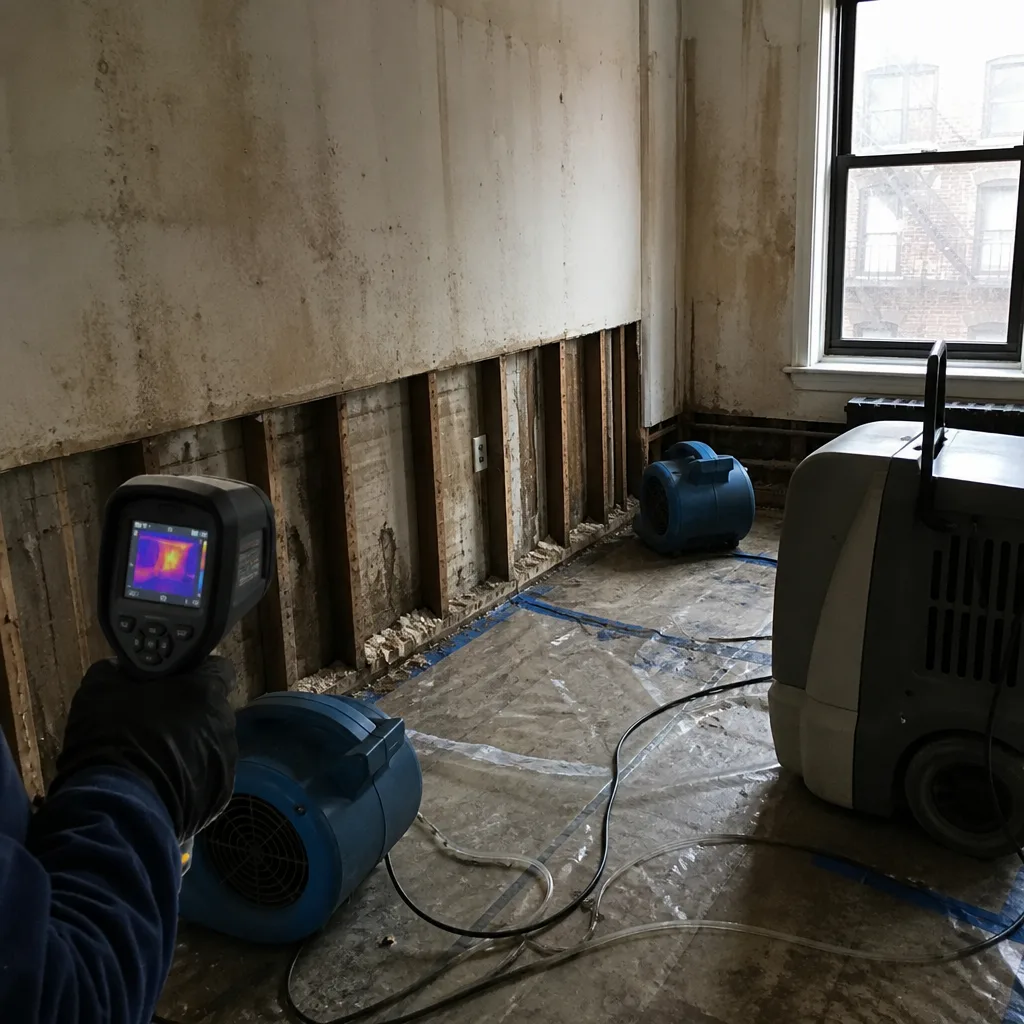 Before
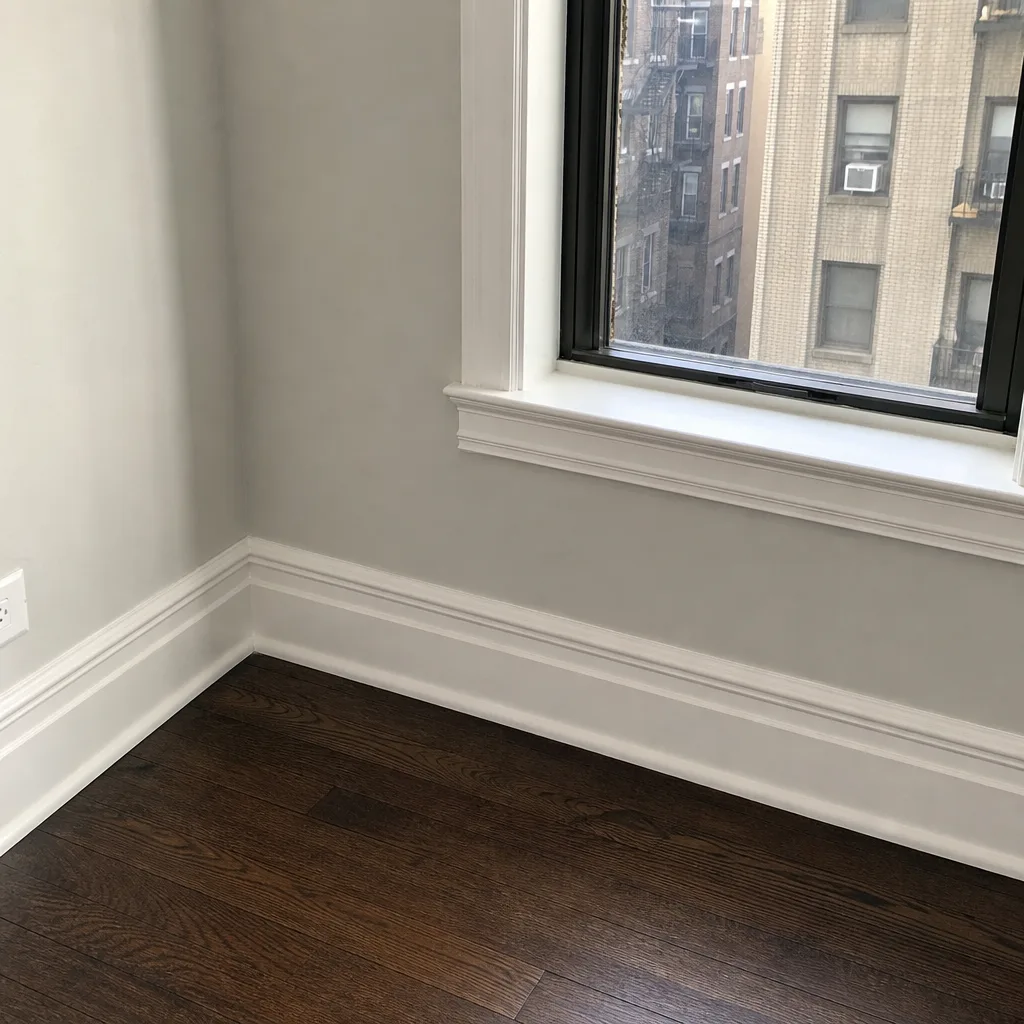 After
After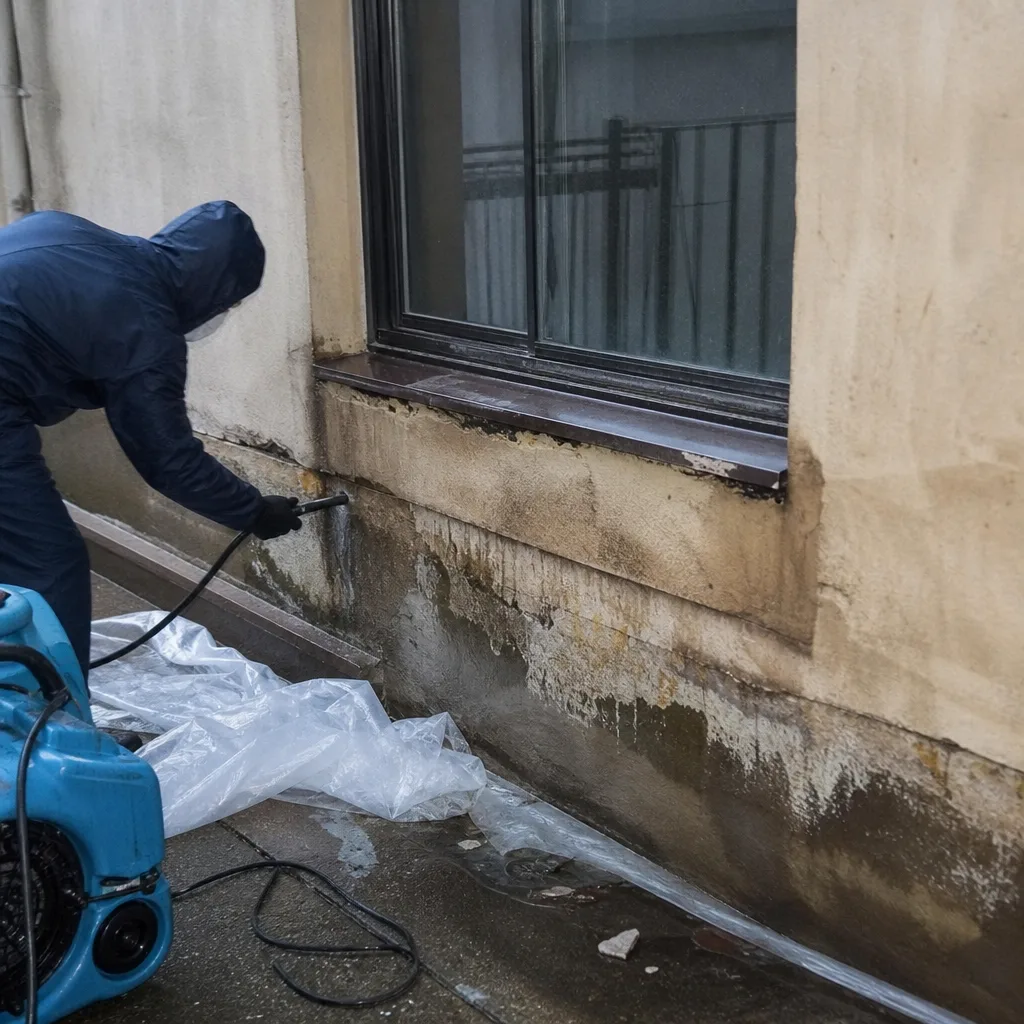 Before
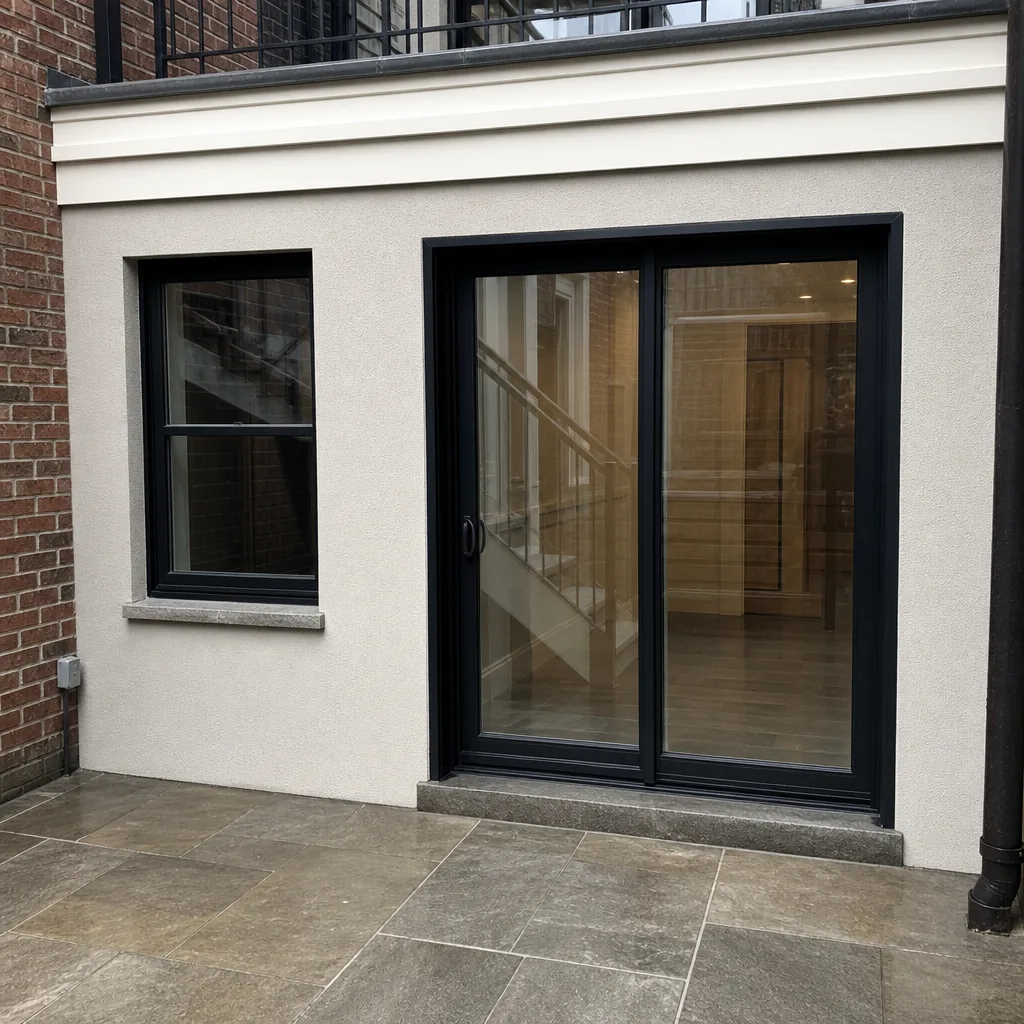 After
After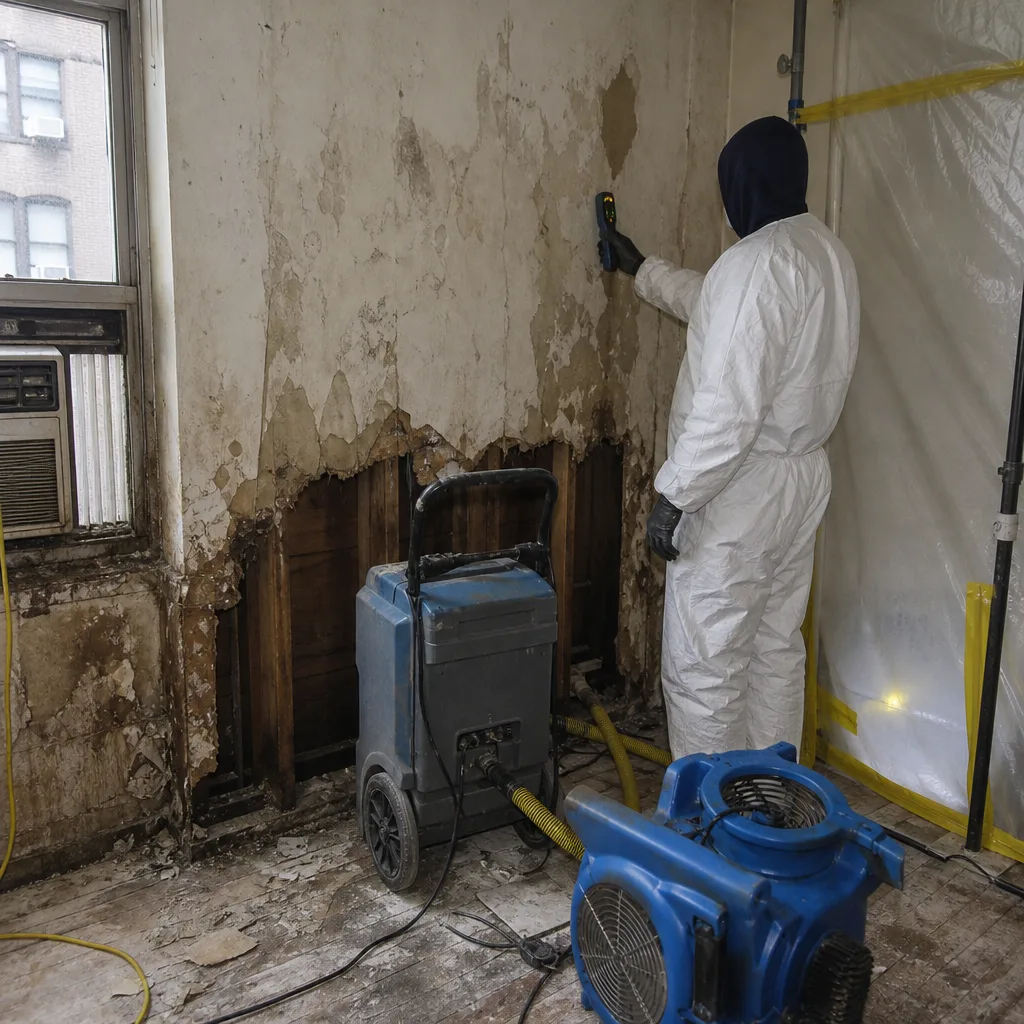 Before
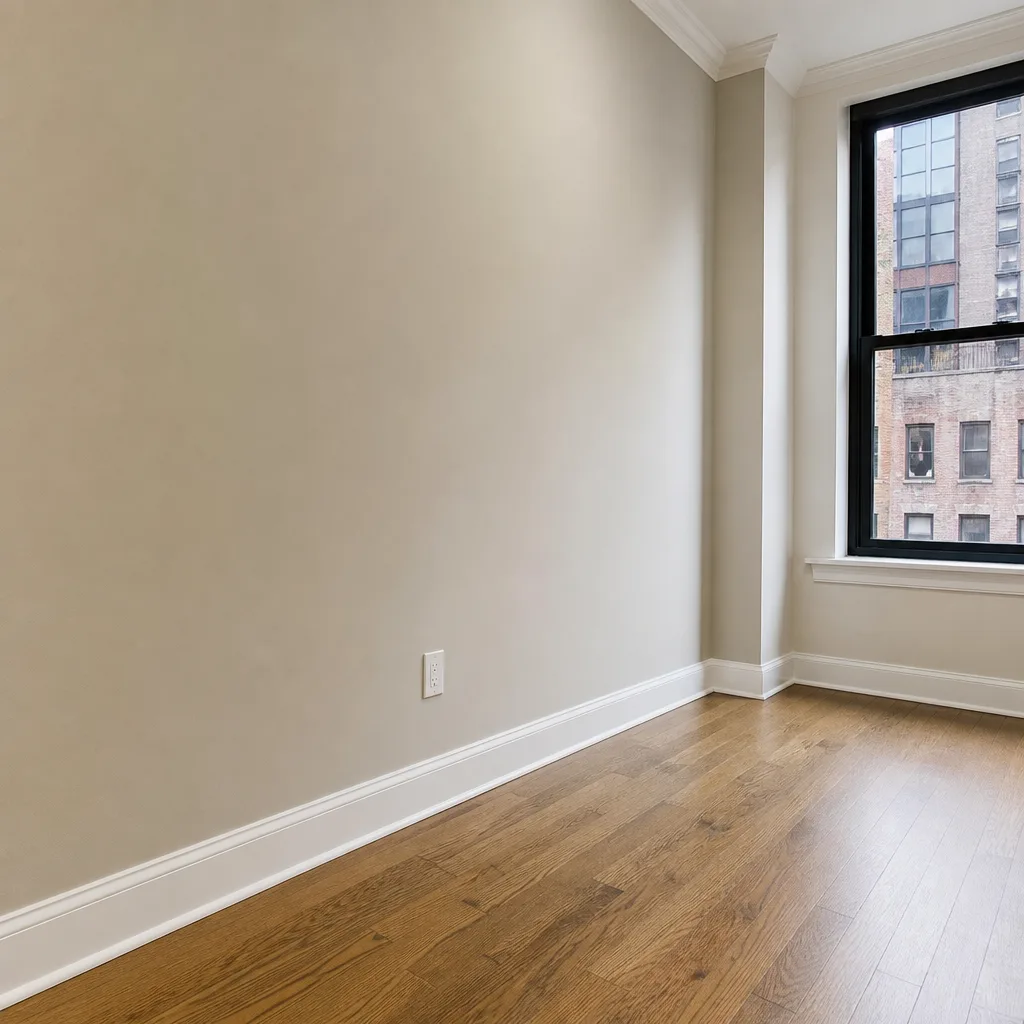 After
AfterDIY vs Professional Damage Restoration: The Midtown Manhattan Homeowner’s Decision Guide
Water finds the path of least resistance, and in Midtown Manhattan, that path often runs through pre-war plaster, 1920s-era lath, and converted commercial spaces never designed for residential plumbing. A slow leak behind a bathroom wall in a co-op on West 57th can travel three floors before anyone notices. This guide walks through the real decision every Midtown Manhattan homeowner faces after a flood, fire, or sewage backup: grab a mop and a fan, or call a restoration crew. You’ll learn what actually works, what makes things worse, what insurance expects, and where the line between “weekend project” and “structural emergency” really sits.
Quick Answer
DIY damage restoration is reasonable only for clean-water spills under about 15 square feet that you can dry within 24 to 48 hours before mold sets in. Anything involving sewage, hidden moisture behind walls, electrical exposure, or water that sat longer than two days demands professional-grade extraction and drying equipment, plus documentation your insurance carrier will accept. In Midtown Manhattan, where wall cavities are tight, building materials are old, and neighbors share common walls, the cost of a wrong DIY call usually exceeds the cost of doing it right the first time.
Table of Contents
- What Counts as “Damage” in a Midtown Manhattan Home
- Where DIY Genuinely Works
- Where DIY Loses: Hidden Moisture, Mold, and Old Building Science
- The Equipment Gap: What Pros Run That You Can’t Rent at a Hardware Store
- The Insurance Angle: Documentation Is Half the Job
- Cost Comparison: DIY vs Professional Restoration in Midtown Manhattan
- The 48-Hour Timeline: What Happens When, and What You Should Do
- Common Mistakes to Avoid
- When to Call a Professional
- Frequently Asked Questions
- The Bottom Line
What Counts as “Damage” in a Midtown Manhattan Home
Damage restoration is not one job. It is four distinct problems wearing the same raincoat, and each one calls for a different level of response. In Midtown Manhattan, the building stock makes this especially true. High-rise co-ops and condos share risers, waste lines, and chase walls. A toilet overflow on the 18th floor of a building near Columbus Circle becomes a ceiling stain in the 17th-floor unit below within hours. Water does not ask permission to travel.
The first category is clean water damage: supply-line breaks, overflowing tubs, radiator leaks on the top floor. This is the easiest category to handle, and the one where careful DIY sometimes works. The second is gray water: dishwasher discharge, washing machine failures, sump pump overflows. Gray water carries soap, food particles, and organic matter. It breeds bacteria within a day. The third is black water: sewage backups, toilet overflows with solid waste, river water intrusion. Black water is a health hazard with no DIY version. The fourth is fire and smoke damage, which adds soot, char, and synthetic-chemical residue from burned plastics and foam to the equation.
Midtown Manhattan adds two complications most restoration guides skip. First, many buildings use steam risers that run through every floor. A pinhole leak behind a riser may wet three apartments before anyone notices. Second, the plaster-and-lath walls common in pre-1960 buildings hold water differently than modern drywall. Lath acts like a sponge, and lime plaster wicks moisture upward. You cannot see the extent of the problem by looking at the baseboard.
Where DIY Genuinely Works
We would be doing you a disservice if we claimed every spill needs a truck and a crew. Honest answer: a small category of incidents is manageable on your own, provided you move fast and know your limits. This is where DIY earns its keep.
- Clean-water spills under 15 square feet. A knocked-over mop bucket, a supply line that snapped while you were at home and caught it within minutes. If the water is clean, the area is small, and you can begin drying within an hour, a wet-dry vacuum and heavy airflow will often do the job.
- Water that never touched drywall or flooring seams. Tile floors with sealed grout, concrete, vinyl. The danger zone is where water reaches organic material: wood subfloor, drywall, insulation, the bottom edge of baseboards that wick upward.
- You can verify dryness completely. Not “feels dry to the hand.” Actually dry, measured with a moisture meter. In our experience, a homeowner’s hand is wrong about 40 percent of the time on plaster walls.
- No electrical outlets, wiring, or appliances were submerged. Water and 120-volt wiring do not mix. If water touched an outlet, a junction box, or the back of a hardwired dishwasher, stop and call someone who handles this daily.
If all four boxes check, DIY drying with a shop vacuum, fans, and a dehumidifier often succeeds. The catch in Midtown Manhattan: humidity. Summer months run sticky, and a dehumidifier that works fine in a Suffolk County basement struggles against 75 percent ambient humidity in a pre-war apartment on the Upper West Side of Midtown. Time is against you. Mold germination starts in 24 to 48 hours in the conditions Manhattan buildings create naturally.
Where DIY Loses: Hidden Moisture, Mold, and Old Building Science
The homeowner who “fully dried” their bathroom leak and then finds black spots behind the vanity six months later is a story we hear at least once a month in Midtown Manhattan. Here is why the DIY route fails so often in this city.
Wall cavities in older buildings are not empty. A Midtown Manhattan apartment built before World War II has lath-and-plaster walls with wooden studs spaced unpredictably, dead-end chases, and decades of accumulated dust and debris. Water that seeps into that cavity does not evaporate quickly. It pools on nail heads, soaks into the lath, and feeds mold in a dark, closed space where no fan you own can reach it. You can dry the surface completely and still have a hidden problem growing behind the wall.
Mold is not always visible. By the time you see black staining on drywall or smell the musty odor, the colony has usually been growing for weeks. The visible patch is the fruiting body of something much larger inside the wall. Bleach does not remediate mold in porous materials; it bleaches the surface, leaves the roots, and adds water to the problem. The EPA’s guidance on mold is blunt: if the affected area exceeds 10 square feet, professional remediation is recommended. That is not a sales line. It is a public health recommendation.
Old wiring meets new water. Pre-war buildings in Midtown Manhattan often still have knob-and-tube wiring in chase walls, or cloth-jacketed BX cable that predates modern insulation standards. Water on degraded cloth insulation is a fire risk. Treating a wet wall cavity as if it were only a moisture problem can miss a genuine electrical hazard hiding behind the lath. A professional restoration crew checks for this. A homeowner with a fan does not.
Multi-unit buildings mean multi-unit liability. If you own in a Midtown Manhattan co-op or condo and try to dry a leak that migrates into the neighbor’s ceiling, the building’s insurance, the neighbor’s insurance, and your own insurance may all have opinions about who pays. Professional restoration companies produce the moisture logs, daily readings, and drying documentation that liability claims are built on. DIY efforts produce a homeowner’s word. Guess which one holds up when the neighbor’s adjuster calls.
The Equipment Gap: What Pros Run That You Can’t Rent at a Hardware Store
The truth about professional water damage restoration is that the equipment does most of the work. And the equipment is not something you can pick up at a Midtown Manhattan hardware store or rent from a general tool rental counter. This is the quiet separating line between DIY and professional-grade.
Commercial dehumidifiers. We run Dri-Eaz and Phoenix LGR (low-grain refrigerant) dehumidifiers. These machines pull 130 to 190 pints of water per day out of the air, compared to the 30 to 50 pints a standard consumer dehumidifier moves. That difference is the difference between dry-in-two-days and damp-forever in a hot Midtown Manhattan July.
High-velocity air movers. Consumer box fans push air around a room. Professional air movers like the XPOWER and Dri-Eaz units we run create a focused stream of air that drives moisture out of flooring, wall cavities, and insulation. Placement matters: air movers are aimed at specific angles under floating floors, behind baseboards, into wall chases. It is not “point a fan at the puddle.” It is fluid dynamics.
Injectidry systems. This is a name most homeowners have never heard, and that is the point. Injectidry allows us to force dry air into wall cavities, under cabinetry, and beneath built-ins without tearing them apart. In a Midtown Manhattan kitchen with custom cabinetry that predates the Eisenhower administration, saving the cabinets matters. A homeowner with a mop cannot move air inside a closed wall void.
Moisture meters and FLIR thermal imaging. Daily moisture readings are logged against a dry standard. This is not guesswork. A B-Air and Phoenix-equipped crew knows when a material is dry by measurement, not by feel. That log is also the single most valuable document in an insurance claim. More on that next.
The Insurance Angle: Documentation Is Half the Job
Water damage restoration in Midtown Manhattan is, in practice, two projects: fixing the house, and satisfying the insurance carrier. Most homeowners only see the first one until the claim hits a snag. Then the second one gets expensive.
Insurance carriers reimburse based on documented damage, professionally dry-logged, with line-item scopes and photographs. A homeowner who mops up a basement flood, tosses the wet carpet, and then files a claim for “water damage” has left the adjuster nothing to verify. The claim gets reduced, denied, or stalled for months. A restoration company that photographs the damage, logs the moisture readings daily, writes a detailed scope, and bills the carrier directly changes the dynamic. The carrier is not being asked to trust a homeowner’s memory. They are being handed a paper trail.
In our 42 years in the local community, the claims that go smoothly are the ones where the mitigation was done professionally from the first visit. The claims that go sideways are the ones where the homeowner tried to save money up front and then asks the carrier to trust their word after the fact. Irony: the professional route often costs the homeowner less out-of-pocket, because the insurance reimbursement actually lands.
The other insurance reality: in Midtown Manhattan, where co-op boards and condo associations have building-wide policies layered over individual unit policies, the blame gets complicated. A riser leak might be the building’s responsibility. A supply line might be the unit owner’s. A sewage backup from a city main might involve municipal liability. A professional restoration company that handles direct insurance billing removes the homeowner from the middle of the phone calls. That alone is worth something in this city.
Cost Comparison: DIY vs Professional Restoration in Midtown Manhattan
Here is the honest money math for a typical Midtown Manhattan water damage scenario: a bathroom supply-line leak that ran for about four hours and wet a 6-by-8-foot area including drywall, subfloor, and baseboard.
| Item | DIY Route | Professional Route |
|---|---|---|
| Equipment | Wet-dry vac: $120 (buy). Fans: $80. Dehumidifier: $200. Moisture meter: $35. Total: $435. | Included in service. Professional-grade extraction, air movers, and LGR dehumidifiers brought to the site. |
| Materials | Drywall patch: $50. Paint: $40. Baseboard: $45. Bleach/cleaner: $25. Total: $160. | Included in rebuild scope, matched to existing finishes. |
| Time | 12 to 20 hours of homeowner labor across 3 to 5 days, plus disposal runs. | Extraction same visit. Drying typically 3 to 5 days with daily monitoring. Rebuild scheduled after. |
| Insurance reimbursement | Usually partially denied for lack of documentation. Homeowner eats most of it. | Direct carrier billing with photo documentation, moisture log, and line-item scope. Most claims approved in full. |
| Risk of hidden mold | High. Wall cavities unaddressed. Mold appears in 3 to 12 months. Remediation then costs $1,800 and up in Midtown Manhattan. | Low. Cavities dried, measured, and logged to dry standard before rebuild. |
The DIY sticker price looks cheaper on day one. It usually is not cheaper by day 180, which is when hidden mold in a Midtown Manhattan wall cavity makes itself known.
Real numbers from this market: water extraction and drying for a single-room leak in Midtown Manhattan typically runs $1,200 to $3,800 depending on affected square footage, what got wet, and how long the water sat. Mold remediation for a 50-square-foot area typically runs $1,800 to $5,000. Sewage cleanup is above all of that. A homeowner who skips professional drying and later pays for mold remediation has paid for the most expensive version of the job.
The 48-Hour Timeline: What Happens When, and What You Should Do
Water damage is a clock problem. Every hour the water sits, the damage compounds. Here is what the first 48 hours look like, and what a Midtown Manhattan homeowner should be doing at each step.
- First 30 minutes: Stop the source. Shut off the supply valve, the main, or the fixture. If you cannot find the shutoff, call your building super. Every Midtown Manhattan co-op and condo has a shutoff plan. Know yours before you need it.
- First hour: Kill the power where water is present. If water reached outlets, switches, or appliances, shut off the breaker to that zone. A live outlet in a wet wall is a fire and shock hazard. Do not stand in water while touching the panel.
- Hours 2 through 6: Begin extraction. Wet-dry vacuum what you can. Pull wet rugs and cushions out. Remove standing water from hard surfaces. This is the oldest and most effective damage control measure, and it works.
- Hours 6 through 24: Assess the hidden damage. Check the baseboards. Check the wall below the leak. Check the ceiling below, if you are in a multi-floor unit. Is drywall spongy? Is the baseboard swelling away from the wall? That means water is inside the wall cavity, and no amount of floor-level drying will fix it. This is the moment to make the DIY-versus-pro call.
- Hours 24 through 48: Hit the dry standard or call. If you chose DIY, the affected materials must be measurably dry within 48 hours. Not damp. Dry. A moisture meter reading on drywall should be at or below the building’s baseline. Anything above that at the 48-hour mark, and mold is likely already germinating. Call a pro.
For Midtown Manhattan specifically: building-wide steam systems run for six months of the year, and humidity in wall cavities runs high even when apartments are dry. This city’s buildings do not dry themselves. They need forced air and measured verification.
Common Mistakes to Avoid
- Using a household fan and calling it done. A box fan moves air across the surface. It does not dry a wall cavity, a subfloor, or the backside of a baseboard. In Midtown Manhattan’s summer humidity, the fan may be doing nothing but circulating wet air.
- Bleaching visible mold. Bleach does not kill mold roots in drywall, wood, or plaster. It bleaches the stain and leaves the colony alive underneath, plus it adds liquid water to the material. The visible mold is the surface of a larger problem.
- Filing the insurance claim after the fact. Once the wet drywall is in the dumpster and the carpet is gone, the adjuster has nothing to verify. Photograph everything before you touch it. Better: have a professional document it from the first visit.
- Assuming “feels dry” is the same as dry. Plaster and dimensional lumber can hold 15 to 20 percent moisture and still feel dry to a human hand. Dry standard for building materials is usually 8 to 12 percent. Your hand is not calibrated.
- Ignoring the ceiling below a leak. In Midtown Manhattan high-rises, water travels down. A bathroom leak on your floor is a ceiling problem for the unit below. Checking the ceiling below is part of the job. Skipping it turns a bathroom drying job into a three-unit liability claim.
- Replacing flooring without drying the subfloor. New wood over wet subfloor is the definition of doing the job twice. The subfloor must reach the dry standard before any finish flooring goes down. Trapped moisture under new flooring rots and molds in the dark.
- Hiring a contractor who hands off at the drying stage. Some restoration companies do extraction and drying, then hand you a list of subs for the rebuild. That handoff is where the schedule slips, the scope changes, and the homeowner becomes the project manager. Floodline Restoration Co. home keeps the job whole: same certified crew from first extraction to finished rebuild, with the 90-Day Done Right Promise in writing.
When to Call a Professional
Call a professional the moment any of these are true: the water is gray or black, not clean. The wet area exceeds 15 square feet. Water has been sitting more than 24 hours. The water reached walls, baseboards, subfloor, or the unit below. You cannot verify dryness with a moisture meter. You have a smoke, soot, or sewage component. You want your insurance claim to land. In any of these cases, the cost of delay is higher than the cost of the call. Floodline Restoration Co. offers free estimates in Midtown Manhattan, and a live person answers at (518) 314-5660 at any hour, including 2 a.m. when the pipe lets go.
Frequently Asked Questions
Single-room water damage restoration in Midtown Manhattan typically runs $1,200 to $3,800 for extraction, drying, and documentation, with rebuild scoped separately. The range reflects how long the water sat, what got wet, and whether wall cavities are involved. Call (518) 314-5660 for a free, no-pressure estimate with straight numbers before any work starts.
Only if the water is clean, the area is under about 15 square feet, it never touched walls or subfloor, and you can verify dry-standard moisture readings within 48 hours. That combination is rare in Midtown Manhattan, where wall cavities wick water upward and summer humidity slows evaporation. Outside those narrow conditions, DIY drying leaves hidden moisture behind.
Most Midtown Manhattan homeowner policies cover sudden and accidental water damage, including supply-line breaks and appliance failures, when documented properly. Sewage backup often requires a specific rider. Professional restoration with photo documentation, daily moisture logs, and a line-item scope gives the adjuster what they need to approve the claim. Floodline Restoration Co. bills the carrier directly, so you are not playing messenger.
A live dispatcher answers at (518) 314-5660 24 hours a day, 7 days a week, and a certified crew begins extraction on the same visit, not the next day. In Midtown Manhattan, response time matters because water in a wall cavity is moving and wicking every hour it sits.
Yes. The visible spot is usually the tip of a larger colony that has been growing in the dark wall cavity for weeks, and mold exposure is a recognized respiratory health risk, not a surface stain. EPA guidance recommends professional remediation for mold areas over 10 square feet. A trained remediation crew removes it safely and corrects the moisture source, rather than bleaching the stain and leaving roots behind.
Water damage restoration is the emergency response: stopping the source, extracting standing water, drying the structure, and rebuilding what needs replacing. Mold remediation is the cleanup after moisture colonizes: containment, removal of affected materials, air filtration, and treatment to prevent regrowth. In Midtown Manhattan, the fastest way to need mold remediation is to skip professional water damage drying. A company that handles both, like Floodline Restoration Co., keeps the problem from becoming two separate projects.
The Bottom Line
DIY damage restoration works in a narrow window: clean water, small area, quick response, measurable dryness. Everything outside that window in Midtown Manhattan, the city’s old walls, shared risers, humid summers, and multi-unit liability, stacks the odds against the homeowner with a mop. Professional restoration costs more on day one and usually less by day 180, because the drying is measured, the documentation lands the insurance claim, and the problem does not come back as hidden mold. The line the water left is where a good restoration company starts. Everything after that is just doing the job right.
Written by Curt Bowman, Owner at Floodline Restoration Co., serving Midtown Manhattan since 2010.