
Free visual inspection and a written scope of work before any mitigation begins - photos, moisture readings, and drying logs go in your claim file
The scope we write is the scope we bill. Anything new gets shown to you, in writing, before we touch it.
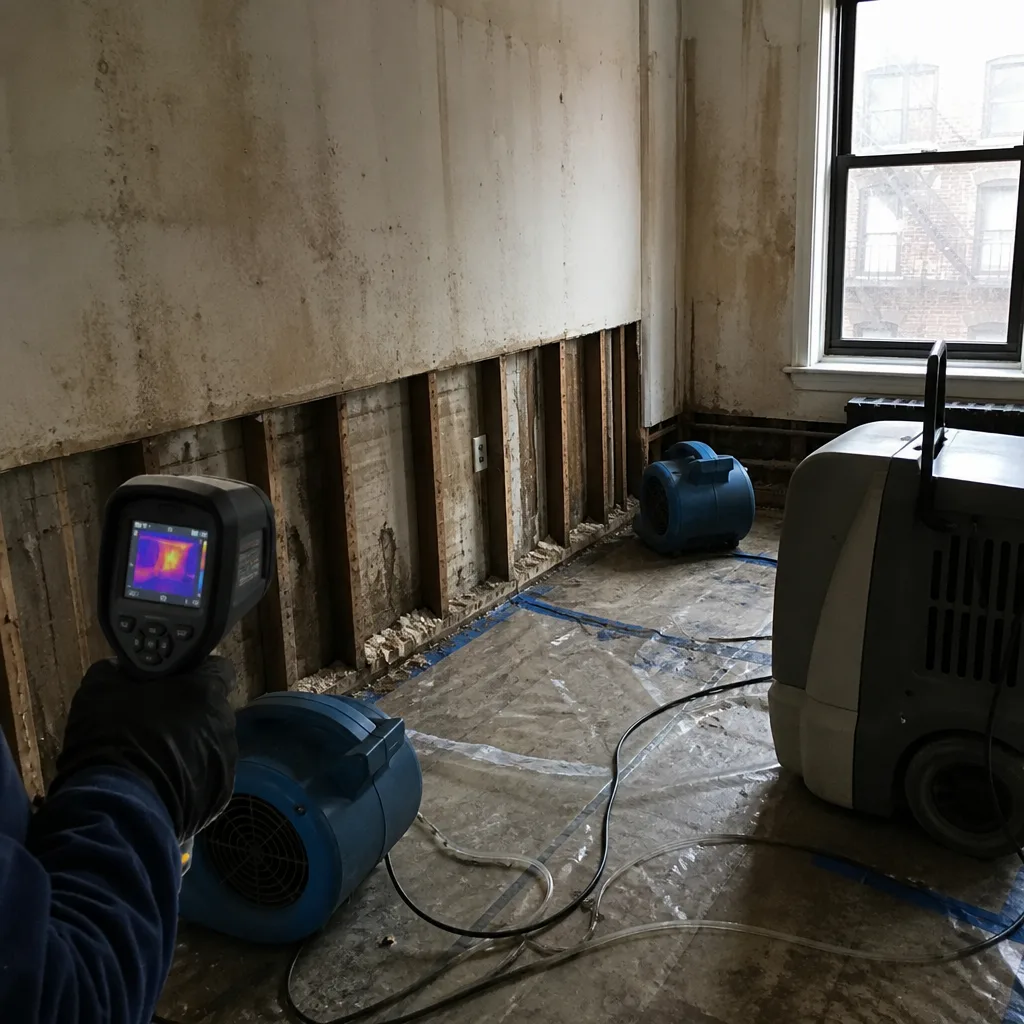 Before
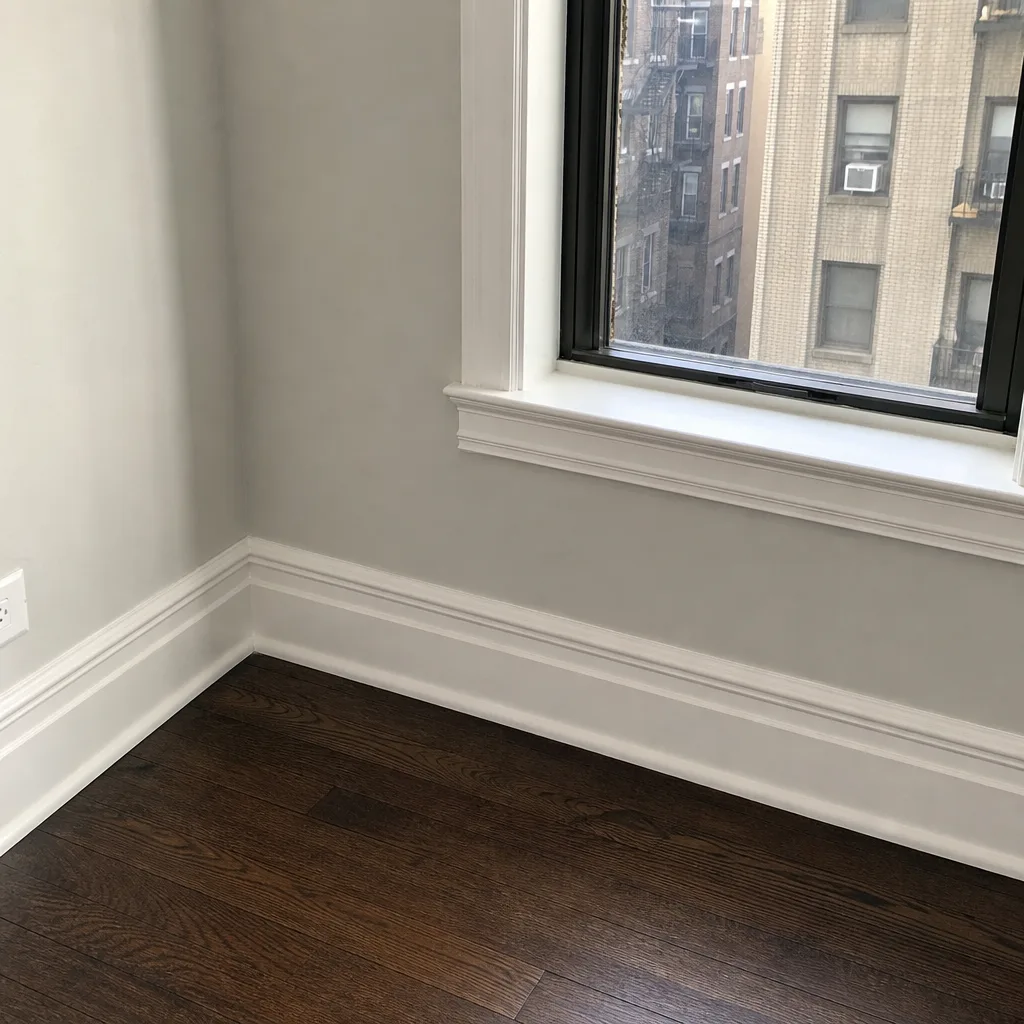 After
After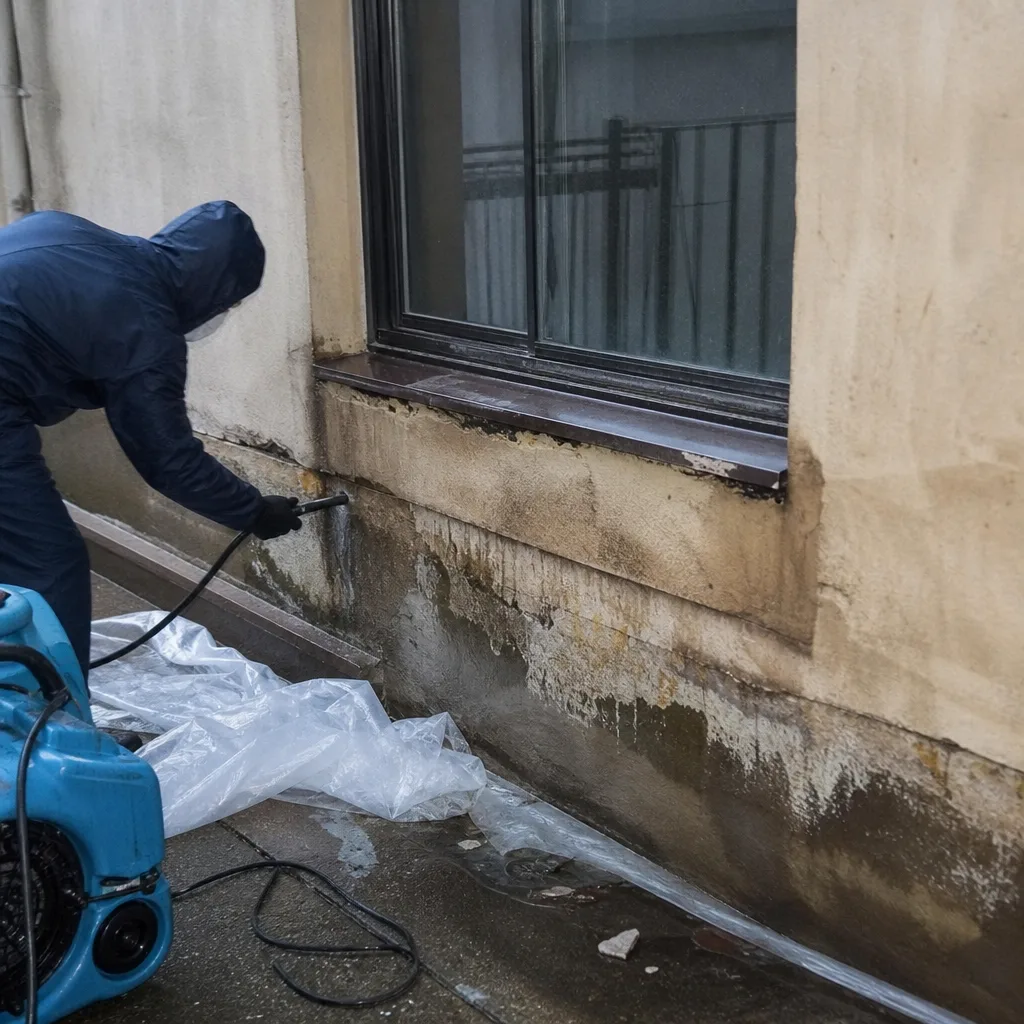 Before
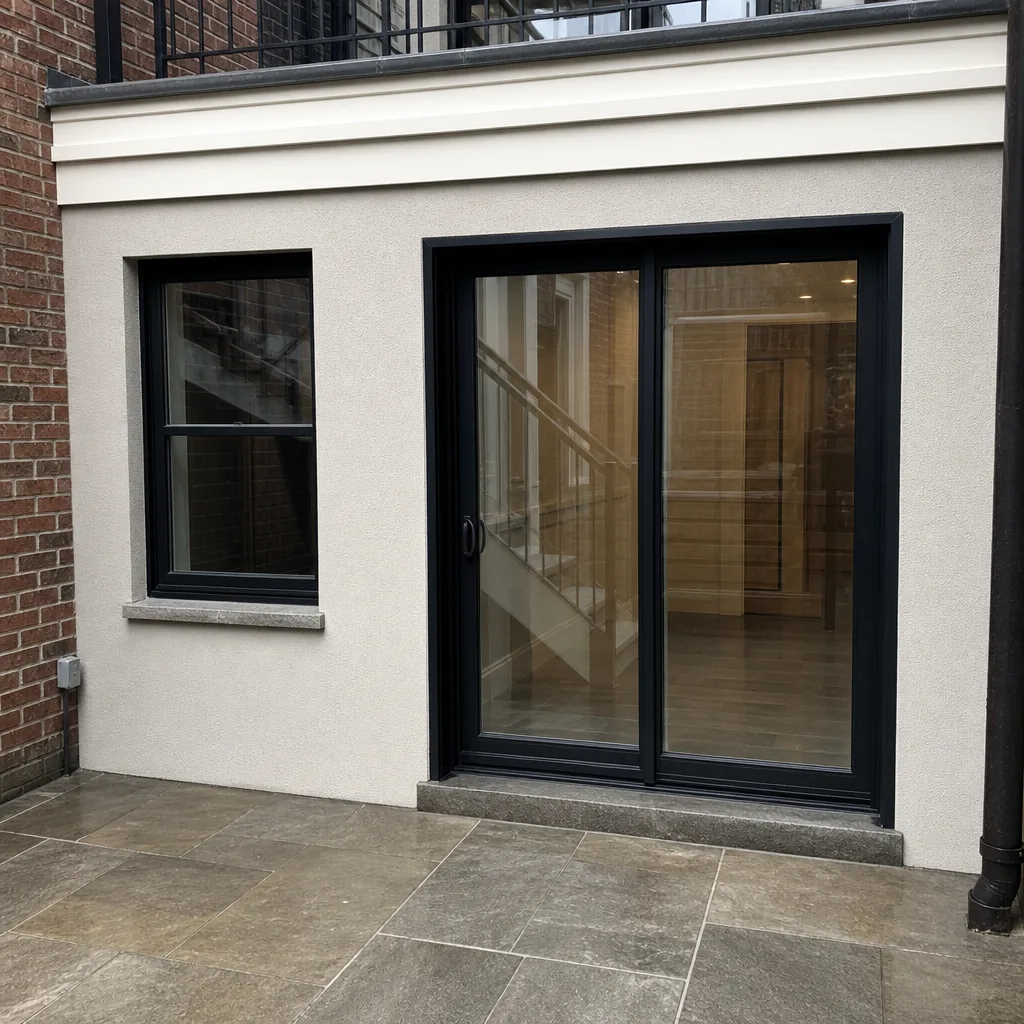 After
After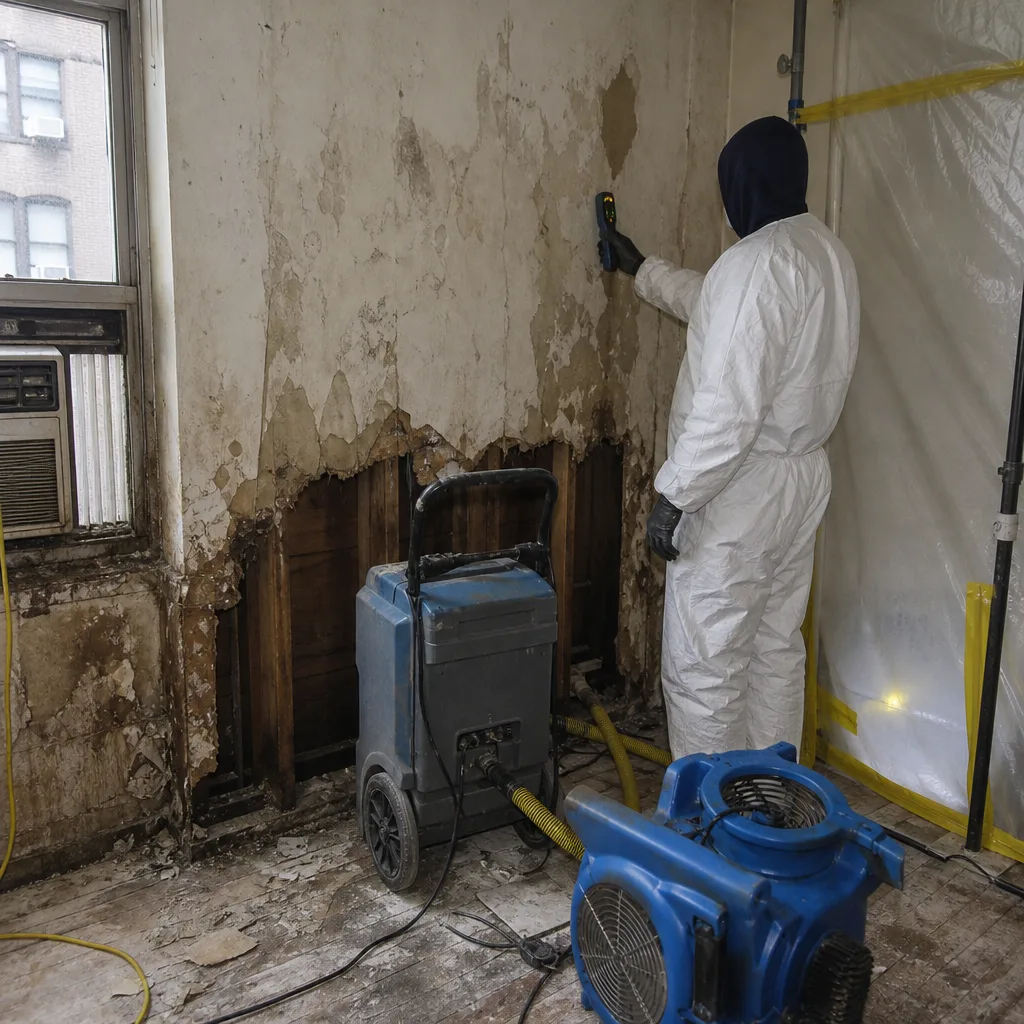 Before
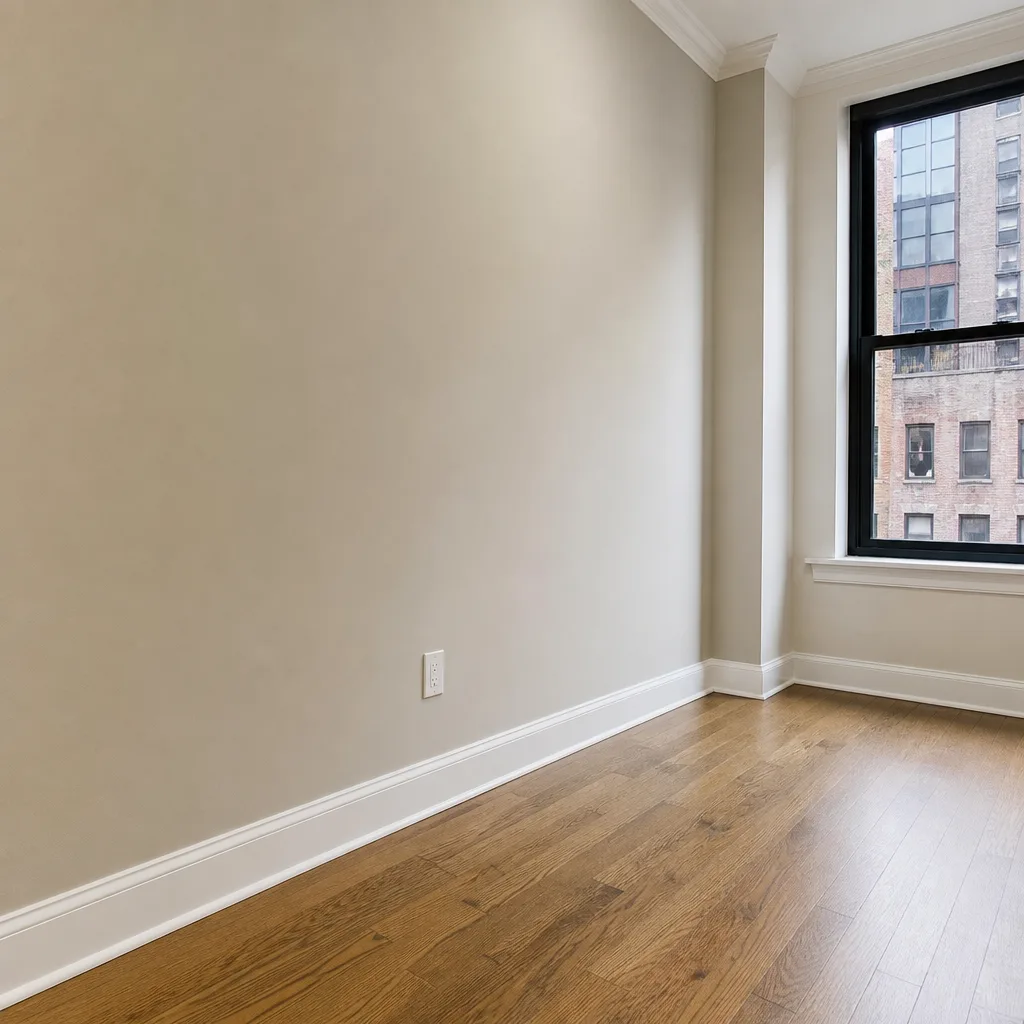 After
After24/7 Emergency Storm & Disaster Restoration in Financial District
Storm and disaster restoration in Financial District typically runs $2,800 to $9,500 for a full basement or sub-grade extraction, structural drying, and sanitization, and most emergency calls get a crew on site within 45 minutes. Water from a failed sump, a nor’easter surge, or a burst supply line inside a converted office tower does not wait, and neither do we. You can reach a live dispatcher at (518) 314-5660 at any hour, every day of the year. The first hour after water enters a FiDi basement or utility chase determines whether you are dealing with a cleanup or a rebuild, because the district’s pre-war steel frames and masonry cores wick moisture upward fast.
Understanding Storm & Disaster Restoration Severity in Financial District Properties
Storm and disaster damage in Financial District breaks into three water categories that dictate everything downstream. Category 1 is clean water from a burst supply line or rainwater that has not touched building materials long. Category 2 carries contaminants, the gray water you get when groundwater, sump overflow, or condensate mixes with dust, oil, and the residue of a hundred-year-old building. Category 3 is black water, the seawater and sewage mix that came through during Sandy and still threatens sub-grade spaces during King Tides. In Financial District, we treat almost every basement intrusion as at least Category 2 because the historic landfill and shallow water table mean groundwater is never clean. Moisture mapping with thermal imaging and hygrometers tells us how far water has traveled through concrete utility cores, legacy freight elevator pits, and the shared utility tunnels that link adjacent towers. Without that mapping, hidden moisture behind a 1920s masonry party wall becomes mold inside 48 hours.
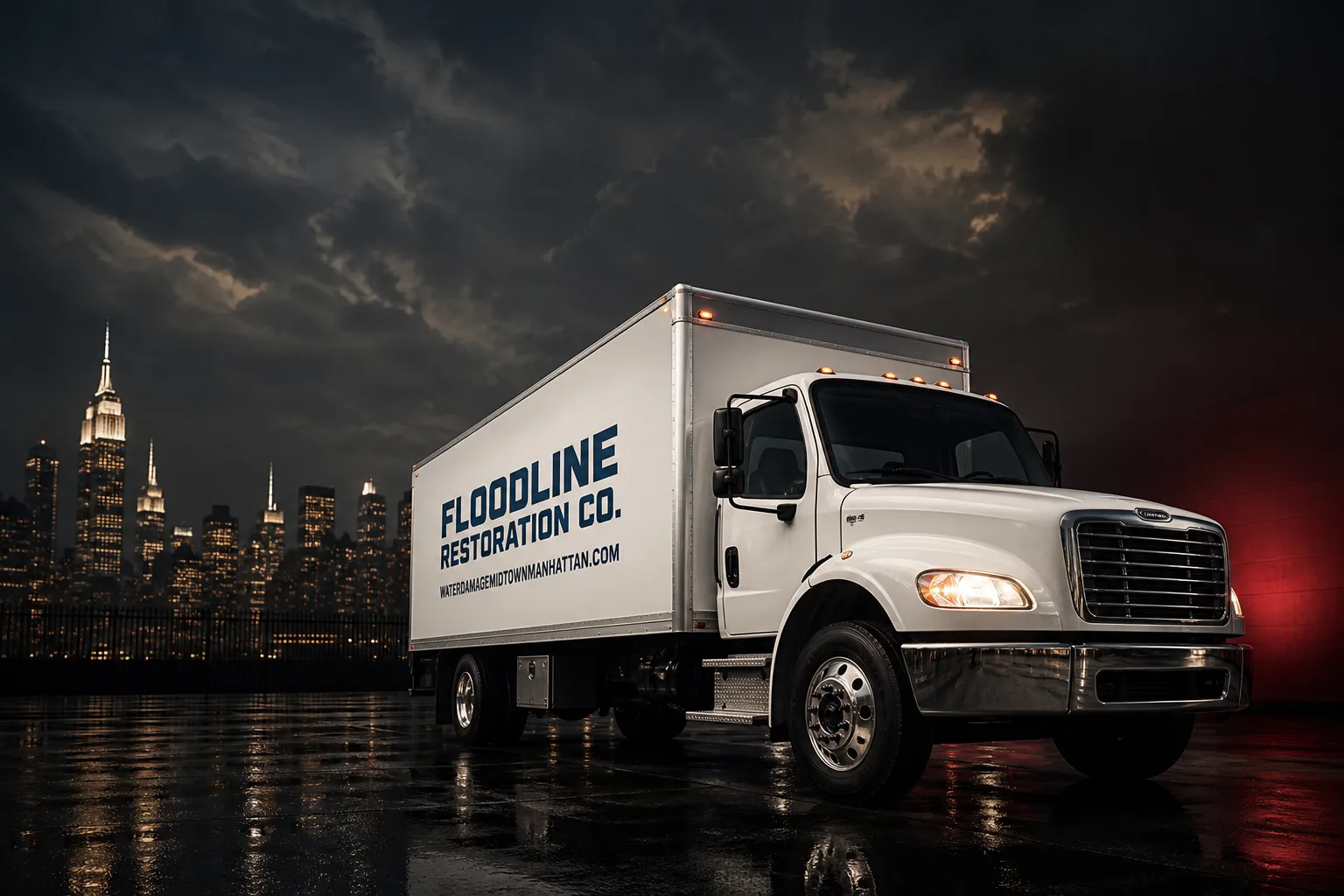
Why Financial District Property Owners Choose Floodline Restoration Co.
- 45-minute response commitment to Financial District. Our dispatch board routes the nearest certified crew the moment you call, and a live person answers that call, not a recording.
- IICRC-certified crews trained to WRT, FSRT, and AMRT standards. Background-checked, uniformed technicians who know the difference between a wet concrete slab and a wet concrete slab hiding a failed sub-grade vault.
- Free visual inspection on every storm or water call. We do not charge you to tell you what you are dealing with, and the scope comes in writing before work starts.
- Direct insurance billing. We talk to your adjuster, send the documentation, and you never play messenger.
- One team from extraction to reconstruction. The same crew that pulls water out of a freight elevator pit on day one is the crew that rebuilds the finished space. No mid-job handoff.
- 90-Day Done Right Promise in writing. The Keystone Standard. If it is not done right, we make it right. No arguing, no paperwork battles.
Our Storm & Disaster Restoration Process
Inspection & Assessment
We walk the full affected area, including the spaces most FiDi owners never see: sub-grade vaults, former loading-dock corridors, and any utility chase shared with an adjacent building. Thermal imaging and moisture probes give us a loss map we can hand to you and your carrier.
Extraction & Stabilization
Our crews pull standing water with truck-mounted and portable extraction units, then stabilize the area to stop further migration. In Financial District, this often means tracing water through a freight elevator pit or a shared utility tunnel before we can call the extraction complete.
Drying & Dehumidification
We place Dri-Eaz air movers, Phoenix dehumidifiers, and Injectidry systems only where the moisture map says they belong. Daily readings are logged until every affected material reaches its dry standard, not just until the surface feels dry.
Cleaning & Sanitization
For Category 2 and 3 water, we contain the space, run HEPA air scrubbers, and apply antimicrobial treatments rated for the surfaces we are treating. In a converted office tower, that includes concrete cores, steel lintels, and any legacy mechanical chase the water touched.
Storm-Specific Treatment
For Financial District buildings with post-Sandy flood-mitigation systems, this includes removing and inspecting failed sump arrays, documenting how water bypassed deployable barriers, and testing backup systems so the next King Tide does not find the same path.
Repairs & Restoration
Once the drying log is complete and you have approved the written scope, the same crew rebuilds what needs rebuilding, from drywall to sub-grade parking finishes. Done right, and backed in writing.
Need Emergency Storm & Disaster Restoration in Financial District Now?
Crews minutes away, answering live 24 hours a day. The sooner we start, the less it costs.
Working With Your Insurance Company
Storm and disaster claims in Financial District are more complicated than in most of the city because a single water event can cross property lines, involve a building’s post-Sandy flood-mitigation equipment, and trigger sub-limits for groundwater or sewer backup that your standard policy may or may not cover. Our job starts with documentation from the first hour: room-by-room photos, moisture readings, a line-item scope, and a clear description of where the water came from and how it traveled. We then communicate directly with your adjuster, provide the drying logs and equipment records they ask for, and bill your carrier directly when coverage applies. You get a written scope before any work begins, and you get the same documentation your insurer gets. No side conversations, no surprises on the bill.
What We Provide Your Insurer
- Thorough documentation of the loss
- Photos of all damage, room by room
- Moisture readings and drying logs
- A detailed, line-item scope of work
- Direct coordination with your carrier
Built for Financial District’s Loss Calendar
Financial District sees water on a schedule, and it has for a long time because the district sits on historic landfill at the tip of Lower Manhattan with tidal water on three sides. Late winter and early spring bring nor’easters that push storm surge into the same low-lying basements and underground parking structures that Sandy filled in 2012. Summer brings sudden, intense thunderstorms that overwhelm the district’s combined storm drains in minutes, sending water into sub-grade mechanical rooms. Fall King Tides, the highest astronomical tides of the year, push groundwater into basement spaces even without a storm. And winter cold snaps burst supply lines in pre-war masonry towers converted to residential use, where original piping runs through concrete utility cores that make access difficult and drying slow. This is not a district where water damage is a rare surprise. It is a district where water is a recurring, predictable event, and a restoration plan has to assume it will happen again.
Storm & Disaster Restoration Across Financial District’s Neighborhoods
The blocks around Wall Street and Broad Street hold some of the oldest office-to-residential conversions in the district, and their sub-grade vaults and freight elevator pits trap water from broken supply lines and groundwater intrusion longer than anywhere else we work. Along South Street and the East River waterfront, buildings sit closest to tidal surge, and the damage we see after a nor’easter is faster and deeper than a few blocks inland. Battery Park City, built on 20th-century landfill, deals with shallow groundwater and a high water table that makes basement drying a longer, more instrumented job. Around Exchange Place and the narrow streets west of Broadway, shared utility tunnels between adjacent towers mean water from one building’s failed sump can show up in a neighbor’s basement, and our moisture mapping has to cross ownership lines. The stress points shift block by block, but the common thread is that every serious water event in the Financial District involves a building that was never originally designed for the way it is used today.
Specialized Storm & Disaster Restoration Services We Offer in Financial District
Flood Damage Restoration
When a King Tide or nor’easter pushes water into a sub-grade space, we extract first, then map the moisture path through the utility chases and legacy cores that define Financial District construction. The restoration includes structural drying, sanitization, and rebuild if the water reached finished space.
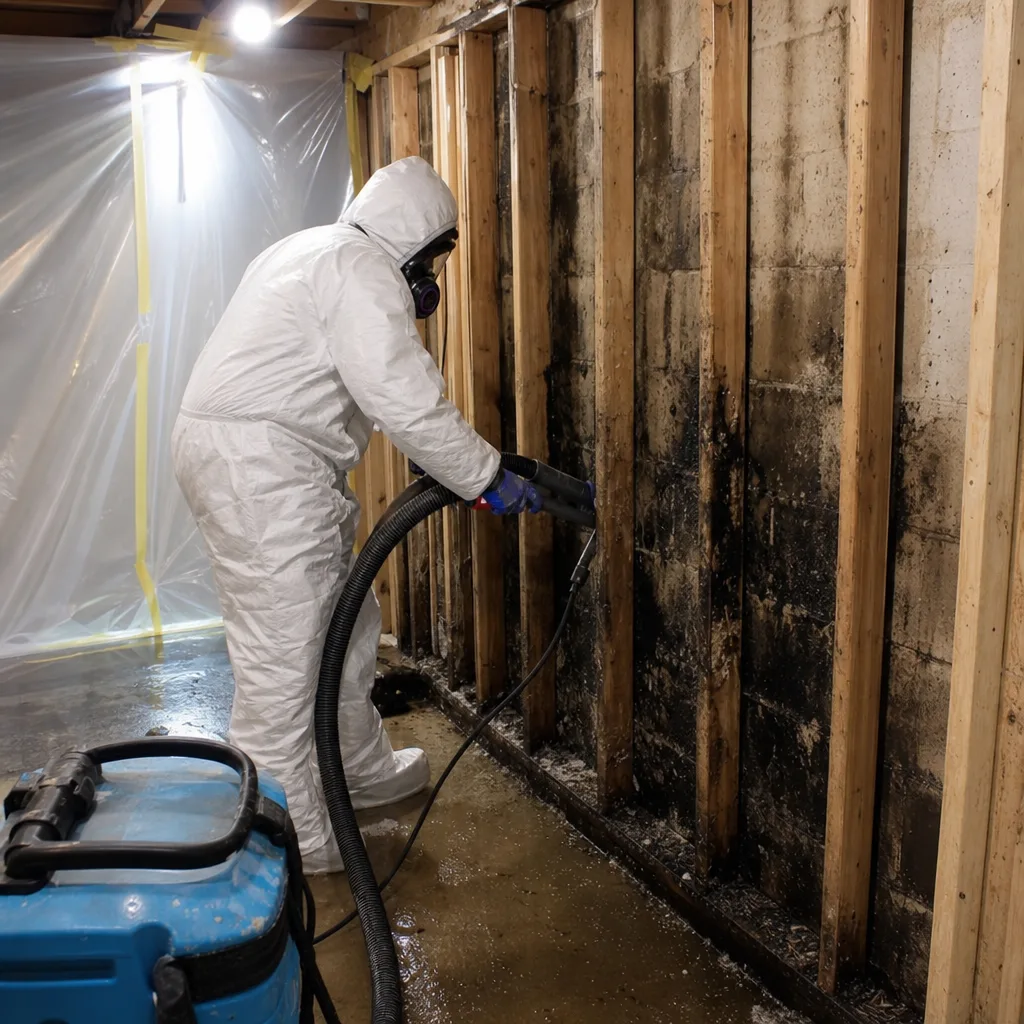
Water Extraction
Standing water in a freight elevator pit or underground parking level is not something to pump and forget. We trace where it came from, how far it has traveled through concrete and steel, and what it touched along the way, because that determines the scope.
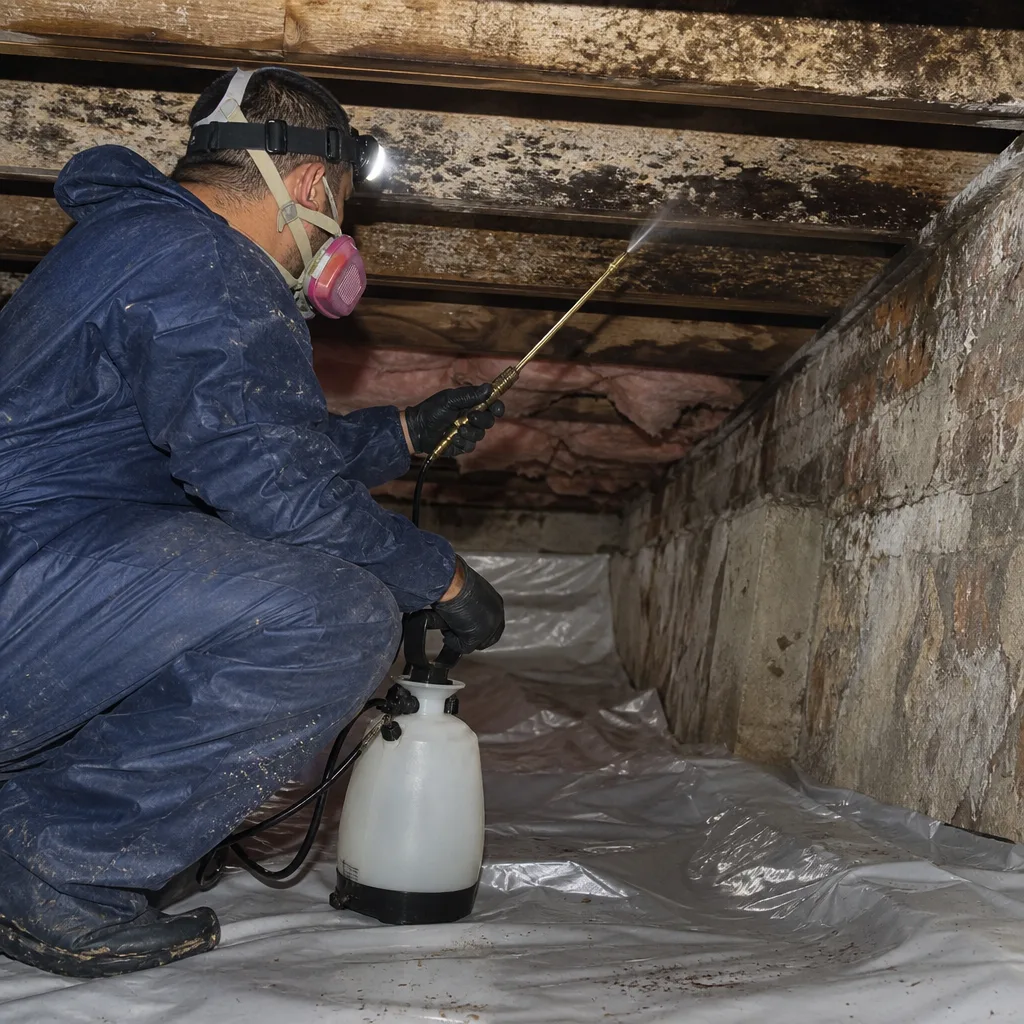
Structural Drying
Drying a pre-war masonry tower means managing humidity inside concrete cores, behind converted commercial walls, and through sub-grade vaults that hold moisture for weeks if not actively dried. We run daily moisture readings and do not stop until the log meets the dry standard.
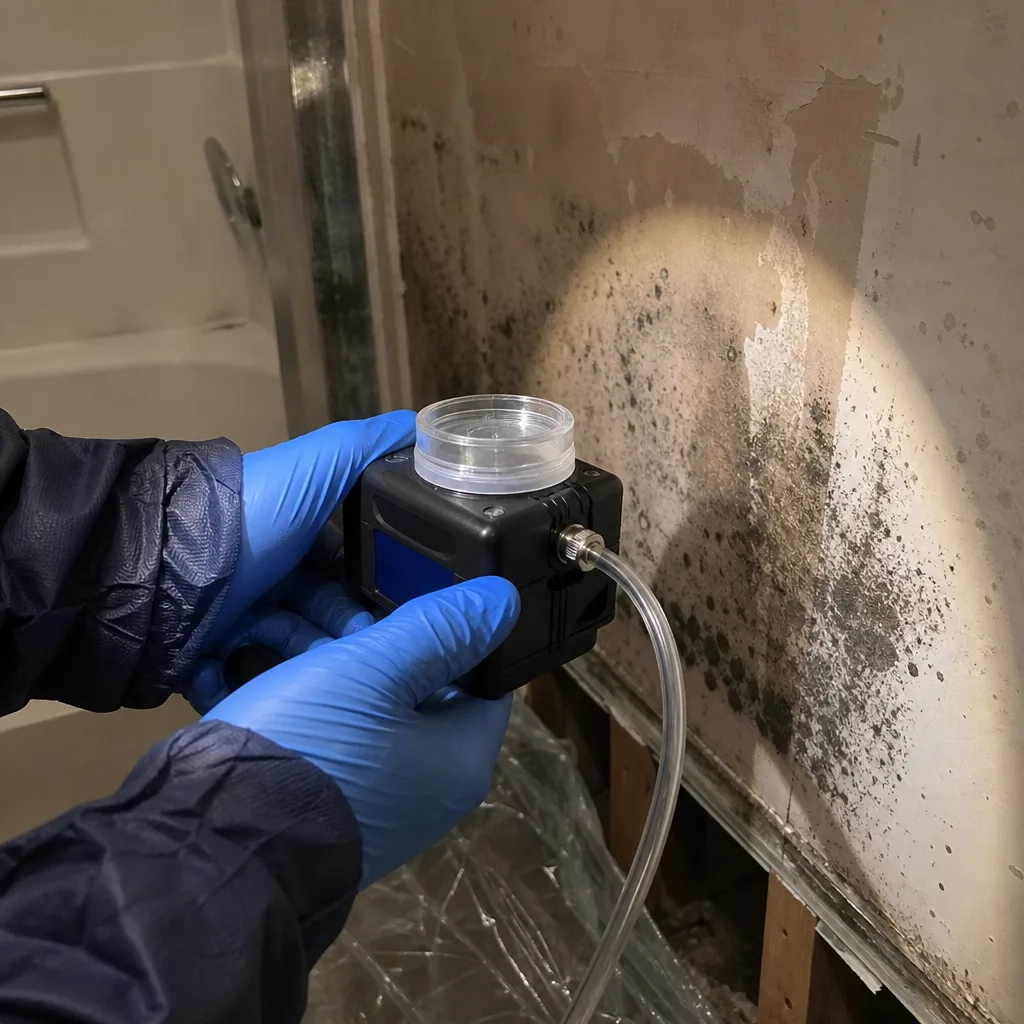
Storm Damage Cleanup
After a storm has passed, we remove debris, document damage for your carrier, and secure the property so further rain or a rising tide cannot add to the loss. Cleanup includes containment and sanitization where Category 2 or 3 water was present.
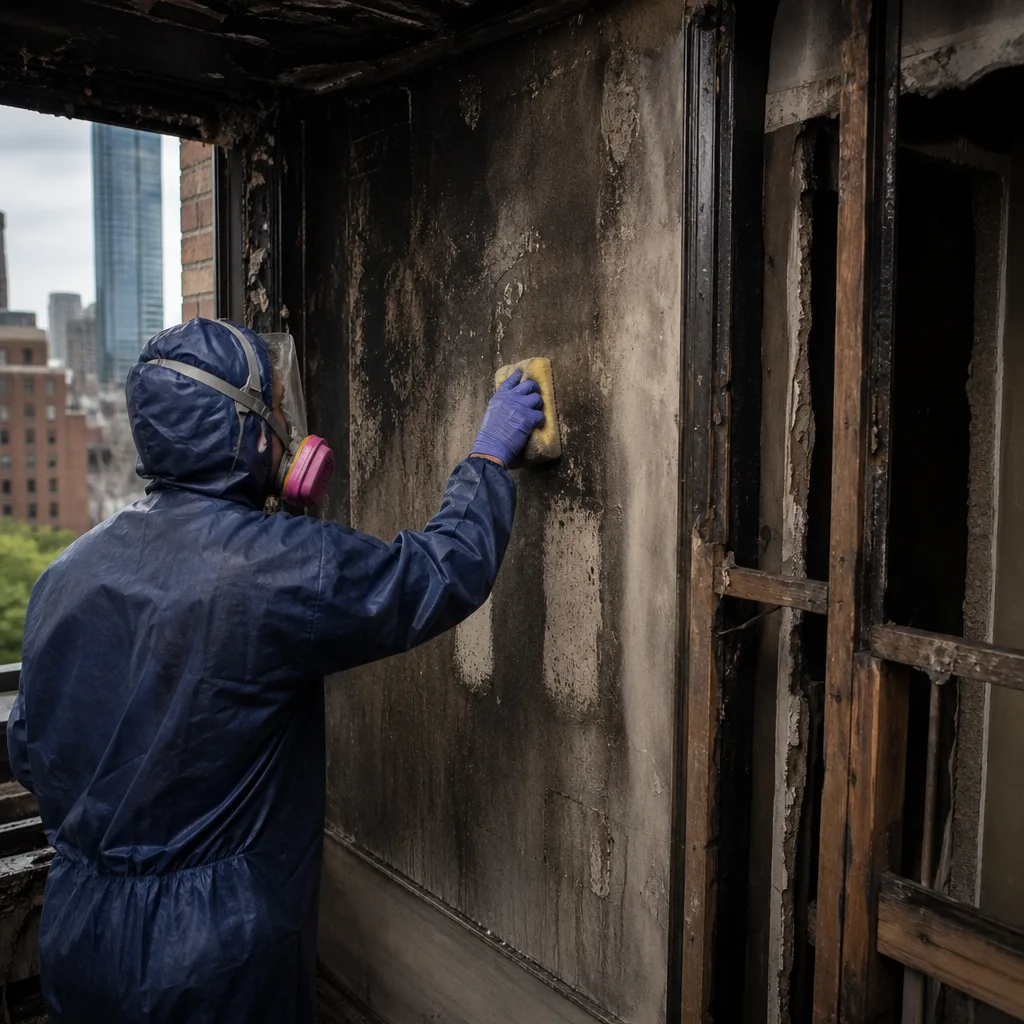
Emergency Board-Up & Roof Tarping
When wind or falling debris opens a window, a roof penetration, or a wall section in a Financial District building, we board and tarp the opening the same visit. A building that is still open to the weather is still taking damage, and every hour counts.
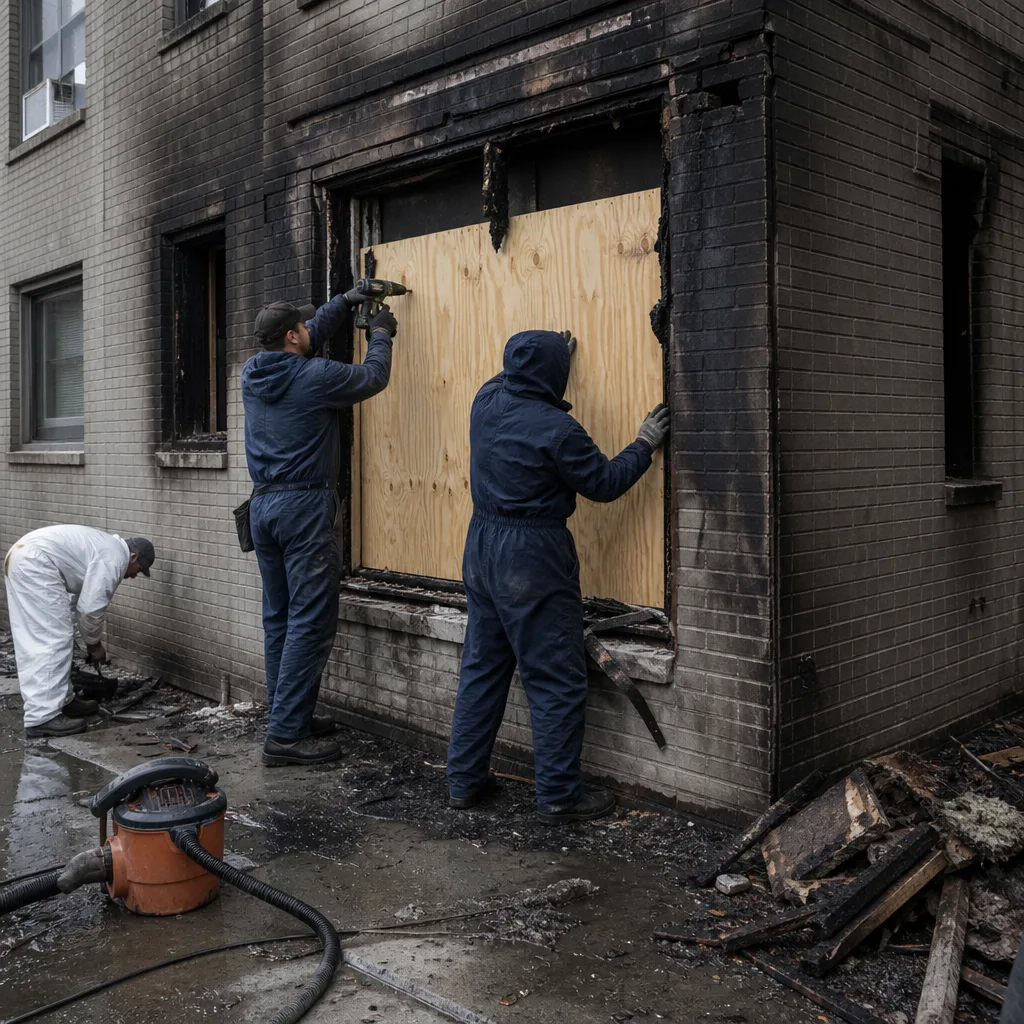
What happens when you call
- 1
A real person answersNo phone trees - you reach a local pro.
- 2
You get an upfront price rangeHonest numbers before anyone is dispatched.
- 3
A background-checked tech heads outLicensed & insured, dispatched right away.
- 4
You approve before work beginsNothing starts until you say go.
Storm & Disaster Restoration Costs in Financial District, NY
A typical water extraction and structural drying job in a Financial District basement or sub-grade mechanical room runs $2,800 to $5,500. When the job includes a failed sump array replacement, containment for Category 3 water, or work that crosses into a neighboring building’s utility tunnel, that range moves to $6,000 to $12,000. Full restoration with rebuild, including drywall, flooring, and any finish work in a converted luxury condominium, commonly lands between $12,000 and $35,000 depending on how far the water traveled and what it touched. Board-up and tarping as a standalone service runs $450 to $1,200. The single biggest variable is whether the water is Category 1, 2, or 3, because category drives containment, sanitization, and the amount of material that must be removed rather than dried. The fastest way to a firm number is a free visual inspection with a written scope. Call (518) 314-5660 and we will be there when we say.
We Also Serve Cities Near Financial District
Our crews cover the neighborhoods around the district every day, including Midtown Manhattan, Midtown West, Murray Hill, and Washington Square. If your property sits just outside the Financial District, the same certified technicians and live 24/7 dispatch are available.
Serving Financial District, NY - Our Local Coverage Area
We’re based in the Financial District area and know this community well. Use the map below to see our service coverage - if you’re nearby, we can almost certainly help.
Financial District Storm & Disaster Restoration Questions, Answered
How do post-Sandy flood barriers in FiDi towers change the way water gets in when they fail?
Post-Sandy deployable barriers are built to stop water at a building’s street-level perimeter, but when a King Tide overwhelms them or the system fails mid-storm, water enters through the paths those barriers were never designed to seal: former loading-dock corridors, legacy freight elevator pits, and shared utility tunnels between adjacent buildings. Restoration has to trace water through those unconventional routes, not just pump the obvious standing water.
What’s the difference between Category 2 and Category 3 water in a Financial District basement flood?
Category 2 water is gray water, meaning it carries significant contamination from groundwater, sump overflow, or a mix of rainwater and building residue. Category 3 is black water, the seawater, sewage, or storm surge mix that carries pathogens and requires full containment, removal of affected porous materials, and professional sanitization. In the Financial District, almost every sub-grade flood is Category 2 or 3 because of the shallow water table and tidal influence.
Why does moisture in a FiDi building spread into neighboring towers, and how do you handle that?
Many Financial District buildings share utility tunnels, sub-grade walls, and in some cases former freight corridors that cross property lines. Water from one building’s failed sump can travel through those shared spaces into an adjacent tower. We map moisture across the entire affected area, including any shared infrastructure, and document it for both ownership entities so the restoration scope is complete from the first day.
How quickly can mold appear after a Financial District basement flood from a failed sump array?
Mold can begin growing within 48 hours in a damp, dark sub-grade space like a FiDi freight elevator pit or utility chase, especially when Category 2 or 3 water is present. That is why our crews start extraction the same visit and do not stop drying until moisture levels hit the dry standard.
What should I check if my FiDi condo has a legacy freight elevator pit that floods after a northeaster?
Check for standing water, unusual odors, and any sign that the pit’s sump pump is not cycling. If the pit has flooded, do not enter it. Call us at (518) 314-5660, and we will extract the water, inspect the sump system, and run moisture readings to see whether water has wicked into surrounding concrete or steel. The sooner that is done, the smaller the restoration scope.
How fast can someone actually get to my Financial District property?
In most cases, a certified crew reaches a Financial District address within 45 minutes of your call, any hour, any day. A live dispatcher answers the phone at (518) 314-5660 and routes the nearest crew immediately.
Will insurance cover storm and flood damage in the Financial District?
It depends on the source of the water, your specific policy, and whether you carry flood insurance, which is separate from standard homeowners coverage. We document everything from the first hour, bill your carrier directly, and coordinate with your adjuster so you know what is covered and what is out of pocket before you commit to a scope.
Do I need full restoration, or can I just have the water extracted and dried?
That depends on the water category and how far the moisture traveled. For clean Category 1 water caught quickly, extraction and drying may be enough. For Category 2 or 3 water, or water that has soaked into drywall, subflooring, or a legacy utility chase, the affected materials typically need to be removed and replaced. Our free visual inspection gives you a written scope that tells you exactly which situation you have.
Last fall, we were called to a 1929 loft conversion on Exchange Place after a King Tide pushed groundwater through an abandoned loading-dock corridor that the building’s deployable barrier did not seal. Our techs ran moisture readings along the former freight elevator pit and found Category 2 water had wicked into the steel frame’s utility chase. We set containment, placed our Dri-Eaz air movers and Phoenix dehumidifiers, and pulled out the legacy pit sump array that had burned out mid-storm. We replaced the failed sump and built a drying log showing structural drying down to pre-loss moisture levels before the building reopened its sub-grade parking. That is what Storm & Disaster Restoration looks like in this district: not just water removal, but tracing how it got in and making sure the same path will not fail the next time.
If you are dealing with water in a sub-grade space, a failed sump, or storm damage anywhere in the Financial District, call (518) 314-5660 now. A live person answers. The estimate is free.
Written by Curt Bowman, Owner at Floodline Restoration Co., serving the Financial District with certified storm and disaster restoration crews.