
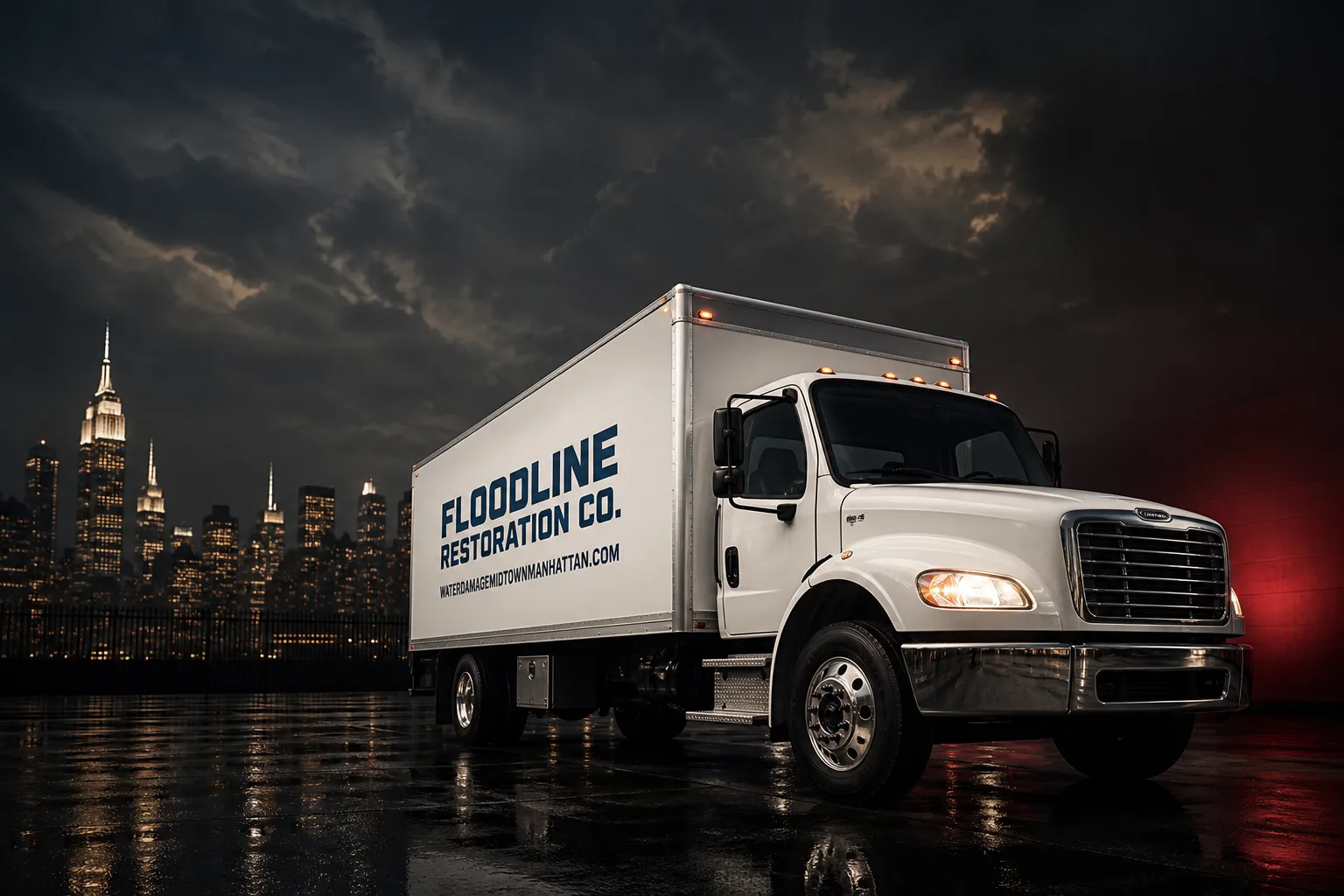
Free visual inspection and a written scope of work before any mitigation begins - photos, moisture readings, and drying logs go in your claim file
The scope we write is the scope we bill. Anything new gets shown to you, in writing, before we touch it.
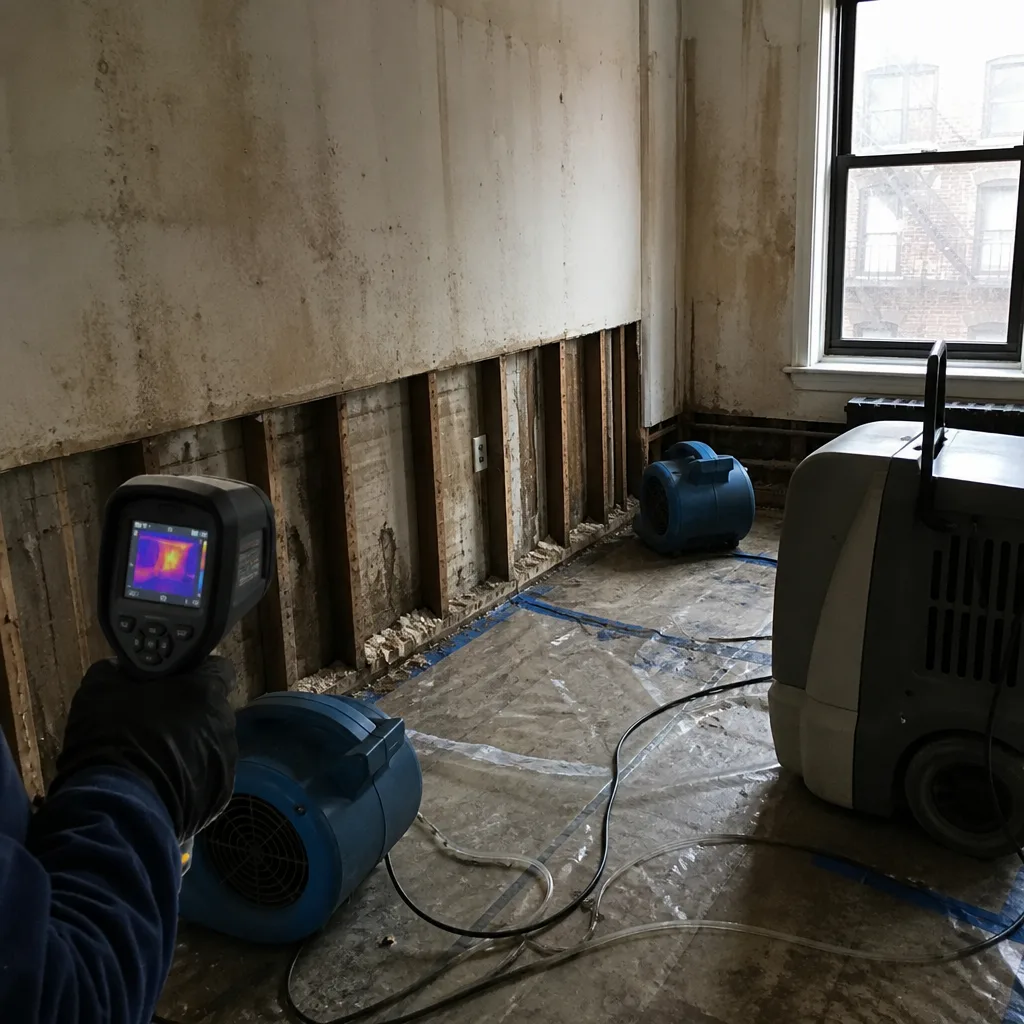 Before
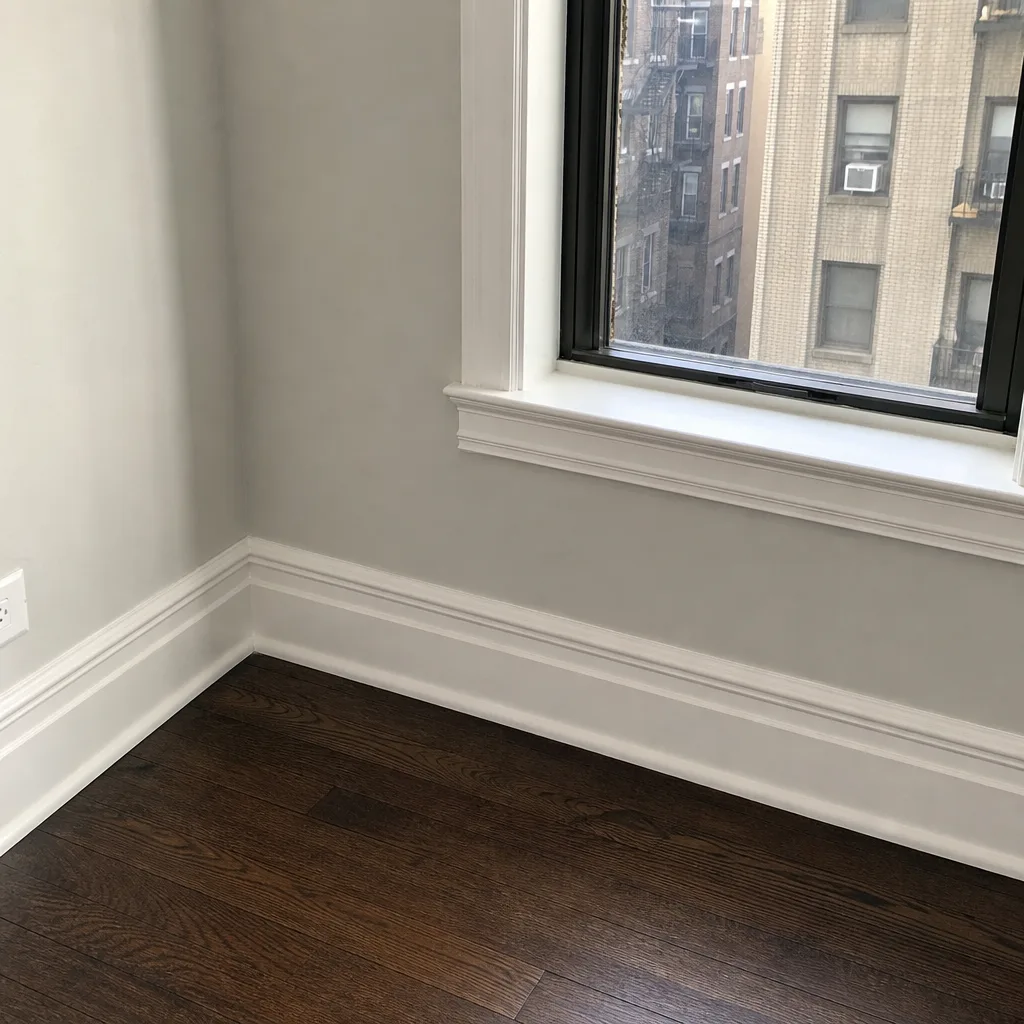 After
After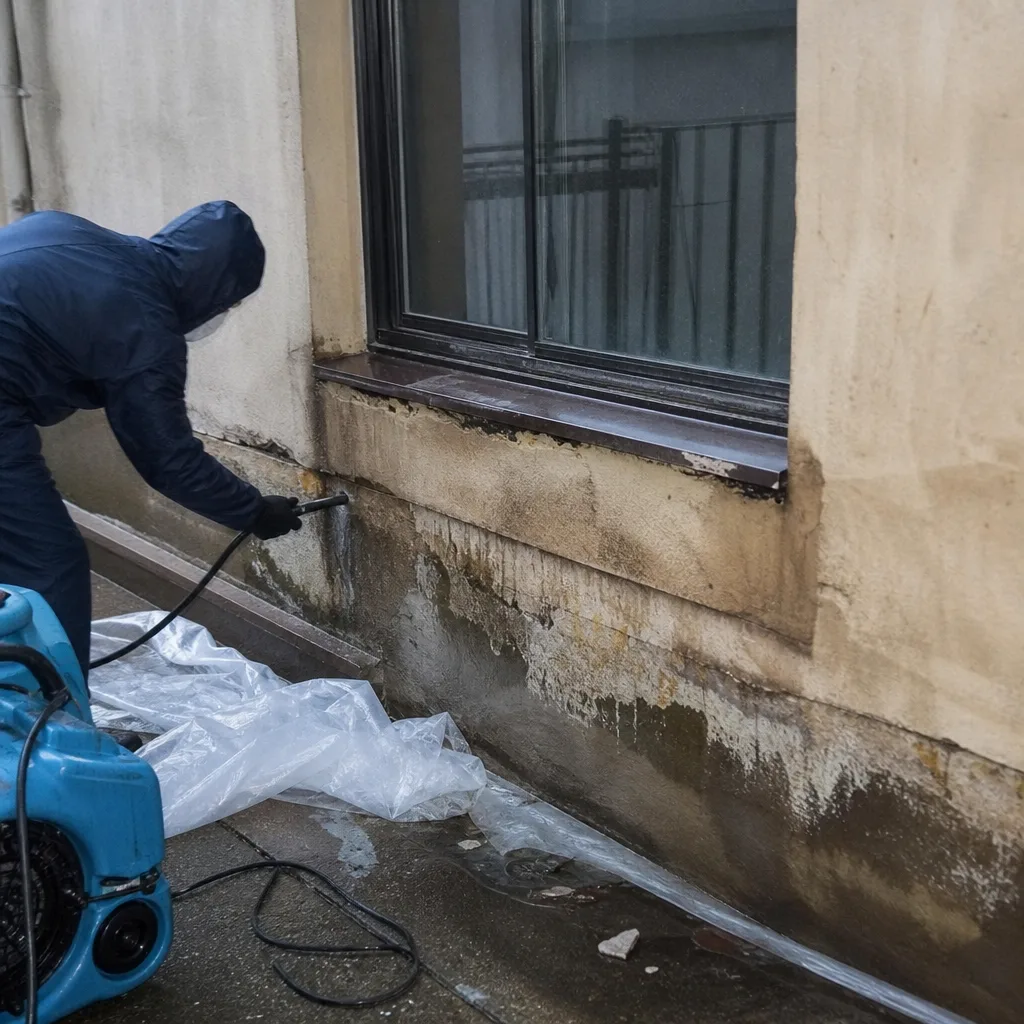 Before
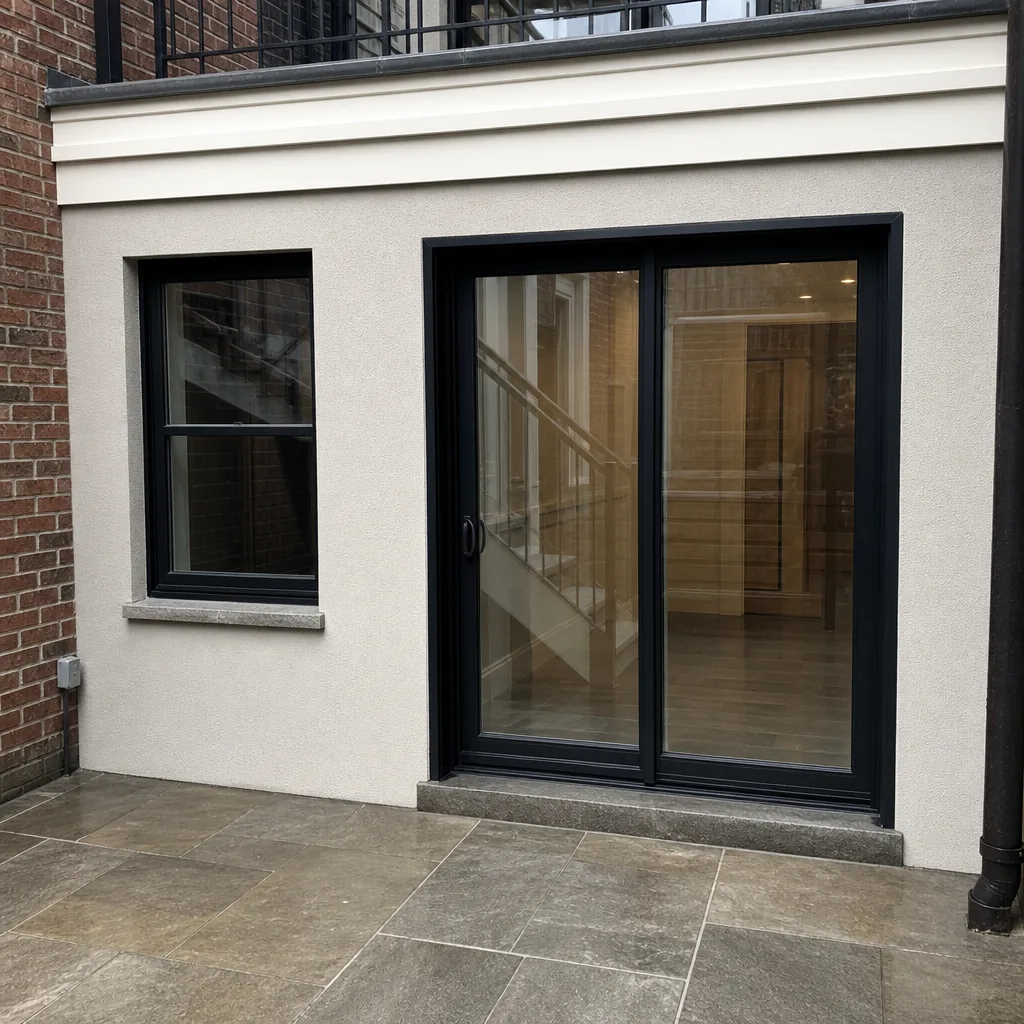 After
After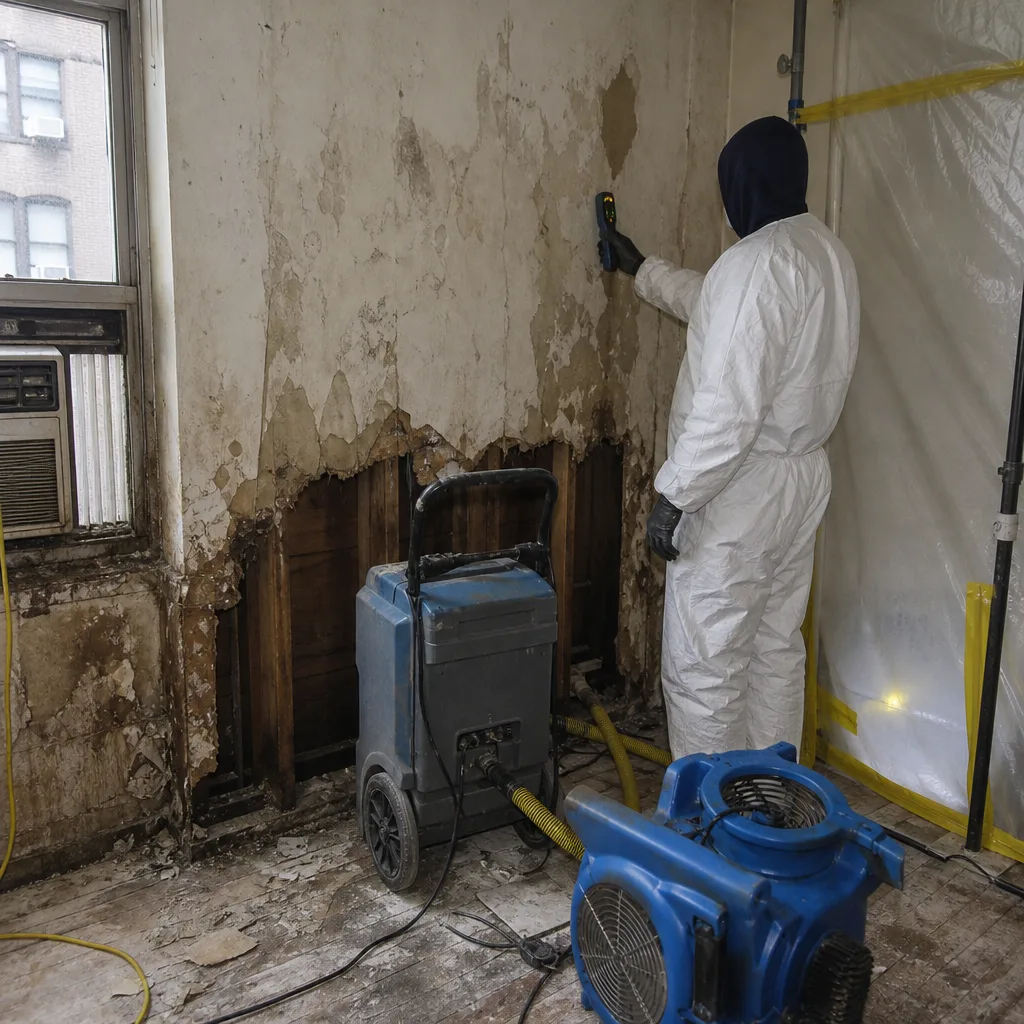 Before
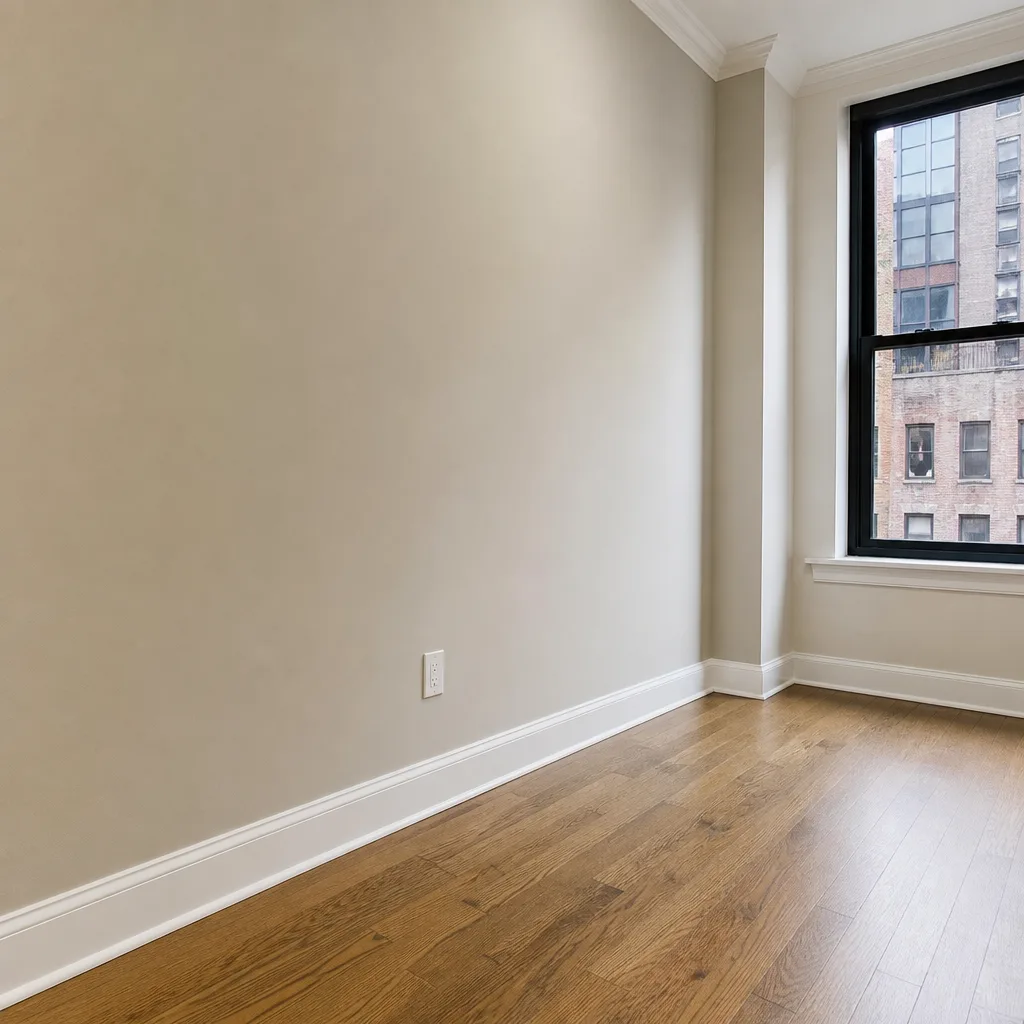 After
After24/7 Emergency Sanitization Services in Upper West Side
Sanitization in Upper West Side properties typically costs $350-$1,100 depending on square footage, contamination category, and whether asbestos abatement must precede antimicrobial treatment. We answer the phone at (518) 314-5660 around the clock, and our crews reach most UWS buildings within 45 minutes. The first hour after a sewer backup or radiator overflow matters most because bacteria and mold spores colonize saturated plaster-and-lath cavities fast, and in a pre-war co-op, what starts as one unit’s problem becomes a vertical stack of damaged apartments if not contained early.
What happens when you call
- 1
A real person answersNo phone trees - you reach a local pro.
- 2
You get an upfront price rangeHonest numbers before anyone is dispatched.
- 3
A background-checked tech heads outLicensed & insured, dispatched right away.
- 4
You approve before work beginsNothing starts until you say go.
Understanding Sanitization Services Severity in Upper West Side Properties
Sanitization work on the Upper West Side falls into three practical categories: bacterial decontamination after sewage or gray-water events, viral disinfection after illness or exposure, and odor and microbial control in occupied spaces. The severity depends less on the event and more on the substrate. In most UWS buildings, walls are original plaster and lath, not modern drywall. Plaster wicks and holds moisture deep into the masonry substrate while feeling dry to the touch. That means a Category 2 leak from a radiator supply valve can leave enough trapped moisture to support mold colonization inside wall cavities within 48 hours, even when the visible surface looks fine. We use moisture mapping with thermal imaging and hygrometers to track what is actually wet, not what appears wet. If asbestos-containing plaster or pipe insulation has been saturated and disturbed, NYC DEP regulations require abatement before any antimicrobial spray, fogging, or duct sanitization can legally proceed. This sequencing is not optional, and it is the single biggest reason generic sanitization crews fail on the Upper West Side.
Why Upper West Side Property Owners Choose Floodline Restoration Co.
- 45-minute response commitment: We dispatch from the New York City office and keep crews staged near the West Side. A live person confirms the address and a technician is on the way in under an hour.
- 24/7 live answer: When you call (518) 314-5660 at 2 a.m., a dispatcher answers. No recording, no call-back promise. The same night a radiator riser fails, we are inside the building.
- IICRC-certified crews: Our technicians hold IICRC certifications including WRT, FSRT, and AMRT. They are background-checked and uniformed, trained to work in occupied co-op buildings without disrupting neighbors.
- Free visual inspection: We assess the affected unit, check the adjacent riser chase, and give a written scope before any work begins. No charge for the inspection, no obligation to proceed.
- Direct insurance billing: We submit the claim documentation, speak with your adjuster, and bill the carrier directly when coverage applies. You are not the go-between.
- One team from first extraction to finished rebuild: The same crew that installs containment and runs the fogger also handles drywall replacement, plaster repair, and paint. No mid-job handoff, no inherited subcontractor.
Our Sanitization Services Process
Inspection & Assessment
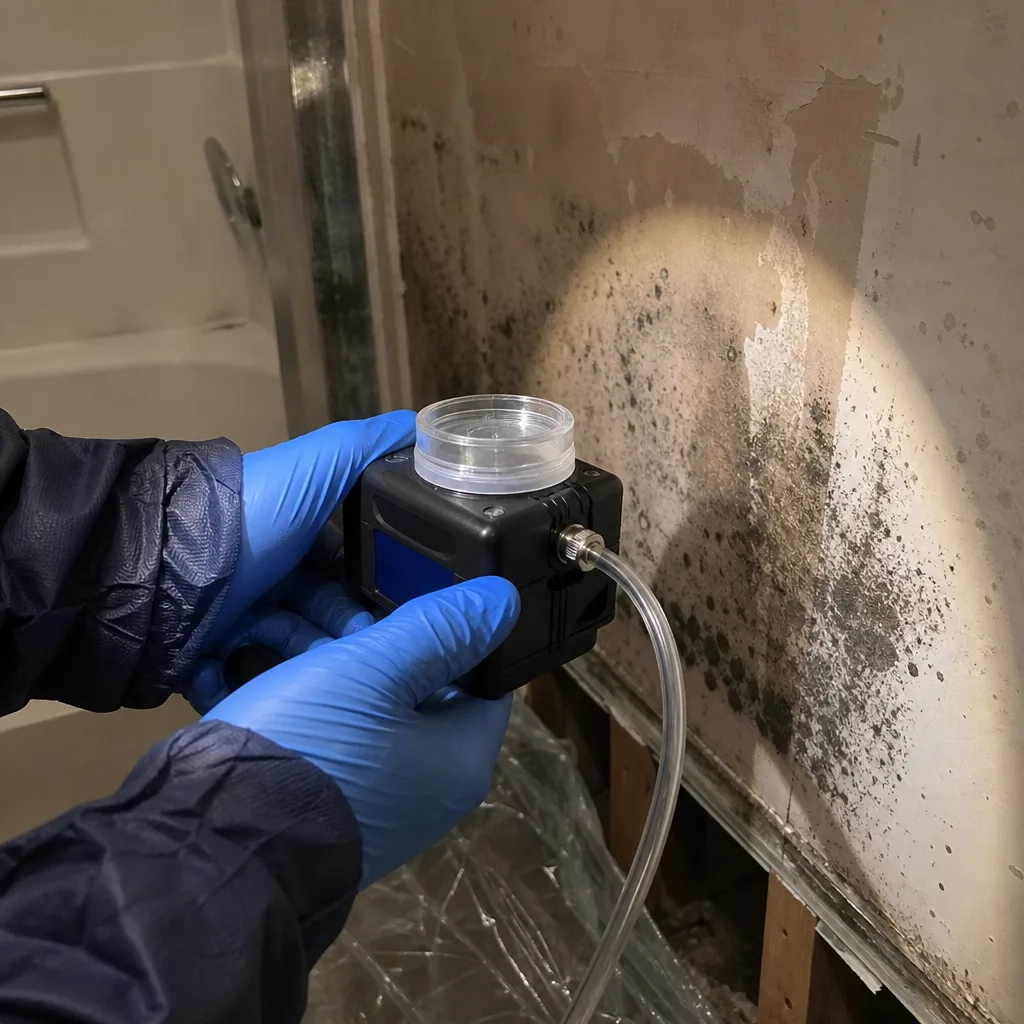
We start with a thorough walk-through of the affected unit and the shared spaces around it. In Upper West Side co-ops, we ask the super or building manager for the riser diagram before opening any wall. Thermal imaging and moisture meters map exactly where water traveled, including cavities you cannot see.
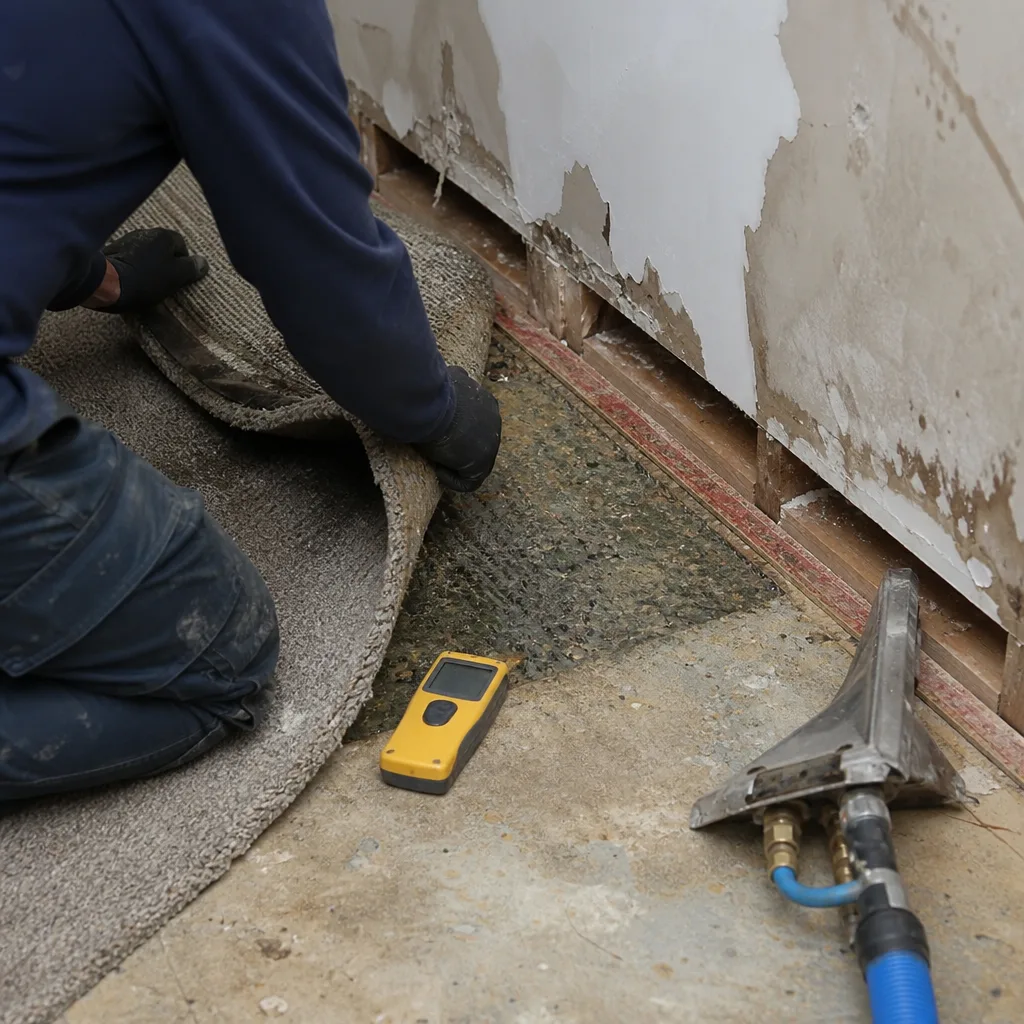
Containment & Stabilization
We seal the affected area with 6-mil poly sheeting and establish negative air pressure so spores and disinfectant aerosols do not migrate through shared hallways or riser chases. This step prevents cross-contamination of neighboring units, which is a serious concern in pre-war apartment buildings.
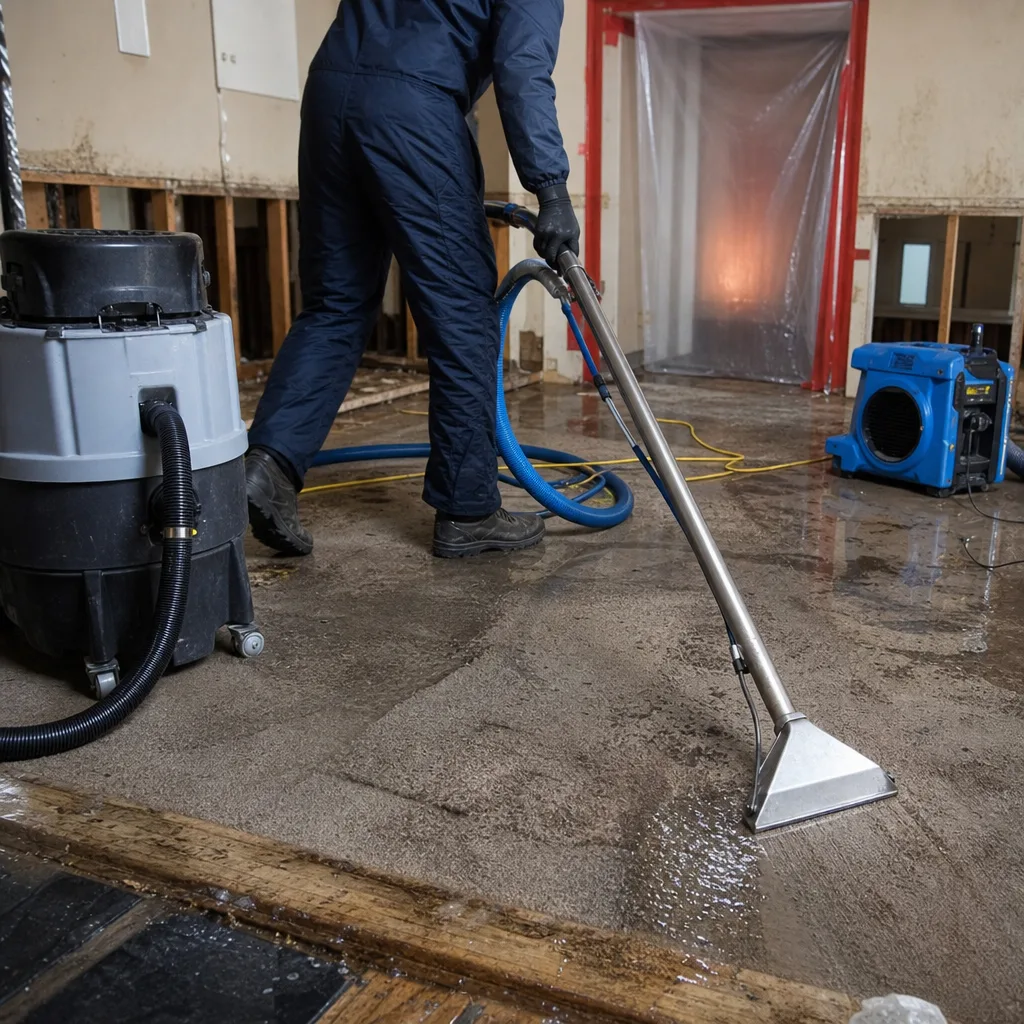
Removal of Saturated Materials
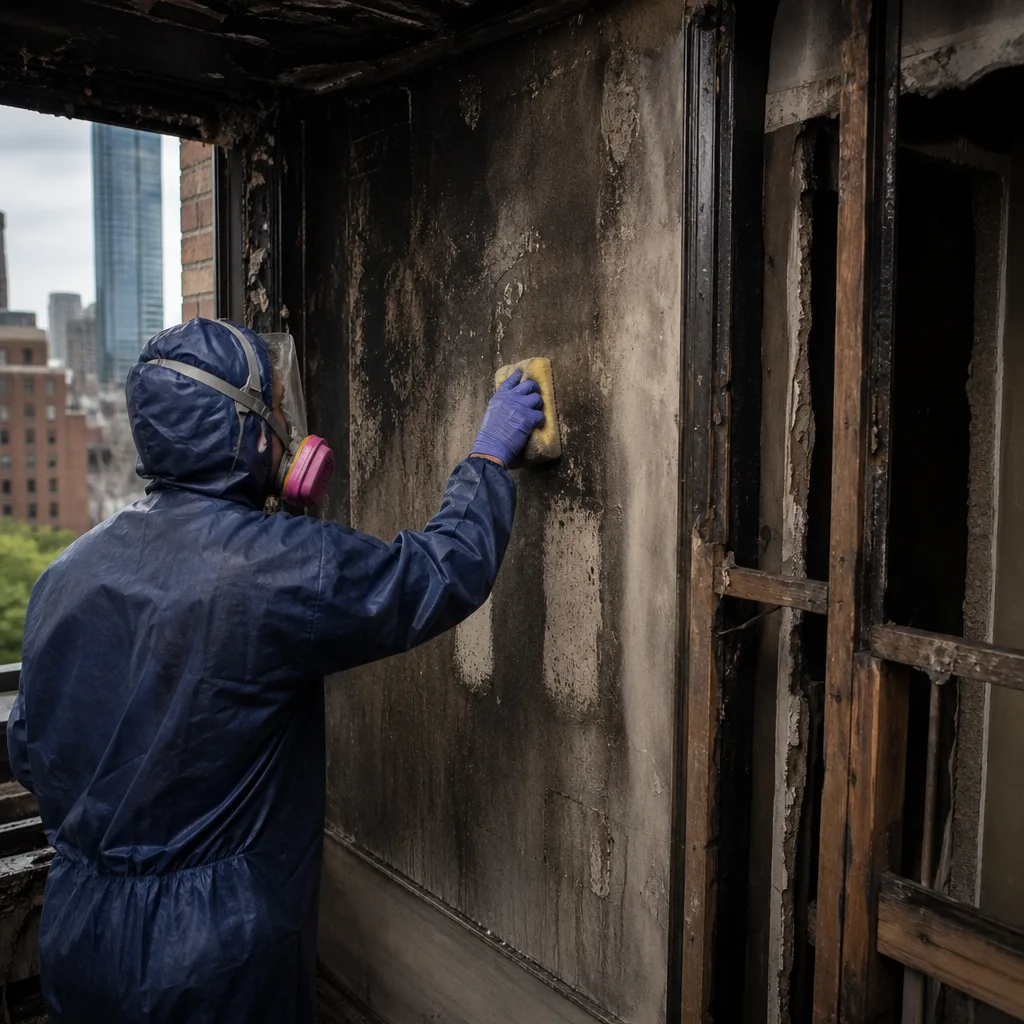
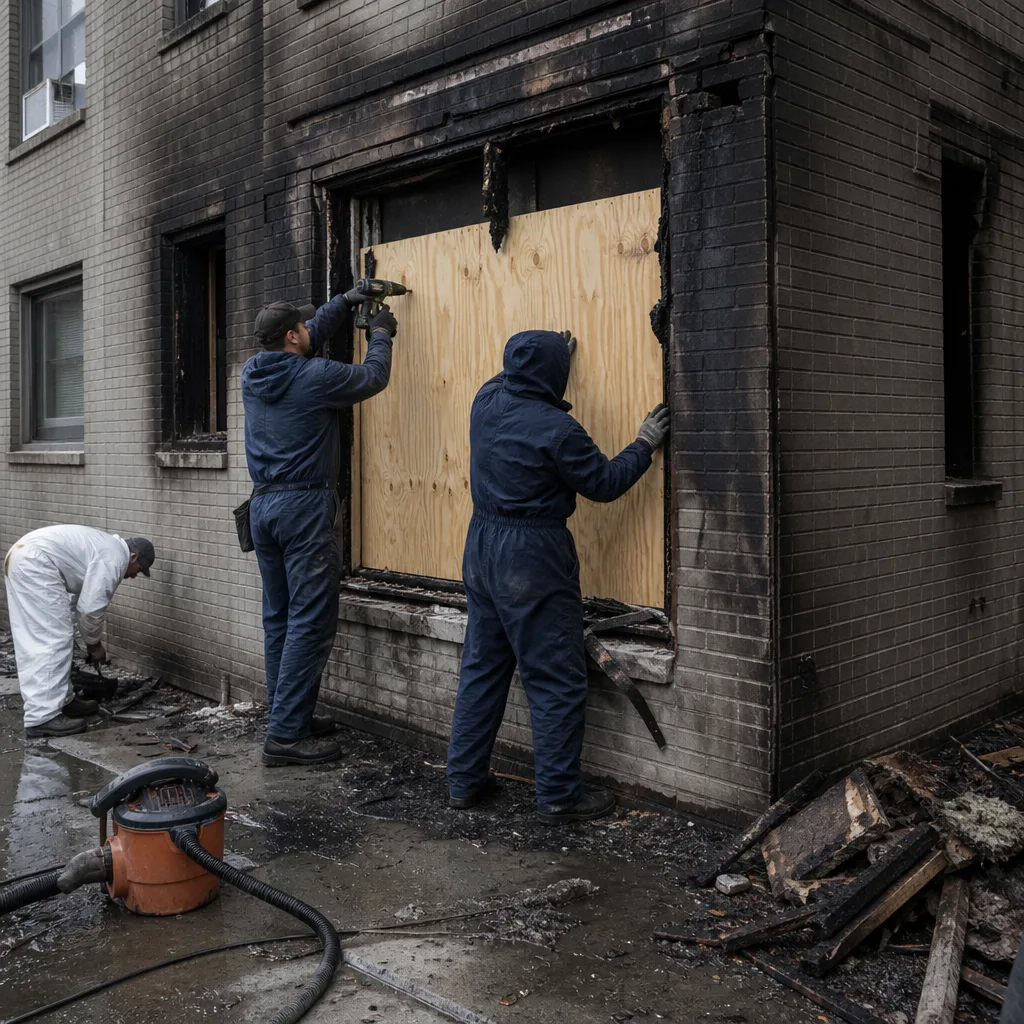
Saturated plaster, lath, insulation, and any asbestos-containing materials that have been compromised are removed under NYC DEP-compliant protocols. In a 1920s co-op, this often means coordinating with the building’s abatement contractor before our antimicrobial work can proceed.
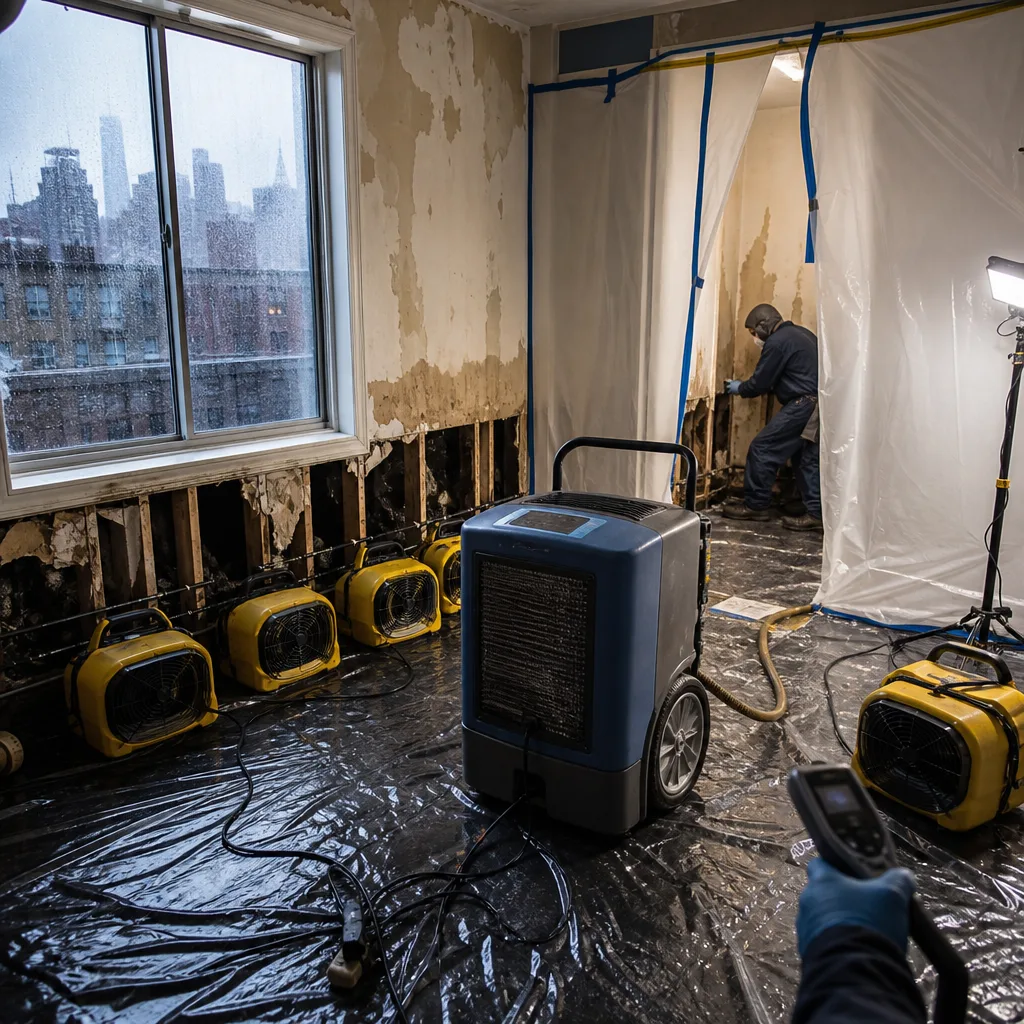
Cleaning & Sanitization
We apply EPA-registered antimicrobials to all exposed framing, masonry, and remaining surfaces. For viral decontamination, we use hospital-grade disinfectants with proper dwell times. Air duct sanitization is performed with HEPA-filtered equipment calibrated for tight pre-war duct runs.
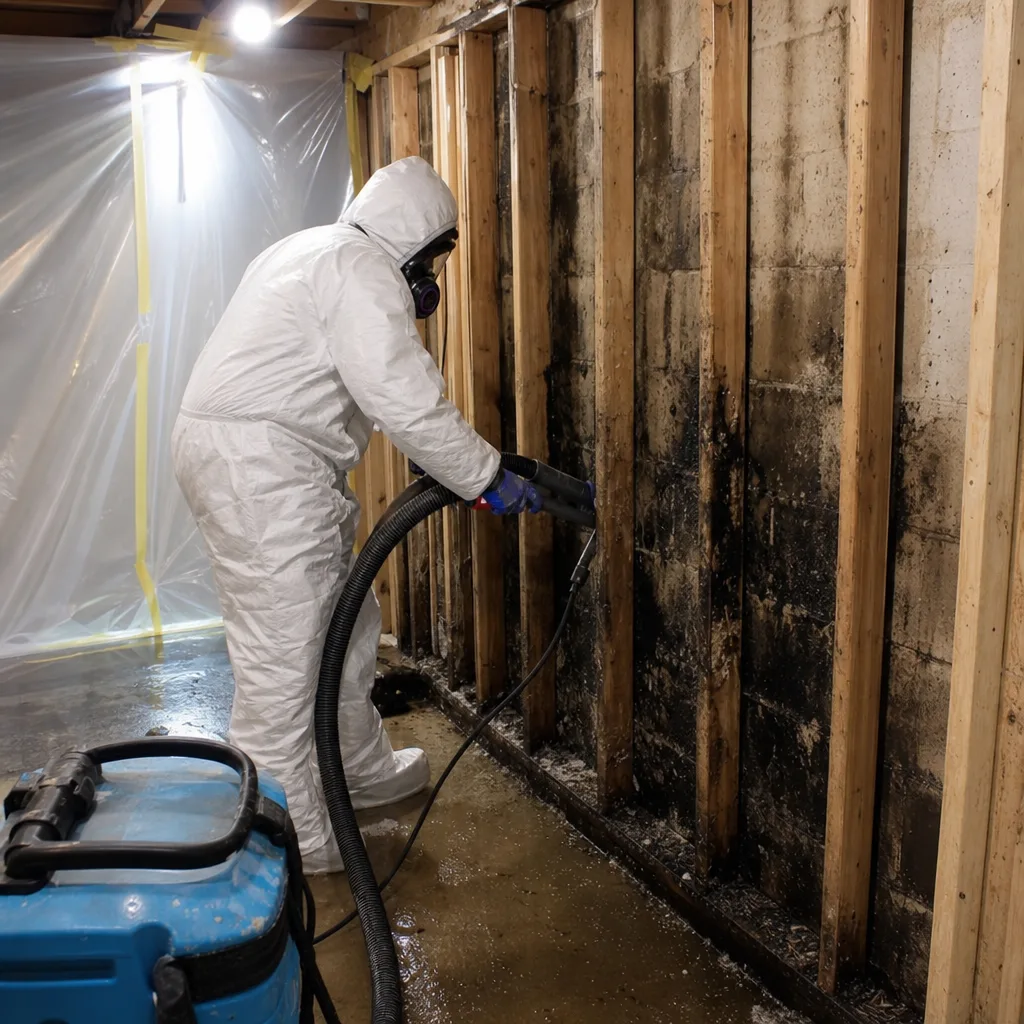
Commercial-Grade Fogging & Drying
We run commercial foggers with EPA-registered disinfectant to reach surfaces that cannot be wiped, including inside wall cavities and behind built-ins. Our drying equipment includes Phoenix dehumidifiers and XPOWER air movers, monitored daily until moisture readings return to pre-loss levels in every cavity.
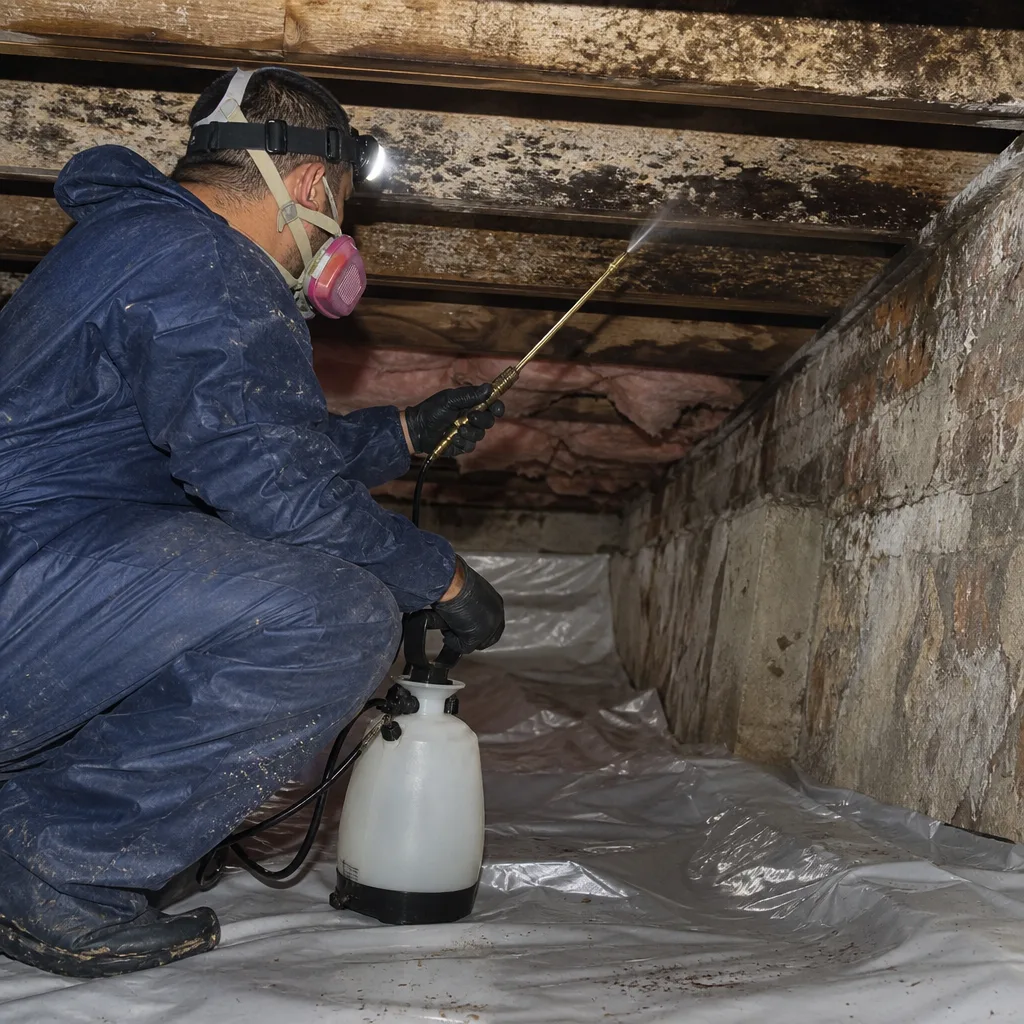
Repairs & Restoration
Once the space is sanitized and dry, we repair or replace what was removed: plaster, lath, insulation, trim, and paint. The same crew handles this, so the final walk-through is with people who know exactly what is behind the finished wall.
Need Emergency Sanitization Services in Upper West Side Now?
Crews minutes away, answering live 24 hours a day. The sooner we start, the less it costs.
Working With Your Insurance Company
Sanitization claims in Upper West Side co-ops are rarely straightforward. The source unit owner’s policy, the building’s master policy, and each affected neighbor’s policy can all come into play. We document everything from the first hour: photos of the source, moisture readings from every affected cavity, and a written scope that separates sanitization from repair. Our team coordinates directly with your adjuster and the building’s claims representative. We have handled enough wet stack events in Manhattan co-ops to know precisely what documentation carriers need to approve antimicrobial treatment and asbestos abatement without delays. We bill the carrier directly when coverage applies, so you are not financing remediation out of pocket while waiting for a check.
What We Provide Your Insurer
- Thorough documentation of the loss
- Photos of all damage, room by room
- Moisture readings and drying logs
- A detailed, line-item scope of work
- Direct coordination with your carrier
Built for Upper West Side’s Loss Calendar
The Upper West Side’s sanitization calls follow a predictable rhythm, but the surprises are what catch people off guard. January and February bring frozen supply lines in unheated utility closets and burst radiator valves in aging two-pipe steam systems. A single failed valve on the 14th floor sends water down through the pipe chase, soaking units on six floors before the super can shut the riser. Spring and summer bring humidity off the Hudson, and that elevated ambient moisture means any leak that reaches a plaster cavity has a head start on mold growth. Summer thunderstorms overwhelm roof drains on flat-roofed towers and send water down interior walls. Autumn nor’easters drive wind-blown rain into the aging limestone and brick façades along Riverside Drive, and chronic envelope intrusion can go unnoticed until interior work reveals contaminated wall cavities. In all of these, the sanitization need is the same: treat the visible contamination and the hidden cavities before occupants begin reporting odors, respiratory irritation, or visible mold. That is why we always ask for the riser diagram first.
Sanitization Services Across Upper West Side’s Neighborhoods
The Upper West Side is not one building type; it is a patchwork of housing stock that spans a century of construction, and each block has its own challenges. Along Central Park West, the grand 1920s co-ops have wide corridors and service elevators, but they also have original cast-iron risers that corrode from the inside and fail without warning. In the high 70s and 80s off Broadway, the six-story limestone rowhouses converted to co-ops have narrow stairwells, tight utility closets, and plaster walls that have absorbed a century of paint, patching, and prior leaks. On Riverside Drive, the pre-war towers facing the Hudson take the brunt of wind-driven rain, and chronic façade intrusion creates conditions where sanitization has to address a recurring problem, not a one-time event. Over in the mid-80s between Amsterdam and Columbus, the smaller walk-up buildings share party walls, meaning a contaminant event in one unit can migrate laterally through the common wall cavities into the adjacent apartment. Our Sanitization Services team routes response by neighborhood because the access constraints, building codes, and failure modes genuinely differ from block to block.
Specialized Sanitization Services Services We Offer in Upper West Side
Commercial-Grade Fogging
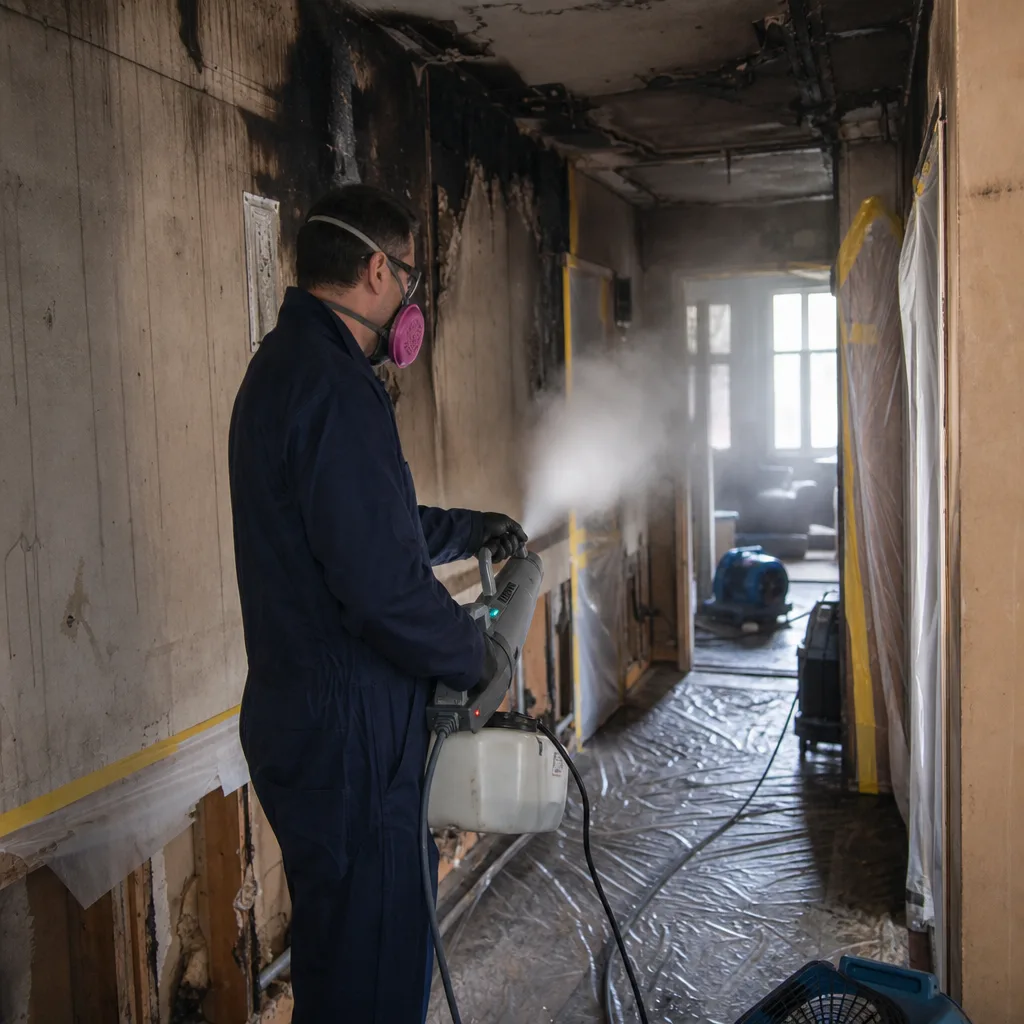
Fogging reaches the surfaces you cannot wipe down: the inside of wall cavities, behind built-in bookshelves, the reverse side of baseboards. In Upper West Side pre-war apartments with original moldings and deep plaster profiles, fogging is often the only way to deliver disinfectant into every crevice. We use EPA-registered products and adjust droplet size and airflow for tight hallways and utility closets so the fog reaches the full riser chase without pooling in dead ends.
Air Duct Sanitization
Many UWS buildings added forced-air cooling to units originally heated by radiators, creating a hybrid system with duct runs squeezed through pre-war chases. Sanitizing those ducts without spreading contaminants to neighboring units through shared risers requires containment, negative pressure, and HEPA-filtered air scrubbing. We map the duct path first, seal registers in adjacent units, and run sanitization through the affected run only.
Virus & Bacteria Decontamination
After a household illness, a sewage backup, or a Category 2 water event, we treat affected surfaces with hospital-grade disinfectants with proper dwell times. In a co-op building, this rarely means just the affected unit; we also treat the shared hallway outside the door, the service elevator, and any common areas the contamination may have touched. We coordinate with building management so the work does not disrupt neighbors.
Odor Neutralization
Odors in pre-war buildings often come from sources you cannot see: saturated plaster behind original walls, dead air pockets in unused chimney flues, or decades of residue in kitchen exhaust runs. We identify the source with moisture mapping and air sampling, then treat the cause, not just the smell. Masking agents are not part of our protocol.
Deep Disinfection
For post-illness cleanup or before a new resident moves in, we perform full-surface disinfection of high-touch areas, floors, walls, and fixtures. In Upper West Side apartments, that includes original doorknobs, window hardware, radiator enclosures, and any surface a previous occupant or contractor touched.
Post-Illness Cleanup
When a household member has been seriously ill, or a unit has been occupied by someone with a communicable condition, we provide thorough decontamination using EPA-registered disinfectants with proper dwell times and clearance documentation. This is not a cosmetic cleaning; it is a documented sanitization with written verification of treated surfaces.
Sanitization Services Costs in Upper West Side, NY
Sanitization pricing on the Upper West Side runs higher than the outer boroughs because of building access, asbestos protocols, and the labor involved in containing shared spaces. A single-unit post-illness deep disinfection typically runs $350-$700. Odor neutralization after a water event usually lands between $500 and $1,100 depending on cavity access and whether plaster removal is required. Air duct sanitization in a pre-war apartment runs $400-$900 per unit, more if the riser chase must be accessed. Commercial-grade fogging adds $250-$500 per session depending on square footage and airflow constraints. If asbestos abatement is required before sanitization can proceed, that work is billed separately through a licensed NYC DEP abatement contractor. Our free visual inspection gives you a written scope with firm numbers before any work begins, so you know exactly what the sanitization will cost. Call (518) 314-5660 to schedule the walk-through.
We Also Serve Cities Near Upper West Side
Our crews cover the surrounding Manhattan neighborhoods, including Midtown Manhattan, Midtown West, Murray Hill, and Washington Square. If you own or manage a property just outside the Upper West Side core, we can be there just as fast. Call our dispatch line and we will confirm the response time for your specific address.
Serving Upper West Side, NY - Our Local Coverage Area
We’re based in the Upper West Side area and know this community well. Use the map below to see our service coverage - if you’re nearby, we can almost certainly help.
Upper West Side Sanitization Services Questions, Answered
Does sanitizing a pre-war co-op unit on the Upper West Side require special approval from the co-op board or building management?
Yes. In most UWS co-ops, any work that opens walls, disturbs asbestos-containing materials, or runs equipment in shared spaces requires written approval from the building management and often the co-op board. We handle that coordination on your behalf as part of our scope, and we do not start containment or sanitization until the building’s requirements are documented. Call (518) 314-5660 and we will walk you through the approval process for your specific building.
How do you sanitize air ducts in a 1920s Upper West Side building without spreading contaminants to neighboring units through shared risers?
We install containment and negative air pressure around the affected duct run before any sanitizing fog or air movement begins. We seal registers in adjacent units, map the duct path from the original building drawings or a visual inspection, and use HEPA-filtered air scrubbers to capture any particles that get dislodged. The sanitizing agent is applied to the affected run only, and we verify with post-treatment air sampling. A free inspection will tell you whether your duct run is isolated or shared, which drives the approach and the cost.
What’s the difference between sanitizing after a radiator leak versus a sewage backup in an Upper West Side co-op?
A radiator leak is Category 1 or Category 2 water, meaning it is clean or lightly contaminated. Sanitization focuses on antimicrobial treatment of surfaces and drying cavities before mold can establish. A sewage backup is Category 3 water: heavily contaminated with bacteria, viruses, and parasites. That requires full removal of affected porous materials, disposal under NYC regulations, and aggressive antimicrobial treatment of every exposed surface. Category 3 work costs more and takes longer. Both require the same containment discipline in a co-op building.
Can you sanitize a unit without moving out all the furniture in a small pre-war Upper West Side apartment?
Usually, yes. In a compact apartment, we protect furniture with poly sheeting, move pieces just enough to access walls and cavities, and run containment around the work zone rather than emptying the unit. But if the contamination is Category 3, porous furniture that absorbed sewage can not be sanitized; it must be disposed of. We will tell you during the free inspection which items can be saved and which should go, with a written list for your insurer.
How quickly can you start sanitization after a water event on the Upper West Side, given parking and access constraints?
We commit to a 45-minute response for emergency sanitization calls on the Upper West Side, and our crews know the building service entrances, freight elevator requirements, and loading zone realities. Most jobs start sanitization within two to three hours of our arrival, after containment and asbestos assessment. Call (518) 314-5660 any time, day or night, and a live dispatcher will give you a firm arrival window.
Will my insurance cover sanitization after a water event in my Upper West Side apartment?
Most homeowner policies cover sanitization when it is tied to a covered water loss, such as a burst pipe or radiator valve failure. But co-op claims are layered: the source unit owner’s policy, the building’s master policy, and affected neighbors’ policies can all be involved. We document everything from the first hour, submit directly to your carrier, and coordinate with the building’s claims representative. If coverage questions arise, we help you get answers without playing messenger.
How long does sanitization take in a typical Upper West Side co-op unit?
A single-unit post-illness disinfection usually takes one day. A Category 2 water event with cavity drying and antimicrobial treatment typically runs three to five days. Category 3 sewage sanitization with removal, treatment, and drying can run five to ten days, longer if asbestos abatement is required or multiple units are involved. We give you a written timeline at the inspection, and we update it daily as drying logs come in.
What should I do in the first 30 minutes after a leak or backup in my Upper West Side apartment?
First, shut off the water at the supply valve if you know where it is, then call the building super to access the riser shutoff. Call (518) 314-5660 immediately after that. Do not run fans or attempt to dry the area yourself; that spreads spores and bacteria through shared spaces. Keep people and pets out of the affected room, and do not touch sewage water with bare hands. Our dispatcher will talk you through what to do until the crew arrives.
In Upper West Side pre-war co-ops, sanitization often must address asbestos-containing plaster and pipe insulation that becomes friable after water damage. That requires NYC DEP-compliant abatement before any antimicrobial treatment or fogging can legally begin, a constraint virtually absent in newer Manhattan high-rises. Our Upper West Side crews know this sequencing inside out. We recently sanitized a 1910 co-op on West 86th Street after a Category 2 water leak from a failed radiator supply valve soaked original plaster-and-lath walls across three floors. Our crew first mapped moisture readings with thermal imaging, then installed containment around the affected riser chase before removing saturated plaster. After asbestos abatement of the pipe insulation, we performed antimicrobial treatment on all exposed framing, ran HEPA air scrubbers and commercial-grade fogging with EPA-registered disinfectant, and finalized with drying logs showing pre-loss moisture levels in every cavity.
Whether you are facing a sewage backup, a post-illness cleanup, or sanitization after a water event in a pre-war co-op, the first call is the one that matters. We answer live 24 hours a day at (518) 314-5660. The inspection is free, the scope is written before work starts, and the 90-Day Done Right Promise means if it is not done right, we make it right, in writing, no arguing.
Written by Curt Bowman, Owner at Floodline Restoration Co., serving Upper West Side since our founding.
Why Upper West Side Chooses Floodline Restoration Co.
We set the standard for sanitization services in Upper West Side.
Documented for Your Claim
Every job is photographed before, during and after, with moisture logs where they apply. We hand the full file to your adjuster and bill your insurance directly - you are never the one relaying it.
Licensed & Insured
Fully certified technicians who meet all local and state licensing requirements.
Upfront Pricing
No hidden fees, no surprises. You approve the price before any work begins.
Guaranteed Work
Every repair and installation is backed by our workmanship warranty and satisfaction guarantee.
How It Works in Upper West Side
Getting your sanitization services handled is simple and fast.
Call or Request a Free Estimate
Tell us about your sanitization services needs and we provide an upfront, transparent quote - no obligation, no hidden fees.
Licensed Technician Dispatched
A background-checked, certified technician arrives in Upper West Side - typically within 30-60 minutes, with parts stocked on the truck.
Problem Solved, Guaranteed
We complete the job to your full satisfaction, backed by our warranty and 100% satisfaction guarantee.
What happens when you call
- 1A real person answersNo phone trees - talk to a local sanitization services pro.
- 2You get an upfront price rangeHonest numbers before anyone is dispatched. No surprises.
- 3We come out and measureLicensed & insured, at a time that suits you - the visit and the quote are both free.
- 4You get the price in writingLine-itemed, yours to keep, and nothing starts until you say go.
What Upper West Side Customers Say
Trusted by homeowners across Upper West Side and surrounding areas.
"We had a musty smell in the hall closet for months. He tested first, found the leak inside the wall, sealed the area off with plastic before opening anything, and put the whole scope in writing before asking for a signature."
"Sewage backed up into the downstairs bathroom on a holiday weekend. The crew arrived in full protective gear, took out everything porous, bagged it, and sanitized the space twice. They treated a disgusting job like it was routine, which for them I suppose it is."
"Washing machine hose let go while we were at work and the ceiling below was sagging by the time I got home. They had extraction running within the hour and fans placed before dinner. The tech took moisture readings every day and showed me the numbers coming down until they hit dry."
Our Work in Upper West Side
A look at recent damage restoration projects across Upper West Side and surrounding areas.
Ready for Sanitization Services in Upper West Side?
Call now for a free estimate - or request one below. Licensed, insured, and here with fast after-hours help in Upper West Side.
(518) 314-5660Request a Free Estimate in Upper West Side
Tell us about your sanitization services needs - we'll respond within the hour.