
Free visual inspection and a written scope of work before any mitigation begins - photos, moisture readings, and drying logs go in your claim file
The scope we write is the scope we bill. Anything new gets shown to you, in writing, before we touch it.
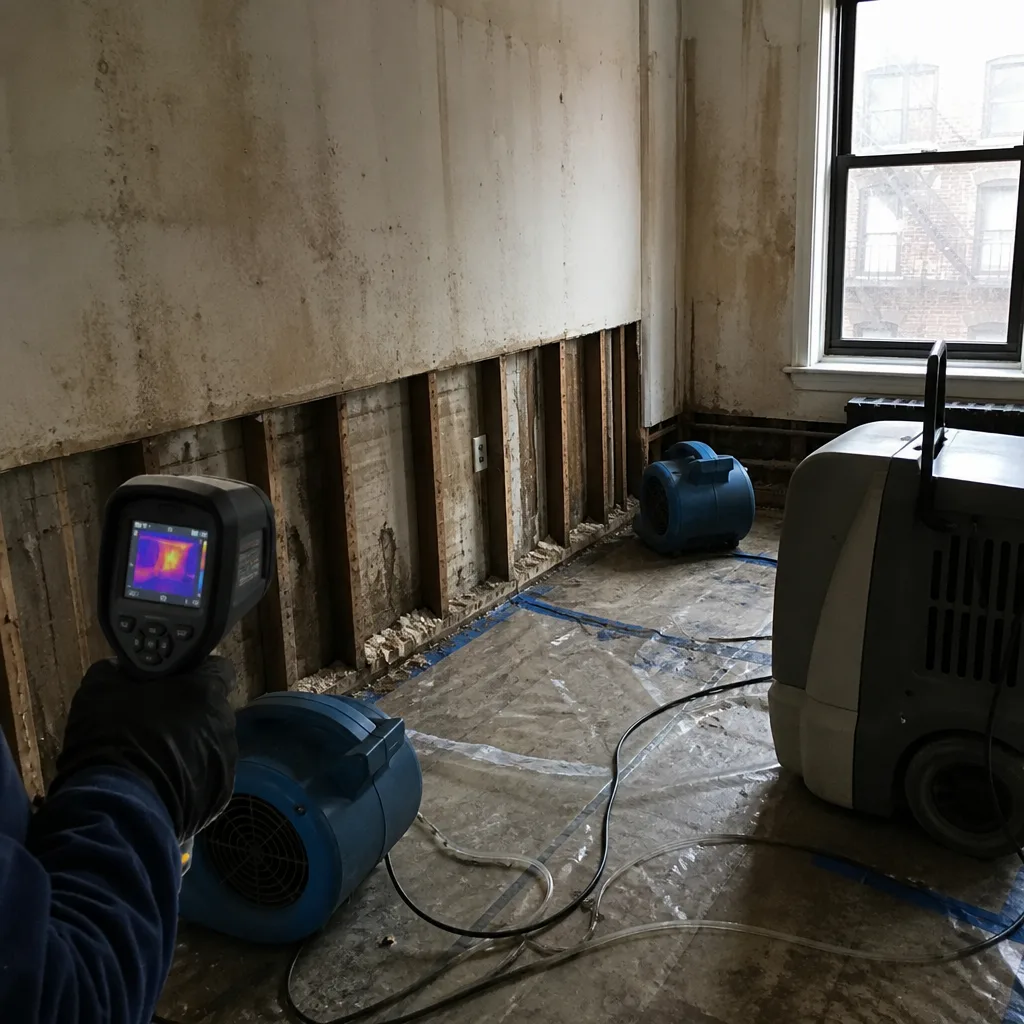 Before
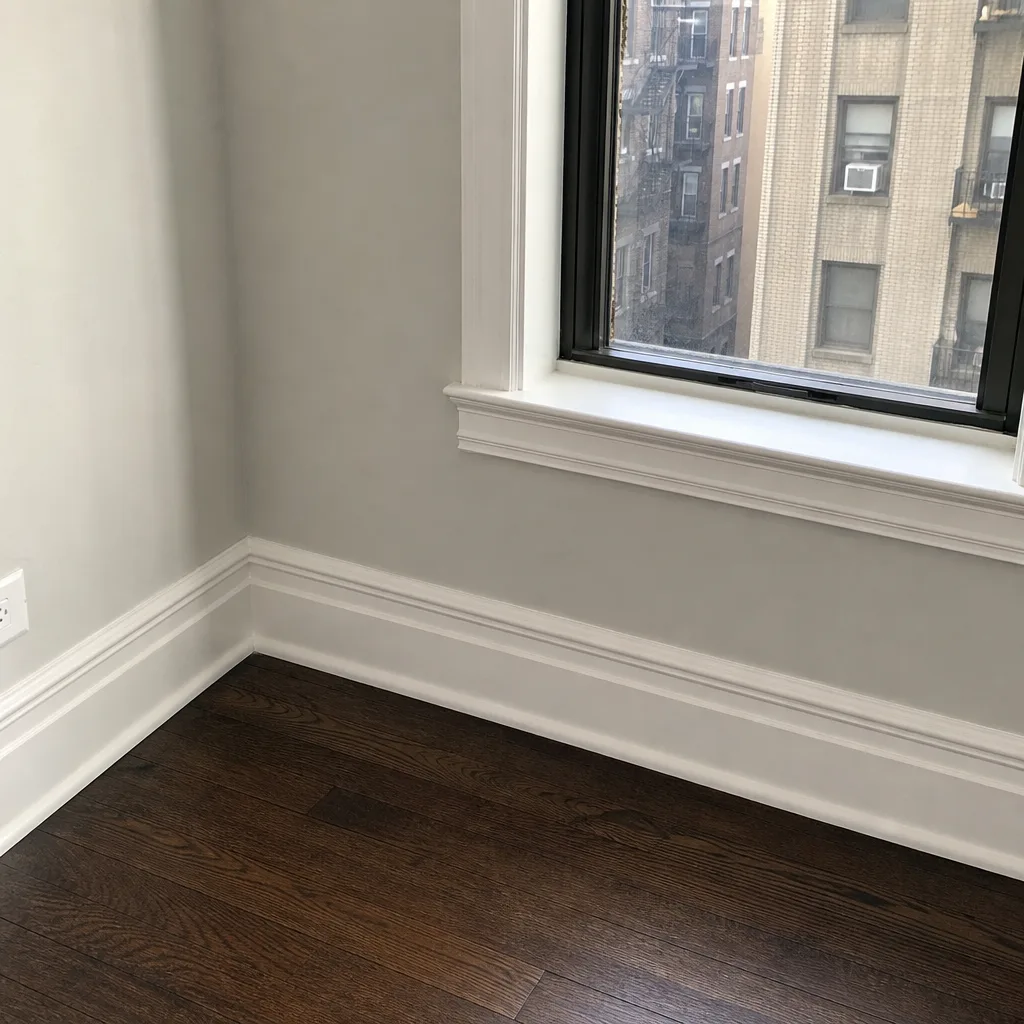 After
After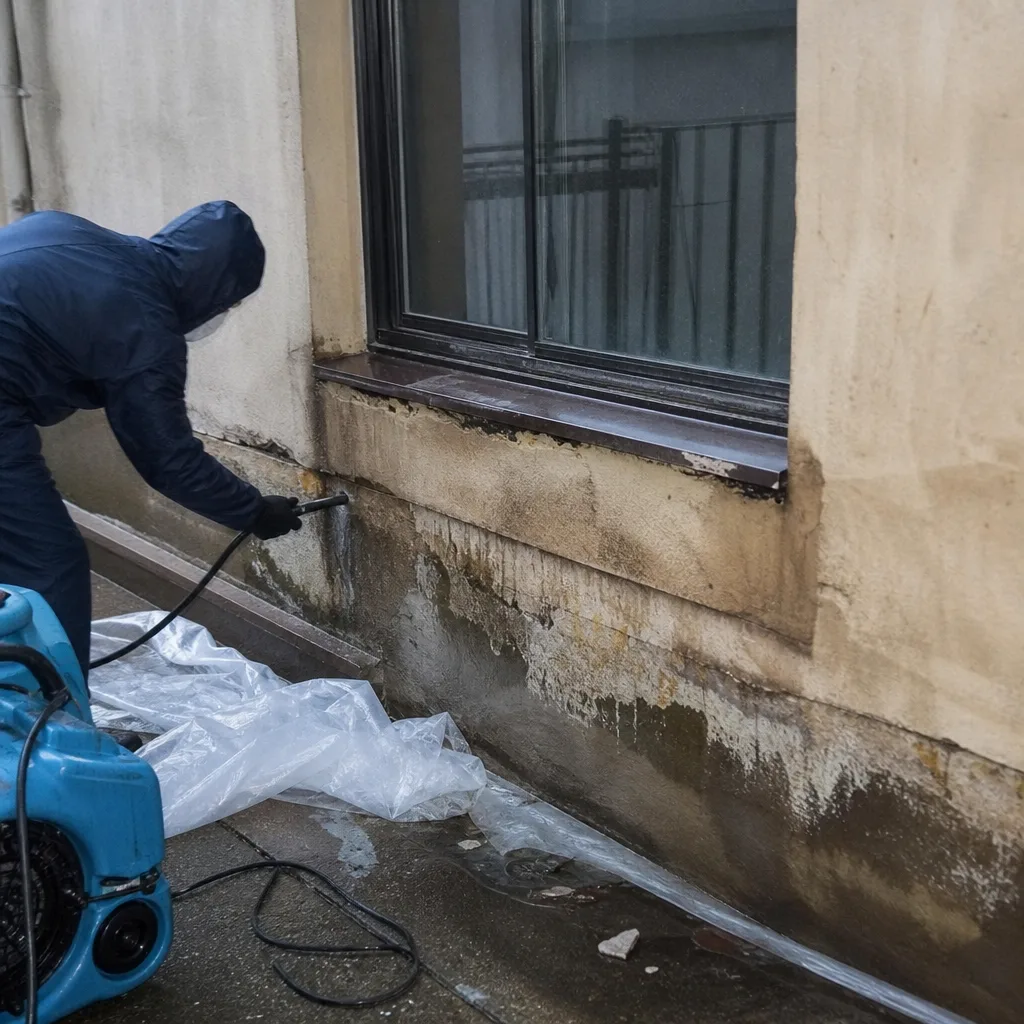 Before
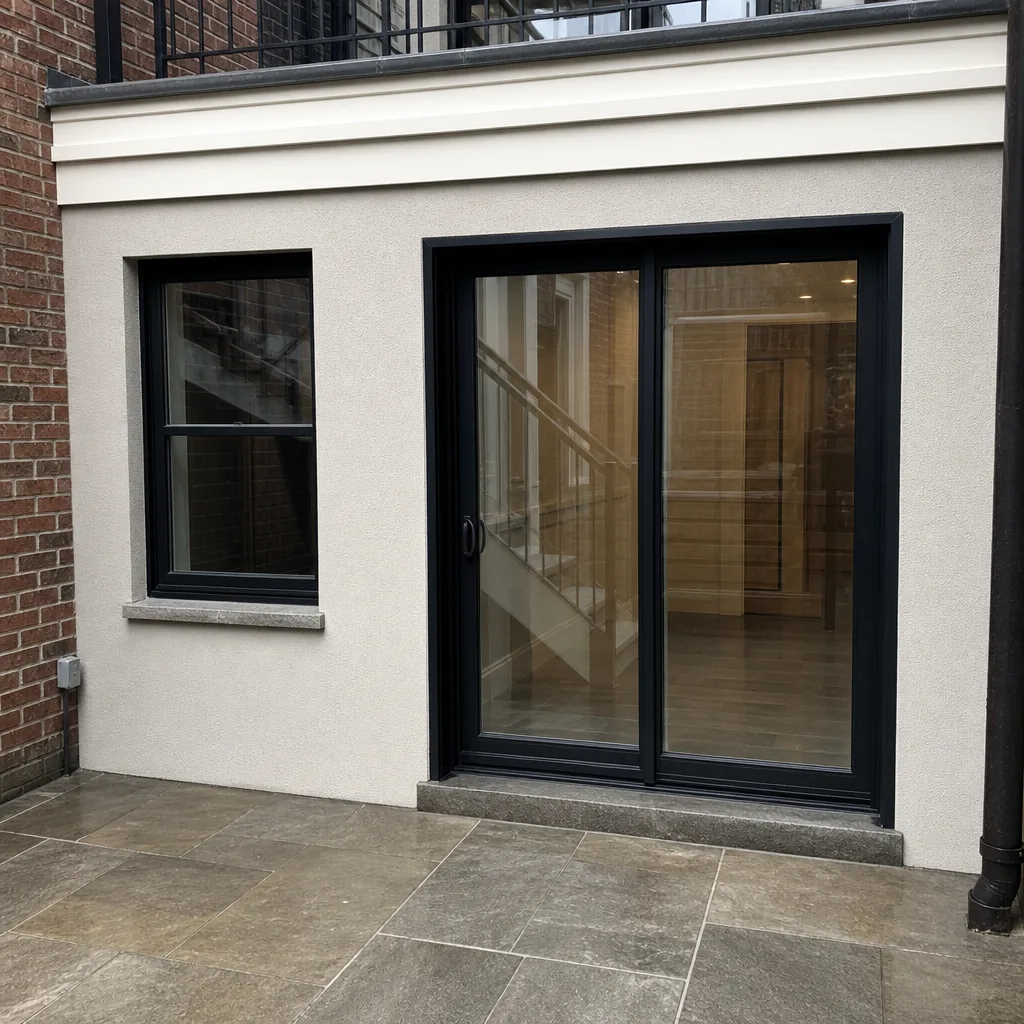 After
After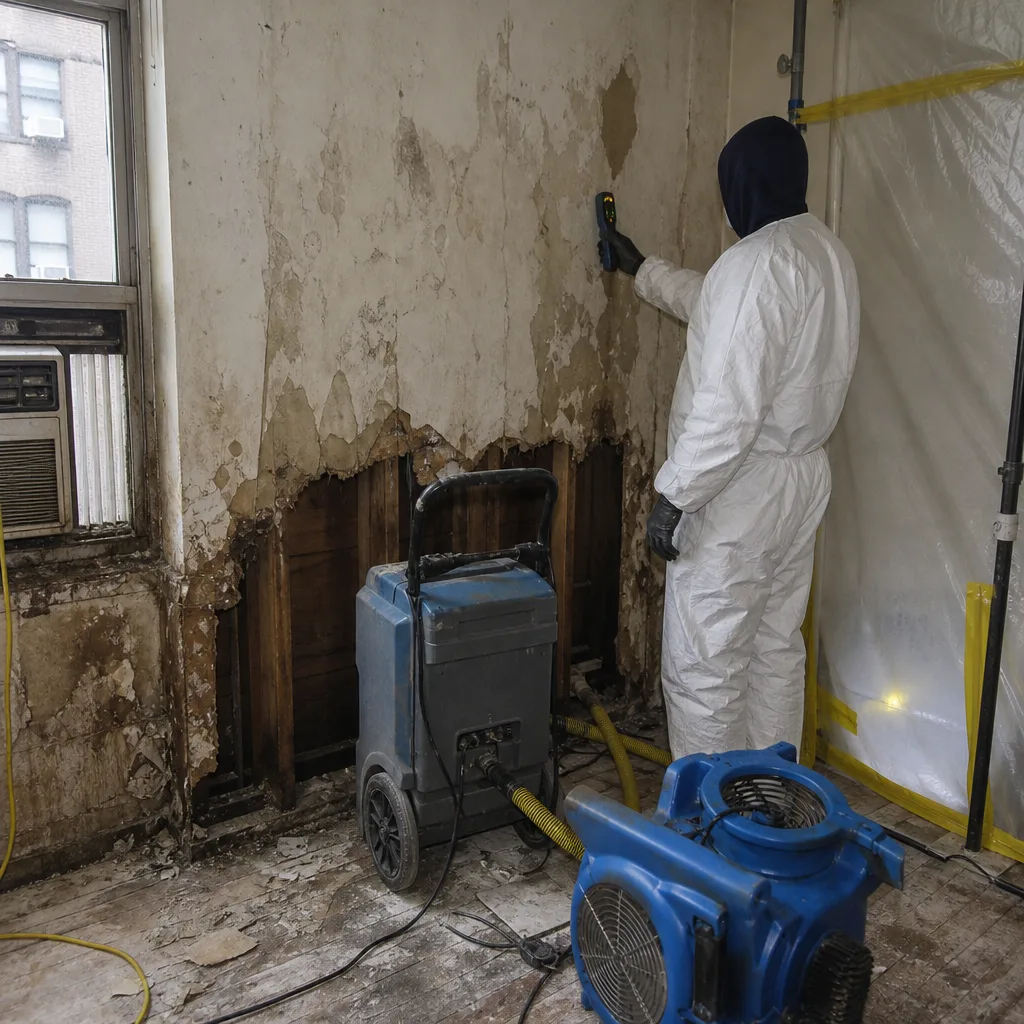 Before
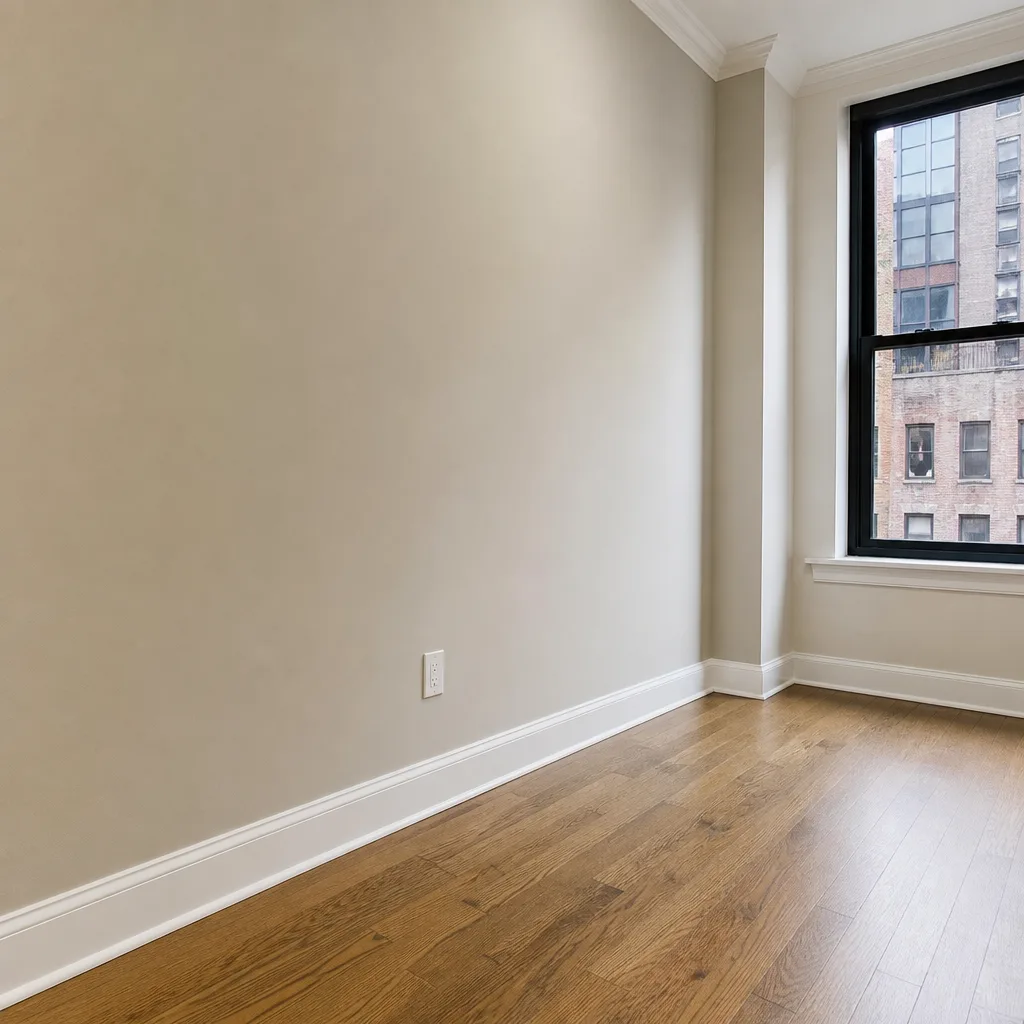 After
After24/7 Emergency Reconstruction & Cleanup in Upper West Side
When water pours through a ceiling on West 86th Street or a steam valve lets go in a 12th-floor co-op on Riverside Drive, the first call should be to a crew that knows the building type before they arrive. Floodline Restoration Co. answers live, 24 hours a day, at (518) 314-5660, and our certified technicians dispatch to Upper West Side addresses around the clock. We arrive fast because water in a pre-war building moves fast: it finds the shared pipe chase, saturates plaster-and-lath, and reaches the apartment below within minutes. The first hour determines whether you’re looking at a five-day dry-out or a full reconstruction with pack-out and co-op board meetings. Our Reconstruction & Cleanup teams handle every phase, so you never describe the damage twice or wait on a subcontracted crew that doesn’t know the building’s riser layout.
Understanding Reconstruction & Cleanup Severity in Upper West Side Properties
Upper West Side buildings present severity factors that a modern drywall-and-drywall suburban company won’t recognize. The housing stock along Broadway, Amsterdam Avenue, and the side streets between 72nd and 96th runs heavily to pre-war cooperative apartments, most built between 1890 and 1940. That means category 2 water (grey water from appliance hoses, radiator overflows, or shower pan failures) carries into original plaster-and-lath assemblies, cast-iron supply risers, and two-pipe steam heating chases that run unbroken from basement to roof. Plaster wicks moisture deep and holds it; wall cavities here stay wet two to three weeks longer than a gypsum board assembly would. Add elevated ambient humidity from the Hudson River on one side and Central Park’s green mass on the other, and secondary mold colonization can begin inside concealed cavities in under 48 hours. The severity ladder in Upper West Side reconstruction work, therefore, rises fast: a surface water event becomes a cavity saturation event unless moisture mapping and structural drying are applied immediately. We use thermal imaging and penetrating moisture meters to read behind original plaster without waiting for it to feel damp, because by then, the framing is already compromised.
Why Upper West Side Property Owners Choose Floodline Restoration Co.
- 45-minute response commitment to Upper West Side addresses. We dispatch from a local New York City office and crews arrive prepared for pre-war construction, not learning your building fresh on the walk-up.
- 24/7 live answer with no phone tree. A dispatcher picks up at 2 a.m., every day of the year. A live person, not a recording, takes the address, the building type, and the scope of the water or damage you can see.
- IICRC-certified technicians trained in WRT, FSRT, and AMRT protocols. That’s water restoration, fire and smoke, and applied microbial remediation. Certifications you can ask to see; uniformed, background-checked pros at your door.
- Free visual inspection, always. Before any wall is opened or any containment is built, we walk the loss site and explain what we see in plain language, with a written scope to follow.
- Direct insurance billing with adjuster coordination. We bill your carrier, hand them the drying logs and line-item scope, and you never play messenger between parties.
- One team from first extraction to finished reconstruction. The same floodline-to-finish crew that maps the moisture on day one is the crew that rebuilds trim, drywall, and flooring at the end. No handoff, no learned-again crew, no finger-pointing.
Our Reconstruction & Cleanup Process
Inspection & Assessment
We start with the building’s riser diagram when it’s available, then map the vertical run of the leak. Thermal imaging and penetrating moisture meters reveal what’s saturated behind original plaster and inside pipe chases before any destructive testing. You get a plain-language summary and a written scope.
Extraction / Stabilization
Standing water goes first. We extract with truck-mounted and portable units, then stabilize any compromised material. Water from a failed appliance hose or radiator valve in a pre-war co-op is almost always category 2; we treat it accordingly with containment before disturbing surfaces.
Drying & Dehumidification
Original plaster-and-lath needs a different drying approach than drywall. We run low-grain refrigerant dehumidifiers (Phoenix and Dri-Eaz), Injectidry panels for in-place wall cavity drying, and XPOWER air movers positioned to chase moisture out of chases and behind baseboards. Daily moisture readings are logged and shared with you and your carrier.
Cleaning & Sanitization
HEPA air scrubbing runs during containment, not just after. All salvageable surfaces are cleaned and treated; anything with confirmed saturation or microbial growth is removed. For carpet and upholstery that can be saved, we clean and sanitize in place when conditions allow.
Specialty Treatment for Upper West Side Construction
Before any demolition beyond the immediate loss area, we check for asbestos-containing materials: pipe insulation wrap, floor tile mastic, and joint compound are pervasive in buildings from this era. If present, NYC DEP-compliant abatement is scheduled and documented before we proceed. We also verify readiness of replacement materials to match original profiles: crown molding, picture rail, baseboards, and hardwood flooring in the building’s original species and finish.
Repairs & Restoration
We rebuild what was opened or removed. Plaster repair, drywall, flooring, paint, trim, and custom millwork all go back under our hand, not a stranger’s. The final day includes a walkthrough against the written scope, plus your 90-Day Done Right Promise in writing.
Need Emergency Reconstruction & Cleanup in Upper West Side Now?
Crews minutes away, answering live 24 hours a day. The sooner we start, the less it costs.
Working With Your Insurance Company
Co-op losses in Upper West Side always involve more than one insurance policy: yours, the unit above’s, the building’s master policy, and sometimes the shareholder’s liability carrier. We document from the first hour so each carrier gets exactly what they need to approve the work without weeks of back-and-forth. Photo records room by room, moisture reading logs dated and timestamped, line-item scopes in insurance-friendly format, and direct adjuster communication are standard on every job we touch. We describe the cause, the migration path, the materials affected, and the drying plan in language a claims examiner can approve on the first read. You never play messenger, and our billing goes straight to the carrier. If your claim is underpaid, we provide the documentation to support a supplement. It’s a square deal: nothing hidden, everything written, and a guarantee that stands behind the finished work.
What We Provide Your Insurer
- Thorough documentation of the loss
- Photos of all damage, room by room
- Moisture readings and drying logs
- A detailed, line-item scope of work
- Direct coordination with your carrier
Built for Upper West Side’s Loss Calendar
The Upper West Side’s reconstruction calendar follows its building systems and its weather. January and February deep freezes are the season for burst supply lines in uninsulated exterior wall cavities of pre-war co-ops, and for failed radiator valves in two-pipe steam systems that suddenly see prolonged cold-weather demand. A single failed valve on the 14th floor of a Central Park West tower can send water through the chase to the 8th floor by morning. Spring thaw brings rising water tables and basement seepage in the old rowhouse conversions off Columbus Avenue, plus the last wind-driven rain events of the season against the Riverside Drive façades. Summer is thunderstorm season: clogged roof drains on flat-roofed 6-story buildings overflow and run down interior stairwells and light courts, while humidity lingers in windowless interior bathrooms. Nor’easter season from October through December tests every aging cornice, roof membrane, and parapet cap on the block. When the envelope leaks, the water travels inside the wall cavity for months before it shows as a stain, meaning we often see long-running concealed damage by the time the loss is discovered. Our Upper West Side crews expect these events in their season, which means we arrive already knowing what the building type is telling us.
Reconstruction & Cleanup Across Upper West Side’s Neighborhoods
Riverside Drive towers, with their western exposure off the Hudson, take wind-driven rain through aging limestone and brick façades; the leaks appear in window reveals and along the north walls, and the interior damage often runs deeper than the surface stain suggests. The side streets between West End Avenue and Broadway, packed with 6-story limestone rowhouses from the 1890s and 1900s, present a different failure pattern: original cast-iron waste and supply lines embedded in masonry, old branch lines serving kitchen and bath stacks, and plaster that hides slow leaks for years. Amsterdam Avenue’s taller post-war hybrids mix plaster with gypsum board; the transition points between original and modern materials are where our moisture mapping finds surprises. Central Park West co-ops, with their wide pre-war layouts and custom plaster crown moldings, demand special care during reconstruction: we match profiles, preserve original picture rail and millwork where possible, and plan reconstruction around board approval windows and building work-hour restrictions.
Specialized Reconstruction & Cleanup Services We Offer in Upper West Side
Full-Service Reconstruction
When water, fire, or a stack event opens walls and ceilings in a pre-war Upper West Side apartment, the rebuild has to match the building’s original materials and profiles. We do plaster repair, drywall, flooring, paint, and millwork restoration under one scope, handled by the same team that managed the original loss. No subcontracted strangers, no re-explaining the leak path to a new crew. We rebuild what needs rebuilding, and we hand you the written 90-Day Done Right Promise before we leave.
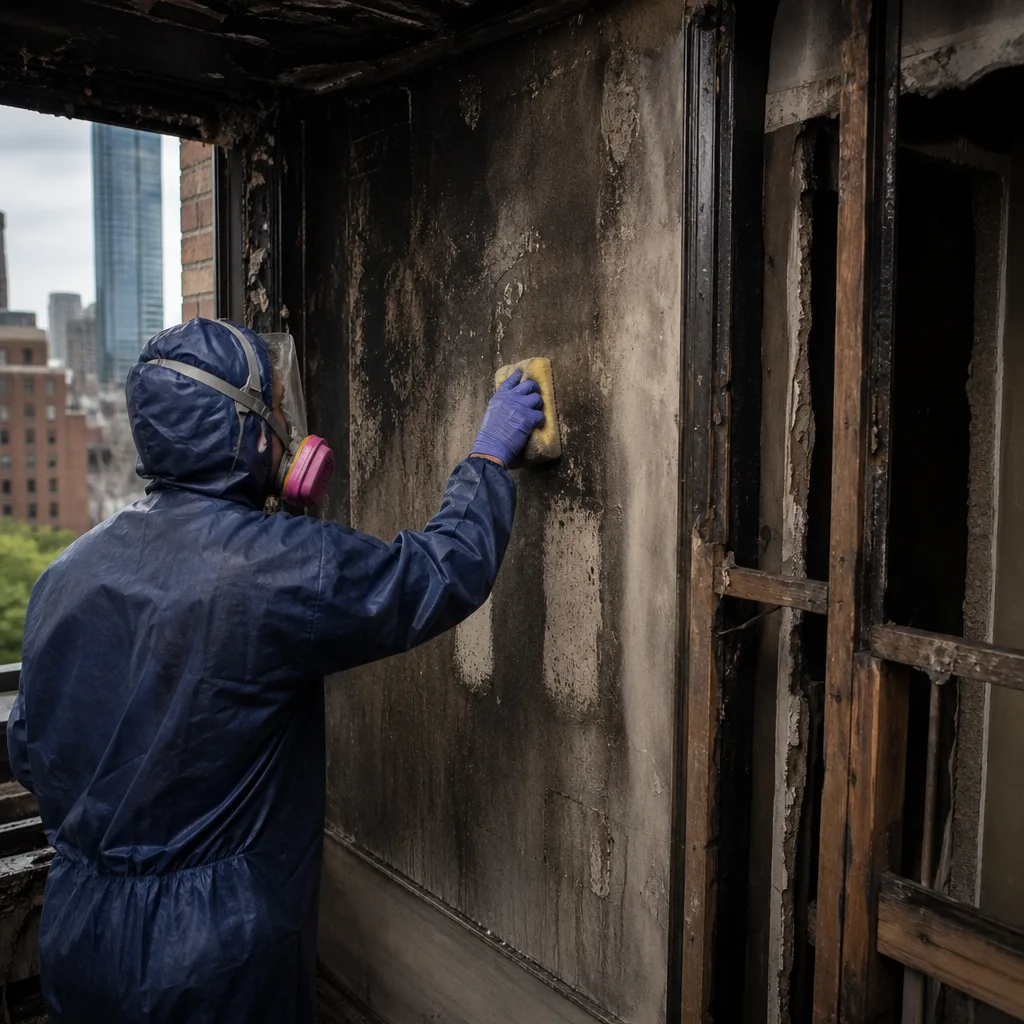
Drywall & Flooring Repair
Post-war sections of Upper West Side buildings with gypsum board assemblies still present unique challenges: board thicknesses vary by decade, transition joints to original plaster require mesh and setting-type compound, and oak strip or parquet flooring in pre-war line-apartments demands careful matching of species, grade, and stain. We repair what can be saved and replace what cannot, matching existing materials so the repair doesn’t announce itself.
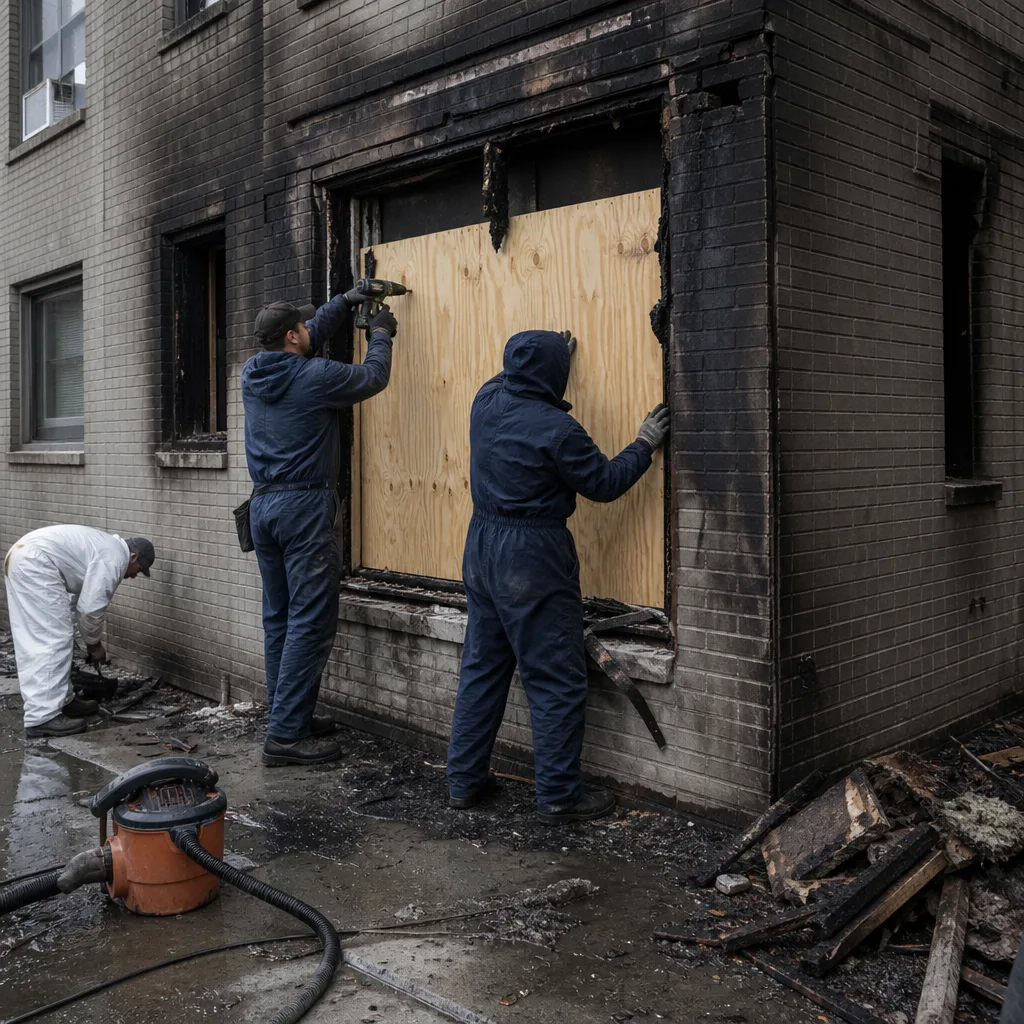
Contents Restoration & Pack-Out
Stack water events in towers often affect closets, bookshelves, upholstered furniture, and wall artwork in multiple units at once. We offer full contents restoration and pack-out from the same address: inventory with photos, cleaning and drying at our facility, storage until reconstruction is finished, and move-back coordination with your board’s elevator and hallway scheduling. Custom mirrors and heavy armoires from Central Park West pre-wars are handled with the care the originals deserve.
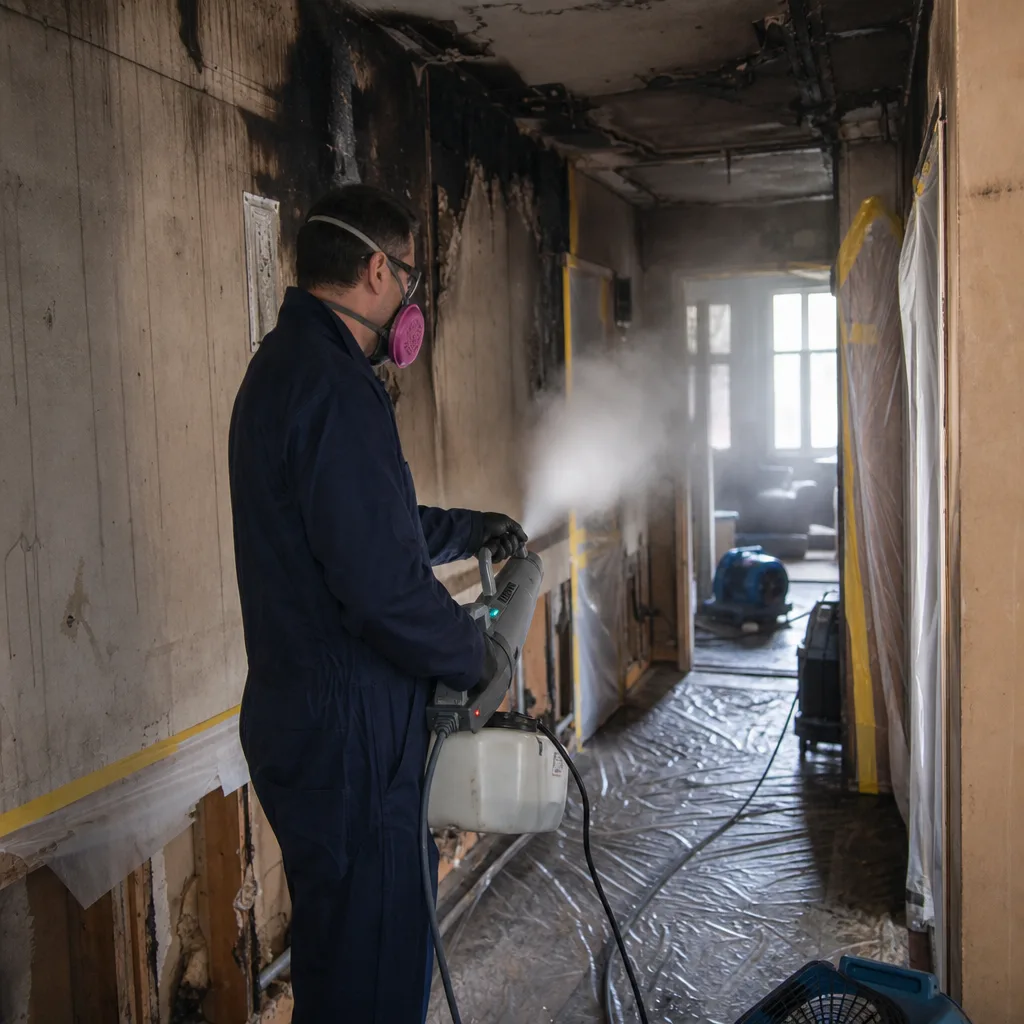
Carpet & Upholstery Cleaning
Category 2 or 3 water on wall-to-wall carpet in a 1920s co-op is a judgment call: clean in place or pack out. We use extraction followed by HEPA-verified drying and professional-grade cleaning when the carpet and pad can be saved, always with the understanding that saturated carpet on original wood subfloor can warp that floor underneath. We check the subfloor before we tell you the carpet is fine.
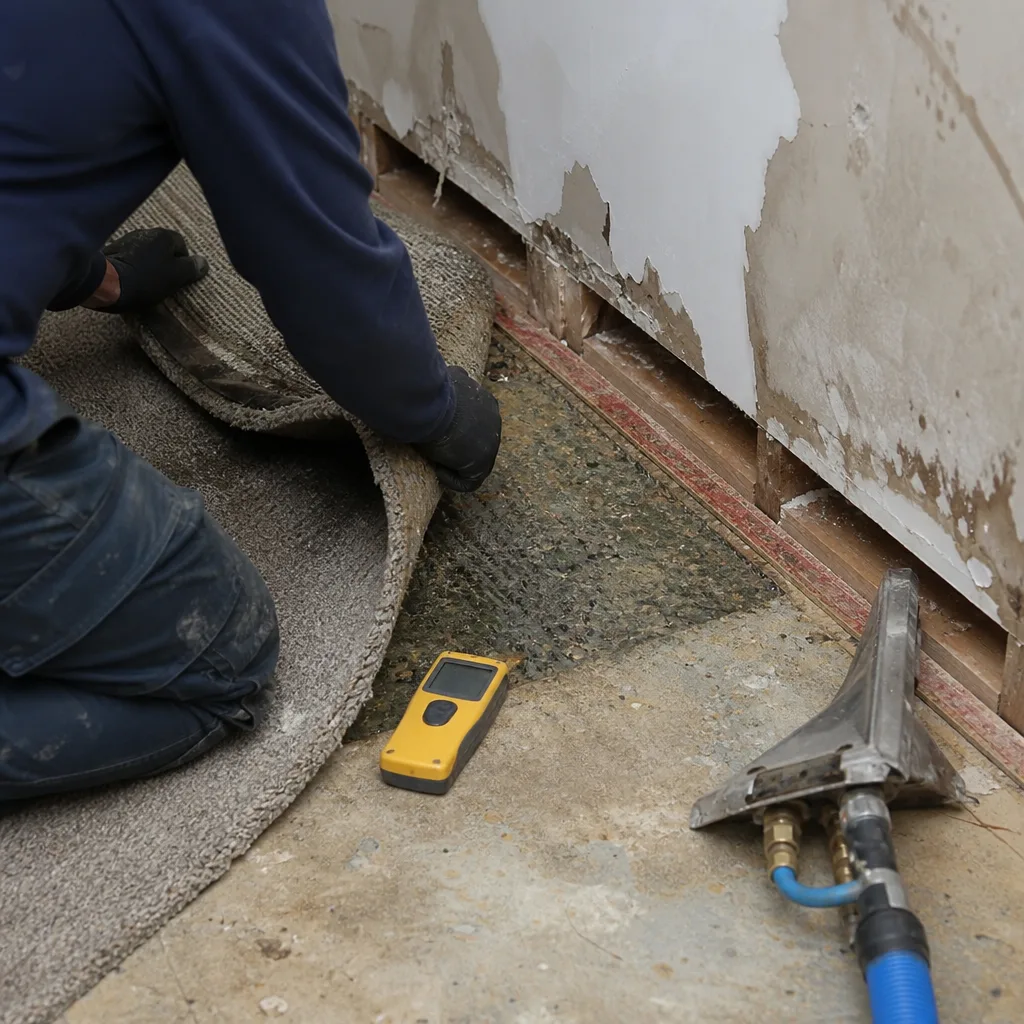
Post-Construction Cleanup
After reconstruction in an occupied co-op, the dust is real. Plaster dust, drywall sanding dust, construction debris, and tool marks all need removal before the unit is move-in ready. We run a full post-construction clean: HEPA vacuuming of all surfaces, cabinet interiors and closets, window and sill cleaning, floor cleaning and polishing, and a final air scrub. You move back into a unit that looks finished, not like a job site.
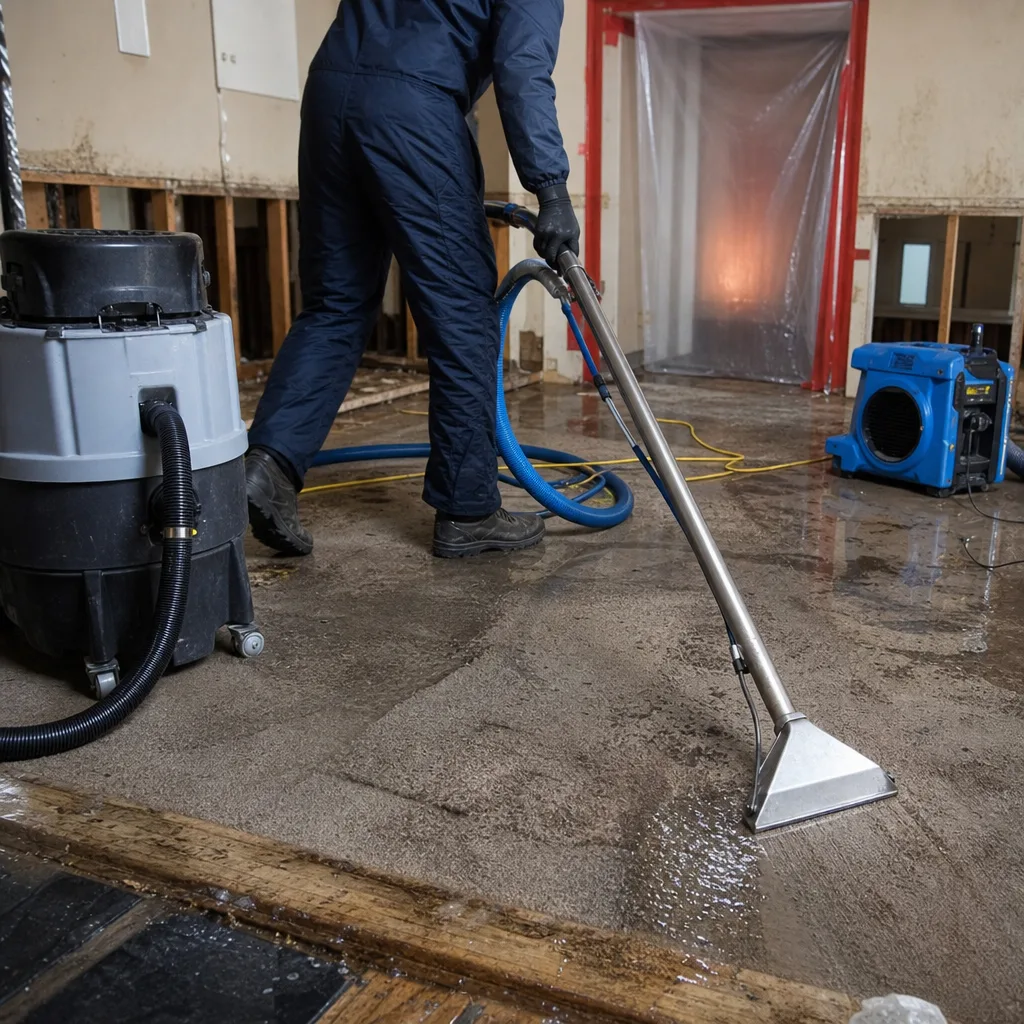
What happens when you call
- 1
A real person answersNo phone trees - you reach a local pro.
- 2
You get an upfront price rangeHonest numbers before anyone is dispatched.
- 3
A background-checked tech heads outLicensed & insured, dispatched right away.
- 4
You approve before work beginsNothing starts until you say go.
Reconstruction & Cleanup Costs in Upper West Side, NY
Upper West Side reconstruction pricing runs higher than the drywall-replacement averages across newer Manhattan districts, and for good reason: matching original plaster profiles, preserving pre-war millwork, coordinating asbestos abatement, and working through board approvals all cost time and labor. A straight drywall patch and repaint after a small ceiling leak typically runs $800-$1,600. Full ceiling and wall restoration involving plaster-and-lath rebuild, crown molding replacement, and repainting in a classic six or seven room apartment runs $4,000-$9,000 per affected room, with custom millwork or parquet flooring pushing single-room totals to $12,000-$20,000. A multi-floor stack event with pack-out, drying, abatement, and reconstruction across several units commonly lands between $40,000 and $120,000, depending on the number of floors involved and the materials affected. Most of these costs are covered by insurance, not out of pocket, when documentation is airtight. The free visual inspection with written scope gives you a firm number before any commitment; call (518) 314-5660 to schedule one.
We Also Serve Cities Near Upper West Side
Our reconstruction crews regularly respond to addresses in Midtown Manhattan, Midtown West, Murray Hill, and Washington Square. If your building sits along the western edge of Midtown or extends south toward the Square, the same certified team, same direct insurance billing, and same 90-Day Done Right Promise apply.
Upper West Side Reconstruction & Cleanup Questions, Answered
How do you handle Reconstruction & Cleanup in a co-op building where multiple units share the same pipe chase?
We request the building’s riser diagram from the super or managing agent before scoping any job in a shared-chase co-op. In a 1920s building with original cast-iron pipe chases, the apparent source unit is rarely the true source. Mapping the vertical stack lets us locate the origin floor and prevent a missed re-wet that surfaces two weeks later three floors below the already remediated unit. We coordinate access approvals through the board, building management, and each affected unit owner’s insurance carrier before opening a single wall.
Do you need to abate asbestos before opening walls in pre-war Upper West Side buildings?
Yes, often. Asbestos-containing pipe insulation wrap, floor tile mastic, and joint compound are pervasive in buildings constructed between the 1890s and 1940s. NYC DEP requires asbestos testing and, when present, licensed abatement before any restoration work that disturbs those materials can legally proceed. Skipping this step earns a stop-work order and costly fines. We identify suspect materials during the initial assessment and schedule compliant abatement before our crews begin demolition.
How long does it take to dry original plaster-and-lath walls after a water event?
Original plaster-and-lath walls in Upper West Side pre-wars typically take 7-14 days to reach dry standard, roughly two to three times longer than modern drywall. Plaster wicks moisture deep into the substrate and feels dry to the touch long before the cavity behind it is dry. We use penetrating moisture meters and thermal imaging to track actual moisture content through the drying process, backed by daily logs you and your carrier can review. Rushing this step is how hidden mold grows behind walls within 48 hours.
Will my co-op’s insurance cover reconstruction of original plaster and custom millwork?
Most co-op master policies and unit owner policies cover reconstruction of original plaster and custom millwork when the scope is documented as like-kind-and-quality replacement, not modern equivalent. That means matching original profiles, species, and installation methods, not pricing drywall substitutions. We write scopes explicitly for original materials and provide the documentation carriers need to approve the higher line items. Direct adjuster communication from our team usually resolves these questions without you making a single phone call.
Can you dry carpets and upholstery in place during a stack water event, or do they need pack-out?
It depends on the water category and how long the carpet has been saturated. Category 1 or 2 water on carpet with a dry subfloor and prompt extraction can often be dried in place with professional-grade equipment. Category 3 water, long-standing saturation, or carpet over original wood subfloor usually means pack-out: the carpet and pad come out for cleaning and drying off-site, and the subfloor gets inspected before anything goes back. We make that call based on readings, not guesswork, and we tell you the reasoning plainly.
How fast can you actually respond to an Upper West Side address?
We commit to 45 minutes for emergency response in Upper West Side, day or night. Live dispatch takes your call around the clock, and crews stage from locations that put every address between 72nd and 96th Streets, from Riverside Drive to Central Park West, within that window. For active water, speed changes the outcome: the difference between a five-day dry-out and a four-week reconstruction is usually measured in the first hour.
What certifications do your reconstruction technicians hold?
Our crews are certified to IICRC standards in Water Damage Restoration (WRT), Fire and Smoke Restoration (FSRT), and Applied Microbial Remediation (AMRT), with additional training to RIA and IFA guides. Every technician on site is background-checked and in uniform. For Upper West Side work specifically, all crew members receive ongoing training in pre-war building systems so they recognize original plaster, cast-iron riser configurations, and asbestos-suspect materials on sight.
What should I do in the first 30 minutes after discovering water damage in my Upper West Side apartment?
First, shut off the water at the fixture or the riser valve if you know where it is; do not touch electrical panels or any wiring in contact with water. Move or lift valuables off wet surfaces if safe to do so. Call (518) 314-5660. Do not attempt to open walls or ceilings yourself, and do not rely on touch to judge how far the water traveled. A quick call gets us an address, a building type, and a crew en route. Call (518) 314-5660 now; estimates are free.
Serving Upper West Side, NY - Our Local Coverage Area
We’re based in the Upper West Side area and know this community well. Use the map below to see our service coverage - if you’re nearby, we can almost certainly help.
Upper West Side Reconstruction & Cleanup, Done Right
After a category 2 water release from a failed appliance hose in a 1910s co-op on West End Avenue, our techs coordinated with the board and three insurance adjusters before opening the ceiling. We set up containment, used Injectidry panels to dry the original plaster-and-lath in place, and documented every moisture reading to prove pre-loss condition. The owners saved weeks of pack-out and the building’s historic walls stayed intact. That’s the standard we bring to every Upper West Side address: the building’s history respected, the paperwork airtight, and a written 90-Day Done Right Promise on the table before we finish. Call (518) 314-5660 for a free estimate, day or night.
Written by Curt Bowman, Owner at Floodline Restoration Co., serving Upper West Side since 2010.