
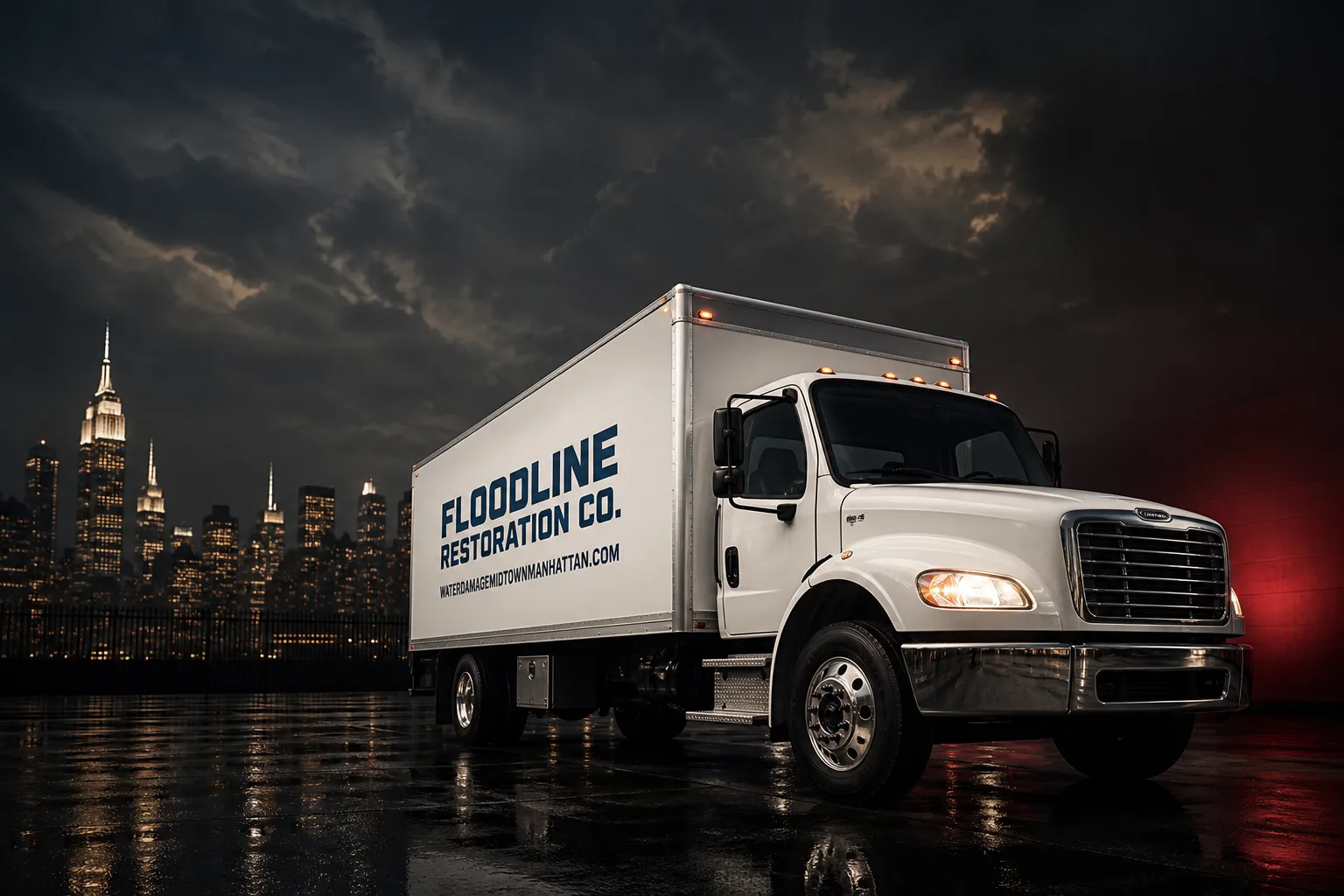
Free visual inspection and a written scope of work before any mitigation begins - photos, moisture readings, and drying logs go in your claim file
The scope we write is the scope we bill. Anything new gets shown to you, in writing, before we touch it.
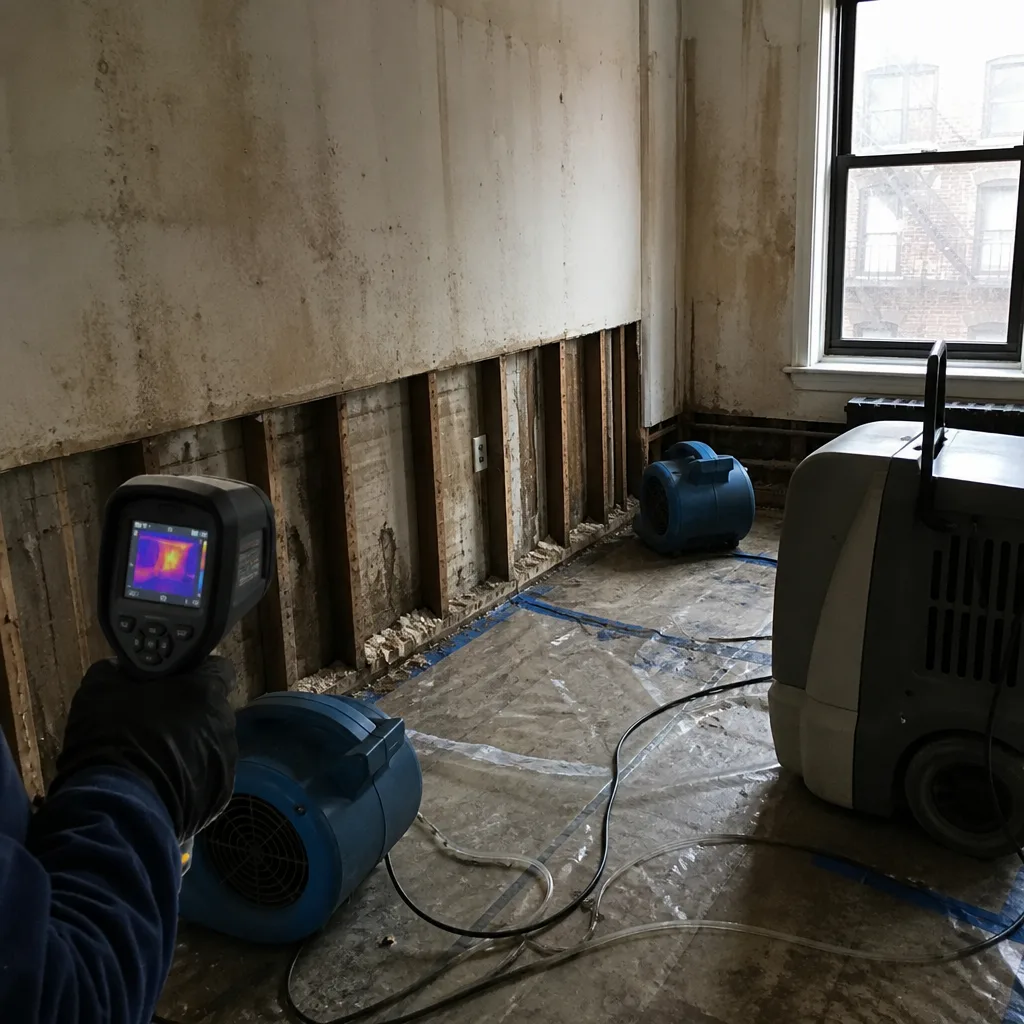 Before
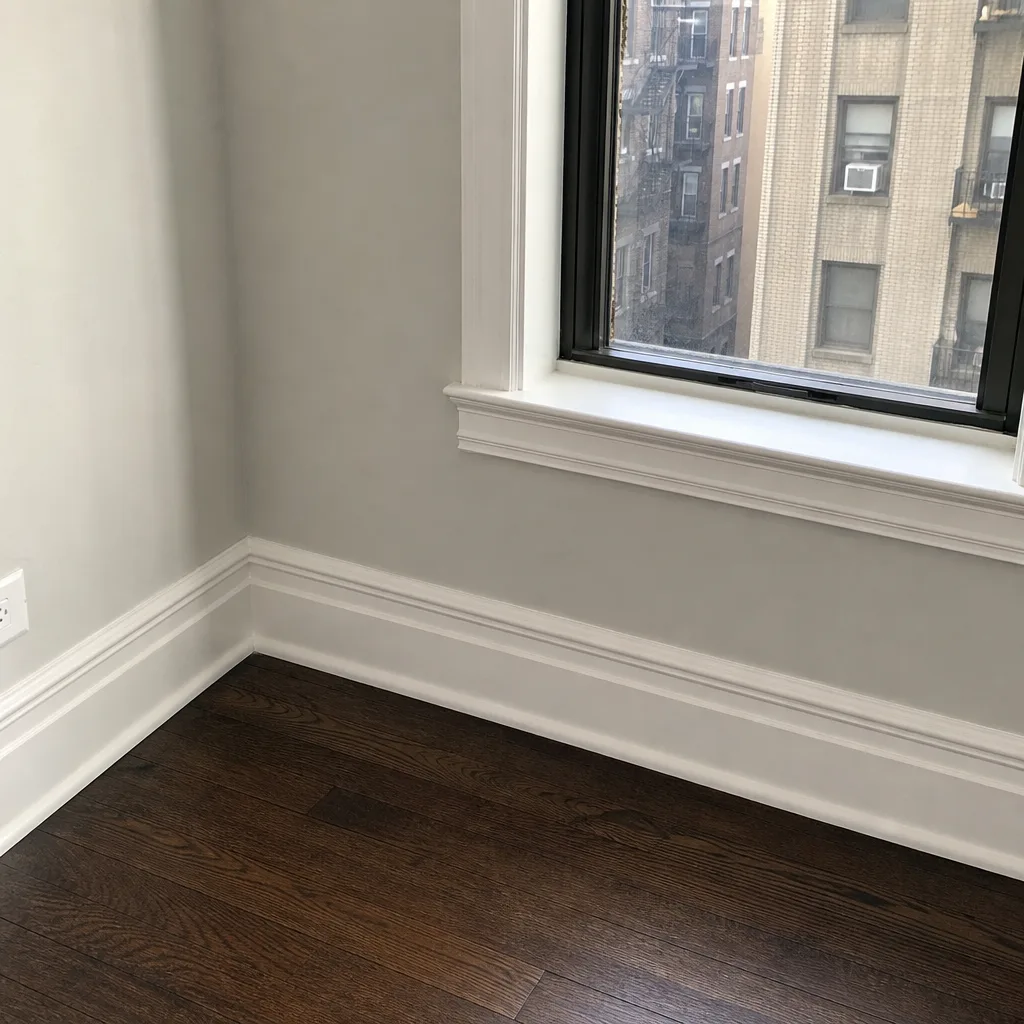 After
After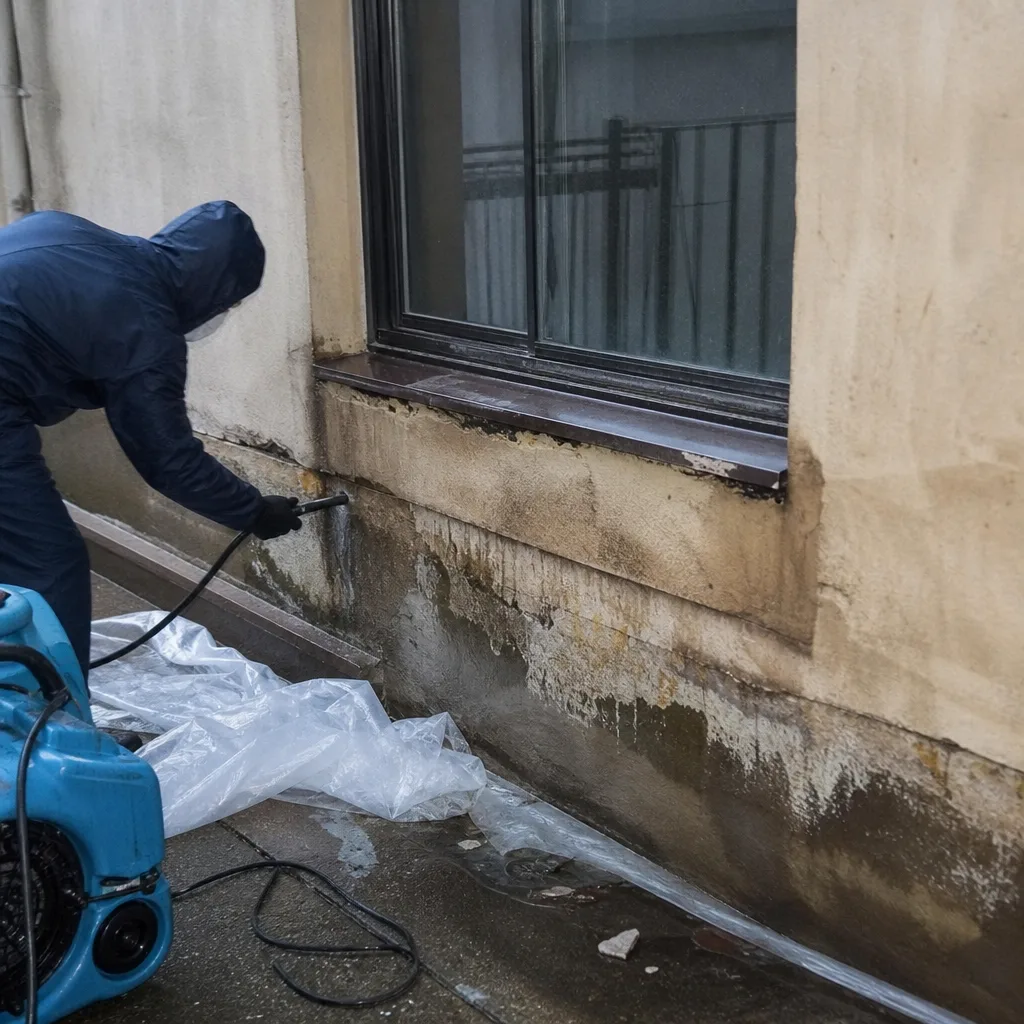 Before
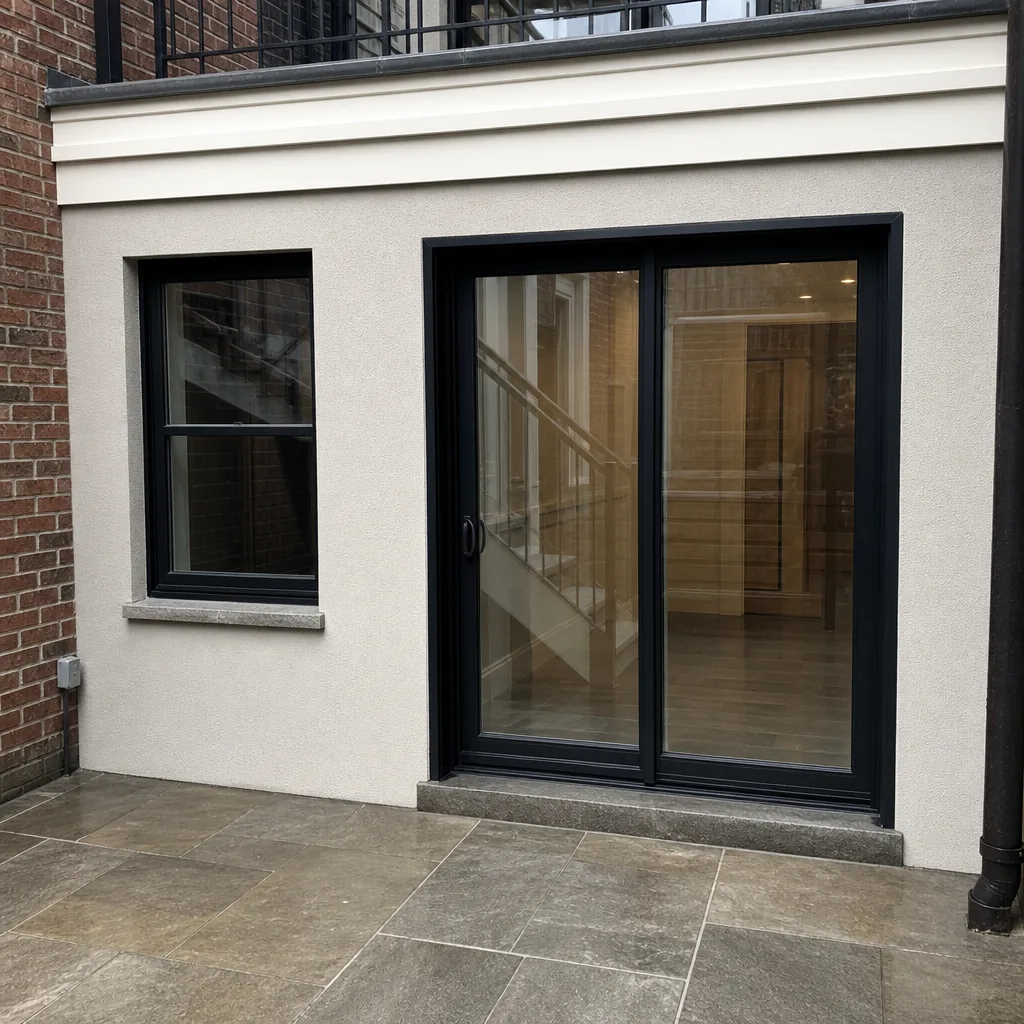 After
After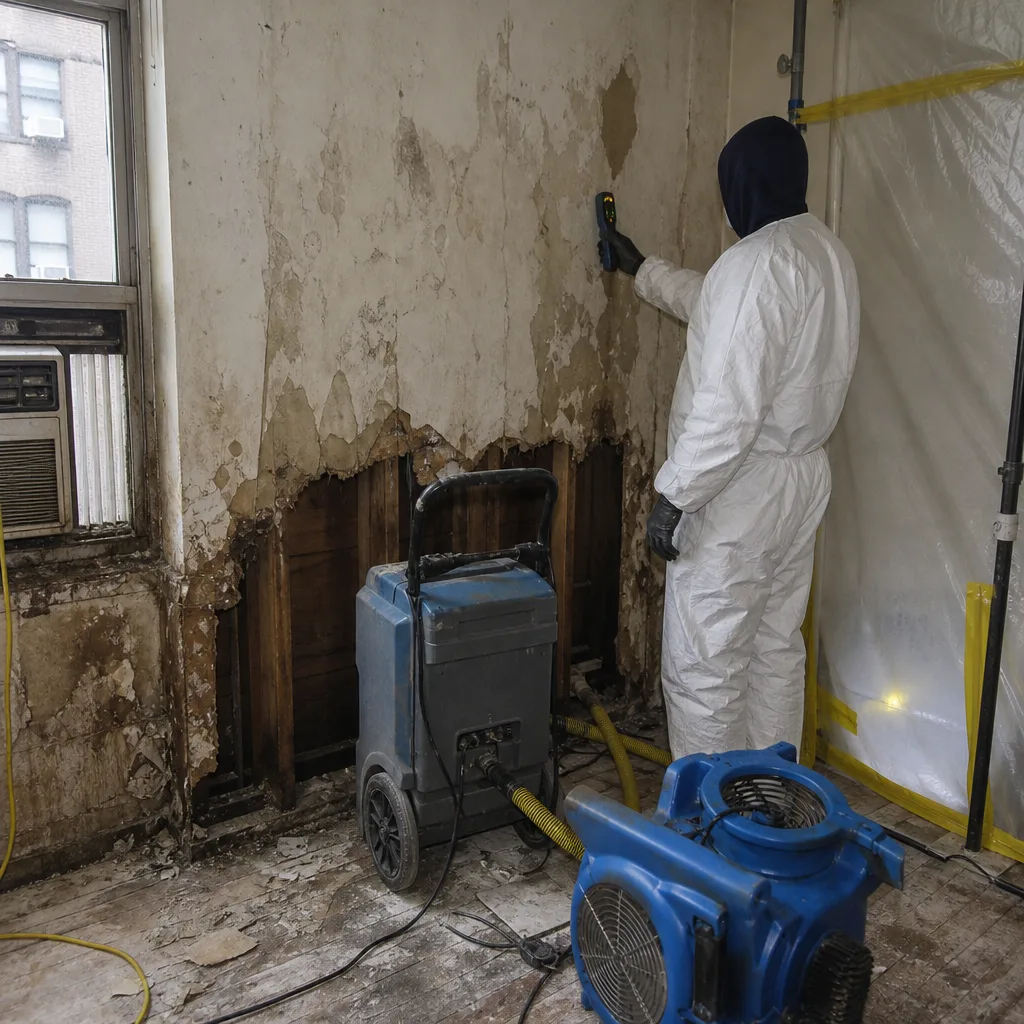 Before
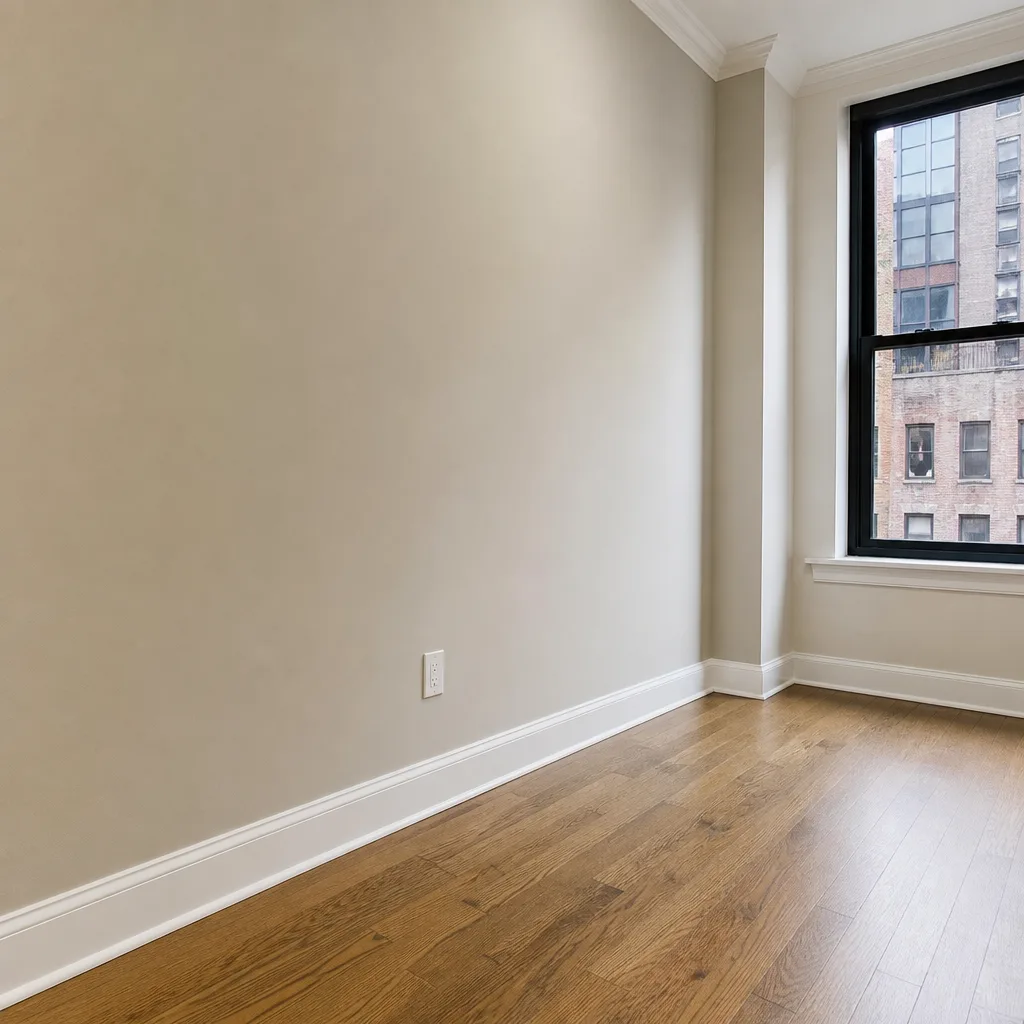 After
After24/7 Emergency Mold Remediation in Weehawken
Mold remediation in Weehawken typically runs $1,800-$6,500 depending on the affected square footage and whether the moisture source is brackish floodwater or escarpment runoff. A live dispatcher answers at (518) 314-5660 around the clock, and our crews reach most Weehawken addresses within 45 minutes. The first hour matters because mold colonies double every 24 to 48 hours once spores find wet drywall, plaster, or framing. We start with a free visual inspection, map the moisture that’s feeding the growth, and contain the affected area before spores move through your HVAC system or into a shared party wall. If you’re seeing black staining on baseboards, smelling mustiness in a basement, or peeling paint on a ceiling below a bathroom, call now. The longer it sits, the more surface area it claims.
Need Emergency Mold Remediation in Weehawken Now?
Crews minutes away, answering live 24 hours a day. The sooner we start, the less it costs.
Understanding Mold Remediation Severity in Weehawken Properties
Mold severity is driven by water category, not just square footage. Category 1 is clean water from a supply line. Category 2 carries contaminants, like stormwater runoff or washing machine discharge. Category 3 is grossly contaminated: Hudson River surge, sewage, or standing floodwater. Weehawken’s two-tier geography means the same mold job can be a completely different technical problem depending on whether you’re in a Port Imperial tower or an upper-town row house. In the lower waterfront buildings, brackish tidal surge pushes Category 3 water into below-grade garages and mechanical rooms. That water is salty, and salt accelerates both mold colonization and corrosion of metal surfaces, including electrical conduit and elevator pits. In upper Weehawken, the 1910s-1950s brick row houses along Boulevard East and the side streets off Park Avenue hold original plaster-and-lath walls. Water sheeting down from the Palisades enters through foundation cracks and saturated earth, then wicks upward. Plaster holds moisture longer than drywall, and behind it, lath strips and studs become a hidden mold farm. Severity in those homes often looks minor on the surface while the framing behind one wall is saturated. We use moisture mapping, not guesswork, to find what the eye can’t see. Containment, HEPA air scrubbing, and clearance testing are standard whether the job is 40 square feet or 4,000.
Why Weehawken Property Owners Choose Floodline Restoration Co.
- 45-minute response commitment. Our Weehawken crews are dispatched from points inside Hudson County, not from a distant regional office. We commit to having a certified technician on site within 45 minutes of your call.
- 24/7 live answer, every time. A real person picks up at 2 a.m. Not a recording, not a callback service. You’ll speak with a dispatcher who can send a crew immediately.
- IICRC-certified crews. Our technicians hold WRT and AMRT certifications and work to IICRC S520 standards for mold remediation. Background-checked and uniformed, so you know who’s in your home.
- Free visual inspection. Before any work starts, we walk the affected area with you, explain what we’re seeing, and tell you what’s necessary versus what can wait. No obligation.
- Direct insurance billing. We document everything, send the scope to your carrier, and handle adjuster communication. You don’t play messenger between us and the insurance company.
- One team from containment to reconstruction. The same Floodline crew that sets containment and removes mold is the crew that rebuilds. No mid-job handoff to strangers.
Our Mold Remediation Process
Inspection & Assessment
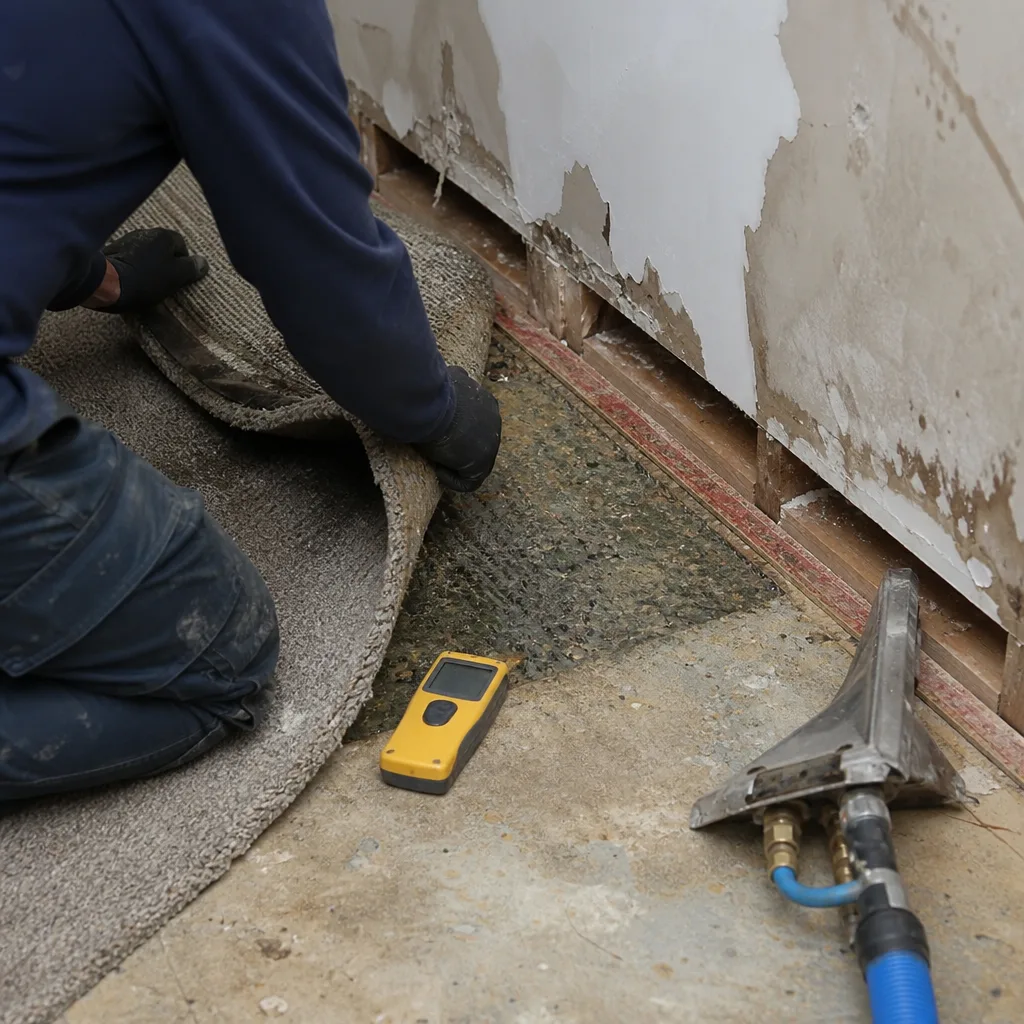
We arrive with thermal imaging and moisture meters. On a 1920s brick row house just above Boulevard East in upper Weehawken, our techs used moisture mapping to trace water seepage from the escarpment into a shared party wall between two units. We identified the source, mapped the affected area, and wrote a scope before any demolition started.
Containment & Stabilization
We seal the work area with 6-mil polyethylene, establish negative air pressure, and run HEPA air scrubbers. In row houses with shared party walls, containment must extend to the full wall assembly so spores don’t migrate laterally into your neighbor’s unit mid-job. In Port Imperial towers, we isolate mechanical rooms and elevator lobbies the same way.
Drying & Dehumidification
We run professional-grade Dri-Eaz and Phoenix dehumidifiers with XPOWER air movers until hygrometer readings show the affected materials have reached pre-loss moisture condition. That typically takes three to seven days in Weehawken’s climate, longer for plaster walls or saturated masonry.
Cleaning & Sanitization
Removed materials are bagged and disposed of under containment. Remaining surfaces are HEPA-vacuumed, wire-brushed where needed, and treated with antimicrobial agents appropriate to the water category. Category 2 or 3 jobs in Weehawken require broader antimicrobial application across exposed framing and subfloor.
Specialty Treatment: Crawl Space & HVAC
Weehawken homes with crawl spaces or unfinished basements often need cavity drying and encapsulation. We treat crawl space floor joists, run dehumidification under the house, and assess HVAC ductwork for spore spread. Air quality restoration includes post-remediation air sampling when clearance criteria apply.
Repairs & Restoration
Once clearance is confirmed, the same crew rebuilds. Drywall, plaster repair, trim, flooring, paint. The 90-Day Done Right Promise covers the entire scope, in writing: if it’s not done right, we make it right. No arguing.
Need Emergency Mold Remediation in Weehawken Now?
Crews minutes away, answering live 24 hours a day. The sooner we start, the less it costs.
Working With Your Insurance Company
Mold claims in Weehawken get complicated fast, especially when brackish water is involved. Insurers need proof that the moisture source was sudden and accidental, not long-term neglect. Our documentation starts the first hour on site: photos of every affected surface, moisture readings taken before and during drying, daily logs showing the drying curve, and a line-item scope of work that names the water category. When your adjuster calls, we answer. We speak their language, we send the documentation directly, and we don’t leave you trying to explain a Category 3 contamination event over the phone. For Port Imperial towers where brackish intrusion from a storm event triggers FEMA Substantial Damage documentation, we handle that distinction in the initial scope of loss so your carrier authorizes full structural drying and corrosion remediation from the start. The billing goes directly from Floodline to the carrier, which means you’re not fronting tens of thousands of dollars and hoping for reimbursement.
What We Provide Your Insurer
- Thorough documentation of the loss
- Photos of all damage, room by room
- Moisture readings and drying logs
- A detailed, line-item scope of work
- Direct coordination with your carrier
Built for Weehawken’s Loss Calendar
Weehawken’s mold losses track the weather, but the pattern is specific to this township’s split geography. January and February bring deep freezes that burst supply lines in the upper-town brick row houses, where aging copper and cast-iron plumbing runs through uninsulated exterior walls. That water soaks lath-and-plaster and framing, and mold follows within days if the wall isn’t opened and dried. March through April is thaw season: snowmelt and spring rains run off the Palisades escarpment and saturate the earth behind the retaining walls and foundations along Boulevard East and the streets climbing up from Park Avenue. Basements in those homes seep, and humidity climbs. July and August thunderstorm downpours overwhelm Weehawken’s combined storm and sanitary systems along the lower avenues. The Port Imperial tier watches hurricane season closely from August through October. Nor’easters push brackish Hudson surge into the below-grade garages and mechanical rooms along the waterfront, and that’s not a freshwater flood. It’s a saltwater event with accelerated corrosion and a faster mold clock. No two seasons in Weehawken produce the same mold job, and no single playbook works for the whole township.
Mold Remediation Across Weehawken’s Neighborhoods
The upper-town plateau, roughly the blocks above Park Avenue and along Boulevard East toward the Lincoln Tunnel approach, holds Weehawken’s oldest housing: dense 1910s-1950s brick row houses, converted multifamily buildings, and some original walk-ups. These homes have shared party walls, original plaster, and basements cut into the cliff’s drainage path. Mold here usually traces back to escarpment runoff, an aged cast-iron waste line, or a neighbor’s slow leak migrating through the wall assembly. We work the side streets off Park Avenue, the blocks around Gregory Avenue, and the hillside sections of Highwood Avenue and Clifton Terrace regularly. Down along the Port Imperial waterfront, everything changes. The 1990s-2010s glass-and-concrete towers near the Hudson-Bergen Light Rail and Weehawken Terminal have below-grade parking structures, elevator pits, and centralized mechanical systems. A flooded garage in one of those buildings isn’t a mop-up. It’s a large-loss commercial restoration job with structural drying, corrosion assessment, and often FEMA documentation. The section along River Road and the ferry terminal corridors has the same profile. Our Mold Remediation teams carry different equipment lists and different protocols depending on which side of the cliff we’re working, and we dispatch accordingly.
Specialized Mold Remediation Services We Offer in Weehawken
Mold Inspection & Testing
We start every Weehawken mold job with inspection before removal. That means thermal imaging across walls and ceilings, moisture meters on baseboards and flooring, and in upper-town row houses, a careful check of the uphill foundation wall where escarpment runoff enters. Air and surface samples go to an independent lab when clearance or third-party verification is required.
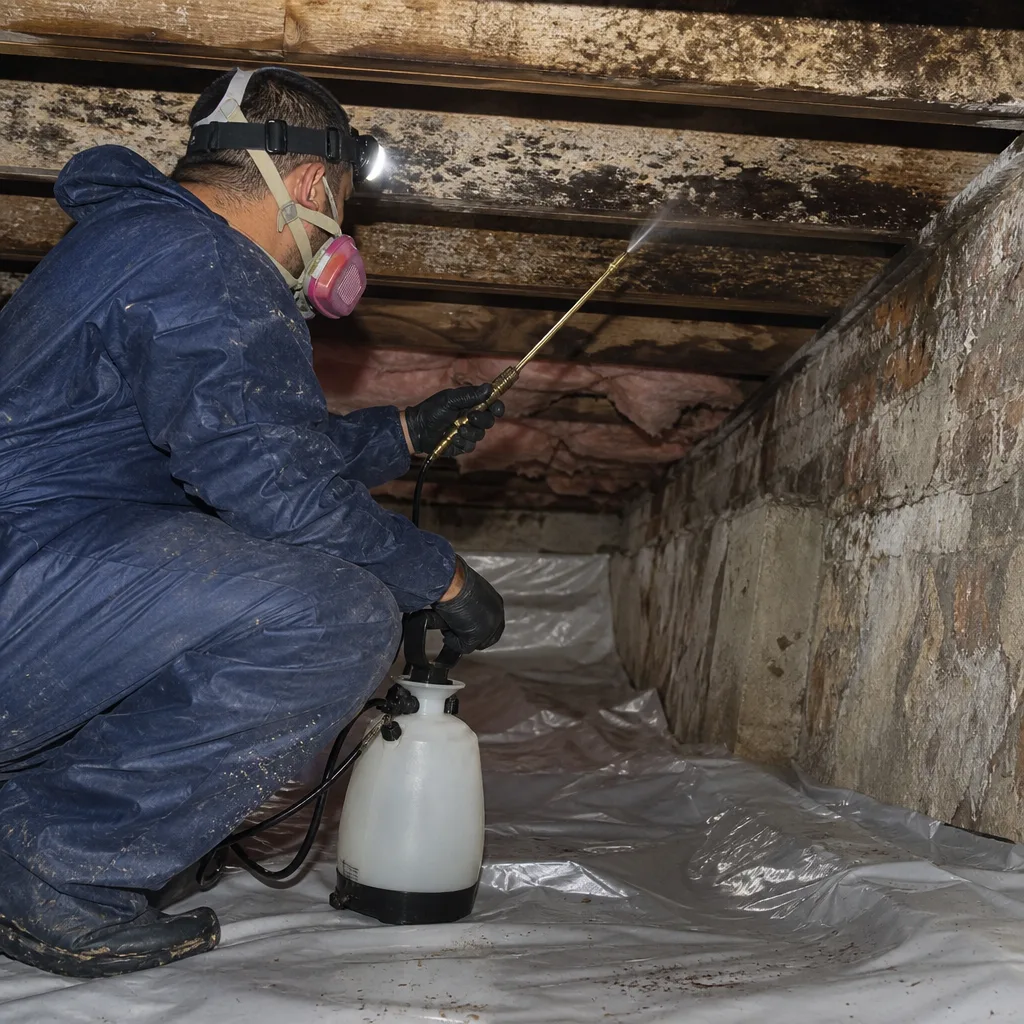
Mold Removal
Removal in Weehawken buildings means containment first, then removing affected drywall, plaster, insulation, or flooring under negative air pressure. In a shared-wall row house, we seal the full wall cavity so the job doesn’t spread spores into the adjacent unit. In a Port Imperial tower, we isolate mechanical rooms and work around building operations.
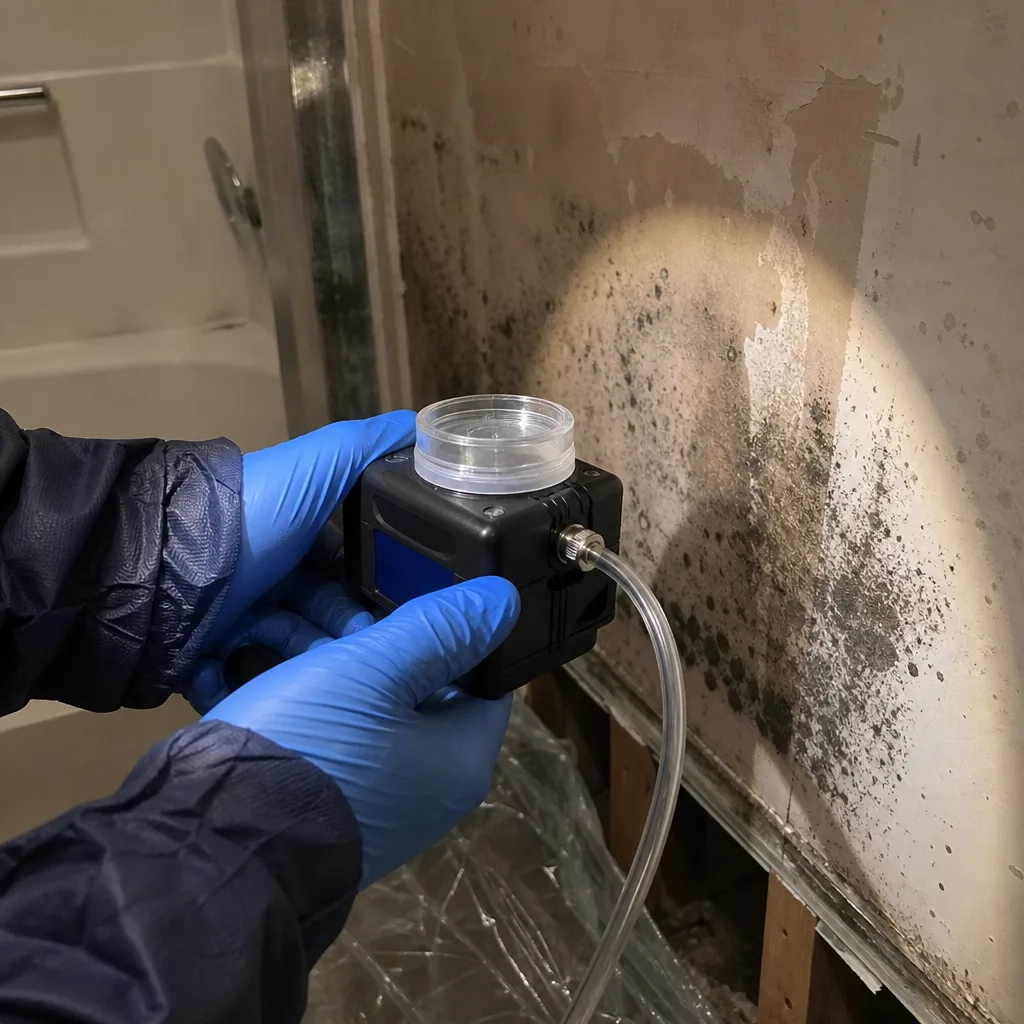
Black Mold Remediation
Stachybotrys, commonly called black mold, grows where cellulose stays wet for extended periods. Weehawken basements with chronic escarpment seepage and the lower walls of waterfront building mechanical rooms both create that environment. We treat it with full containment, HEPA air scrubbing throughout the work area, removal of all affected porous materials, and antimicrobial treatment of exposed framing. Clearance testing confirms the result.
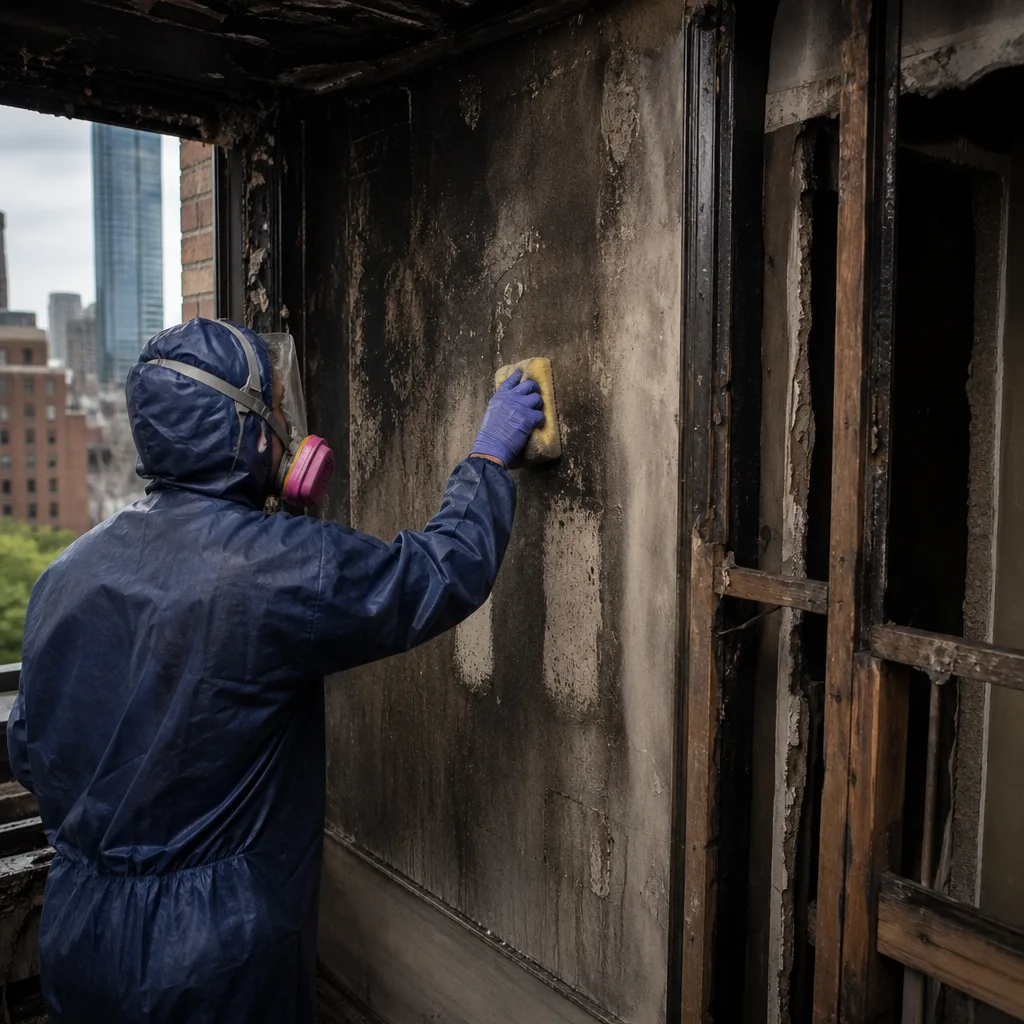
Air Quality Restoration
Mold spores ride HVAC systems. After we complete remediation, we HEPA-vacuum return registers, replace affected filters, and in severe cases run duct cleaning with a negative-air system. In Weehawken row houses with shared chase walls, we check whether spores migrated into the duct runs before we sign off.
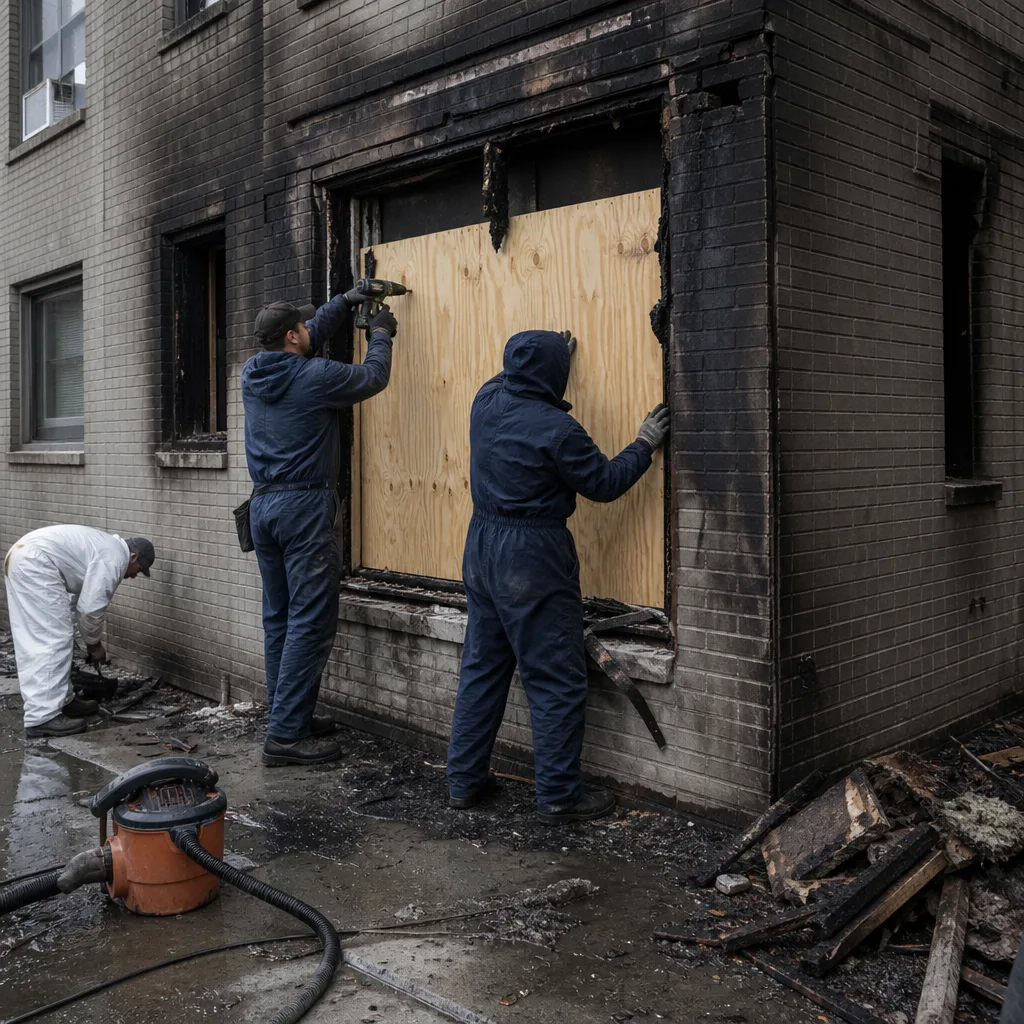
Crawl Space Treatment
Homes in the upper-town plateau with crawl spaces face chronic humidity from the saturated hillside. We install vapor barriers, treat floor joists for surface mold, and run dehumidification until the wood reaches a stable moisture content. Leaving a Weehawken crawl space damp and open to the cliff runoff means the mold comes back within months.
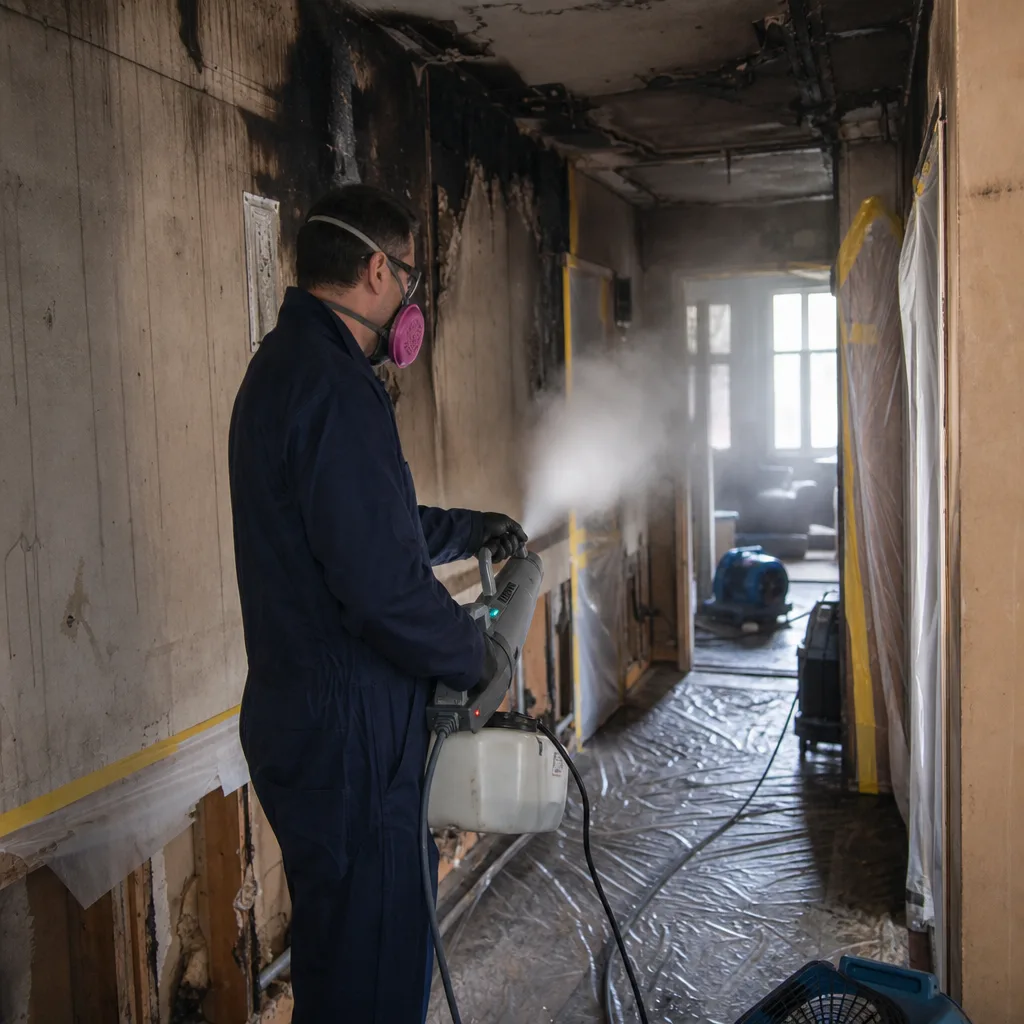
Moisture & Humidity Control
The long-term answer to mold in Weehawken is controlling moisture. That means exterior grading and drainage improvements on the uphill side of upper-town basements, dehumidifier placement sized to the square footage, and in waterfront buildings, monitoring plans for below-grade spaces. We leave you with a written moisture log showing what changed and where the readings ended up.
What happens when you call
- 1
A real person answersNo phone trees - you reach a local pro.
- 2
You get an upfront price rangeHonest numbers before anyone is dispatched.
- 3
A background-checked tech heads outLicensed & insured, dispatched right away.
- 4
You approve before work beginsNothing starts until you say go.
Mold Remediation Costs in Weehawken, NJ
A small contained mold job in Weehawken, under 50 square feet, typically runs $1,800-$3,500. A mid-size upper-town basement with escarpment seepage across 100-200 square feet of wall and flooring usually lands between $4,000 and $8,000, including containment, drying, removal, antimicrobial treatment, and rebuild. Large-loss jobs in Port Imperial below-grade parking structures or mechanical rooms start around $10,000 and can reach six figures depending on structural drying scope and corrosion remediation. The variables that move Weehawken prices: water category, whether plaster or drywall is involved, how much framing needs treatment, whether the job requires third-party clearance testing, and whether reconstruction includes custom finishes. The free visual inspection is the cleanest path to a firm number. We give you a written scope before any work starts, and the 90-Day Done Right Promise is in writing with it. Call (518) 314-5660 and we’ll come look.
We Also Serve Cities Near Weehawken
Our Hudson County response area covers the communities around Weehawken, including Union City, with its dense multifamily housing up the Palisades slope; Hoboken, where basement flooding carries the same storm surge profile as the Port Imperial waterfront; and North Bergen, where the escarpment runoff pattern continues north along Boulevard East.
Serving Weehawken, NJ - Our Local Coverage Area
We’re based in the Weehawken area and know this community well. Use the map below to see our service coverage - if you’re nearby, we can almost certainly help.
Weehawken Mold Remediation Questions, Answered
What’s different about mold remediation in Weehawken’s Port Imperial high-rises versus the upper-town row houses?
Port Imperial towers require Category 3 brackish water protocols because Hudson River surge is saltwater, and salt accelerates both mold growth and corrosion of steel, conduit, and elevator components. Upper-town row houses are more often Category 2 stormwater infiltration from the escarpment, with moisture wicked into plaster and shared party walls. The containment, drying strategy, and documentation are different. Your building’s side of the Palisades dictates the playbook.
Can mold from a neighbor’s unit in a Weehawken row house spread into ours through the wall?
Yes. The shared party walls in Weehawken’s brick row houses are continuous assemblies. If one unit has saturated plaster or framing, spores can migrate through the wall cavity into the adjacent unit. Proper containment on a party wall job seals the full wall assembly and maintains negative air pressure so the remediation doesn’t push spores into your neighbor’s space. Call (518) 314-5660 and we’ll inspect both sides of the wall.
How fast can a crew actually reach my home in Weehawken?
We commit to 45 minutes from your call. Our dispatch is live 24/7, and our Weehawken response teams stage from inside Hudson County, not a remote office. If you call at 2 a.m. with a burst supply line feeding a basement, a technician is on the road minutes after you hang up.
Will my insurance cover mold remediation in Weehawken?
It depends on the cause. Sudden and accidental water events, like a burst pipe or storm surge intrusion, are typically covered. Long-term seepage or deferred maintenance is usually not. The distinction matters, and it’s why we document the water source and category from the first hour. We also bill your carrier directly and handle adjuster communication. For a specific answer about your policy, call us and we’ll walk through what we’re seeing.
Do I need full remediation, or just a cleaning?
If the affected area is under 10 square feet and the surface is non-porous, a cleaning may be sufficient. If mold is on drywall, plaster, insulation, or framing, or if it traces back to a Category 2 or 3 water event, you need removal and treatment. Surface cleaning hides the problem. Our free visual inspection tells you which situation you’re in, without an upsell.
How long does mold remediation take in Weehawken?
A contained 50-square-foot job typically finishes in two to four days including drying. A full upper-town basement with saturated plaster and framing runs five to ten days. Large-loss Port Imperial work can take weeks depending on structural drying. We’re on site daily with moisture readings until the dry standard is met, and you get the log.
Can we stay in our home during remediation?
For small contained jobs, usually yes, and we’ll tell you which rooms to avoid. For large jobs with full containment and negative air pressure, or when the HVAC system is involved, we may recommend temporary relocation. Weehawken row houses with shared party walls sometimes require more caution. We’ll give you a straight answer before work starts, not after.
What should I do in the first 30 minutes after discovering mold in my Weehawken home?
Shut off the water if the source is a leak. Don’t disturb the mold, don’t run fans directly on it, don’t open the HVAC system. Turn off the HVAC if the intake might pull spores through it. Then call us at (518) 314-5660. A technician will be on the way, and we’ll tell you what to do over the phone while they’re driving.
Written by Curt Bowman, Owner of Floodline Restoration Co., serving Weehawken’s upper-town and waterfront properties with mold remediation, water damage response, and full reconstruction.